Instruction to Jury that Property Interest is Necessary to Maintain an Action for Conversion
What is this form?
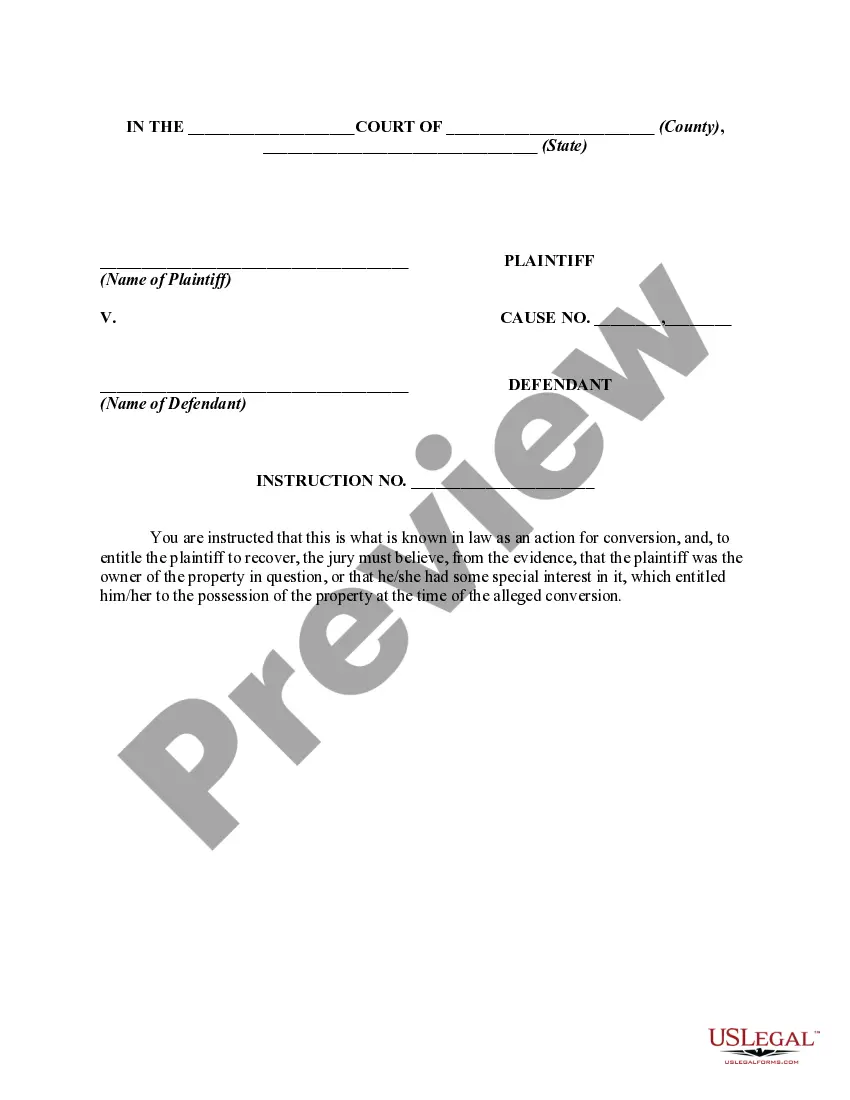
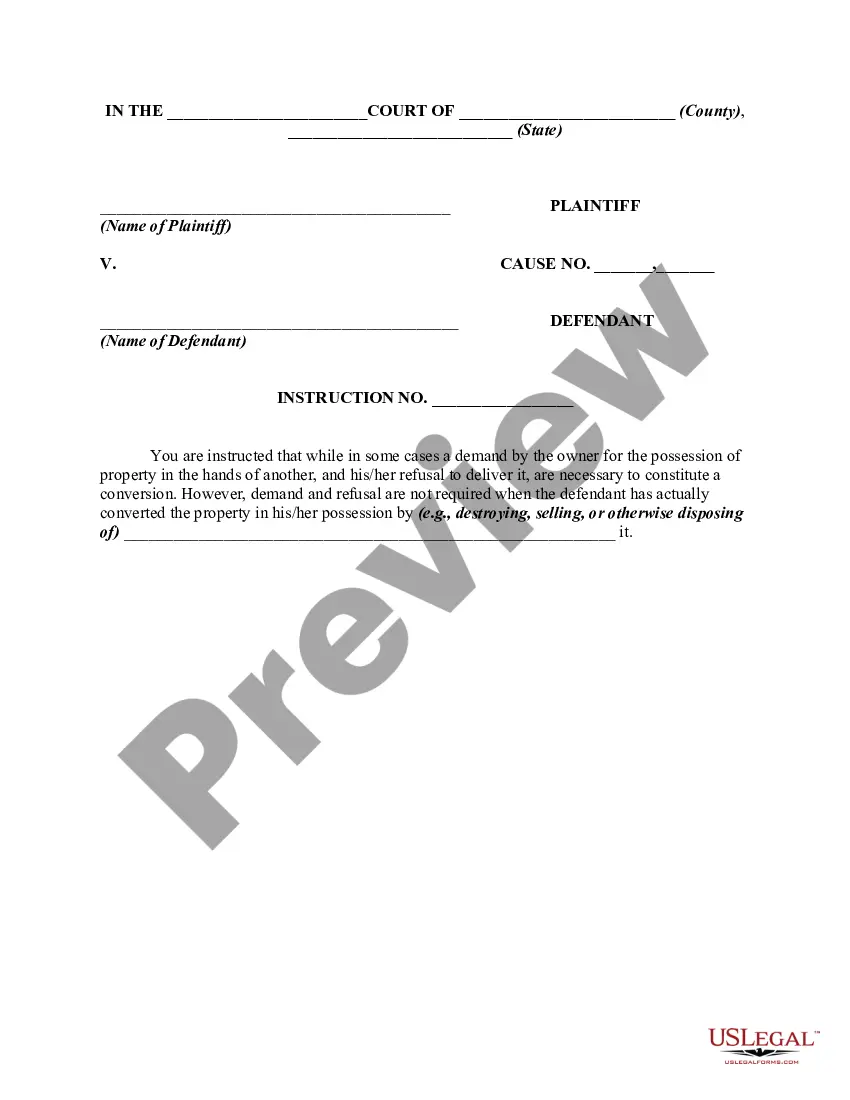
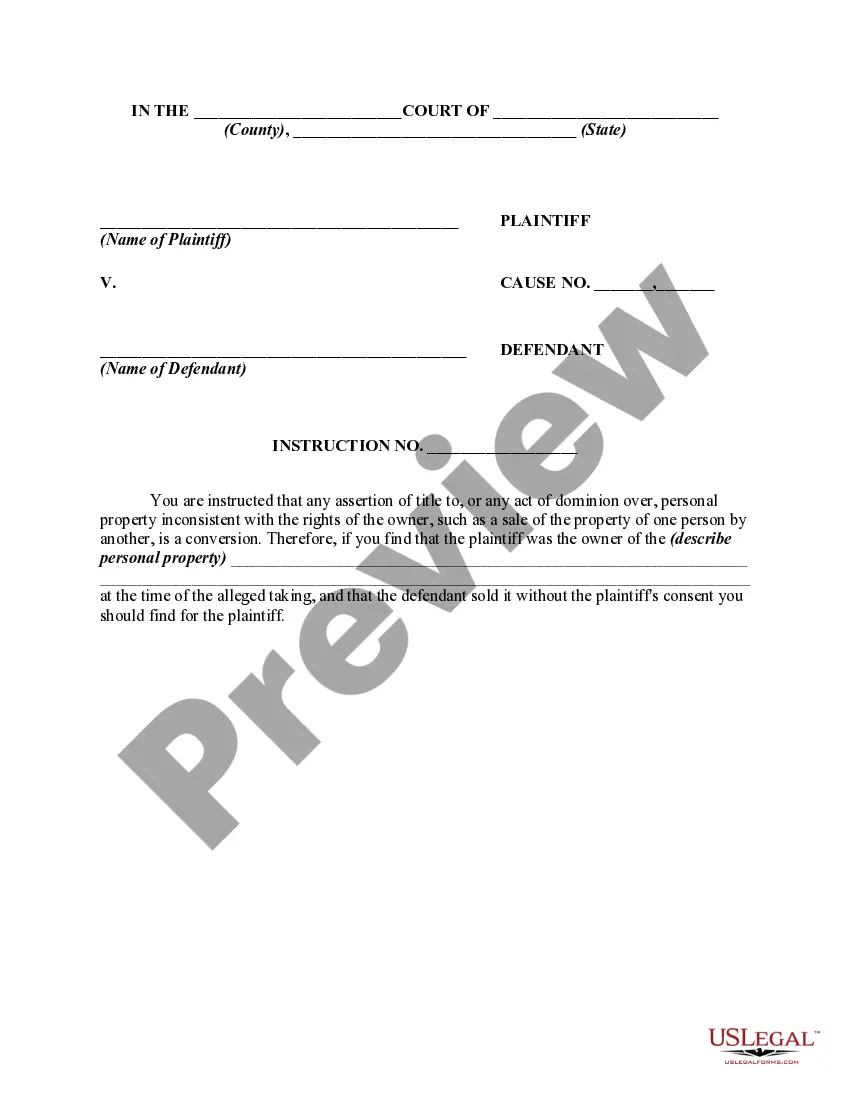
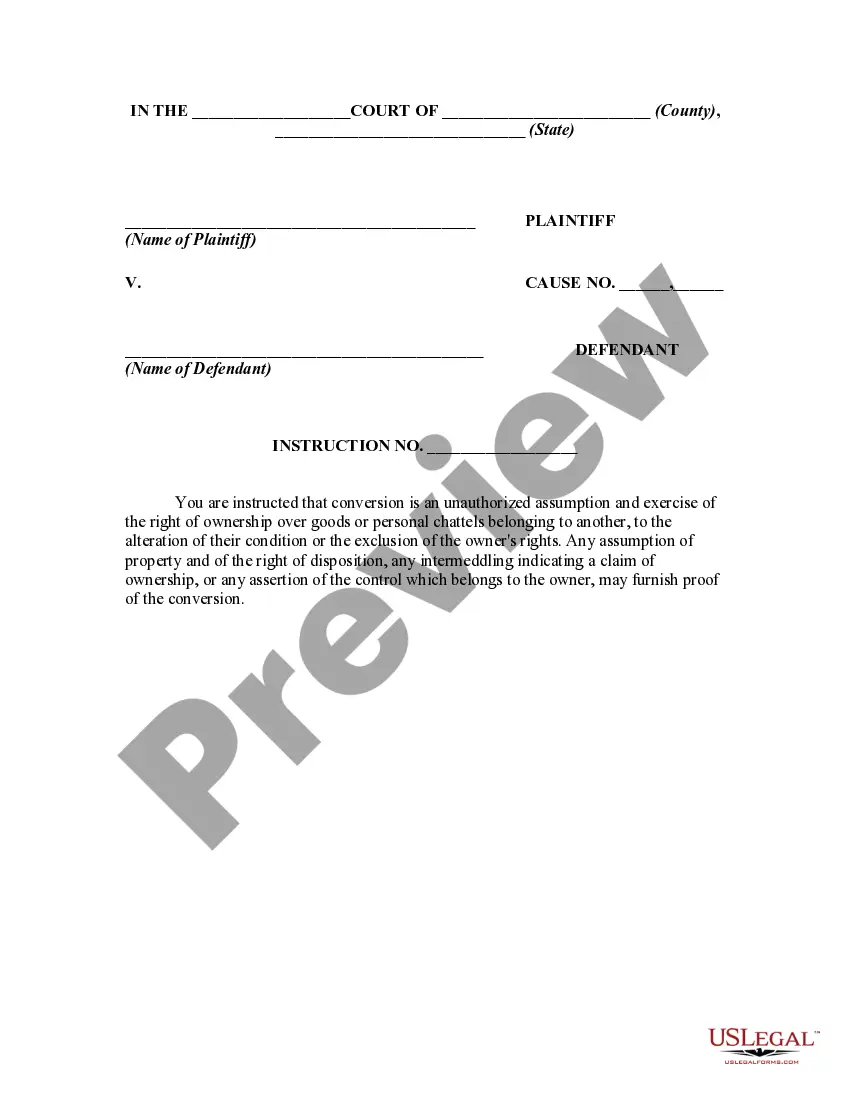
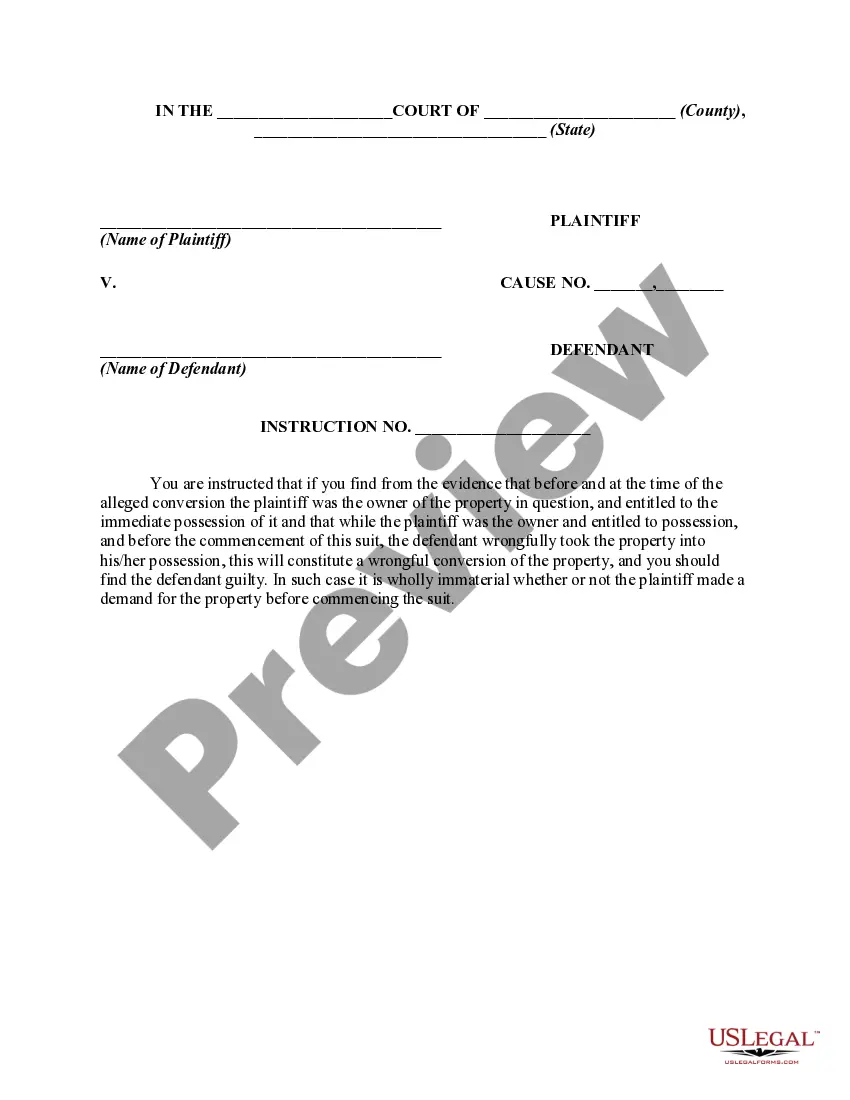
This legal form is known as an Instruction to Jury that Property Interest is Necessary to Maintain an Action for Conversion. It outlines the legal principles surrounding the civil action of conversion, which occurs when personal property is taken and retained by someone other than its true owner without permission. This form is specifically designed to inform jurors of the necessity for the plaintiff to demonstrate ownership or a special interest in the property to succeed in their claim.
Main sections of this form
- Court information: Name of the court and county where the case is filed.
- Case number: Unique identifier for the legal action.
- Plaintiff and defendant names: Identification of the parties involved in the case.
- Instruction number: Reference for jurors concerning legal standards in the case.
- Ownership requirement: Clarification that the plaintiff must own the property or have a significant interest in it.
Common use cases
This form should be used in cases involving civil actions for conversion where a jury is required to determine if the plaintiff had the necessary interest in the property taken. It is particularly relevant when the ownership is disputed or when the plaintiff's entitlement to possession is questioned.
Who should use this form
- Plaintiffs seeking to recover personal property taken unlawfully.
- Attorneys representing clients in conversion cases.
- Individuals involved in disputes over property ownership or rights to possession.
How to prepare this document
- Identify the court where the case is being filed and enter the relevant details.
- Complete the case number section to provide a reference for your legal action.
- Enter the names of the plaintiff and defendant as they appear in the legal documents.
- Fill in the instruction number to reference the specific legal guidelines given to jurors.
- State the basis for ownership or interest in the disputed property to clarify entitlements.
Notarization requirements for this form
This form does not typically require notarization unless specified by local law. However, it is essential to verify the requirements in your jurisdiction to ensure compliance.
Get your form ready online
Our built-in tools help you complete, sign, share, and store your documents in one place.
Make edits, fill in missing information, and update formatting in US Legal Forms—just like you would in MS Word.
Download a copy, print it, send it by email, or mail it via USPS—whatever works best for your next step.
Sign and collect signatures with our SignNow integration. Send to multiple recipients, set reminders, and more. Go Premium to unlock E-Sign.
If this form requires notarization, complete it online through a secure video call—no need to meet a notary in person or wait for an appointment.
We protect your documents and personal data by following strict security and privacy standards.

Make edits, fill in missing information, and update formatting in US Legal Forms—just like you would in MS Word.

Download a copy, print it, send it by email, or mail it via USPS—whatever works best for your next step.

Sign and collect signatures with our SignNow integration. Send to multiple recipients, set reminders, and more. Go Premium to unlock E-Sign.

If this form requires notarization, complete it online through a secure video call—no need to meet a notary in person or wait for an appointment.

We protect your documents and personal data by following strict security and privacy standards.
Common mistakes to avoid
- Failing to provide accurate court information, leading to potential delays.
- Not specifying the correct ownership status of the property.
- Leaving out the instruction number, which can mislead jurors.
Why use this form online
- Convenience of instant availability and easy download.
- Editable format to tailor the form to specific case needs.
- Reliability of legal language drafted by licensed attorneys.
Legal use & context
- This form is used in civil litigation related to conversion actions.
- The legal standards set forth in the instruction guide juror decisions on property rights.
- Understanding the form is vital for any party involved in property disputes.
Summary of main points
- This form instructs juries on the requirements for a successful conversion claim.
- Proper completion ensures clarity for all parties involved.
- Review state-specific requirements to align with local legal standards.
Looking for another form?
Form popularity
FAQ
Conversion in California is a civil cause of action that applies when a person unlawfully and without permission, took or interfered with someone else's possession of their property. The victim can bring a claim for recovery of the property, or compensation for the value of the lost property.
Conversion occurs when a person uses or alters a piece of personal property belonging to someone else without the owner's consent. The degree of interference for conversion must be so serious that the tortfeasor, or person accused of committing the tort, may be required to pay the full value of the property.
A conversion occurs when a person without authority or permission intentionally takes the personal property of another or deprives another of possession of personal property. It is a tort which allows the injured party to seek legal relief. This article shall discuss the basic law involving conversion.
By tortuous taking; by any use or appropriation of the use of the person in possession, indicating a claim of right in opposition to rights of the owner; or. refusal to give up possession to the owner on demand.
Conversion in California is a civil cause of action that applies when a person unlawfully and without permission, took or interfered with someone else's possession of their property. The victim can bring a claim for recovery of the property, or compensation for the value of the lost property.
Prosecutors are responsible for bringing charges against people who have stolen property. Conversion is the civil equivalent of criminal theft charges. Individuals who want to sue to reclaim the value of their property may sue in small claims court or by hiring a civil attorney to handle the case for them.
Conversion can occur when someone, acting without your consent, does any of the following with your property: Takes and fails to return your property. Sells your property. Substantially changes your property, like cutting down trees to use the wood in construction.