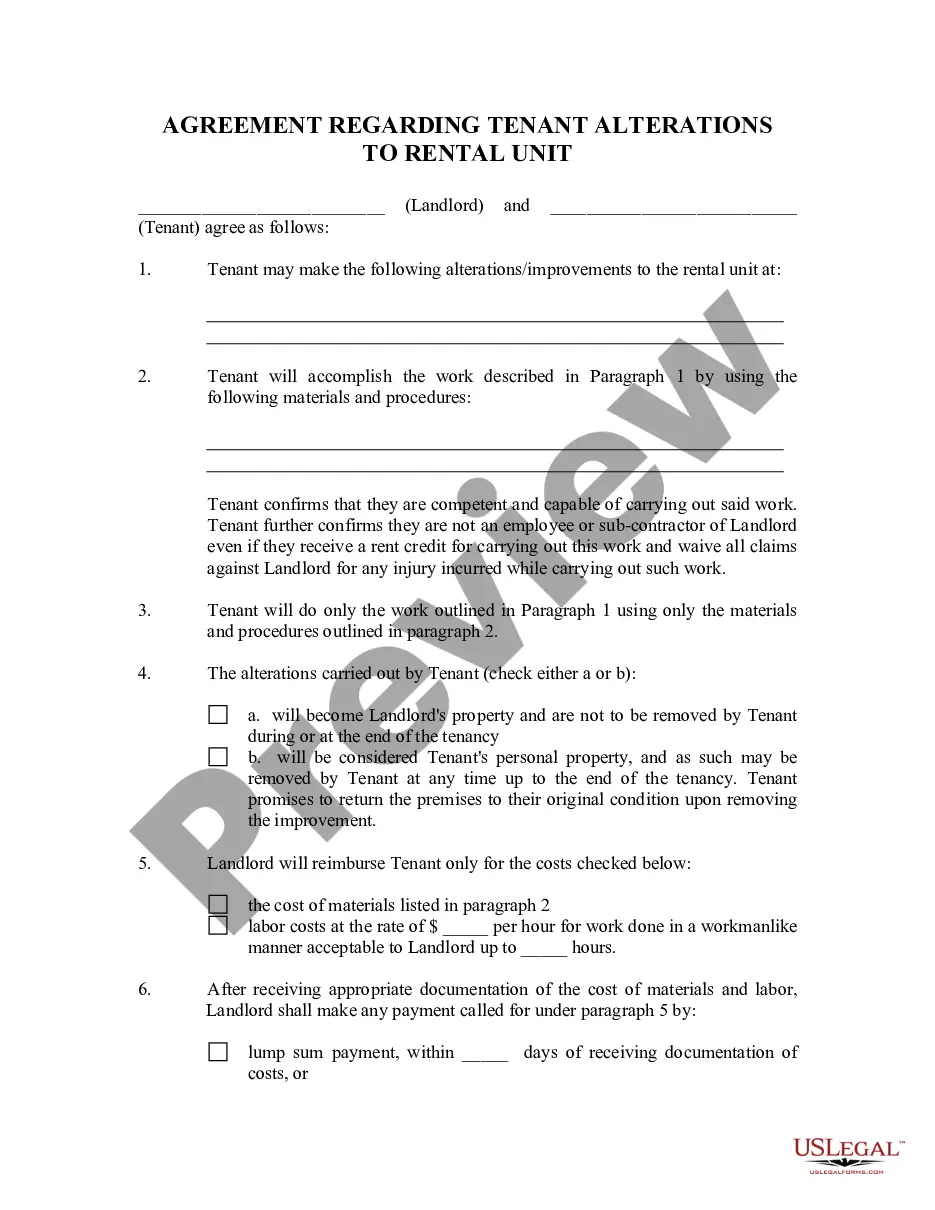
Complaint by Debtor For Posting of Notices of Indebtedness in and Around Plaintiff's House, Causing Intentional Infliction of Mental Anguish, and Violating the Federal Fair Debt Collection Practices Act
What is this form?
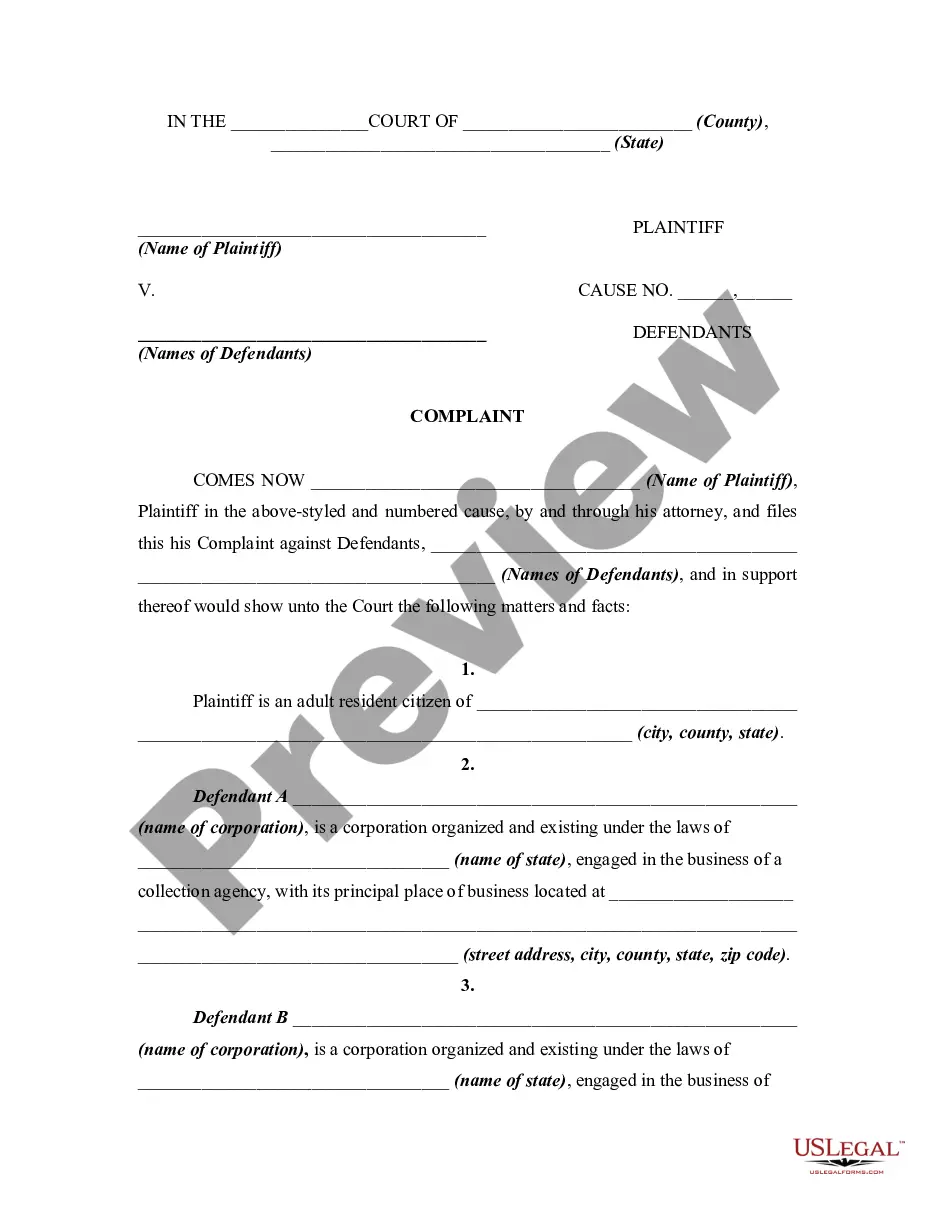
This form is a Complaint by Debtor for Posting of Notices of Indebtedness in and Around Plaintiff's House. It is specifically designed for individuals who have experienced harassment under the Fair Debt Collection Practices Act (FDCPA). This form allows plaintiffs to file a complaint against debt collectors who have unlawfully posted notices that cause mental anguish. Unlike other debt collection forms, this complaint focuses on actions that cause emotional harm and breach federal regulations regarding fair debt collection practices.
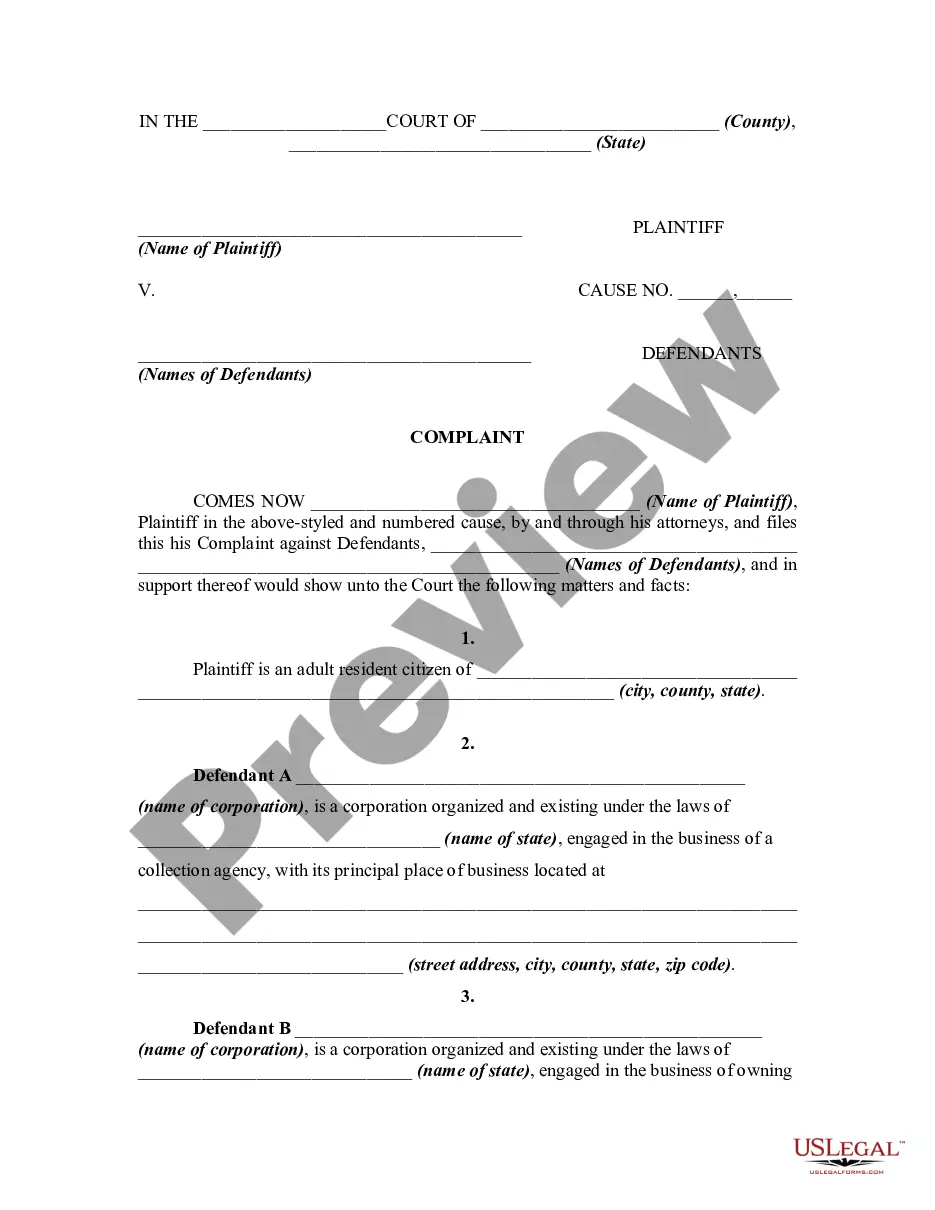
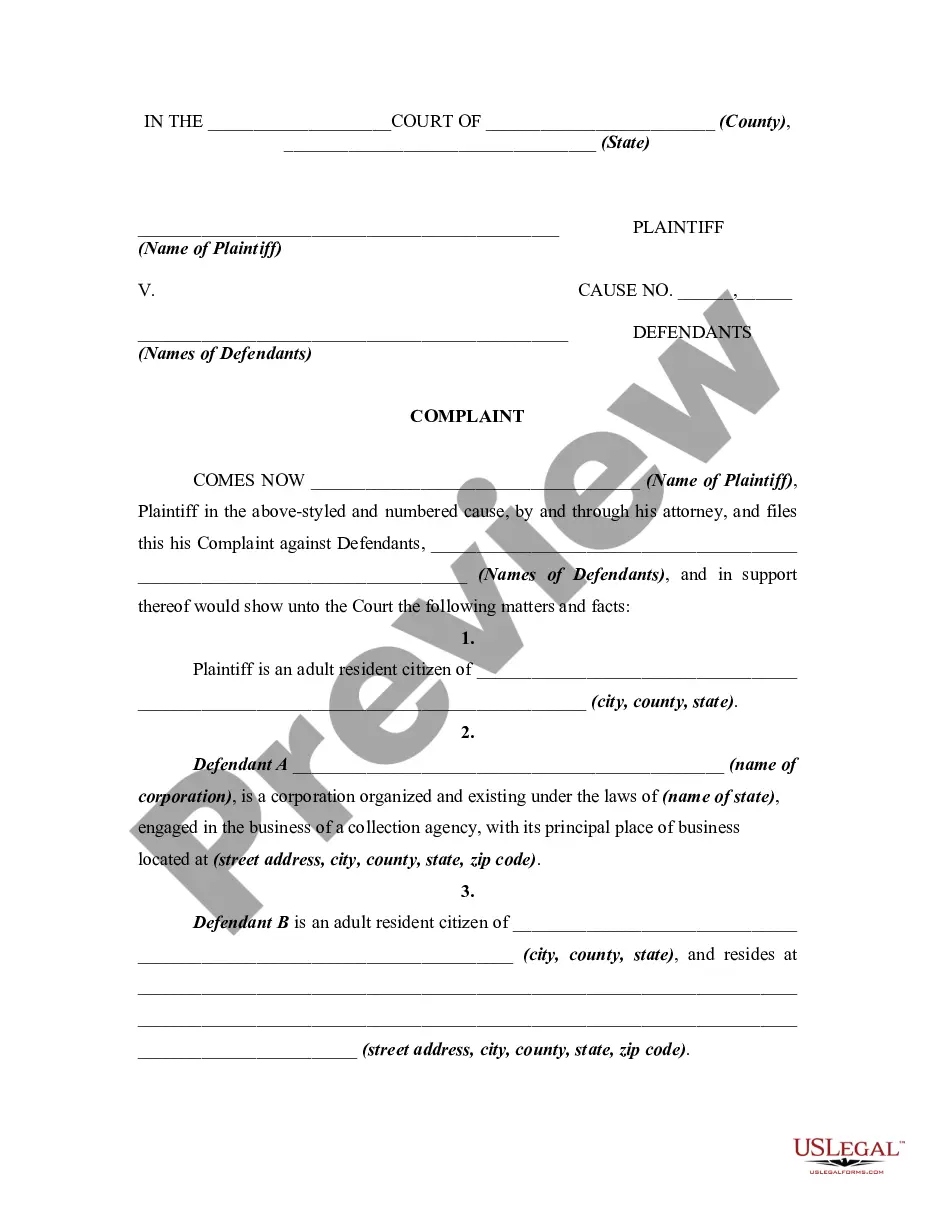
Key components of this form
- Name of the plaintiff and defendants
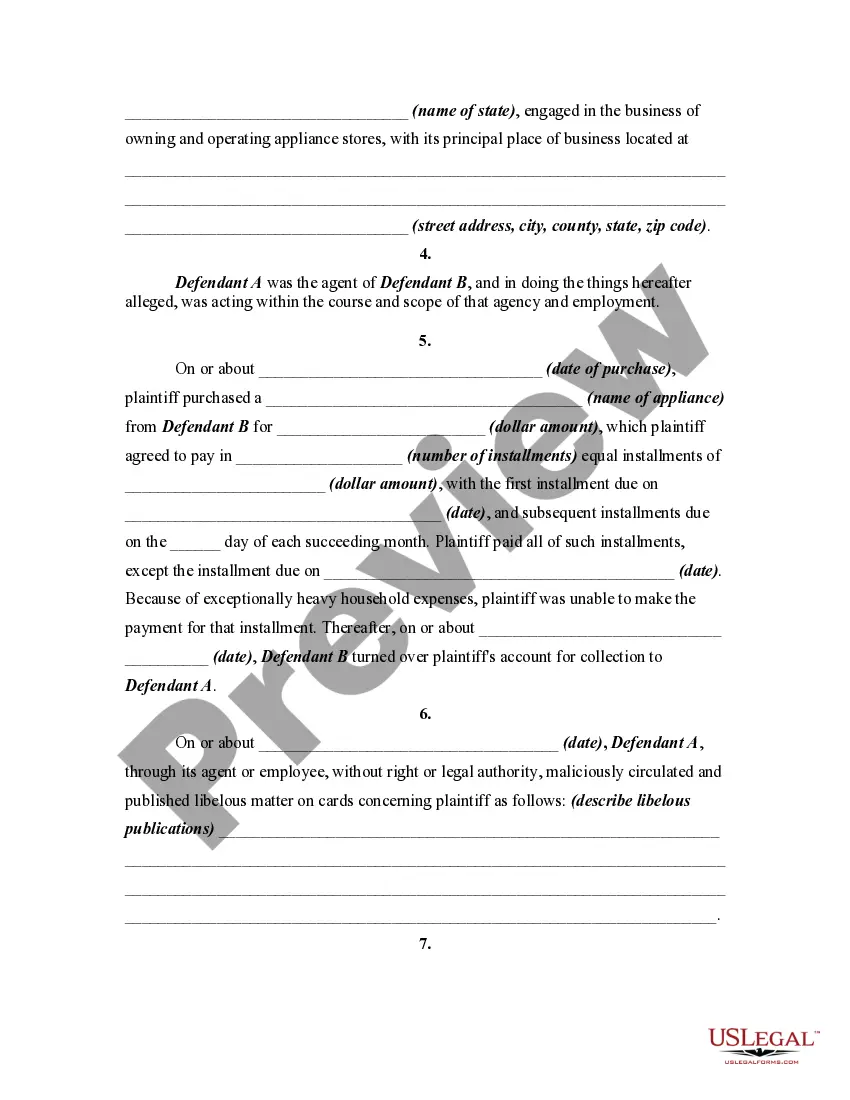
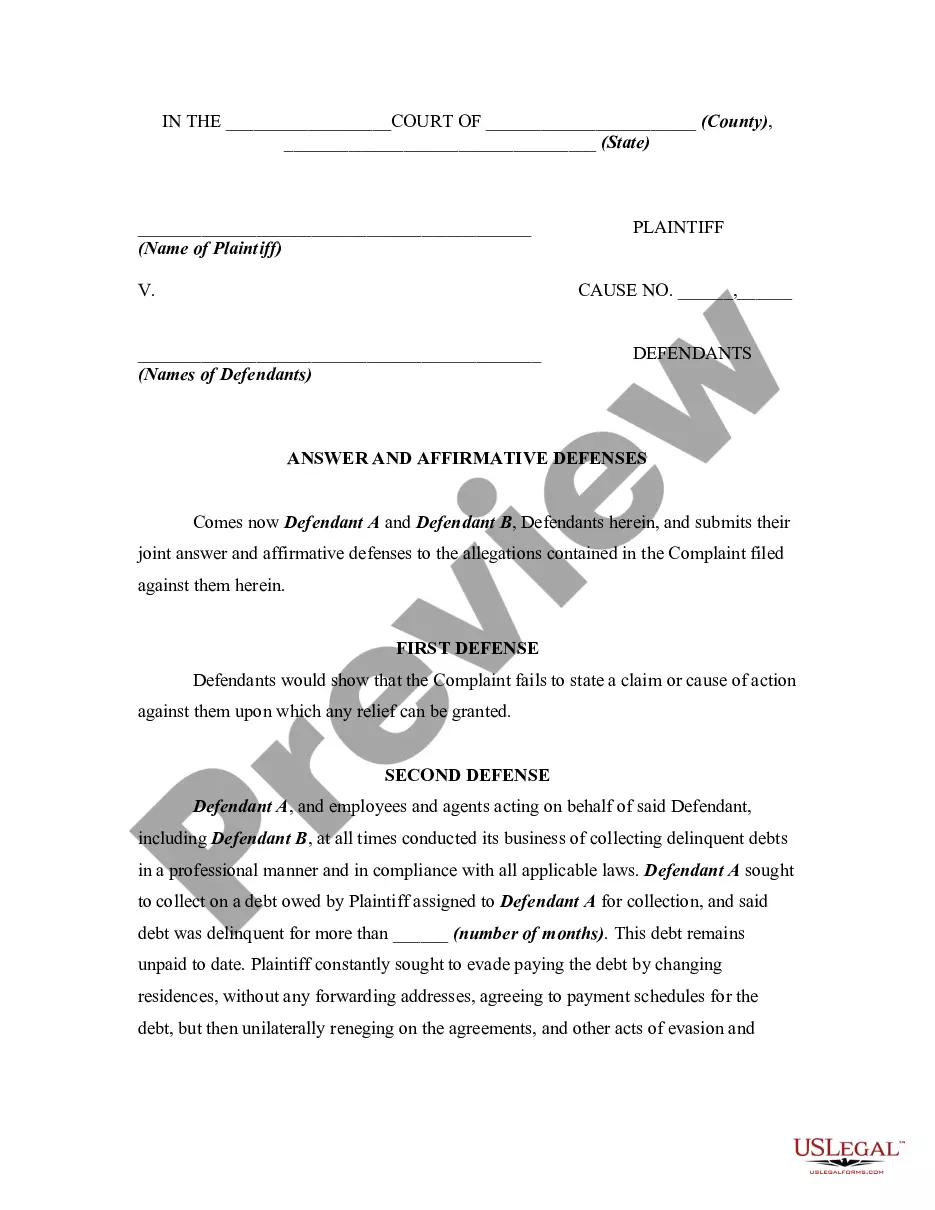
- Details of the debt and payment agreement
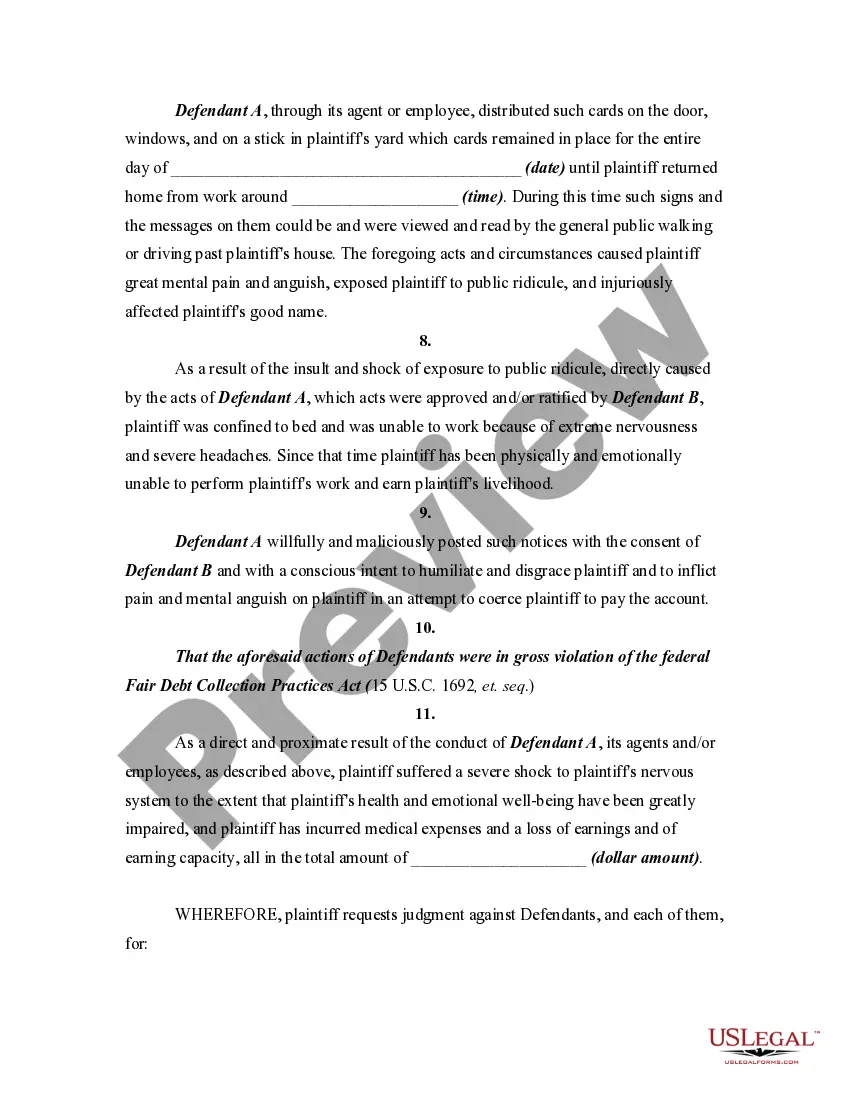
- Allegations regarding the posting of notices
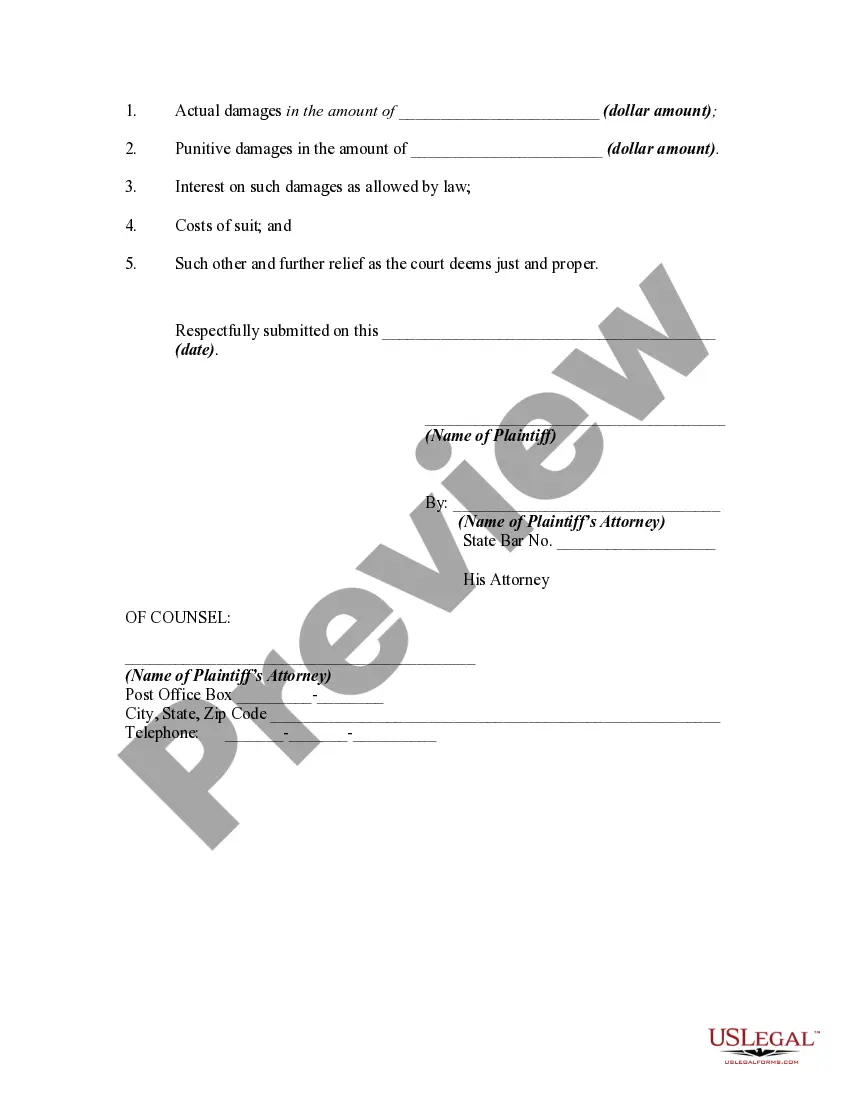
- Claims for actual and punitive damages
- Request for specific relief to the court
Common use cases
This form should be used when a debtor has suffered emotional distress due to the unlawful practices of a debt collector, specifically through the public posting of notices regarding their indebtedness. If you are facing harassment in the form of public disclosures or notices that damage your reputation or emotional well-being, this form allows you to formally lodge a complaint in court.
Who needs this form
- Individuals who have fallen behind on debt payments and have been reported to collection agencies.
- Debtors who believe they have been subjected to harassment by debt collectors.
- Anyone who has experienced mental anguish due to improper debt collection practices.
- People seeking legal recourse for violations of the Fair Debt Collection Practices Act.
Steps to complete this form
- Identify the plaintiff and defendants by entering their names and relevant details.
- Provide specifics about the debt, including the type of product purchased and payment agreement terms.
- Detail the actions taken by the debt collector that caused emotional distress.
- State the damages sought, including actual and punitive damages.
- Ensure all necessary signatures are provided from both the plaintiff and the plaintiff's attorney.
Is notarization required?
In most cases, this form does not require notarization. However, some jurisdictions or signing circumstances might. US Legal Forms offers online notarization powered by Notarize, accessible 24/7 for a quick, remote process.
Get your form ready online
Our built-in tools help you complete, sign, share, and store your documents in one place.
Make edits, fill in missing information, and update formatting in US Legal Forms—just like you would in MS Word.
Download a copy, print it, send it by email, or mail it via USPS—whatever works best for your next step.
Sign and collect signatures with our SignNow integration. Send to multiple recipients, set reminders, and more. Go Premium to unlock E-Sign.
If this form requires notarization, complete it online through a secure video call—no need to meet a notary in person or wait for an appointment.
We protect your documents and personal data by following strict security and privacy standards.

Make edits, fill in missing information, and update formatting in US Legal Forms—just like you would in MS Word.

Download a copy, print it, send it by email, or mail it via USPS—whatever works best for your next step.

Sign and collect signatures with our SignNow integration. Send to multiple recipients, set reminders, and more. Go Premium to unlock E-Sign.

If this form requires notarization, complete it online through a secure video call—no need to meet a notary in person or wait for an appointment.

We protect your documents and personal data by following strict security and privacy standards.
Avoid these common issues
- Failing to include accurate details about the debt and payment history.
- Not specifying the exact actions that caused mental anguish.
- Omitting signatures from the necessary parties.
- Neglecting to consult state-specific legal requirements before submission.
Why complete this form online
- Immediate access to a legally vetted complaint template designed by licensed attorneys.
- Easy customization to fit specific case details without legal jargon.
- Convenient downloading and printing options for filing.
- Your form remains secure and accessible for future reference.
Legal use & context
- This form serves as a formal complaint in civil court under federal law, specifically the FDCPA.
- Utilizing this form correctly can provide significant legal grounding to pursue claims for mental anguish.
- Ensure compliance with local laws as variations may affect your ability to file effectively.
Summary of main points
- The form is crucial for individuals facing illegal debt collection practices.
- Complete the form accurately to avoid submission errors.
- Consult local laws to ensure all requirements are met for your jurisdiction.
- This complaint can help recover damages for emotional distress due to debt collection harassment.
Looking for another form?
Form popularity
FAQ
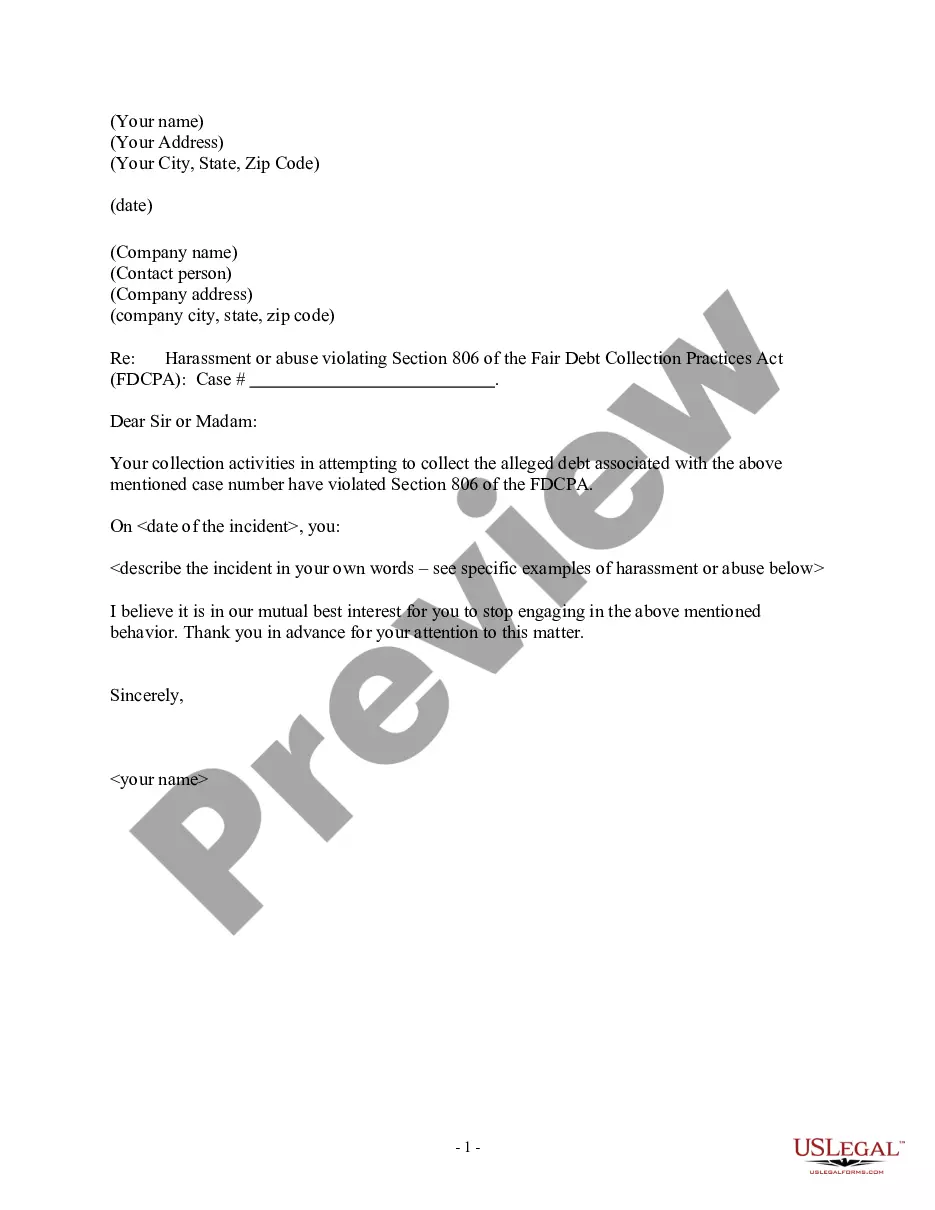
You're protected from harassing or abusive practices The Fair Debt Collection Practices Act prohibits debt collectors from using any harassing or abusive practices in an attempt to collect the debt.Along with other restrictions, debt collectors cannot: Use profane language. Threaten or use violence.
The Fair Debt Collection Practices Act (FDCPA) protects debtors from harassment by debt collectors. If a collector has violated the FDCPA, you can sue the collector in court. The FDCPA provides a range of damages for successful FDCPA lawsuits, including monetary damages, attorneys' fees, and more.
The Fair Debt Collection Practices Act (FDCPA) says debt collectors can't harass, oppress, or abuse you or anyone else they contact. Some examples of harassment are: Repetitious phone calls that are intended to annoy, abuse, or harass you or any person answering the phone.
If a debt collector violates the FDCPA, you may sue that collector in state or federal court. You can even sue in small claims court. You must do this within one year from the date on which the violation occurred.The court might also order the debt collector to stop engaging in certain collection activities.
Many consumers pay collectors money they do not owe and fall deeper into debt, while others suffer invasions of their privacy, job loss, and domestic instability. The FTC enforces the Fair Debt Collection Practices Act (FDCPA), which prohibits deceptive, unfair, and abusive debt collection practices.
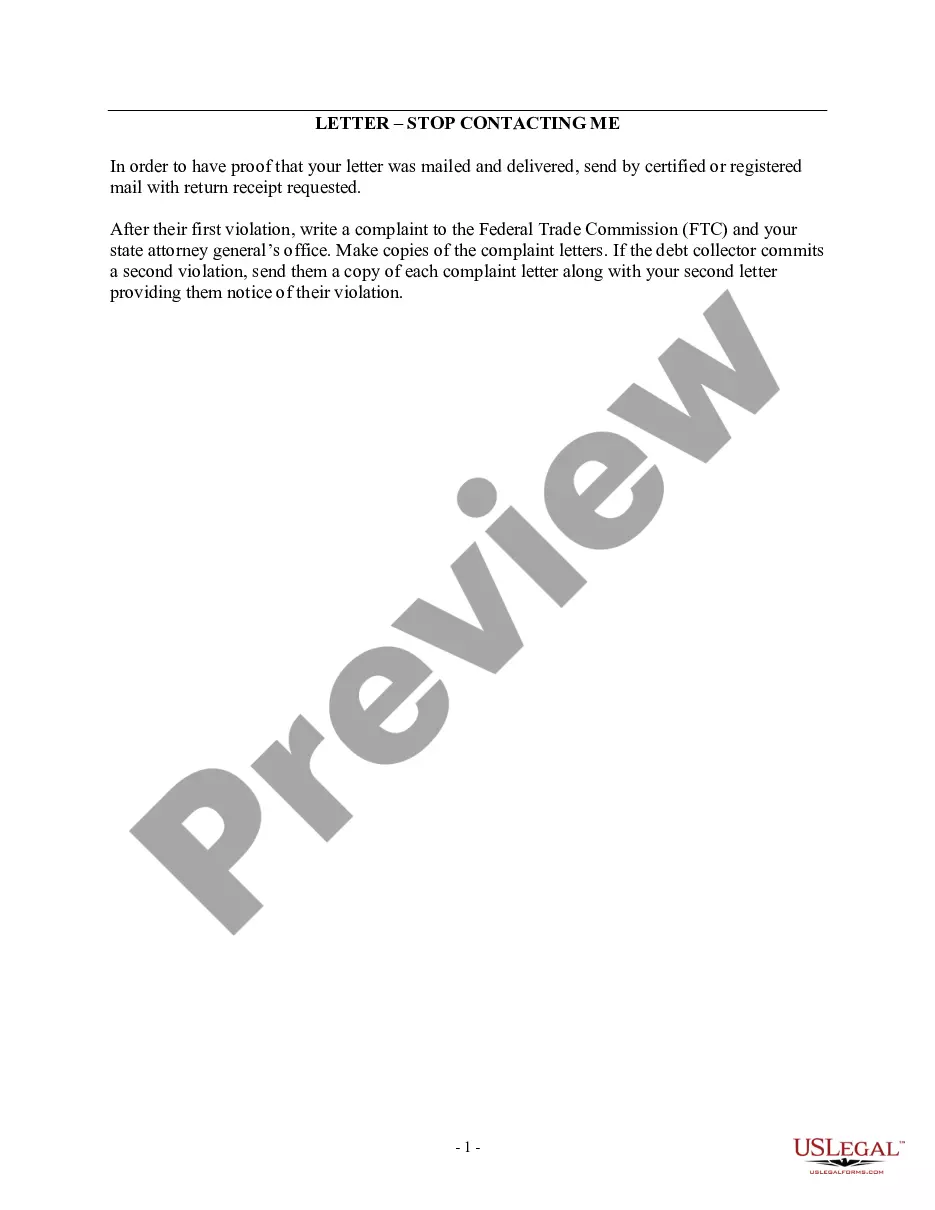
Pick up the phone. Send a letter to the debt collector. Check your credit report for errors. If the problem persists, know your rights and options. Never pay someone else's debt.
You can file an online complaint with the CFPB, which will in turn contact the creditor and attempt to find a resolution. California consumers can also contact the California attorney general's office. The state attorney general is charged with protecting consumers from unfair or deceptive trade practices.
Your dispute should be made in writing to ensure that the debt collector has to send you verification of the debt. If you're having trouble with debt collection, you can submit a complaint with the CFPB online or by calling (855) 411-CFPB (2372).