Collection Agency's Return of Claim as Uncollectible
Understanding this form
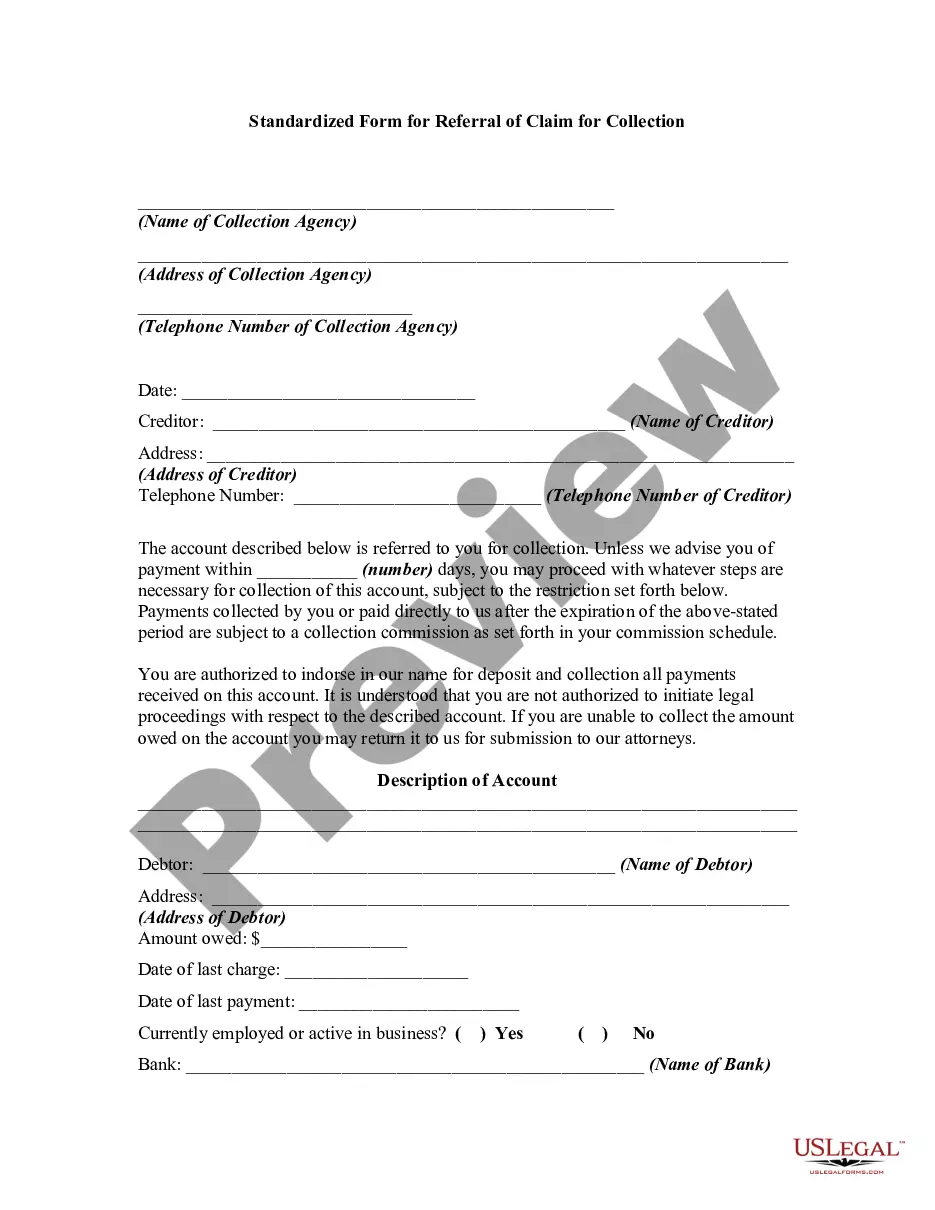
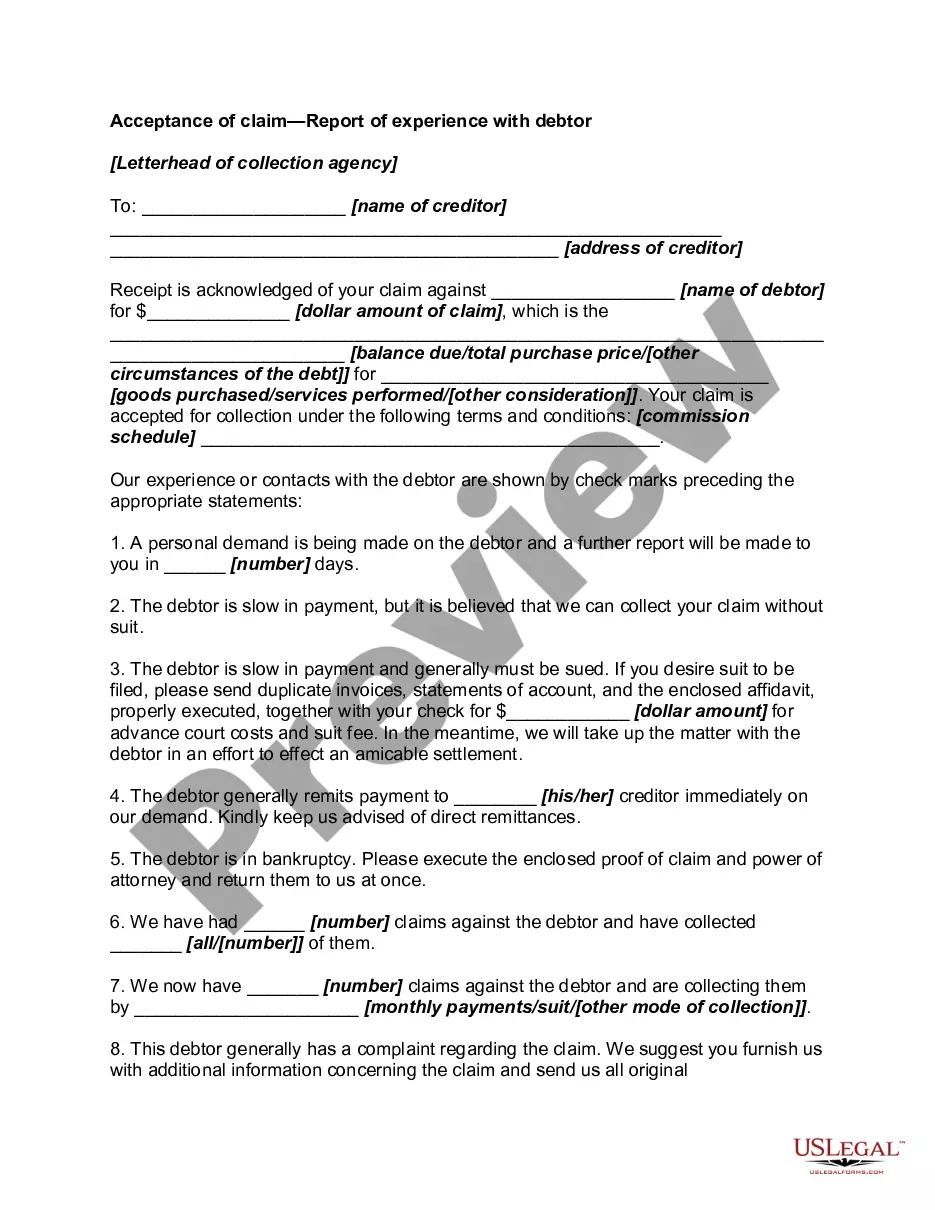
The Collection Agency's Return of Claim as Uncollectible is a legal document used by collection agencies to formally notify a creditor that they have been unable to collect a debt. This form serves as a return of the claim to the creditor, indicating that further collection efforts will not be pursued unless authorized. Unlike other collection forms, this specific document emphasizes the uncollectibility of a claim without requiring complex legal language.
Form components explained
- Name and address of the collection agency
- Contact information of the agency including phone number
- Date of the notice
- Name and address of the creditor
- Name of the debtor whose account is being returned
- Signature of the agency representative along with their title
Situations where this form applies
This form should be used when a collection agency has made repeated attempts to collect a debt but has been unsuccessful. It is necessary when the agency has not received authorization from the creditor to escalate the matter to litigation. By issuing this form, the collection agency officially communicates their inability to recover the debt, allowing the creditor to decide on further action.
Who can use this document
This form is intended for:
- Collection agencies operating on behalf of creditors
- Creditors who wish to formally document uncollectible accounts
- Businesses that are managing overdue accounts and wish to maintain legal records
How to complete this form
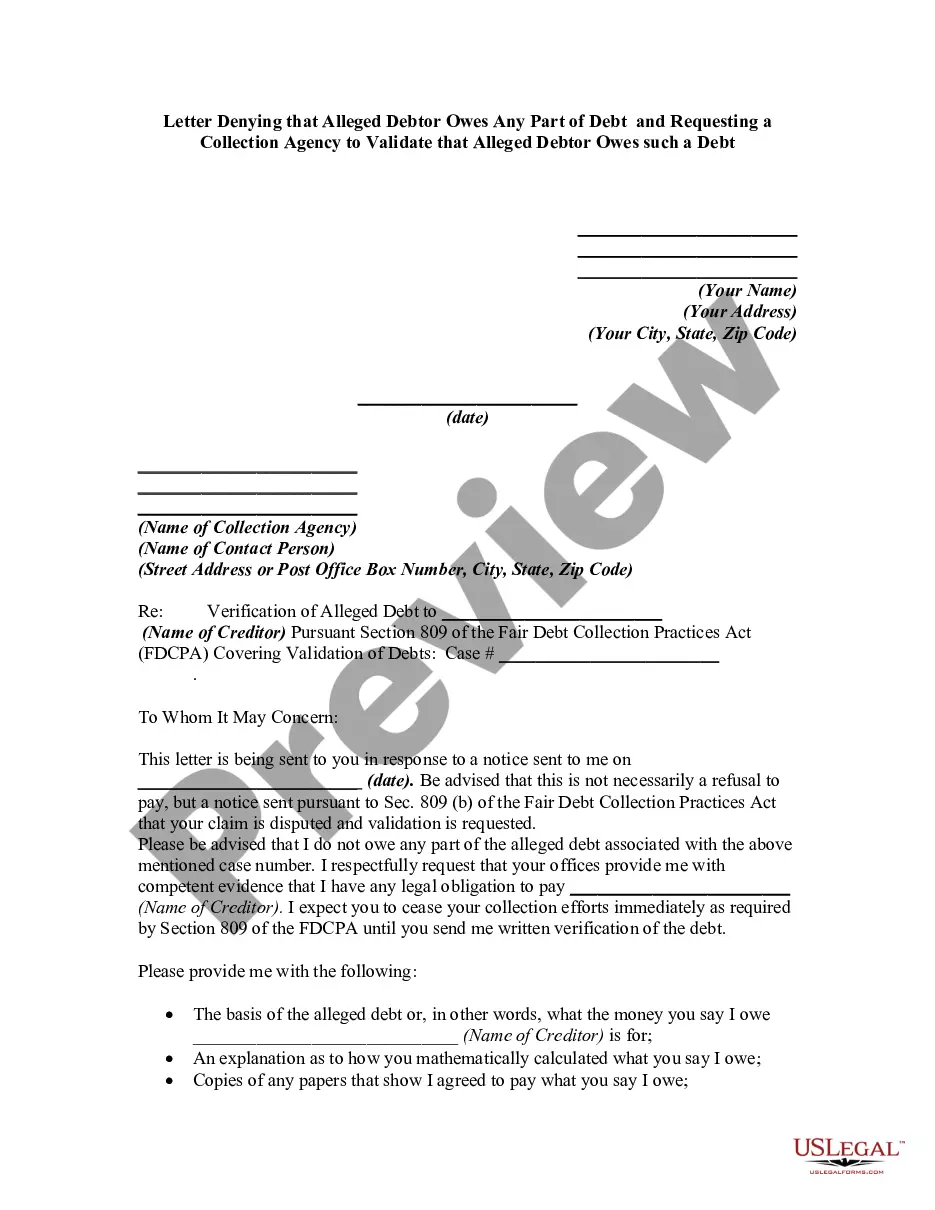
- Fill in the name and address of your agency at the top of the form.
- Add your agency's phone number and the date you are completing the form.
- Enter the name and address of the creditor you are notifying.
- Specify the name of the debtor whose account is being returned as uncollectible.
- Sign the document and include your title within the agency to validate the return.
Notarization requirements for this form
This form usually doesn’t need to be notarized. However, local laws or specific transactions may require it. Our online notarization service, powered by Notarize, lets you complete it remotely through a secure video session, available 24/7.
Get your form ready online
Our built-in tools help you complete, sign, share, and store your documents in one place.
Make edits, fill in missing information, and update formatting in US Legal Forms—just like you would in MS Word.
Download a copy, print it, send it by email, or mail it via USPS—whatever works best for your next step.
Sign and collect signatures with our SignNow integration. Send to multiple recipients, set reminders, and more. Go Premium to unlock E-Sign.
If this form requires notarization, complete it online through a secure video call—no need to meet a notary in person or wait for an appointment.
We protect your documents and personal data by following strict security and privacy standards.

Make edits, fill in missing information, and update formatting in US Legal Forms—just like you would in MS Word.

Download a copy, print it, send it by email, or mail it via USPS—whatever works best for your next step.

Sign and collect signatures with our SignNow integration. Send to multiple recipients, set reminders, and more. Go Premium to unlock E-Sign.

If this form requires notarization, complete it online through a secure video call—no need to meet a notary in person or wait for an appointment.

We protect your documents and personal data by following strict security and privacy standards.
Common mistakes to avoid
- Failing to include accurate contact information for both the agency and creditor.
- Not specifying the debtor's name, which may cause confusion.
- Omitting a signature or title, making the document incomplete.
Why complete this form online
- Convenient access to download and customize the form.
- Edit and fill the form at your own pace.
- Reliable and legally compliant templates drafted by licensed attorneys.
Legal use & context
- This form serves as formal documentation for creditors about the status of the debt.
- Utilizing this form can protect both the creditor and the collection agency from potential disputes later.
Key takeaways
- The form is essential for communicating uncollectible debt status between collection agencies and creditors.
- Ensure all details are filled correctly to avoid issues.
- This document emphasizes the need for formalized communication regarding debt collection efforts.
Looking for another form?
Form popularity
FAQ
To record the bad debt entry in your books, debit your Bad Debts Expense account and credit your Accounts Receivable account. To record the bad debt recovery transaction, debit your Accounts Receivable account and credit your Bad Debts Expense account. Next, record the bad debt recovery transaction as income.
Write Off the Bad Debt Once you've determined that an unpaid invoice is worthless, you can write it off when it comes time to file taxes. If an unpaid invoice from a previous year becomes worthless, you'll have to file an amended return for a refund of the tax you paid.
You might get sued. The debt collector may file a lawsuit against you if you ignore the calls and letters. If you then ignore the lawsuit, this could lead to a judgment and the collection agency may be able to garnish your wages or go after the funds in your bank account.
A business deducts its bad debts, in full or in part, from gross income when figuring its taxable income.Nonbusiness Bad Debts - All other bad debts are nonbusiness. Nonbusiness bad debts must be totally worthless to be deductible. You can't deduct a partially worthless nonbusiness bad debt.
Generally speaking, you cannot deduct expenses from a previous year on this year's tax return. You can only deduct expenses in the year that you paid for them.Deductions, income or anything else from a previous year cannot be claimed with the current year's tax information.
IRS rules say you can only deduct a bad debt in the year it becomes worthless. If you have a court judgment against the debtor and have tried to collect for several years with no success, then you can write the debt off. If the IRS questions the deduction, you will have to show you took reasonable steps to collect.
In general, judgements levied on you through a small claims court case are not deductible expenses on your tax return.The IRS allows you to deduct legal fees if you paid the fees in an attempt to produce or collect taxable income, keep your job, for divorce advice or to collect taxable alimony.
Because it generally generates a loss when it is written off, bad debt recovery usually produces income. In accounting, the bad debt recovery credits the allowance for bad debts or bad debt reserve categories and reduces the accounts receivable category in the books.
A debt collector may settle for around 50% of the bill, and Loftsgordon recommends starting negotiations low to allow the debt collector to counter. If you are offering a lump sum or any alternative repayment arrangements, make sure you can meet those new repayment parameters.