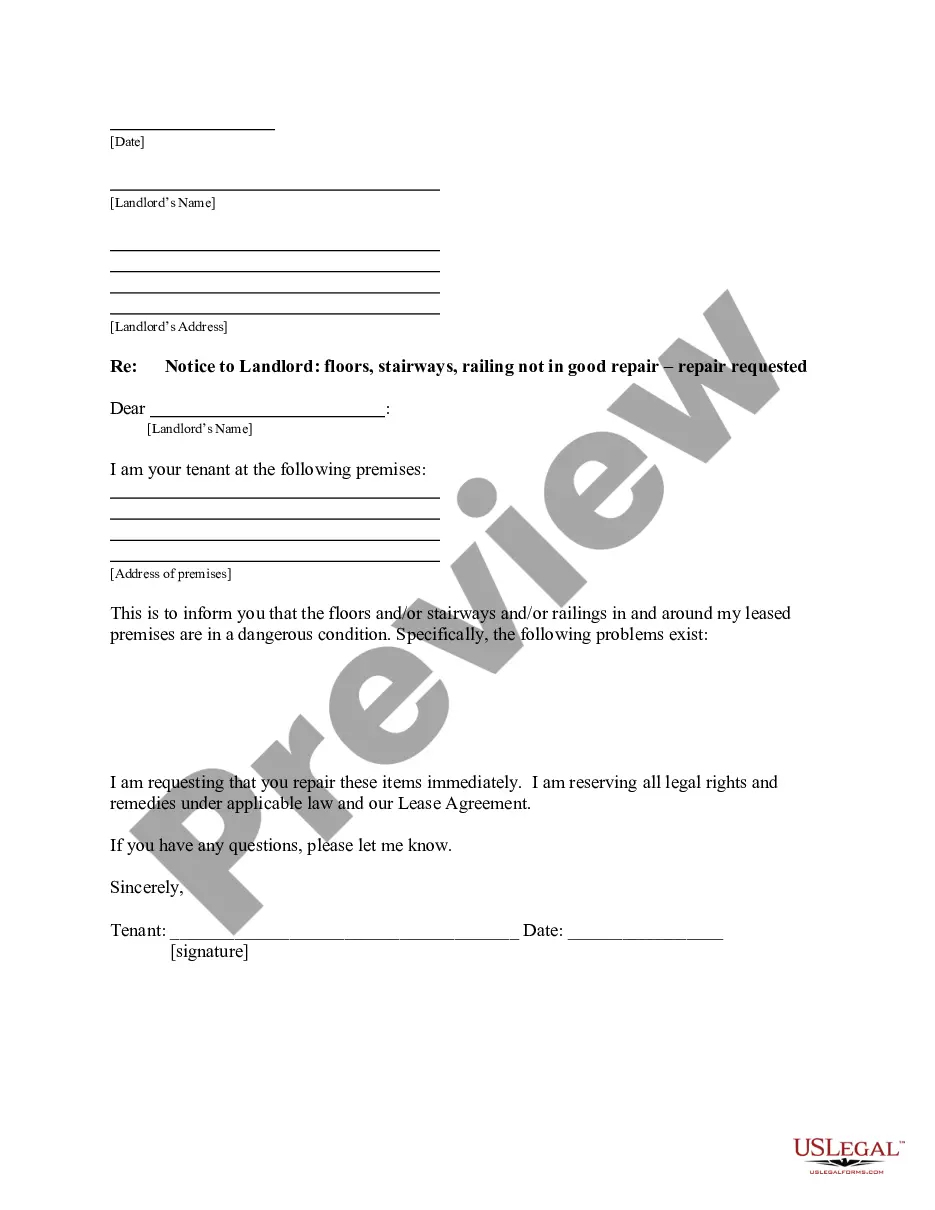
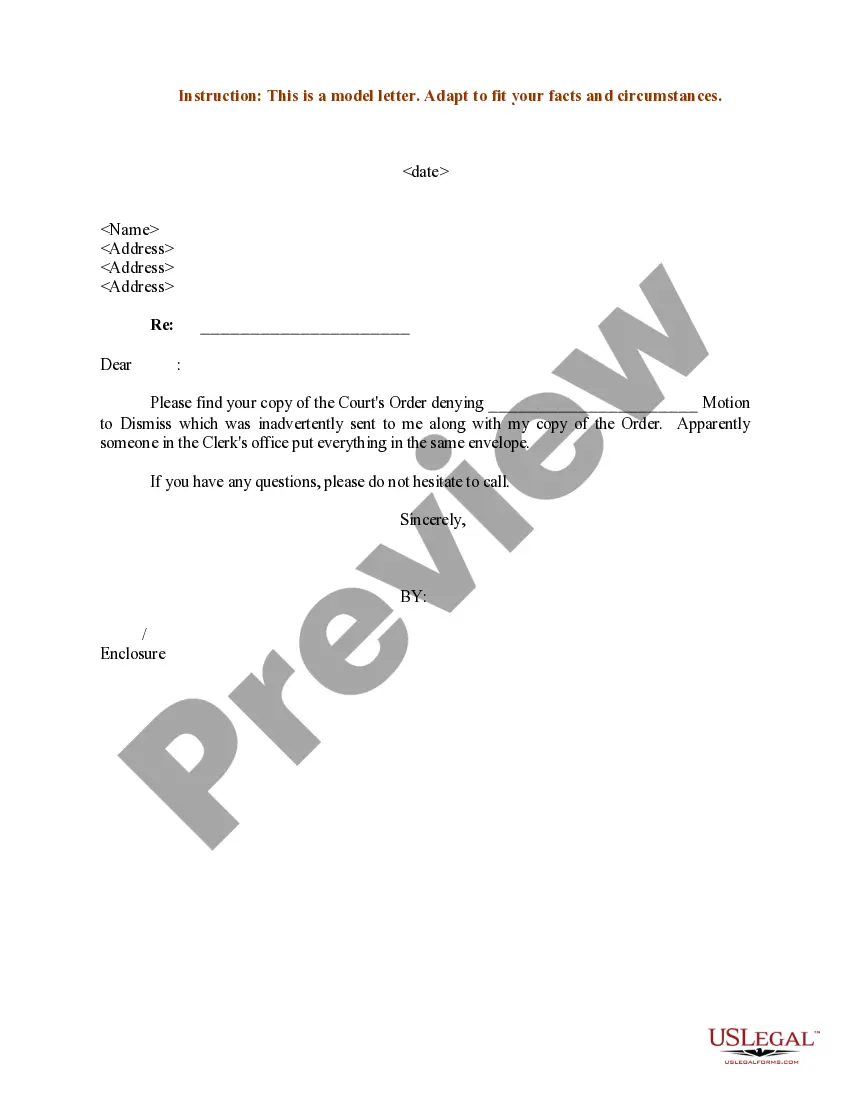
Sample Letter for Order Denying Motion to Dismiss
Understanding this form
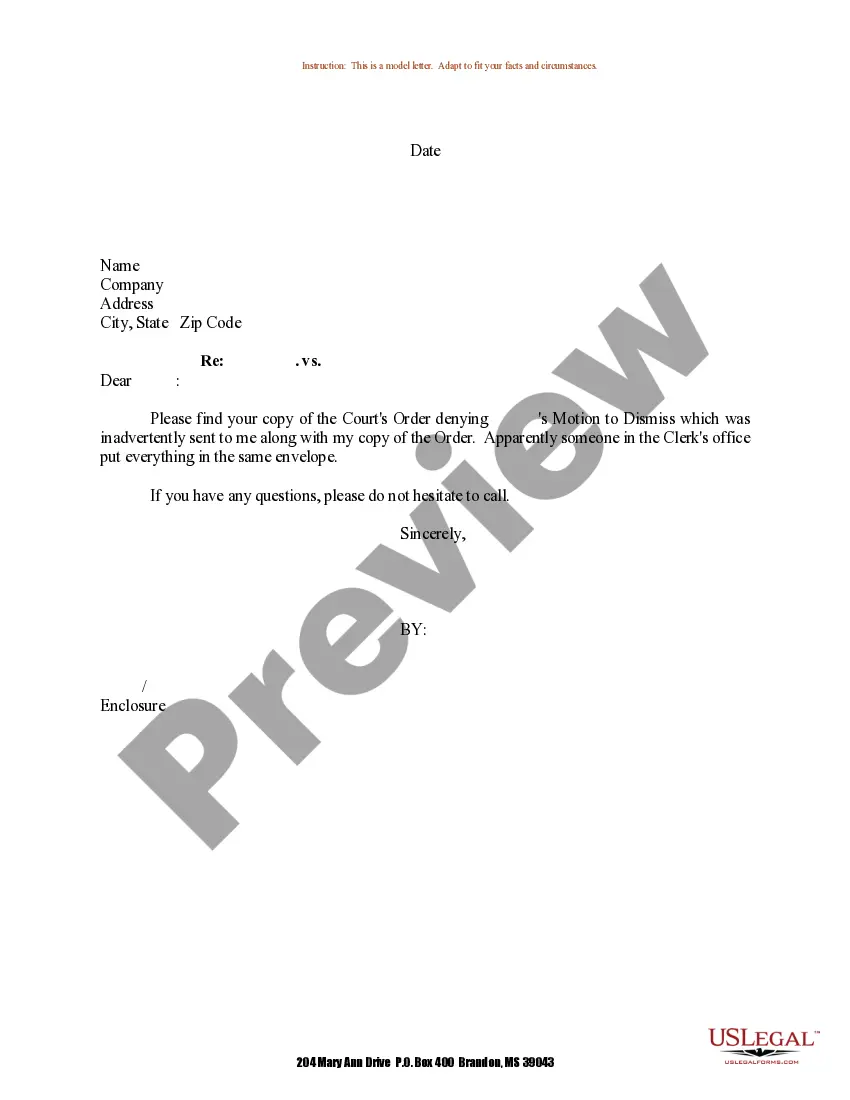
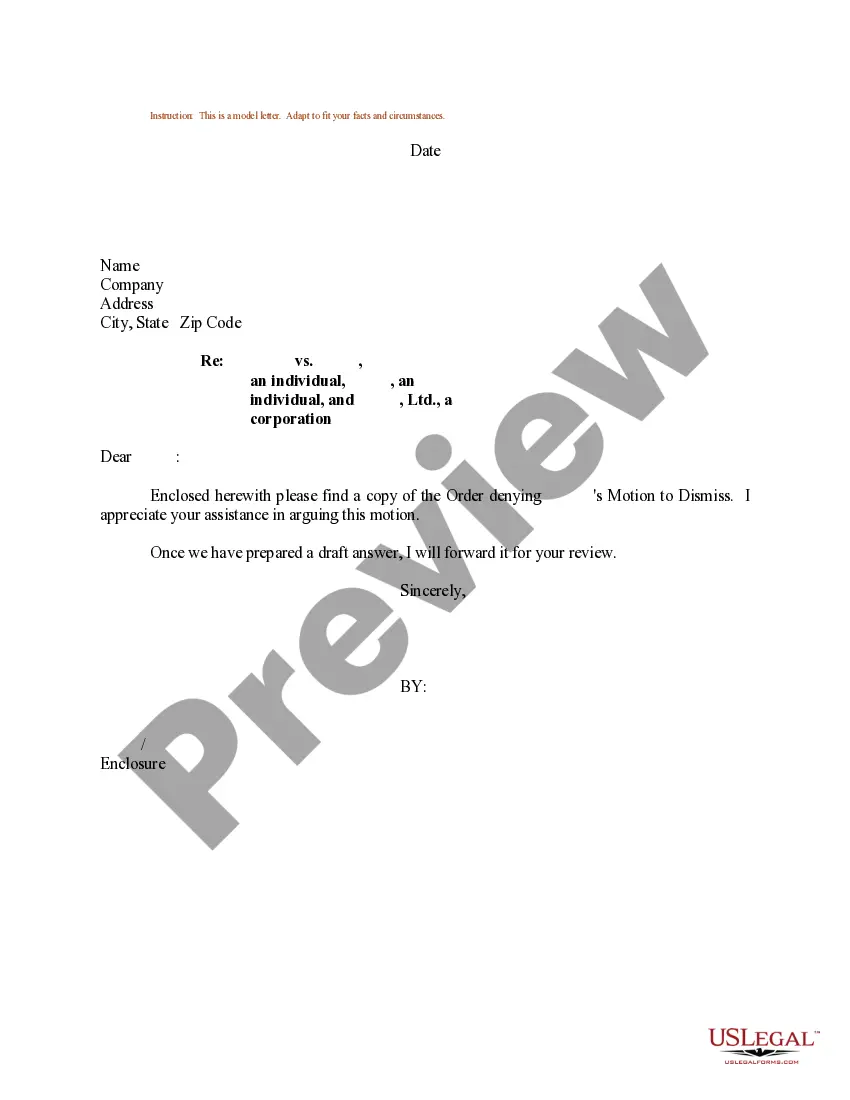
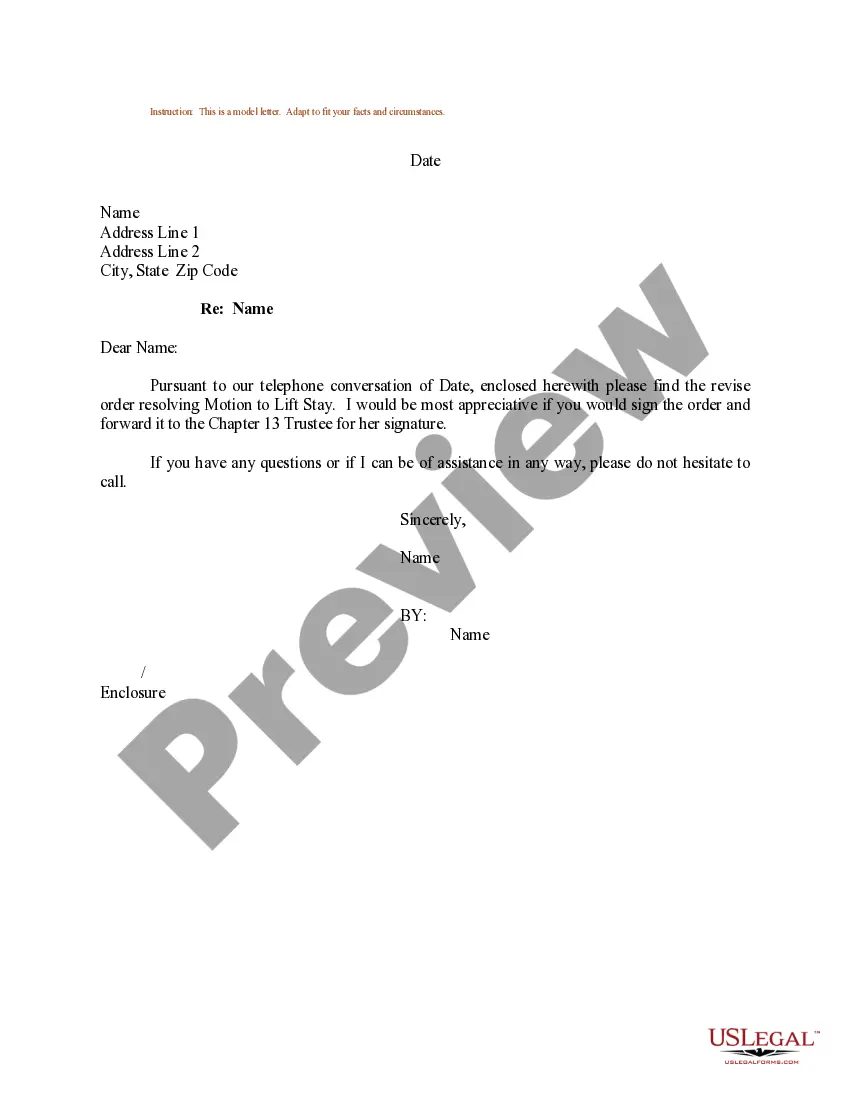
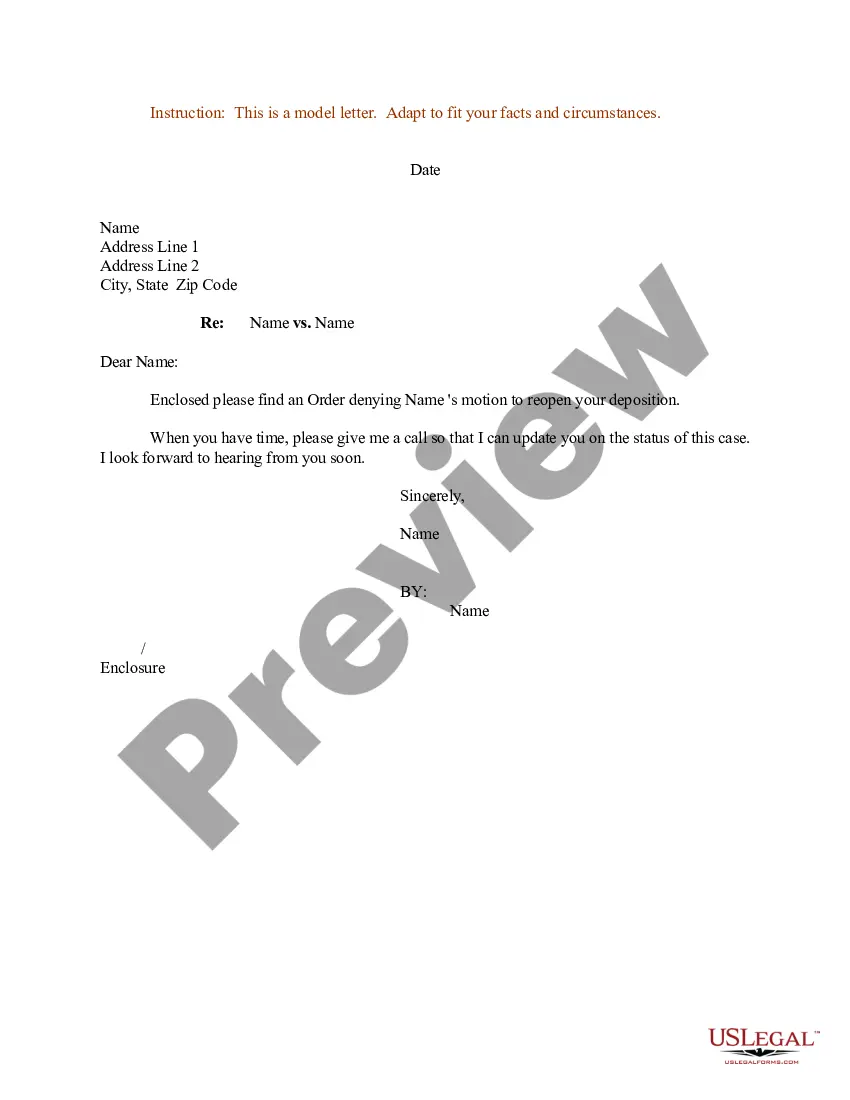
This form is a Sample Letter for Order Denying Motion to Dismiss. It serves as a template for responding to a motion that seeks to dismiss a case. This letter is crafted in Word format and is useful for anyone needing to communicate an official denial of such a motion. It is essential for parties involved in legal proceedings to understand how to properly contest motions attempting to terminate their case prematurely.
Main sections of this form
- Date of the letter
- Name and address of the sender
- Name and address of the recipient
- Reference line for the subject matter
- Description of the motion being denied
When to use this form
This form is used when a response is needed to a motion to dismiss that has been filed in court. It is particularly useful in civil litigation where one party argues that the case should not proceed for legal reasons. The Sample Letter helps ensure that the party defending against the motion properly conveys their stance to the court and to the opposing party.
Who can use this document
- Litigants who have received a motion to dismiss
- Attorneys representing clients in civil litigation
- Individuals seeking to contest the dismissal of their case
Steps to complete this form
- Identify and enter the date at the top of the letter.
- Fill in your name and address in the header section.
- Provide the name and address of the recipient.
- Write a clear subject line referencing the motion to dismiss.
- State your denial of the motion and outline the reasons.
Notarization guidance
In most cases, this form does not require notarization. However, some jurisdictions or signing circumstances might. US Legal Forms offers online notarization powered by Notarize, accessible 24/7 for a quick, remote process.
Get your form ready online
Our built-in tools help you complete, sign, share, and store your documents in one place.
Make edits, fill in missing information, and update formatting in US Legal Forms—just like you would in MS Word.
Download a copy, print it, send it by email, or mail it via USPS—whatever works best for your next step.
Sign and collect signatures with our SignNow integration. Send to multiple recipients, set reminders, and more. Go Premium to unlock E-Sign.
If this form requires notarization, complete it online through a secure video call—no need to meet a notary in person or wait for an appointment.
We protect your documents and personal data by following strict security and privacy standards.

Make edits, fill in missing information, and update formatting in US Legal Forms—just like you would in MS Word.

Download a copy, print it, send it by email, or mail it via USPS—whatever works best for your next step.

Sign and collect signatures with our SignNow integration. Send to multiple recipients, set reminders, and more. Go Premium to unlock E-Sign.

If this form requires notarization, complete it online through a secure video call—no need to meet a notary in person or wait for an appointment.

We protect your documents and personal data by following strict security and privacy standards.
Common mistakes to avoid
- Failing to address the letter to the correct party.
- Omitting essential details about the case or motion.
- Not adhering to court-specific formatting guidelines.
Benefits of completing this form online
- Convenience of downloading and editing the template at your ease.
- Reliable content drafted by licensed attorneys to enhance legal accuracy.
- Immediate accessibility allows for timely responses to legal motions.
Legal use & context
- This form serves as a formal response to motions in civil litigation.
- A properly crafted letter can significantly impact the judge's decision on the motion.
- It is advisable to consult legal counsel to ensure the content meets all relevant legal standards.
Summary of main points
- The Sample Letter for Order Denying Motion to Dismiss is crucial for contesting a motion to dismiss.
- Proper completion of the form is essential for effective communication in legal proceedings.
- Users should ensure compliance with local court rules and formatting standards.
Looking for another form?



Form popularity
FAQ
You simply need to request that the court deny the defendant's motion to dismiss. For example, you could write the following: For the foregoing reasons and all the others discussed in Plaintiff's Complaint, the present Motion to Dismiss should be denied.
The motion must include a separate "Notice of Motion" which includes a brief summary of the nature of the motion, the deadline for filing a response, and if there is a hearing, the date, time, and location of the hearing.
You simply need to request that the court deny the defendant's motion to dismiss. For example, you could write the following: For the foregoing reasons and all the others discussed in Plaintiff's Complaint, the present Motion to Dismiss should be denied.
To survive a motion to dismiss, a lawsuit must contain sufficient factual matter to state a claim to relief that is plausible on its face.
What does an order denying a motion to suppress mean in California? Generally, it means that the court will not block evidence in a criminal case. A Los Angeles DUI lawyer can step in if you are interested in blocking evidence. Find out more by calling us at (310) 862-0199.
In considering a motion to dismiss under Rule 12(b)(6), the court must accept all well-pled allegations in a complaint as true. Albright v. Oliver, 510 U.S. 266, 268 (1994). The court must construe all factual allegations in the light most favorable to the plaintiff.
Fill out the forms. You have to fill out at least 2 forms, maybe more, to file your opposition. File the forms. Turn in your completed forms by mail or efiling. Serve the other party. Get ready for the hearing. Prepare an order.
The first lines of your motion should state your name and role in the case, and what you are asking the judge to do. Traditionally, the first line begins "Comes now the defendant," followed by your name. Then you state that you're asking the court to dismiss the plaintiff's complaint.
You do not have to file a response. However, you would be wise to do so as a motion to dsmiss , if granted, could end your suit. Motions to dimiss for failure to state a claim are rarely granted.