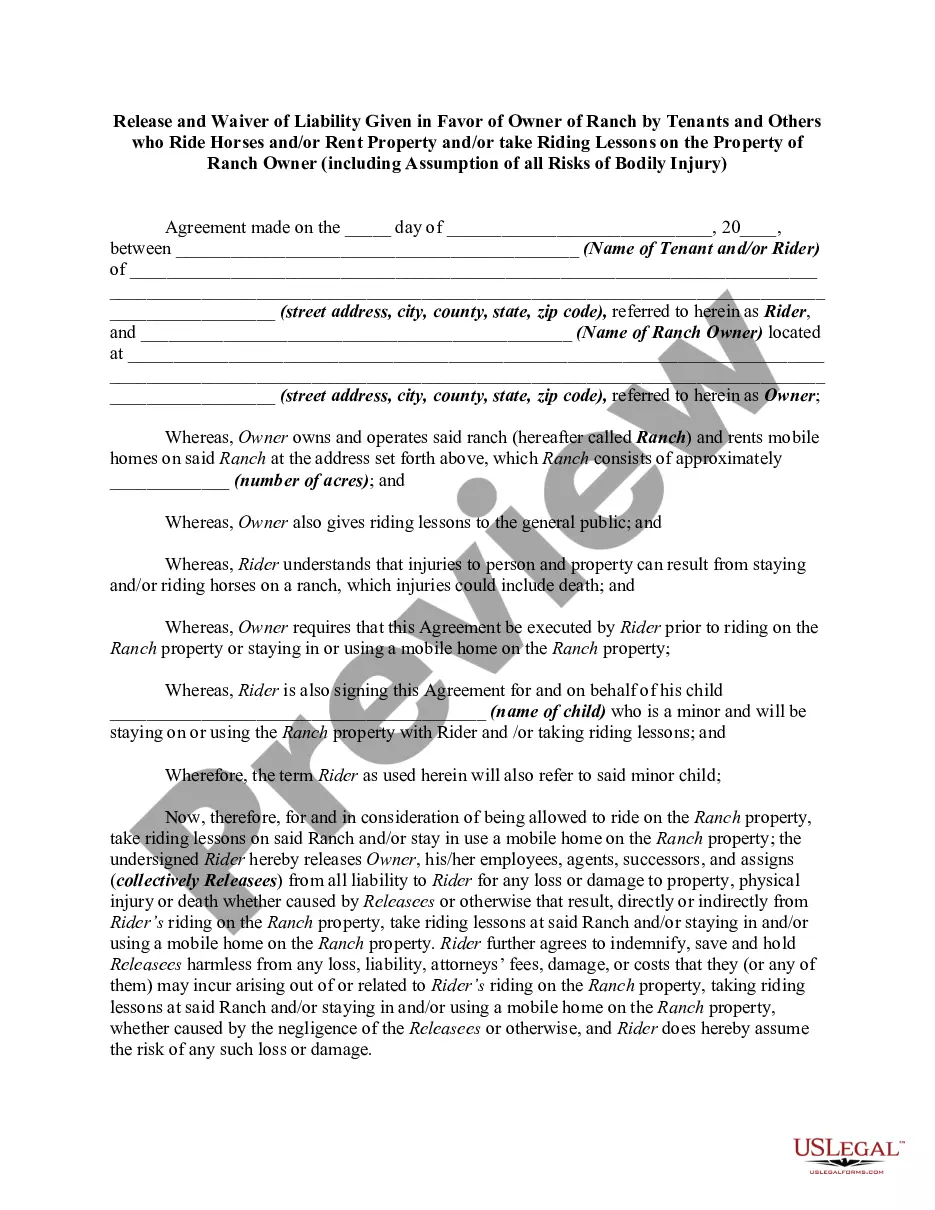
Release and Waiver of Liability Given in Favor of Owner of Ranch by Tenants and Others who Ride Horses and/or Rent Property and/or take Riding Lessons on the Property of Ranch Owner - including Assumption of all Risks of Personal Bodily Injury - Horseback
What this document covers
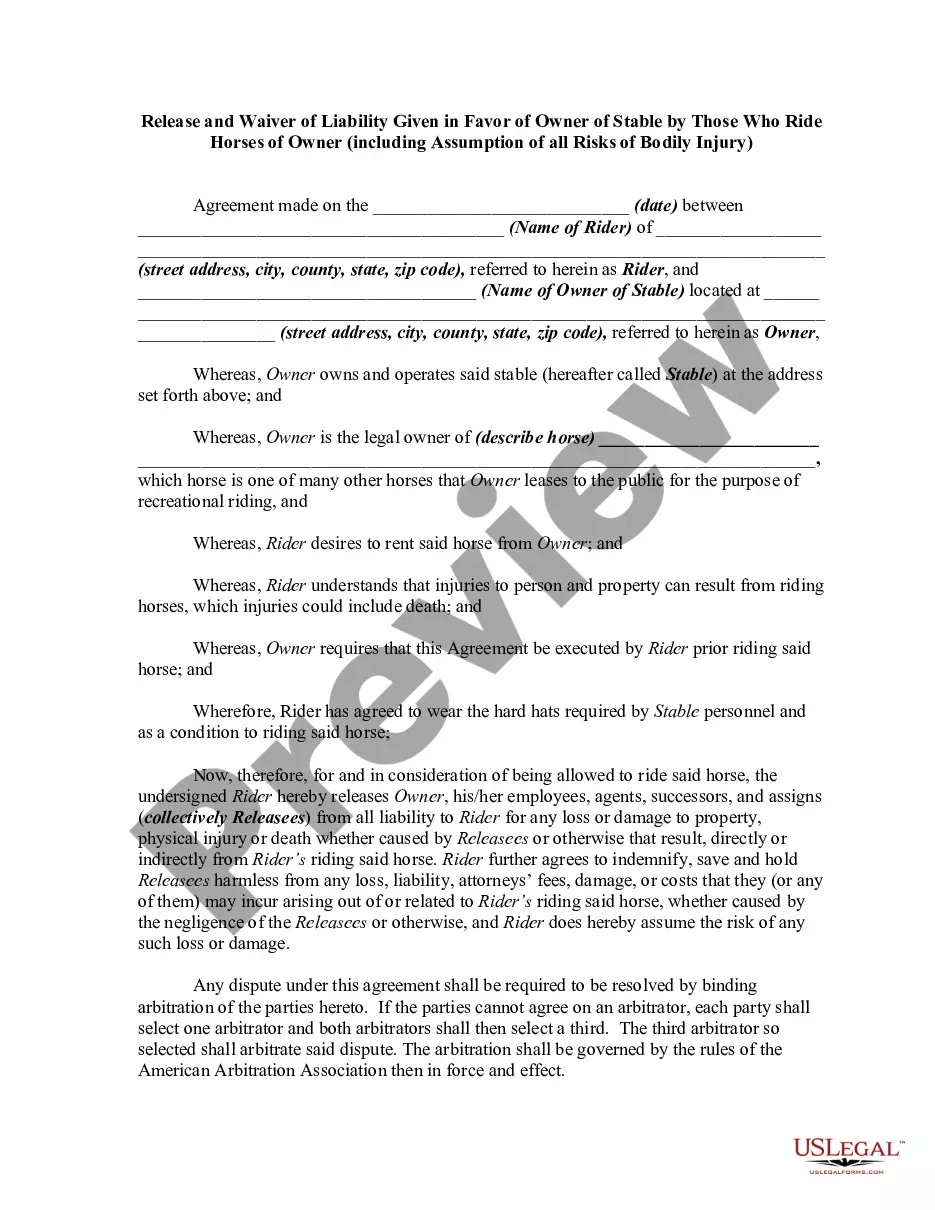
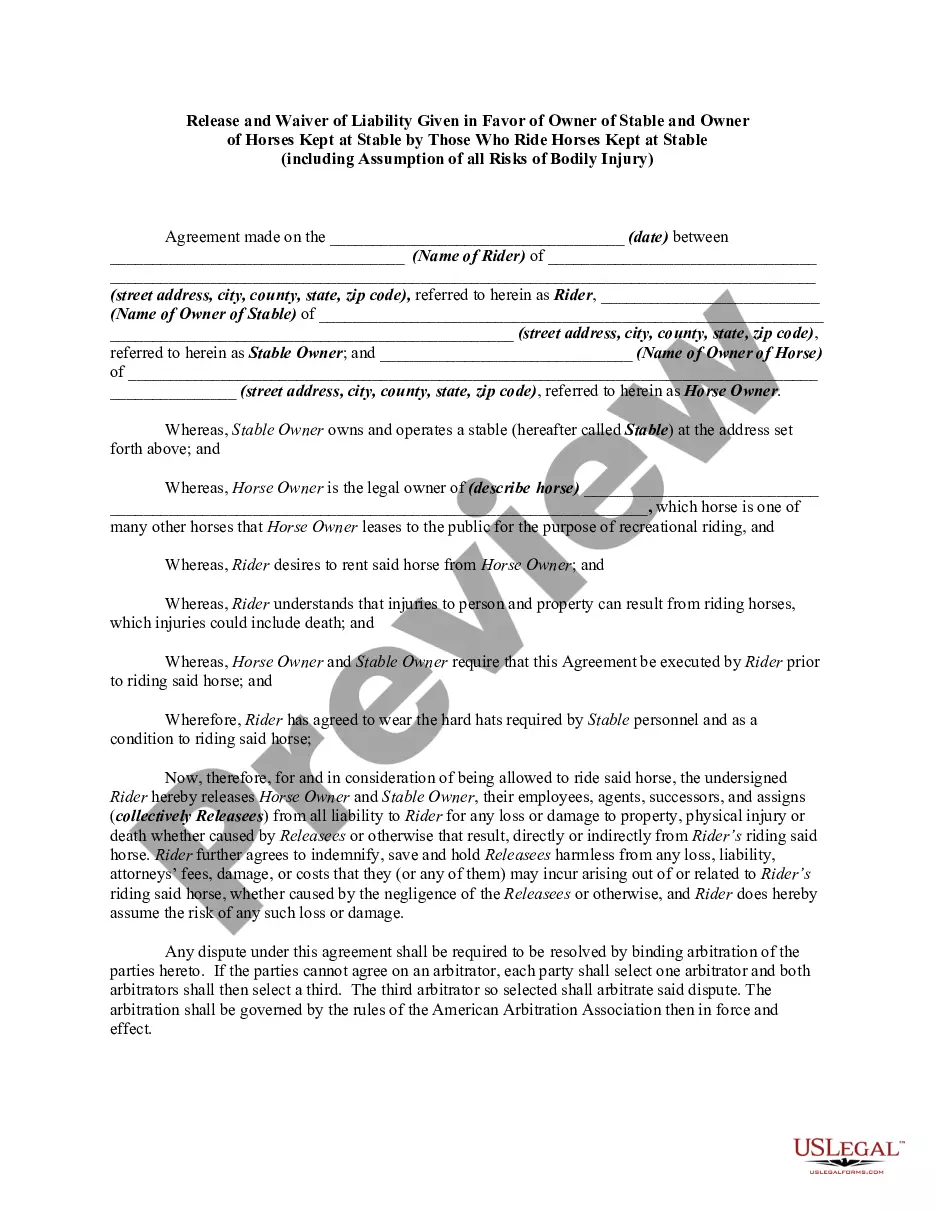
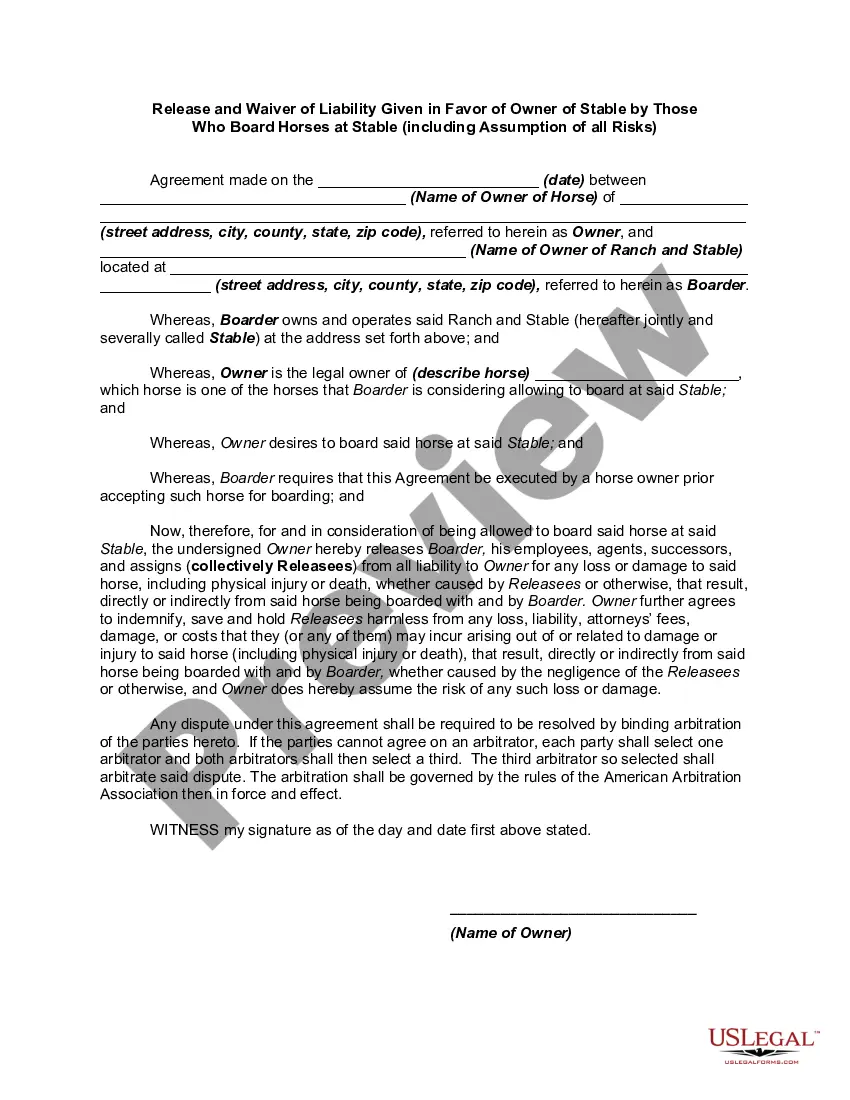
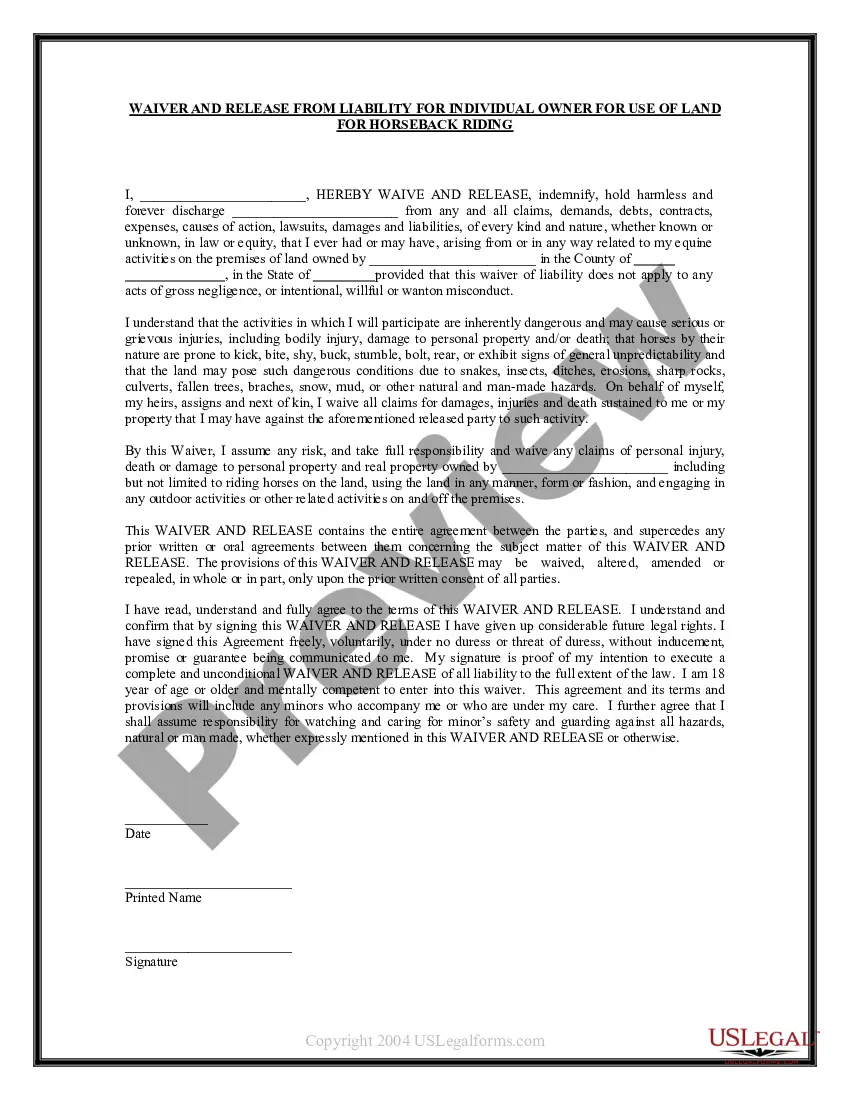
The Release and Waiver of Liability is a legal document that protects ranch owners from claims made by individuals who ride horses or rent property on their ranch. This form specifically addresses the assumption of risks associated with horseback riding and related activities. Unlike other liability waivers, this form is tailored for ranch owners and their tenants or riders, ensuring that all parties understand and accept the inherent risks involved in these activities.
Key components of this form
- Names and contact information of the rider and the ranch owner
- Description of the ranch and the activities involved
- Assumption of risk statement for horseback riding and property use
- Indemnification clause protecting the ranch owner from liability
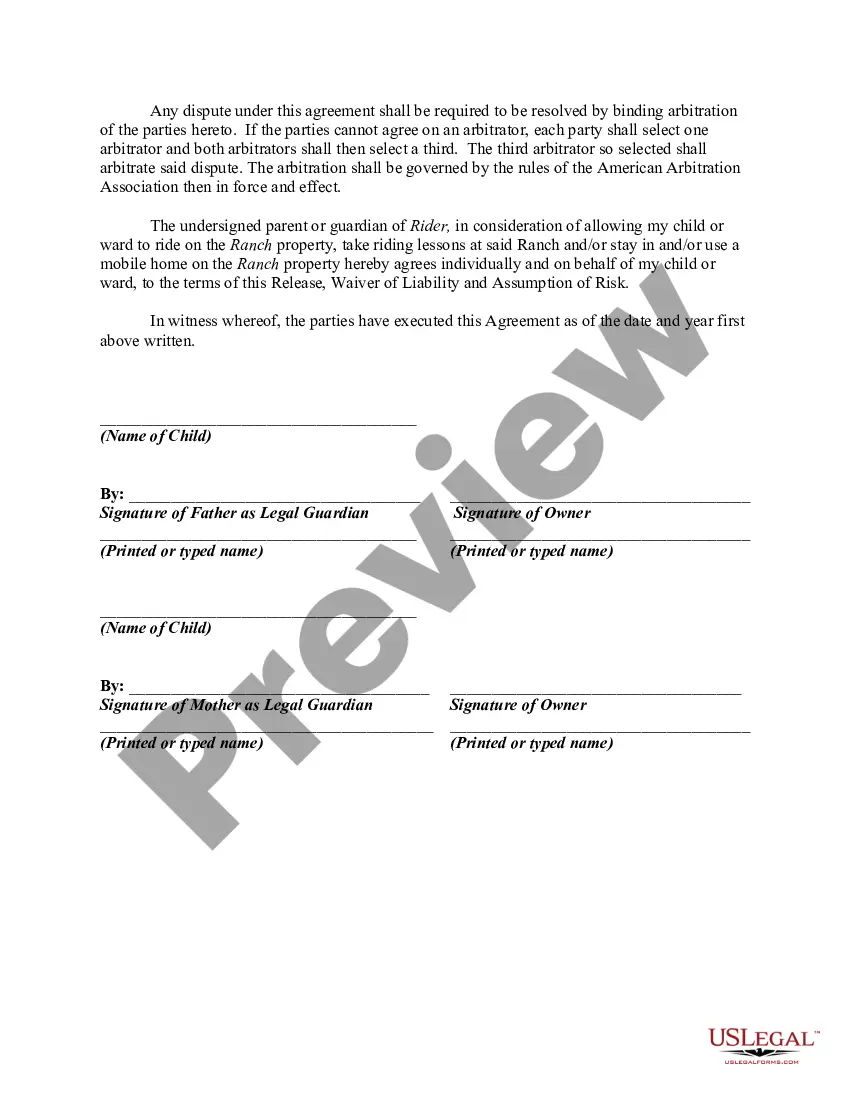
- Signatures of both the rider and any parents or guardians if minors are involved
Common use cases
This form should be used whenever a rider or tenant wishes to engage in horseback riding, stay on ranch property, or participate in riding lessons offered by the ranch owner. It is essential before any activities commence and serves to clarify the responsibilities and risks involved.
Intended users of this form
- Ranch owners who provide riding lessons or rent property
- Individuals renting mobile homes on the ranch
- Parents or guardians signing on behalf of minor children participating in activities on the ranch
Steps to complete this form
- Identify the parties involved by entering the names and addresses of the rider and the ranch owner.
- Specify the property address of the ranch and any relevant details about the ranch's activities.
- Outline the risks involved in horseback riding and related activities clearly.
- Have all parties sign and date the document to validate the agreement.
- If applicable, include the names and signatures of parents or guardians for minor riders.
Does this form need to be notarized?
This form does not typically require notarization unless specified by local law. It is advisable to check state regulations to confirm any notarization needs.
Get your form ready online
Our built-in tools help you complete, sign, share, and store your documents in one place.
Make edits, fill in missing information, and update formatting in US Legal Forms—just like you would in MS Word.
Download a copy, print it, send it by email, or mail it via USPS—whatever works best for your next step.
Sign and collect signatures with our SignNow integration. Send to multiple recipients, set reminders, and more. Go Premium to unlock E-Sign.
If this form requires notarization, complete it online through a secure video call—no need to meet a notary in person or wait for an appointment.
We protect your documents and personal data by following strict security and privacy standards.

Make edits, fill in missing information, and update formatting in US Legal Forms—just like you would in MS Word.

Download a copy, print it, send it by email, or mail it via USPS—whatever works best for your next step.

Sign and collect signatures with our SignNow integration. Send to multiple recipients, set reminders, and more. Go Premium to unlock E-Sign.

If this form requires notarization, complete it online through a secure video call—no need to meet a notary in person or wait for an appointment.

We protect your documents and personal data by following strict security and privacy standards.
Common mistakes
- Failing to complete all sections of the form, leaving essential fields blank.
- Not having the form signed by all required parties, including guardians for minors.
- Using outdated versions of the form that may not comply with current legal standards.
Benefits of completing this form online
- Convenient access to a legal document that can be downloaded and filled out at your own pace.
- Editability allows for customizing the form to suit specific needs and circumstances.
- Reliability from using templates drafted by licensed attorneys, ensuring legal compliance.
Legal use & context
- The form serves as a legal document to protect ranch owners from liability claims.
- Courts uphold waivers like this one unless gross negligence is involved.
- Participants should fully understand the implications of signing this release before engaging in any activities.
Summary of main points
- Signing the Release and Waiver of Liability is a crucial step for participants involved in ranch activities.
- The form protects ranch owners from claims related to injuries or damages.
- It is essential to ensure all parties, especially guardians of minors, understand the risks involved.
Looking for another form?






Form popularity
FAQ
A person who owns shares in and possessed property in cooperative apartment block or a condominium. How To Find Out Who Owns A Property.
The cost of registering a lease is generally paid by a tenant. Leases with a lease period of more than three years, including any option period, must be registered. This helps to protect the tenant's interests.
Tenant's Property means Tenant's movable fixtures and movable partitions, telephone and other equipment, furniture, furnishings and other movable items of personal property.
(Entry 1 of 2) 1a : one who has the occupation or temporary possession of lands or tenements of another specifically : one who rents or leases a dwelling (such as a house) from a landlord.
As far as Ownership is concerned, Tenant cannot become Owner.
The tenant in the given situation can NEVER claim ownership.The law is settled : ONCE A TENANT, ALWAYS A TENANT. In no situation, a tenant can claim ownership so long as you are receiving rent. If he stop paying rent, you should immediately file an eviction petition.
A landlord is a person who owns property, be it apartments, houses, land or real estate that is leased or rented to other parties, commonly referred to as tenants. On the other hand, an owner is a person who has full control and rights over an object, property, land or intellectual property.
The term landlord refers to a person who owns property and allows another person to use it for a fee.The person using the property is called a tenant. The agreement between a landlord and a tenant is called a lease or rental agreement.
A renter is a person who pays rent in other to use something that to belongs to someone else be it a house, room or even a car. But a tenant can be a renter, free occupier or a caretaker of someone's property eg.