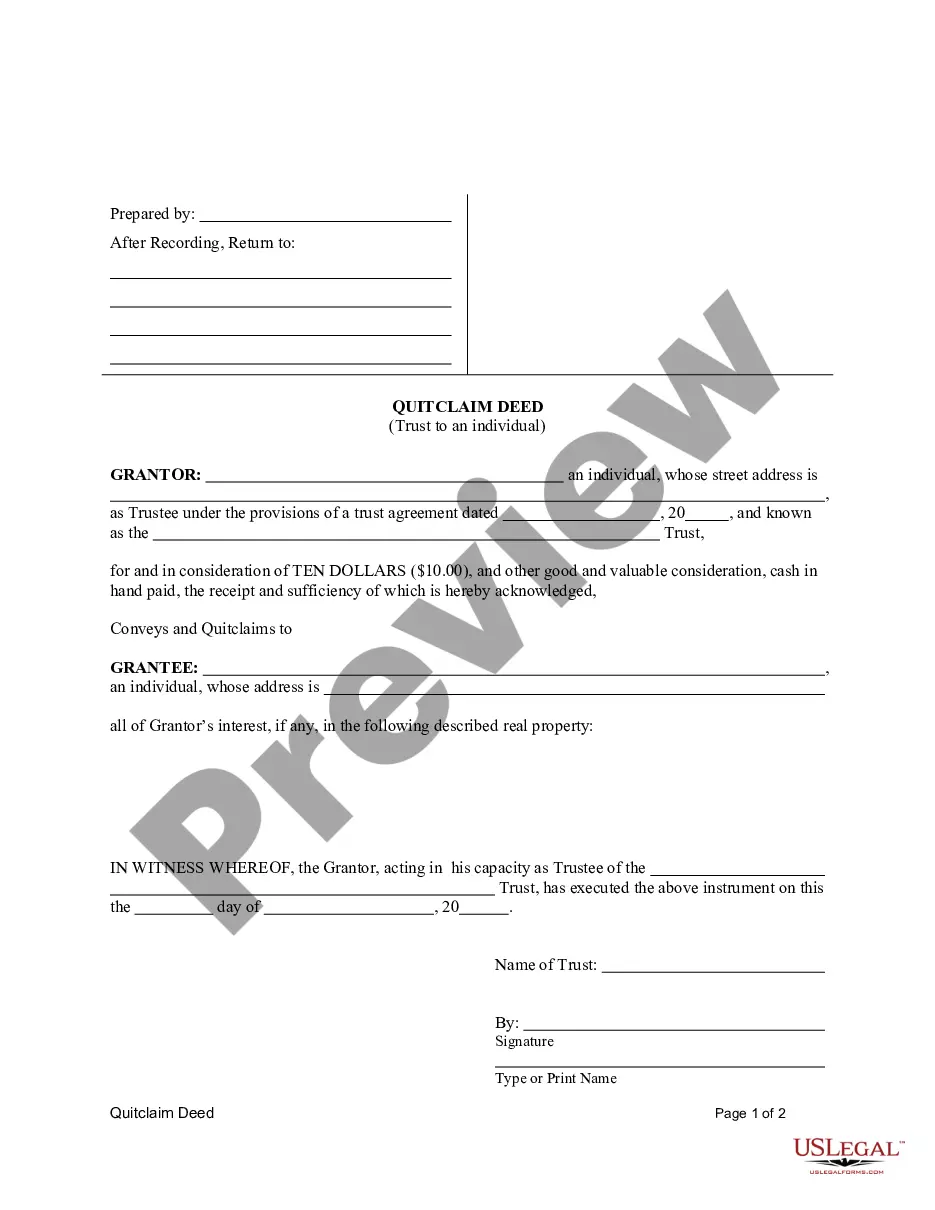
Claimant's First Set of Interrogatories to Employer and Carrier
About this form
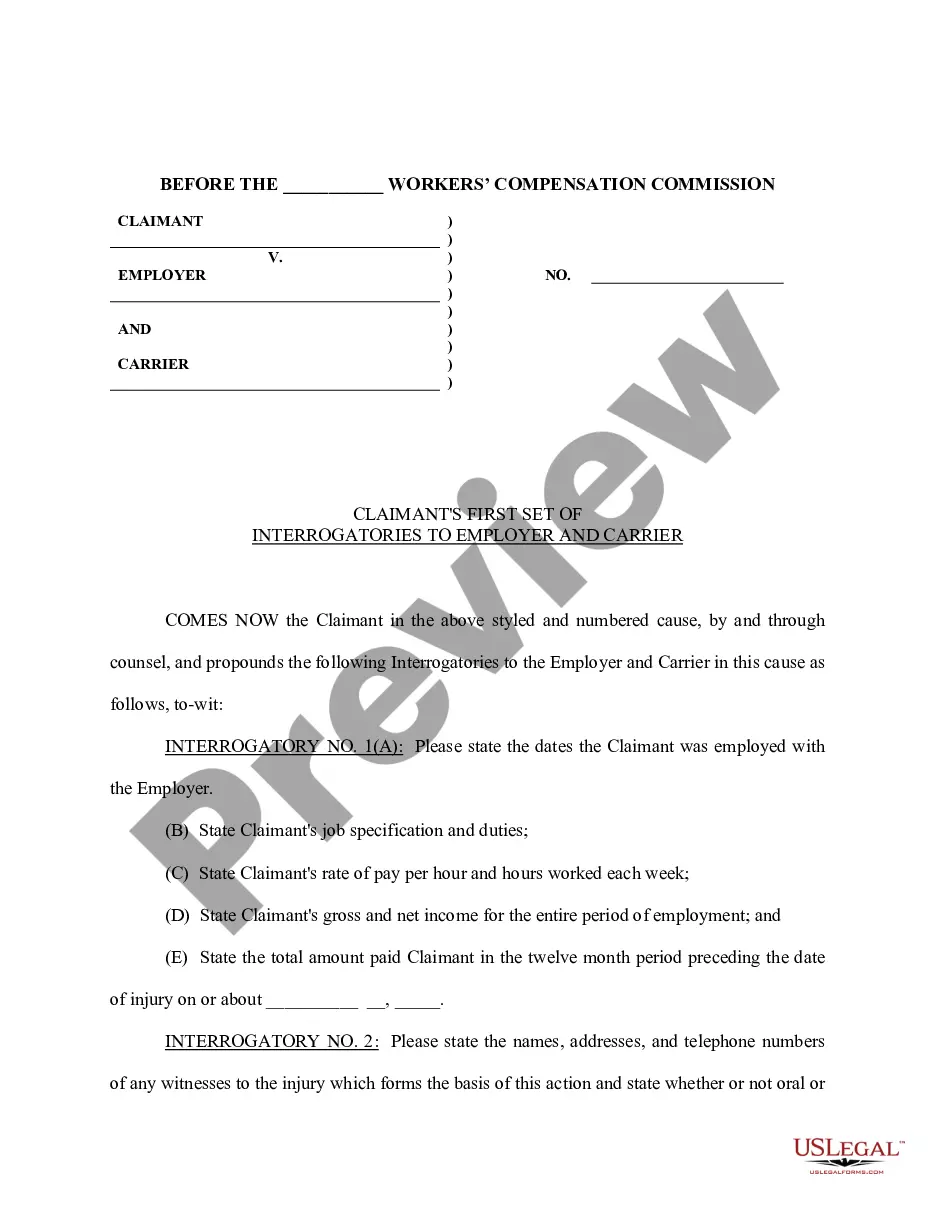
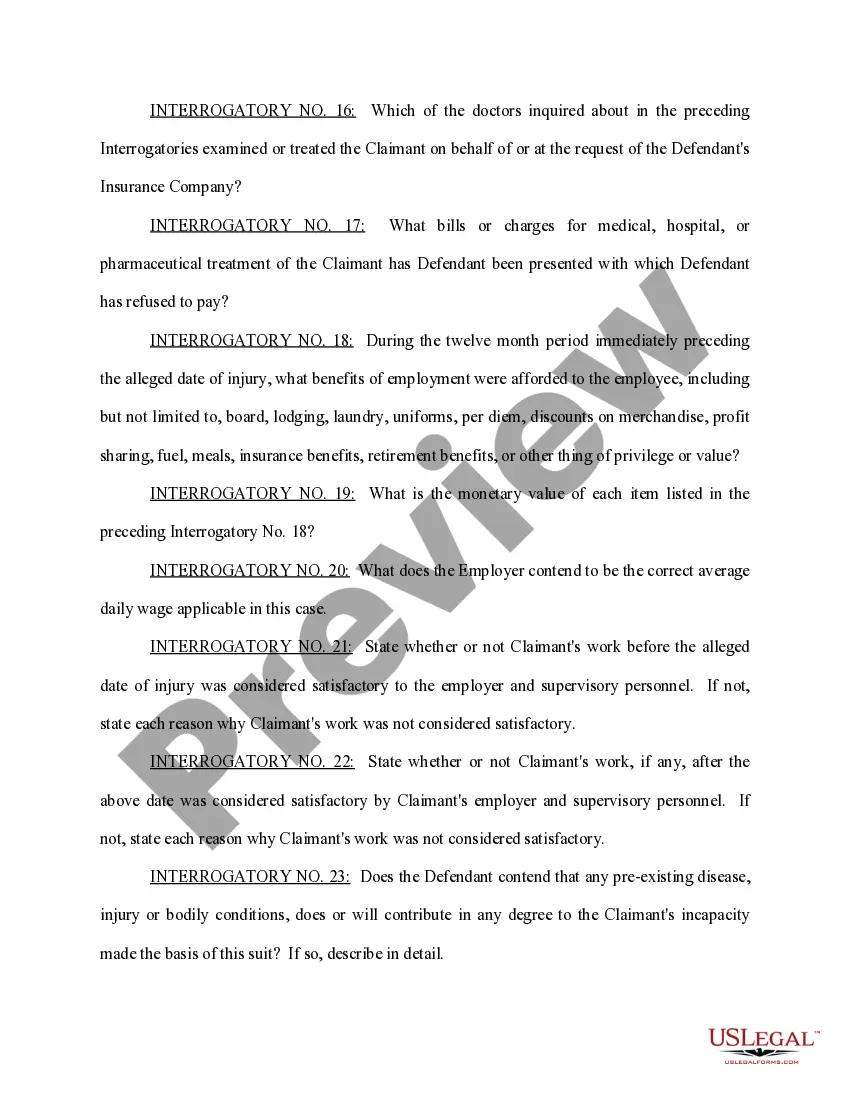
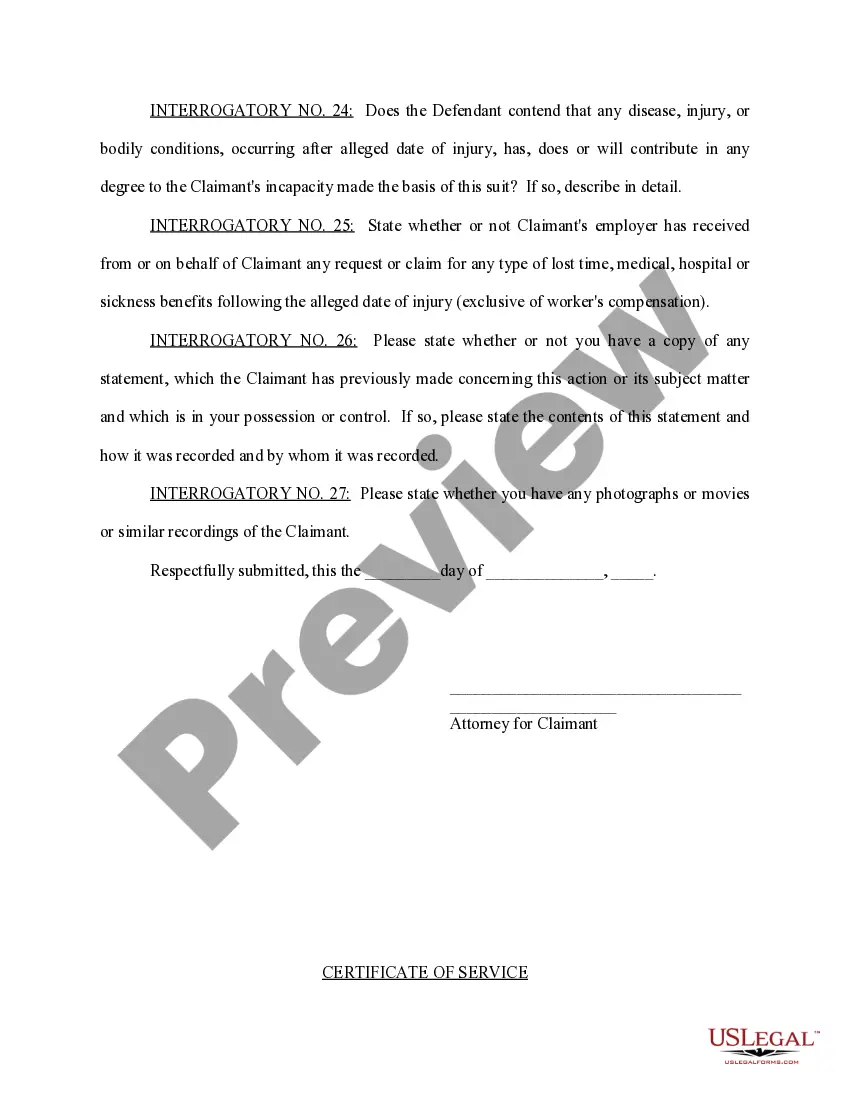
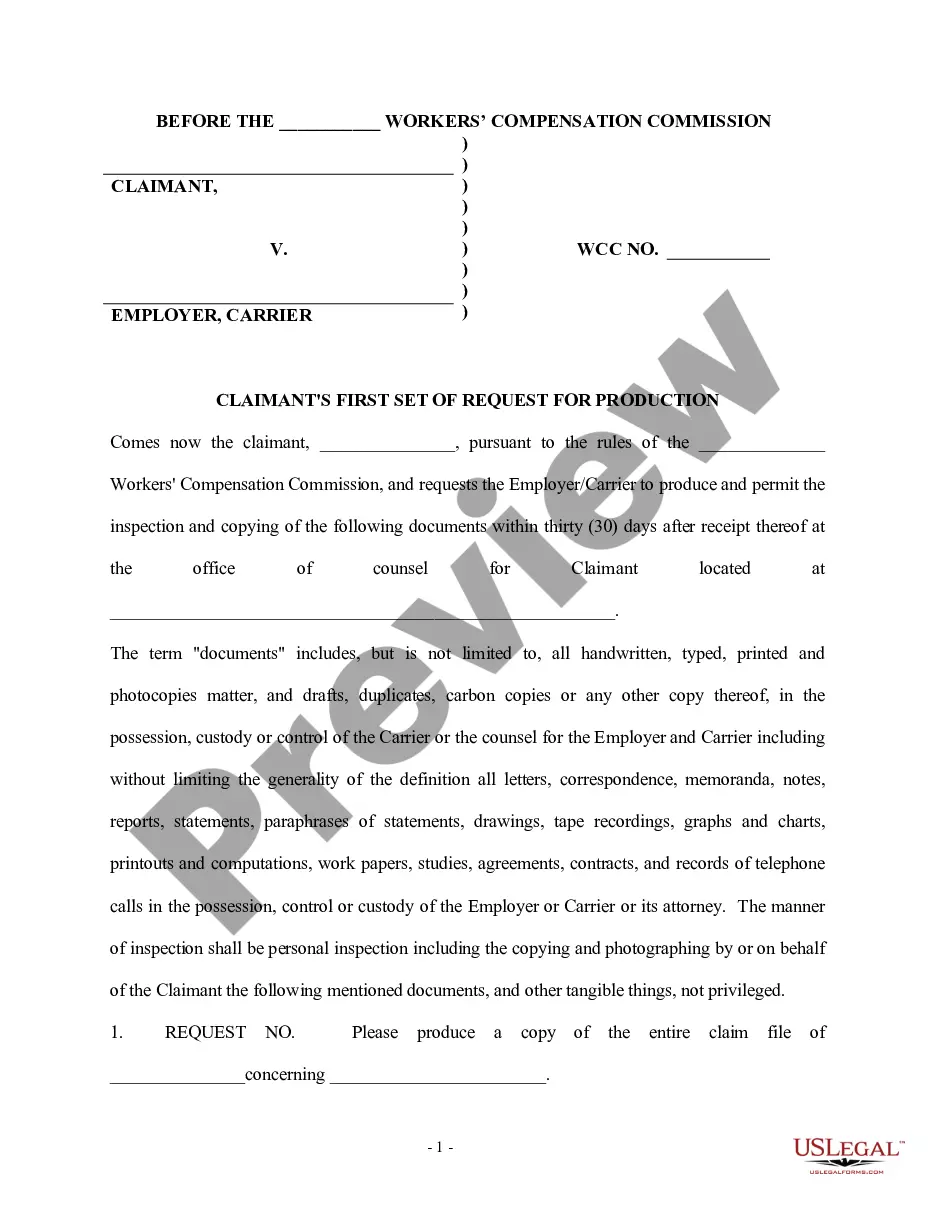
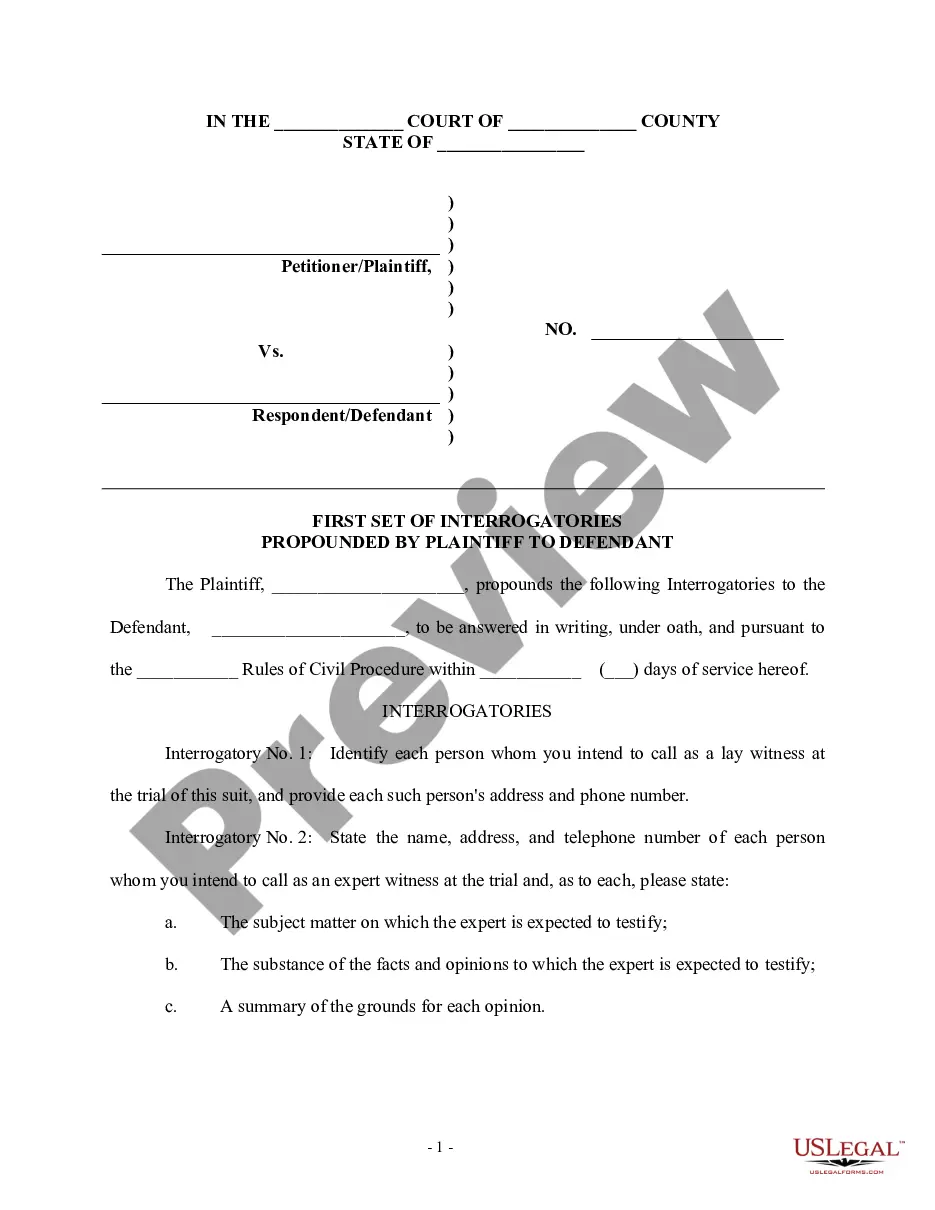
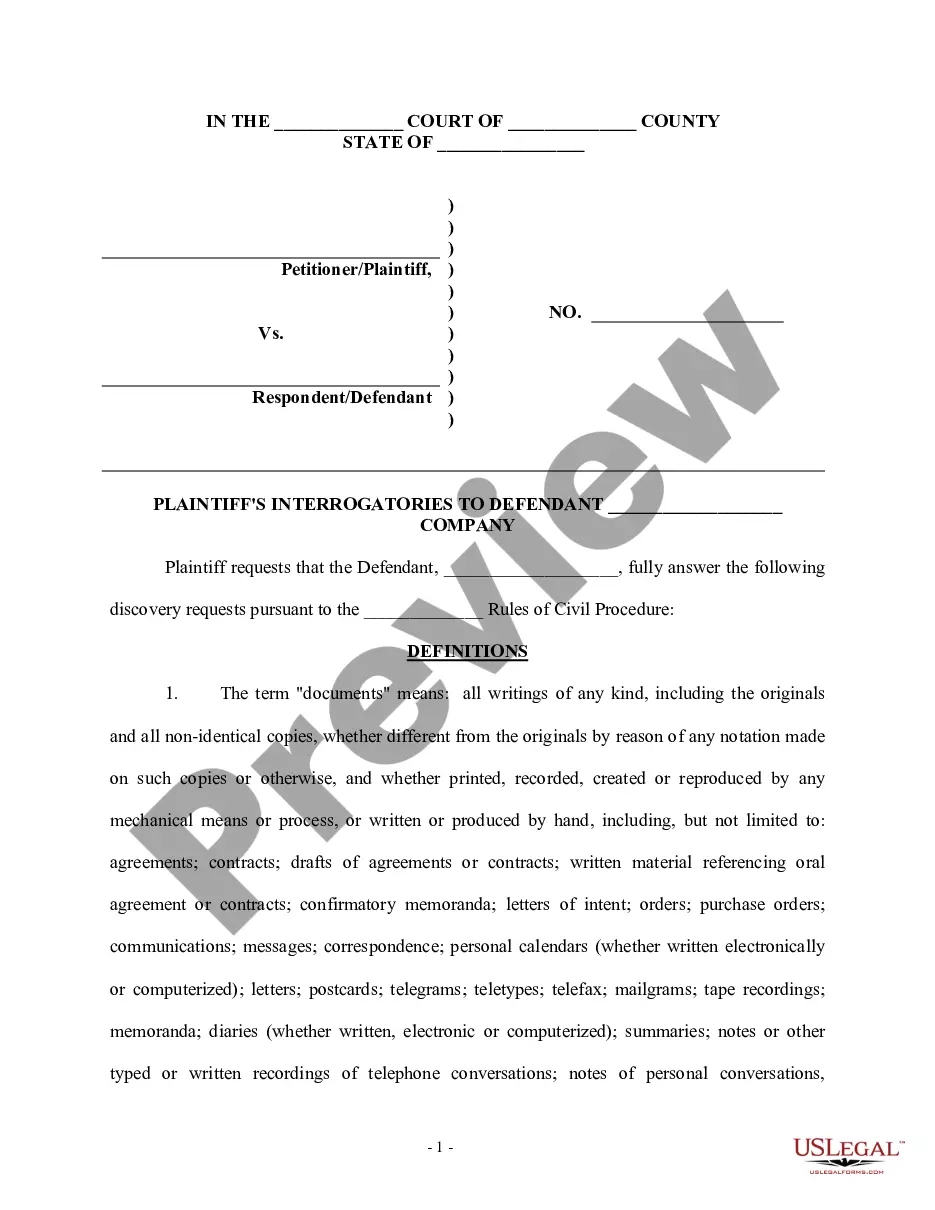
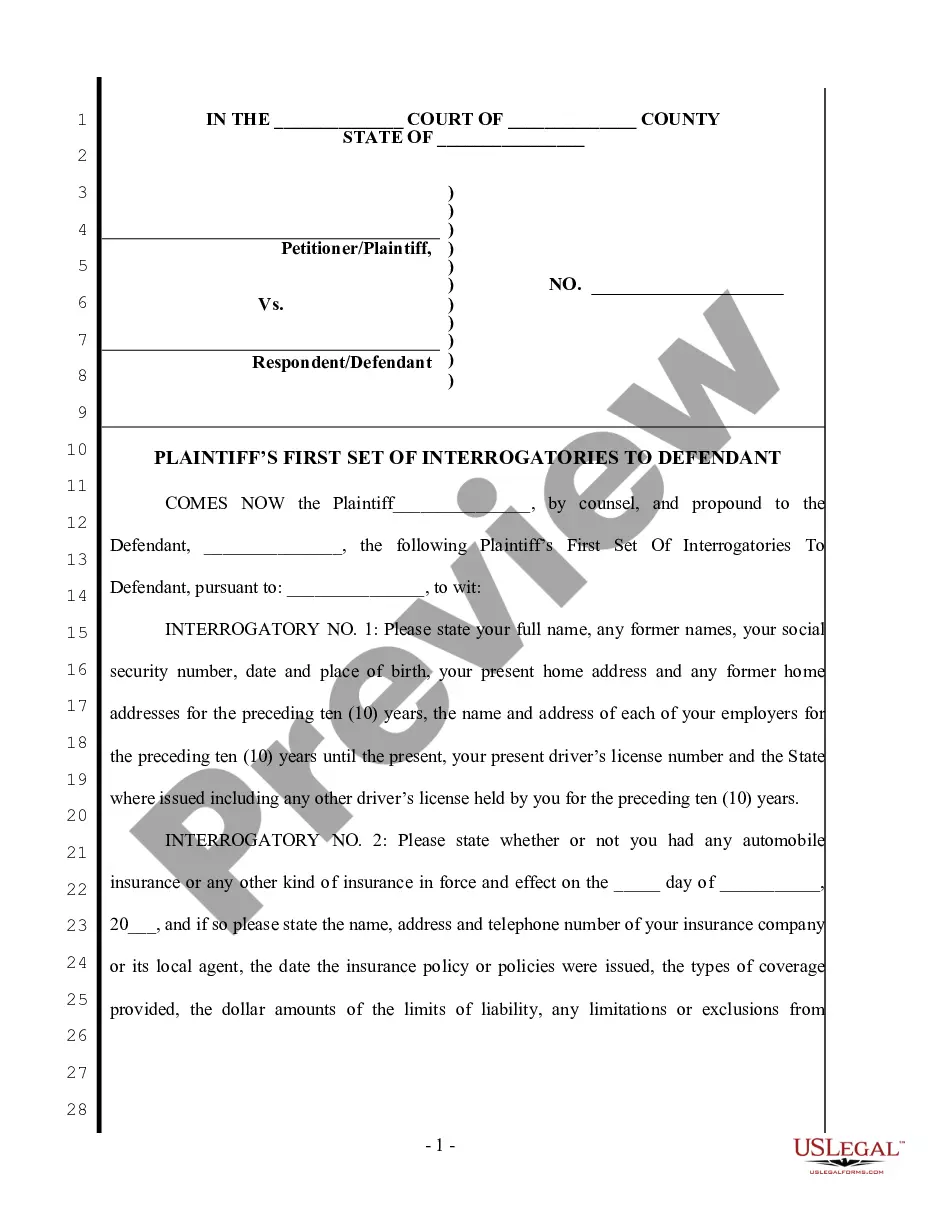
The Claimant's First Set of Interrogatories to Employer and Carrier is a legal document used in workers' compensation cases. This form serves as a request for specific information and documented evidence related to the claimant's employment and the circumstances surrounding their injury. It helps claimants gather crucial details to support their case against the employer and the insurance carrier, distinguishing it from other legal forms by its targeted focus on information needed for workers' compensation claims.
Main sections of this form
- Dates of employment
- Job specifications and duties of the claimant
- Claimant's rate of pay and income information
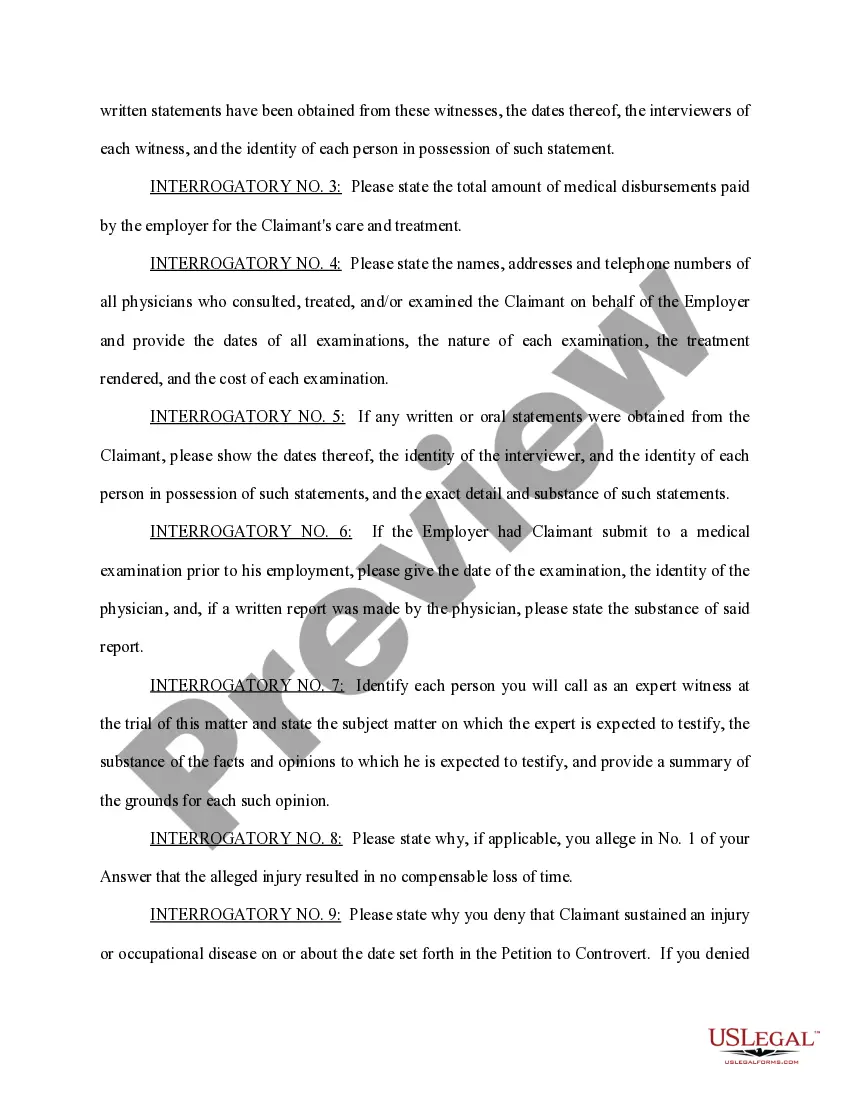
- Medical expenses incurred by the employer
- Witness information related to the injury
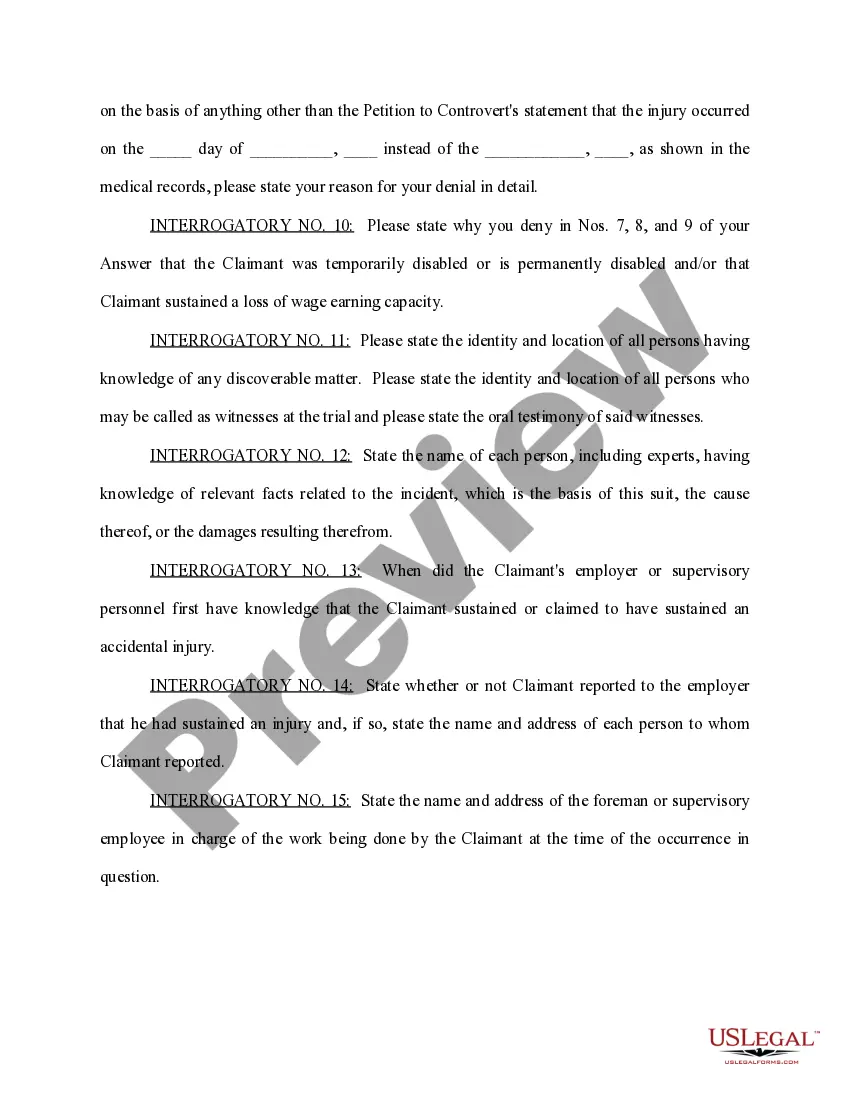
- Details of medical examinations and treatments
- Statements from the claimant or other witnesses
- Expert witness information

Situations where this form applies
This form is used when pursuing a workers' compensation claim. If you have sustained an injury while employed and are seeking compensation for medical expenses, lost wages, or other damages, you may need to file this set of interrogatories. It is particularly important when you need to clarify the details of your employment and medical treatment, gather witness statements, or respond to disputes raised by the employer or carrier regarding the claim.
Who should use this form
- Individuals who are claimants in a workers' compensation case
- Legal representatives helping clients with workers' compensation claims
- Employers and insurance carriers responding to a claimant's inquiries
How to prepare this document
- Provide the names of all parties involved, including the claimant and employer.
- Complete the section detailing the claimant's employment history, including dates and job specifications.
- List all medical providers and summarize treatments received related to the workplace injury.
- Identify any witnesses and provide their contact information.
- Ensure all necessary dates and details are filled accurately to support the claim.
Does this document require notarization?
This form does not typically require notarization unless specified by local law. Always check with your stateâs regulations to ensure compliance.
Get your form ready online
Our built-in tools help you complete, sign, share, and store your documents in one place.
Make edits, fill in missing information, and update formatting in US Legal Forms—just like you would in MS Word.
Download a copy, print it, send it by email, or mail it via USPS—whatever works best for your next step.
Sign and collect signatures with our SignNow integration. Send to multiple recipients, set reminders, and more. Go Premium to unlock E-Sign.
If this form requires notarization, complete it online through a secure video call—no need to meet a notary in person or wait for an appointment.
We protect your documents and personal data by following strict security and privacy standards.

Make edits, fill in missing information, and update formatting in US Legal Forms—just like you would in MS Word.

Download a copy, print it, send it by email, or mail it via USPS—whatever works best for your next step.

Sign and collect signatures with our SignNow integration. Send to multiple recipients, set reminders, and more. Go Premium to unlock E-Sign.

If this form requires notarization, complete it online through a secure video call—no need to meet a notary in person or wait for an appointment.

We protect your documents and personal data by following strict security and privacy standards.
Common mistakes
- Failing to provide complete and accurate contact information for witnesses.
- Omitting relevant medical information or documentation of expenses.
- Not specifying the exact dates of injuries or medical treatments.
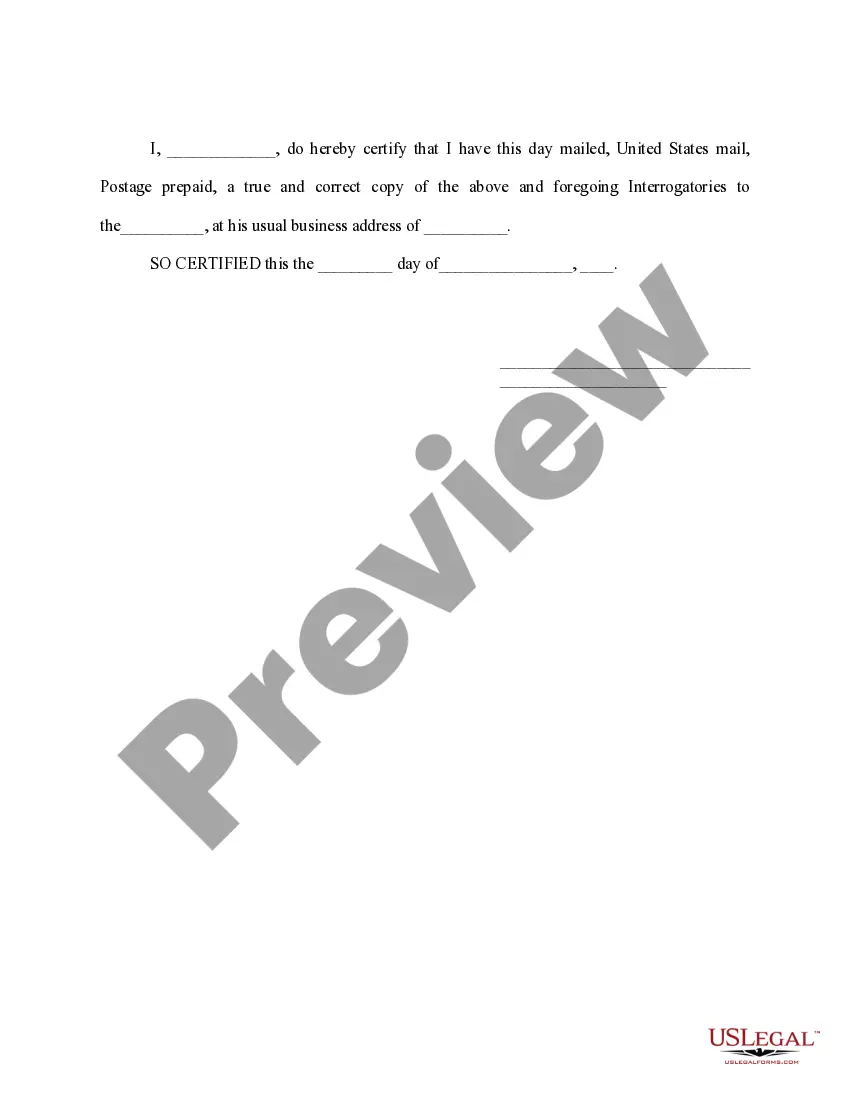
- Neglecting to sign and date the interrogatories before submission.
Advantages of online completion
- Convenient access to downloadable forms allows for quick completion.
- Easily editable format ensures you can customize the document to meet your specific needs.
- Reliability ensured by using templates drafted by licensed attorneys.
Legal use & context
- This form is legally recognized in the context of workers' compensation claims.
- Responses provided must be truthful and are used as evidence in legal proceedings.
- Failure to respond adequately may negatively impact the outcome of the claim.
Quick recap
- Use the Claimant's First Set of Interrogatories when initiating a workers' compensation claim.
- Gather comprehensive information about employment and medical history for an effective claim.
- Ensure accuracy and completeness to avoid common mistakes that could hinder your case.
Looking for another form?



Form popularity
FAQ
This form is a discovery document used in workers' compensation cases to request specific information and supporting documents about the claimant's employment and the circumstances of the injury. It helps gather employment history, wages, medical expenses, and related evidence to support the claim against the employer and the insurance carrier and to clarify disputed facts.
To elicit precise information and documentation listed in the form’s main sections—dates of employment, job duties, pay information, medical expenses related to the employer, witness details, medical treatments, statements, and expert witnesses. The goal is to build a factual record supporting the workers' compensation claim and address issues raised by the employer or carrier.
As the claimant's initial set of written questions in a workers' compensation case, it targets essential facts about employment and injury. It seeks information such as employment dates, job duties, wage details, medical expenses paid by the employer, witness names, treatment records, and any expert opinions, helping to clarify disputed points for the claim.
Provide complete, truthful answers within the case deadlines, and produce documents responsive to each question. Include the dates of employment, job duties, pay information, medical expenses paid by the employer, witness details, medical examinations and treatments, statements, and any expert witness information. You may also object to privileged or overly broad inquiries.
Yes, interrogatories in a workers' compensation discovery process contribute to the factual record and may be examined by a judge or administrative decision-maker when disputes arise. The form's responses, including employment, wage, medical expense, witness, and treatment details, can influence decisions on claim validity, credibility, and scope of evidence.
This form is the claimant's first set of interrogatories to employer and carrier, focusing on foundational facts: dates of employment, job duties, pay information, medical expenses the employer has incurred, witness details, medical care, statements, and expert witnesses. Later sets typically address additional or follow-up topics not covered here.