Instruction to Jury Regarding Compensatory Damages for Conversion
About this form
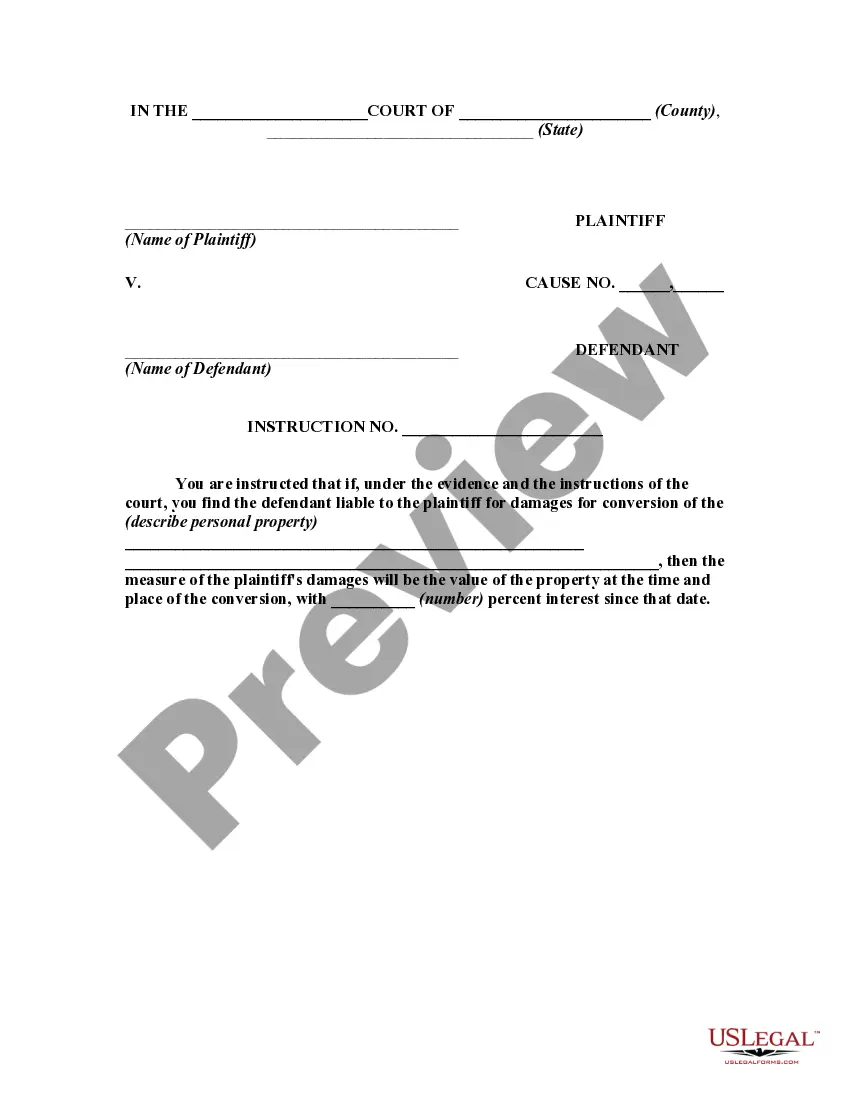
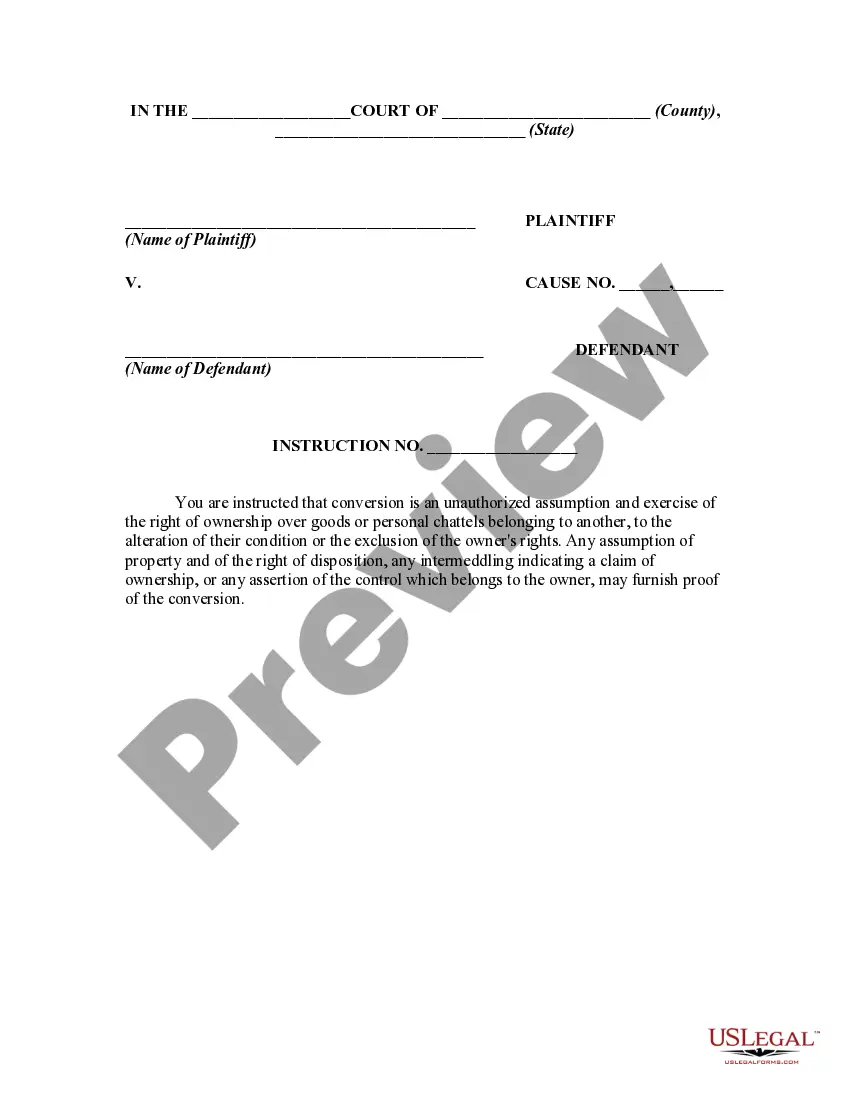
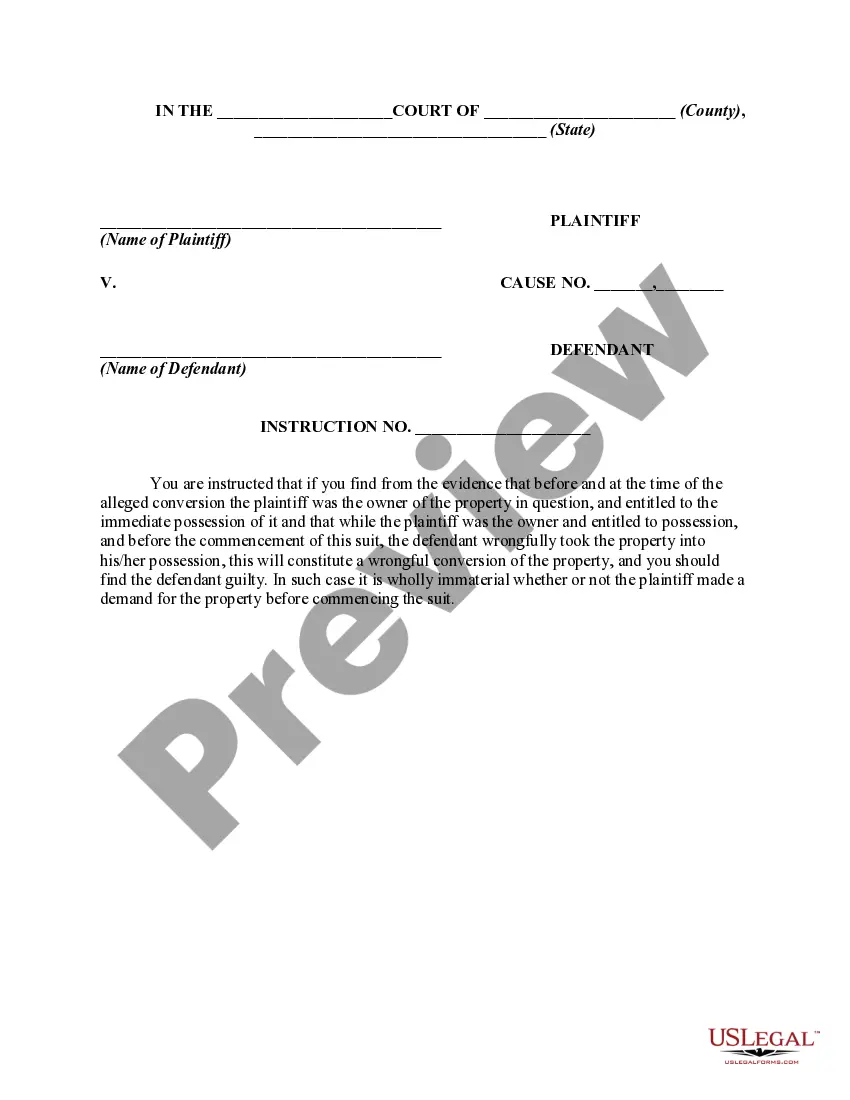
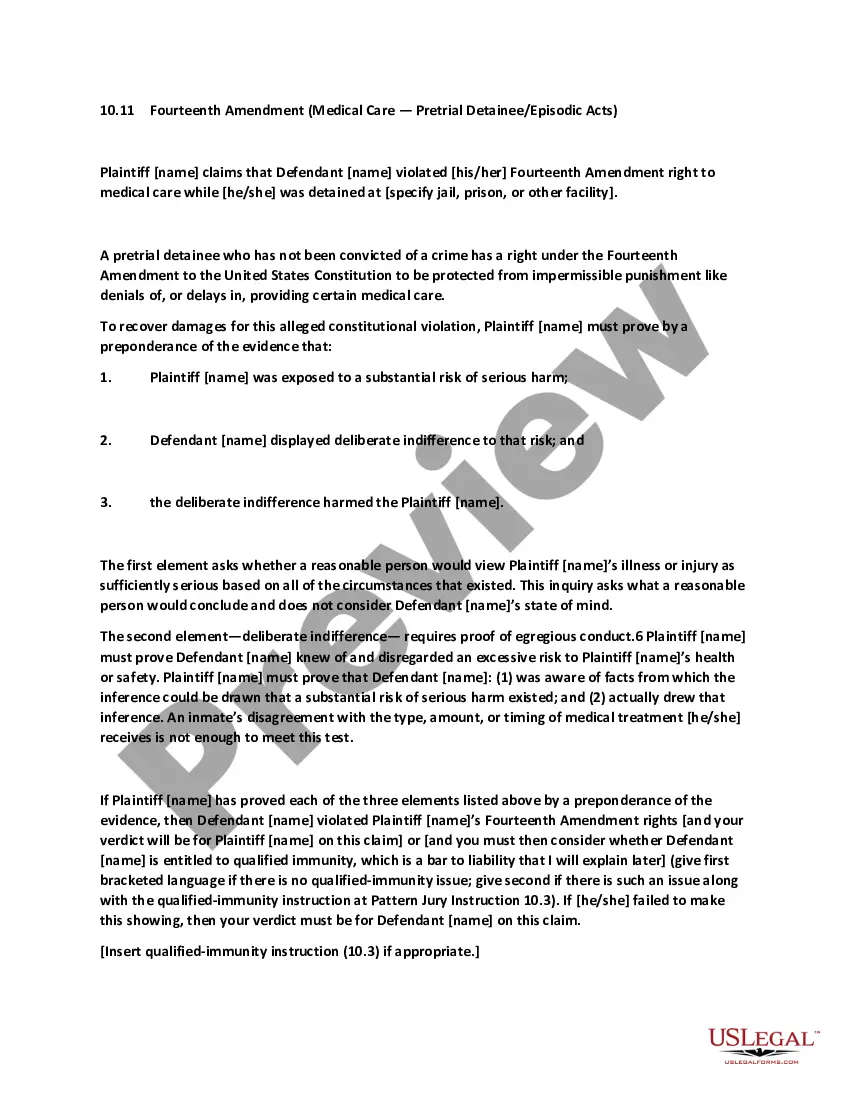
The Instruction to Jury Regarding Compensatory Damages for Conversion outlines how jurors should assess damages for the unlawful taking of personal property. This form clarifies the method for determining the value of the property at the time of conversion, along with any applicable interest. It is essential for guiding jurors in processing compensatory damages claims specifically related to conversion cases.
Key components of this form
- Parties involved: Names of the plaintiff and defendant.
- Cause number: The unique identifier for the legal case.
- Description of property: Details on the converted personal property.
- Measure of damages: The value of the property at the time of conversion.
- Interest calculation: A specified percentage of interest since the date of conversion.
Common use cases
This form should be used in legal proceedings involving claims of conversion, where a plaintiff seeks to recover monetary damages for the unlawful taking of their personal property. It is particularly applicable in situations where the plaintiff can demonstrate the value of their property and any loss incurred as a result of the conversion.
Who should use this form
- Individuals filing a lawsuit for conversion of personal property.
- Attorneys representing clients in conversion cases.
- Parties involved in civil litigation over property disputes.
Steps to complete this form
- Identify the parties: Fill in the names of the plaintiff and defendant.
- Enter the cause number associated with the case.
- Specify the personal property that was converted, providing a clear description.
- Insert the value of the property at the time of conversion.
- Indicate the percentage of interest to be calculated from the date of conversion.
Notarization guidance
In most cases, this form does not require notarization. However, some jurisdictions or signing circumstances might. US Legal Forms offers online notarization powered by Notarize, accessible 24/7 for a quick, remote process.
Get your form ready online
Our built-in tools help you complete, sign, share, and store your documents in one place.
Make edits, fill in missing information, and update formatting in US Legal Forms—just like you would in MS Word.
Download a copy, print it, send it by email, or mail it via USPS—whatever works best for your next step.
Sign and collect signatures with our SignNow integration. Send to multiple recipients, set reminders, and more. Go Premium to unlock E-Sign.
If this form requires notarization, complete it online through a secure video call—no need to meet a notary in person or wait for an appointment.
We protect your documents and personal data by following strict security and privacy standards.

Make edits, fill in missing information, and update formatting in US Legal Forms—just like you would in MS Word.

Download a copy, print it, send it by email, or mail it via USPS—whatever works best for your next step.

Sign and collect signatures with our SignNow integration. Send to multiple recipients, set reminders, and more. Go Premium to unlock E-Sign.

If this form requires notarization, complete it online through a secure video call—no need to meet a notary in person or wait for an appointment.

We protect your documents and personal data by following strict security and privacy standards.
Common mistakes
- Failing to provide a clear and detailed description of the converted property.
- Not accurately stating the cause number, affecting case identification.
- Omitting the interest percentage or miscalculating it.
Benefits of using this form online
- Convenient access to legal forms anytime, allowing for prompt action.
- Editable templates ensure that users can tailor the form to their specific needs.
- Save and print options provide flexibility for documentation and submission.
Looking for another form?
Form popularity
FAQ
Generally, punitive damages may be allowed when the conversion involves elements of fraud, ill will, malice, recklessness, wantonness, oppression, insult, willful, conscious disregard of the plaintiff's rights, or other aggravating circumstancesxii.
Conversion is a tort that exposes you to liability for damages in a civil lawsuit. It applies when someone intentionally interferes with personal property belonging to another person.
The judge instructs the jury about the relevant laws that should guide its deliberations. (In some jurisdictions, the court may instruct the jury at any time after the close of evidence.The judge reads the instructions to the jury. This is commonly referred to as the judge's charge to the jury.
Step 1: Consult With Representatives. If you are considering going to court, talk to your potential representatives before filing a lawsuit. Step 2: File Complaint / Pleading. Step 3: Discovery. Step 4: Trial. Step 5: Verdict. Step 6: Appeal.
Criminal Conversion: A person who knowingly or intentionally exerts unauthorized control over the property of another person commits criminal conversion.
According to this theory, the jurors use the amount of compensation that the plaintiff is seeking as a starting point during deliberations. For example, if a plaintiff is seeking $500,000 in damages, the jury may begin deliberations by discussing whether they should award the full $500,000.
When you want to reclaim the value of your personal property that was damaged or altered by some else's unauthorized use, you can file a lawsuit for conversion. This intentional tort is the civil law equivalent of a criminal theft charge.
Mental anguish.Disfigurement.Future medical expenses.Future lost wages.Long-term physical pain and suffering.Loss of consortium.Inconvenience.Loss of enjoyment of life.Compensatory Damages Definition - Investopedia\nwww.investopedia.com > terms > compensatory-damages
Disfigurement.Mental anguish.Future lost wages.Future medical expenses.Loss of consortium.Long-term physical pain and suffering.Loss of opportunity.Loss of enjoyment of life.Compensatory Damages - Definition, Understanding, and Why\ncleartax.in > terms > compensatory-damages