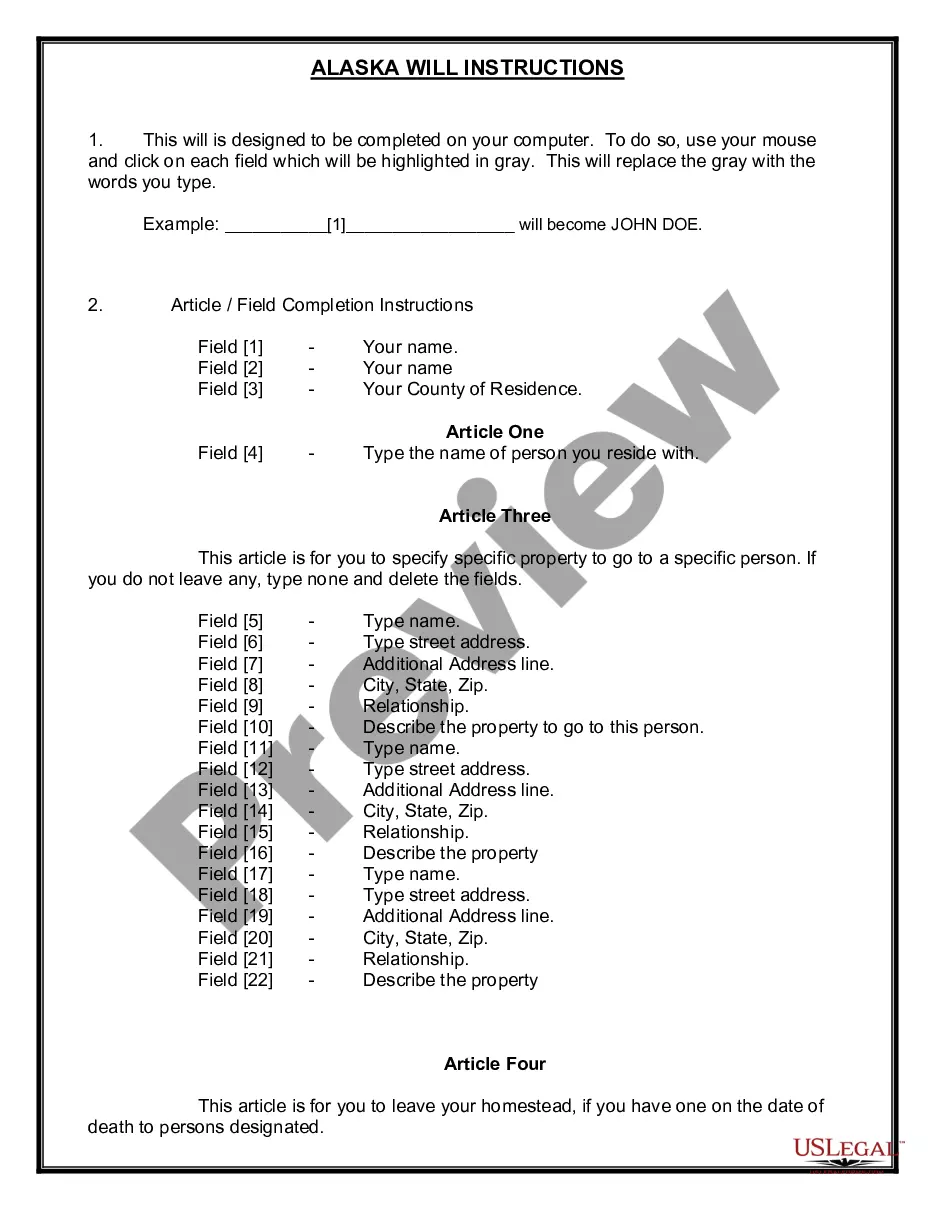
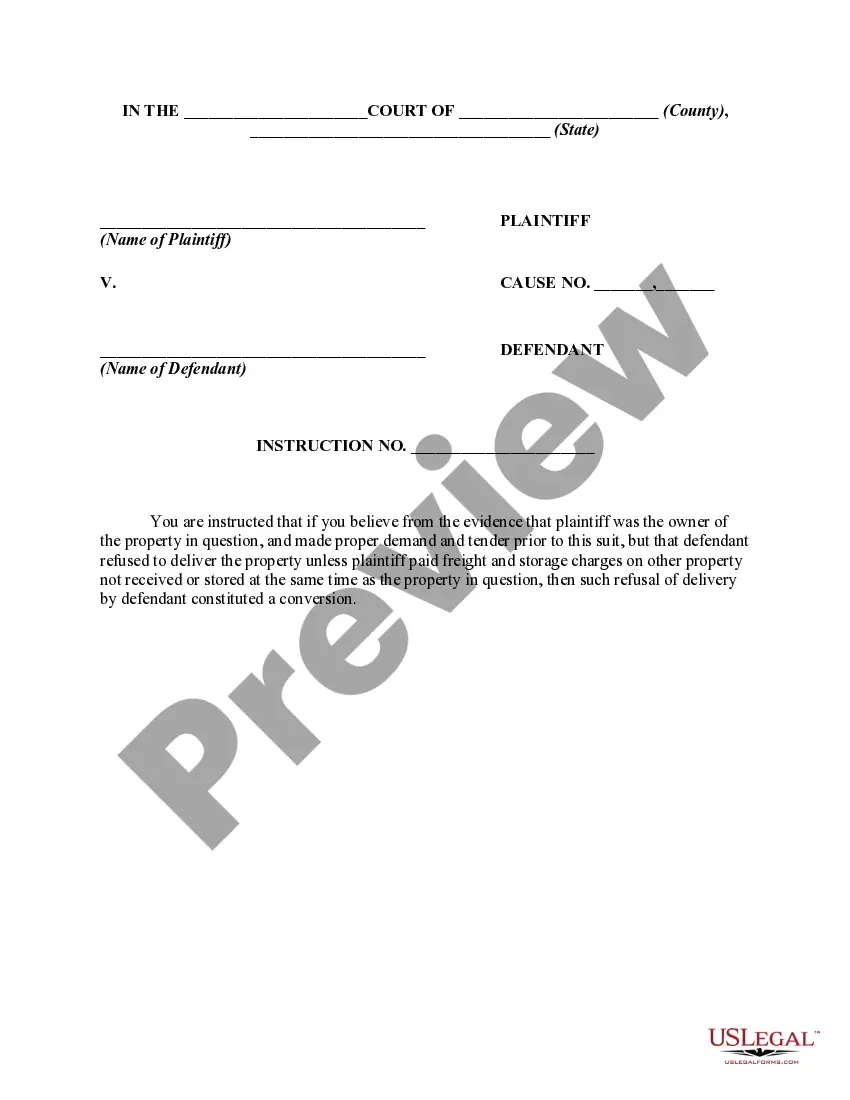
Instruction to Jury that Refusal to Deliver Goods after Demand and Tender of Freight and Storage Charges can Constitute Conversion
Understanding this form
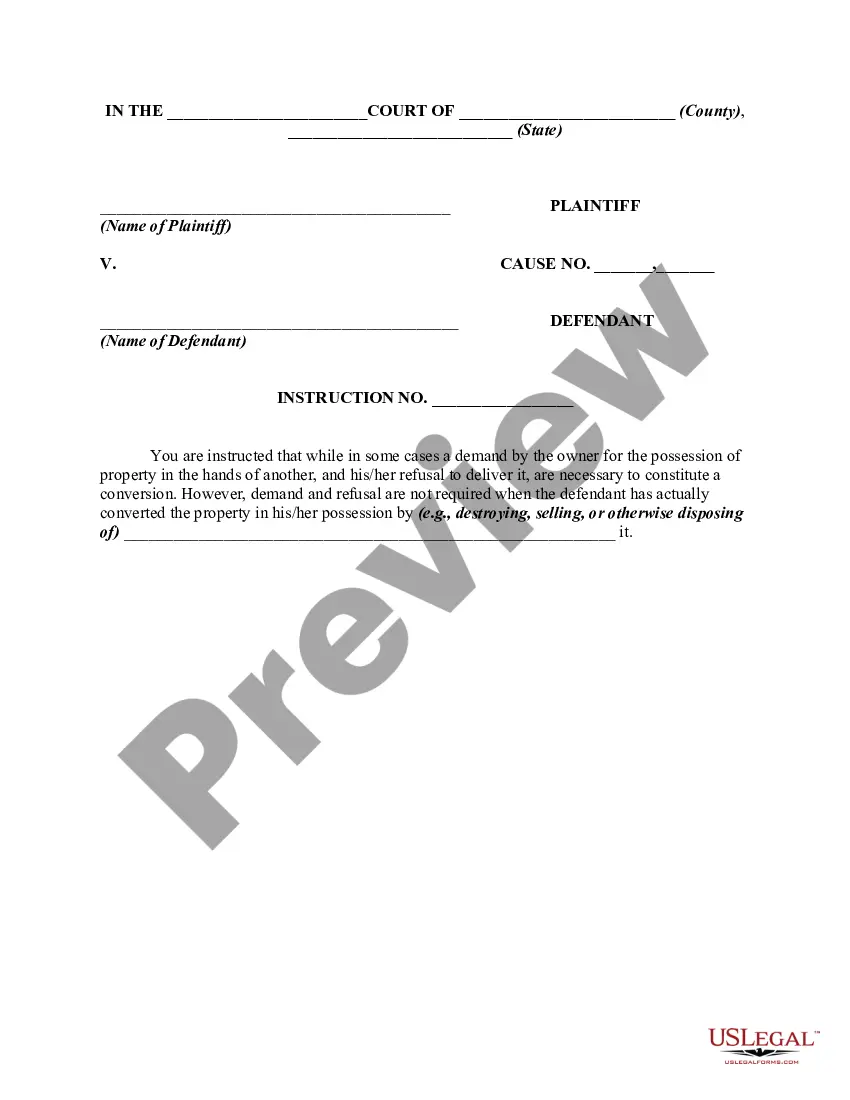
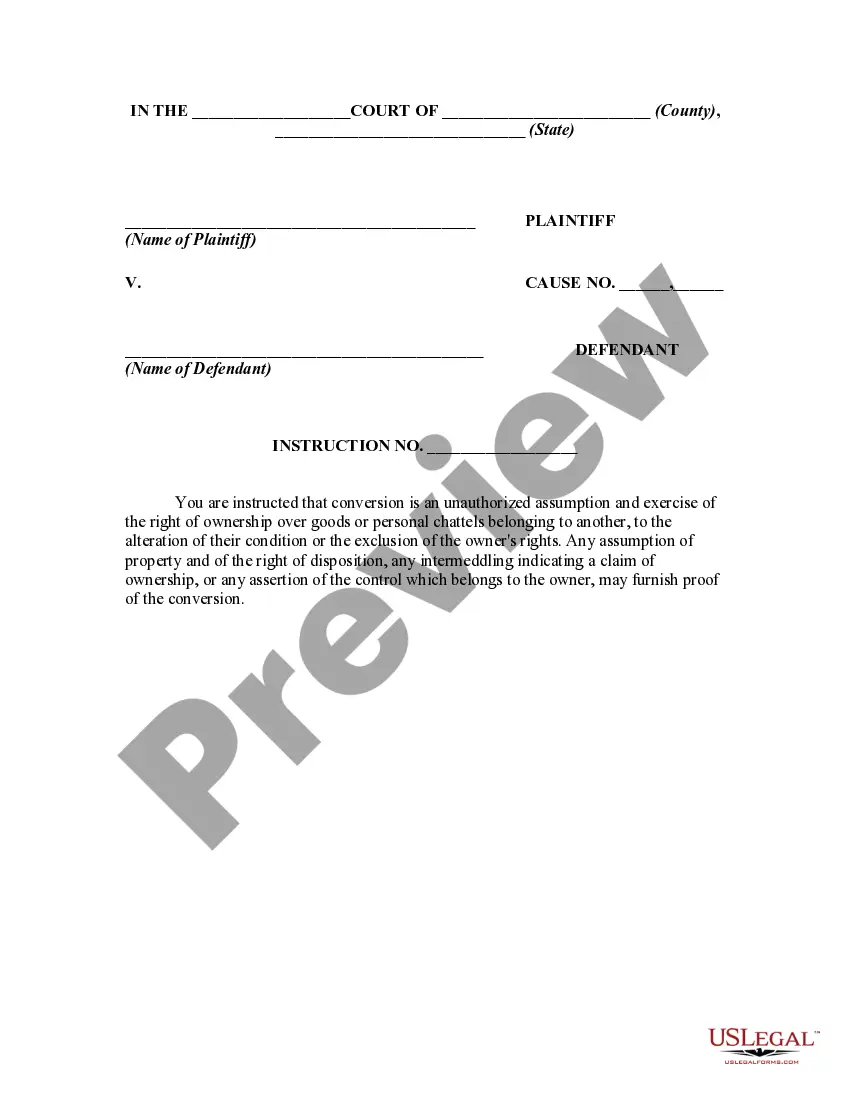
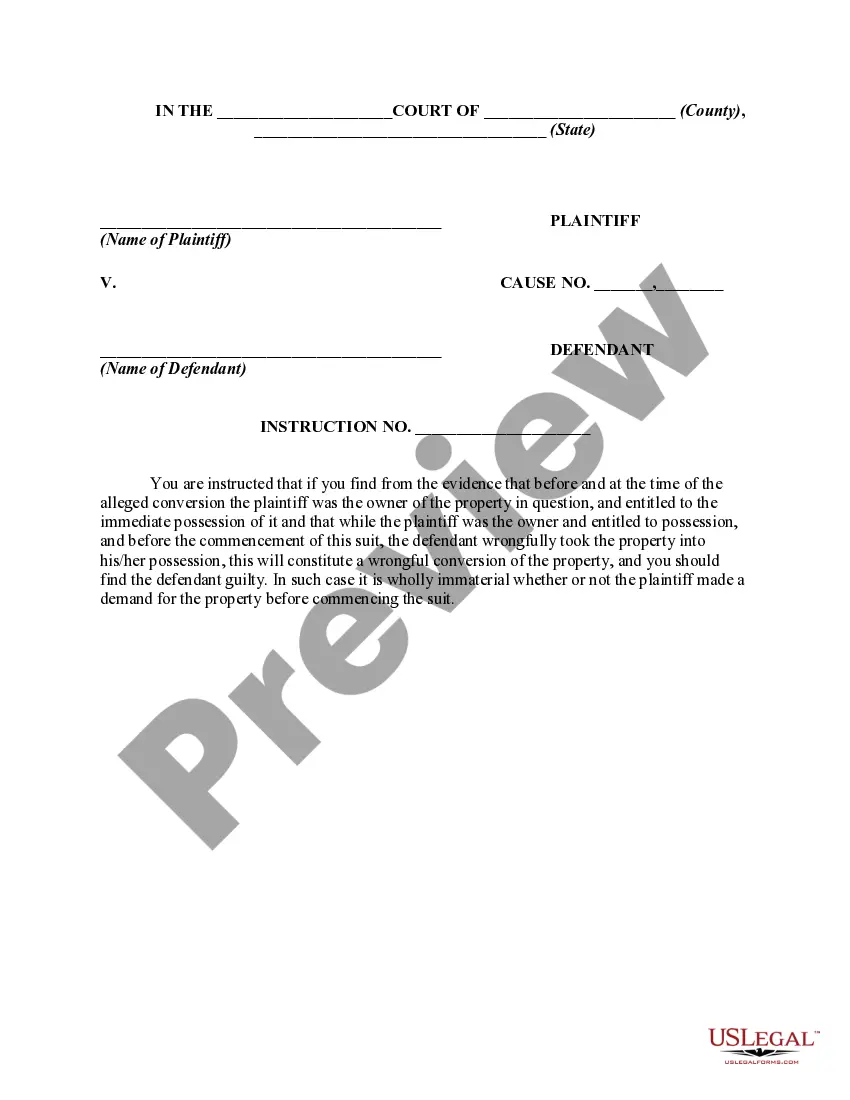
This form is an Instruction to Jury that Refusal to Deliver Goods after Demand and Tender of Freight and Storage Charges can Constitute Conversion. It is used in legal cases concerning the conversion of personal property, which occurs when someone unlawfully retains possession of property belonging to another. This instruction helps jurors understand that refusal to return property upon demand and payment of specific charges may be viewed as conversion, setting it apart from other legal forms related to theft or property disputes.
Key parts of this document
- Case title identifying the plaintiff and defendant.
- Instruction number to categorize the specific jury instruction.
- Statement regarding the plaintiff's ownership of the property in question.
- Explanation of the conditions under which refusal to deliver goods constitutes conversion.
- Conditions for proper demand and tender prior to the suit.
When this form is needed
This form is applicable in cases where a plaintiff claims that their personal property has been unlawfully withheld by a defendant. It is particularly relevant when the defendant refuses to deliver the property unless additional charges for freight or storage are paid. If a lawsuit is underway and these circumstances exist, this form is vital in informing the jury about the implications of the defendant's actions.
Who should use this form
- Individuals or businesses who have been denied return of their personal property.
- Attorneys representing clients in conversion cases.
- Parties involved in legal proceedings regarding disputes over the possession of personal goods.
Instructions for completing this form
- Identify the parties involved in the case: the plaintiff and the defendant.
- Enter the case number to properly file the instruction with the court.
- Complete the instruction number field to specify the details of the instruction.
- Clearly state the ownership of the property in question by the plaintiff.
- Include evidence of the demand and tender made by the plaintiff prior to the suit.
- Describe any refusal by the defendant to return property and the conditions attached to that refusal.
Does this document require notarization?
Notarization is not commonly needed for this form. However, certain documents or local rules may make it necessary. Our notarization service, powered by Notarize, allows you to finalize it securely online anytime, day or night.
Get your form ready online
Our built-in tools help you complete, sign, share, and store your documents in one place.
Make edits, fill in missing information, and update formatting in US Legal Forms—just like you would in MS Word.
Download a copy, print it, send it by email, or mail it via USPS—whatever works best for your next step.
Sign and collect signatures with our SignNow integration. Send to multiple recipients, set reminders, and more. Go Premium to unlock E-Sign.
If this form requires notarization, complete it online through a secure video call—no need to meet a notary in person or wait for an appointment.
We protect your documents and personal data by following strict security and privacy standards.

Make edits, fill in missing information, and update formatting in US Legal Forms—just like you would in MS Word.

Download a copy, print it, send it by email, or mail it via USPS—whatever works best for your next step.

Sign and collect signatures with our SignNow integration. Send to multiple recipients, set reminders, and more. Go Premium to unlock E-Sign.

If this form requires notarization, complete it online through a secure video call—no need to meet a notary in person or wait for an appointment.

We protect your documents and personal data by following strict security and privacy standards.
Typical mistakes to avoid
- Failing to establish clear ownership of the property involved.
- Not providing sufficient evidence of demand and tender prior to the suit.
- Misstating the conditions under which the property was refused delivery.
- Inaccurately identifying the parties or case number.
Benefits of using this form online
- Convenient access to legal forms from anywhere at any time.
- Easy editing to tailor the document to your specific case.
- Reliable templates drafted by licensed attorneys ensuring legal compliance.
Looking for another form?



Form popularity
FAQ
The first step in a lawsuit is filing the complaint and serving it on the defendant. The plaintiff will outline their version of events in the complaint and describe how the defendant's actions harmed them. They will ask for monetary compensation or another remedy, such as an injunction.
Writing and filing the complaint. Paying the filing fee (or getting it waived) Notifying the party you are suing (this notification is usually called service of process) Proving to the court that the party you are suing (the Defendant) has been served.
Pre-filing stage. During this stage, the dispute arises and the parties gather information, try to negotiate a resolution, and prepare for the possibility of a court case. Pleading stage. Discovery stage. Pre-trial stage. Trial Stage. Post-trial stage.
Step 1: Consult With Representatives. If you are considering going to court, talk to your potential representatives before filing a lawsuit. Step 2: File Complaint / Pleading. Step 3: Discovery. Step 4: Trial. Step 5: Verdict. Step 6: Appeal.
Step 1: Consult With Representatives. If you are considering going to court, talk to your potential representatives before filing a lawsuit. Step 2: File Complaint / Pleading. Step 3: Discovery. Step 4: Trial. Step 5: Verdict. Step 6: Appeal.
Search for potential lawyers with experience handling your type of case. Research the lawyers background and history of case results. Set up a consultation with any lawyer you are considering hiring. If you are comfortable with the billing arrangement, hire the lawyer. The attorney will file the lawsuit on your behalf.
The plaintiff files a complaint to initiate a lawsuit. The defendant files an answer to the complaint. The judge will issue a scheduling order laying out a timeline for important dates and deadlines, including when the trial will take place. The parties engage in discovery. Motions and other pleadings may be filed.
Civil lawsuits generally proceed through distinct steps: pleadings, discovery, trial, and possibly an appeal. However, parties can halt this process by voluntarily settling at any time. Most cases settle before reaching trial. Arbitration is sometimes another alternative to a trial.