Release Agreement in Letter Form of Employer By Employee for Alleged Violations of Fair Employment Practices Statutes with Form for Employee's Acceptance upon Termination of Job or Employment
What this document covers
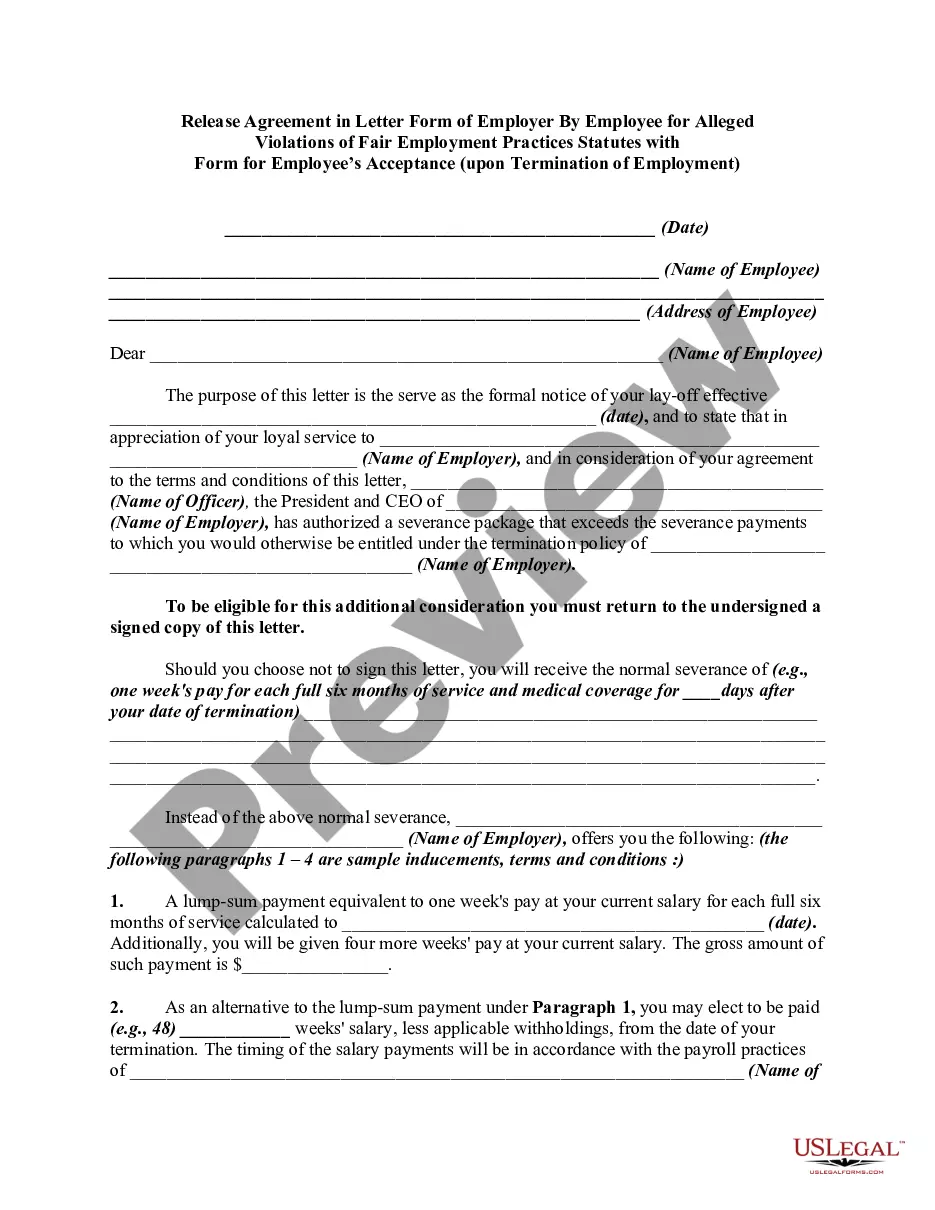
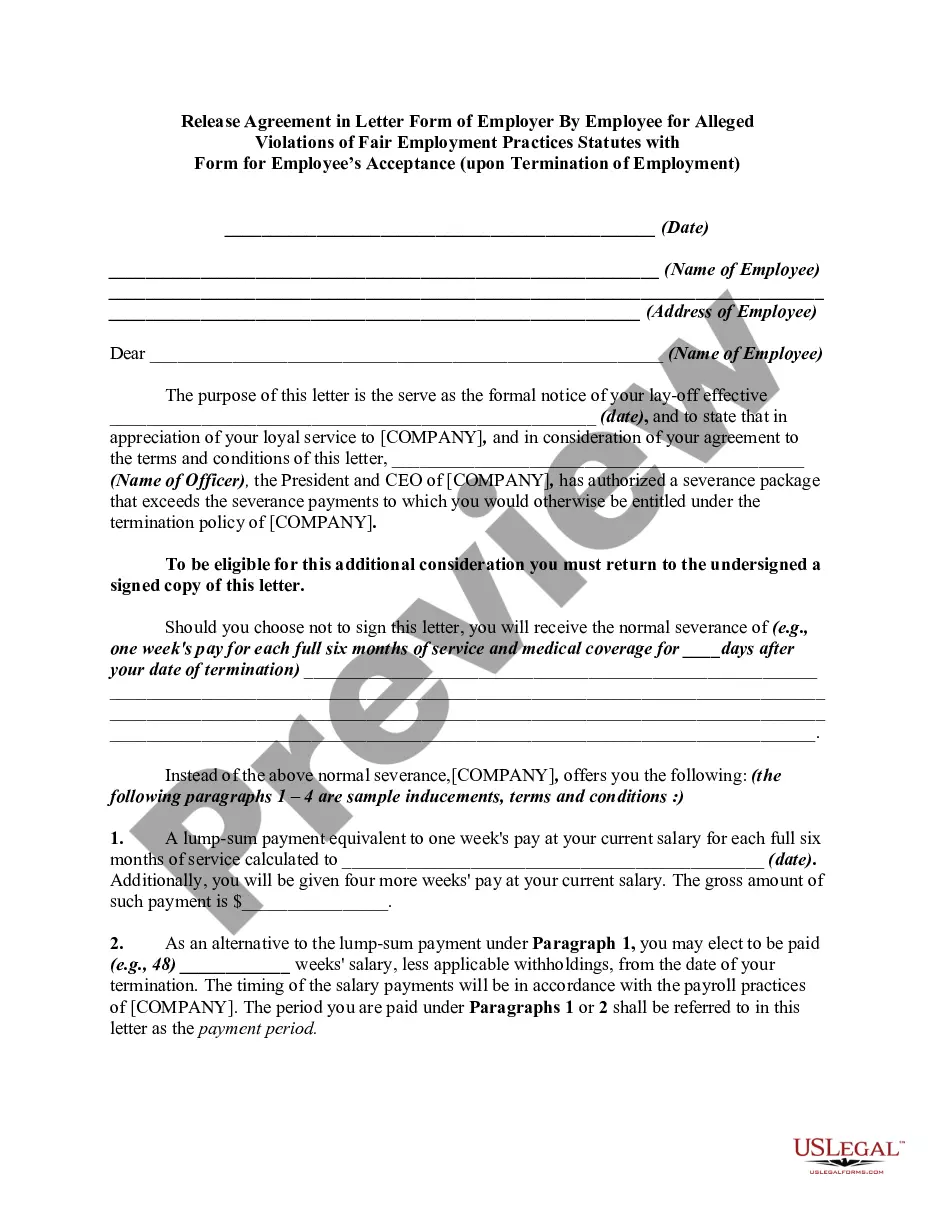
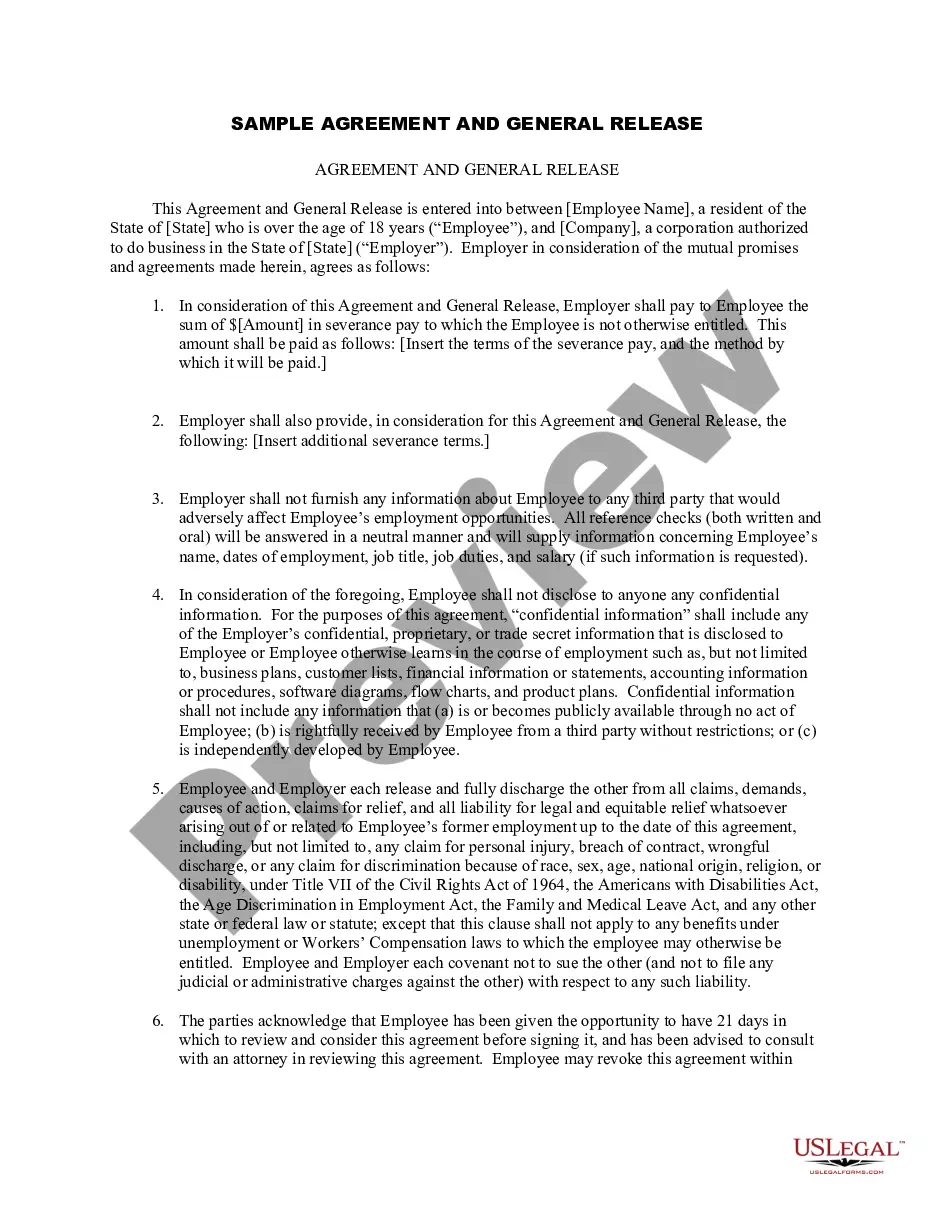
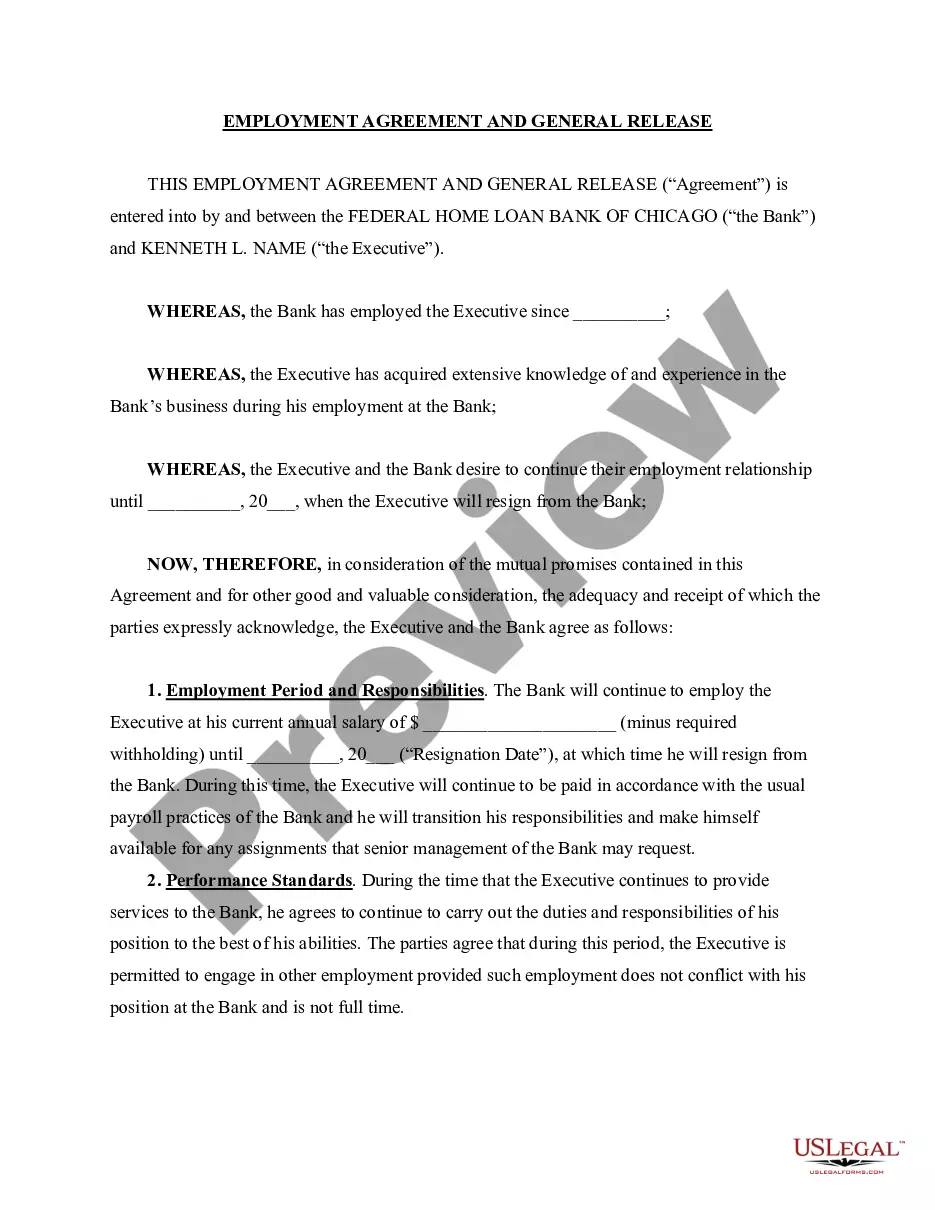
This Release Agreement in Letter Form allows an employer to formally notify an employee of their layoff while offering a financial separation package that is often more favorable than standard severance. The purpose of this agreement is to resolve any potential disputes related to alleged violations of fair employment practices statutes, including federal laws such as Title VII of the Civil Rights Act and the Americans with Disabilities Act. Unlike standard severance forms, this agreement often includes clauses that waive the employee's right to future claims.
Key components of this form
- Date and employee name and address sections for personalization.
- A section outlining the layoff notification and the effective date.
- Details of the severance package, including payment options and duration.
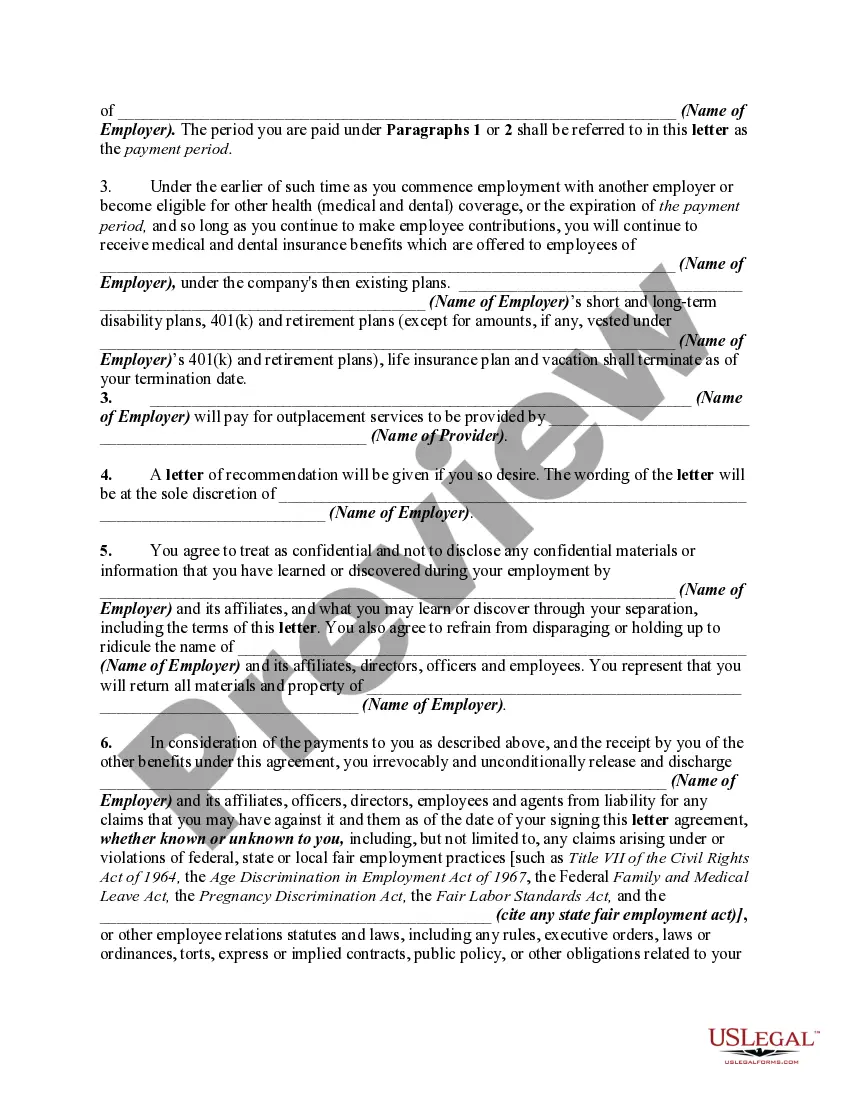
- Health insurance continuation during the payment period.
- A confidentiality clause regarding company information.
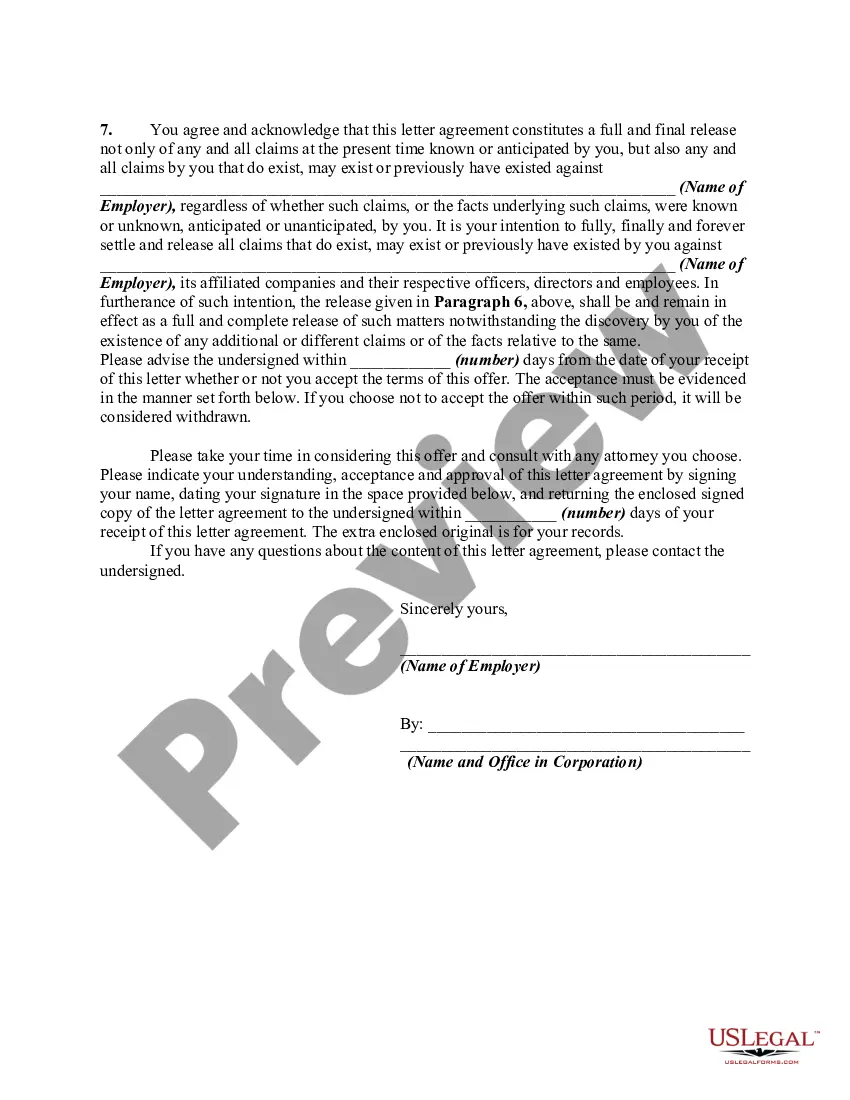
- Release of liability for claims against the employer.
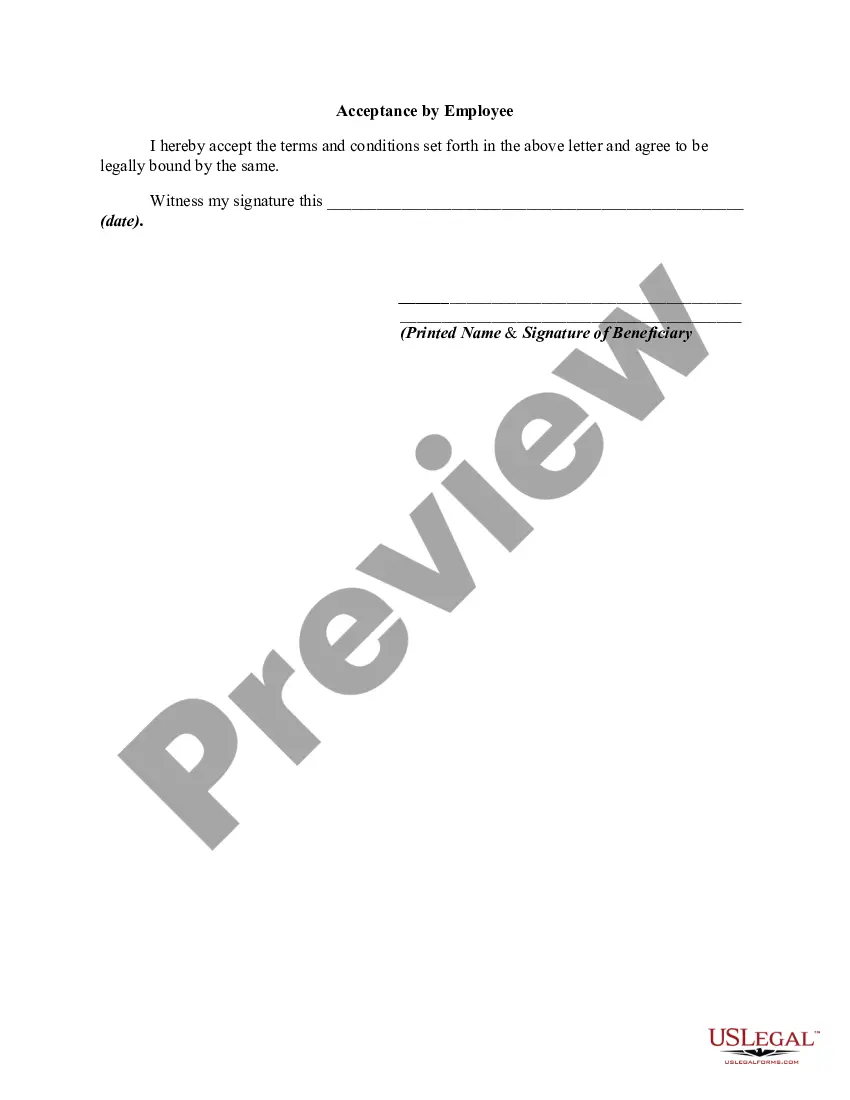
- Instructions for employee acceptance of the terms.
Situations where this form applies
This form is typically used when an employer decides to lay off an employee and wants to offer a more beneficial severance package in exchange for the employee releasing their rights to any future claims against the employer. It's beneficial in situations where there may be concerns about discrimination, wrongful termination, or other legal violations under fair employment laws.
Intended users of this form
- Employers looking to lay off employees while providing additional financial compensation and legal protections.
- Employees who are offered severance and need to understand the terms before acceptance.
- Human resource professionals managing layoffs or terminations.
How to prepare this document
- Fill in the date and employeeâs full name and address at the beginning of the letter.
- Specify the effective date of the layoff in the designated section.
- Clearly outline the severance package options and any additional benefits being offered.
- Ensure the confidentiality and release of liability clauses are included and understood.
- Request the employee to sign and return the letter within the specified time frame to indicate acceptance.
Is notarization required?
This form does not typically require notarization unless specified by local law. However, ensuring that both parties have signed the document properly is crucial for enforceability.
Get your form ready online
Our built-in tools help you complete, sign, share, and store your documents in one place.
Make edits, fill in missing information, and update formatting in US Legal Forms—just like you would in MS Word.
Download a copy, print it, send it by email, or mail it via USPS—whatever works best for your next step.
Sign and collect signatures with our SignNow integration. Send to multiple recipients, set reminders, and more. Go Premium to unlock E-Sign.
If this form requires notarization, complete it online through a secure video call—no need to meet a notary in person or wait for an appointment.
We protect your documents and personal data by following strict security and privacy standards.

Make edits, fill in missing information, and update formatting in US Legal Forms—just like you would in MS Word.

Download a copy, print it, send it by email, or mail it via USPS—whatever works best for your next step.

Sign and collect signatures with our SignNow integration. Send to multiple recipients, set reminders, and more. Go Premium to unlock E-Sign.

If this form requires notarization, complete it online through a secure video call—no need to meet a notary in person or wait for an appointment.

We protect your documents and personal data by following strict security and privacy standards.
Typical mistakes to avoid
- Failing to include all required details such as effective dates and benefits.
- Not allowing the employee sufficient time to review before signing.
- Omitting state-specific requirements that could affect the validity of the agreement.
- Not providing the employee with a copy of the signed agreement for their records.
Benefits of using this form online
- Convenience of downloading and editing the form to suit specific needs.
- Access to templates that comply with legal standards designed by licensed attorneys.
- Ability to ensure all necessary components and clauses are included for legal protection.
Legal use & context
The Release Agreement is enforceable as long as it is entered into voluntarily and the terms are clear. However, certain limitations may apply based on state laws or specific employment contracts. Always consider consulting with a legal professional when drafting or signing such agreements.
What to keep in mind
- The form serves to formalize a severance agreement while releasing the employer from future claims.
- Both the employer and employee must carefully review the terms before signing.
- It's crucial to comply with state-specific employment laws that may affect the use of this agreement.
Looking for another form?



Form popularity
FAQ
This Release Agreement in Letter Form is used when an employer terminates an employee and offers a severance package in exchange for the employee’s release of claims under fair employment laws. It formalizes the layoff date, outlines the severance terms and payment options, provides health insurance continuation, includes a confidentiality clause, and requires the employee’s acceptance to release liability.
A termination and release agreement combines the formal end of employment with a promise by the employee to relinquish claims against the employer. In this form, it includes a severance package, potential payment options, health insurance continuation, a confidentiality clause, and a release of liability, plus instructions for how the employee accepts the terms.
An employee release agreement is a contract in which the employee agrees to release the employer from liability in exchange for consideration, typically severance. This form frames that exchange in the context of termination, specifying severance terms, health insurance continuation, a confidentiality clause, and a signed release of claims, along with acceptance instructions.
In this form, red flags include an overly broad release of liability without clear limits, severance terms that are vague or incomplete, missing health insurance continuation details, and unclear instructions for how the employee accepts the terms. Because the agreement ties claims under fair employment statutes to severance, clarity is essential.
Evidence of retaliation would generally involve documented adverse actions tied to protected activity or status. This form does not itself establish retaliation; it is used to settle alleged violations and provide a release in exchange for severance. Individuals should consult counsel to assess any retaliation evidence before signing and to determine appropriate further steps.
This form is a Release Agreement in Letter Form of Employer By Employee for Alleged Violations of Fair Employment Practices Statutes with Form for Employee's Acceptance upon Termination of Job or Employment. It differs from a generic severance by explicitly addressing alleged fair employment violations, including an employee acceptance form, and tying severance to a release of liability and confidentiality provisions.