Revocation of Trust and Acknowledgment of Receipt of Notice of Revocation by Trustee
Overview of this form
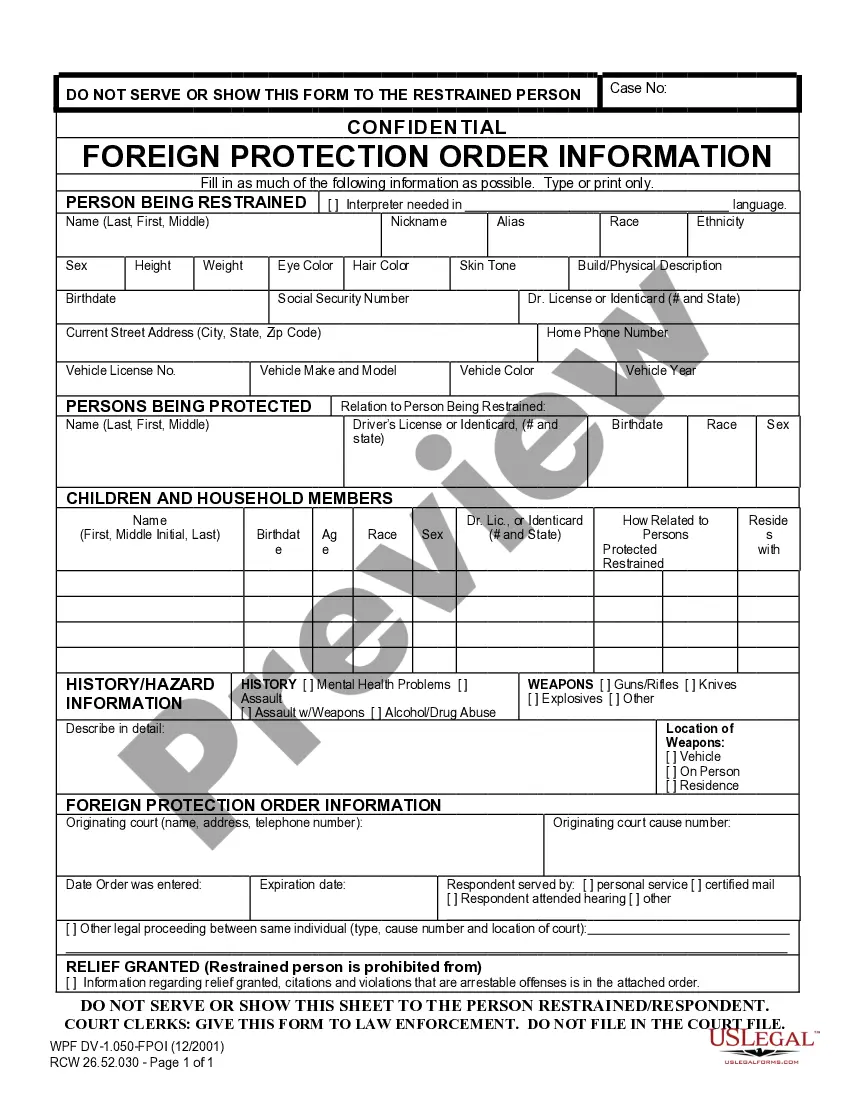
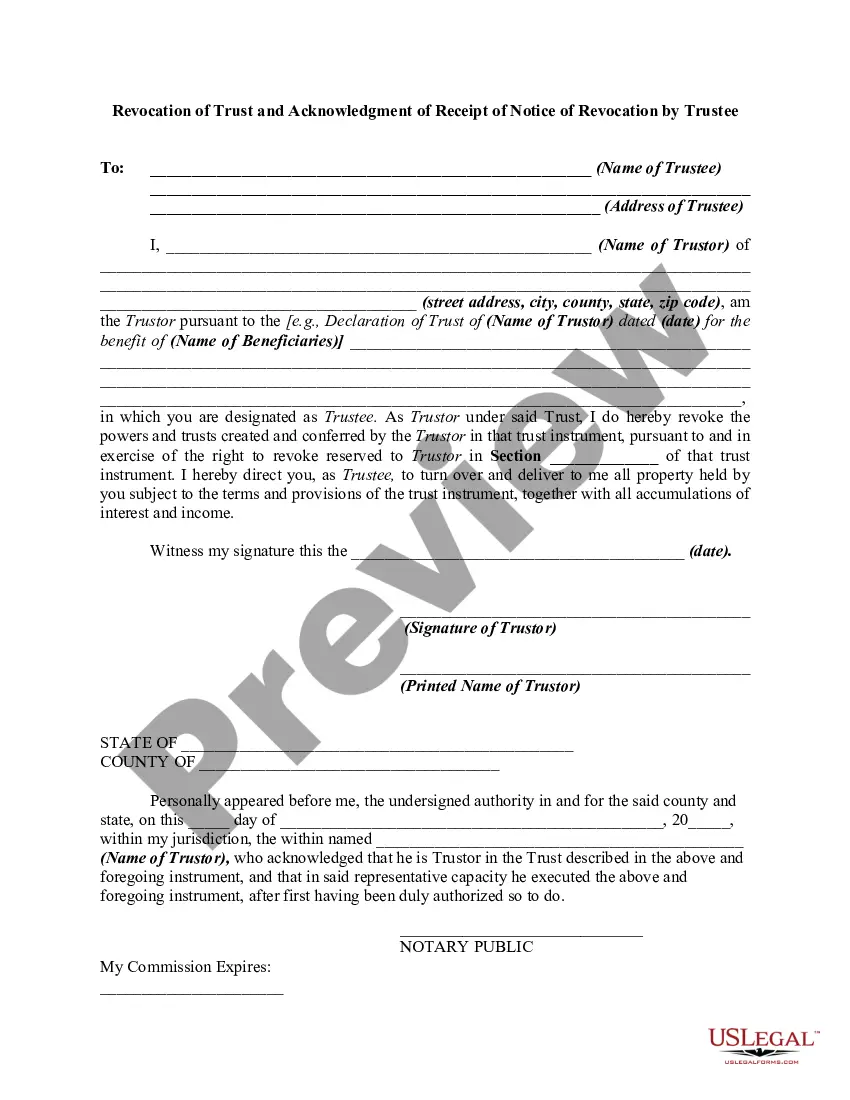
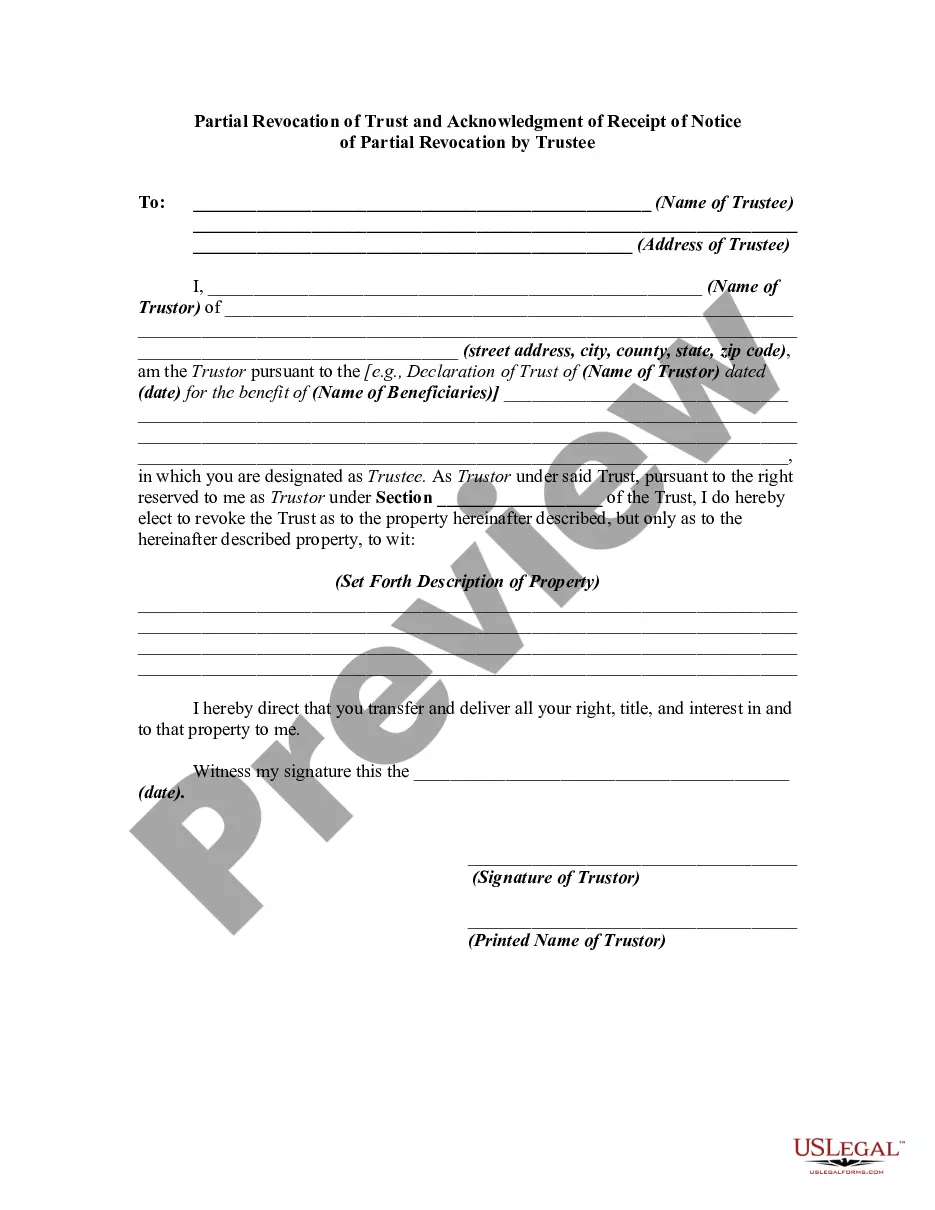
The Revocation of Trust and Acknowledgment of Receipt of Notice of Revocation by Trustee is a legal document that allows a trustor to formally revoke a trust they previously established. This form is crucial for ensuring that the trust is dismantled according to the terms laid out in the original trust agreement. Unlike other trust-related documents, this form specifically outlines the revocation process and the necessary acknowledgments by the trustee, making it essential for anyone needing to terminate a trust.
Form components explained
- Name and address of the trustee.
- Name and address of the trustor.
- Description of the original trust, including beneficiaries.
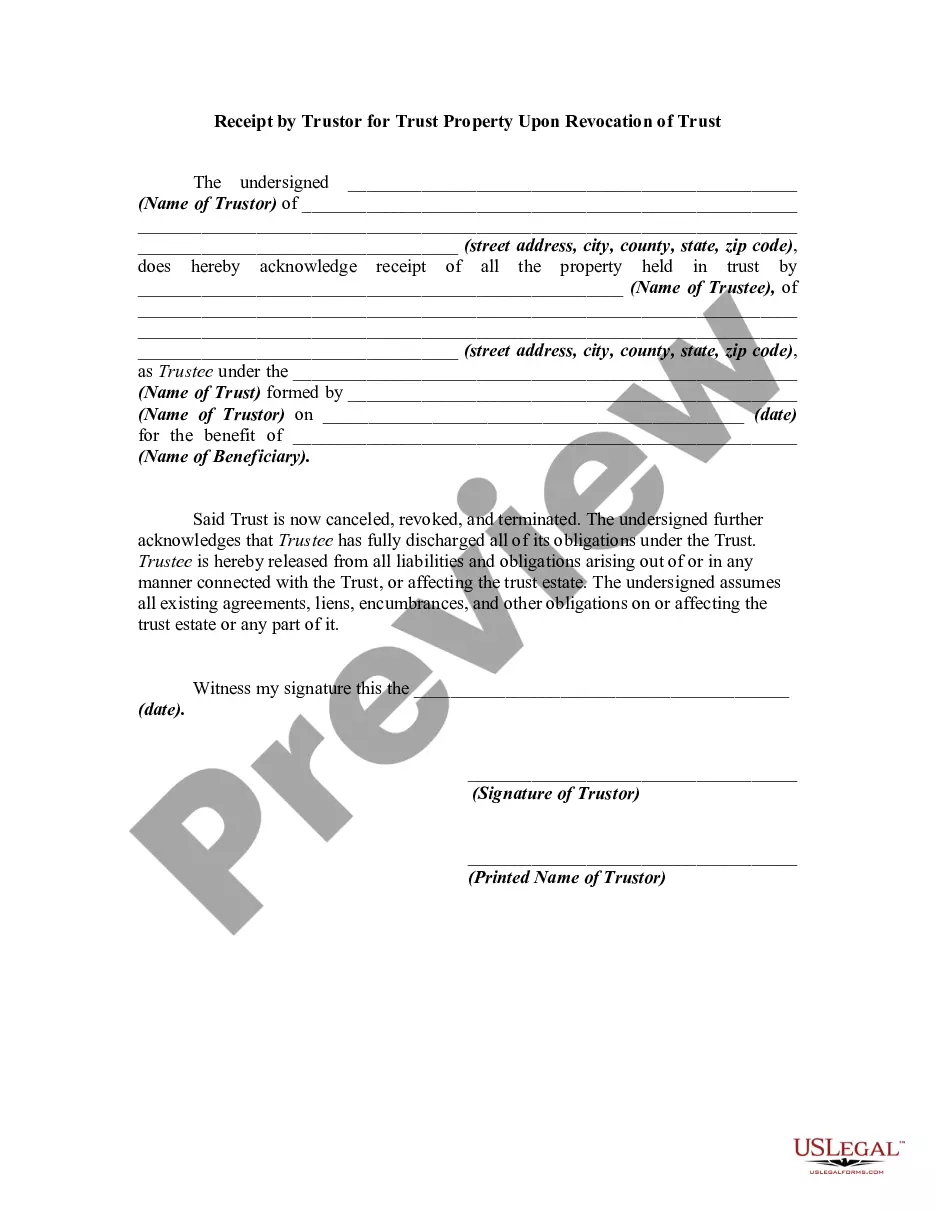
- Instructions for the trustee to return all trust property.
- Signature and notarization details for the trustor and trustee.
Situations where this form applies
This form is typically used when a trustor decides to revoke their trust due to changing circumstances, such as a change in financial situation, personal relationships, or simply a decision to no longer manage assets through a trust. It is essential for those who wish to reclaim their property and formally notify the trustee of the revocation.
Who needs this form
- Individuals who have established a revocable trust.
- Trustors seeking to terminate an existing trust.
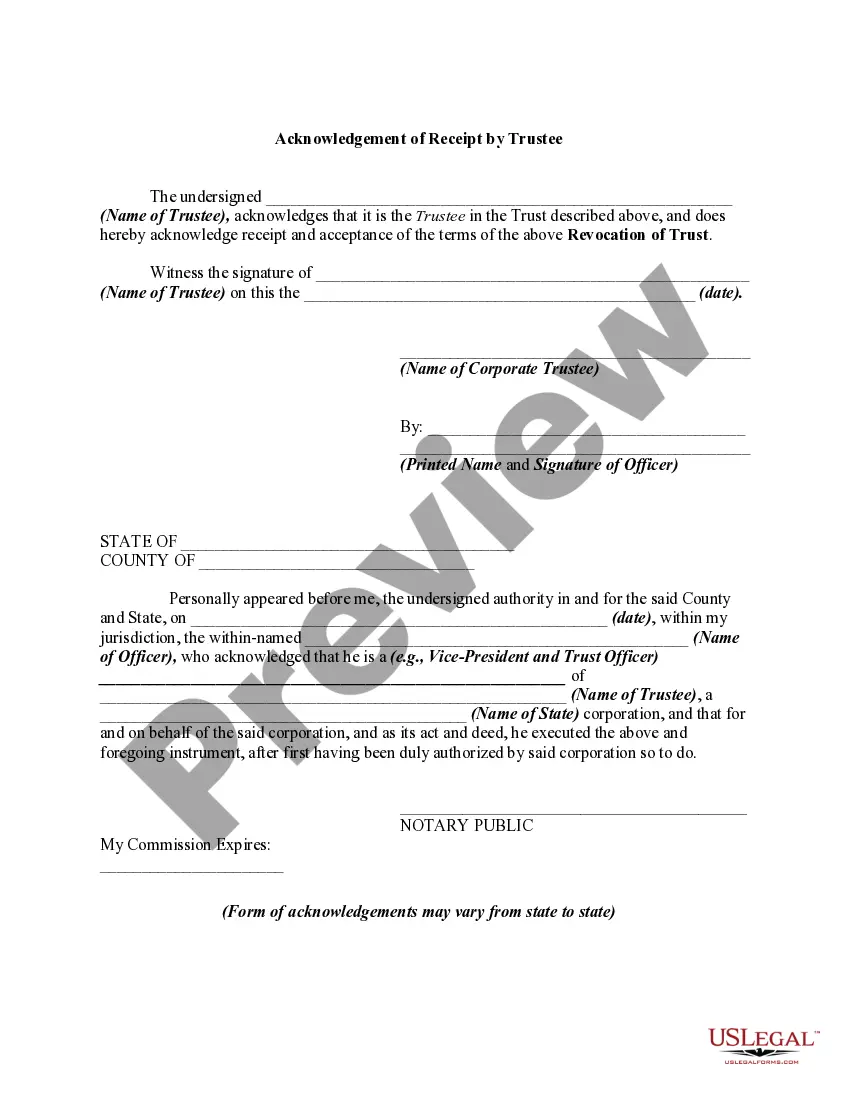
- Trustees who need to acknowledge the termination of trust and return assets.
Instructions for completing this form
- Identify and fill in the names and addresses of both the trustor and trustee.
- Describe the original trust, including its name, date established, and beneficiaries.
- State the section of the trust instrument that grants the authority to revoke the trust.
- Have the trustor sign and date the form in the presence of a notary public.
- The trustee must acknowledge receipt of the revocation and signature.
Notarization requirements for this form
Yes, this form must be notarized to be legally valid. It is essential to ensure that the identity of the trustor is verified and that the signing process adheres to legal standards. US Legal Forms offers integrated online notarization services that are available 24/7, ensuring a secure and convenient experience without the need to travel.
Get your form ready online
Our built-in tools help you complete, sign, share, and store your documents in one place.
Make edits, fill in missing information, and update formatting in US Legal Forms—just like you would in MS Word.
Download a copy, print it, send it by email, or mail it via USPS—whatever works best for your next step.
Sign and collect signatures with our SignNow integration. Send to multiple recipients, set reminders, and more. Go Premium to unlock E-Sign.
If this form requires notarization, complete it online through a secure video call—no need to meet a notary in person or wait for an appointment.
We protect your documents and personal data by following strict security and privacy standards.

Make edits, fill in missing information, and update formatting in US Legal Forms—just like you would in MS Word.

Download a copy, print it, send it by email, or mail it via USPS—whatever works best for your next step.

Sign and collect signatures with our SignNow integration. Send to multiple recipients, set reminders, and more. Go Premium to unlock E-Sign.

If this form requires notarization, complete it online through a secure video call—no need to meet a notary in person or wait for an appointment.

We protect your documents and personal data by following strict security and privacy standards.
Common mistakes to avoid
- Failing to properly identify the trust in question.
- Not including the correct section of the trust agreement governing revocation.
- Omitting notarization or signatures where required.
Why use this form online
- Instant access to downloadable templates that you can complete at your convenience.
- Edit and customize the form to suit your specific requirements and circumstances.
- Trustworthy resources created by licensed attorneys ensure legal validity.
- Time-saving, allowing you to focus on other important tasks.
Quick recap
- The Revocation of Trust allows the trustor to terminate an existing trust.
- It is critical for the trustee to understand their responsibilities upon revocation.
- Notarization is a legal requirement for this form to be considered valid.
- Consult local law to ensure compliance with state-specific requirements.
Looking for another form?
Form popularity
FAQ
You have the right to revoke your deed of trust. It is the writing that evidences the agreement to allow the lender a security interest in your property.Even after you sign the deed of trust, you STILL hold legal title to the property.
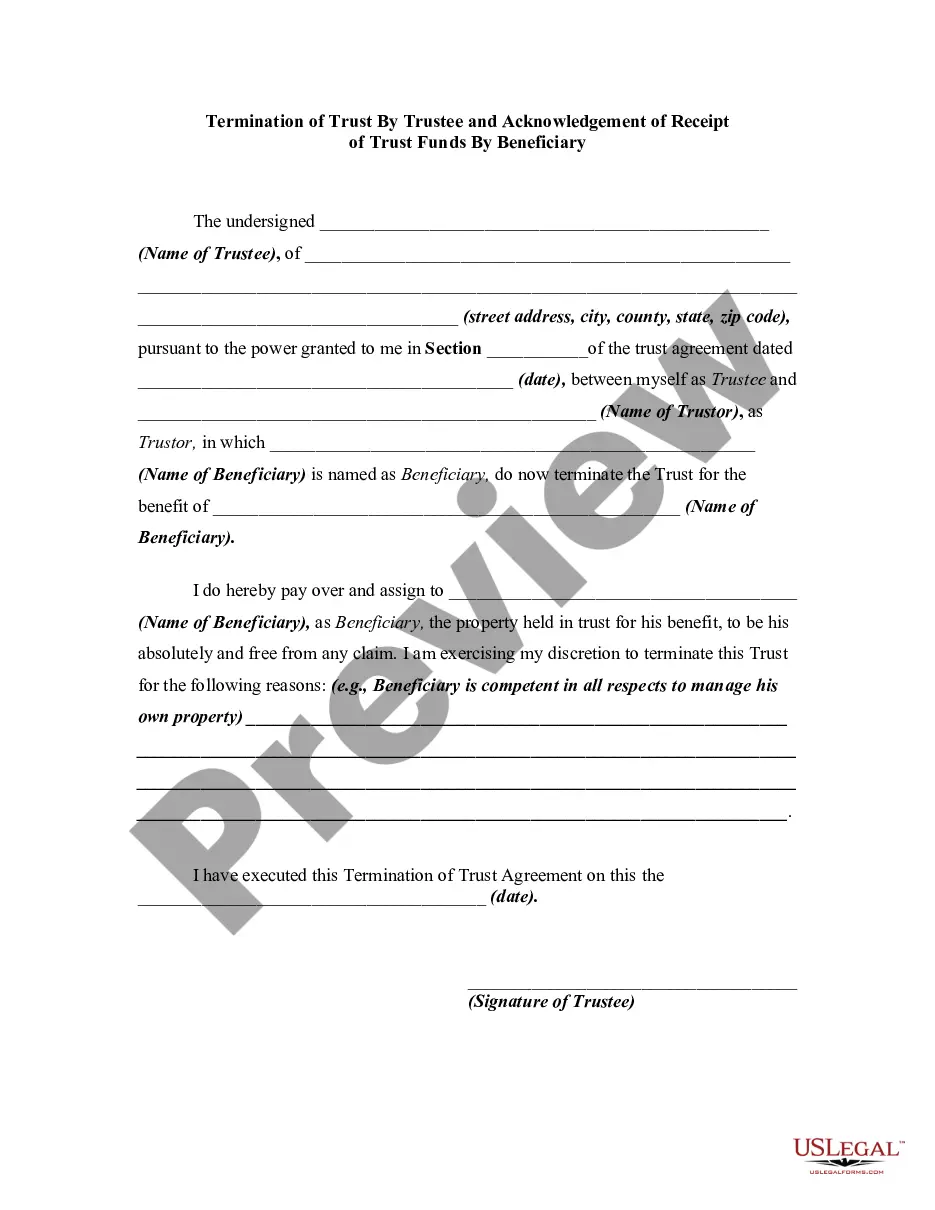
In some states, your trustee must submit a formal accounting of the trust's operation to all beneficiaries.Trustees can sometimes waive this requirement if all beneficiaries agree in writing. In either case, after the report is made, the trust's assets can be distributed and the trust can be dissolved.
One of the most common reasons for revoking a trust, for example, is a divorce, if the trust was created as a joint document with one's soon-to-be ex-spouse.A revocable trust may also be revoked if the grantor wants to appoint a new trustee or change the provisions of the trust completely.
If you want to revoke your trust, you must formally take all of the trust assets out of the living trust and transfer title back to you. Basically, you must reverse the process you followed when you transferred ownership of the property to yourself as trustee.
Remove All Property from the Trust. Fill out a Revocation Declaration. Review your Revocation. Finalize the Declaration with a Notary as Witness. Submit or Store your Declaration.
You must actually transfer or place property in the trust. That means the trust, with you as trustee, owns the property in it.You can also take property out of the trust if your needs change or if you want to give it to your beneficiary.
The first step in dissolving a revocable trust is to remove all the assets that have been transferred into it. The second step is to fill out a formal revocation form, stating the grantor's desire to dissolve the trust.
An irrevocable trust is a trust with terms and provisions that cannot be changed. However, under certain circumstances, changes to an irrevocable trust can be made and a trust can even be terminated. A material purpose of the trust no longer exists.