Notice of Hearing
Understanding this form
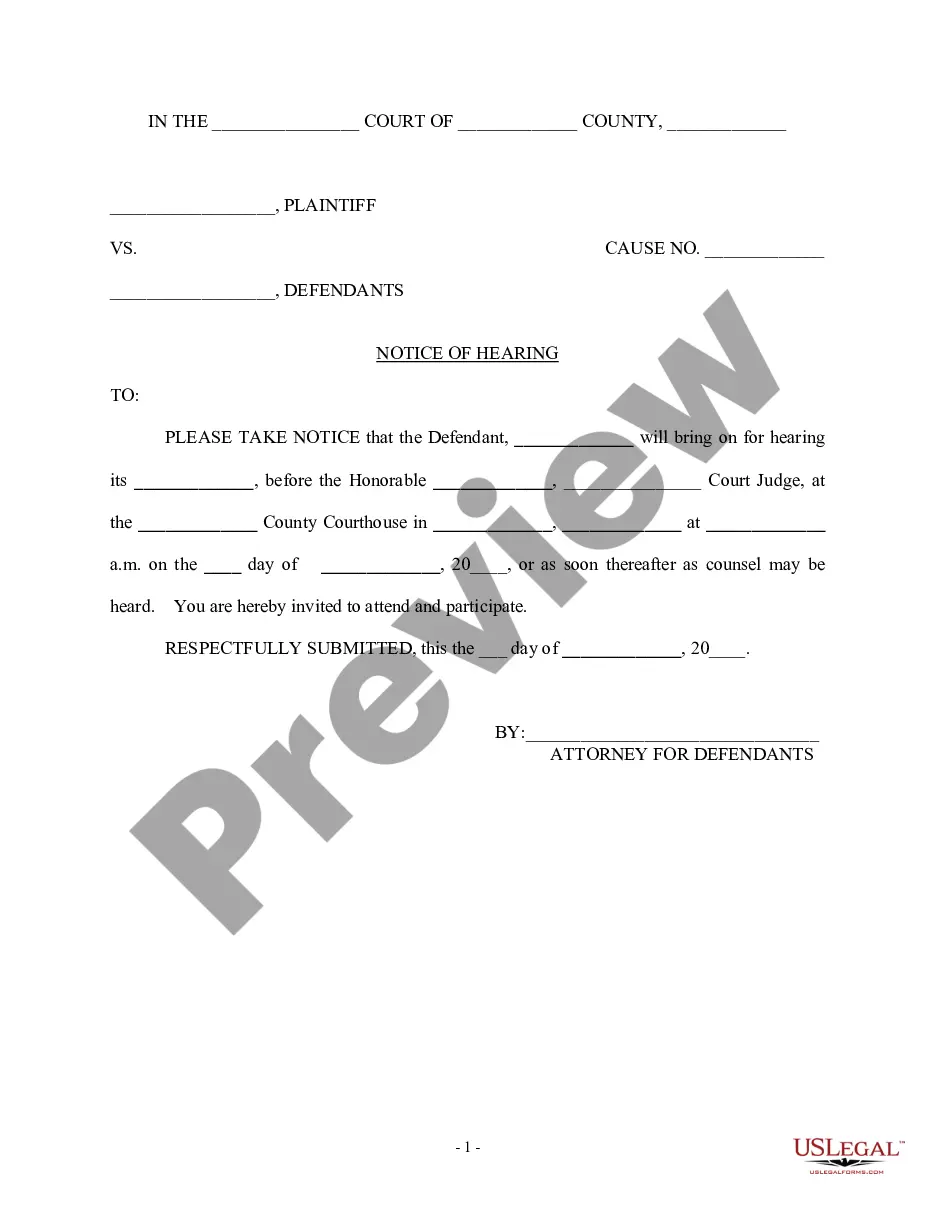
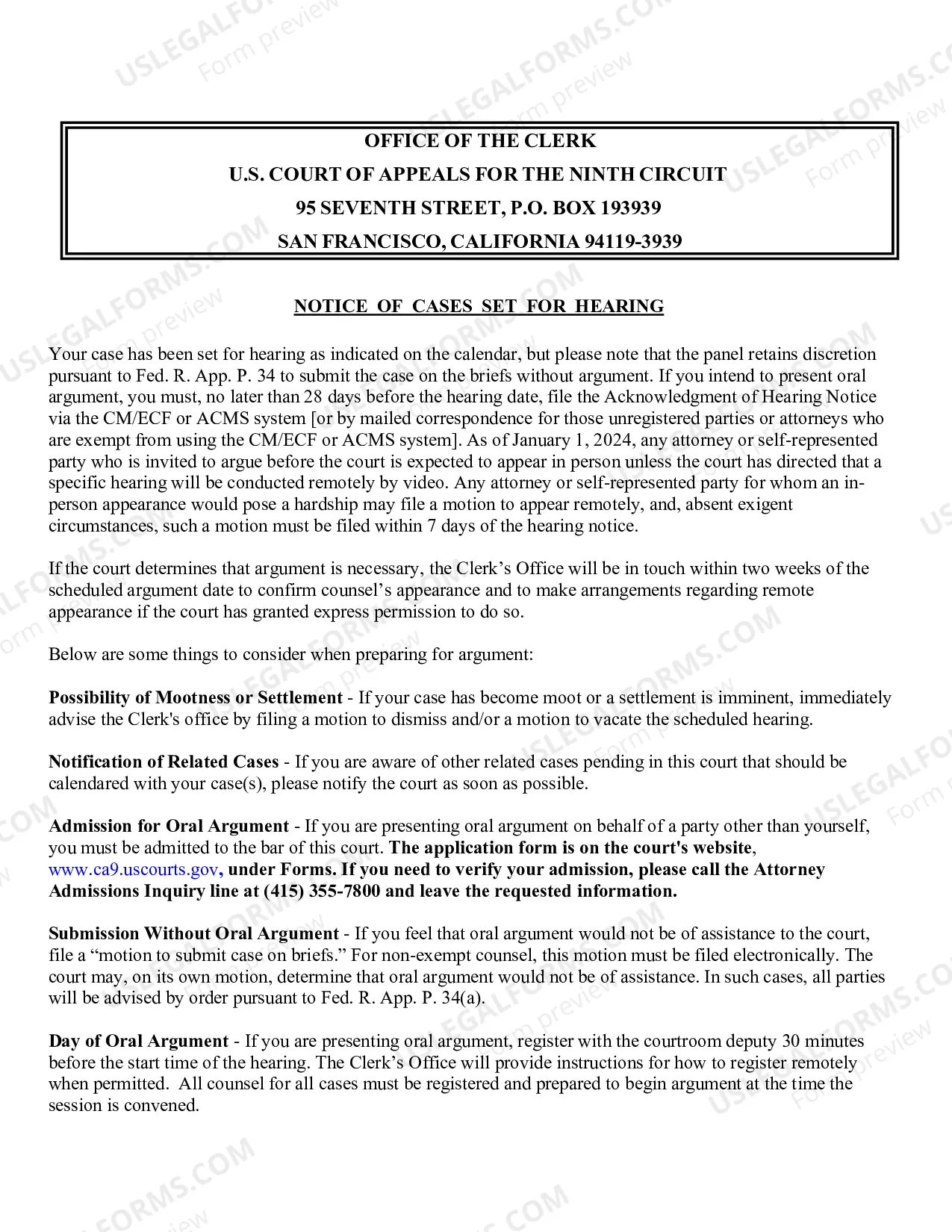
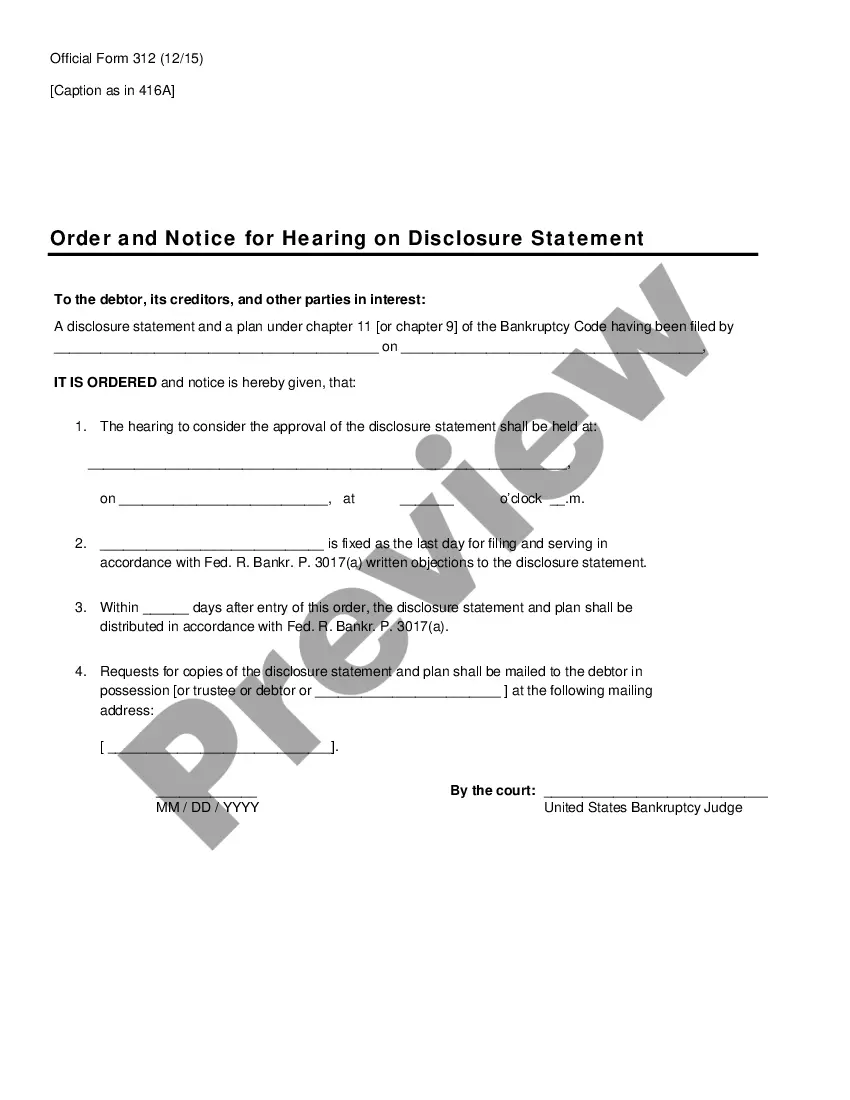
The Notice of Hearing is a legal document used to inform the involved parties, specifically the plaintiff, that the defendant will present a case before a court. This form outlines essential details such as the judge's name, the court's location, and the date and time for the hearing. Unlike other court documents, the Notice of Hearing serves a specific purpose of notifying plaintiffs about the upcoming proceedings, ensuring their right to participate in the hearing.
Main sections of this form
- Name of the plaintiff and defendants
- Cause number assigned to the case
- Name of the judge presiding over the hearing
- Date, time, and location of the hearing
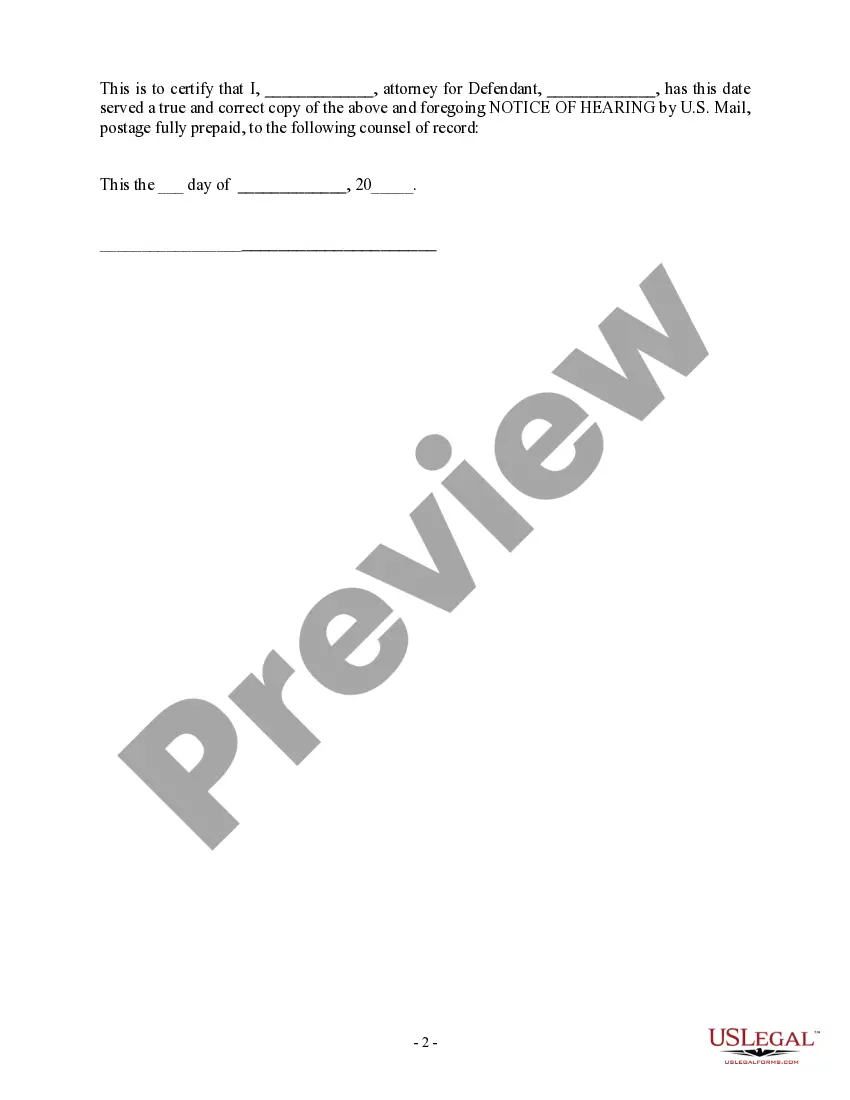
- Certificate of Service indicating notification of the hearing to the plaintiff's counsel
Common use cases
This form is used when defendants want to formally notify plaintiffs of an upcoming hearing regarding a specific matter in a legal case. It should be utilized in situations where the defendants have filed motions or requests that require a legal hearing and want to ensure the plaintiff is aware and has an opportunity to respond or attend.
Who should use this form
- Defendants involved in a legal action who have filed a motion requiring a hearing
- Attorneys representing defendants in a court case
- Parties to a lawsuit who need to ensure all involved are notified of the hearing schedule
How to prepare this document
- Identify and enter the names of the parties involved in the case.
- Specify the cause number associated with your legal action.
- Fill in the name of the judge who will preside over the hearing.
- Enter the date, time, and location of the hearing.
- Sign the document as the attorney representing the defendants.
- Complete the Certificate of Service to confirm the notice has been delivered to the plaintiff's counsel.
Notarization requirements for this form
In most cases, this form does not require notarization. However, some jurisdictions or signing circumstances might. US Legal Forms offers online notarization powered by Notarize, accessible 24/7 for a quick, remote process.
Get your form ready online
Our built-in tools help you complete, sign, share, and store your documents in one place.
Make edits, fill in missing information, and update formatting in US Legal Forms—just like you would in MS Word.
Download a copy, print it, send it by email, or mail it via USPS—whatever works best for your next step.
Sign and collect signatures with our SignNow integration. Send to multiple recipients, set reminders, and more. Go Premium to unlock E-Sign.
If this form requires notarization, complete it online through a secure video call—no need to meet a notary in person or wait for an appointment.
We protect your documents and personal data by following strict security and privacy standards.

Make edits, fill in missing information, and update formatting in US Legal Forms—just like you would in MS Word.

Download a copy, print it, send it by email, or mail it via USPS—whatever works best for your next step.

Sign and collect signatures with our SignNow integration. Send to multiple recipients, set reminders, and more. Go Premium to unlock E-Sign.

If this form requires notarization, complete it online through a secure video call—no need to meet a notary in person or wait for an appointment.

We protect your documents and personal data by following strict security and privacy standards.
Common mistakes to avoid
- Failing to include the correct cause number, which can delay proceedings.
- Not providing sufficient notice time before a hearing, which may violate court rules.
- Incorrectly filling out the Certificate of Service, leading to potential legal disputes.
Why complete this form online
- Convenience of downloading the form anytime and anywhere.
- Editable templates that allow for accurate completion tailored to your needs.
- Assurance of legality, with forms drafted by licensed attorneys.
Legal use & context
- The Notice of Hearing is critical in ensuring all parties are informed about hearing dates, which is essential for due process.
- Failure to properly notify involved parties can result in complications or dismissal of motions due to lack of participation.
What to keep in mind
- The Notice of Hearing is essential for informing parties about upcoming court proceedings.
- Utilizing this form helps maintain procedural integrity and supports legal participation rights.
Legal terms and meanings
- Certificate of Service: A document confirming that a specific notice or legal document has been delivered to the involved parties.
- Cause Number: A unique identifier assigned to a case to track its progress through the court system.
- Presiding Judge: The judge responsible for overseeing a specific case during court proceedings.
Looking for another form?
Form popularity
FAQ
The Notice of Hearing informs the plaintiff that the defendant will present a case before the court. It lists the judge, court location, and the hearing’s date and time. It is used when a defendant’s motion requires a hearing and includes a Certificate of Service showing notification to the plaintiff’s counsel.
The defendant or the defendant’s attorney sends the Notice of Hearing to the plaintiff’s counsel. The form includes a Certificate of Service to confirm that notice has been provided, ensuring the plaintiff has been informed about the hearing and can attend or respond as appropriate, as part of the motion process that requires a hearing.
The defendant or the defendant’s attorney files the Notice of Hearing with the court and serves the plaintiff’s counsel, as reflected by the form’s Certificate of Service.
The Notice of Hearing lists the hearing’s date and time but does not specify a duration. The actual length is determined by the court based on the matters raised, not by this form.
The purpose is to inform the plaintiff that a hearing on a matter raised by a defendant’s motion is scheduled. It communicates the hearing date, time, location, and presiding judge, and includes a Certificate of Service to show the plaintiff’s counsel was notified.
This Notice of Hearing includes a Certificate of Service indicating notification to the plaintiff’s counsel and requires listing the judge, court location, and exact date and time. Those form-specific details ensure proper notice in a motion-related hearing.