Complaint Against Adjoining Landowner to Recover Proportionate Share of Cost of Construction of Fence
What is this form?
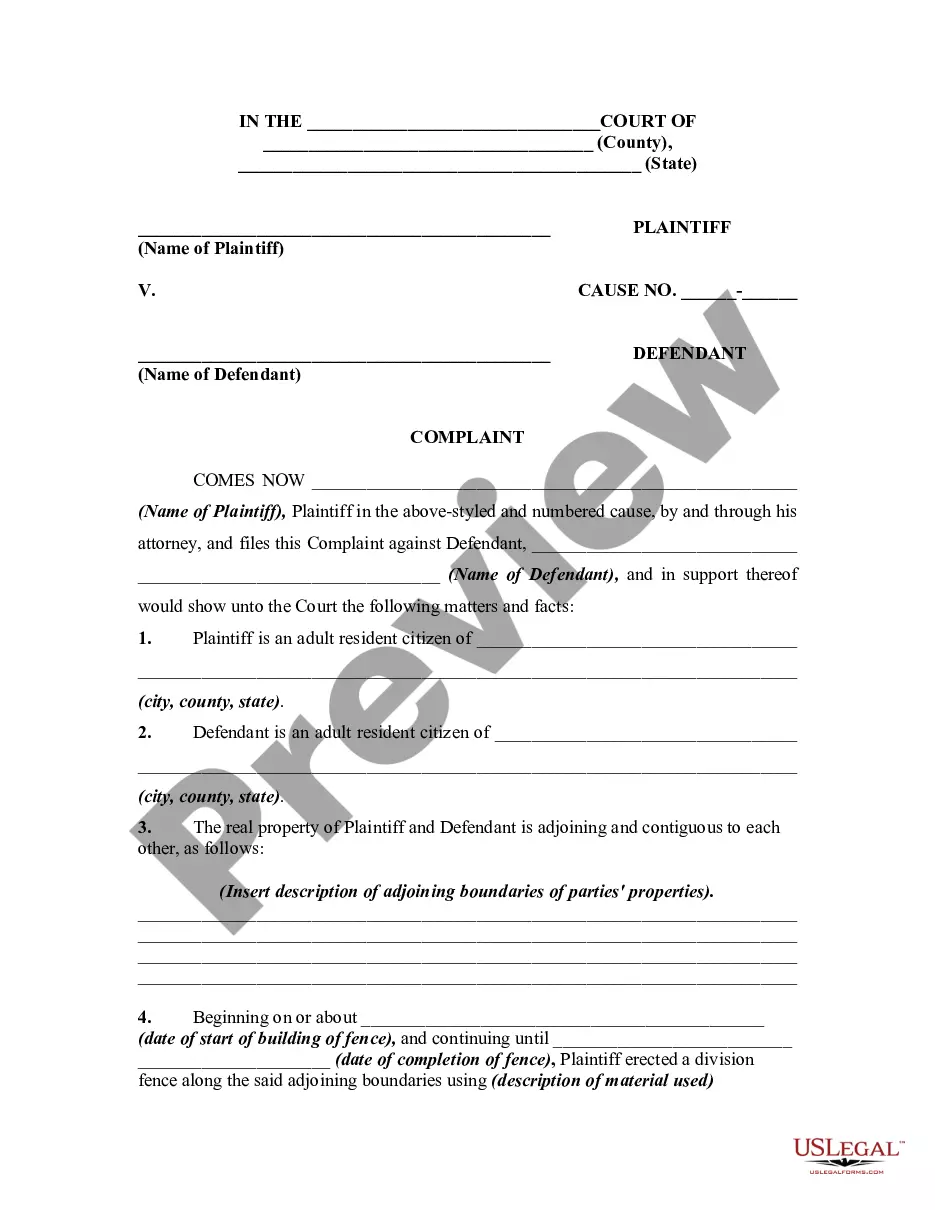
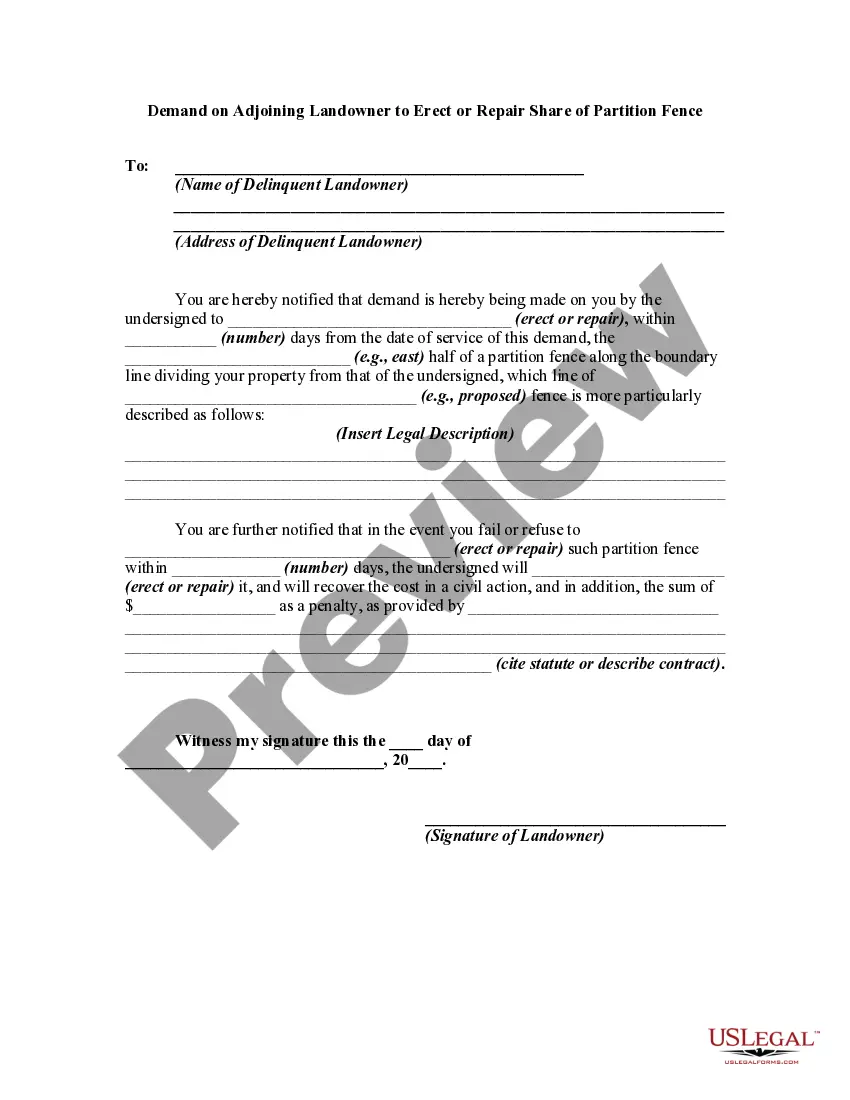
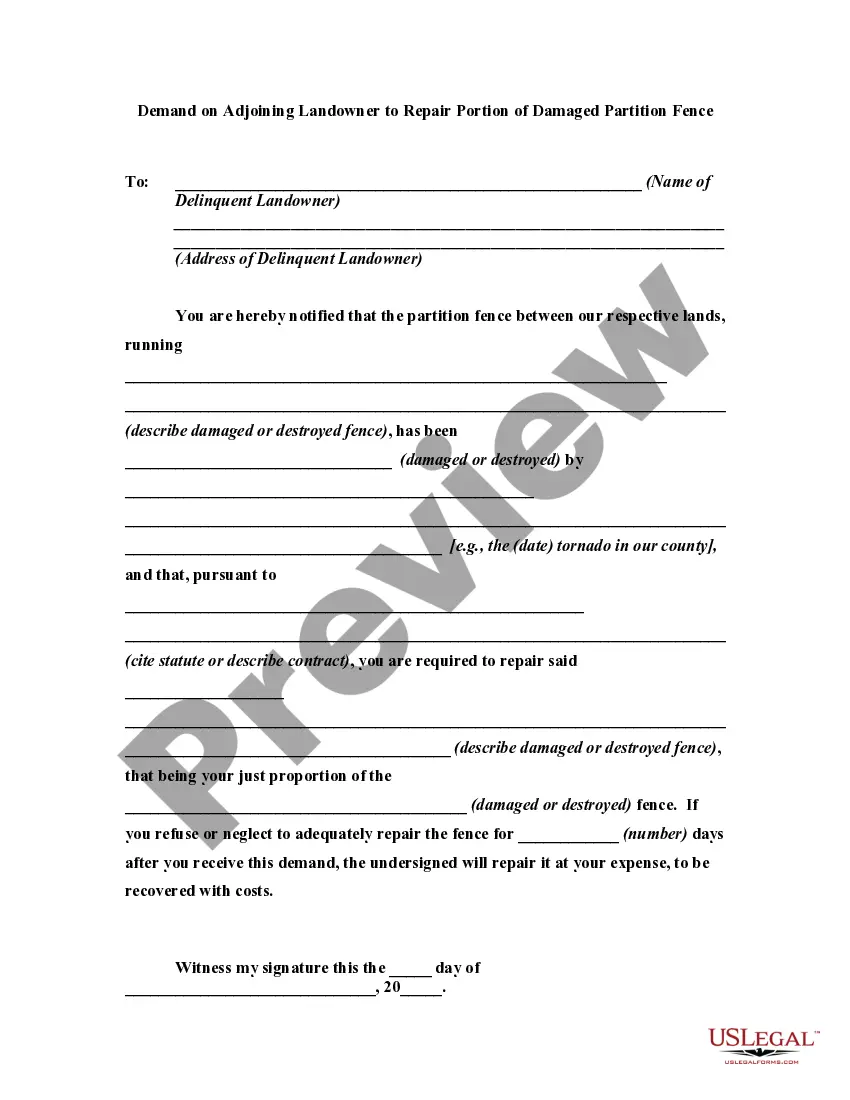
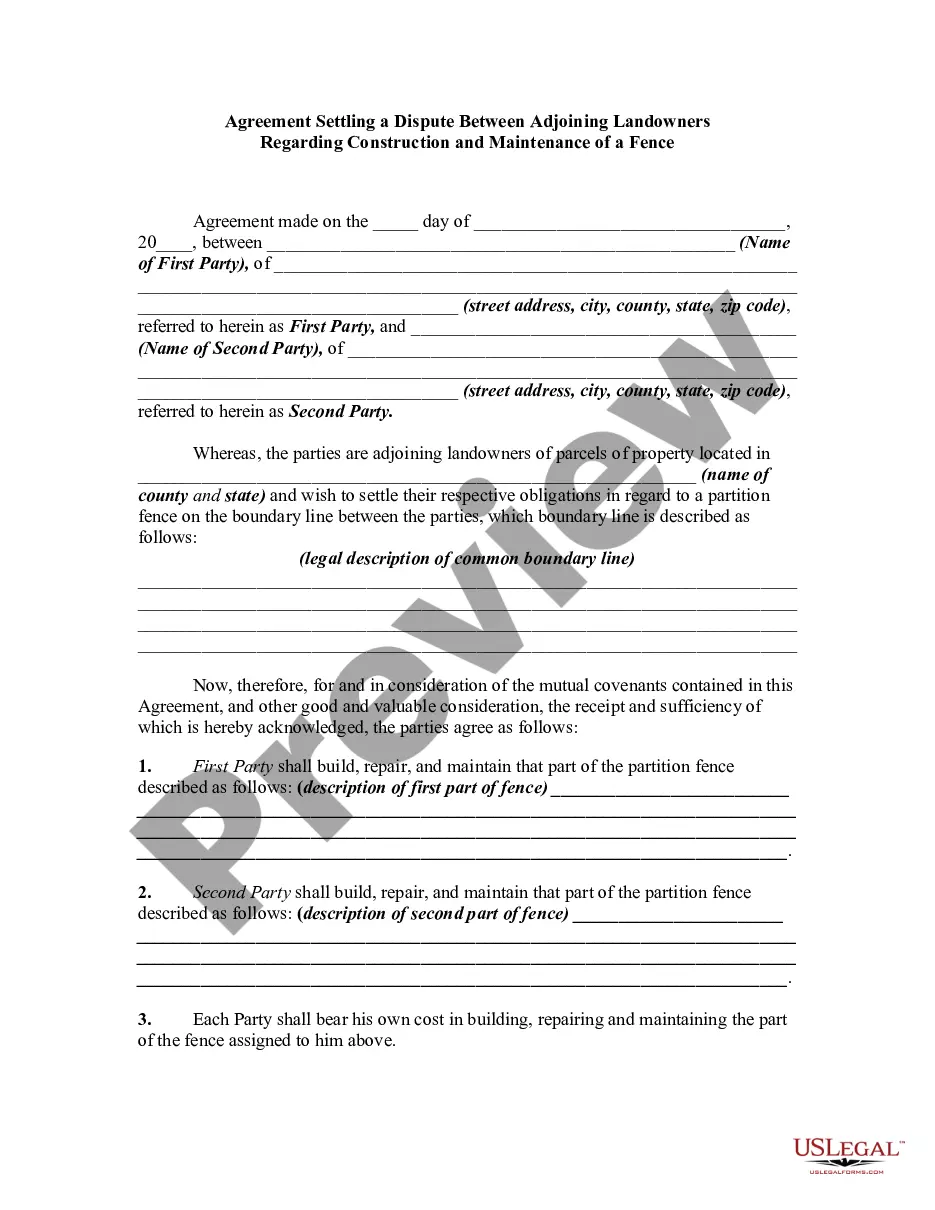
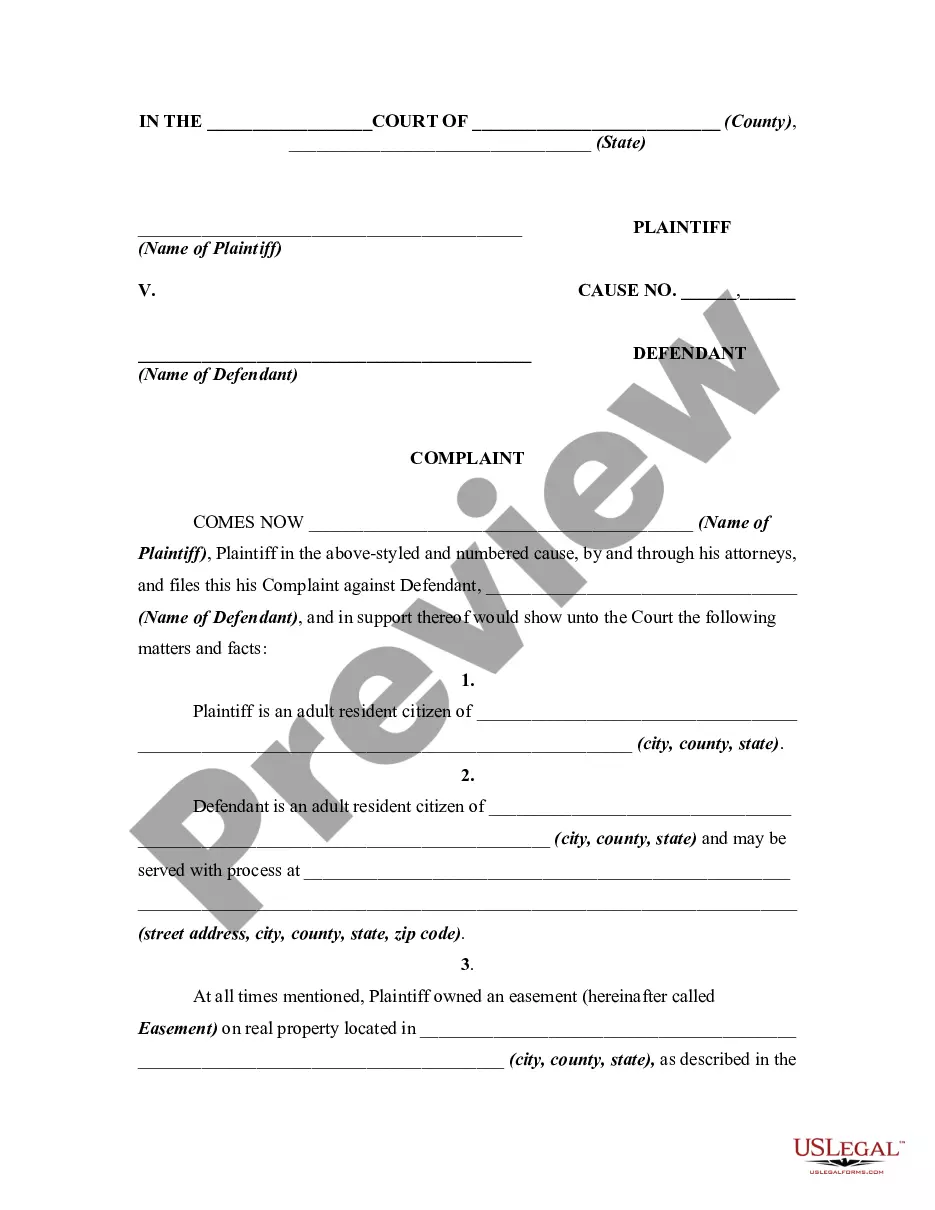
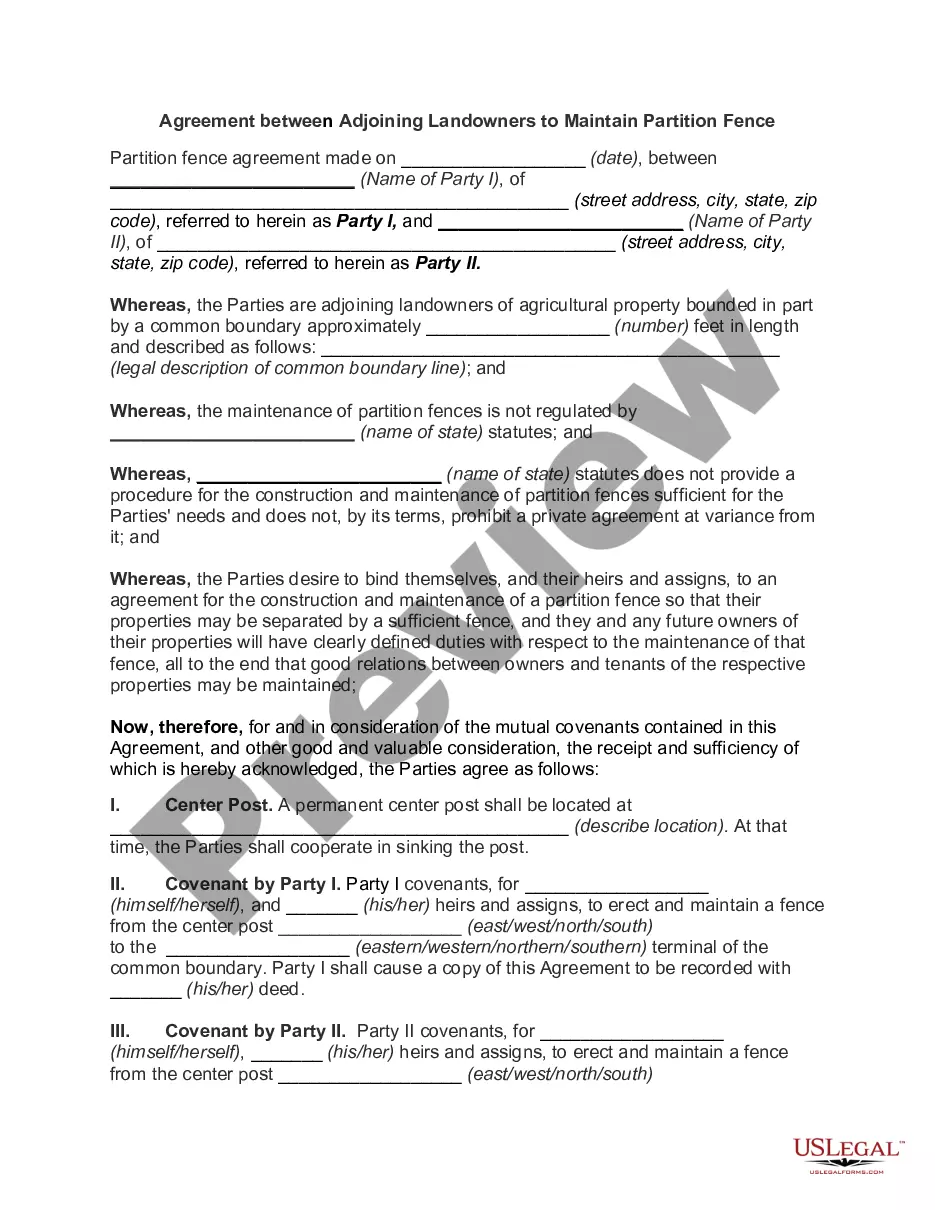
This Complaint Against Adjoining Landowner to Recover Proportionate Share of Cost of Construction of Fence is a legal document used when a property owner seeks reimbursement from an adjoining landowner for their share of the cost of constructing a division fence. Unlike other forms related to property disputes, this complaint specifically addresses the financial responsibilities related to fence construction or maintenance, reflecting the unique obligations defined by state statutes.
Form components explained
- Identification of the plaintiff and defendant, including their addresses.
- Description of the properties involved, including boundary details.
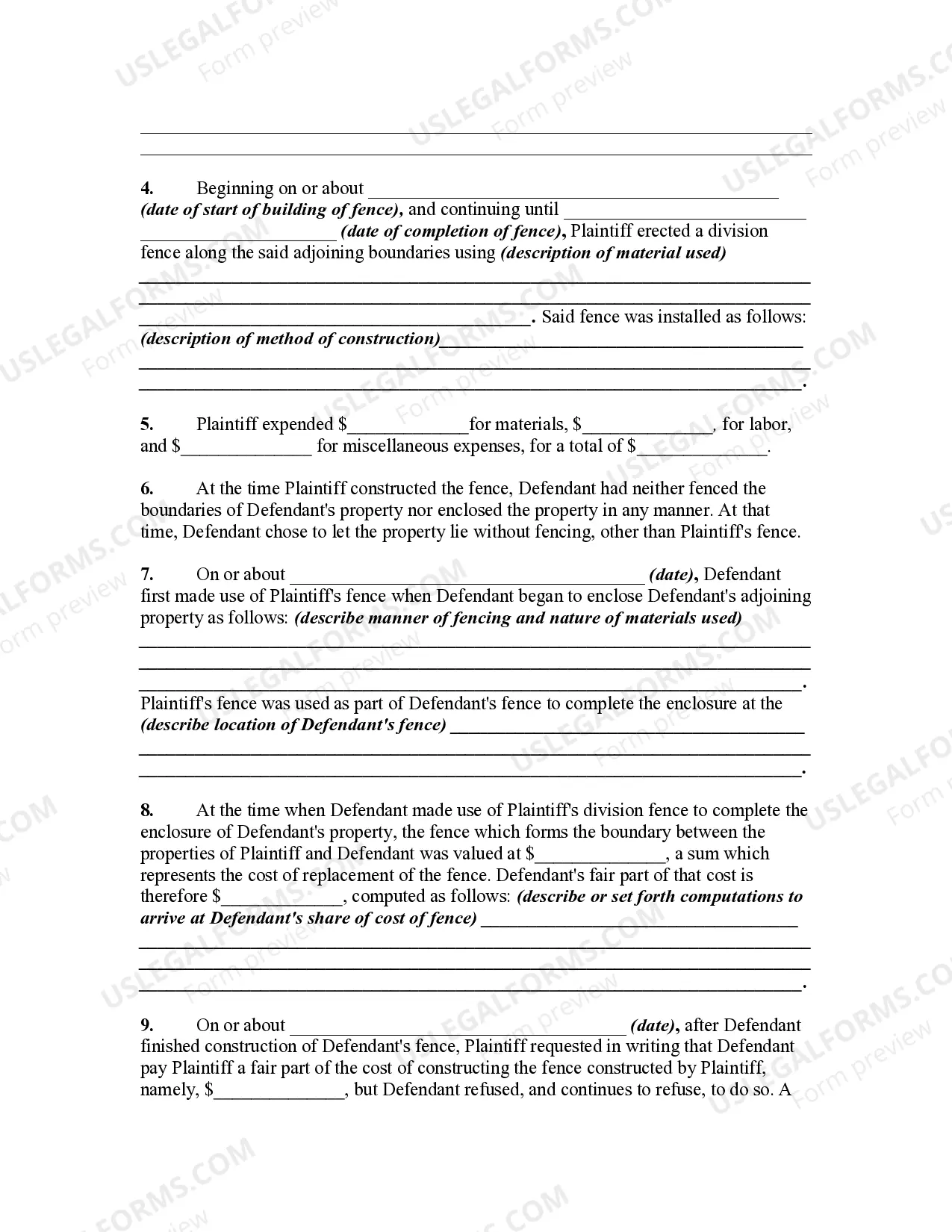
- Details of the fence construction, including materials and costs.
- Summary of the defendant's use of the fence and the resulting financial obligations.
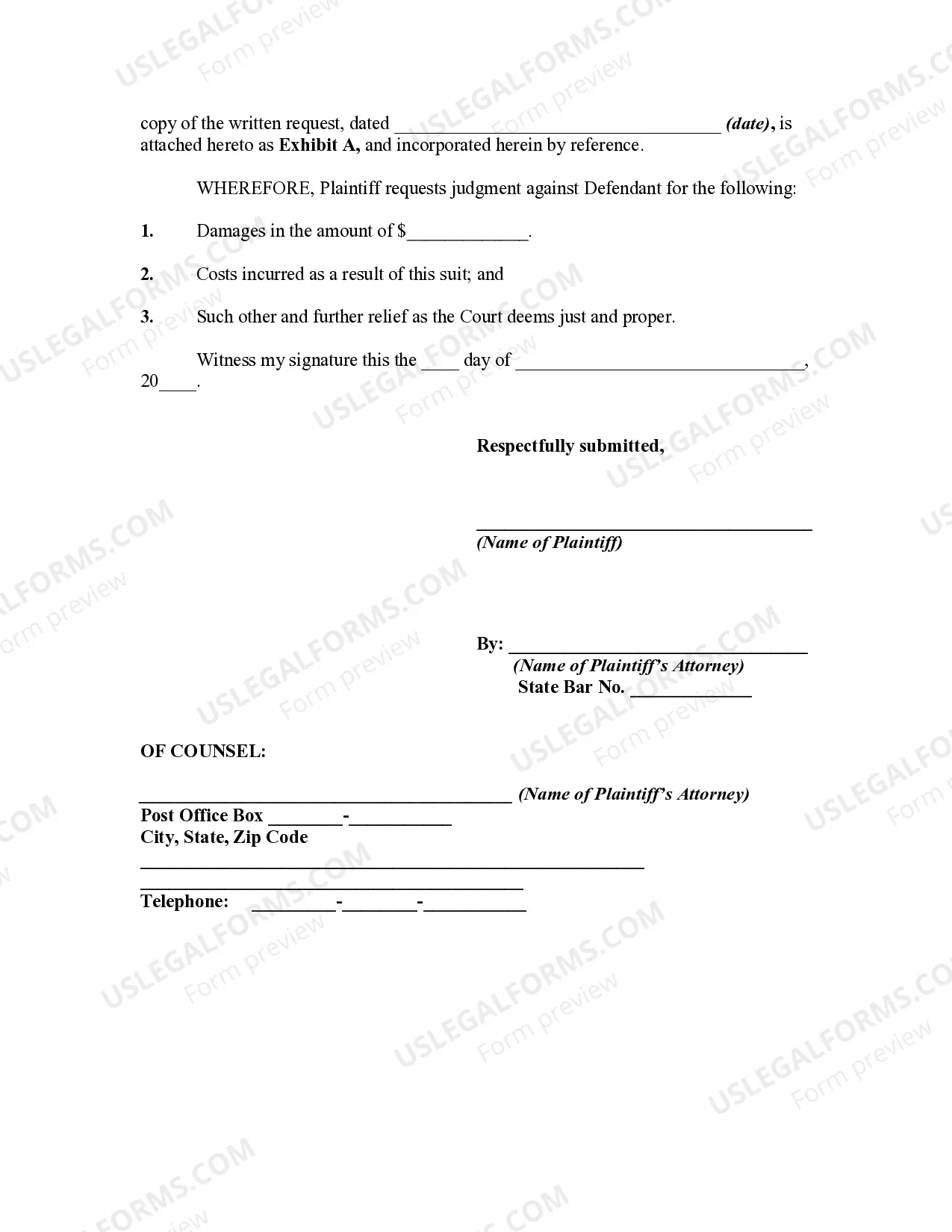
- Formal request for damages and other relief sought from the court.
Common use cases
This form is needed when a property owner constructs a fence on the property line and the adjoining owner subsequently benefits from that fence without contributing to its cost. It should be used when all attempts to request reimbursement have failed, and formal legal action is warranted to recover the costs associated with the fence's construction.
Who should use this form
- Property owners who have constructed a fence on the boundary between their property and that of an adjoining landowner.
- Individuals seeking to hold an adjacent property owner accountable for their share of the fence construction costs.
- Attorneys representing clients in property disputes related to fence costs.
How to prepare this document
- Identify the parties involved by entering the names and addresses of the plaintiff and defendant.
- Clearly describe the properties, including boundary information.
- Document the timeline of fence construction, noting the materials used and total costs incurred.
- State how the defendant utilized the plaintiff's fence for their own property.
- Fetch the requested reimbursement amount and related documentation, including the written request for payment.
Is notarization required?
Notarization is generally not required for this form. However, certain states or situations might demand it. You can complete notarization online through US Legal Forms, powered by Notarize, using a verified video call available anytime.
Get your form ready online
Our built-in tools help you complete, sign, share, and store your documents in one place.
Make edits, fill in missing information, and update formatting in US Legal Forms—just like you would in MS Word.
Download a copy, print it, send it by email, or mail it via USPS—whatever works best for your next step.
Sign and collect signatures with our SignNow integration. Send to multiple recipients, set reminders, and more. Go Premium to unlock E-Sign.
If this form requires notarization, complete it online through a secure video call—no need to meet a notary in person or wait for an appointment.
We protect your documents and personal data by following strict security and privacy standards.

Make edits, fill in missing information, and update formatting in US Legal Forms—just like you would in MS Word.

Download a copy, print it, send it by email, or mail it via USPS—whatever works best for your next step.

Sign and collect signatures with our SignNow integration. Send to multiple recipients, set reminders, and more. Go Premium to unlock E-Sign.

If this form requires notarization, complete it online through a secure video call—no need to meet a notary in person or wait for an appointment.

We protect your documents and personal data by following strict security and privacy standards.
Common mistakes to avoid
- Failing to provide complete and accurate property boundary descriptions.
- Neglecting to document the costs associated with the fence construction clearly.
- Omitting dates or signatures that can invalidate the complaint.
Why complete this form online
- Easy access to download and print the form at your convenience.
- Immediate availability of legal templates drafted by licensed attorneys.
- Editable format allows users to customize the form to fit their specific case.
Looking for another form?






Form popularity
FAQ
A Land Survey Works Wonders for Boundary Disputes. If you feel like your neighbor has or is developing on top of your land, you may want to get a professional land survey. Talk it Over and Offer Concessions. Bring on a Neutral Third Party. Hire a Qualified Estate Attorney.
As a last resort, if you feel confident that your property is being encroached upon, you can file a claim in court and ask a judge to decide the boundariesbut the more you involve the legal system, the more cost you will incur.
By suggesting that one party or the other should apply to the Revenue Officer to fix the limits, under section 101 (1) of the Punjab Land Revenue Act. by appointing a local Commissioner, and. by the Court itself making a local enquiry.
Have a Professional Land Survey Done. Talk Things Out and Offer Concessions. Seek Mediation or a Neutral Third Party. If all else fails, hire a qualified real estate attorney.
When you file a nuisance lawsuit against your neighbor, you essentially make the claim that your neighbor's actions are interfering with the enjoyment of your property. Nuisance claims are considered either private or public.A nuisance typically involves non-physical elements, such as odors or sounds.
A Land Survey Works Wonders for Boundary Disputes. If you feel like your neighbor has or is developing on top of your land, you may want to get a professional land survey. Talk it Over and Offer Concessions. Bring on a Neutral Third Party. Hire a Qualified Estate Attorney.
In California, two people whose properties border each other are both required to maintain an existing fence between the properties, with only a few exceptions. In short, each owner has to pay one-half of the cost of maintaining or replacing the fence.
Unregistered land If a neighbour trespasses on land for a period of 12 years of more prior to 13 October 2003, they can claim ownership of the land through adverse possession and apply to the Land Registry to register the land in their name.
A neighbor will not own the part of a structure that encroaches on their land. Instead, the encroachment will be viewed as an act of trespass. Also, although the neighbor will be able to sue that person for trespass, they will not automatically gain legal title to the portion of the building that is now on their land.