Simple Motion to Amend Complaint and Notice of Motion
Overview of this form
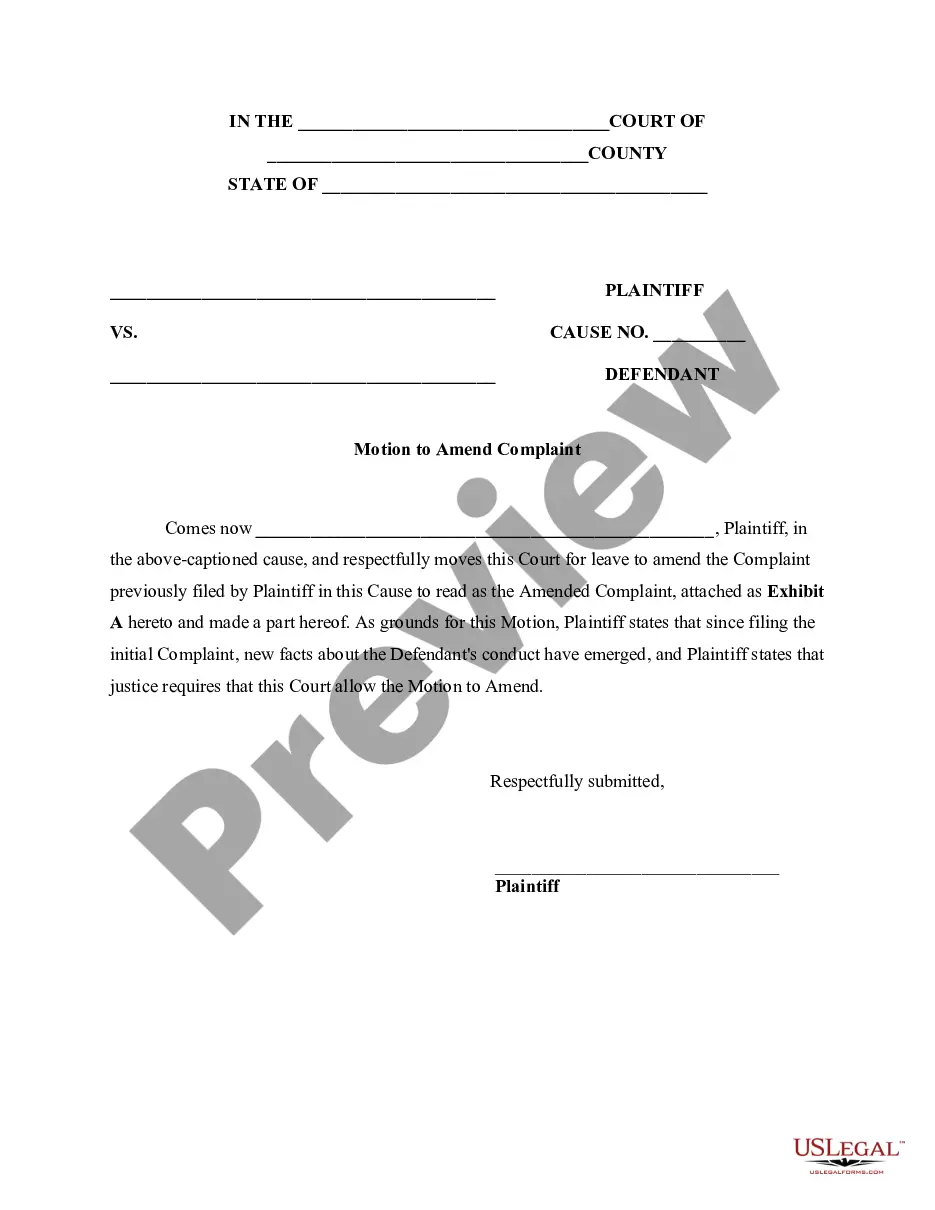
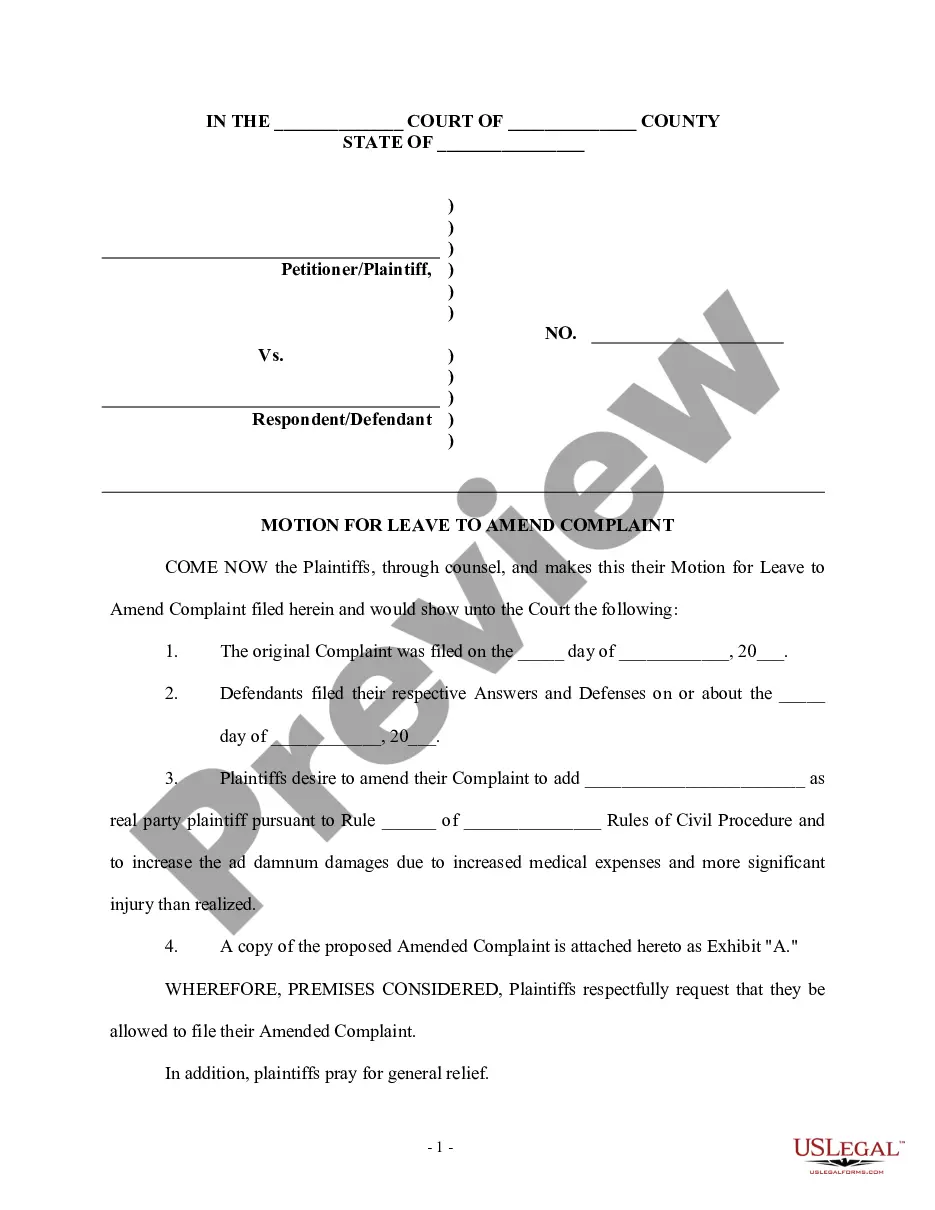
The Simple Motion to Amend Complaint and Notice of Motion is a legal document used to request permission from the court to modify an existing complaint in a civil case. This form is essential for parties seeking to include new information or claims that have emerged after the filing of the initial complaint. Unlike a standard complaint, this motion outlines the reasons for the amendment, ensuring that justice is served by allowing all relevant facts to be presented.
Form components explained
- Identification of the parties involved in the case.
- Reasons for requesting the amendment to the complaint.
- The proposed amended complaint, included as an exhibit.
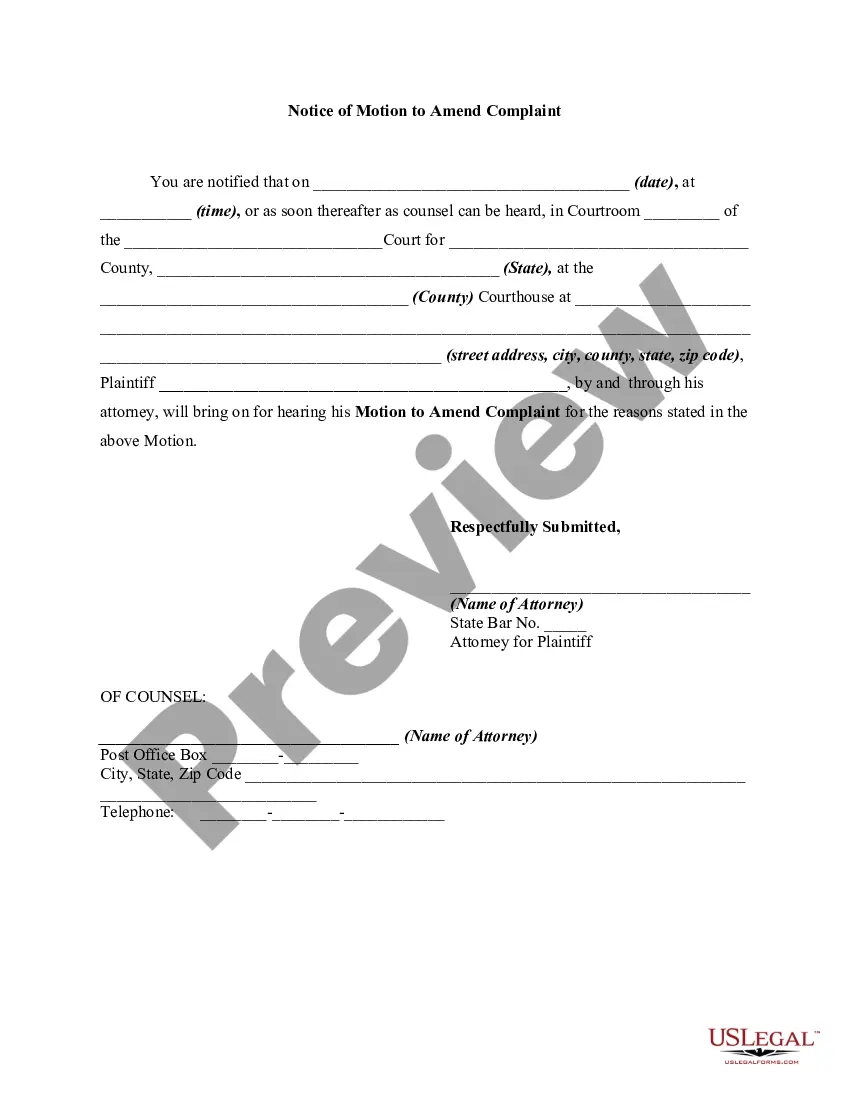
- Notice of the motion hearing date, time, and location.
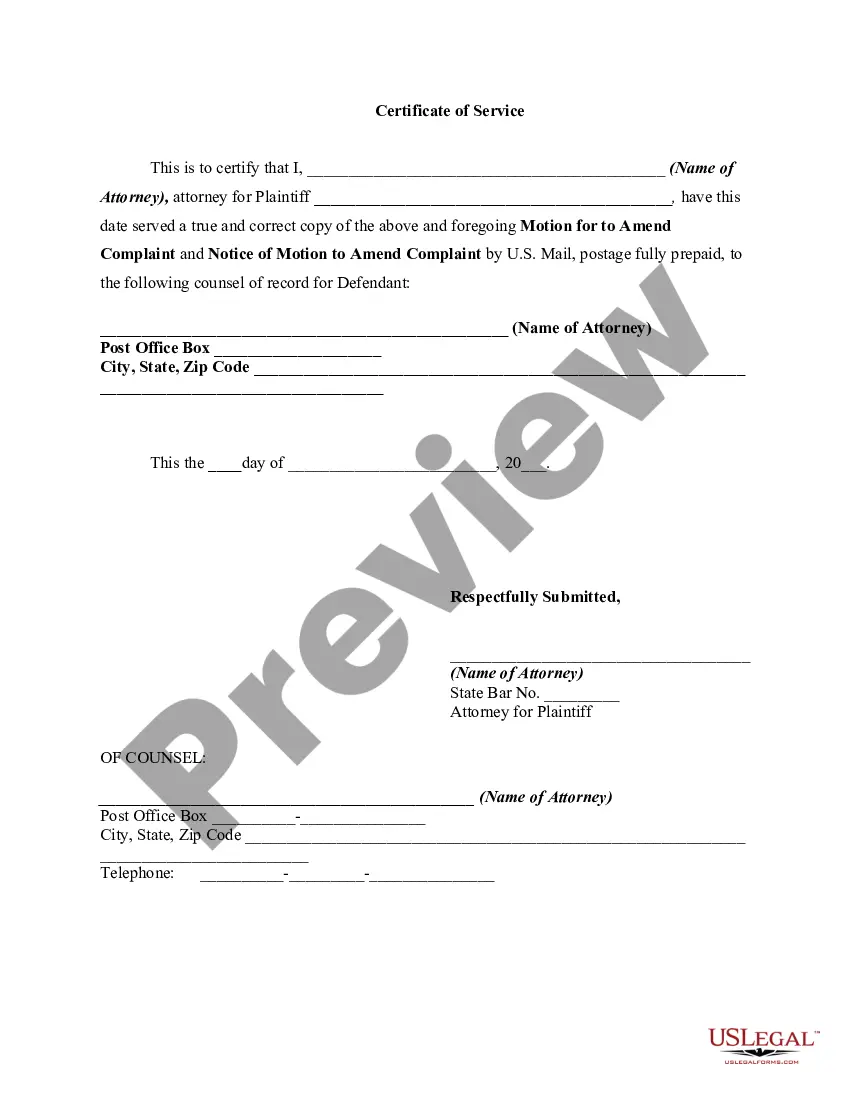
- Certificate of service confirming that the motion was sent to the opposing party.

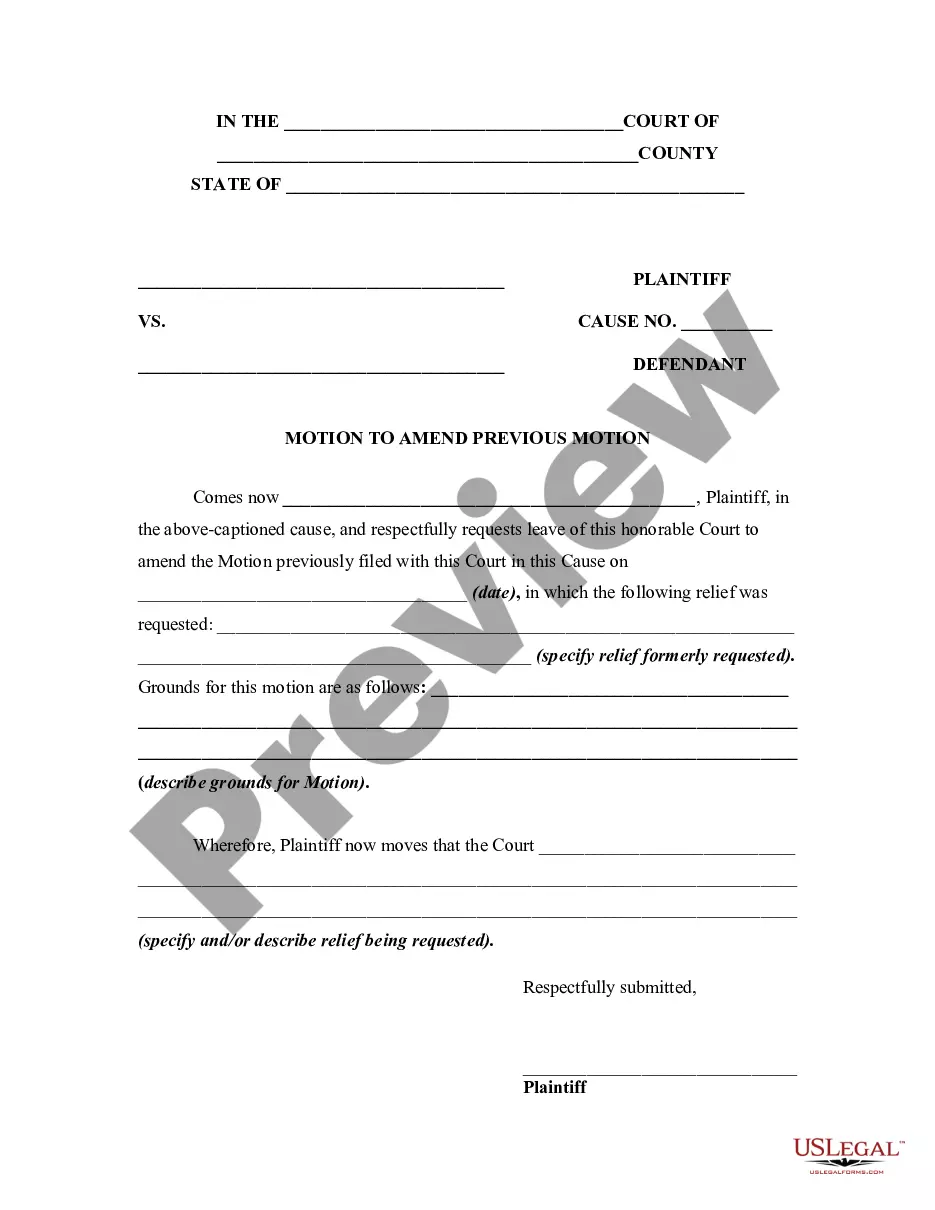
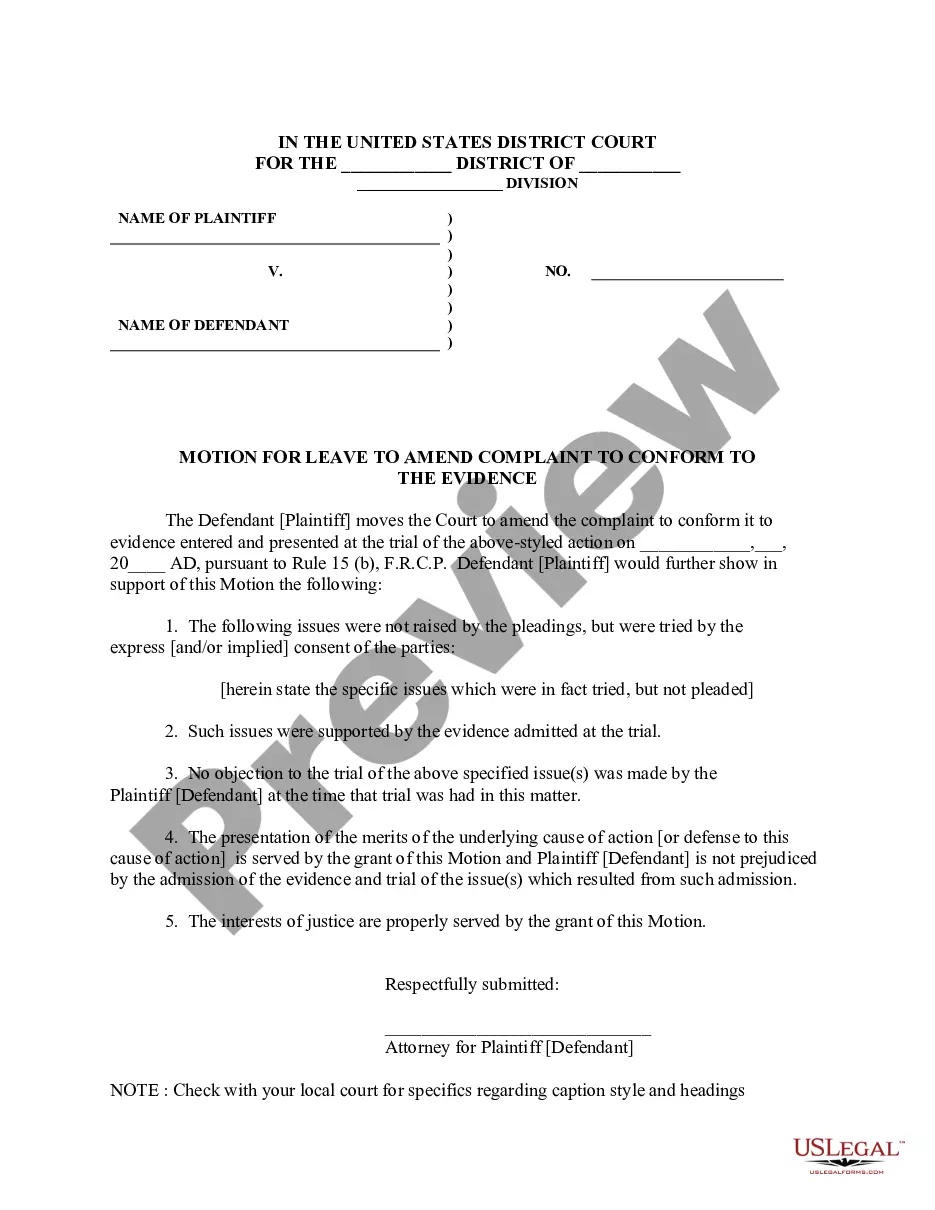
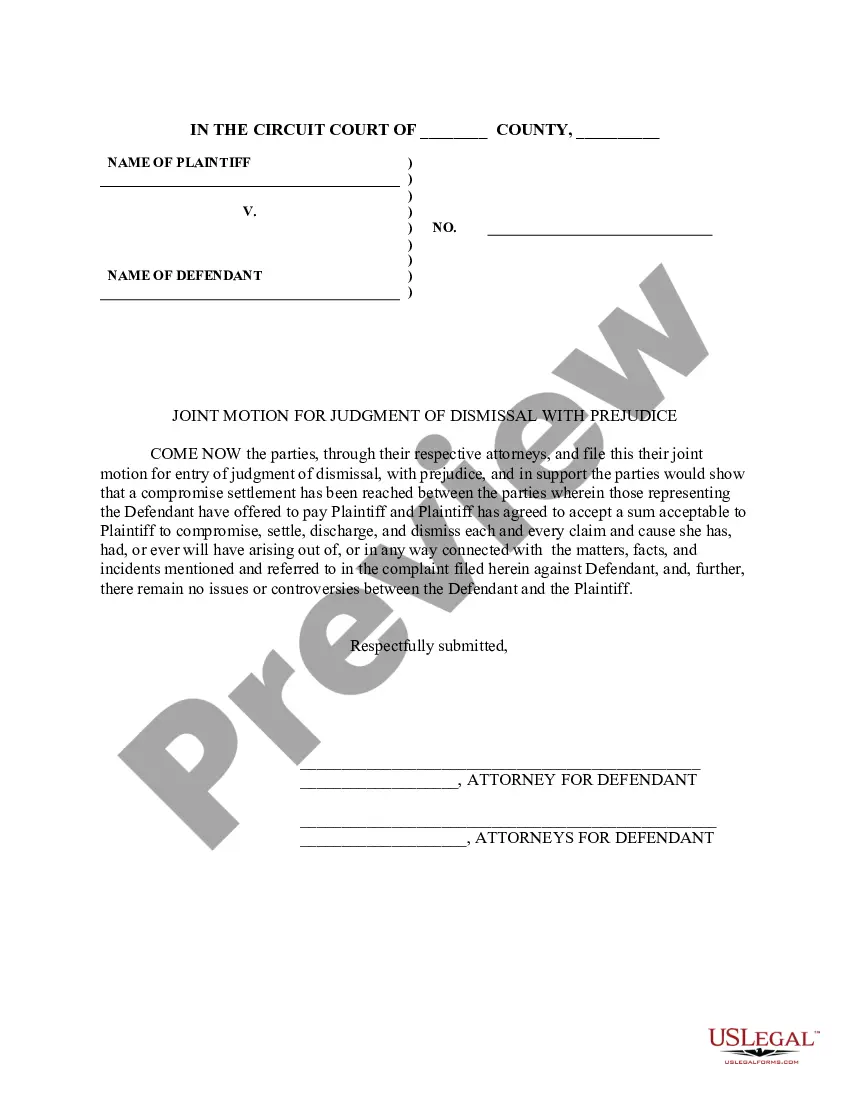
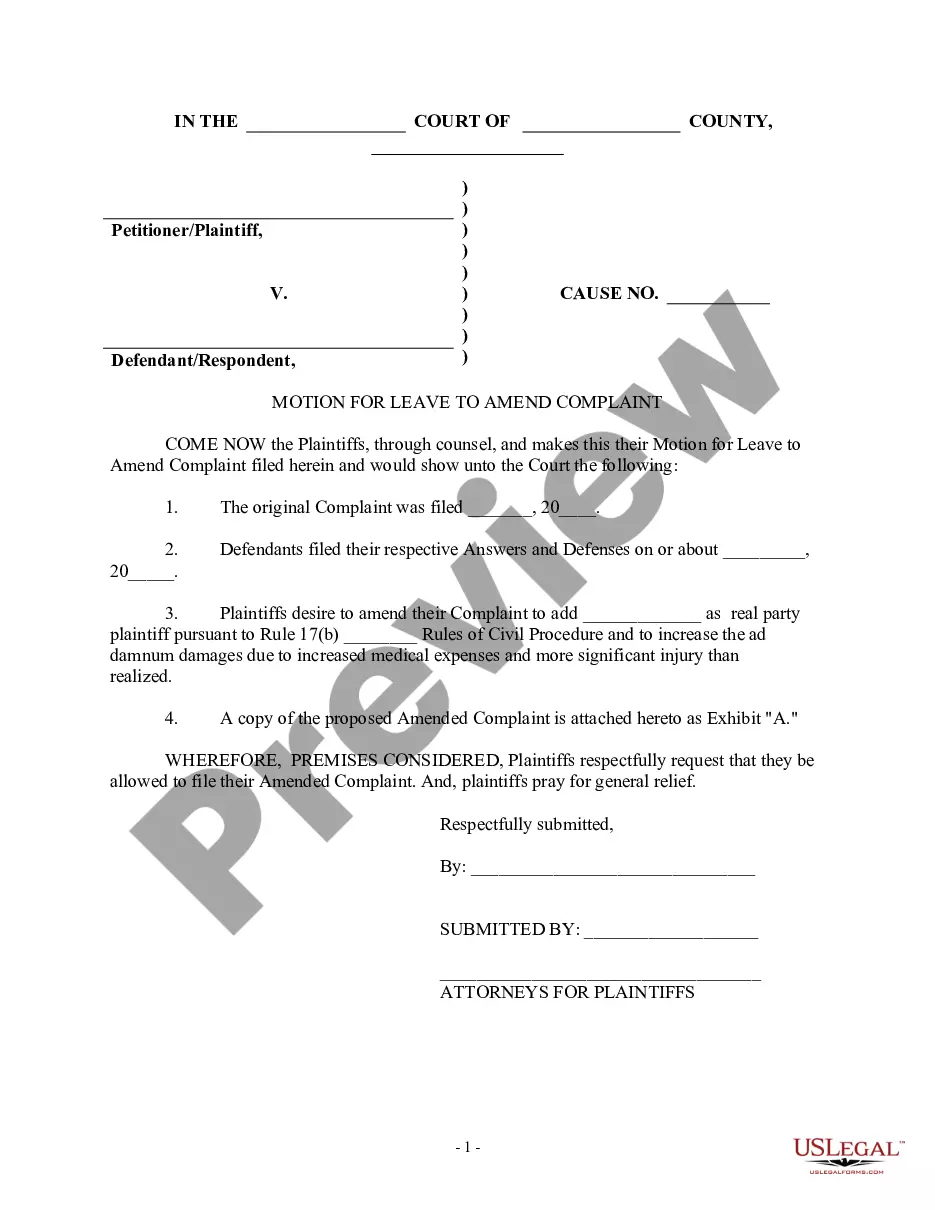
When to use this form
This form should be used when you need to make changes to your original complaint due to new information that affects your case. For example, if you discover new evidence or if there are changes in the defendants' actions that are significant to the legal issues you are pursuing, this motion allows you to update the court and the opposing party appropriately.
Who can use this document
- Individuals or organizations that are plaintiffs in a civil lawsuit.
- Attorneys representing clients who need to amend their complaints.
- Anyone involved in a legal matter who has new facts to include in their case.
Steps to complete this form
- Identify the parties involved by filling out the names of the plaintiff and defendant.
- Clearly state the reasons for amending the complaint in the appropriate section.
- Attach the proposed amended complaint as Exhibit A.
- Specify the date, time, and location for the motion hearing.
- Complete the certificate of service to confirm that the motion has been shared with the opposing party.
Is notarization required?
This form does not typically require notarization unless specified by local law. However, check local regulations to ensure compliance with any additional requirements that may apply.
Get your form ready online
Our built-in tools help you complete, sign, share, and store your documents in one place.
Make edits, fill in missing information, and update formatting in US Legal Forms—just like you would in MS Word.
Download a copy, print it, send it by email, or mail it via USPS—whatever works best for your next step.
Sign and collect signatures with our SignNow integration. Send to multiple recipients, set reminders, and more. Go Premium to unlock E-Sign.
If this form requires notarization, complete it online through a secure video call—no need to meet a notary in person or wait for an appointment.
We protect your documents and personal data by following strict security and privacy standards.

Make edits, fill in missing information, and update formatting in US Legal Forms—just like you would in MS Word.

Download a copy, print it, send it by email, or mail it via USPS—whatever works best for your next step.

Sign and collect signatures with our SignNow integration. Send to multiple recipients, set reminders, and more. Go Premium to unlock E-Sign.

If this form requires notarization, complete it online through a secure video call—no need to meet a notary in person or wait for an appointment.

We protect your documents and personal data by following strict security and privacy standards.
Common mistakes
- Failing to include the proposed amended complaint as an exhibit.
- Not providing adequate reasons for the amendment.
- Missing the deadline for filing the motion and proposed changes.
- Neglecting to serve the opposing party properly.
Benefits of using this form online
- Convenience of downloading and completing forms from home.
- Editable templates ensure accuracy and clarity.
- Reliable access to attorney-drafted documents that meet legal standards.
Legal use & context
- This form allows parties to adjust their claims based on newly discovered facts.
- Amending a complaint can be crucial for presenting the complete context of a case.
- Filing this motion correctly can impact the progression and outcome of the legal proceedings.
What to keep in mind
- The Simple Motion to Amend Complaint is essential for updating legal claims.
- All parties involved must be notified of the motion to amend.
- Ensure compliance with both federal and state-specific rules regarding amendments.
Looking for another form?
Form popularity
FAQ
Amend something previously adopted - is a change motion that can be made only if no action has been taken on the original motion. It is used to strike out only a part of the text or make a change to the wording. It must be seconded, is debatable and requires 2/3 of the members to vote in the affirmative to pass.
Amended complaint. n. what results when the party suing (plaintiff or petitioner) changes the complaint he/she has filed. It must be in writing, and can be done before the complaint is served on any defendant, by agreement between the parties (usually their lawyers), or upon order of the court.
Unless the court orders otherwise, any required response to an amended pleading must be made within the time remaining to respond to the original pleading or within 14 days after service of the amended pleading, whichever is later.
(e) (1) In response to a demurrer and prior to the case being at issue, a complaint or cross-complaint shall not be amended more than three times, absent an offer to the trial court as to such additional facts to be pleaded that there is a reasonable possibility the defect can be cured to state a cause of action.
Once a defendant has answered, a first amended complaint can only be filed and served with leave of court. If the plaintiff did not get the court's permission, it is not deemed a valid first amended complaint.
2021 California Rules of Court (2) "Amended pleading" means a pleading that completely restates and supersedes the pleading it amends for all purposes.A supplement to a pleading may add information to or may correct omissions in the modified pleading.
Amend. v. to alter or change by adding, subtracting, or substituting. One can amend a statute, a contract or a written pleading filed in a law -suit. The change is usually called an amendment.
It means to change the basis for the case in some way. A motion to amend a complaint is the formal way of asking the court for permission to change the original complaint.
By striking out words, sentences, or paragraphs. By striking out and inserting words (with the words inserted replacing the words struck out) By amending by substitution (a form of strike out and insert applied to paragraphs or entire motions)