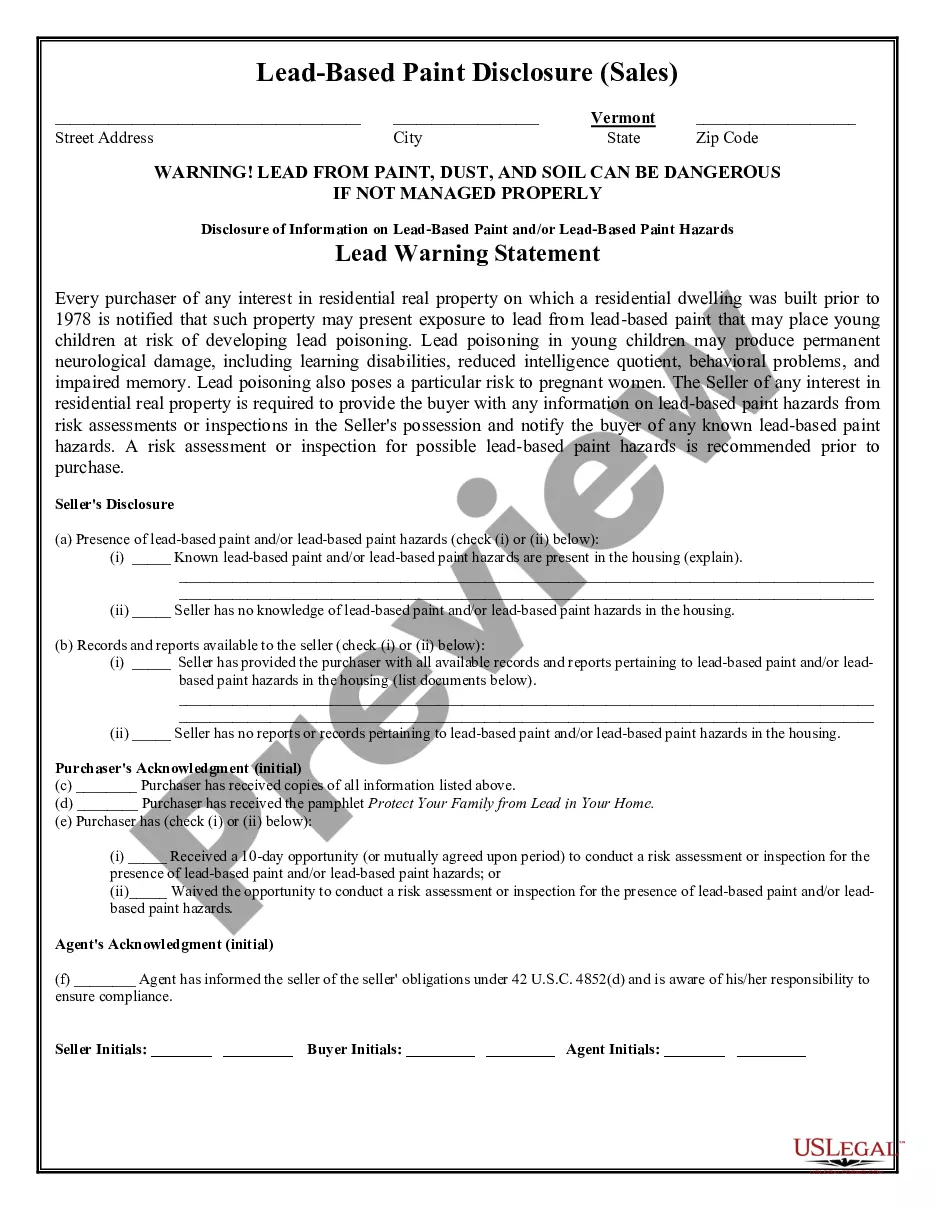
Escrow Agreement for Sale of Real Property and Deposit of Earnest Money
About this form
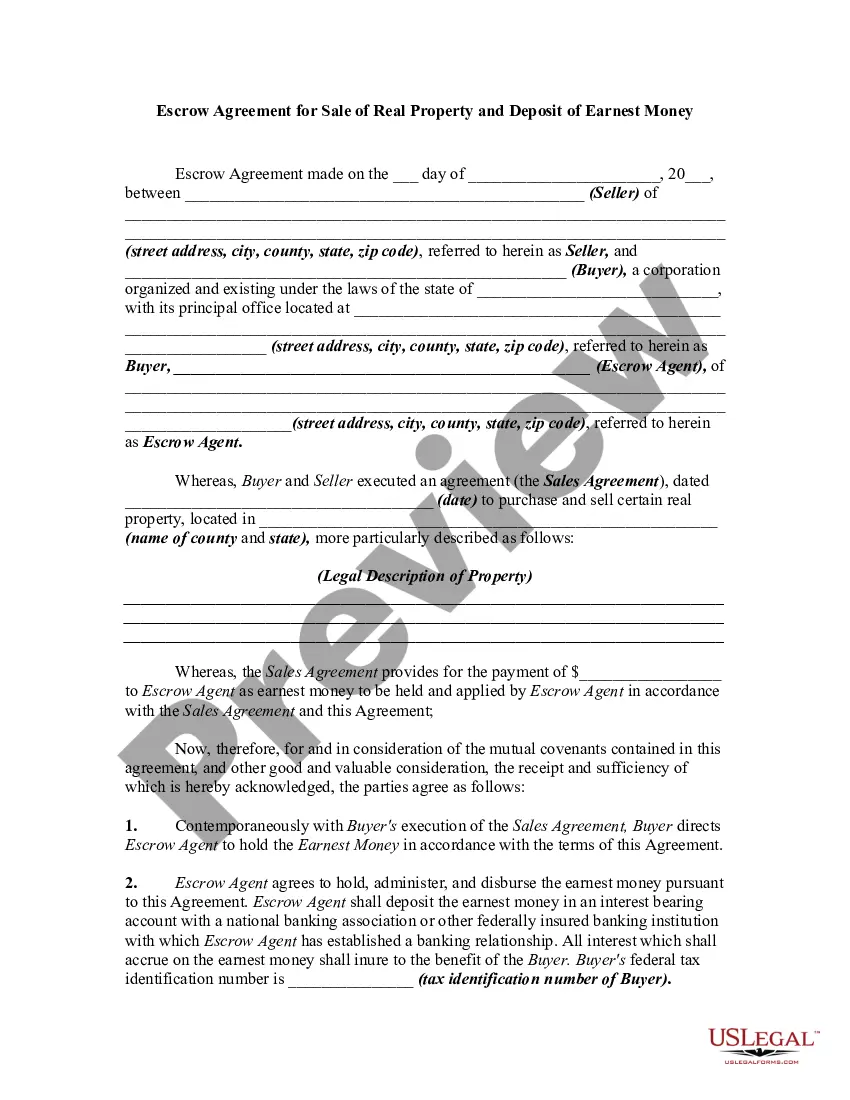
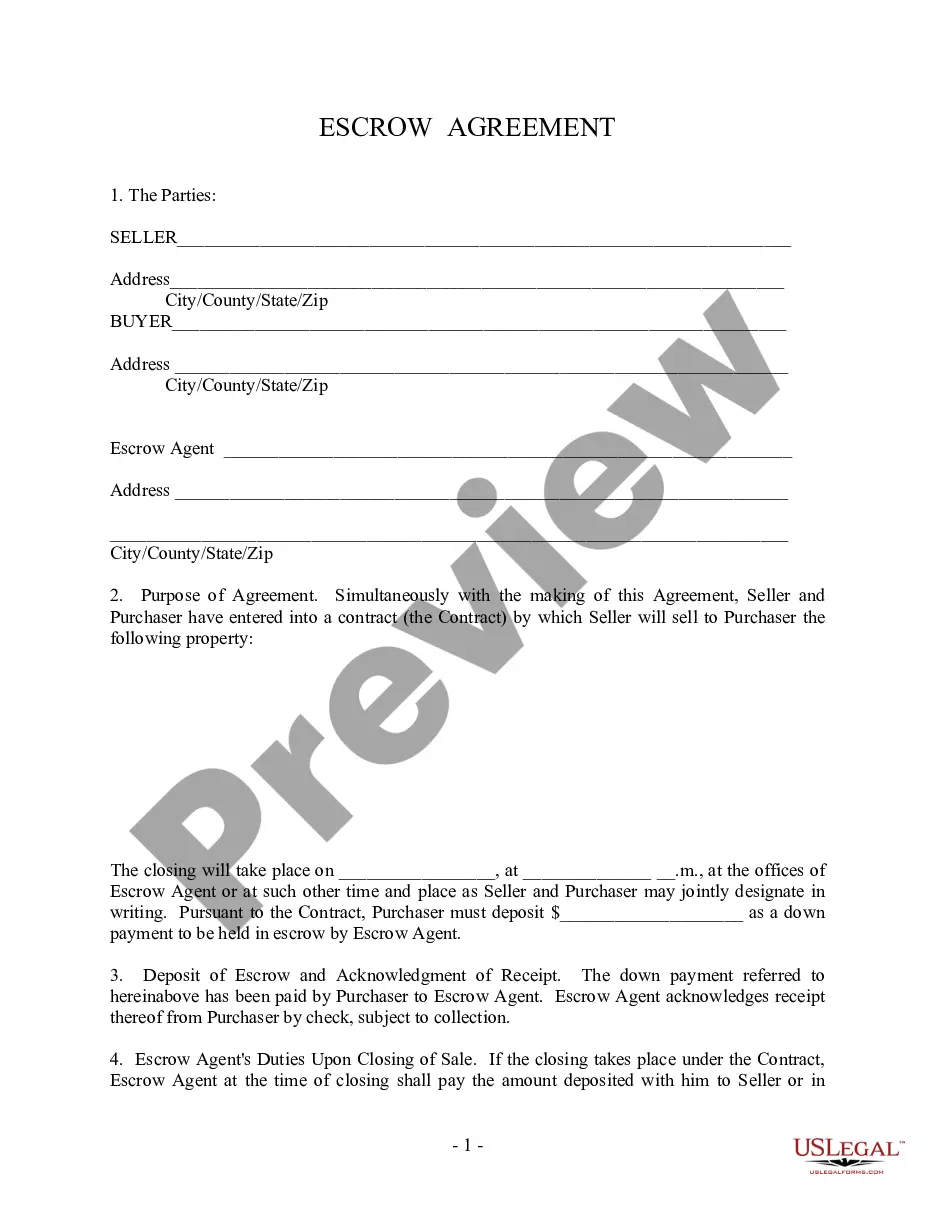
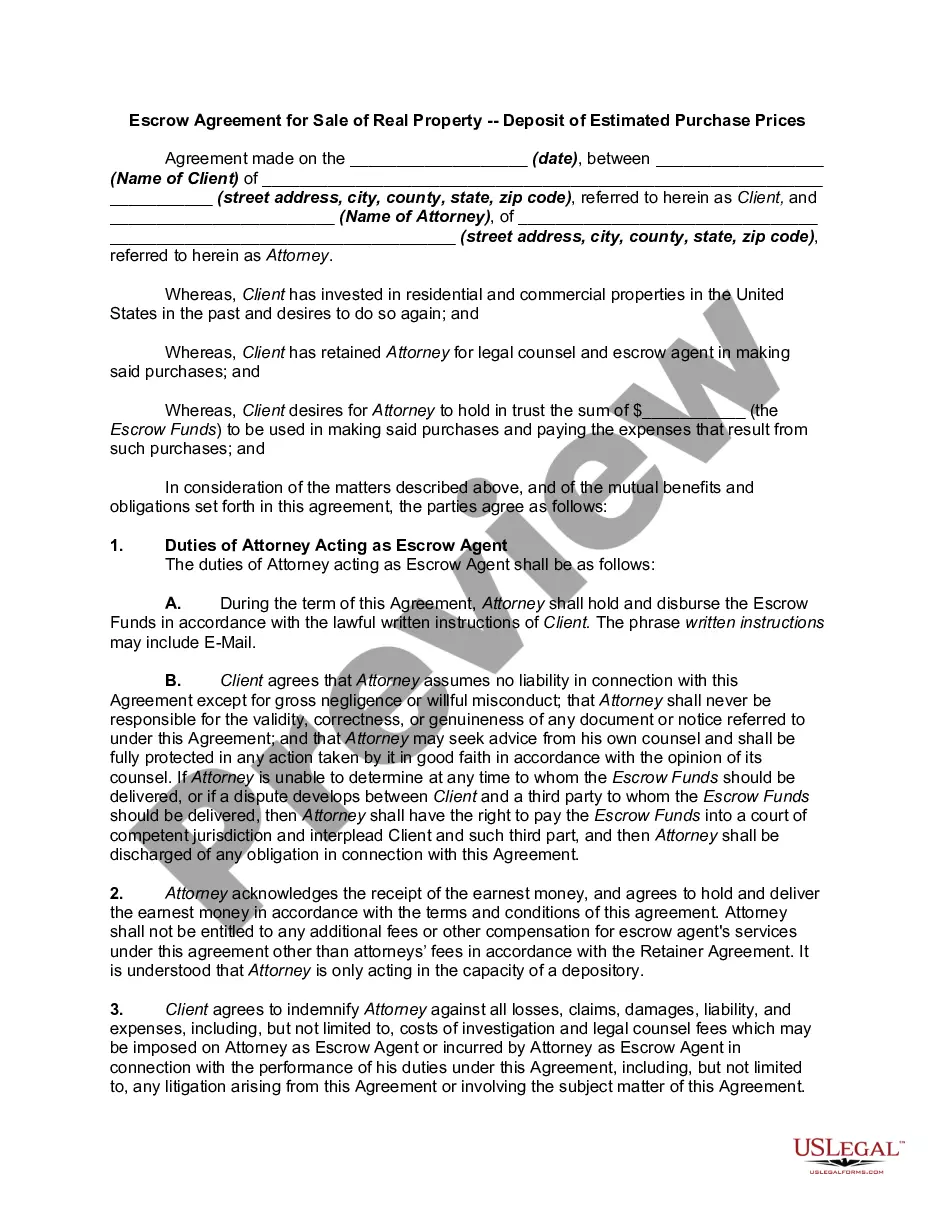
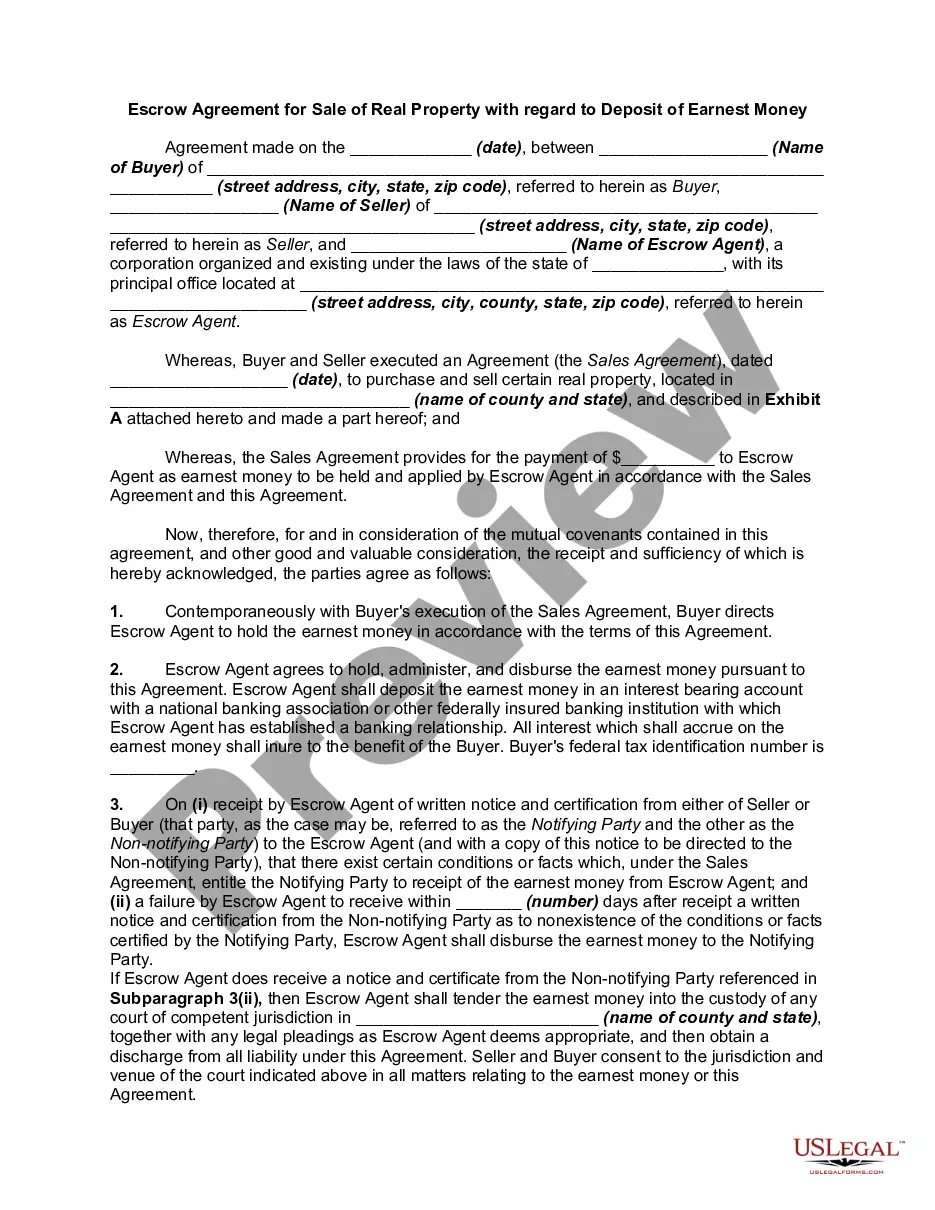
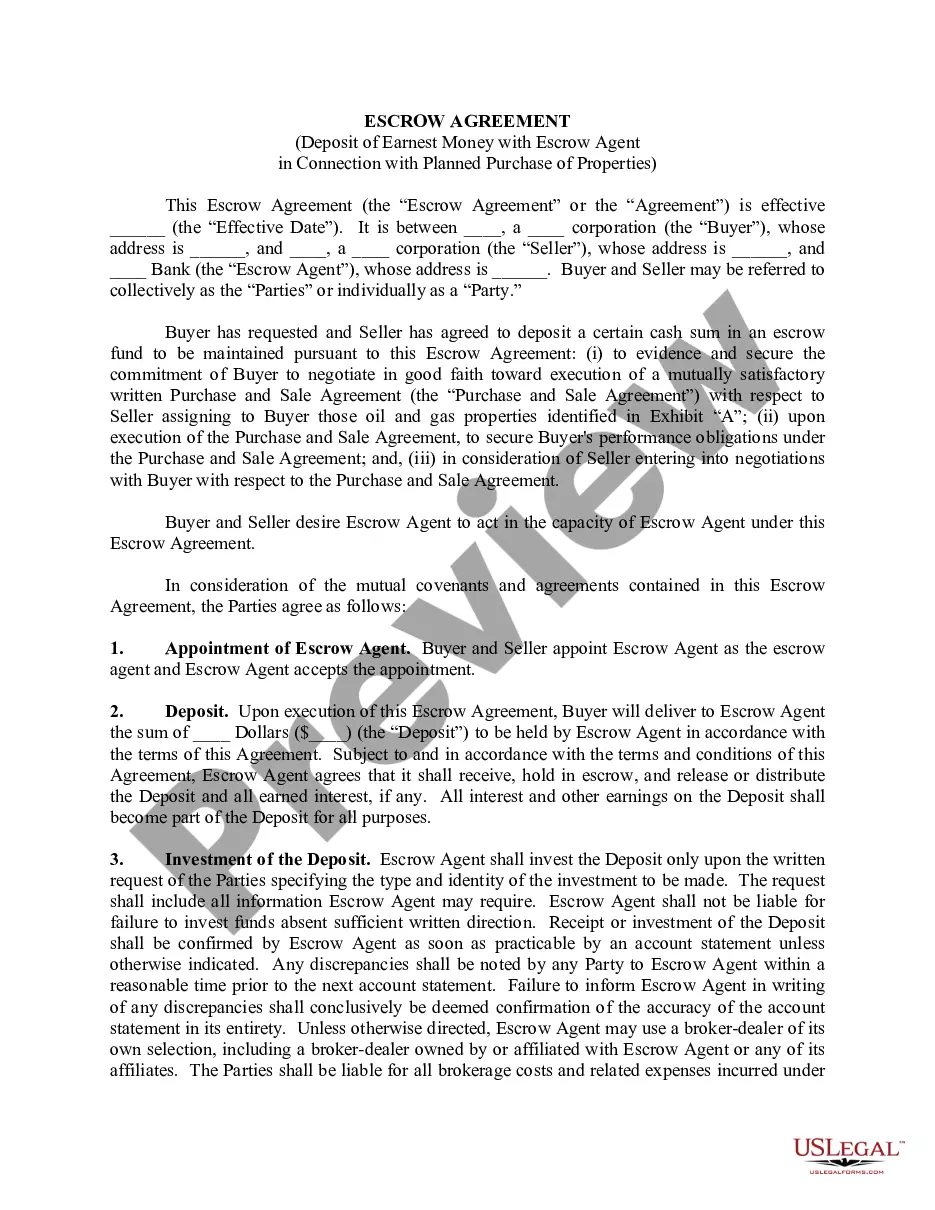
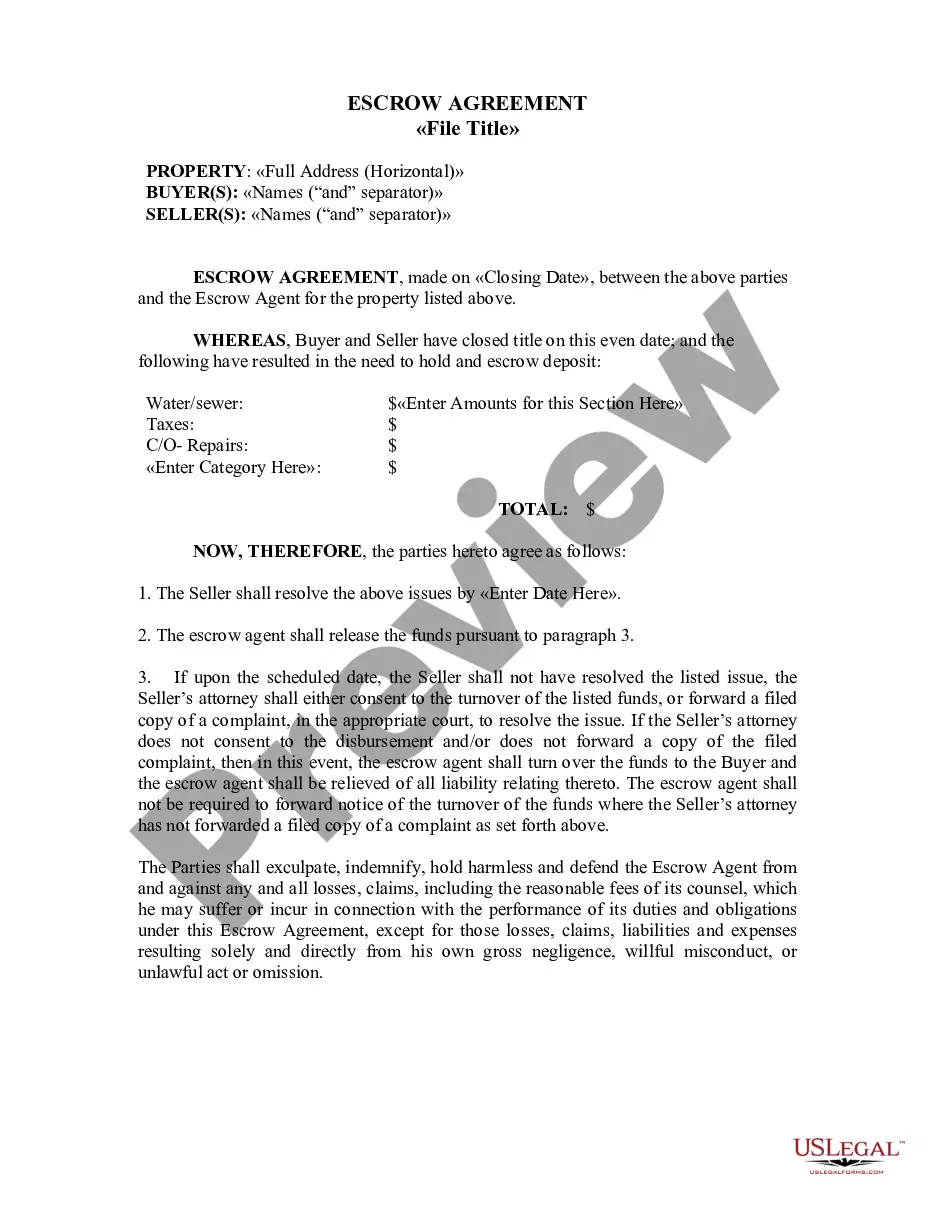
The Escrow Agreement for Sale of Real Property and Deposit of Earnest Money is a legal document used to outline the terms under which earnest money is held by a third party during real estate transactions. It serves to protect both the buyer and seller by ensuring that the earnest money is managed according to the agreed conditions of the sale. Unlike simple purchase agreements, this form provides a structured way to handle the deposit and associated responsibilities of the parties involved.
What’s included in this form
- Identification of parties: Details about the buyer, seller, and escrow agent, including names and addresses.
- Property description: A precise legal description of the real estate being sold.
- Earnest money amount: Specifies the amount of money deposited with the escrow agent.
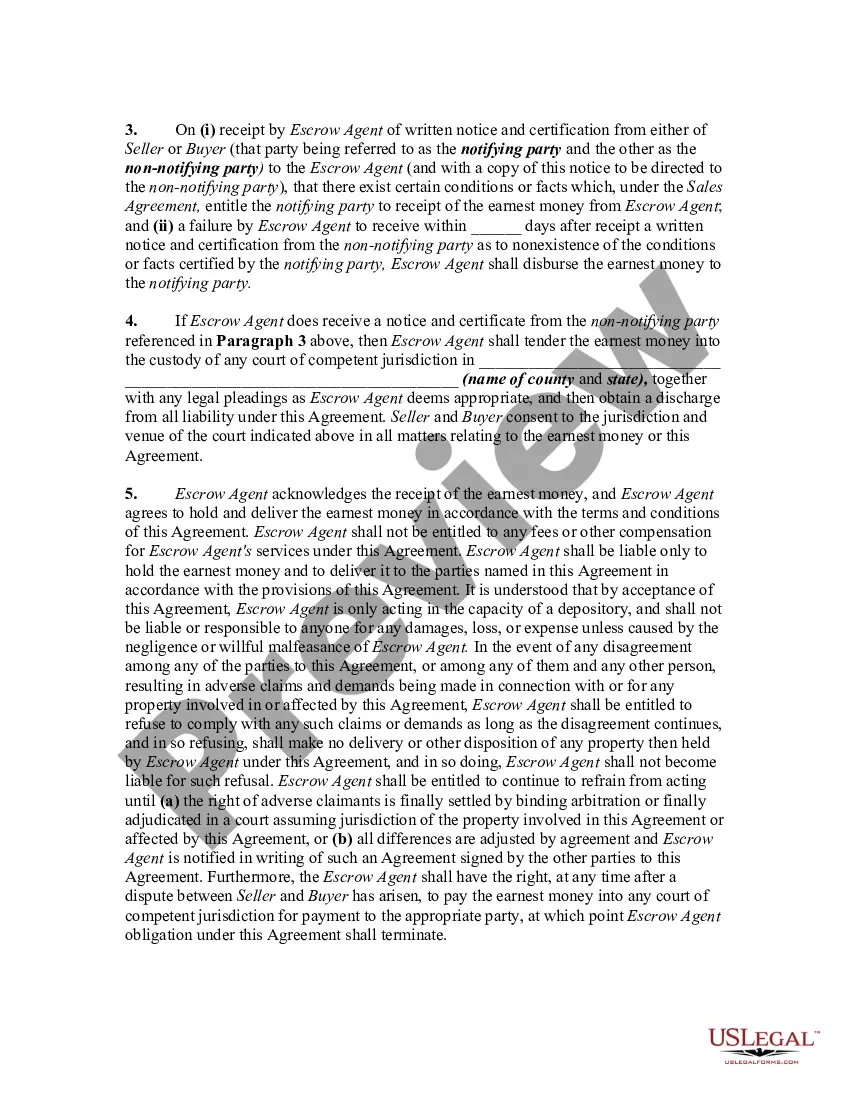
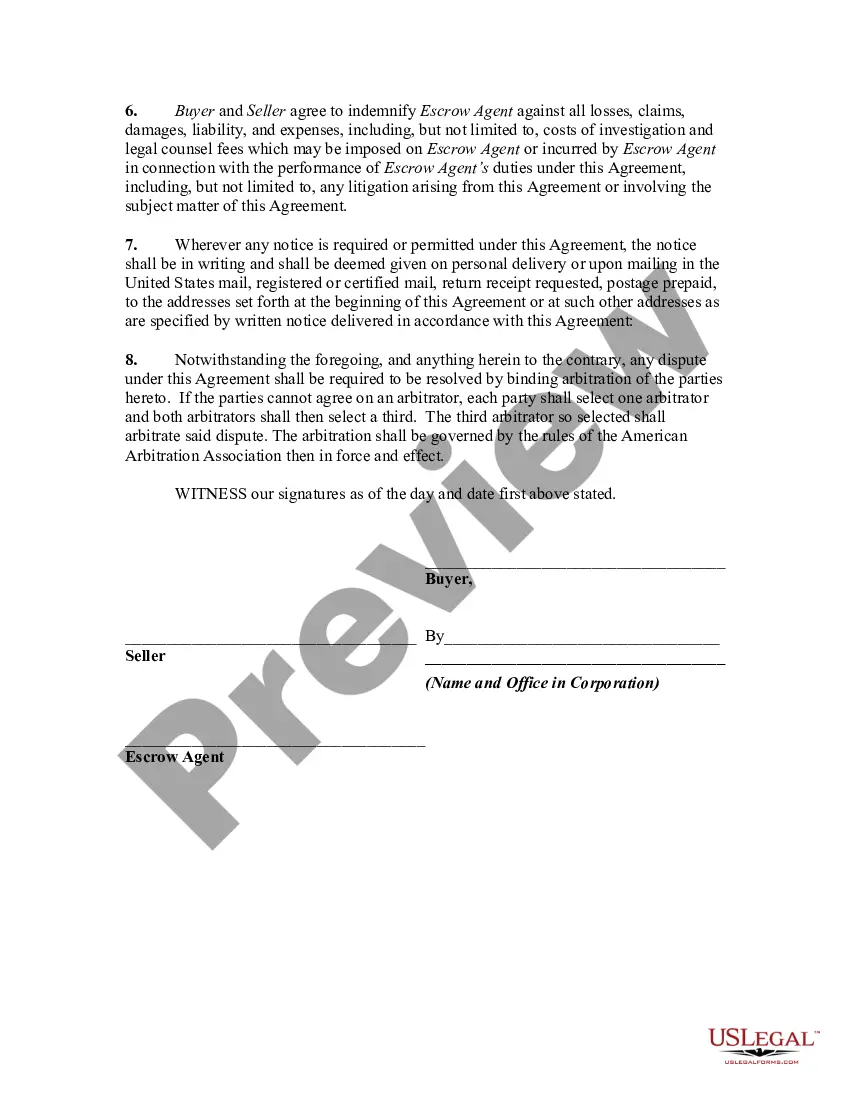
- Conditions for disbursement: Outlines the circumstances under which the earnest money will be released.
- Indemnification clause: Protects the escrow agent against claims or disputes arising from the agreement.
When this form is needed
This form is typically used in real estate transactions when a buyer wants to secure their offer with earnest money. It is essential when the buyer and seller need a neutral third party to hold the funds until specific conditions are met, such as completion of inspections or negotiations. If a dispute arises, this agreement helps clarify procedures for disbursing the earnest money.
Who can use this document
- Homebuyers and sellers engaging in a real estate transaction.
- Real estate agents and brokers facilitating the sale.
- Escrow agents responsible for managing earnest money deposits.
How to prepare this document
- Identify the parties: Enter the full names and addresses of the seller, buyer, and escrow agent.
- Specify the property: Provide a detailed legal description of the real estate involved in the transaction.
- Enter the earnest money amount: Fill in the agreed amount that will be held in escrow.
- Include conditions for disbursement: Outline any specific conditions that must be met for the earnest money to be released.
- Obtain signatures: Ensure all parties read and sign the agreement to validate the terms.
Does this document require notarization?
This form does not typically require notarization unless specified by local law. However, it is advisable to check your state's regulations to ensure compliance.
Get your form ready online
Our built-in tools help you complete, sign, share, and store your documents in one place.
Make edits, fill in missing information, and update formatting in US Legal Forms—just like you would in MS Word.
Download a copy, print it, send it by email, or mail it via USPS—whatever works best for your next step.
Sign and collect signatures with our SignNow integration. Send to multiple recipients, set reminders, and more. Go Premium to unlock E-Sign.
If this form requires notarization, complete it online through a secure video call—no need to meet a notary in person or wait for an appointment.
We protect your documents and personal data by following strict security and privacy standards.

Make edits, fill in missing information, and update formatting in US Legal Forms—just like you would in MS Word.

Download a copy, print it, send it by email, or mail it via USPS—whatever works best for your next step.

Sign and collect signatures with our SignNow integration. Send to multiple recipients, set reminders, and more. Go Premium to unlock E-Sign.

If this form requires notarization, complete it online through a secure video call—no need to meet a notary in person or wait for an appointment.

We protect your documents and personal data by following strict security and privacy standards.
Common mistakes
- Failing to provide a precise legal description of the property.
- Not specifying the conditions under which earnest money will be released.
- Omitting signatures or initials from all parties involved.
- Leaving the earnest money amount blank or miscalculating it.
Benefits of completing this form online
- Convenience of accessing and completing the form from anywhere.
- Editability allows for quick adjustments before finalizing.
- Reliability of forms drafted by licensed attorneys, ensuring legal compliance.
Main things to remember
- An escrow agreement is critical for managing earnest money in real estate transactions.
- Understanding terms and conditions included in the form helps protect both buyers and sellers.
- Ensure all parties involved are clearly identified and that the form is properly completed and signed.
- Consider the state-specific regulations that may apply to your transaction.
Looking for another form?








Form popularity
FAQ
If the deal falls through, the seller has to relist the home and start all over again, which could result in a big financial hit. Earnest money protects the seller if the buyer backs out. It's typically around 1% 3% of the sale price and is held in an escrow account until the deal is complete.
Go to the Banking menu and click Transfer Funds. In the Transfer Funds window, select the account from which you want to transfer the funds. Select the account to which you want to transfer the funds. Enter the amount that you want to transfer. Save the transaction.
Go to the Banking menu and click Transfer Funds. In the Transfer Funds window, select the account from which you want to transfer the funds. Select the account to which you want to transfer the funds. Enter the amount that you want to transfer. Save the transaction.
When is the earnest money check cashed? Once your offer is accepted, the earnest money check is usually deposited into an escrow account, where it is held until closing. That money is collateral that guarantees your promise to purchase the house.
If the earnest money check had been deposited and you also PAID (additional check made payable to owners) for an option (time in which to do inspections) in the contract, you likely have the unrestricted right to cancel the contract FOR ANY REASON, but you have to do it through the correct process.
During the home sales process, the buyer puts up a predetermined amount of cash (usually between 1% and 3% of the total home sales price) in an escrow account after an offer is accepted by the homeowner, and is held by a bank or other financial institution in an escrow account until the sale is finalized.
You'll typically use a third-party escrow agent such as the title company, to hold your earnest money deposit in an escrow account. You should avoid giving the deposit directly to the seller. If the transaction doesn't close and the seller cannot return the money, you may have to pursue legal action, costing you more.
Escrow companies will accept a cashier's check or wire, or a personal check for the earnest money deposit. Just keep in mind, we will cash your check right away.
When escrow fails to close due to the nonperformance of either the buyer or the seller a breach of the underlying purchase agreement any funds held in escrow are to be disbursed within 30 days after the person entitled to the funds demands them.