General Form of Claim or Notice of Lien By General Contractor
What this document covers
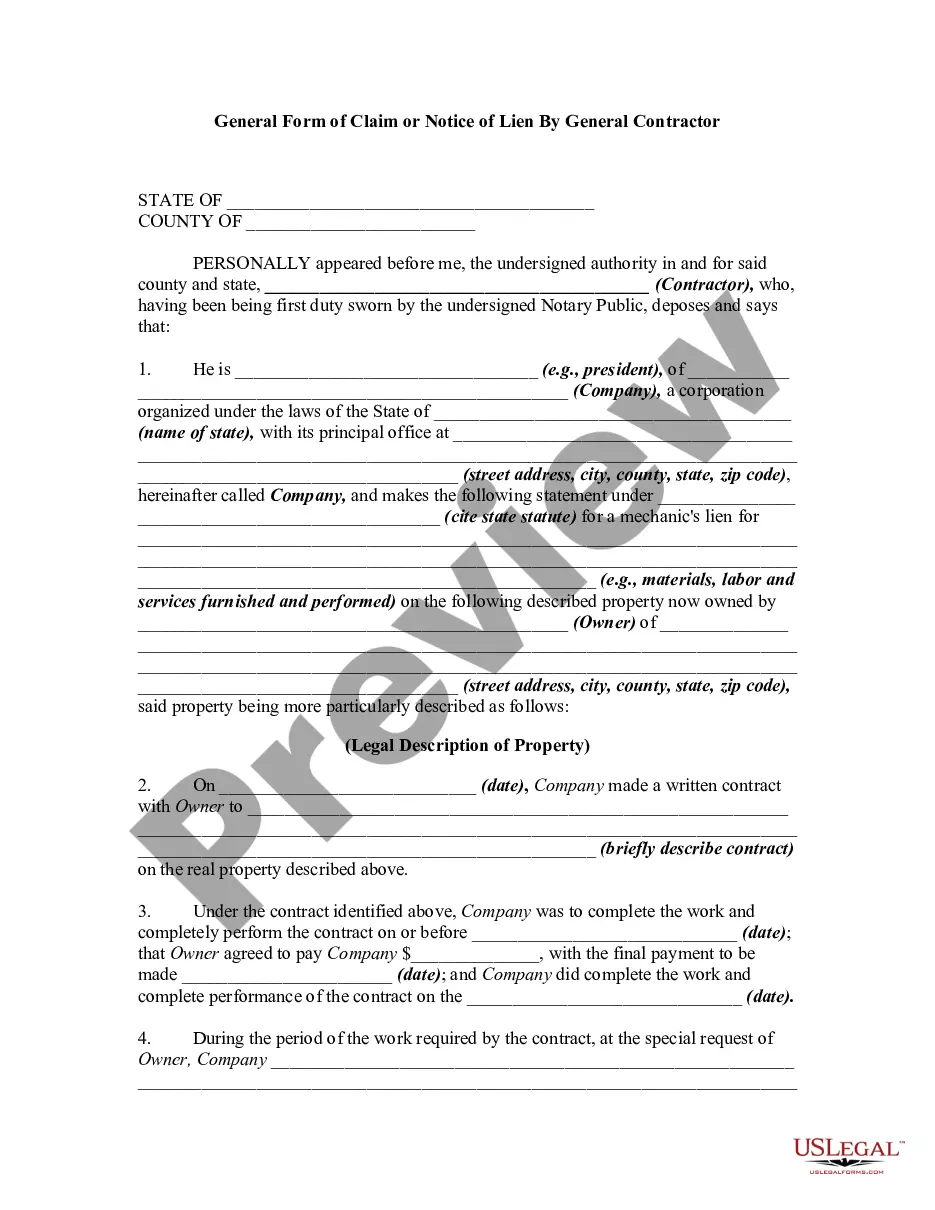
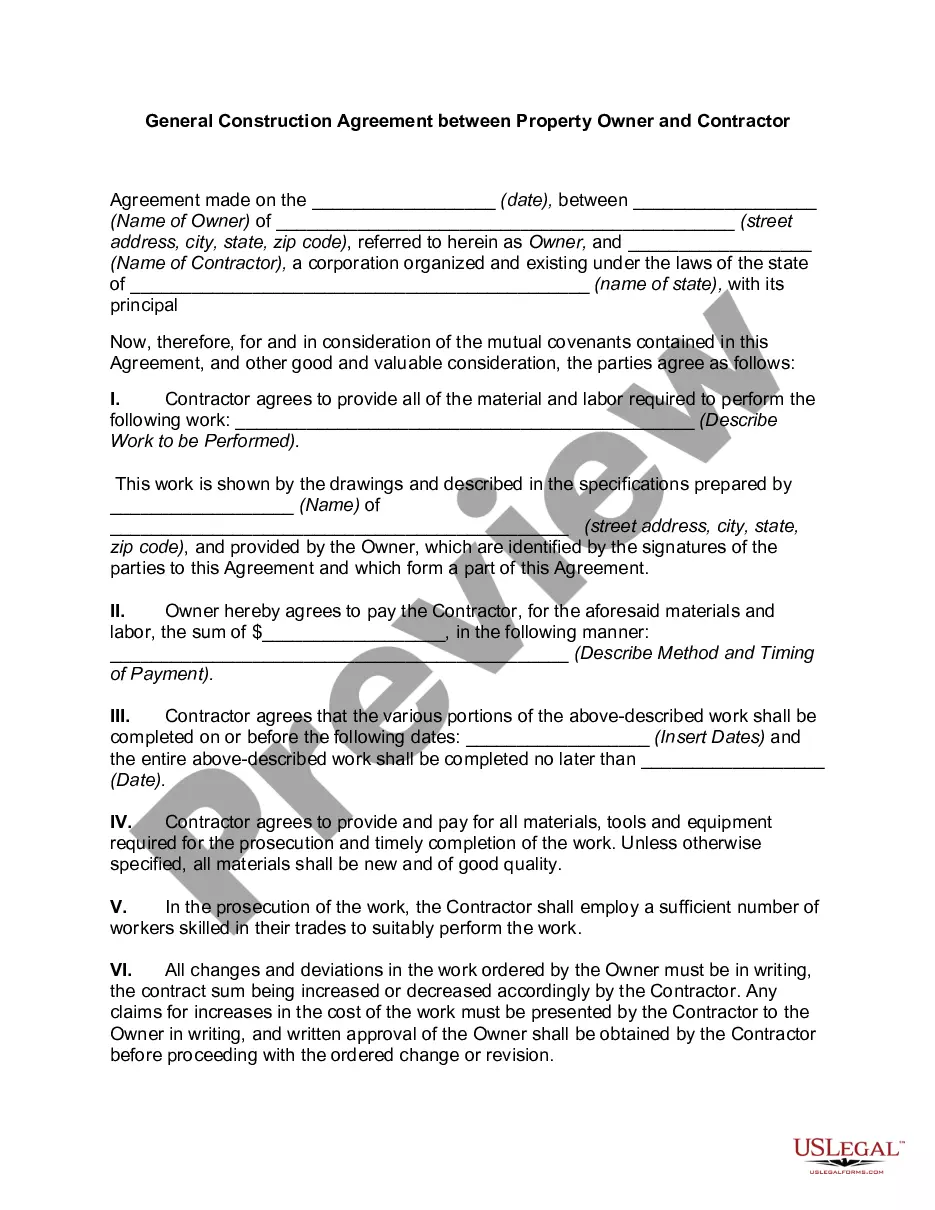
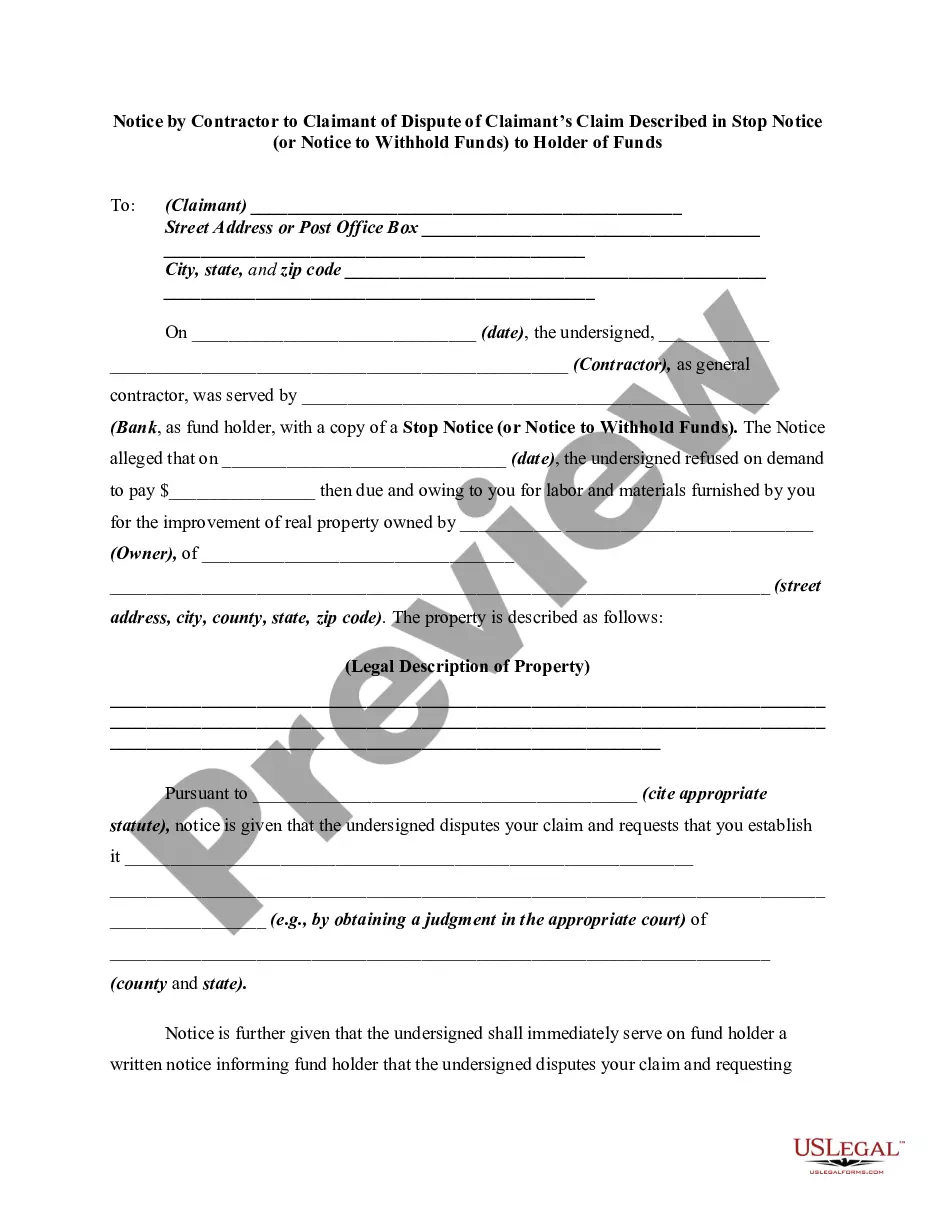
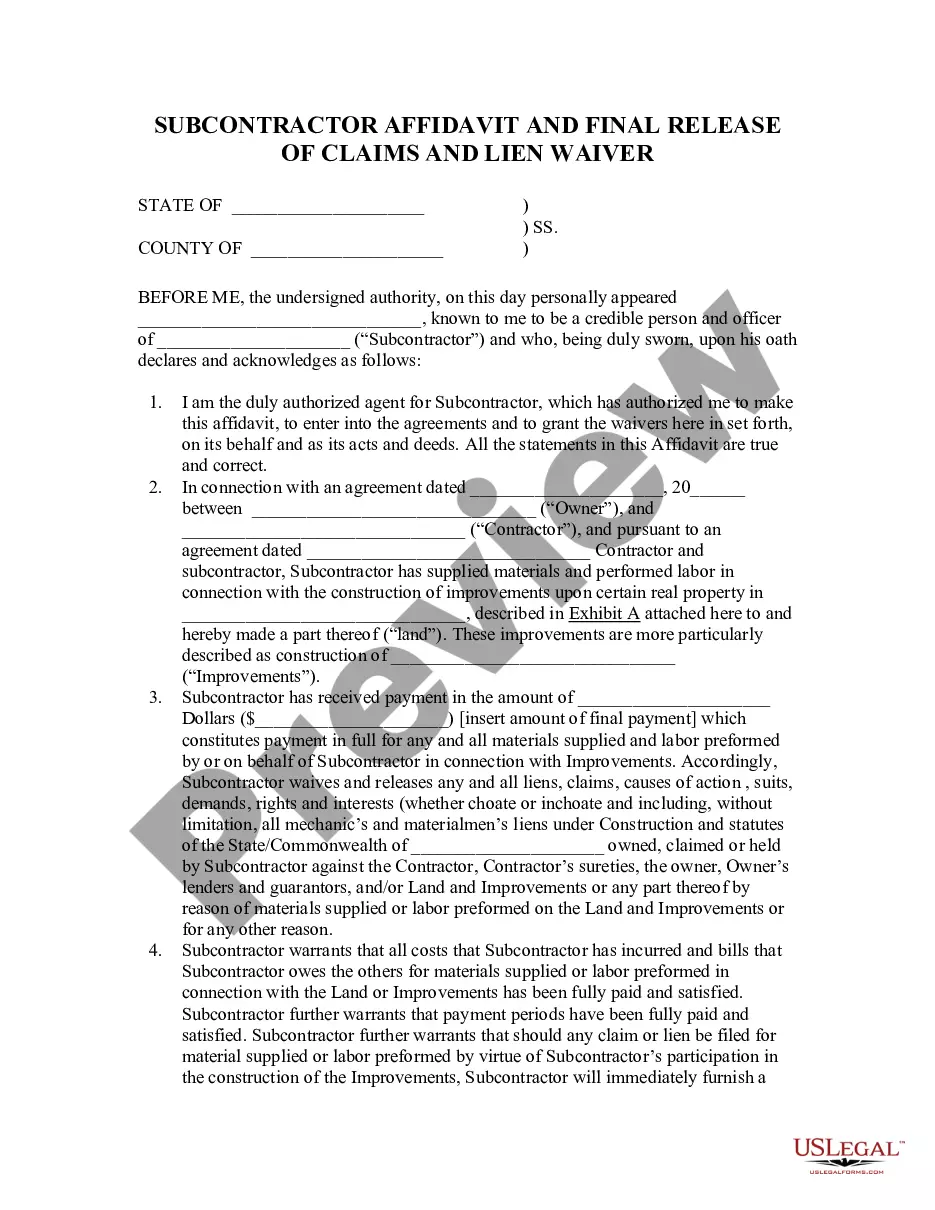
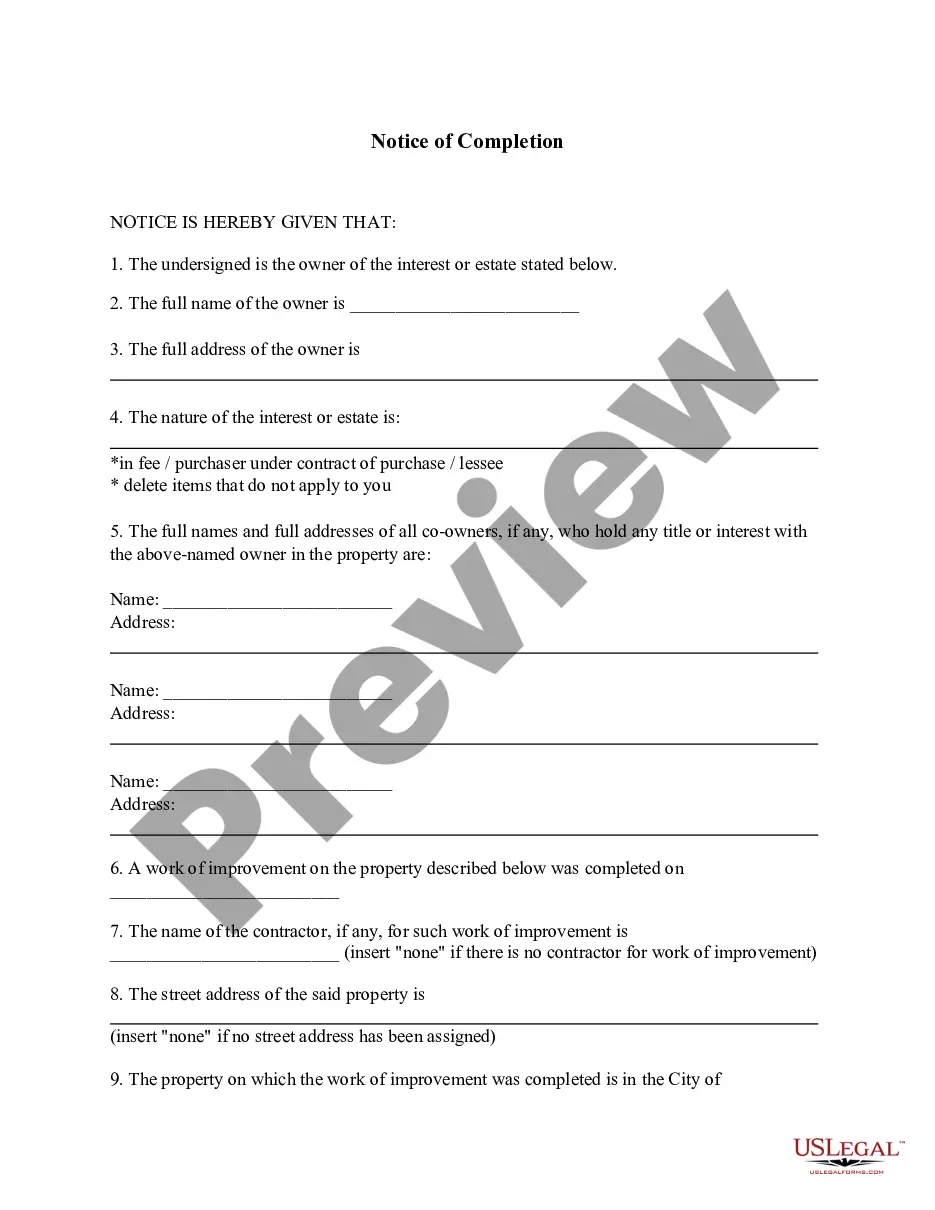
The General Form of Claim or Notice of Lien By General Contractor is a legal document that allows a contractor to assert a lien on a property for unpaid work. This form establishes the contractor's right to claim a portion of the property's value to secure payment for services rendered. It differs from other lien forms by specifically representing the interests of general contractors in a construction context.
Main sections of this form
- Identification of the contractor and their company.
- Details of the property subject to the lien.
- Description of the contract and services provided.
- Dates of contract execution and payment due dates.
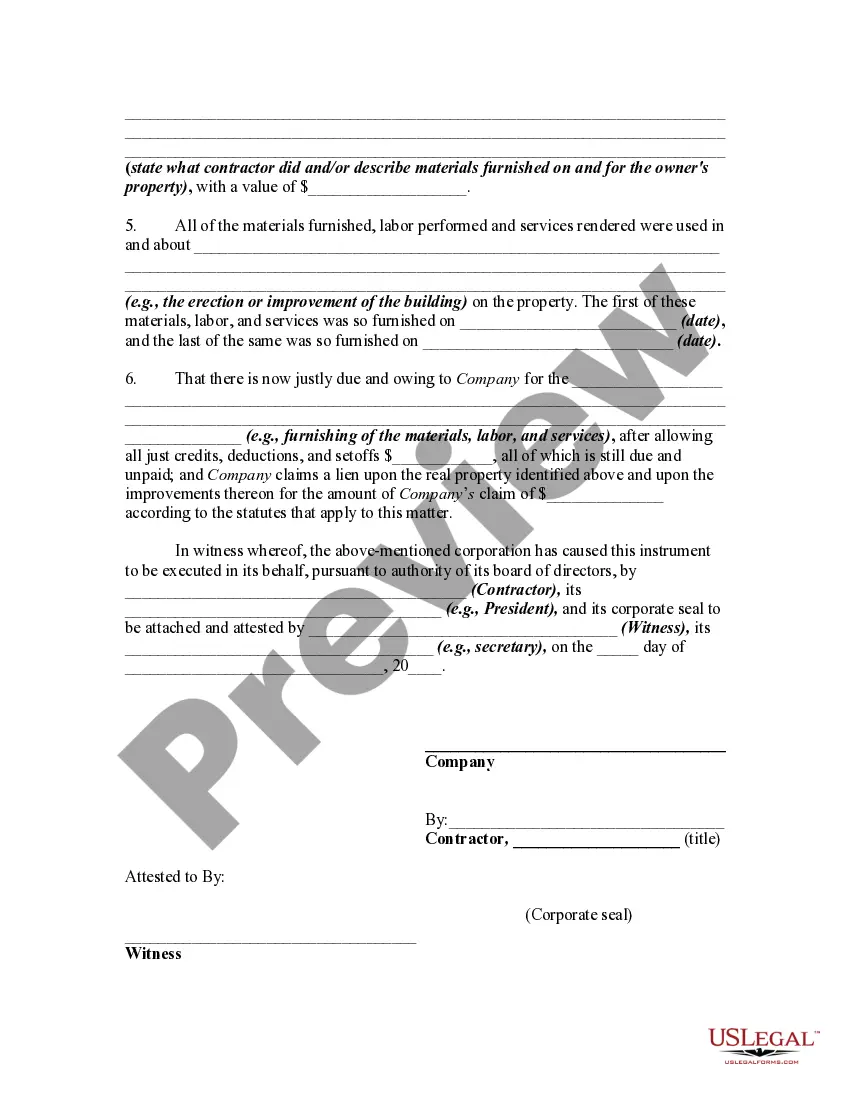
- Liens amount claimed and basis for the claim.
- Signatures of the contractor and a witnessing official.

Situations where this form applies
This form should be used when a general contractor has completed work on a property but has not received payment. It is commonly employed in situations where contractors need to legally protect their right to payment by placing a lien on the property, thus notifying others of their monetary claim. Using this form can help prevent potential disputes over unpaid bills and can facilitate the collection of outstanding amounts.
Who should use this form
This form is intended for:
- General contractors who have completed work but have not been paid.
- Construction companies seeking to secure payments through liens.
- Subcontractors who are acting on behalf of general contractors with written authorization.
How to complete this form
- Identify the parties involved, including the contractor and property owner.
- Provide a detailed description of the property, including its legal description.
- Outline the contract specifics, including services and materials supplied.
- Specify the dates of contract signing, completion, and payment due dates.
- State the total amount claimed and any relevant statutes.
- Ensure the form is signed by the contractor and a witness.
Does this form need to be notarized?
Yes, this form must be notarized to be legally valid. Proper notarization ensures that the signatures are authentic and that the document can stand up in court. US Legal Forms provides integrated online notarization services, allowing you to complete this step easily via secure video call, ensuring legal equivalence without needing to travel.
Get your form ready online
Our built-in tools help you complete, sign, share, and store your documents in one place.
Make edits, fill in missing information, and update formatting in US Legal Forms—just like you would in MS Word.
Download a copy, print it, send it by email, or mail it via USPS—whatever works best for your next step.
Sign and collect signatures with our SignNow integration. Send to multiple recipients, set reminders, and more. Go Premium to unlock E-Sign.
If this form requires notarization, complete it online through a secure video call—no need to meet a notary in person or wait for an appointment.
We protect your documents and personal data by following strict security and privacy standards.

Make edits, fill in missing information, and update formatting in US Legal Forms—just like you would in MS Word.

Download a copy, print it, send it by email, or mail it via USPS—whatever works best for your next step.

Sign and collect signatures with our SignNow integration. Send to multiple recipients, set reminders, and more. Go Premium to unlock E-Sign.

If this form requires notarization, complete it online through a secure video call—no need to meet a notary in person or wait for an appointment.

We protect your documents and personal data by following strict security and privacy standards.
Avoid these common issues
- Failing to provide accurate property descriptions or legal identifications.
- Missing signatures or not having the document properly notarized.
- Not specifying the amount due clearly, leading to disputes.
- Using the form without verifying state-specific requirements.
Benefits of using this form online
- Convenience of immediate downloading and printing from home.
- Editability to tailor the form to your specific needs easily.
- Access to reliable templates drafted by licensed attorneys.
- Time-saving compared to drafting a form from scratch.
What to keep in mind
- The General Form of Claim or Notice of Lien By General Contractor is essential for contractors seeking payment.
- Accurate completion of the form is crucial to enforce a lien on the property.
- Local legal requirements should always be verified to ensure compliance.
- Online services can streamline the process of notarization and document retrieval.
Looking for another form?










Form popularity
FAQ
A mechanics lien may be recorded only after the contractor stops furnishing labor, services, equipment or materials to the project. (Civil Code §3116). For the purposes of recording a lien, it does not matter if the contractor voluntarily stopped, or was prevented by a third party from completing the work.
Fill out the appropriate mechanics lien form. (Lien form for Original Contractors Lien form for Subcontractors & Suppliers) Deliver your lien form to the county recorder office. Serve your lien on the property owner.
A Lien Demand Letter or Notice of Intent to Lien is a formal demand for payment.A lien demand letter puts a debtor on notice of your intent to lien the job site property by a specific date deadline. Increase your odds of getting paid with a lien demand letter.
There, a construction lien on a commercial project must be filed with a county clerk within 90 days of the last day services or materials were provided. Filing a construction lien on residential projects requires filing a Notice of Unpaid Balance and Right to File Lien within 90 days of the last day of service.
Who you are. The services or materials you provided. The last date you provided the services or materials. How much payment should be. The date on which you will file a lien if you do not receive payment. How the debtor should pay.
A lien is a claim on property to ensure payment of a debt. When you borrow money to purchase a car, the lender files a lien on the vehicle with the state to insure that if the loan defaults, the lender can take the car. When the debt is fully repaid, a release of the lien is provided by the lender.
If you're claiming a lien on real property, it must be filed in the recorder's office of the county where the property is located. Expect to pay a filing fee between $25 and $50 depending on the location where you file.