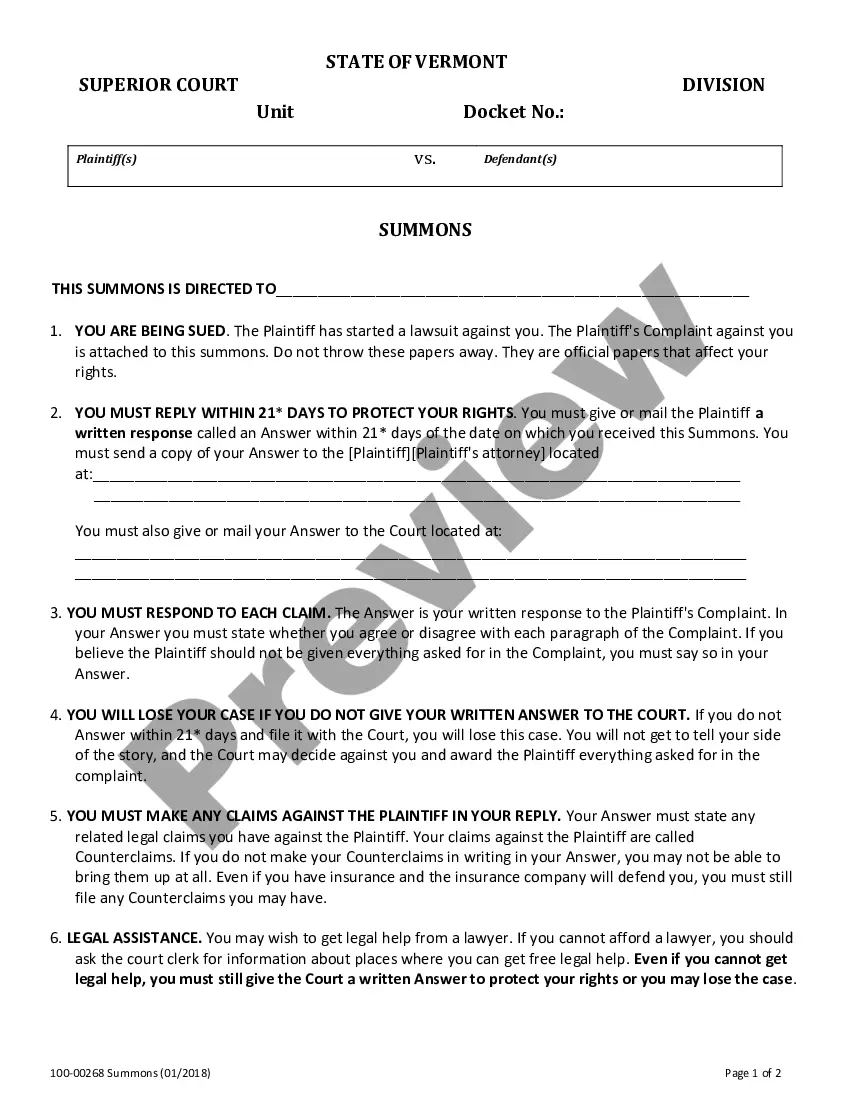
Agreement for Employment of Landscape Architect as Self-Employed Independent Contractor
What is this form?
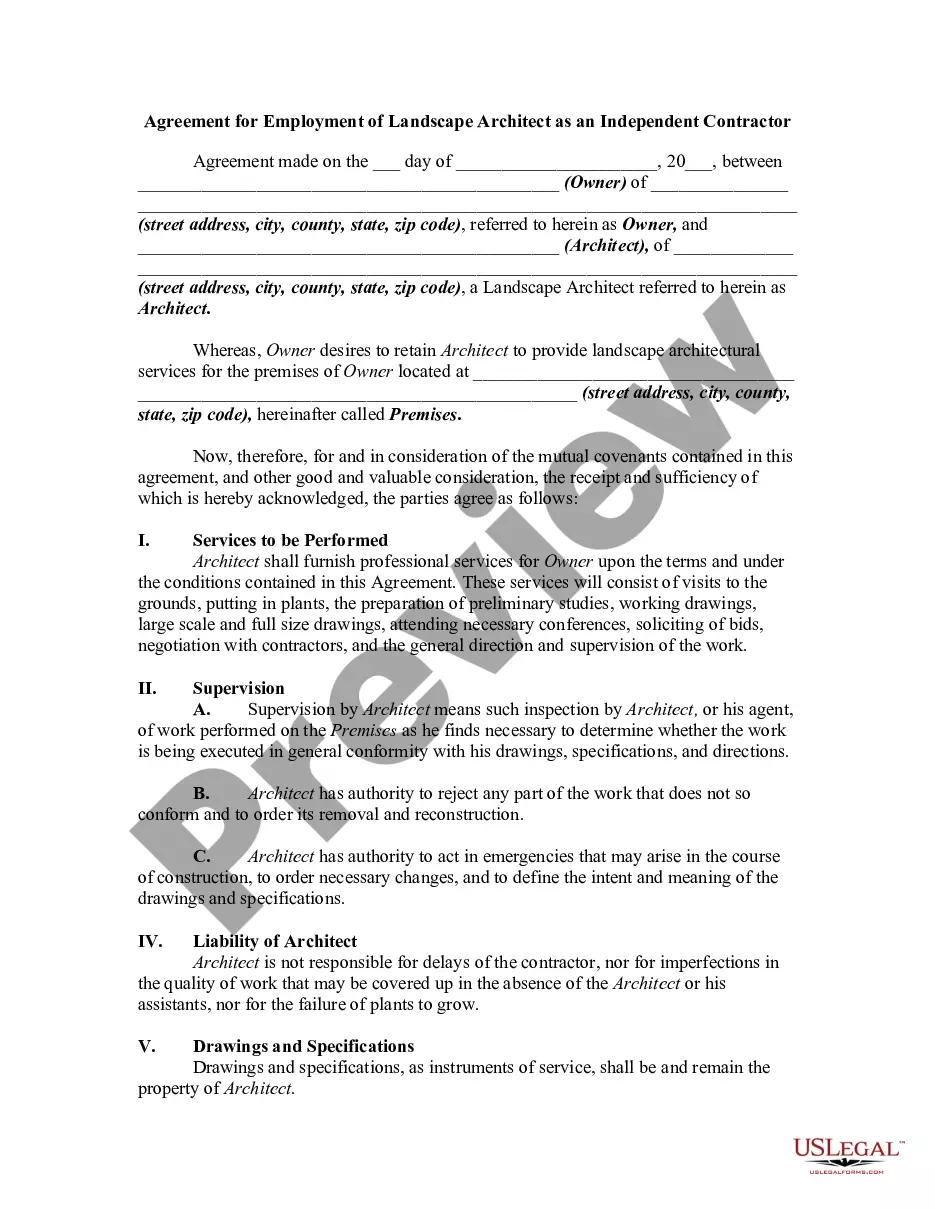
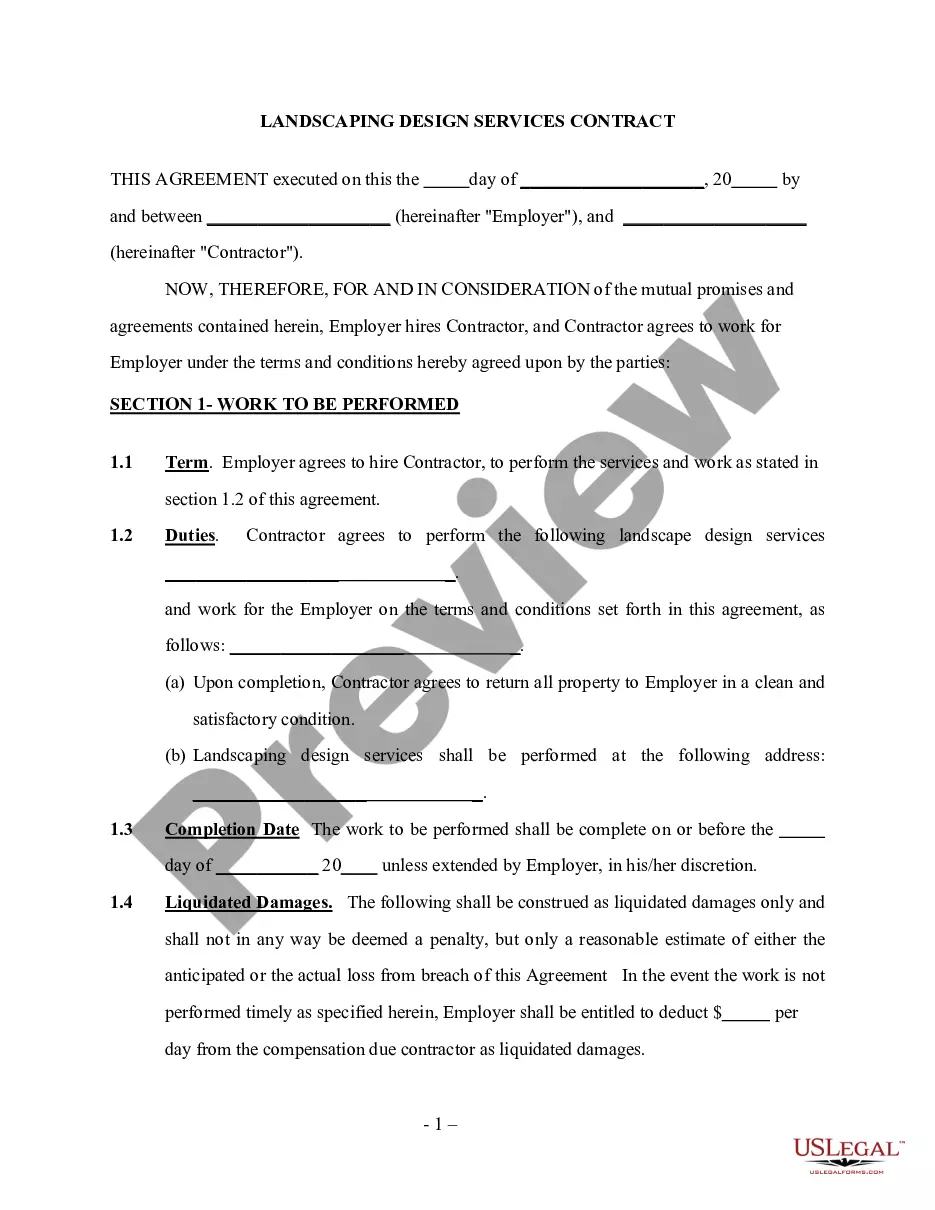
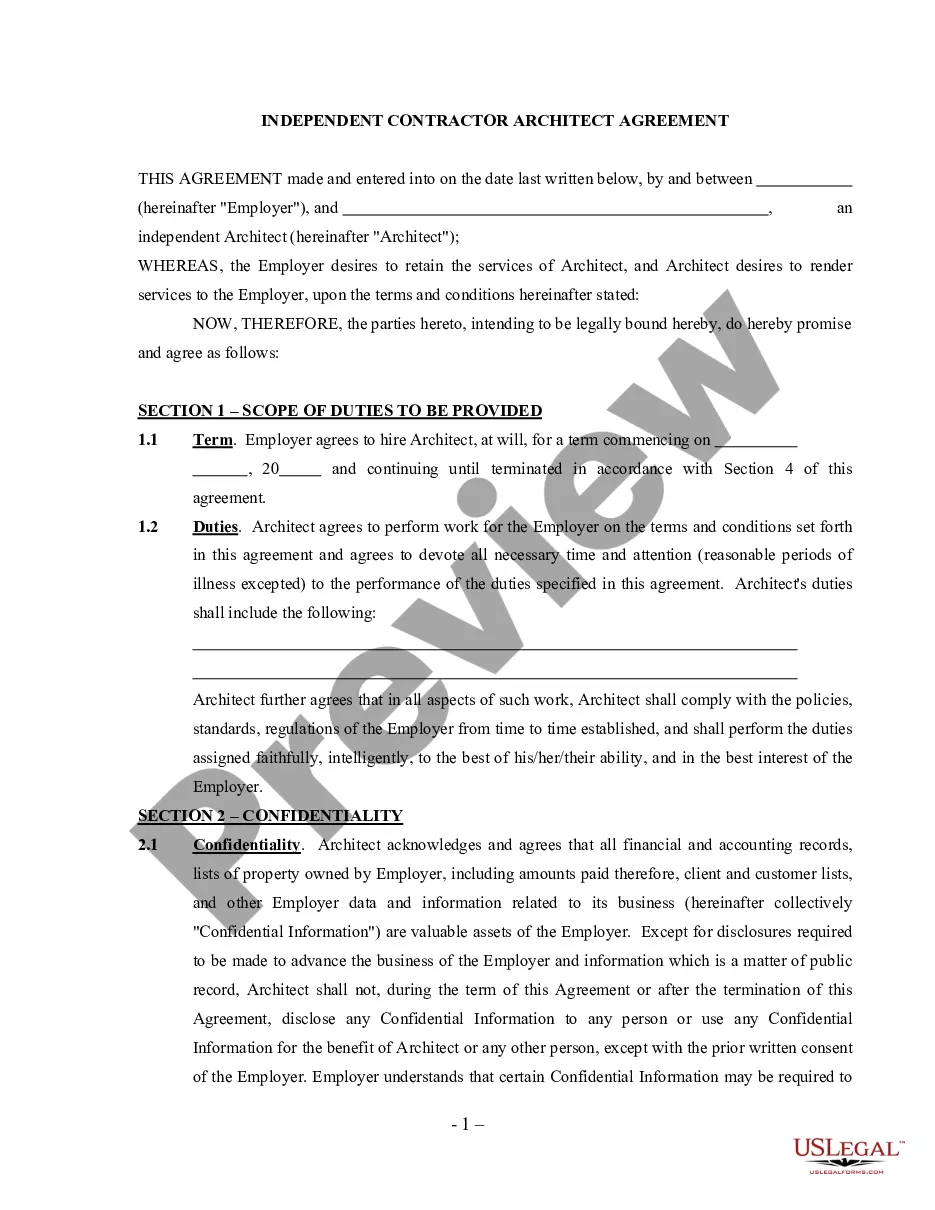
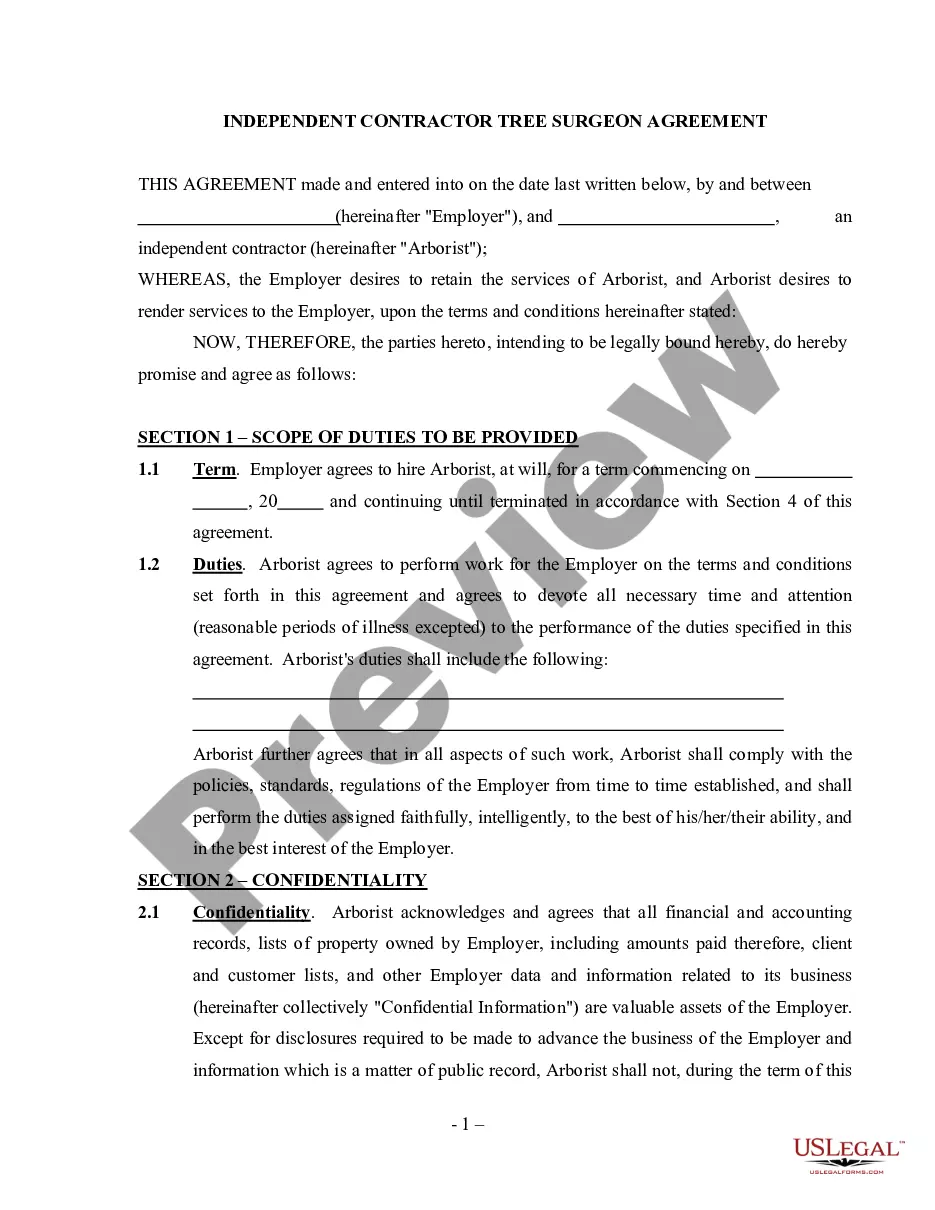
The Agreement for Employment of Landscape Architect as Self-Employed Independent Contractor is a legal document that establishes a formal relationship between a property owner and a landscape architect hired as an independent contractor. This agreement outlines the services to be performed, compensation, responsibilities, and the rights of both parties. This form is used specifically for projects that require professional landscape architectural services, differentiating it from other employment or contractor agreements through its focus on landscape design and implementation.
Key components of this form
- Parties involved: Identification of the Owner and the Landscape Architect, including their contact information.
- Scope of services: Detailed description of professional services to be provided by the architect.
- Supervision: Conditions under which the architect will oversee the project and have authority over work performed.
- Liability: Provisions that specify the architect's limited liability for certain delays and issues.
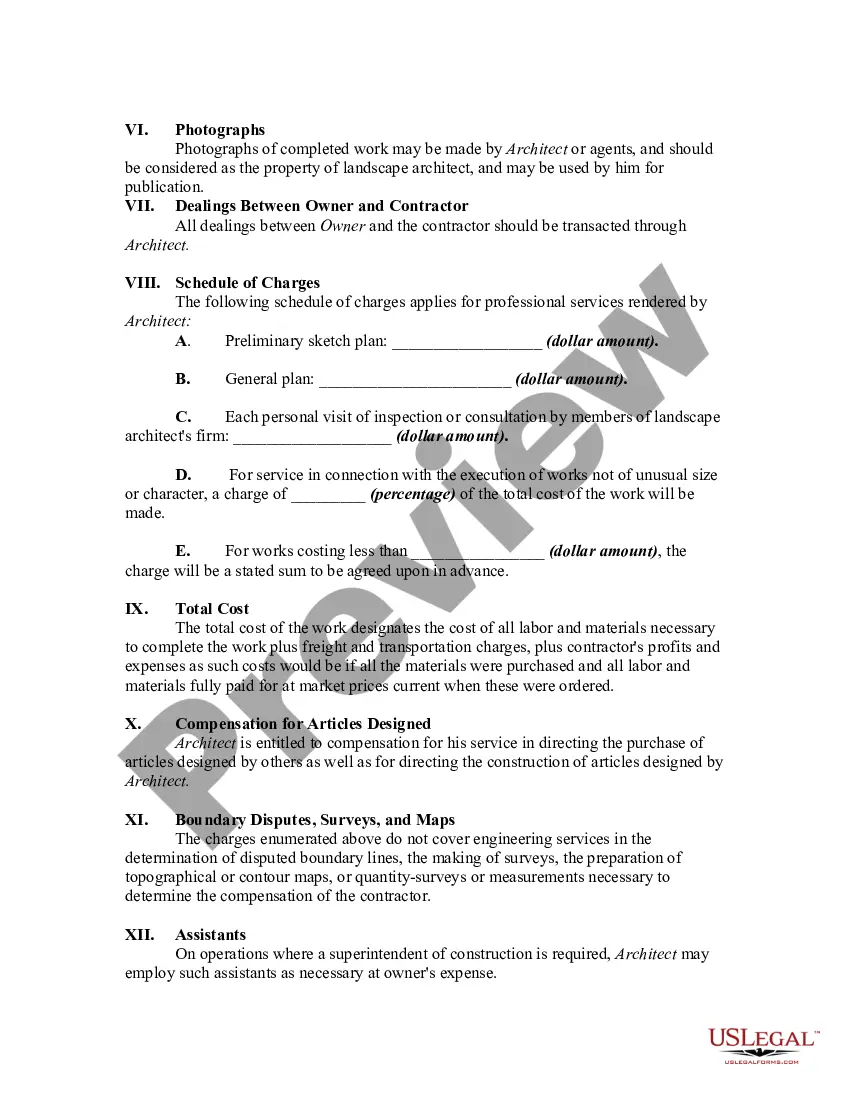
- Compensation Structure: Schedule of charges for different services rendered by the architect.
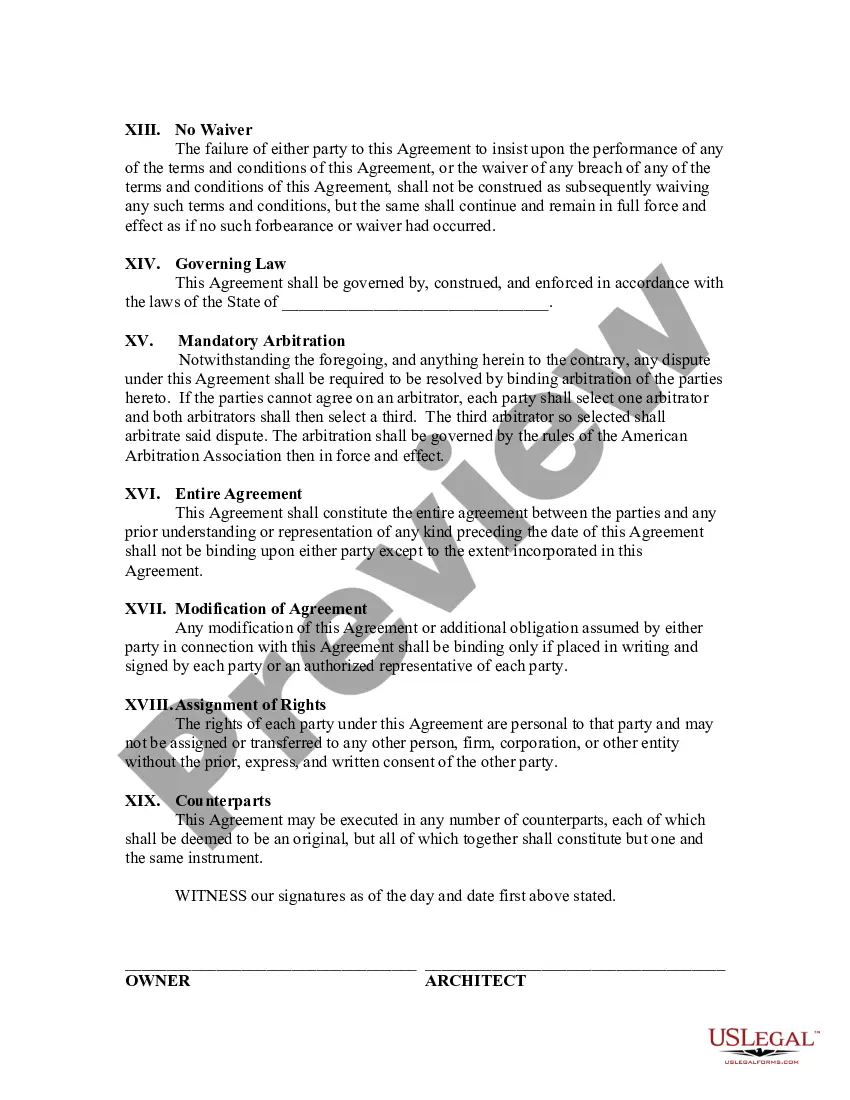
- Governing Law: Specification of which state's laws govern the agreement.

When this form is needed
This form is appropriate when a property owner wants to engage a landscape architect for a specific project as an independent contractor. It is ideal for scenarios involving new landscape design, garden installation, or renovation of existing outdoor spaces. Use this form when clear expectations regarding services, costs, and oversight are necessary to ensure a successful working relationship.
Who should use this form
- Property owners seeking to hire a landscape architect for independent contract work.
- Landscape architects who provide services as independent contractors and require a formal agreement.
- Contractors or firms looking to specify the terms of landscape architectural services.
Steps to complete this form
- Identify the parties: Fill in the full names and addresses of the Owner and the Landscape Architect.
- Define the project location: Specify the street address of the premises where services will be performed.
- Outline services: Clearly state the professional services the architect will provide.
- Enter terms of supervision and liability: Review and include the necessary conditions regarding project oversight and architect's liability.
- Specify compensation: Detail the charges for services and total cost structure.
- Sign and date the agreement: Ensure both parties sign the document to formalize the agreement.
Is notarization required?
Notarization is not commonly needed for this form. However, certain documents or local rules may make it necessary. Our notarization service, powered by Notarize, allows you to finalize it securely online anytime, day or night.
Get your form ready online
Our built-in tools help you complete, sign, share, and store your documents in one place.
Make edits, fill in missing information, and update formatting in US Legal Forms—just like you would in MS Word.
Download a copy, print it, send it by email, or mail it via USPS—whatever works best for your next step.
Sign and collect signatures with our SignNow integration. Send to multiple recipients, set reminders, and more. Go Premium to unlock E-Sign.
If this form requires notarization, complete it online through a secure video call—no need to meet a notary in person or wait for an appointment.
We protect your documents and personal data by following strict security and privacy standards.

Make edits, fill in missing information, and update formatting in US Legal Forms—just like you would in MS Word.

Download a copy, print it, send it by email, or mail it via USPS—whatever works best for your next step.

Sign and collect signatures with our SignNow integration. Send to multiple recipients, set reminders, and more. Go Premium to unlock E-Sign.

If this form requires notarization, complete it online through a secure video call—no need to meet a notary in person or wait for an appointment.

We protect your documents and personal data by following strict security and privacy standards.
Mistakes to watch out for
- Failing to clearly specify the scope of work and services to be provided.
- Not including addresses for all parties involved.
- Omitting details regarding compensation, which can lead to misunderstandings.
- Neglecting to review state-specific legal requirements which might affect enforceability.
Why use this form online
- Convenience of downloading the form instantly from anywhere, at any time.
- Editability allows users to tailor the document to specific needs easily.
- Reliability of having a professionally drafted agreement, ensuring clarity and legality.
Looking for another form?

Form popularity
FAQ
The landscape company and its independent worker usually prefer the independent contractor status. The company's accounting is simplerthey provide no worker's compensation insurance, they don't have to worry about whether the workers are undocumented, they make no tax withholding, and there are no unemployment claims.
Terms. This is the first section of any agreement or contract and states the names and locations of the parties involved. Responsibilities & Deliverables. Payment-Related Details. Confidentiality Clause. Contract Termination. Choice of Law.
Terms. This is the first section of any agreement or contract and states the names and locations of the parties involved. Responsibilities & Deliverables. Payment-Related Details. Confidentiality Clause. Contract Termination. Choice of Law.
The IRS requires contractors to fill out a Form W-9, request for Taxpayer Identification Number and Certification, which you should keep on file for at least four years after the hiring. This form is used to request the correct name and Taxpayer Identification Number, or TIN, of the worker or their entity.
Get it in writing. Keep it simple. Deal with the right person. Identify each party correctly. Spell out all of the details. Specify payment obligations. Agree on circumstances that terminate the contract. Agree on a way to resolve disputes.
For most types of projects you hire an independent contractor (IC) to do, the law does not require you to put anything in writing. You can meet with the IC, agree on the terms of your arrangement, and have an oral contract or agreement that is legally binding. Just because you can doesn't mean you should, however.
Terms. This is the first section of any agreement or contract and states the names and locations of the parties involved. Responsibilities & Deliverables. Payment-Related Details. Confidentiality Clause. Contract Termination. Choice of Law.
Identifying/Contact Information. Title and Description of the Project. Projected Timeline and Completion Date. Cost Estimate and Payment Schedule. Stop Work Clause and Stop Payment Clause. Act of God Clause. Change Order Agreement. Warranty.