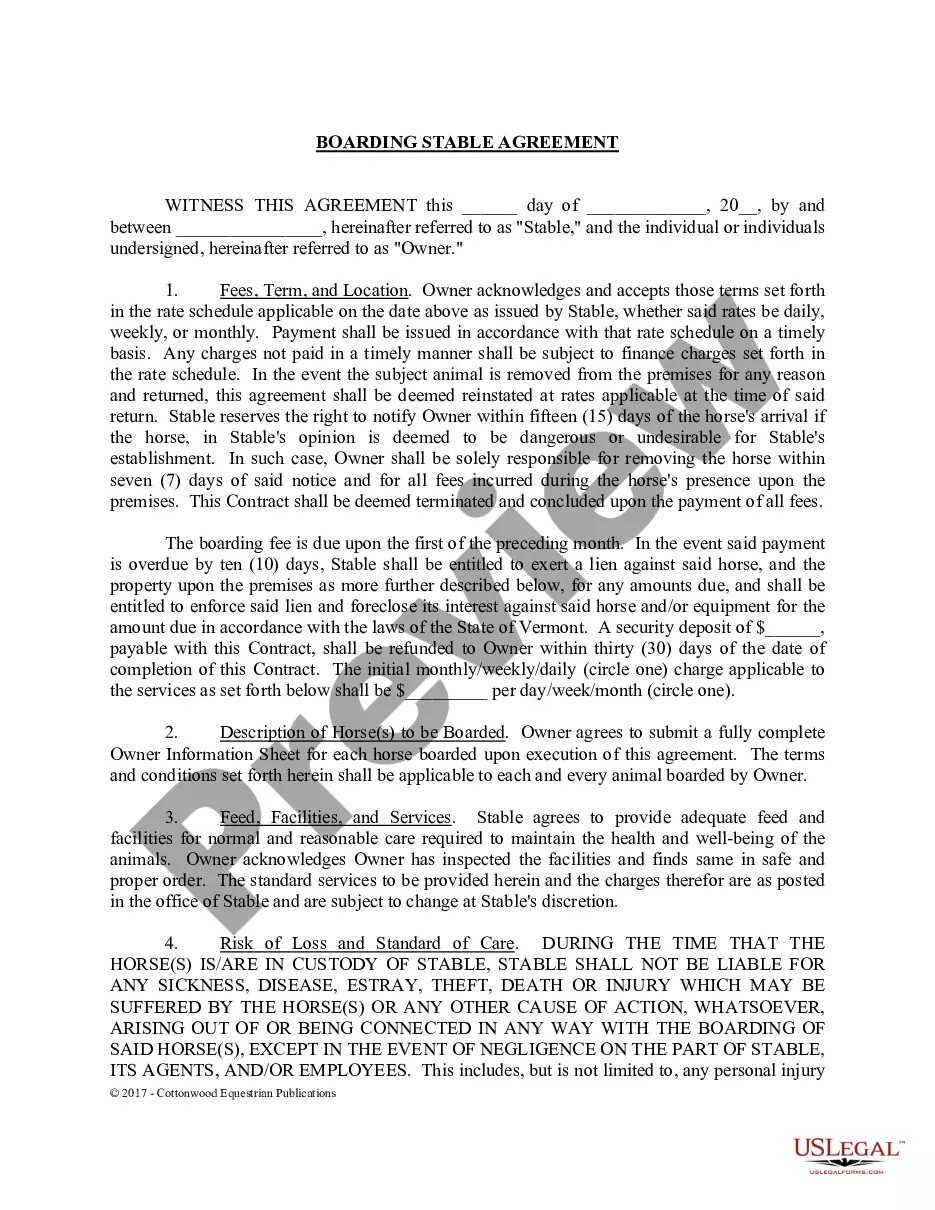
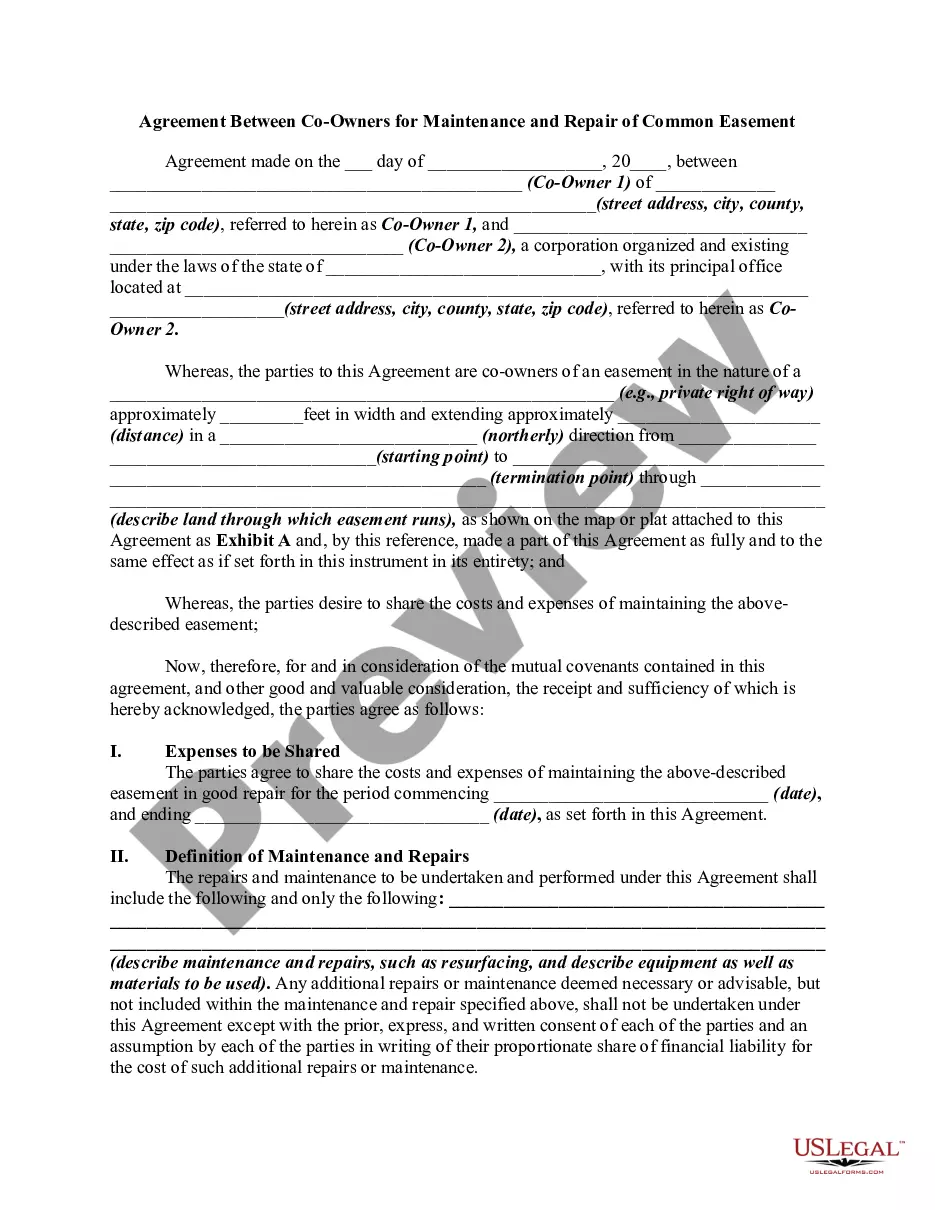
Agreement Between Co-Owners for Maintenance and Repair of Common Easement
Overview of this form
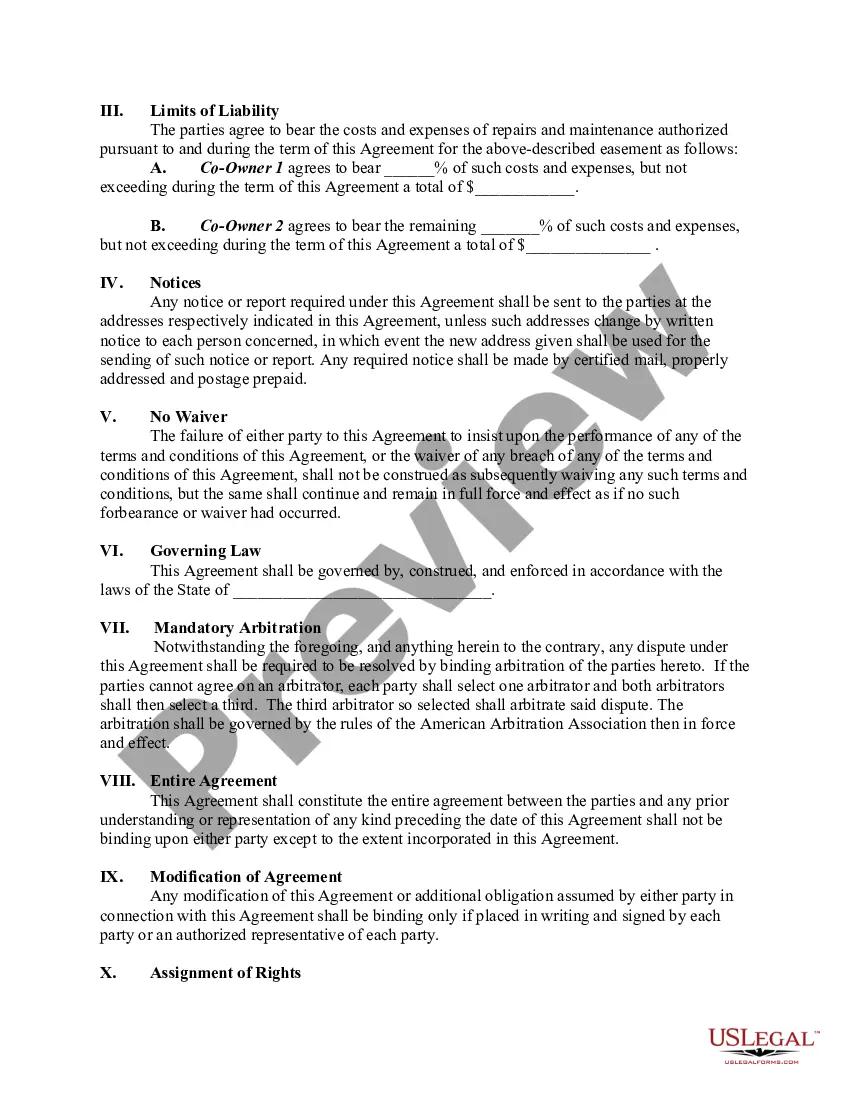
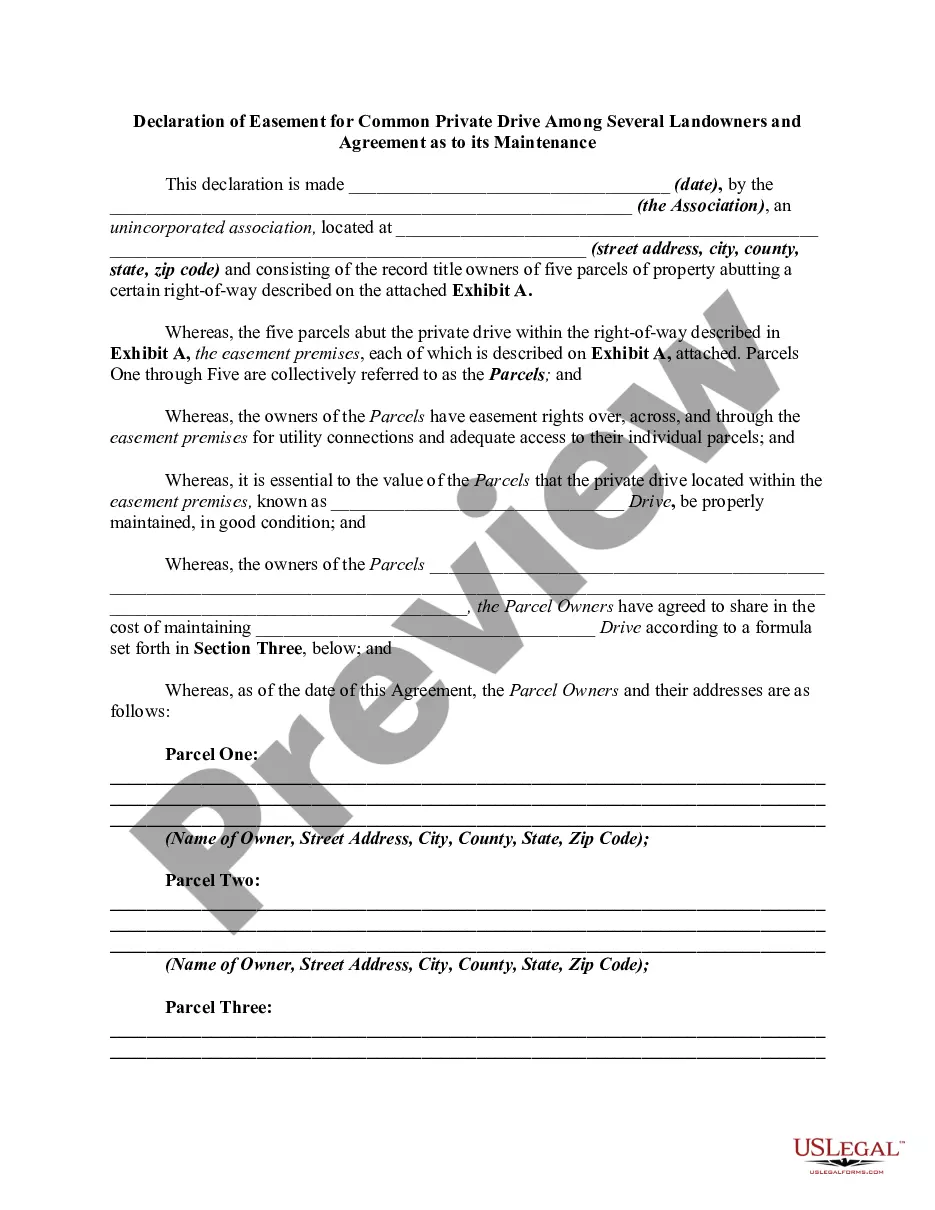
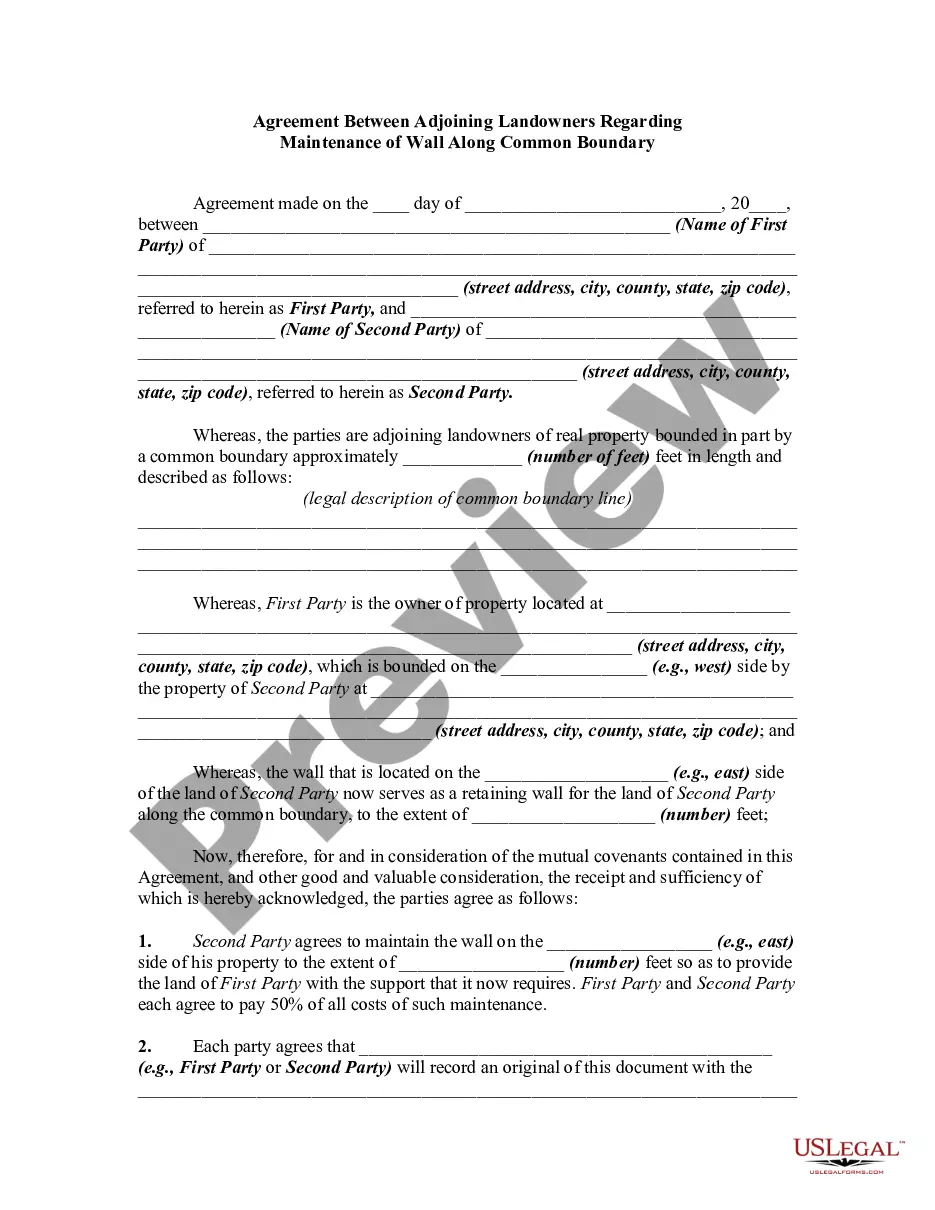
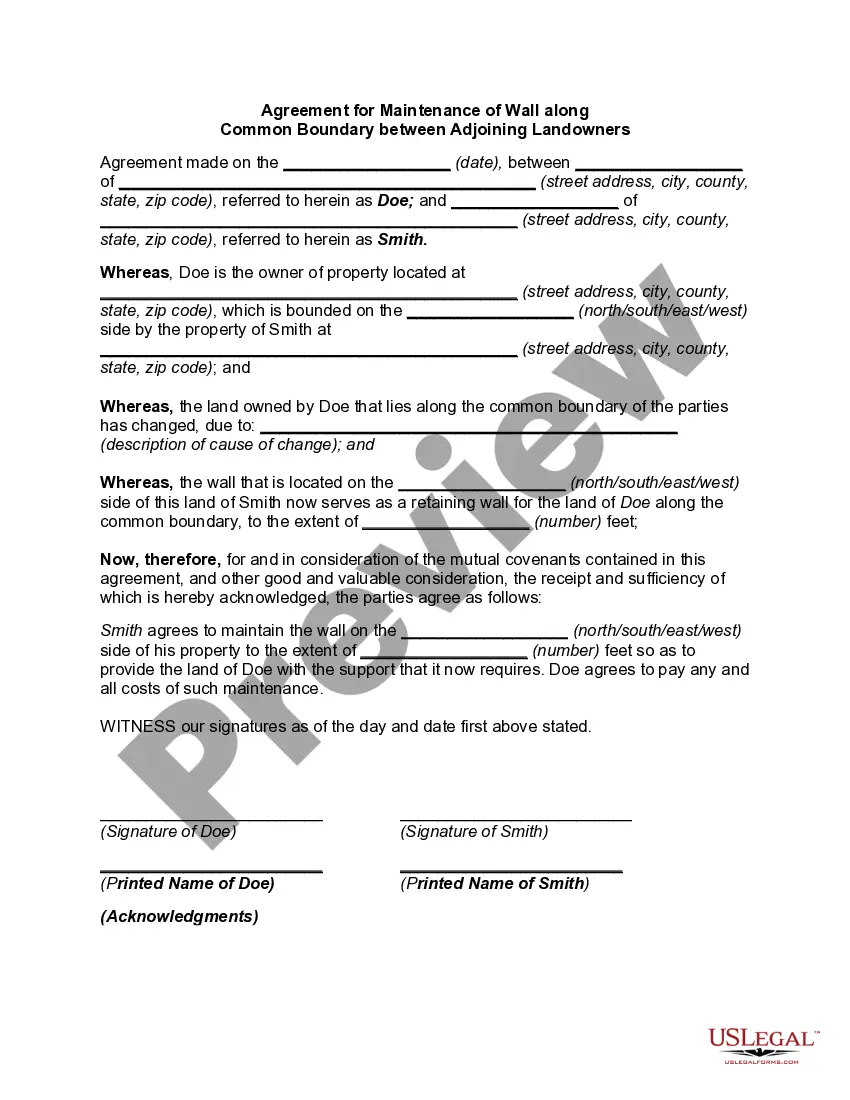
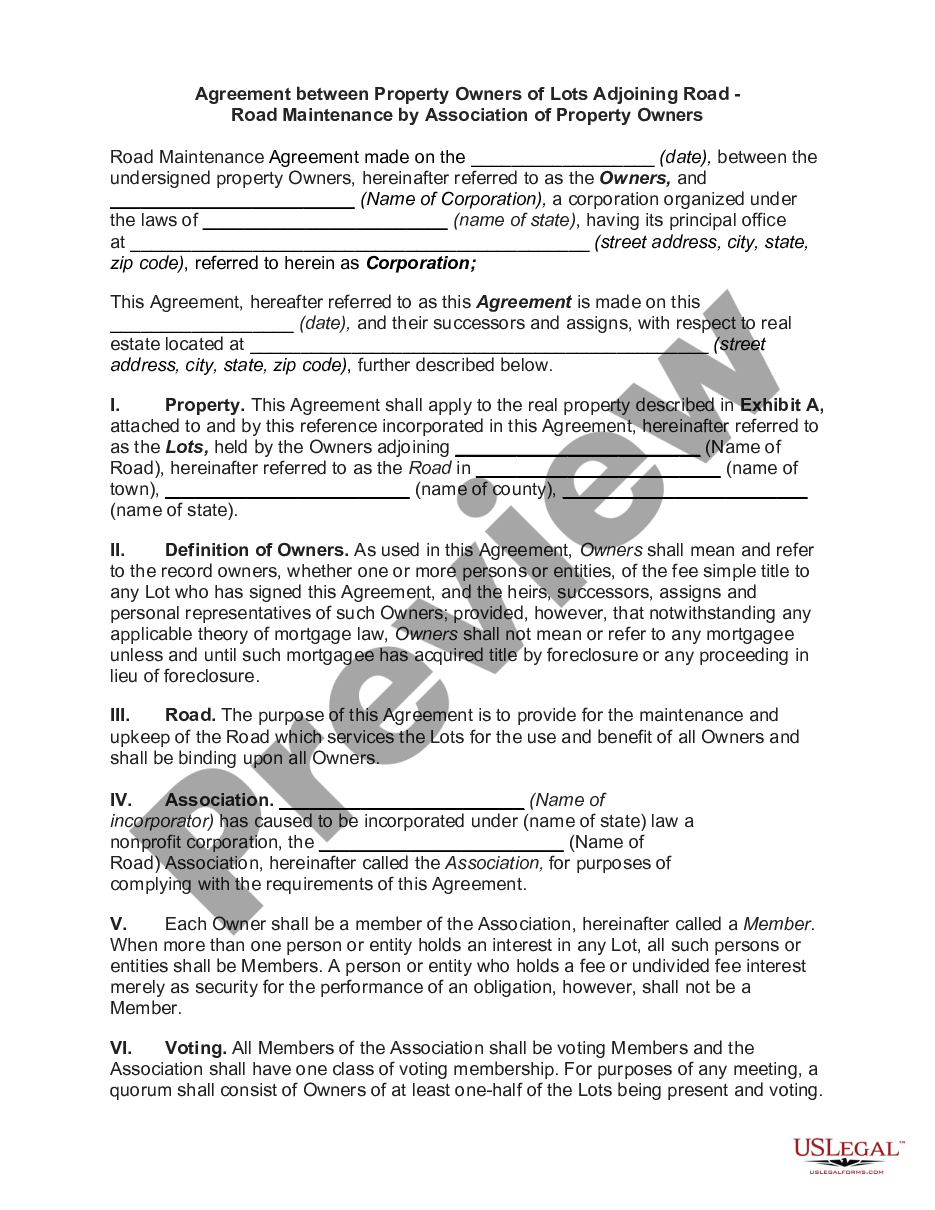
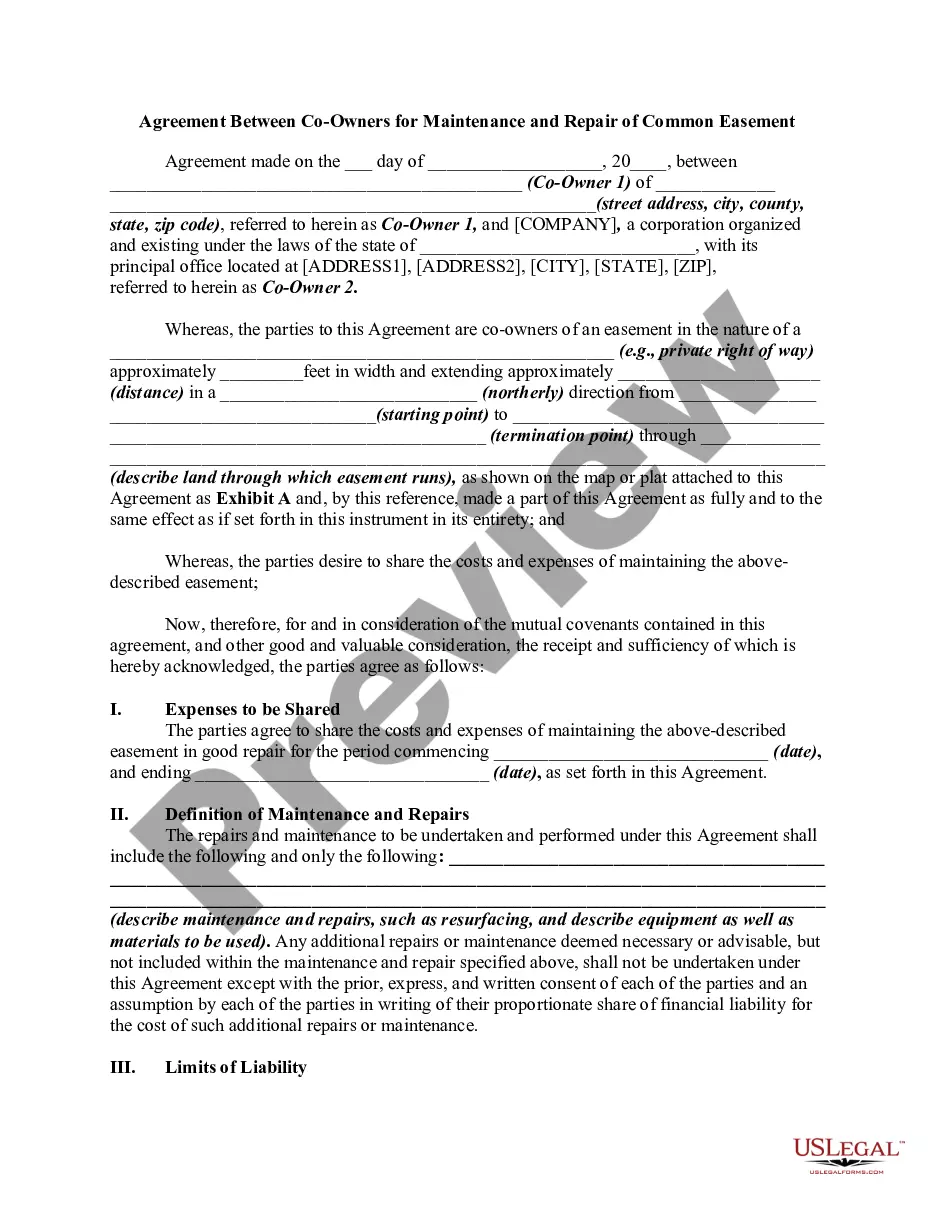
The Agreement Between Co-Owners for Maintenance and Repair of Common Easement is a legal document that outlines the responsibilities of co-owners in sharing costs related to the maintenance and repair of an easement. This form is essential for ensuring clarity among co-owners about their obligations, differing from other real property agreements by specifically addressing the management of a shared right to use someone else's land for a specified purpose.
Key parts of this document
- Identification of the co-owners and their respective addresses.
- Description of the easement, including its dimensions and boundaries.
- Details on the specific maintenance and repairs to be performed.
- Allocation of costs between the co-owners, including any financial limits.
- Conditions regarding notices, modifications, and arbitration in case of disputes.
When to use this form
This agreement is necessary when two or more parties share ownership of an easement and need to establish how they will manage and fund the maintenance and repairs. It's often used in situations involving private roads, utility easements, and shared access paths where multiple owners need a clear understanding of their financial and procedural obligations.
Intended users of this form
This form is suitable for:
- Property co-owners who share an easement.
- Individuals or entities involved in joint land agreements.
- Individuals seeking clarification on cost-sharing responsibilities related to an easement.
Steps to complete this form
- Identify the parties involved in the agreement and their addresses.
- Clearly describe the easement, including its width and length.
- Specify the maintenance and repairs that will be addressed under the agreement.
- Detail the cost-sharing arrangement, including financial limits for each party.
- Obtain signatures from both parties to formalize the agreement.
Notarization guidance
Notarization is generally not required for this form. However, certain states or situations might demand it. You can complete notarization online through US Legal Forms, powered by Notarize, using a verified video call available anytime.
Get your form ready online
Our built-in tools help you complete, sign, share, and store your documents in one place.
Make edits, fill in missing information, and update formatting in US Legal Forms—just like you would in MS Word.
Download a copy, print it, send it by email, or mail it via USPS—whatever works best for your next step.
Sign and collect signatures with our SignNow integration. Send to multiple recipients, set reminders, and more. Go Premium to unlock E-Sign.
If this form requires notarization, complete it online through a secure video call—no need to meet a notary in person or wait for an appointment.
We protect your documents and personal data by following strict security and privacy standards.

Make edits, fill in missing information, and update formatting in US Legal Forms—just like you would in MS Word.

Download a copy, print it, send it by email, or mail it via USPS—whatever works best for your next step.

Sign and collect signatures with our SignNow integration. Send to multiple recipients, set reminders, and more. Go Premium to unlock E-Sign.

If this form requires notarization, complete it online through a secure video call—no need to meet a notary in person or wait for an appointment.

We protect your documents and personal data by following strict security and privacy standards.
Mistakes to watch out for
- Failing to accurately describe the easement can lead to misunderstandings.
- Not specifying the maintenance tasks, resulting in disputes over responsibilities.
- Neglecting to include financial limits, possibly causing unexpected costs for co-owners.
Advantages of online completion
- Convenient access to legal forms anytime, anywhere.
- Editable templates allow for customization to fit specific needs.
- Reliability of attorney-drafted documents, ensuring legal soundness.
Key takeaways
- The form establishes clear guidelines for co-owners regarding maintenance costs of an easement.
- Accurate and detailed descriptions are vital to prevent misunderstandings.
- Consultation with a legal professional can aid in compliance with local laws.
Looking for another form?

Form popularity
FAQ
Co-owners have equal rights to possession of the property, and equal rights and responsibilities. If one co-owner excludes the other from the property, the excluded co-owner can recover the property's rental value from the excluding co-owner.
Generally, joint owners have the right to possess and use the property. Most states do not require a joint owner to pay rent to the other joint owner(s) while exercising this right.Your rights as a joint owner also include: Money owed from renting the property to tenants.
The legal interest (estate) is always co-owned under a legal joint tenancy. This means all co-owners have a legal right to occupation and use of the land as is the case with a beneficial joint tenancy. They are effectively trustees of the property holding the property on trust for themselves and all other co-owners.
A co-ownership agreement creates and regulates each owner's rights and obligations relative to the property.An agreement is needed whether the property is investment property or will be occupied by the parties but it is even more important when one or more of the parties will occupy the property as a residence.
Co-owners mean all the owners of a property. If the property is owned by more than one person, it is called joint ownership. In case of coparcenary, the male members and daughters have a common and an equal interest in ancestral property.The transferee becomes the co-owner.
You cannot legally evict him or her from it due to the joint ownerhip issues. I recommend that you consult further with a real estate attorney as to how to possibly have a buy out of the assorted family interests in this family home.
Ownership of Tenant in Common PropertiesJoint owners have rights that are defined by the type of ownership method chosen. The term "co-owner" implies that more than one person has an ownership percentage of the property. Joint ownership, in its three common forms, refines and defines the rights of the co-owners.
A co-owner is an individual or group that shares ownership in an asset with another individual or group. Each co-owner owns a percentage of the asset, although the amount may vary according to the ownership agreement.