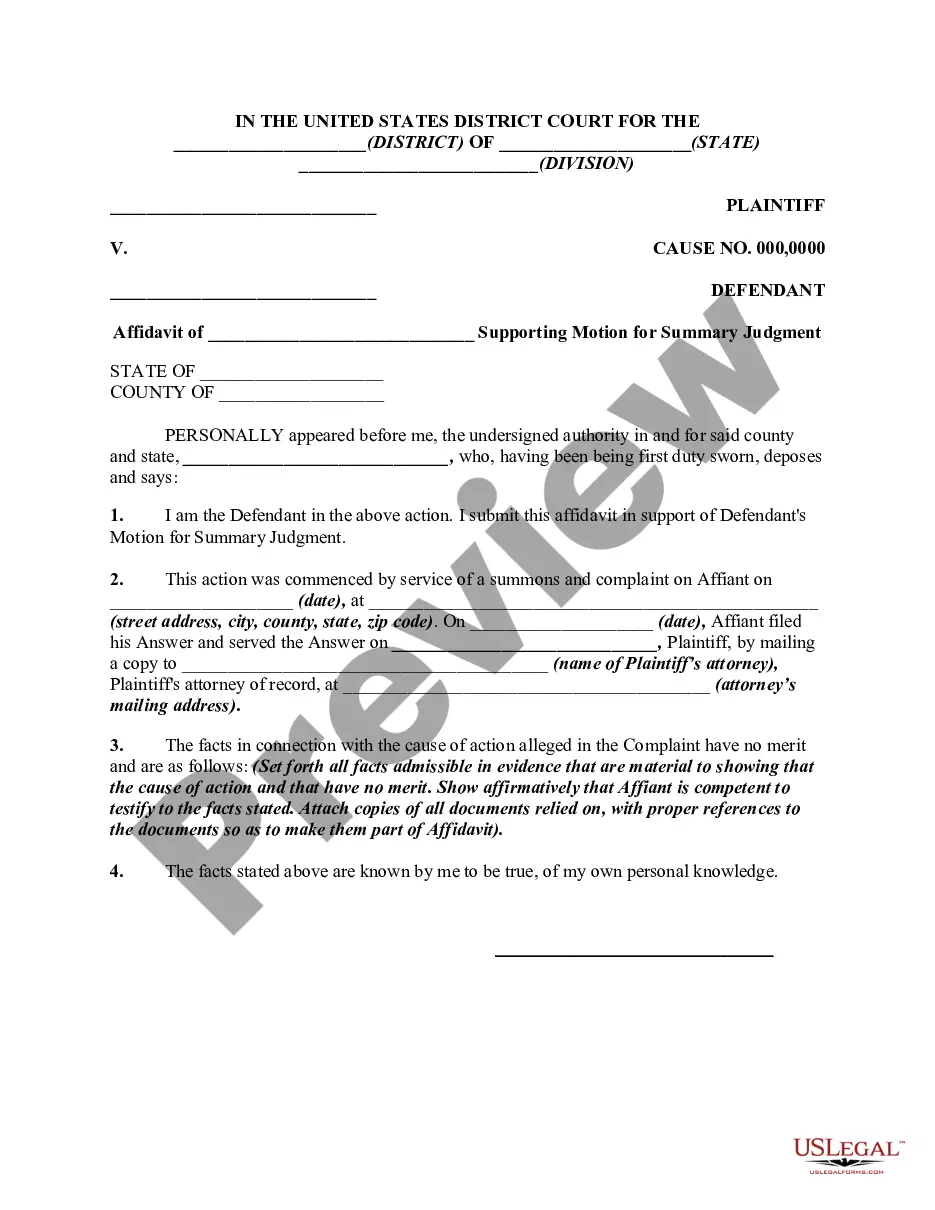
Affidavit of Defendant Supporting Motion for Summary Judgment
What this document covers
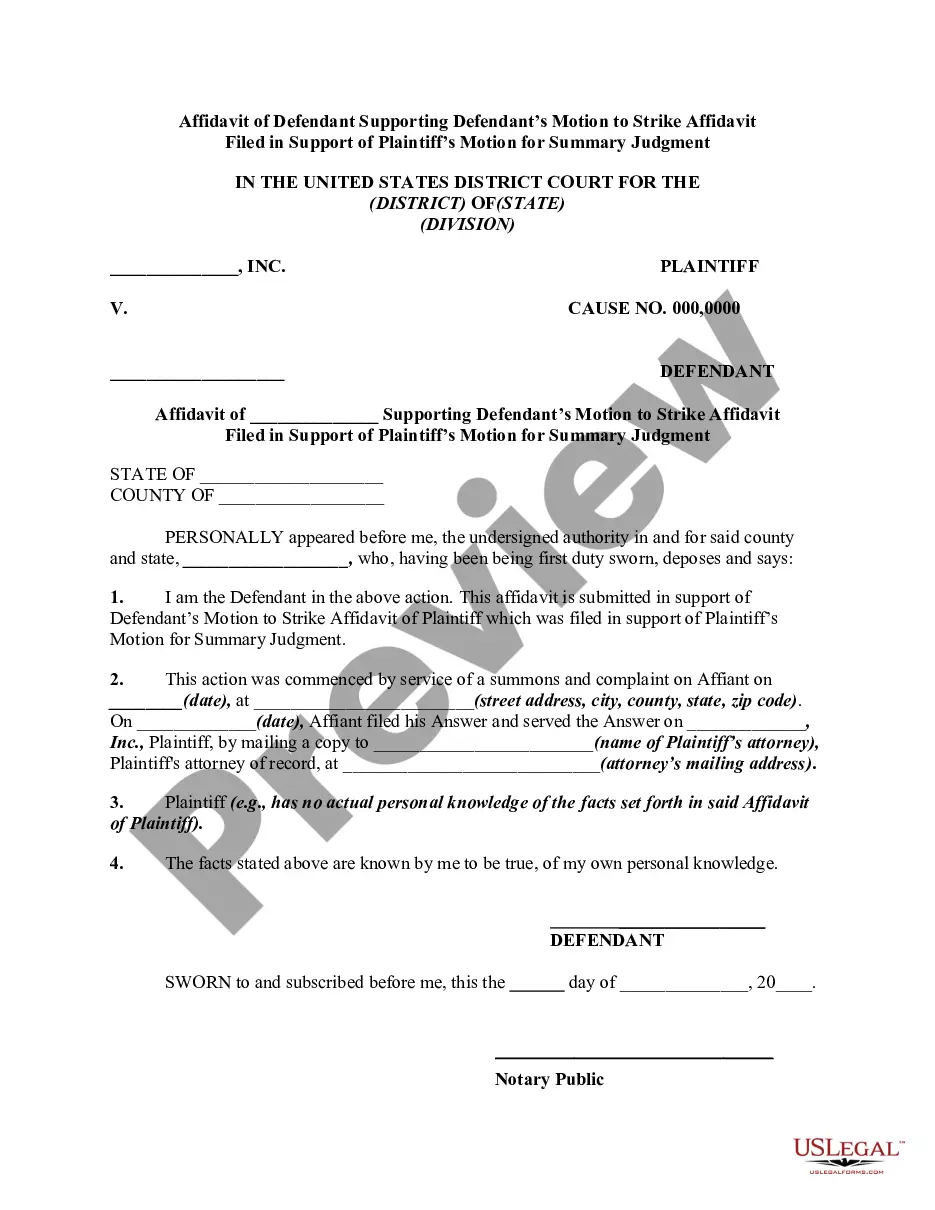
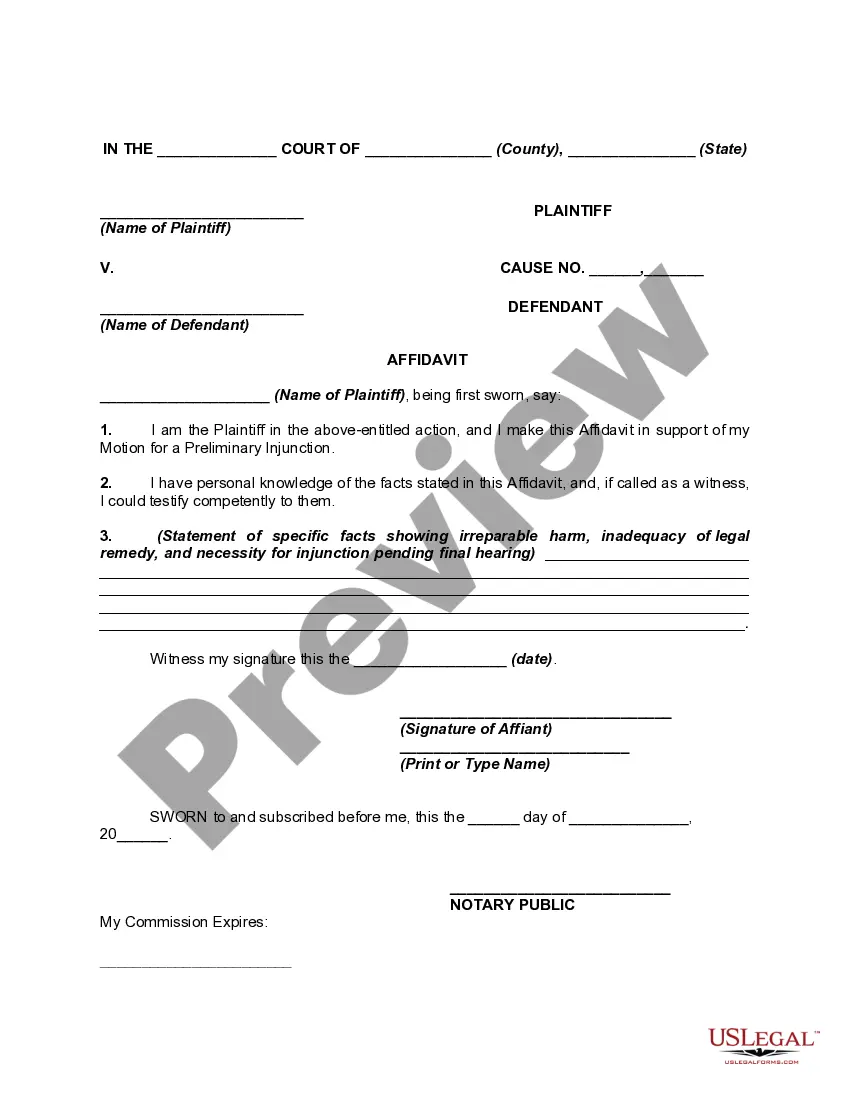
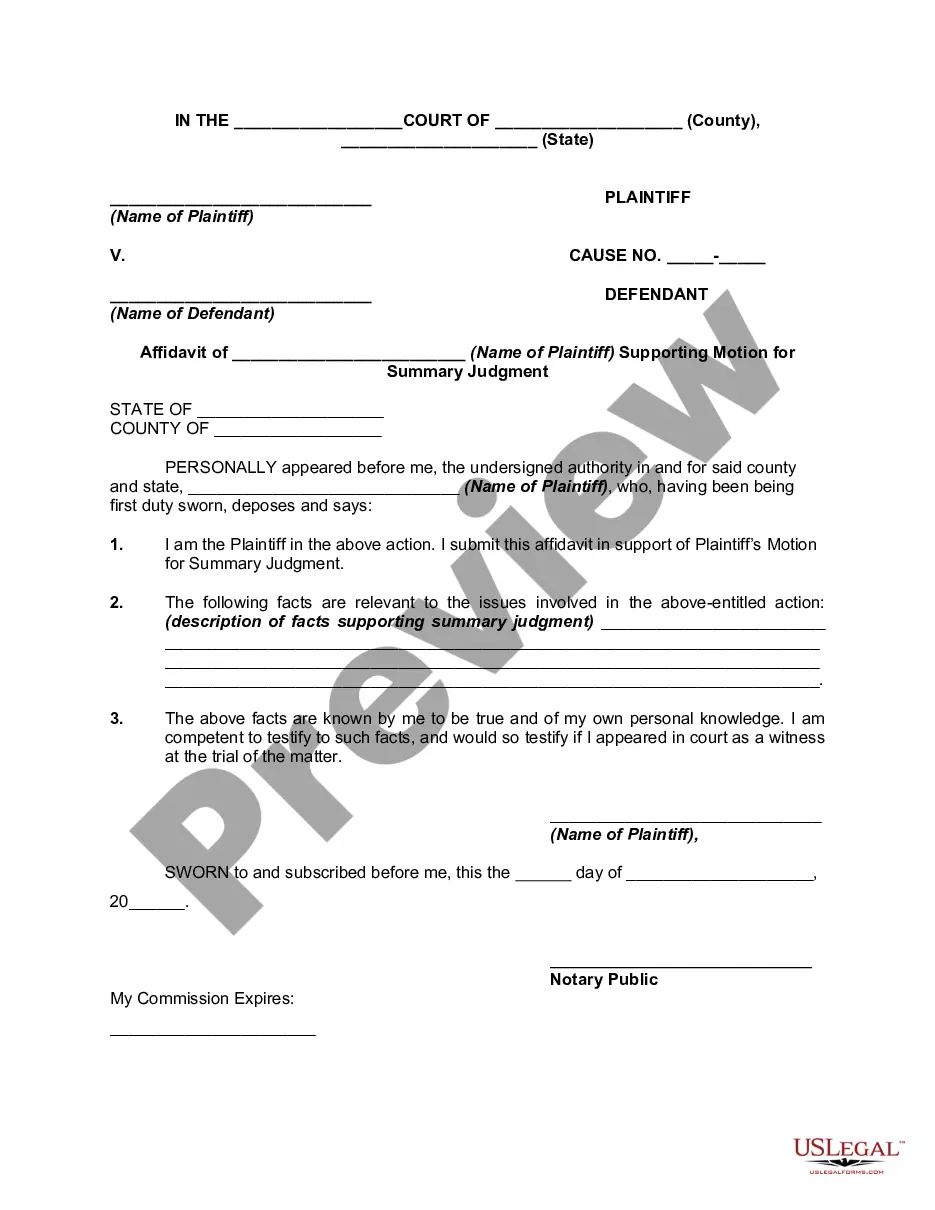
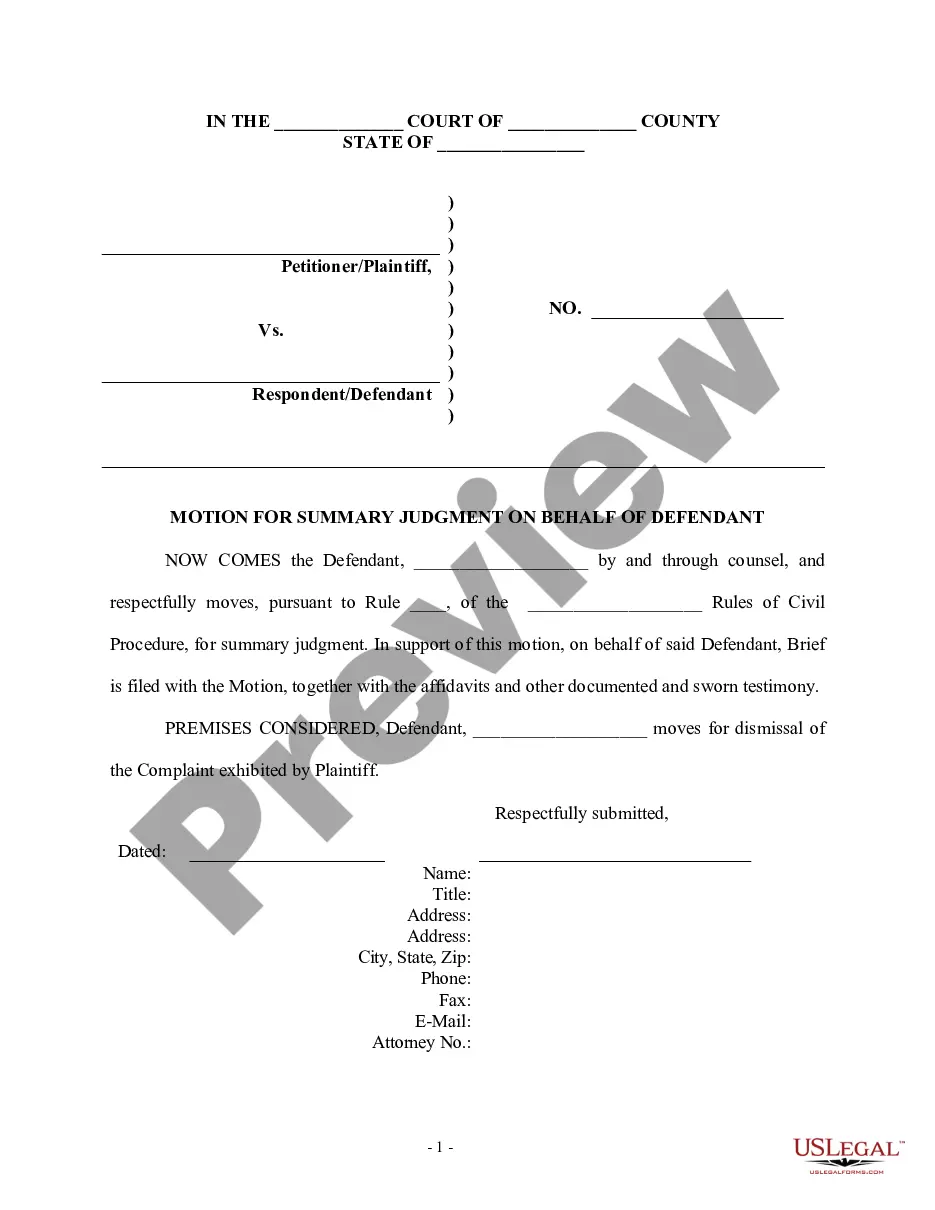
The Affidavit of Defendant Supporting Motion for Summary Judgment is a legal document used by defendants in civil cases. Its primary purpose is to articulate the factual basis upon which a party claims there is no genuine dispute over material facts, making a trial unnecessary. This affidavit provides evidence to support the defendantâs motion for summary judgment, distinguishing it from other types of affidavits, which may serve different functions in legal proceedings.
Key components of this form
- Identification of the defendant and the case details, including the court and cause number.
- Statement affirming the defendant's personal knowledge of the facts relevant to the case.
- Chronological account of service of summons, filing of the answer, and responses to the plaintiff.
- Detailed presentation of facts that demonstrate why the claim has no merit.
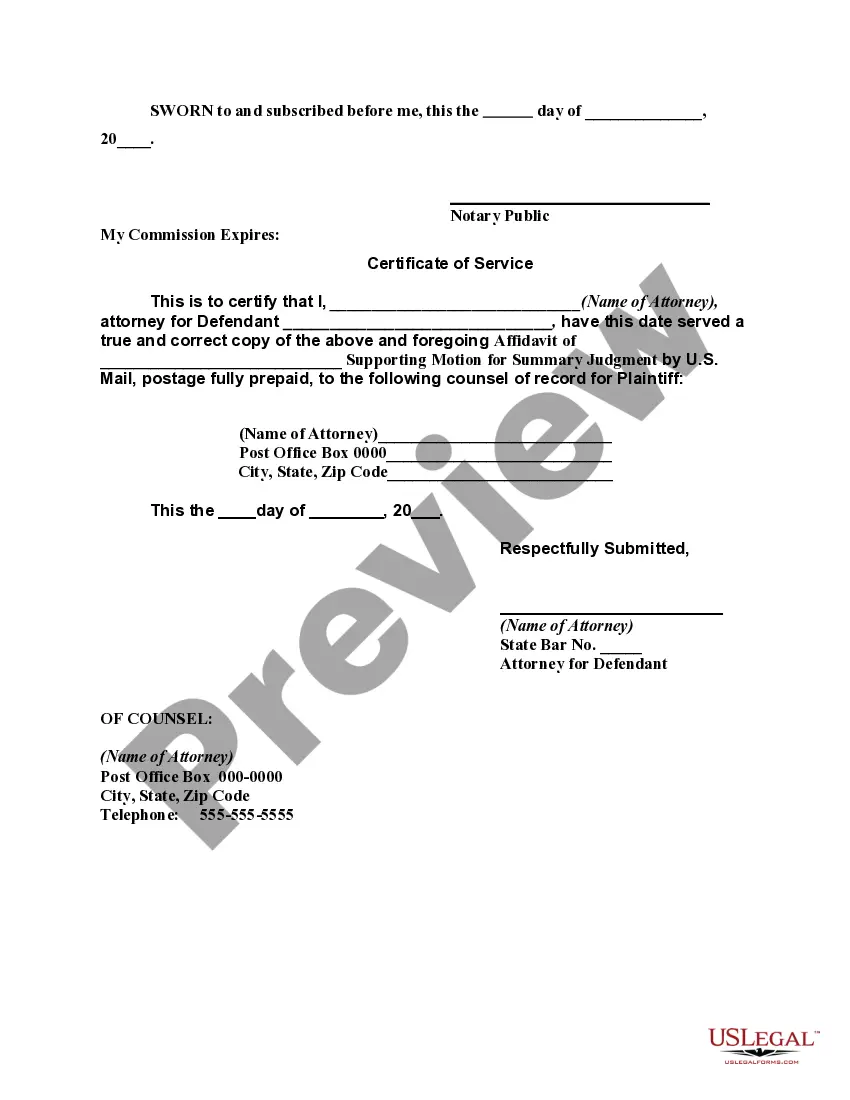
- Signature sections for the defendant and notary public to validate the affidavit.
When to use this document
This affidavit should be used when a defendant believes that the evidence reveals no substantial facts in dispute and wishes to obtain a summary judgment. Typical scenarios may include cases where the plaintiff's claims can be refuted by existing documentation or clear evidence. This form is essential in streamlining the litigation process and can potentially avoid unnecessary court appearances and costs.
Who needs this form
- Defendants in civil lawsuits seeking to challenge the merits of a plaintiff's case.
- Individuals without legal representation who are comfortable preparing and filing their own legal documents.
- Attorneys representing defendants who require a formal affidavit to accompany their motion.
Instructions for completing this form
- Enter the appropriate court and case information at the top of the document.
- Provide personal details, including the name of the defendant and date of affidavit signing.
- Outline the timeline of the case, including important dates such as service of summons and filing of the answer.
- Clearly state the facts that support the motion for summary judgment and attach any relevant documents.
- Sign the affidavit in front of a notary public to validate its authenticity.
Notarization requirements for this form
Yes, this form must be notarized to be legally valid. It requires the signature of a notary public to authenticate the affidavit, confirming that the affiant (defendant) signed the document in their presence. US Legal Forms offers integrated online notarization services for your convenience, allowing for secure video calls to complete the process without needing to travel.
Get your form ready online
Our built-in tools help you complete, sign, share, and store your documents in one place.
Make edits, fill in missing information, and update formatting in US Legal Forms—just like you would in MS Word.
Download a copy, print it, send it by email, or mail it via USPS—whatever works best for your next step.
Sign and collect signatures with our SignNow integration. Send to multiple recipients, set reminders, and more. Go Premium to unlock E-Sign.
If this form requires notarization, complete it online through a secure video call—no need to meet a notary in person or wait for an appointment.
We protect your documents and personal data by following strict security and privacy standards.

Make edits, fill in missing information, and update formatting in US Legal Forms—just like you would in MS Word.

Download a copy, print it, send it by email, or mail it via USPS—whatever works best for your next step.

Sign and collect signatures with our SignNow integration. Send to multiple recipients, set reminders, and more. Go Premium to unlock E-Sign.

If this form requires notarization, complete it online through a secure video call—no need to meet a notary in person or wait for an appointment.

We protect your documents and personal data by following strict security and privacy standards.
Common mistakes
- Failing to accurately state all relevant facts supporting the motion.
- Not including necessary signatures from the notary public.
- Leaving out crucial dates related to the case timeline.
- Not attaching supporting documents that substantiate the claims made in the affidavit.
Why use this form online
- Convenience of downloading and filling the form at your own pace.
- Access to templates drafted by licensed attorneys, ensuring legal accuracy.
- Editability allows for customization to meet individual case requirements.
- Secure online storage options for ease of access to past documents.
Looking for another form?



Form popularity
FAQ
Stated different, to successfully defend against summary judgment the non-moving party (you) should seek to demonstrate that indeed there are material facts in dispute. Alternatively, the non-moving party (you) can argue that the undisputed facts support a judgment as a matter of law in your favor.
If the motion is granted, the judgment on the issue or case is deemed to be a final judgment from which a party may seek an appeal. The court of appeal can reverse the grant of summary judgment and reinstate the claim in the lower court. However, this is rarely done and most summary judgments are upheld on appeal.
The moving party has the initial burden to show that summary judgment is proper even if the moving party would not have the BURDEN OF PROOF at trial. The court generally examines the evidence presented with the motion in the light most favorable to the opposing party.
Completely resolve a case (e.g., entry of judgment for plaintiff or defendants) Completely resolve a claim. Completely determine the status of a particular party. Resolve a particular claim's application to a particular party. Establish a fact or ruling applicable to the case as it is further adjudicated.
Essentially, a party can obtain summary judgment if it is able to clearly demonstrate that its opponent has no real prospect of succeeding in the litigation.As no oral evidence can be given on a summary judgment application, it will only succeed if the applicant can establish the strength of its case on paper alone.
By motion for summary judgment, I'll be referring to motions for summary adjudication as well, which are treated more favorably in federal court than in state courts such as California.Many defendants automatically file a motion summary judgment in every case, even if they don't reasonably expect to win it.
Rule 56 of the Federal Rules of Civil Procedure governs summary judgment for federal courts. Under Rule 56, in order to succeed in a motion for summary judgment, a movant must show 1) that there is no genuine dispute as to any material fact, and 2) that the movant is entitled to judgment as a matter of law.
Stated different, to successfully defend against summary judgment the non-moving party (you) should seek to demonstrate that indeed there are material facts in dispute. Alternatively, the non-moving party (you) can argue that the undisputed facts support a judgment as a matter of law in your favor.
The key to defeating a motion for summary judgment is to show the court that there are still facts in dispute. Summary judgment is only appropriate if none of the facts are disputed.