Complaint or Petition to Recover Possession of Premises from a Tenant at Will After Statutory Notice to Quit - Past Due Rent
Overview of this form
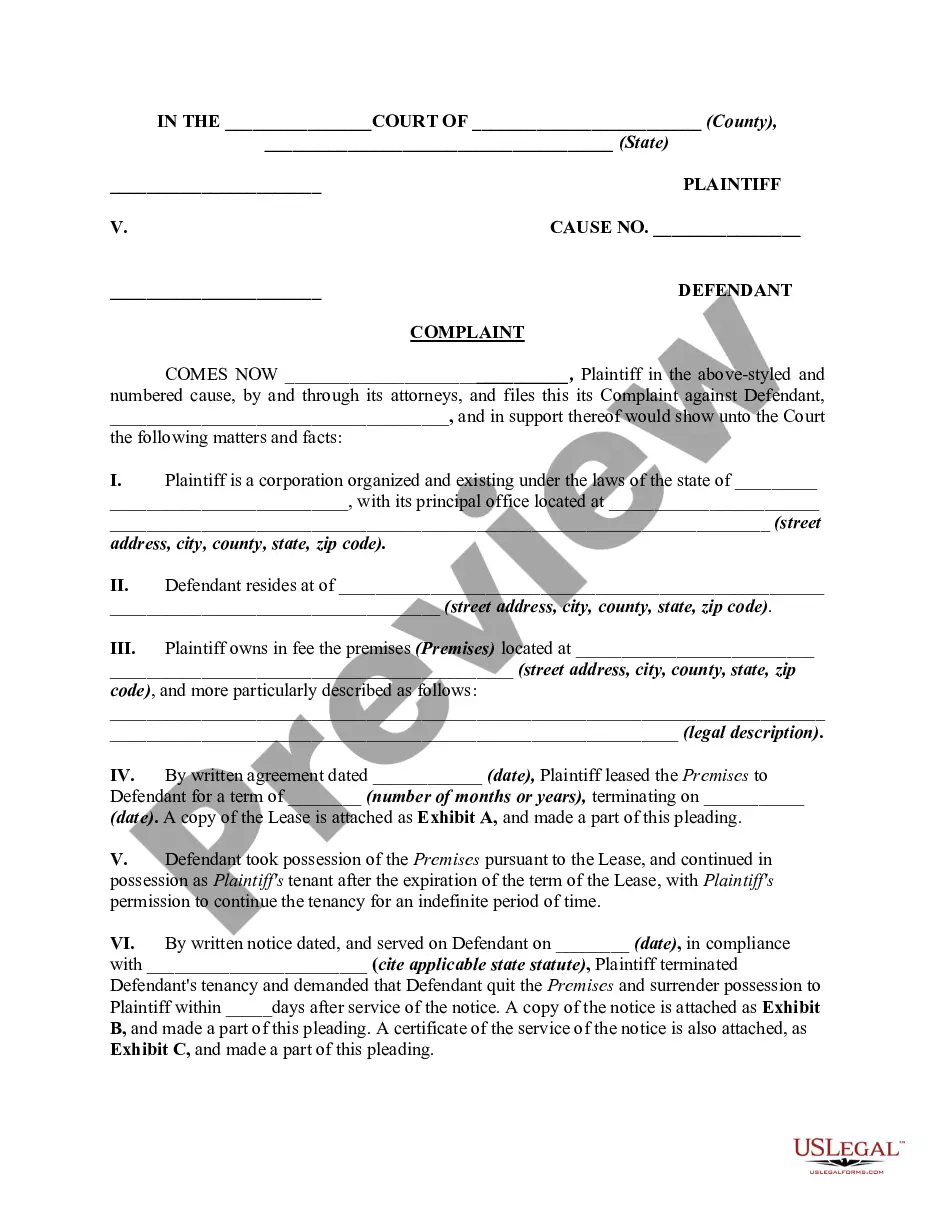
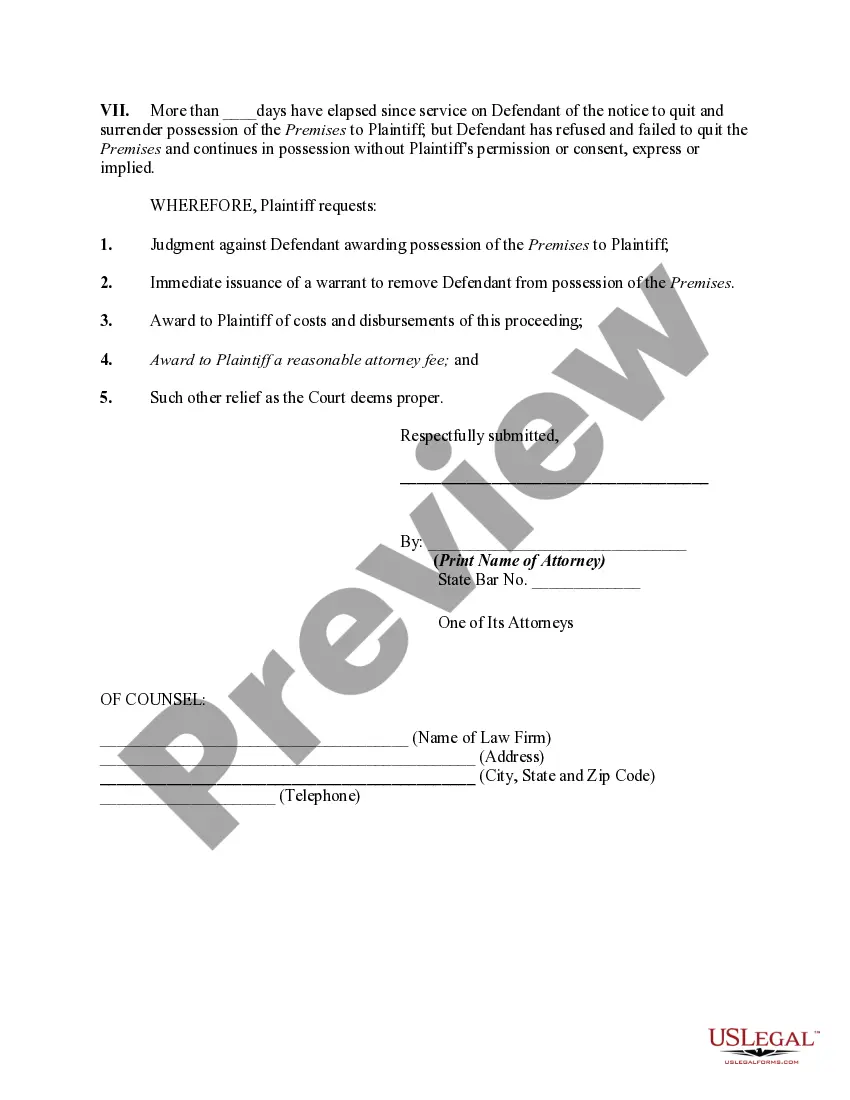
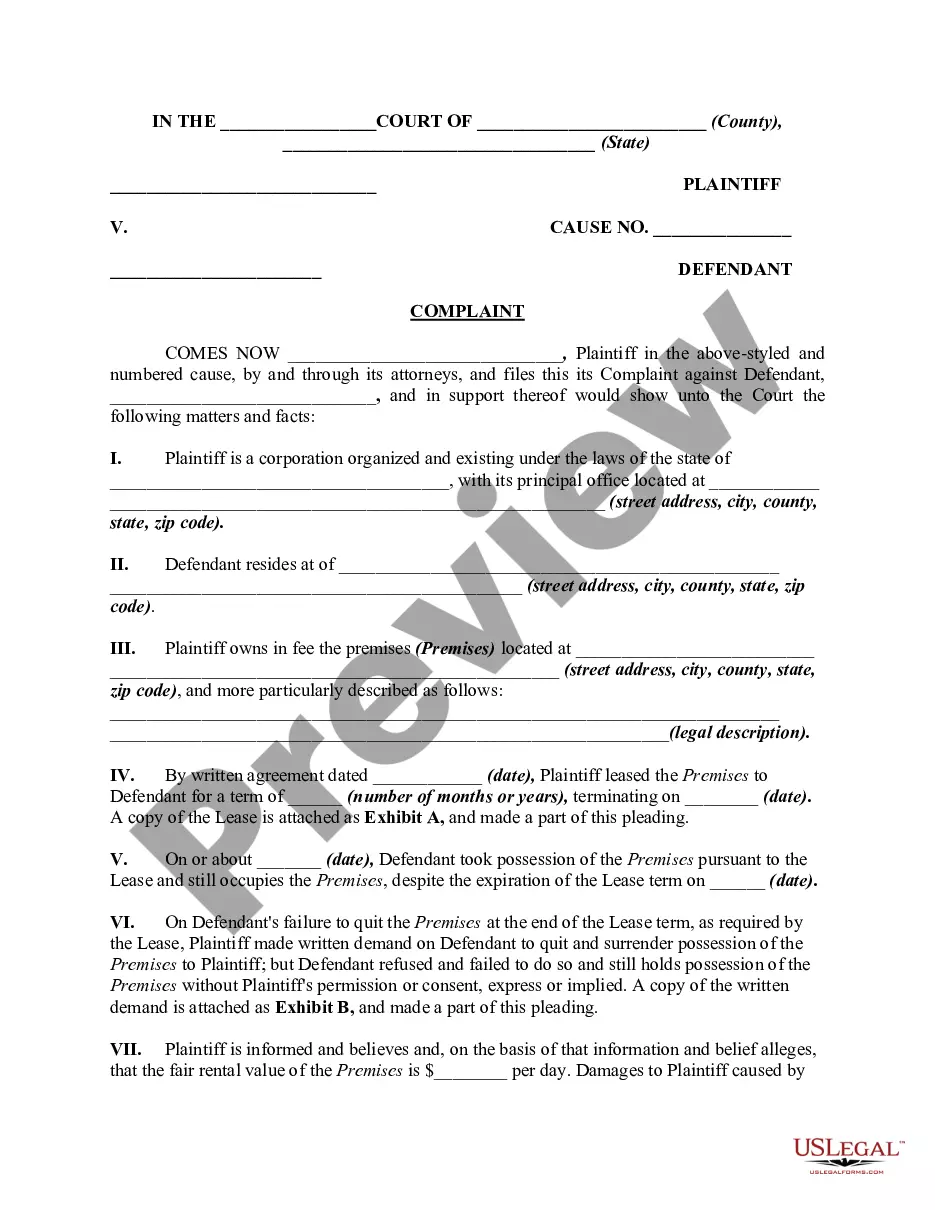
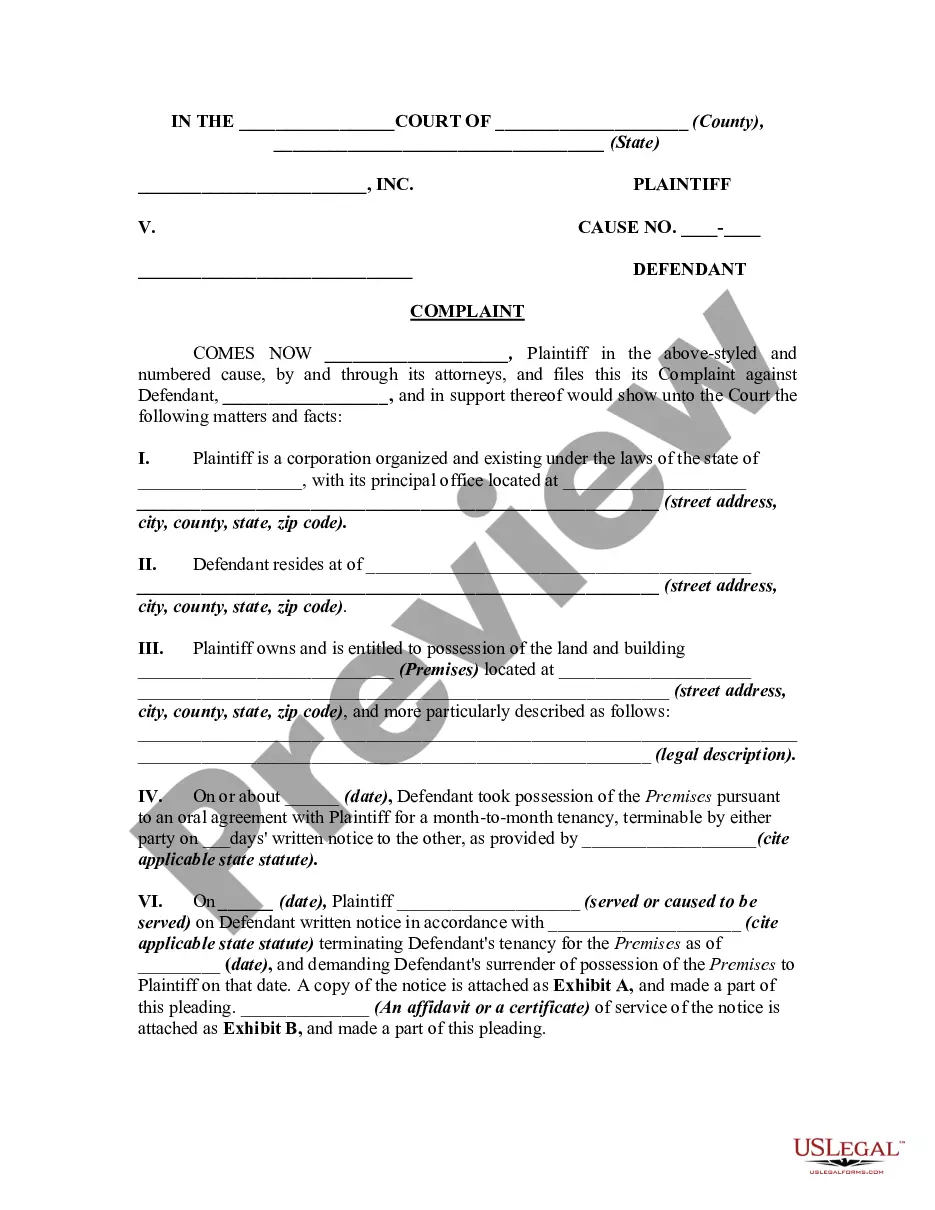
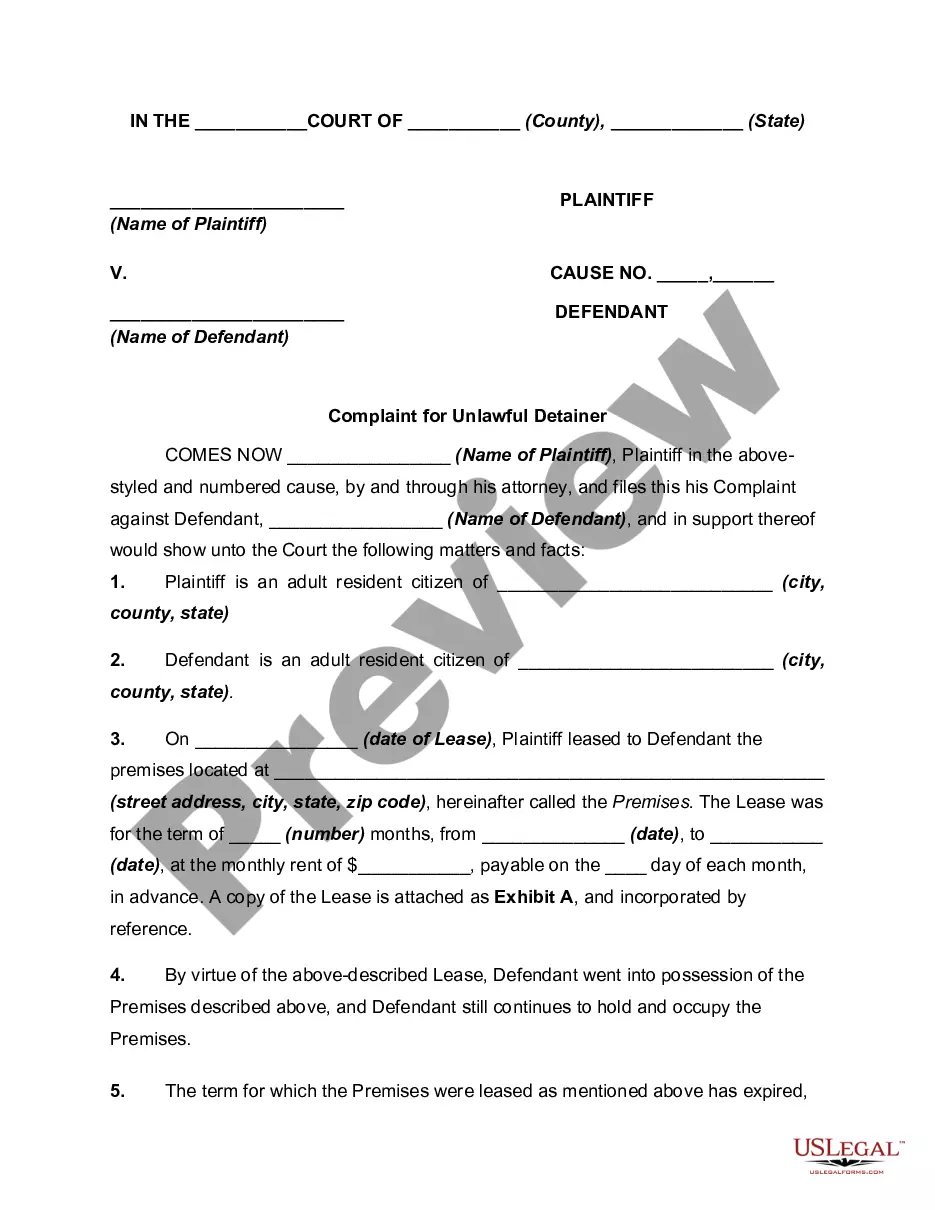
The Complaint or Petition to Recover Possession of Premises from a Tenant at Will After Statutory Notice to Quit - Past Due Rent is a legal document used by landlords to regain possession of rental property from tenants who have not paid rent and have been given appropriate notice to vacate. This form is specifically designed for situations involving tenants-at-will, differing from other eviction processes that may involve written leases or different types of rental agreements.
Form components explained
- Plaintiff and defendant details to identify the parties involved.
- Description of the premises in question, including legal and physical addresses.
- Details of the tenant's occupancy, including lease agreements and permissions.
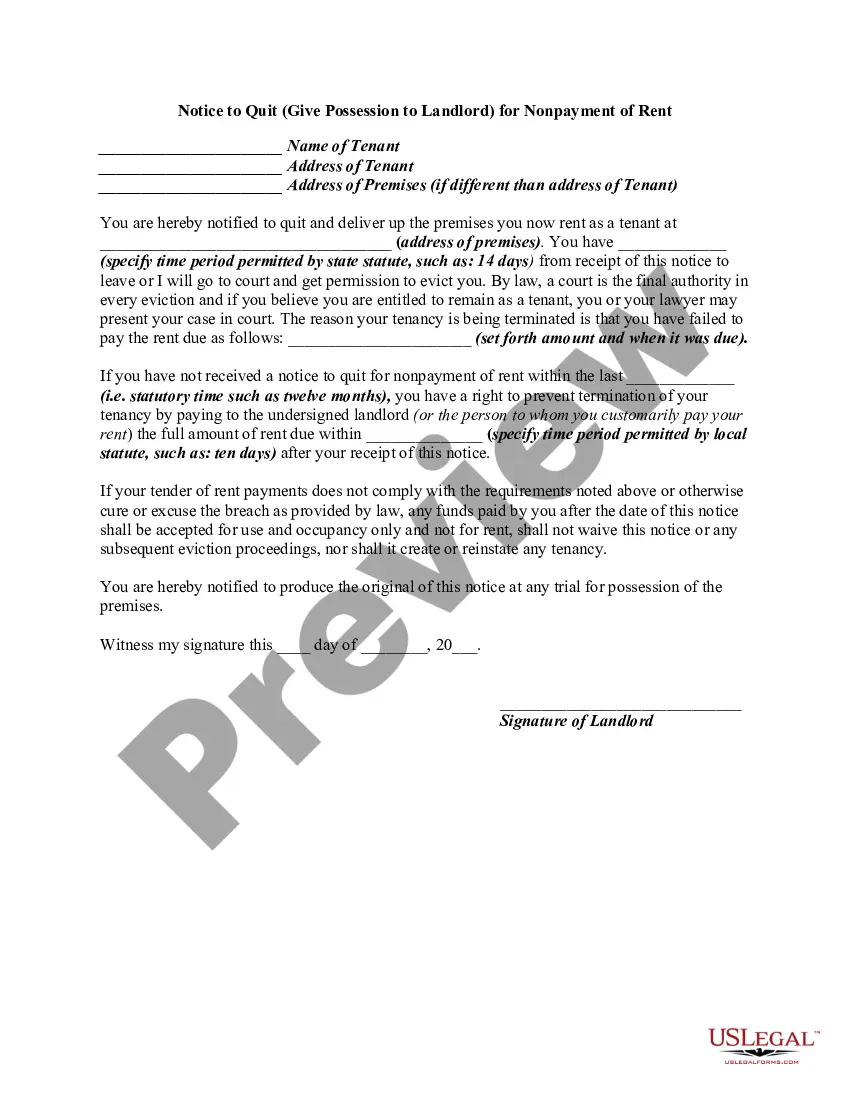
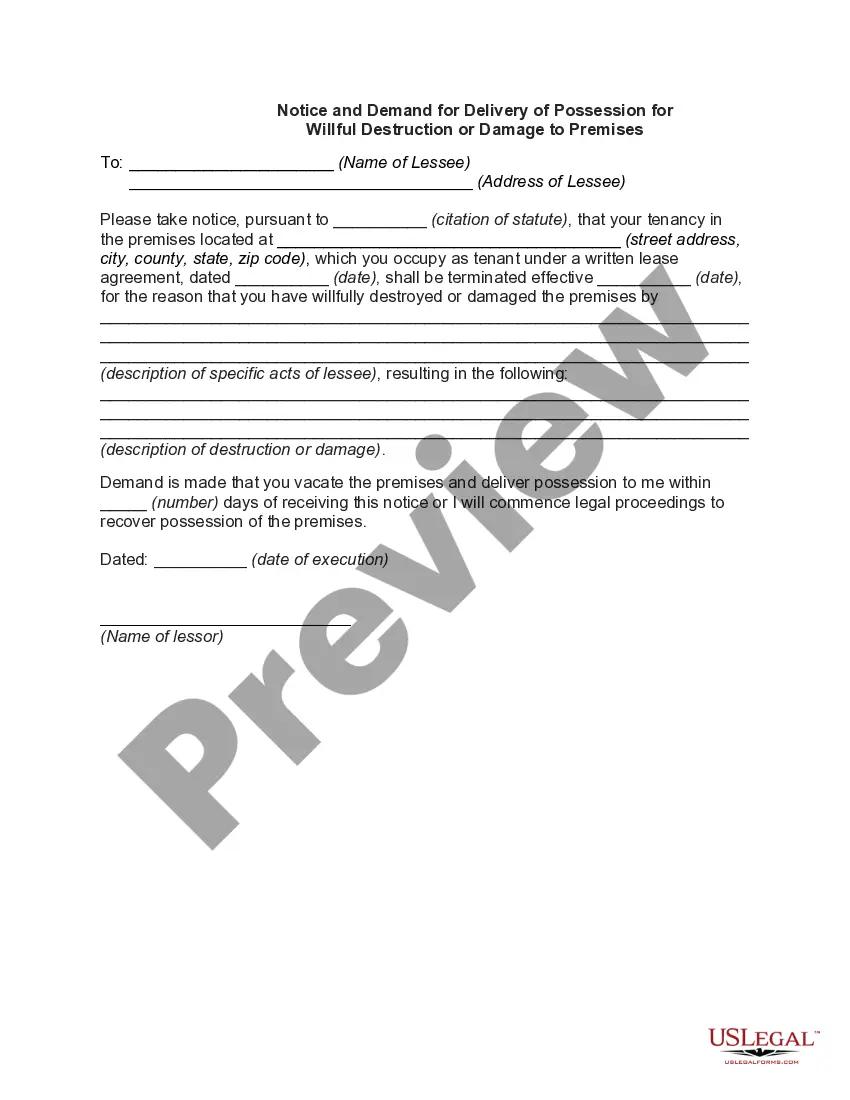
- Notification details to the tenant, including dates and statutory compliance.
- Request for judgment and recovery of possession, including any associated costs and attorney fees.
When to use this document
This form should be used when a landlord needs to file a complaint in court to recover possession of a property from a tenant-at-will who has fallen behind on rent payments. This is applicable after the landlord has delivered a statutory notice to quit, allowing the tenant a specified period to vacate the premises. It is a necessary step in the legal eviction process when other measures have failed.
Who can use this document
- Landlords seeking to reclaim their property from a tenant-at-will.
- Property managers handling lease agreements and tenant relations.
- Real estate professionals assisting landlords in eviction proceedings.
Steps to complete this form
- Identify the parties: Fill in the names and addresses of both the landlord (plaintiff) and the tenant (defendant).
- Specify the property: Clearly describe the premises, including its legal and physical addresses.
- Enter lease details: Provide information about the lease agreement, including the date it was signed and its duration.
- Document the notice: Include details of the termination notice served to the tenant, including the date it was provided and the applicable state statute.
- State your request: Clearly articulate what relief is being sought from the court, including possession of the premises and any associated costs.
Does this document require notarization?
Notarization is generally not required for this form. However, certain states or situations might demand it. You can complete notarization online through US Legal Forms, powered by Notarize, using a verified video call available anytime.
Get your form ready online
Our built-in tools help you complete, sign, share, and store your documents in one place.
Make edits, fill in missing information, and update formatting in US Legal Forms—just like you would in MS Word.
Download a copy, print it, send it by email, or mail it via USPS—whatever works best for your next step.
Sign and collect signatures with our SignNow integration. Send to multiple recipients, set reminders, and more. Go Premium to unlock E-Sign.
If this form requires notarization, complete it online through a secure video call—no need to meet a notary in person or wait for an appointment.
We protect your documents and personal data by following strict security and privacy standards.

Make edits, fill in missing information, and update formatting in US Legal Forms—just like you would in MS Word.

Download a copy, print it, send it by email, or mail it via USPS—whatever works best for your next step.

Sign and collect signatures with our SignNow integration. Send to multiple recipients, set reminders, and more. Go Premium to unlock E-Sign.

If this form requires notarization, complete it online through a secure video call—no need to meet a notary in person or wait for an appointment.

We protect your documents and personal data by following strict security and privacy standards.
Typical mistakes to avoid
- Failing to include accurate addresses for both the tenant and the property.
- Omitting critical dates related to the lease and notice to quit.
- Not following the specific statutory requirements for notices and eviction processes in the respective state.
Why complete this form online
- Convenience of downloading and completing the form at your own pace.
- Access to templates drafted by licensed attorneys for increased legal reliability.
- Ability to edit and customize the document for specific situations or requirements.
Looking for another form?
Form popularity
FAQ
No. Many Pennsylvania courts have said your landlord cannot evict you by self-help, meaning such things as padlocking your door, shutting off your utilities, using force to evict you, or using any eviction method other than going to court.
Your landlord can evict you if you fall behind with your rent - you could lose your home. Coronavirus (COVID-19) has not changed this, but there are new rules that mean your landlord must give you at least 6 months' notice if they plan to evict you, unless you owe at least 6 months' rent.
Tenant Options When Served With a Three-Day Notice in Florida.If the tenant fails to pay rent in the future, the landlord must repeat the entire eviction process. If the tenant does not pay the rent, but moves out within three days, the landlord may use the tenant's security deposit (if any) to cover the unpaid rent.
Your landlord can evict you if you fall behind with your rent - you could lose your home. Coronavirus (COVID-19) has not changed this, but there are new rules that mean your landlord must give you at least 6 months' notice if they plan to evict you, unless you owe at least 6 months' rent.
Pay any delinquent rent that is due to the landlord within the allotted time of the notice. Move out of the premises within the allotted time of the notice. File an answer with the judicial court. File a motion to stay with the court.
The tenant in the given situation can NEVER claim ownership.The law is settled : ONCE A TENANT, ALWAYS A TENANT. In no situation, a tenant can claim ownership so long as you are receiving rent. If he stop paying rent, you should immediately file an eviction petition.
Tell Them The Problem & Consequences. Explain the reason that you want the tenant to go. Offer Them a Way Out. Let the tenant know that you are willing to give them a lump sum of cash in agreement for leaving the property. The Release.
Include a company or personal letterhead. If you do not have a letter head create one that includes your name, address and contact information such as phone number and email. Include the date in the top left corner. Include the tenant's name and address below the date.
A renter is a person who pays rent in other to use something that to belongs to someone else be it a house, room or even a car. But a tenant can be a renter, free occupier or a caretaker of someone's property eg.