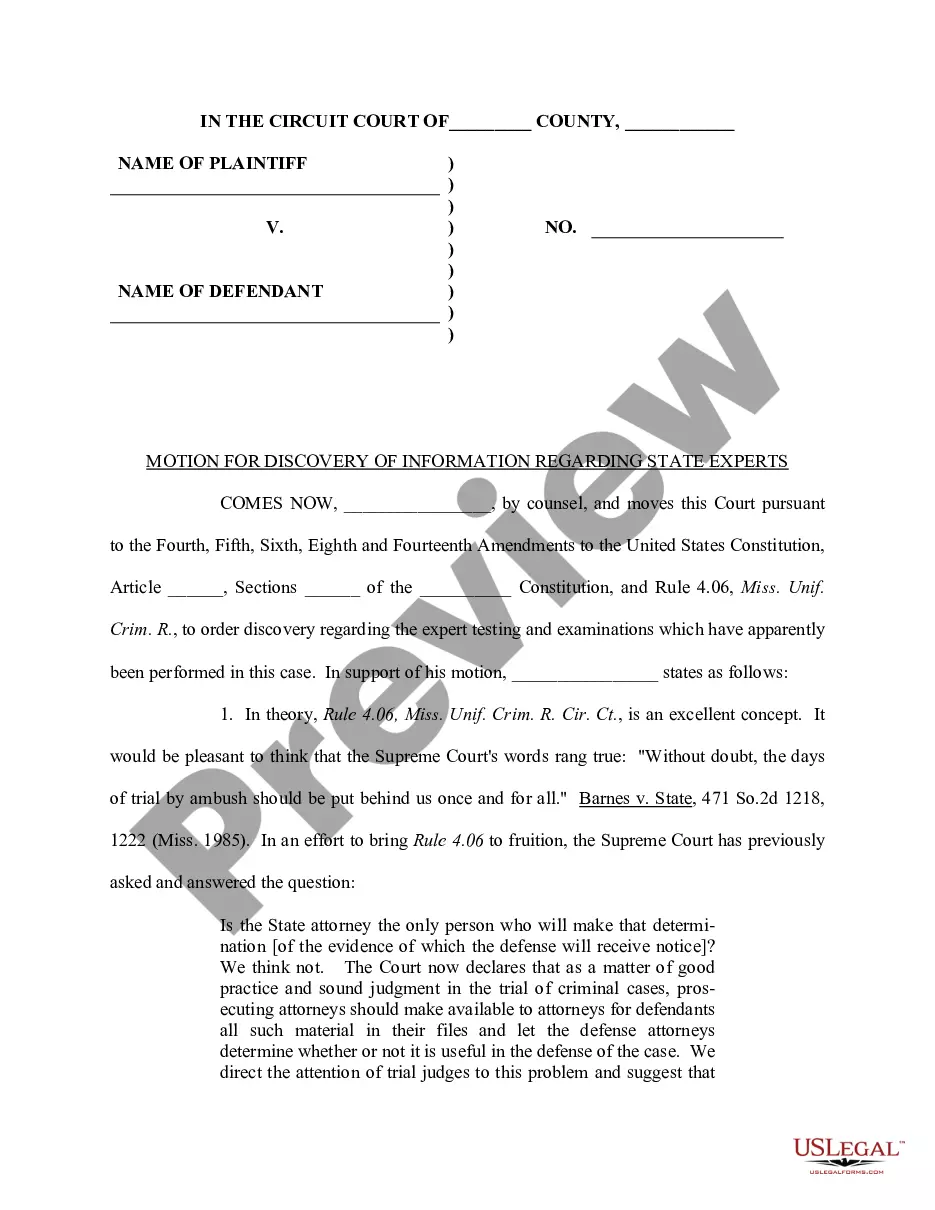
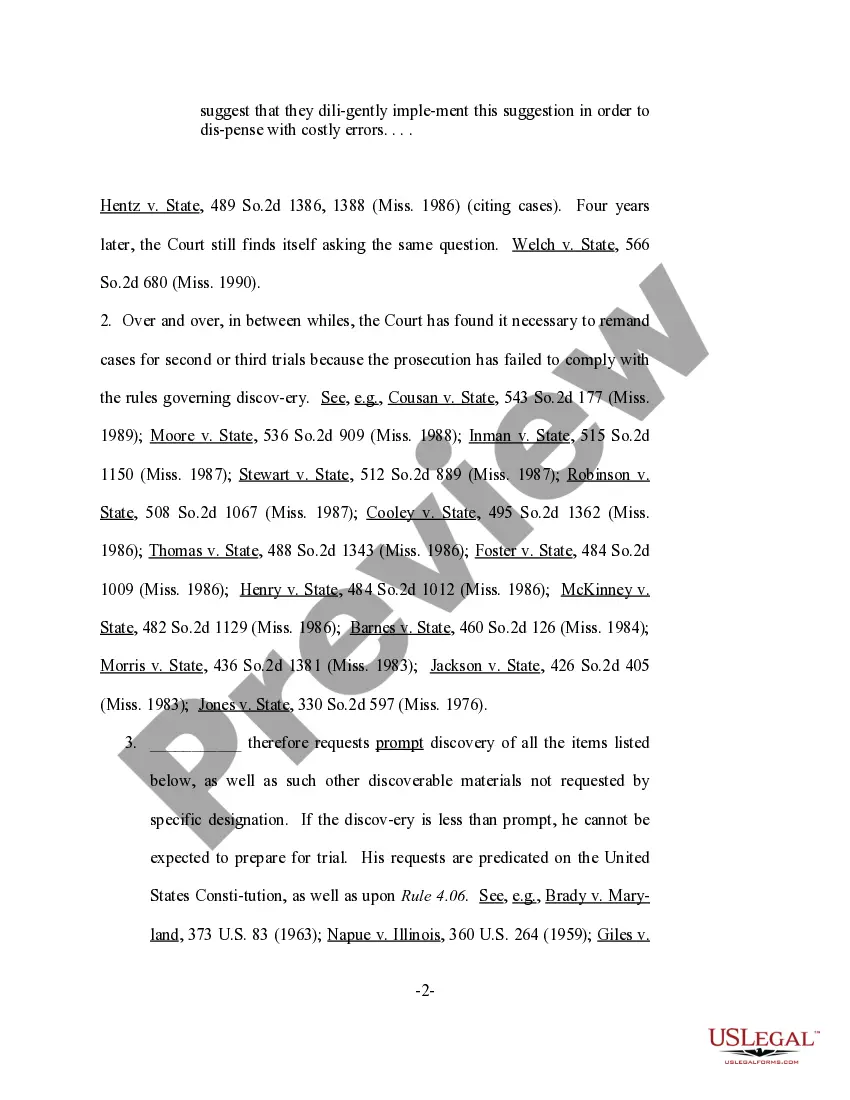
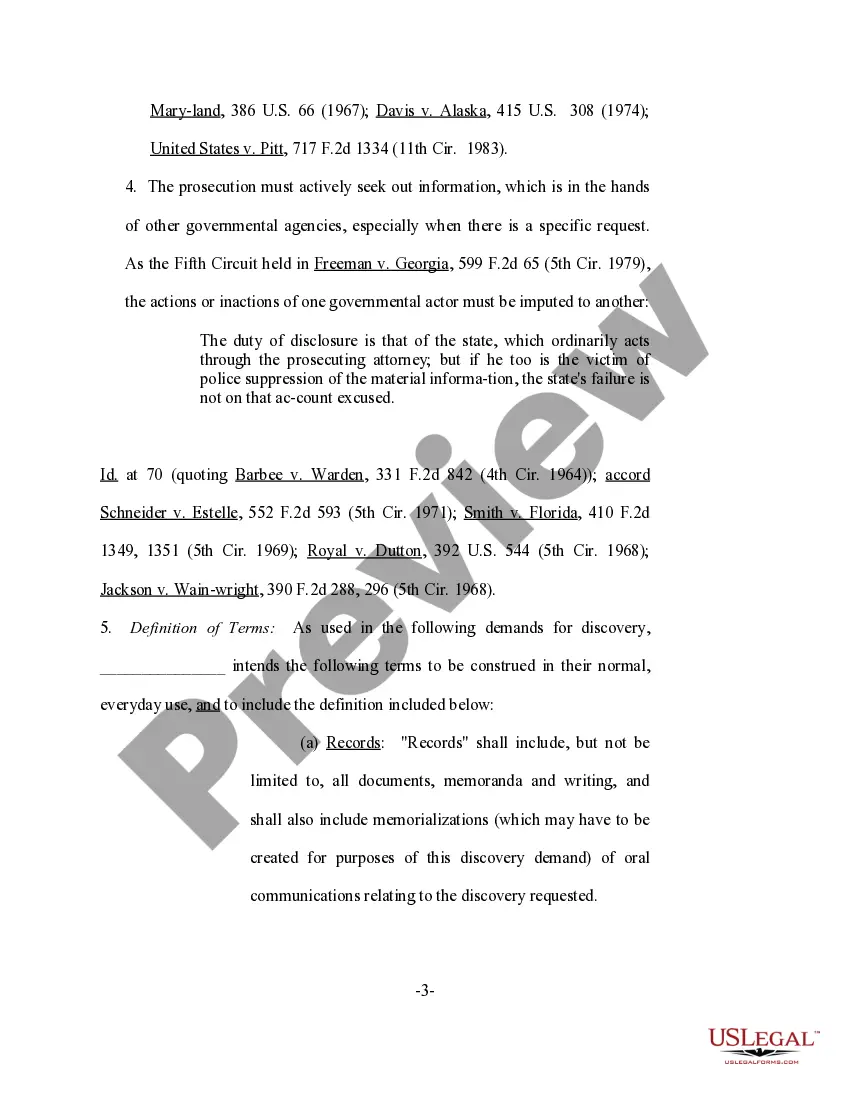
Motion for Discovery of Information Regarding State Experts
Overview of this form
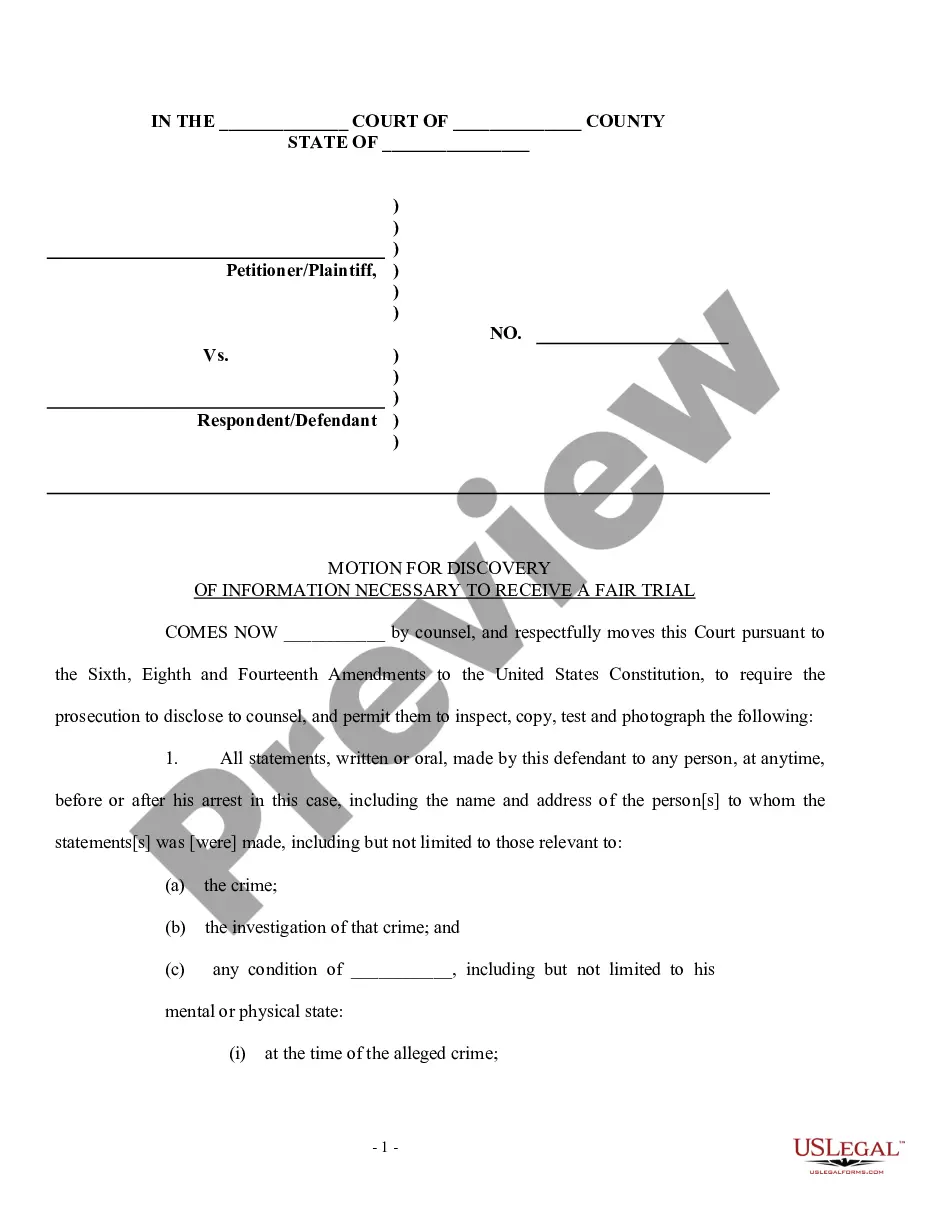
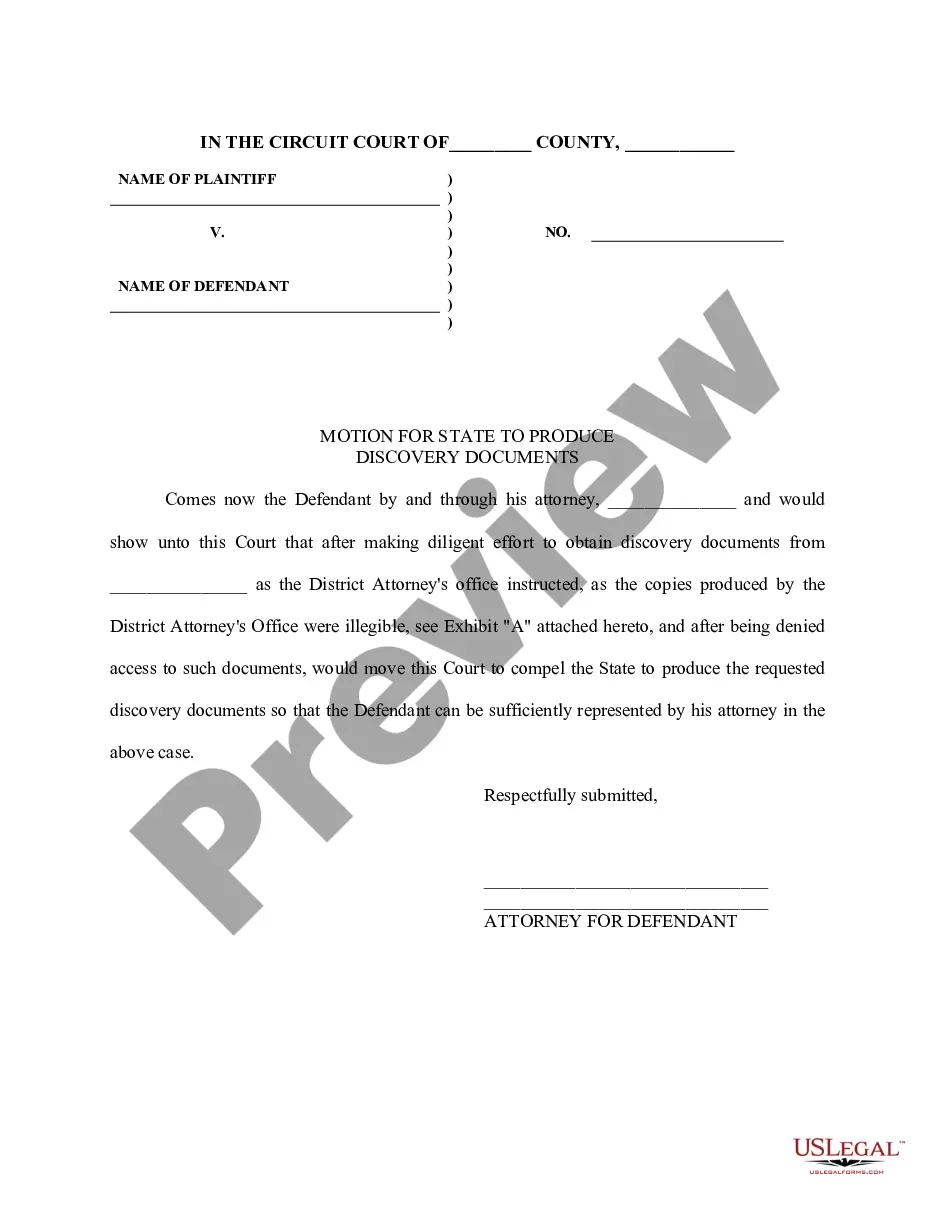
The Motion for Discovery of Information Regarding State Experts is a legal document used in criminal trials to obtain evidence from the prosecution. This form allows defense attorneys to request information about the expert witnesses that the state plans to use, ensuring transparency and fairness in legal proceedings. It is essential for preparing a solid defense by understanding the evidence and expert testimony that may be presented at trial, thereby mitigating any surprises during the trial process.
Main sections of this form
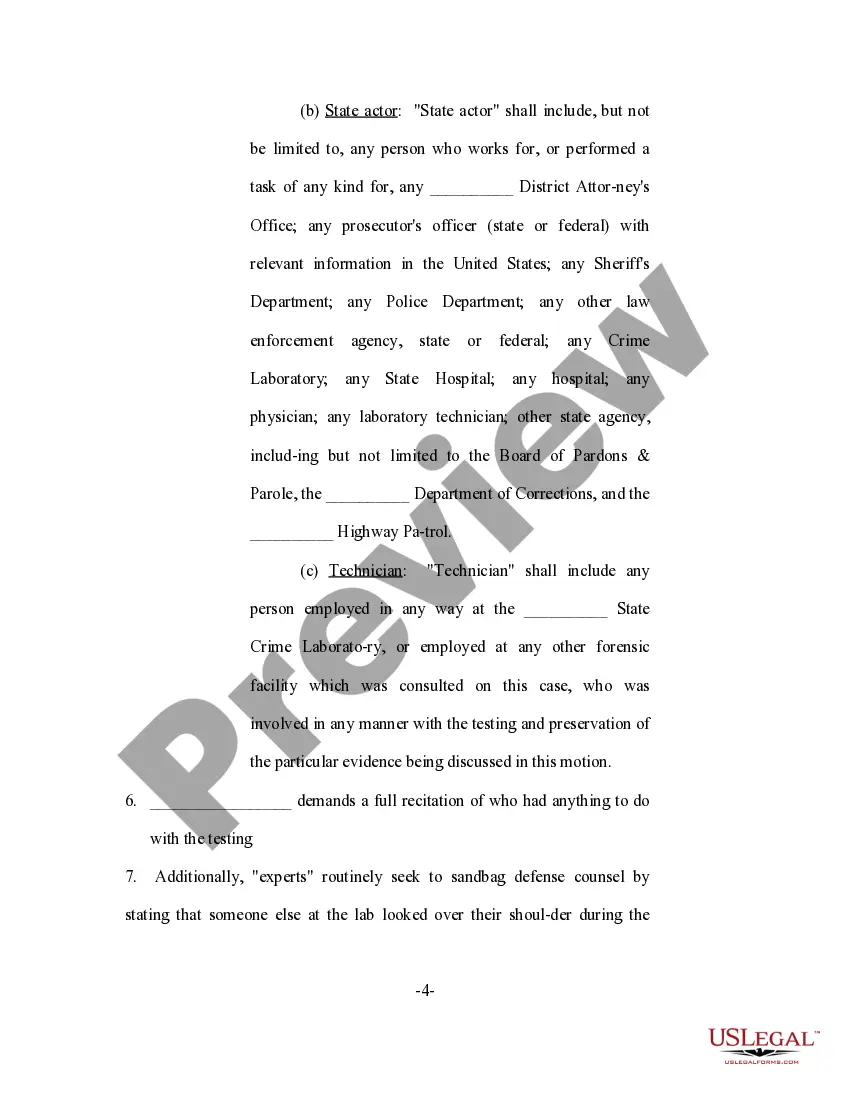
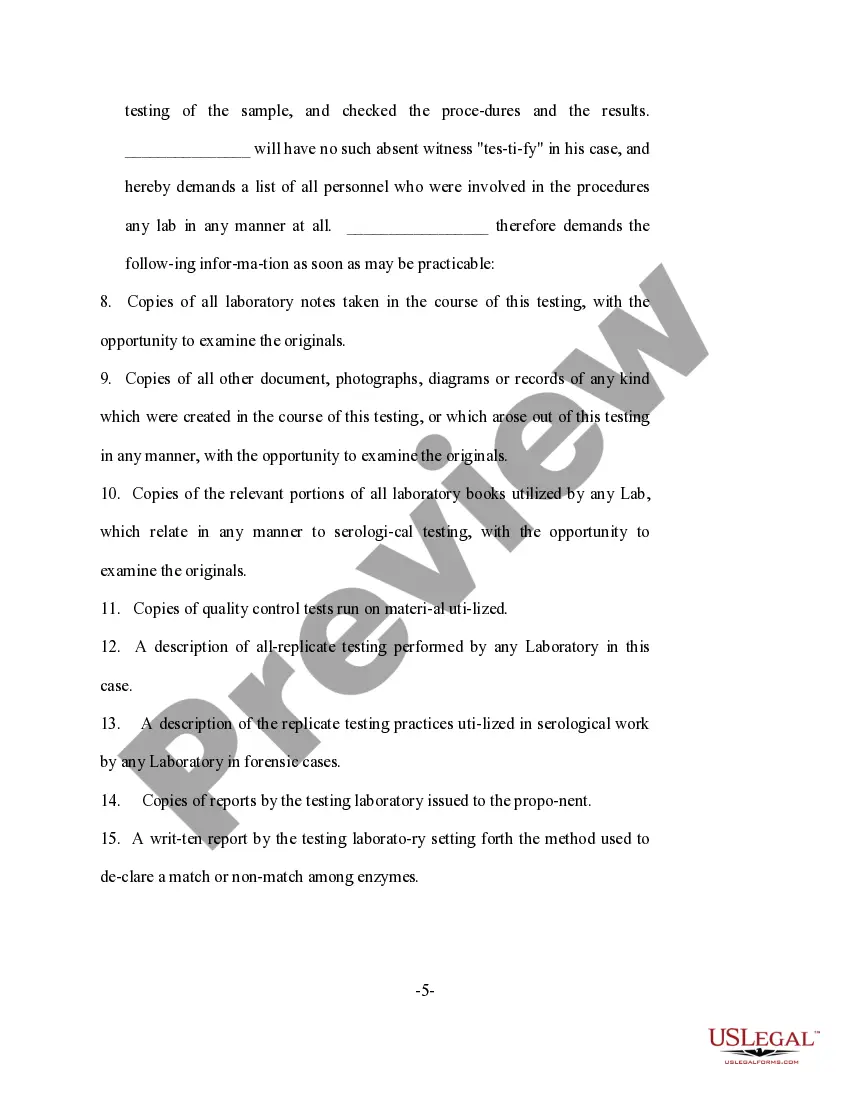
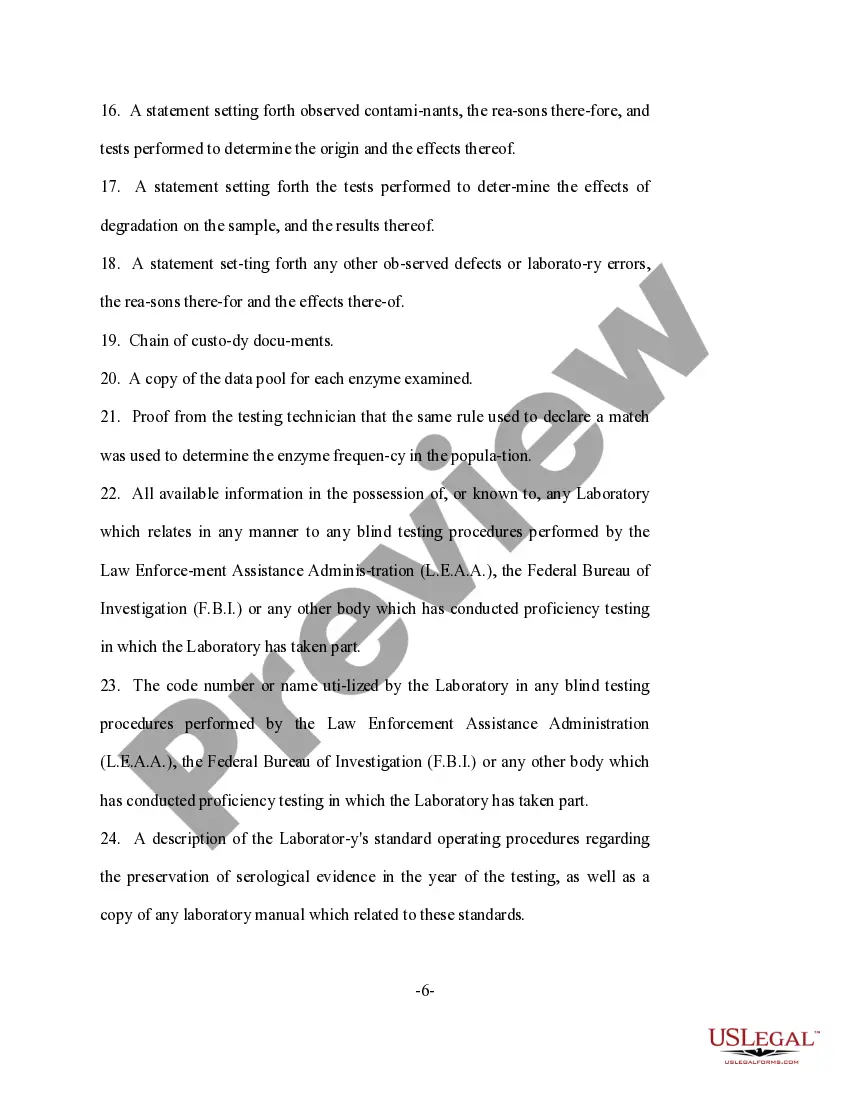
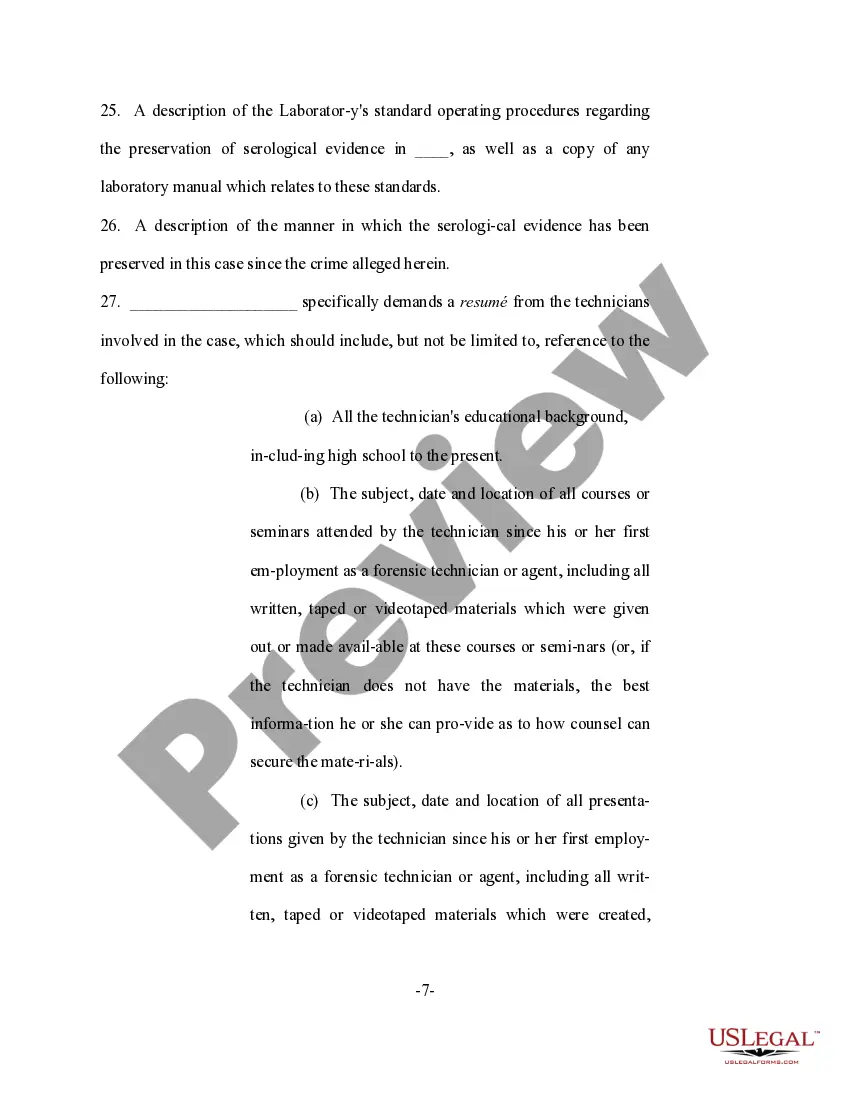
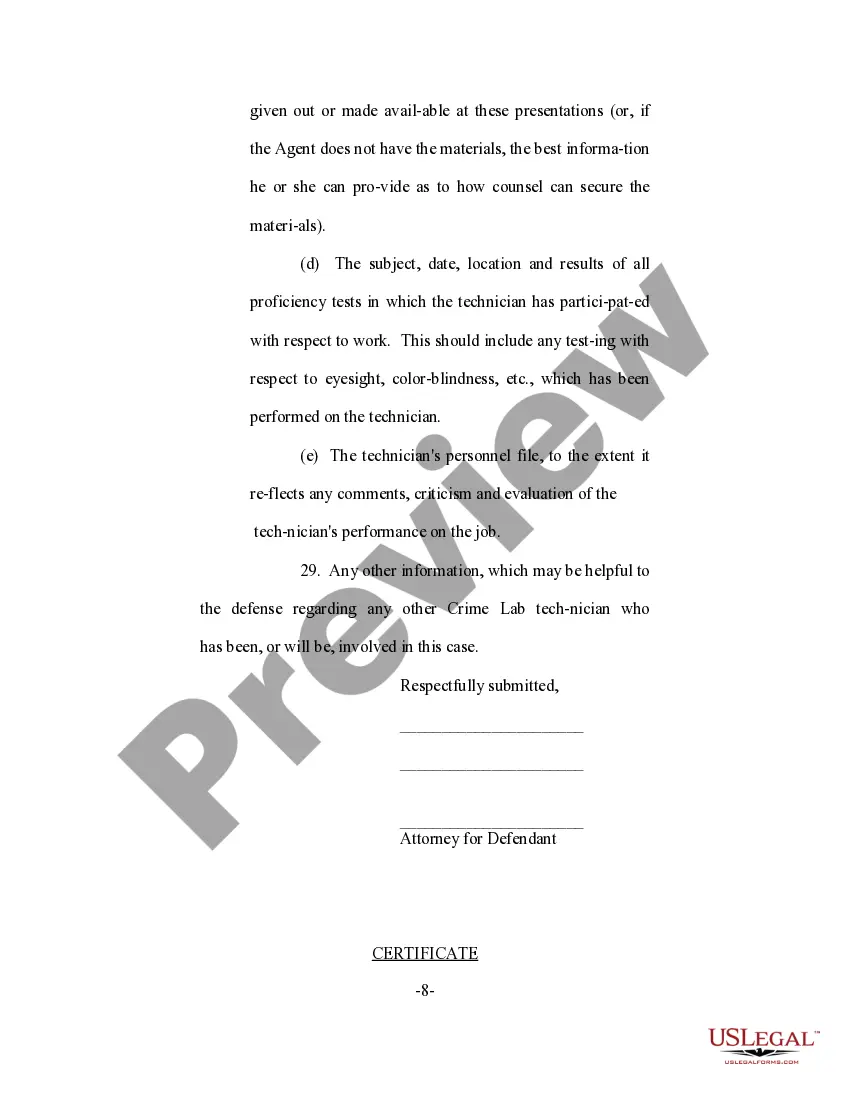
- Request for documents, photographs, and records related to expert witnesses.
- Definitions of key terms such as ârecords,â âstate actor,â and âtechnician.â
- Specificity in identifying the experts and the labs involved in testing evidence.
- Requirement for the prosecution to disclose all pertinent information regarding expert testimony.
- Certification of delivery of the motion to relevant parties.
When to use this form
This form should be used when a defendant is facing criminal charges and the defense needs to gather detailed information about the expert witnesses that the prosecution intends to call during the trial. It is particularly important in cases where scientific evidence is involved, such as forensic testing or other expert analysis, and when previous cases have highlighted issues of compliance with discovery rules.
Who this form is for
This form is intended for:
- Defense attorneys representing clients in criminal cases.
- Individuals facing criminal charges who are seeking to understand and challenge evidence presented against them.
- Legal professionals looking for a structured approach to gather expert witness information.
How to complete this form
- Identify and fill in the names and addresses of all parties involved, including the defendant and the prosecution.
- Clearly list all requested documents and types of evidence related to expert witnesses.
- Provide definitions for key terms to ensure clarity in what you are requesting.
- Sign and date the motion, certifying that you have served a copy to the relevant parties.
- Keep a copy of the filed motion for your records and follow up on the request to ensure compliance by the prosecution.
Does this document require notarization?
This form does not typically require notarization unless specified by local law. It is advisable to check local regulations to ensure compliance before submission.
Get your form ready online
Our built-in tools help you complete, sign, share, and store your documents in one place.
Make edits, fill in missing information, and update formatting in US Legal Forms—just like you would in MS Word.
Download a copy, print it, send it by email, or mail it via USPS—whatever works best for your next step.
Sign and collect signatures with our SignNow integration. Send to multiple recipients, set reminders, and more. Go Premium to unlock E-Sign.
If this form requires notarization, complete it online through a secure video call—no need to meet a notary in person or wait for an appointment.
We protect your documents and personal data by following strict security and privacy standards.

Make edits, fill in missing information, and update formatting in US Legal Forms—just like you would in MS Word.

Download a copy, print it, send it by email, or mail it via USPS—whatever works best for your next step.

Sign and collect signatures with our SignNow integration. Send to multiple recipients, set reminders, and more. Go Premium to unlock E-Sign.

If this form requires notarization, complete it online through a secure video call—no need to meet a notary in person or wait for an appointment.

We protect your documents and personal data by following strict security and privacy standards.
Avoid these common issues
- Failing to clearly specify the documents or information requested.
- Not including proper definitions for key terms, leading to confusion.
- Neglecting to certify the delivery of the motion to the prosecution.
- Omitting necessary signatures or dates, which may render the motion invalid.
Why use this form online
- Immediate access to customizable templates drafted by licensed attorneys.
- Convenient download options for easy completion and filing.
- Reliable guidance on legal requirements and best practices.
- Easy revision capabilities, allowing you to adapt the document as needed.
- The motion is designed to compel the prosecution to disclose information crucial to the defense.
- Failure to comply with discovery requests can lead to legal consequences for the prosecution.
- This form upholds the defendant's constitutional rights to a fair trial by ensuring access to necessary evidence.
Quick recap
- The motion aids in securing discovery of expert-related information to support a defense.
- Clear definitions and a thorough request help prevent misunderstandings and ensure compliance.
- Proper usage of the form can improve the efficiency of the trial process.
Looking for another form?
Form popularity
FAQ
Expert discovery is the period of time during which the parties exchange information about what the experts will say. This exchange usually occurs by deposing the experts. Expert discovery in complex cases can last several months. Once both stages of discovery are complete, the Court will set a trial date.
Discovery in a criminal case refers to the exchange of evidence and statements between opposing sides of a case.Typically, a defense attorney will file a Notice of Appearance, informing the Court and the prosecutor of his or her role in the case, and a Discovery Demand requesting particular information.
Discovery in a criminal case refers to the exchange of evidence and statements between opposing sides of a case.Typically, a defense attorney will file a Notice of Appearance, informing the Court and the prosecutor of his or her role in the case, and a Discovery Demand requesting particular information.
Your criminal defense attorney should be able to provide you with a copy of the discovery in your case. If you do not have a criminal defense attorney, you should immediately hire one as this is the only way you will obtain the best possible result on your case.
In California, all discoverable reports and writing of a retained expert must be produced upon a timely expert demand.Thus, draft reports are discoverable. An expert's unreasonable failure to produce all discoverable reports and writings may result in the exclusion of that expert's testimony.
Explain to the judge that you asked the plaintiff to give you documents and, they did not. Tell the judge why you need the documents. Ask the judge to order the plaintiff to give you the documents you requested.
In both civil and criminal cases, discovery involves investigating the evidence that the other side plans to present. It can prevent any surprises at trial, narrow the issues that are disputed, and often help the two sides reach a resolution out of court rather than going through a full trial.
Discovery is the process through which defendants find out about the prosecution's case. For example, through standard discovery procedure, they can: get copies of the arresting officers' reports and statements made by prosecution witnesses, and. examine evidence that the prosecution proposes to introduce at trial.
The plaintiff must respond by the deadline. There are different ways to make sure you get each kind of discovery if the plaintiff does not give it to you by the deadline. If the plaintiff does not respond to the court order, then you can file a Motion to Dismiss and you may win your case.