Joint Venture Agreement to Develop and to Sell Residential Real Property
About this form
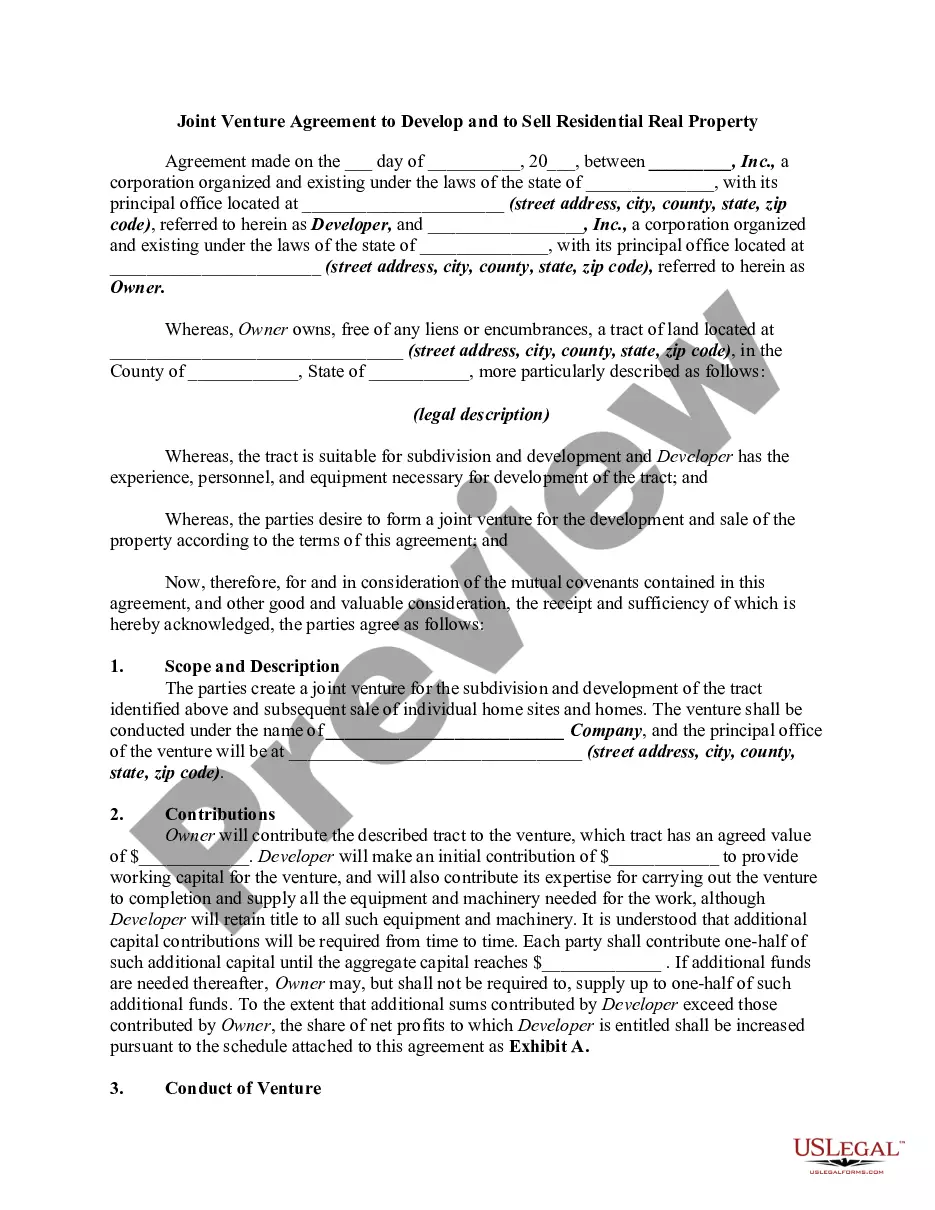
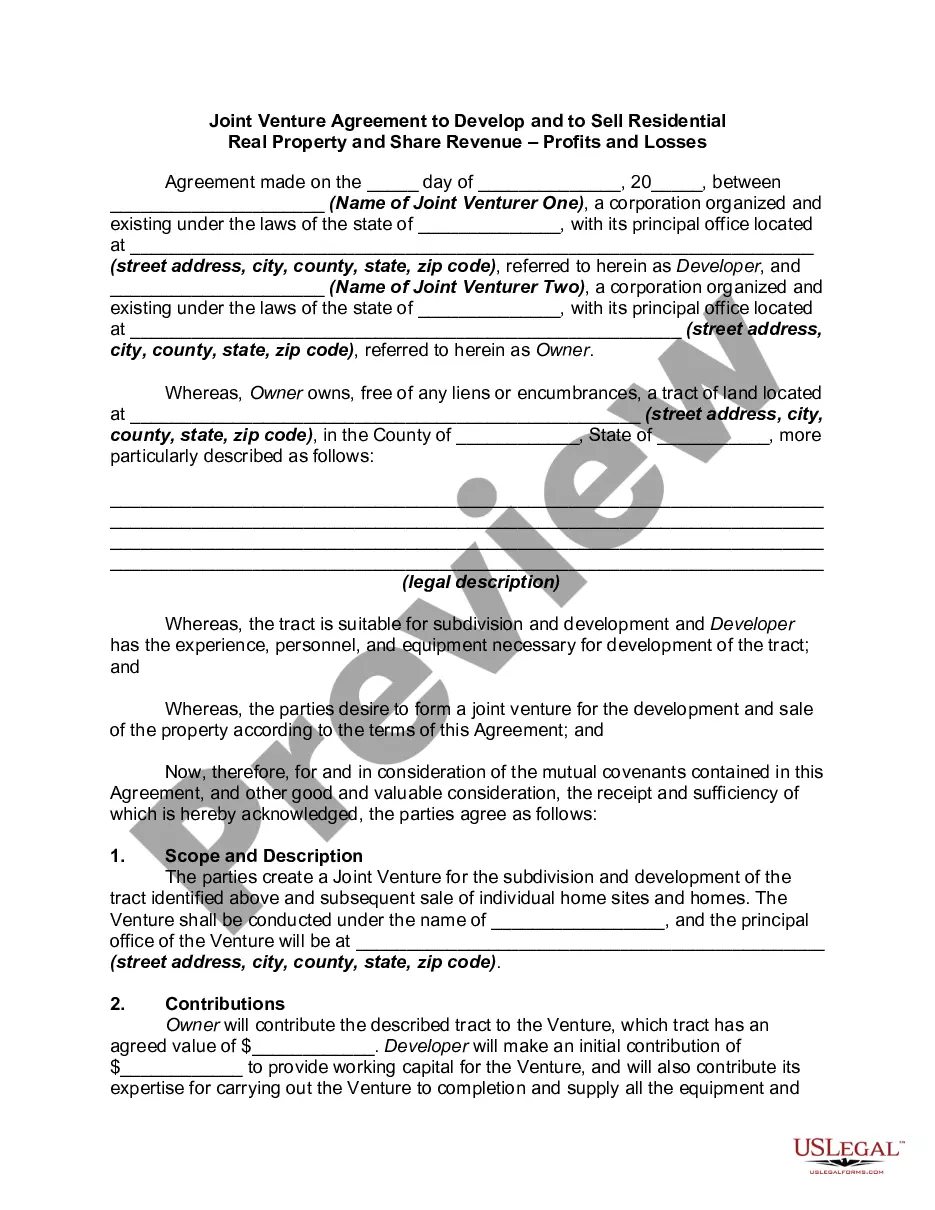
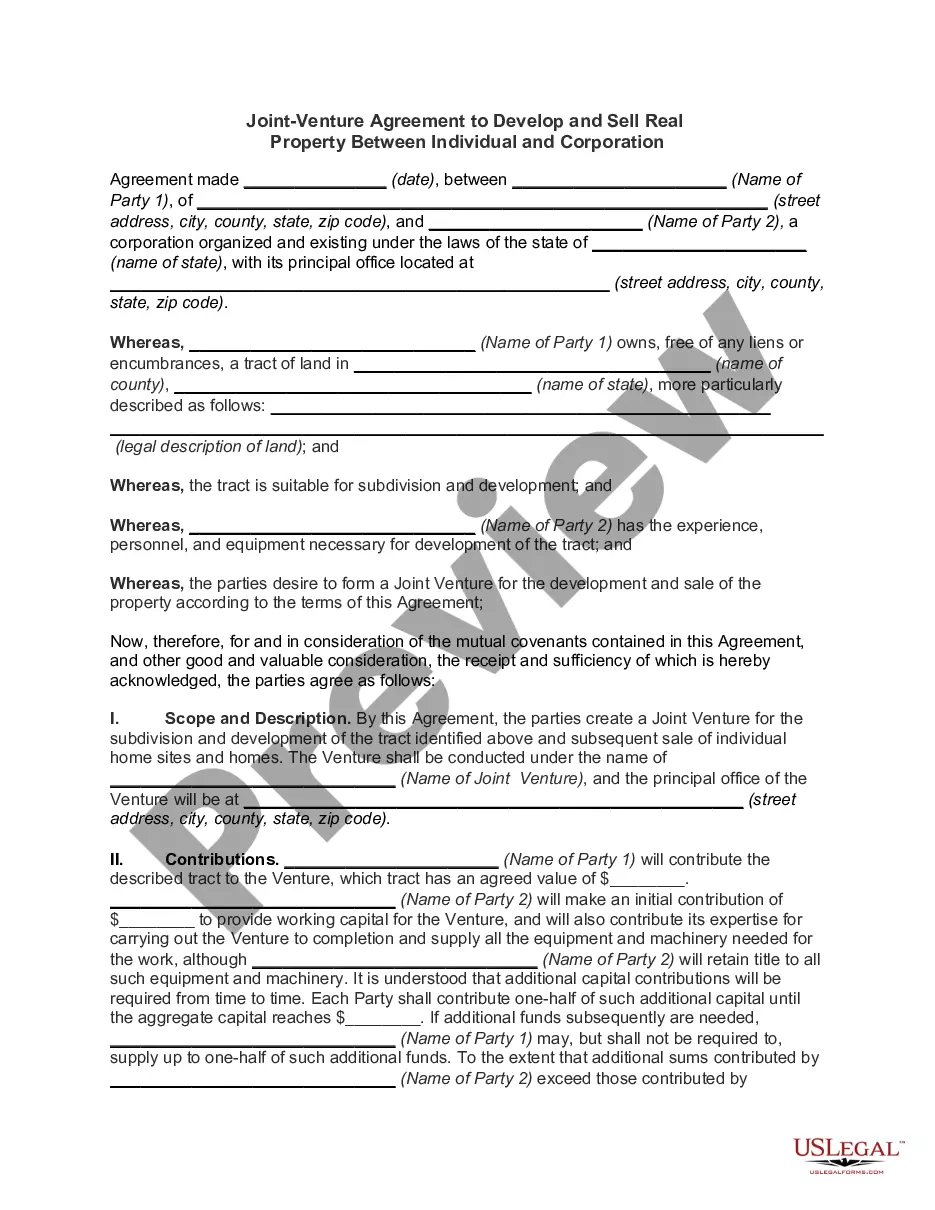
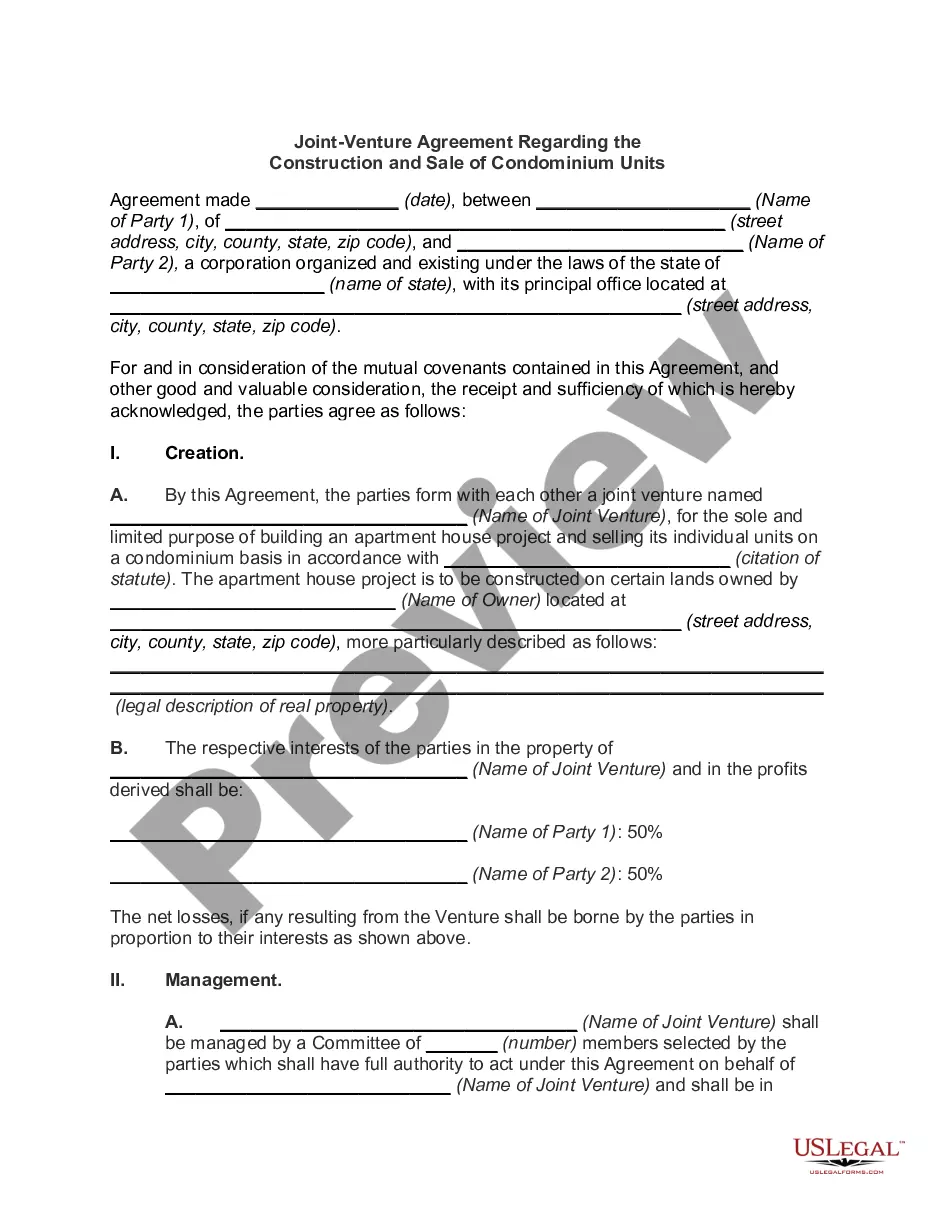
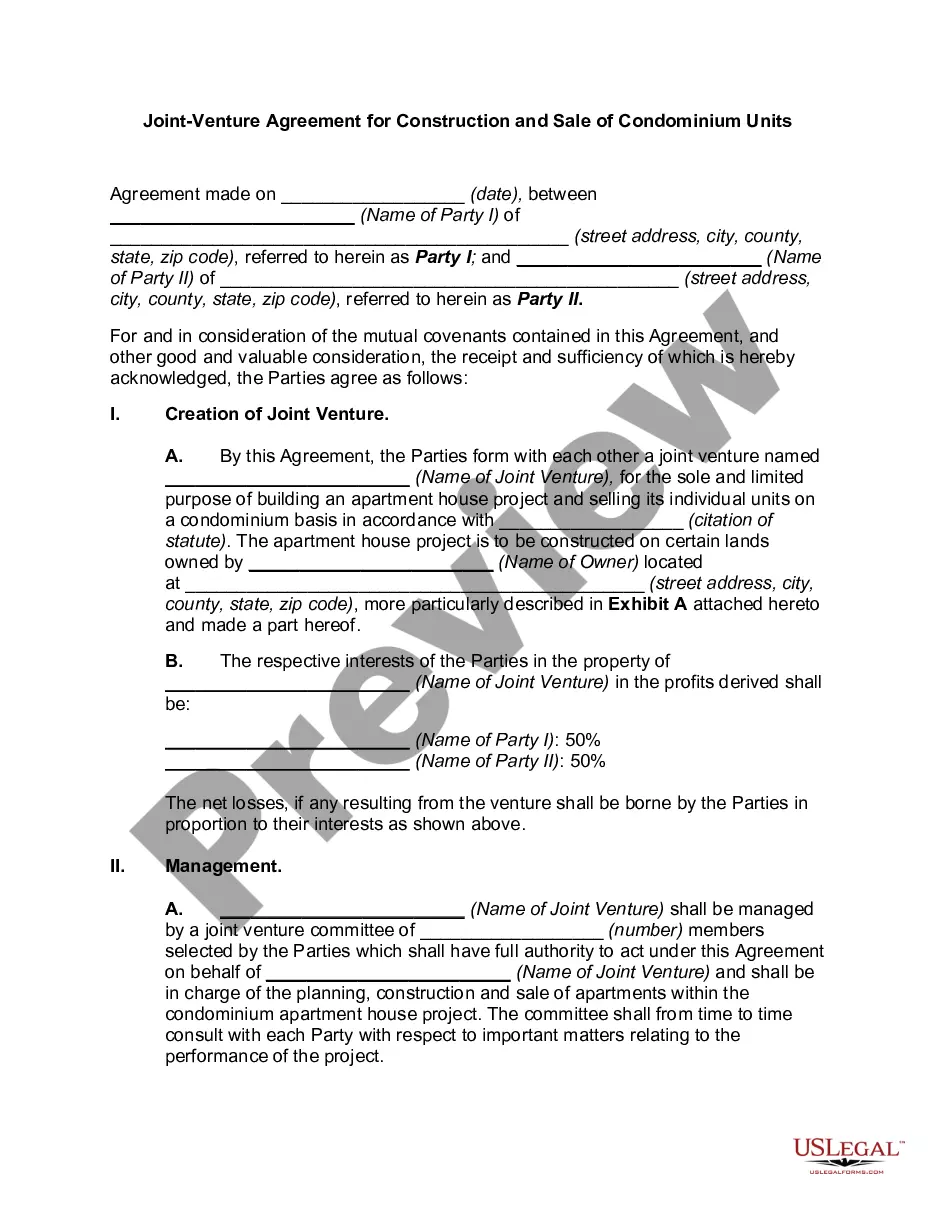
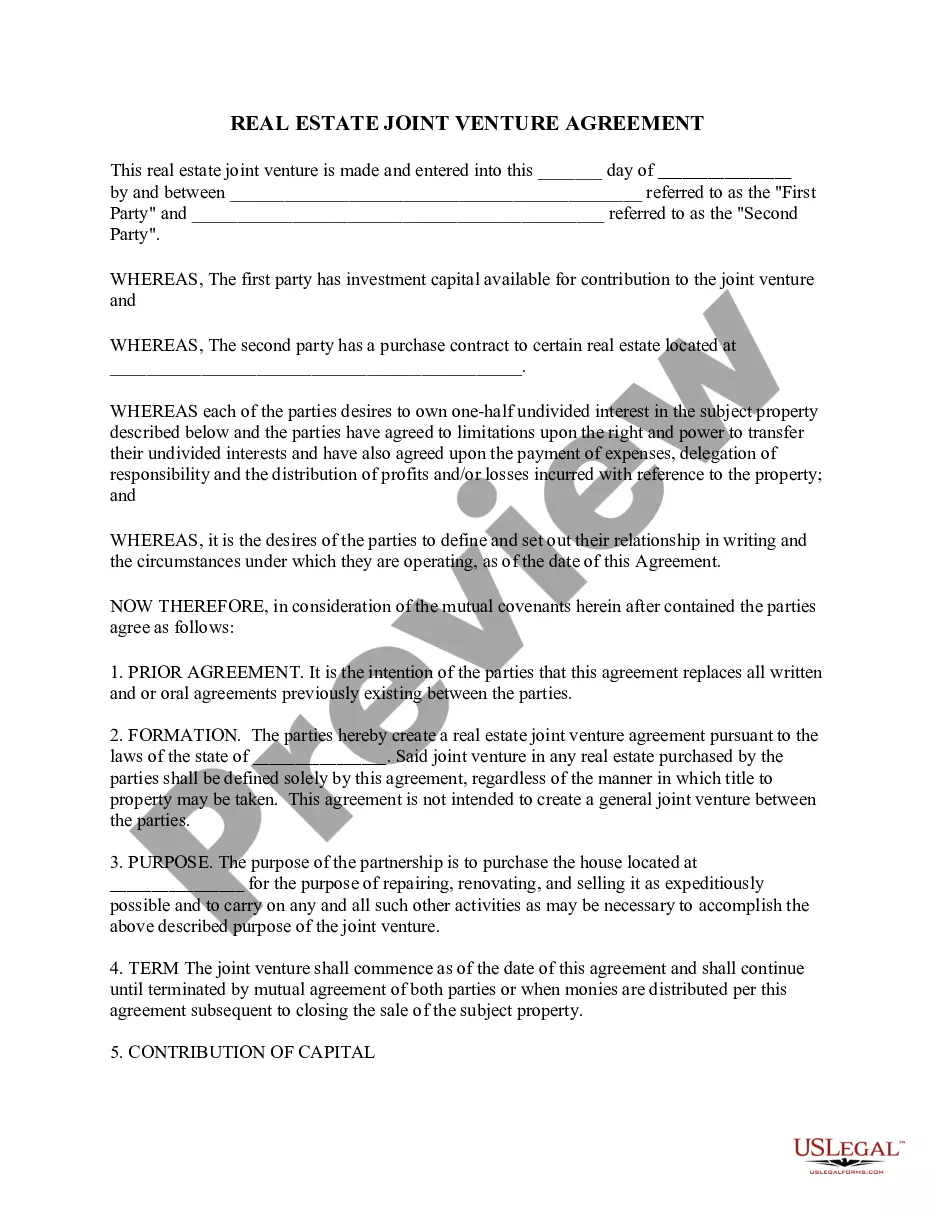
The Joint Venture Agreement to Develop and to Sell Residential Real Property is a legal document that formalizes a partnership between two or more parties to collaborate on a specific real estate project. Unlike a general partnership, which is often ongoing, a joint venture focuses on a single transaction or project, such as the development and sale of residential properties. This form outlines the responsibilities, contributions, profit sharing, and duration of the venture, ensuring that all parties agree on their roles and obligations in the project.
Main sections of this form
- Scope and Description: Defines the specific project and the name of the joint venture company.
- Contributions: Details the contributions of each party, including land and financial support.
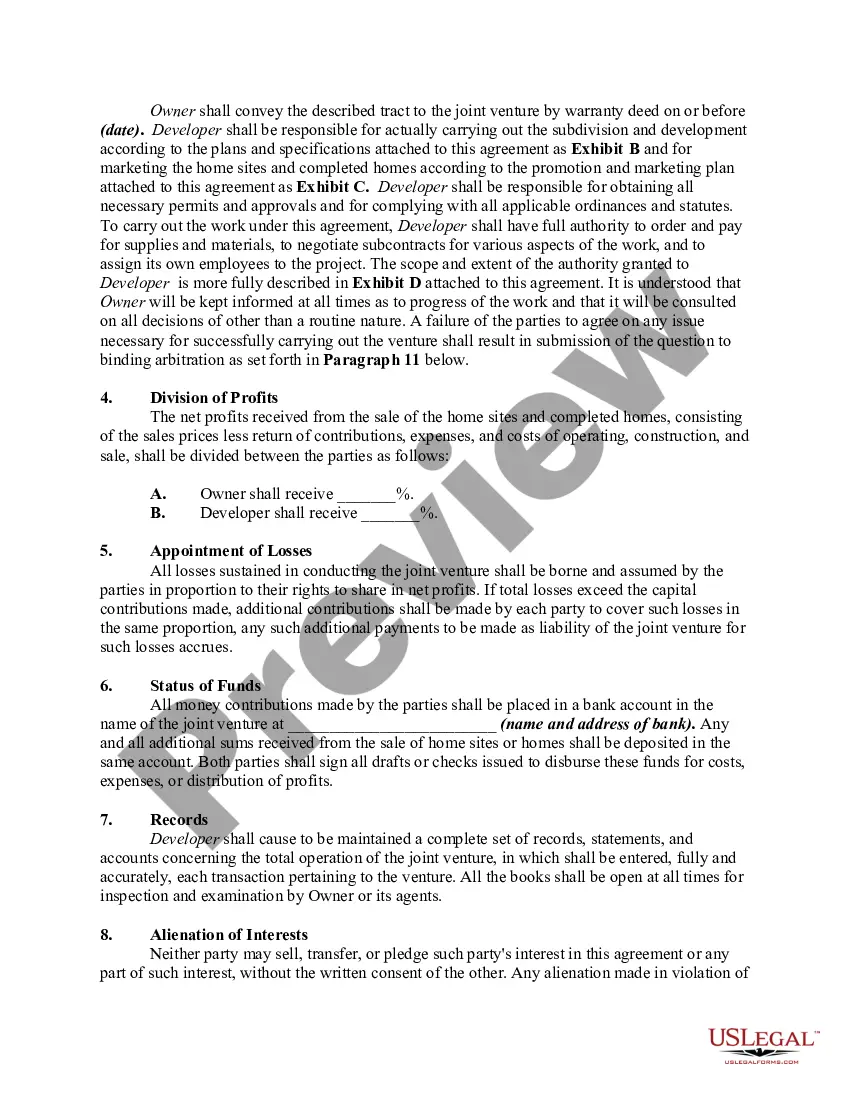
- Division of Profits: Outlines how profits from the sale of developed properties will be split between the parties.
- Conduct of Venture: Specifies responsibilities for development, including obtaining permits and marketing efforts.
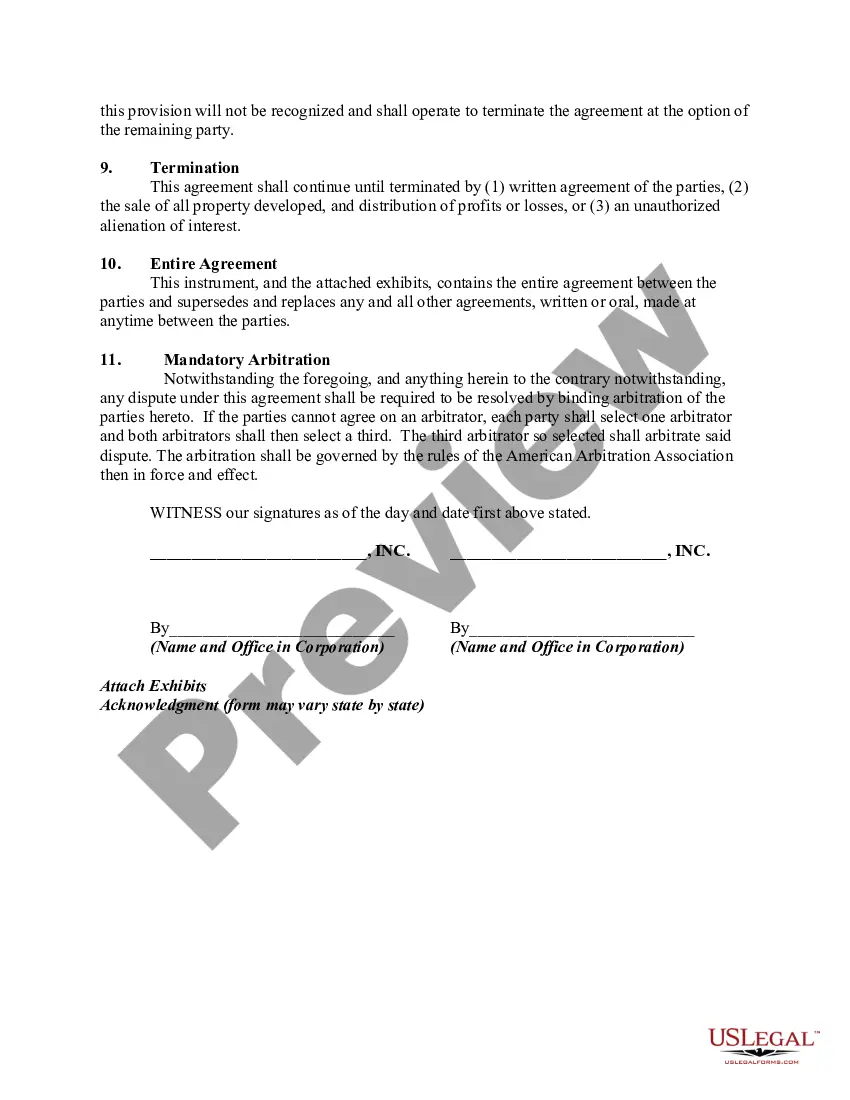
- Termination: Lists conditions under which the joint venture can be terminated.
- Mandatory Arbitration: States that disputes must be resolved through binding arbitration.
When this form is needed
This form should be used when two or more parties wish to collaborate on the development and sale of residential real estate. It is particularly useful when the parties want to clarify their roles, share resources, and outline the financial arrangements before starting a project. Scenarios for use include developing a new housing community, renovating existing residential properties for sale, or collaborating on a subdivision plan.
Who needs this form
This joint venture agreement is suitable for:
- Real estate developers looking to join forces with landowners.
- Property owners who want to leverage joint expertise and resources for development.
- Investors interested in participating in a specific real estate project.
- Small businesses in the real estate sector forming collaborations.
Instructions for completing this form
- Identify the parties involved in the joint venture.
- Specify the property to be developed, including its legal description.
- Detail the contributions of each party, including land and financial investments.
- Outline the division of profits as agreed upon by all parties.
- Sign and date the agreement, ensuring all parties are in agreement.
Notarization guidance
To make this form legally binding, it must be notarized. Our online notarization service, powered by Notarize, lets you verify and sign documents remotely through an encrypted video session.
Get your form ready online
Our built-in tools help you complete, sign, share, and store your documents in one place.
Make edits, fill in missing information, and update formatting in US Legal Forms—just like you would in MS Word.
Download a copy, print it, send it by email, or mail it via USPS—whatever works best for your next step.
Sign and collect signatures with our SignNow integration. Send to multiple recipients, set reminders, and more. Go Premium to unlock E-Sign.
If this form requires notarization, complete it online through a secure video call—no need to meet a notary in person or wait for an appointment.
We protect your documents and personal data by following strict security and privacy standards.

Make edits, fill in missing information, and update formatting in US Legal Forms—just like you would in MS Word.

Download a copy, print it, send it by email, or mail it via USPS—whatever works best for your next step.

Sign and collect signatures with our SignNow integration. Send to multiple recipients, set reminders, and more. Go Premium to unlock E-Sign.

If this form requires notarization, complete it online through a secure video call—no need to meet a notary in person or wait for an appointment.

We protect your documents and personal data by following strict security and privacy standards.
Common mistakes to avoid
- Not clearly defining the scope of the project, which can lead to misunderstandings.
- Failing to specify the profit-sharing arrangement or contributions clearly.
- Omitting important details in the termination clause.
- Neglecting to update the agreement if there are changes in contributions or project scope.
Advantages of online completion
- Immediate access to professionally drafted templates.
- Convenient downloading and editing options to tailor the form to your needs.
- Reduced reliance on legal counsel for straightforward agreements.
- Assurance that the form complies with current legal standards.
Looking for another form?
Form popularity
FAQ
A real estate partnership is formed by two or more investors who combine their capital and expertise to purchase, develop, or lease property. Also known as a real estate limited partnership (RELP), the partnership agreement can require each investor to be actively involved in the partnership as equal members.
In the property market, a joint venture is a temporary but formalised partnership of builders, finance houses and developers, which contract with each other for a particular development project, such as a housing estate, often through the creation of a temporary subsidiary company called a Special Purpose Vehicle (SPV)
Determine if a partnership is right for you. Review your strengths and weaknesses. Find someone who compliments your skills. Evaluate the potential of the partnership. Establish clearly defined roles and expectations. Create the terms of agreement. Keep the process simple.
A joint venture in real estate is two or more parties that combine resources for a specific development or investment.The responsibilities in a joint venture can be assigned in whatever way is needed for the particular project. The profits are also shared however the parties agree.
In the property market, a joint venture is a temporary but formalised partnership of builders, finance houses and developers, which contract with each other for a particular development project, such as a housing estate, often through the creation of a temporary subsidiary company called a Special Purpose Vehicle (SPV)
Determine if a partnership is right for you. Review your strengths and weaknesses. Find someone who compliments your skills. Evaluate the potential of the partnership. Establish clearly defined roles and expectations. Create the terms of agreement. Keep the process simple.
Find the investment property. Put your team together. Raise funds and get financing in place. Oversee property improvements and upgrades. Operate the property. Create solid exit strategies to capitalize on your investment.
Partner puts in the cash required for the down payment and the closing costs; I take out the mortgage and do the work. We split the NET (profit or loss) 50/50. If we sell the property, we split the NET (profit or loss) 50/50. Equity is always split 50/50, including appreciation and any possible refinancing.