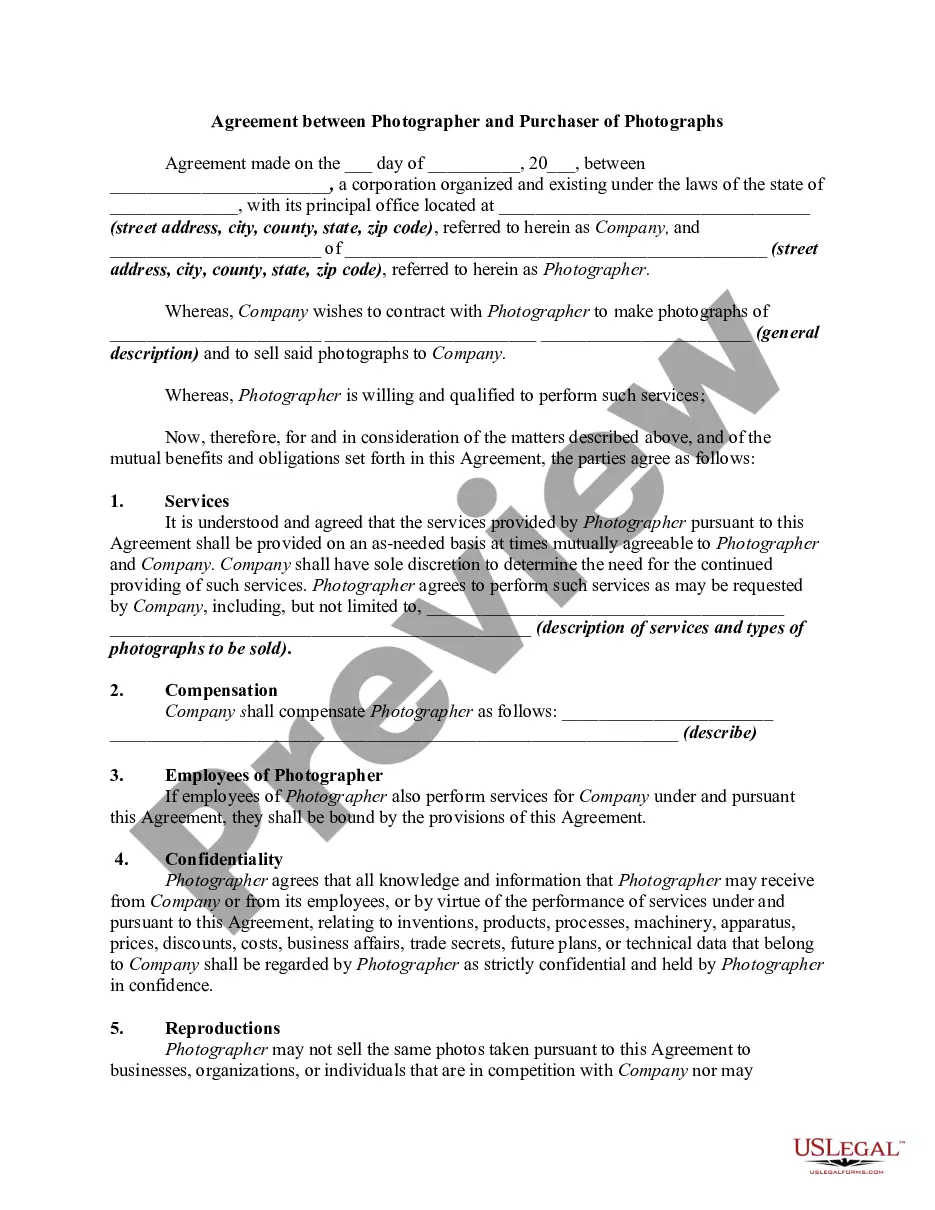
Agreement between Photographer and Purchaser of Photographs
Overview of this form
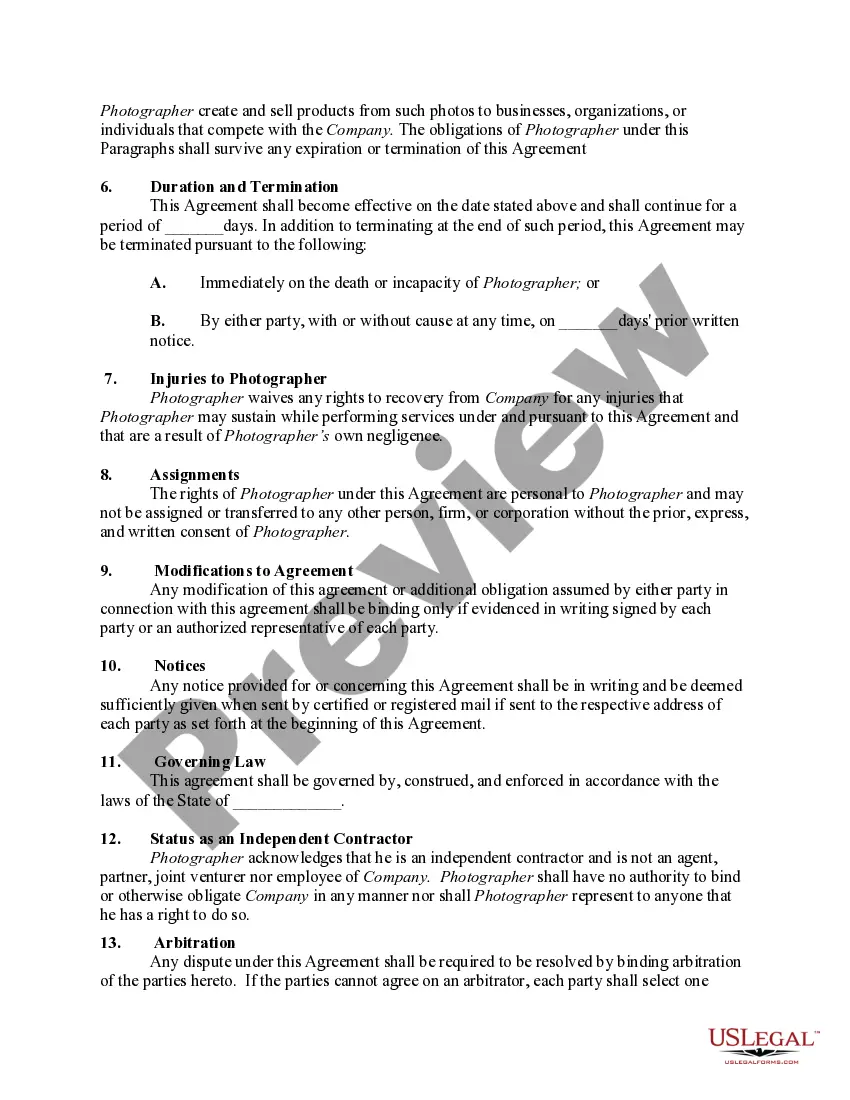
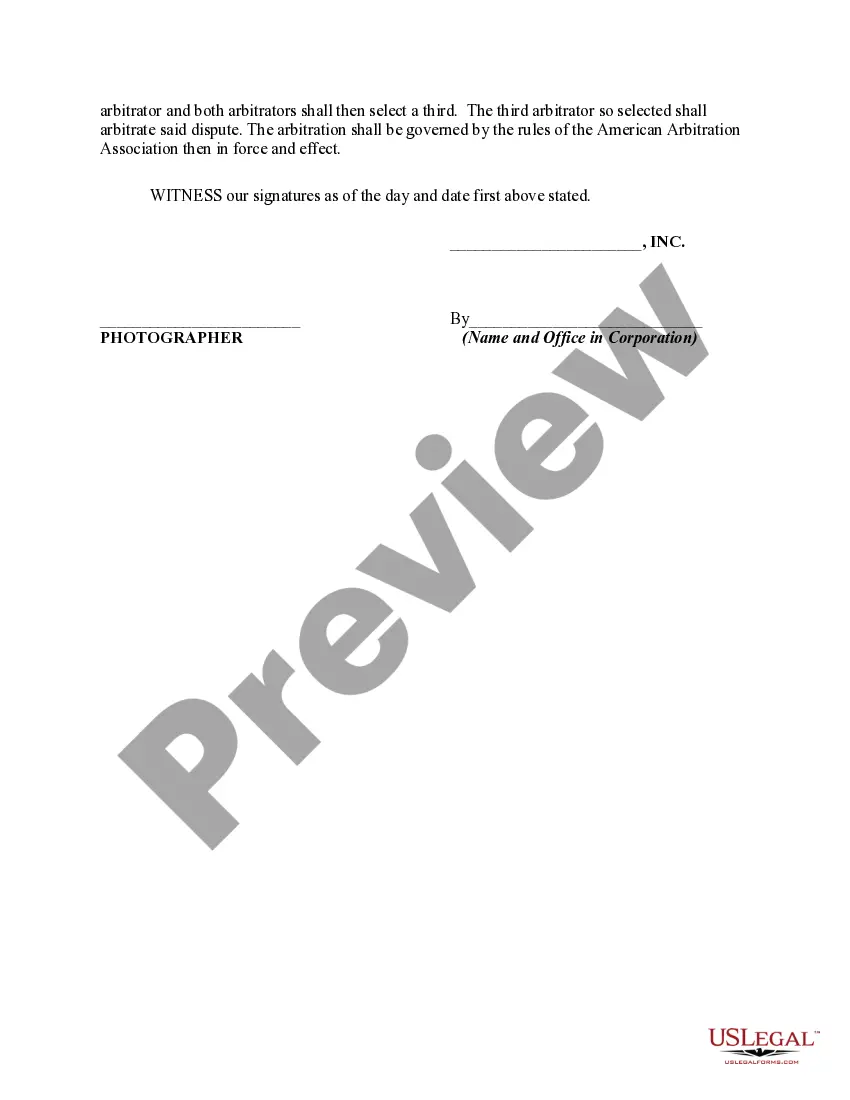
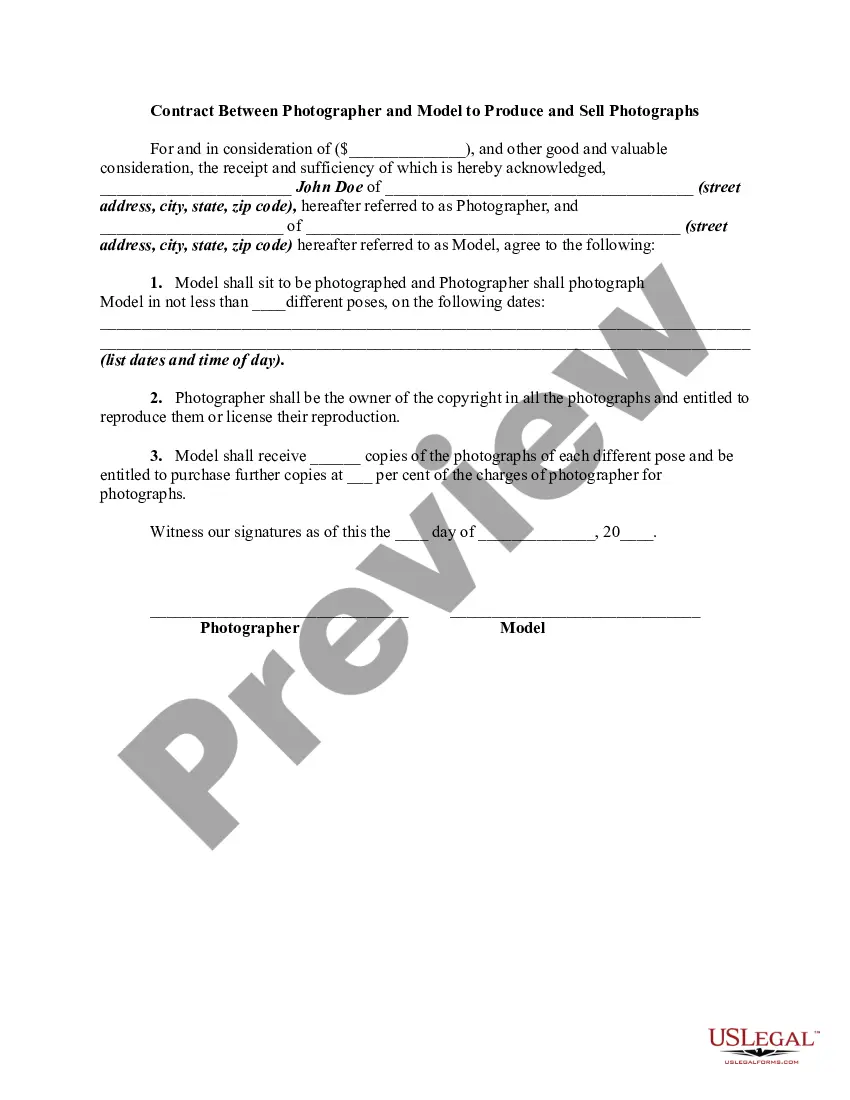
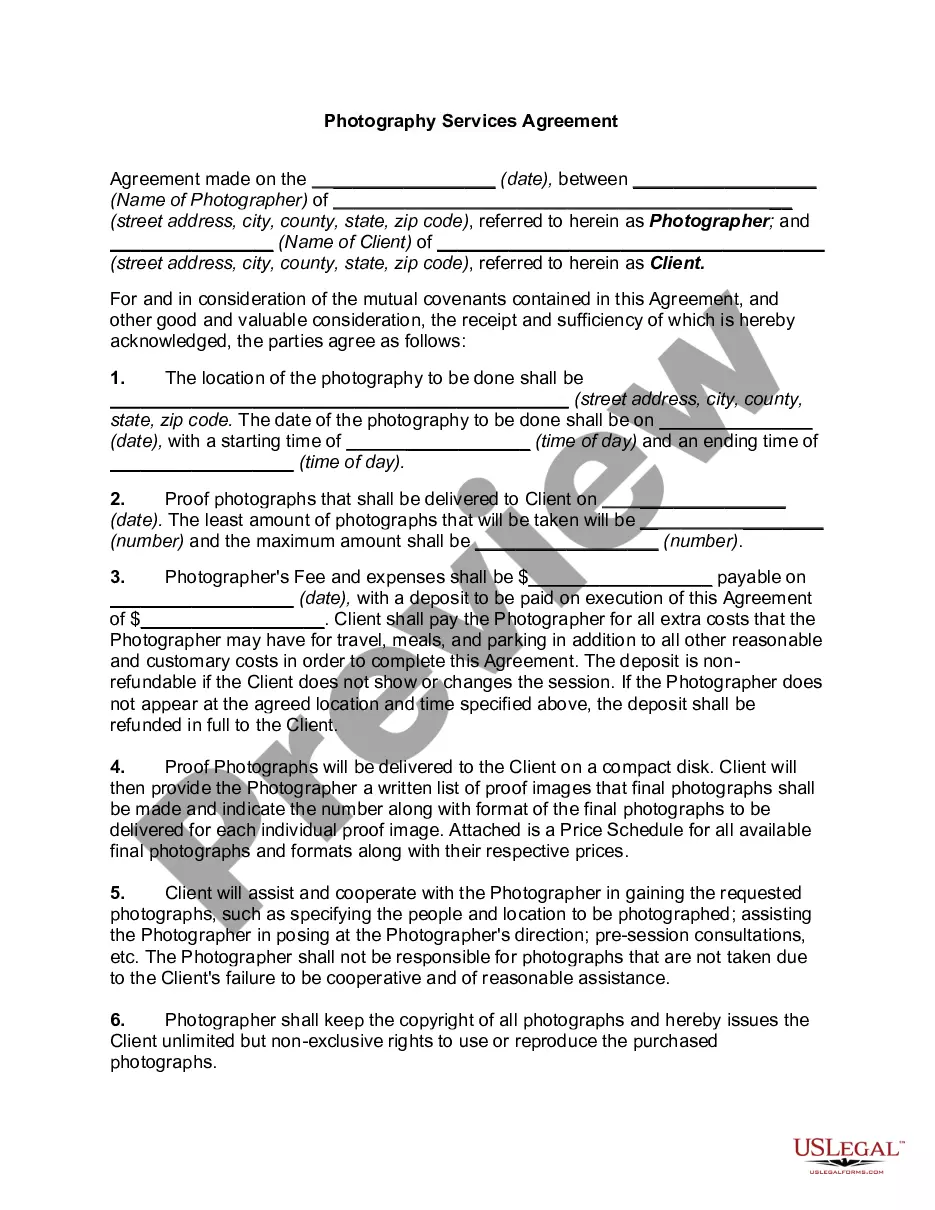
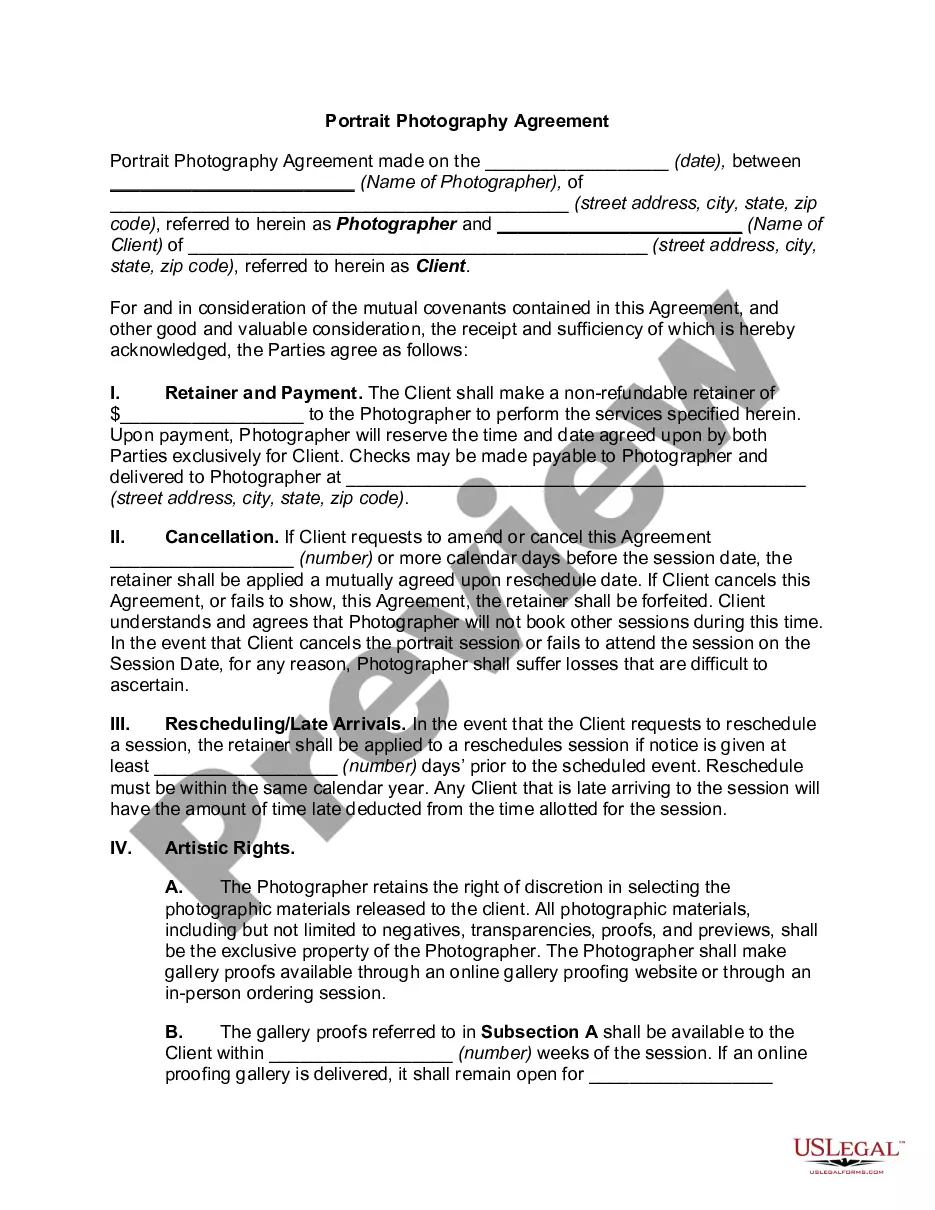
The Agreement between Photographer and Purchaser of Photographs is a legal contract that formalizes the relationship between a photographer and a company seeking to use photographs for commercial purposes. This agreement outlines the services to be provided by the photographer, compensation details, confidentiality obligations, and ownership rights. It is important for ensuring that both parties understand their rights and responsibilities, setting it apart from less formal agreements or verbal contracts related to photography services.
Key components of this form
- Services: Defines the photographic services needed by the company.
- Compensation: Specifies how the photographer will be paid.
- Confidentiality: Requires the photographer to keep company information confidential.
- Reproductions: Outlines restrictions on selling the photographs to competitors.
- Duration and Termination: Details the duration of the contract and termination rights.
- Status as an Independent Contractor: Establishes that the photographer acts independently and is not an employee of the company.

When to use this document
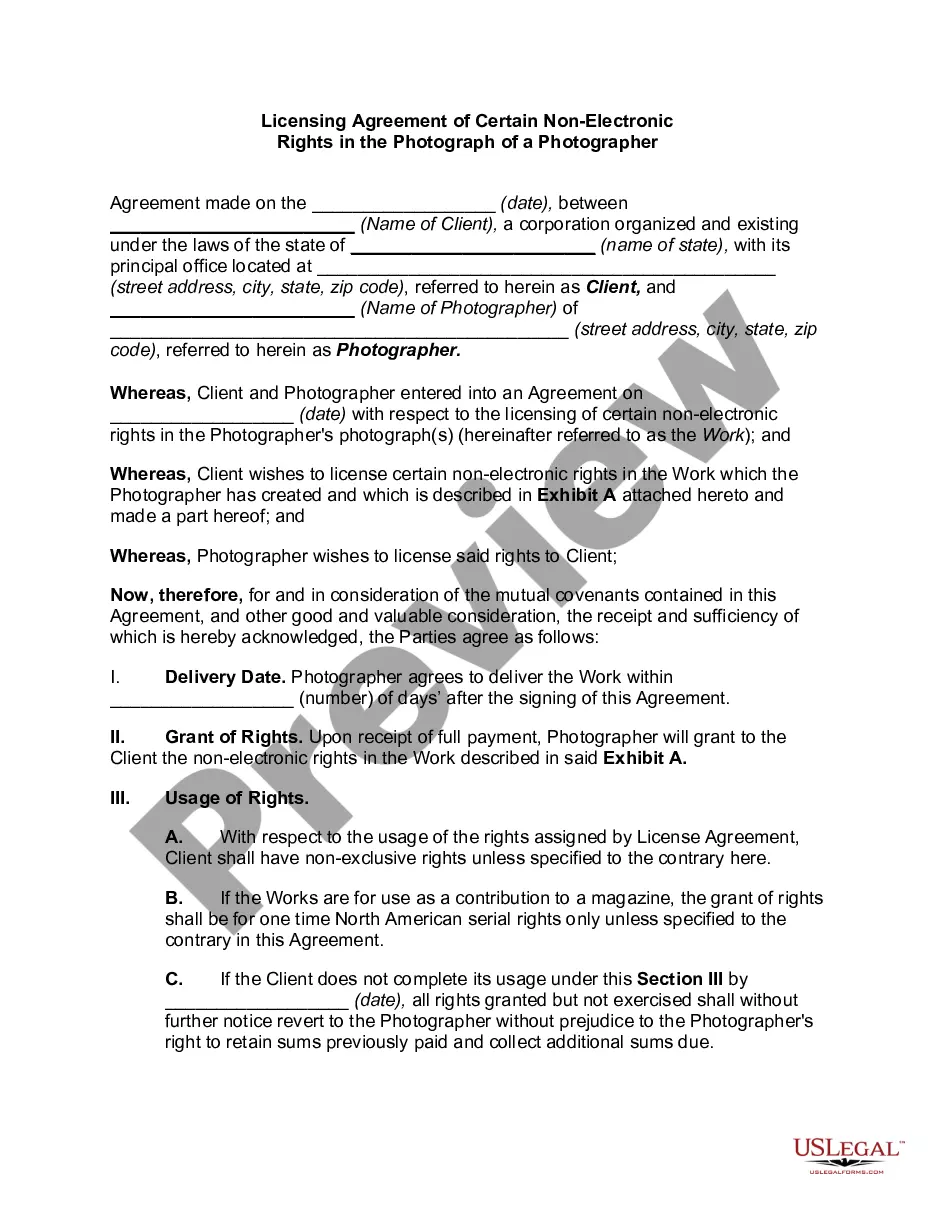
This agreement should be used when a photographer is hired by a company to create commercial photographs. It is particularly useful in situations where the photographs will be used for advertising, marketing, or other professional purposes, ensuring that both parties have a clear understanding of their rights to the images and any agreed-upon compensation structure.
Intended users of this form
- Photographers who are engaged by companies for commercial projects.
- Companies looking to hire photographers for marketing or branding purposes.
- Freelancers or independent photographers wanting to protect their rights and outline payment terms.
- Businesses seeking to ensure confidentiality and non-competition in their agreements with photographers.
How to prepare this document
- Identify the parties involved: Enter the names and addresses of both the company and the photographer.
- Describe the services: Specify the type of photographs and services the photographer will provide.
- Set compensation: Clearly outline how the photographer will be paid for their services.
- Enter contract duration: Indicate the effective date and duration of the agreement.
- Include termination clauses: Note any conditions under which the agreement may be terminated.
- Sign and date: Ensure both parties sign the agreement to validate it.
Does this form need to be notarized?
This form does not typically require notarization unless specified by local law. However, having the agreement notarized can provide additional legal protection and assurance for both parties.
Get your form ready online
Our built-in tools help you complete, sign, share, and store your documents in one place.
Make edits, fill in missing information, and update formatting in US Legal Forms—just like you would in MS Word.
Download a copy, print it, send it by email, or mail it via USPS—whatever works best for your next step.
Sign and collect signatures with our SignNow integration. Send to multiple recipients, set reminders, and more. Go Premium to unlock E-Sign.
If this form requires notarization, complete it online through a secure video call—no need to meet a notary in person or wait for an appointment.
We protect your documents and personal data by following strict security and privacy standards.

Make edits, fill in missing information, and update formatting in US Legal Forms—just like you would in MS Word.

Download a copy, print it, send it by email, or mail it via USPS—whatever works best for your next step.

Sign and collect signatures with our SignNow integration. Send to multiple recipients, set reminders, and more. Go Premium to unlock E-Sign.

If this form requires notarization, complete it online through a secure video call—no need to meet a notary in person or wait for an appointment.

We protect your documents and personal data by following strict security and privacy standards.
Avoid these common issues
- Not specifying the photographic services clearly, leading to misunderstandings.
- Failing to outline payment terms, causing disputes over compensation.
- Omitting confidentiality clauses, risking unauthorized sharing of sensitive information.
- Not including termination clauses, making it difficult to end the agreement if needed.
- Signing without reviewing the terms thoroughly, which can lead to overlooked obligations.
Advantages of online completion
- Convenience: Download and complete the form from home or office at any time.
- Editability: Tailor the form easily to fit specific needs and details of the agreement.
- Compliance: Ensure that the form you are using meets legal standards as drafted by licensed attorneys.
- Secure storage: Keep a digital copy for easy access and future reference.
Legal use & context
- This agreement is enforceable in a court of law, provided that all parties have duly signed it.
- Be aware of state-specific laws that may affect the enforceability of contract termsã
- Ensure that the contract is clear and addresses all relevant aspects to minimize potential disputes.
What to keep in mind
- This agreement is crucial for protecting both party's rights in a photography arrangement.
- It details the services, compensation, and confidentiality obligations required in a commercial photography context.
- Proper completion and signing of the form establish a legal contract between the photographer and the company.
Looking for another form?




Form popularity
FAQ
Copyright Ownership and Transfer of Use Rights. Payment Schedule. Cancellation Policy. Summary of What Each Side Will Deliver. Start Date of Photography Contract and Shoot Date (If Applicable) Full Contact Information and Names for Client and Your Business.
If you don't have a good contract, then you may well be out of luck. Small claims court will work, but may find in his favor.
Under the Federal Copyright Act of 1976, photographs are protected by copyright from the moment of creation. According to the U.S. Copyright Office, the owner of the work is generally the photographer or, in certain situations, the employer of the photographer.
Copyright Ownership and Transfer of Use Rights. Payment Schedule. Cancellation Policy. Summary of What Each Side Will Deliver. Start Date of Photography Contract and Shoot Date (If Applicable) Full Contact Information and Names for Client and Your Business.
Under copyright law, the photographer owns the copyright and can use it for any editorial use without permission of the person in the picture.A person cannot have their picture used without their permission for anything that sells or promotes a product or service.
A contract is THE agreement your client and photographer relationship will be built on. It has legally binding rights and obligations, which the courts can enforce. Here are a few of the major points photography contracts should include (opinion from my legal education and experience in the business).
A photography contract is a written agreement that describes the services to be performed by a photographer hired by an individual or business. The cost of hiring a photographer varies greatly depending on where they are based, how much experience they have, and the type of job they are asked to do.
All parties must agree about an offer made by one party and accepted by the other. Something of value must be exchanged for something else of value. This can include goods, cash, services, or a pledge to exchange these items.