Complaint for Breach of Fiduciary Duty - Trust
What this document covers
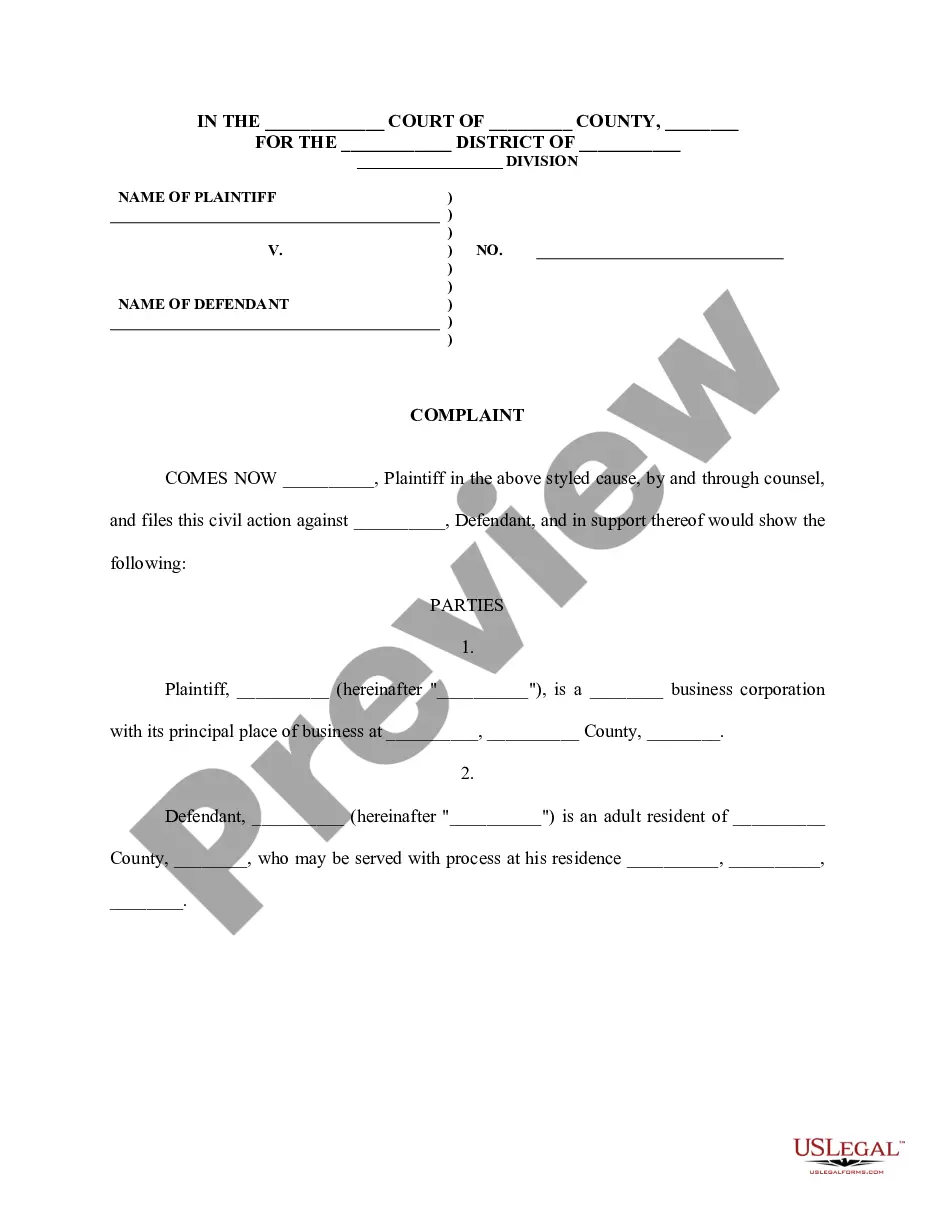
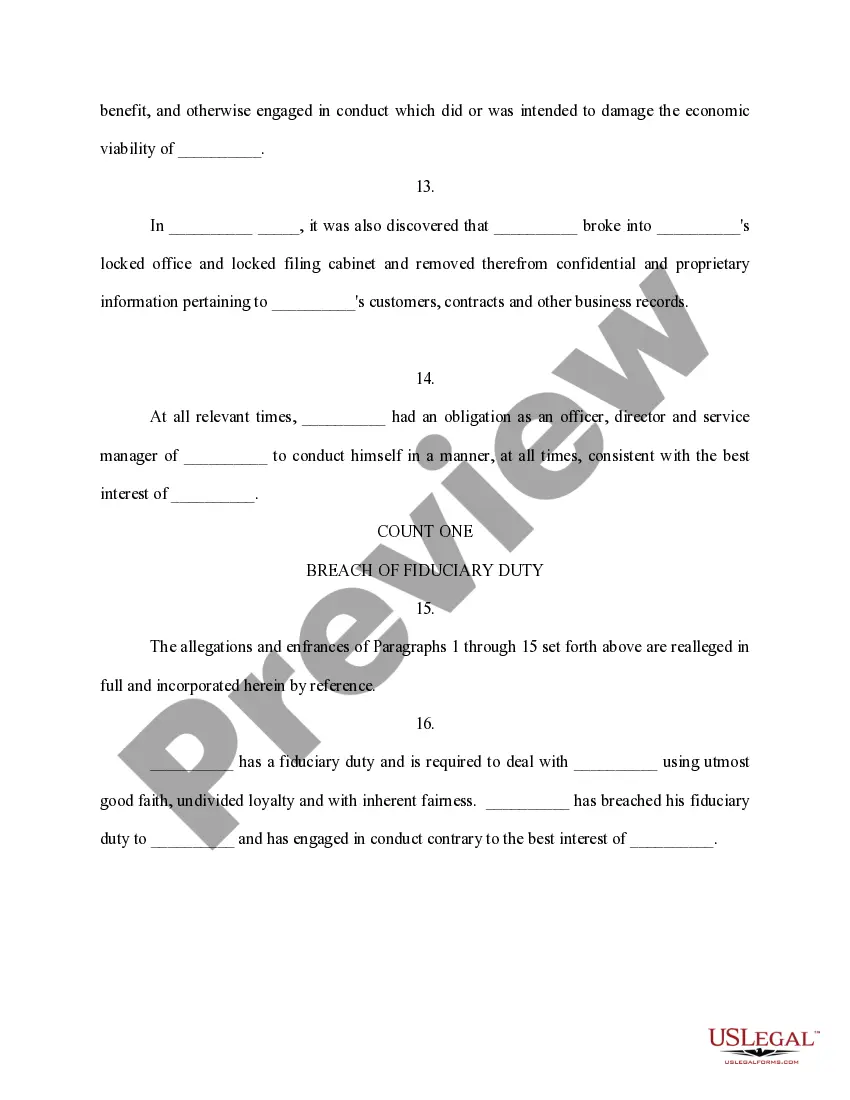
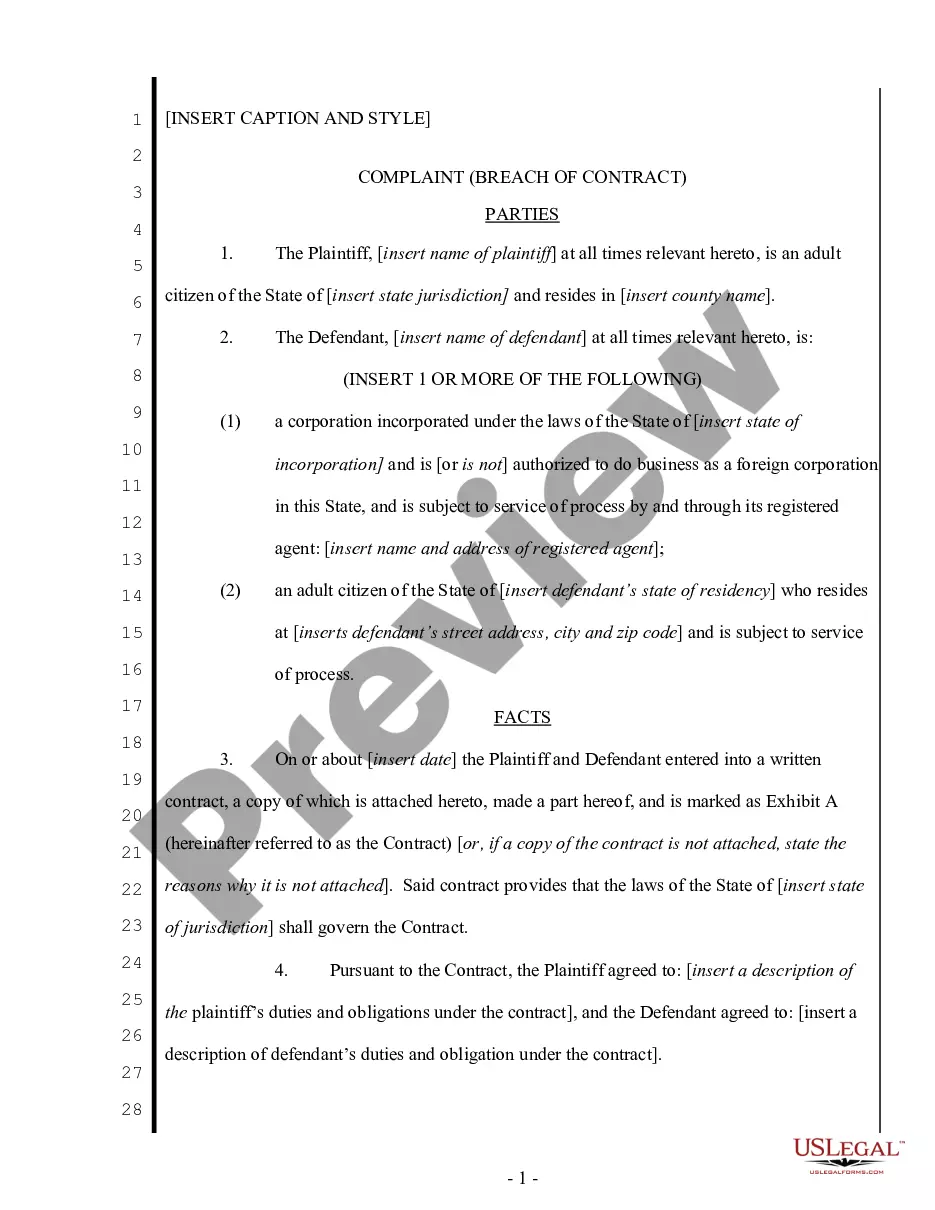
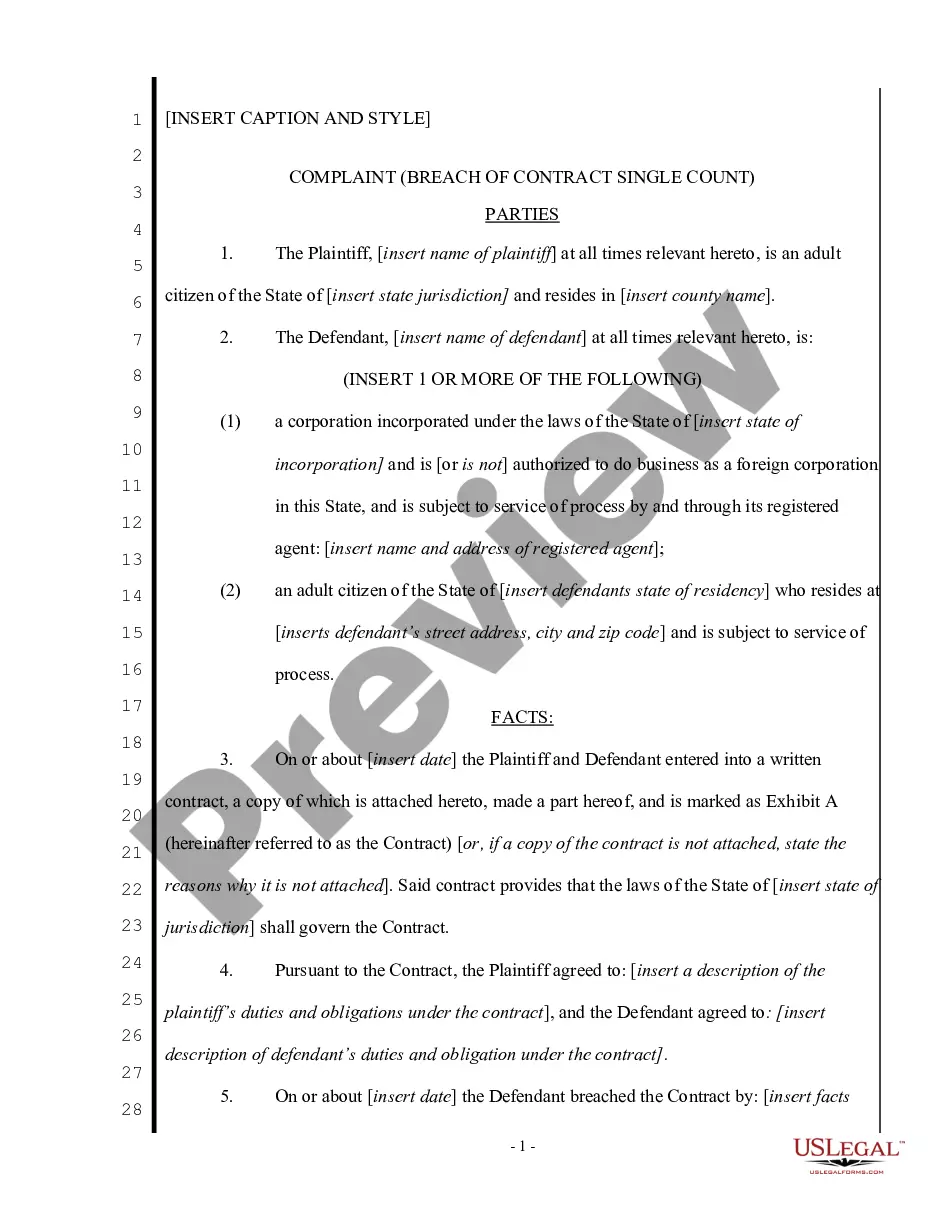
The Complaint for Breach of Fiduciary Duty - Trust is a legal document used to initiate a lawsuit against an individual or entity that has violated their fiduciary obligations. This form is particularly applicable in scenarios involving trust relationships, such as between trustees and beneficiaries. Unlike general complaint forms, this specific document addresses the nuances of fiduciary duties, ensuring that any grievances related to those duties can be properly articulated and pursued in court.
Key components of this form
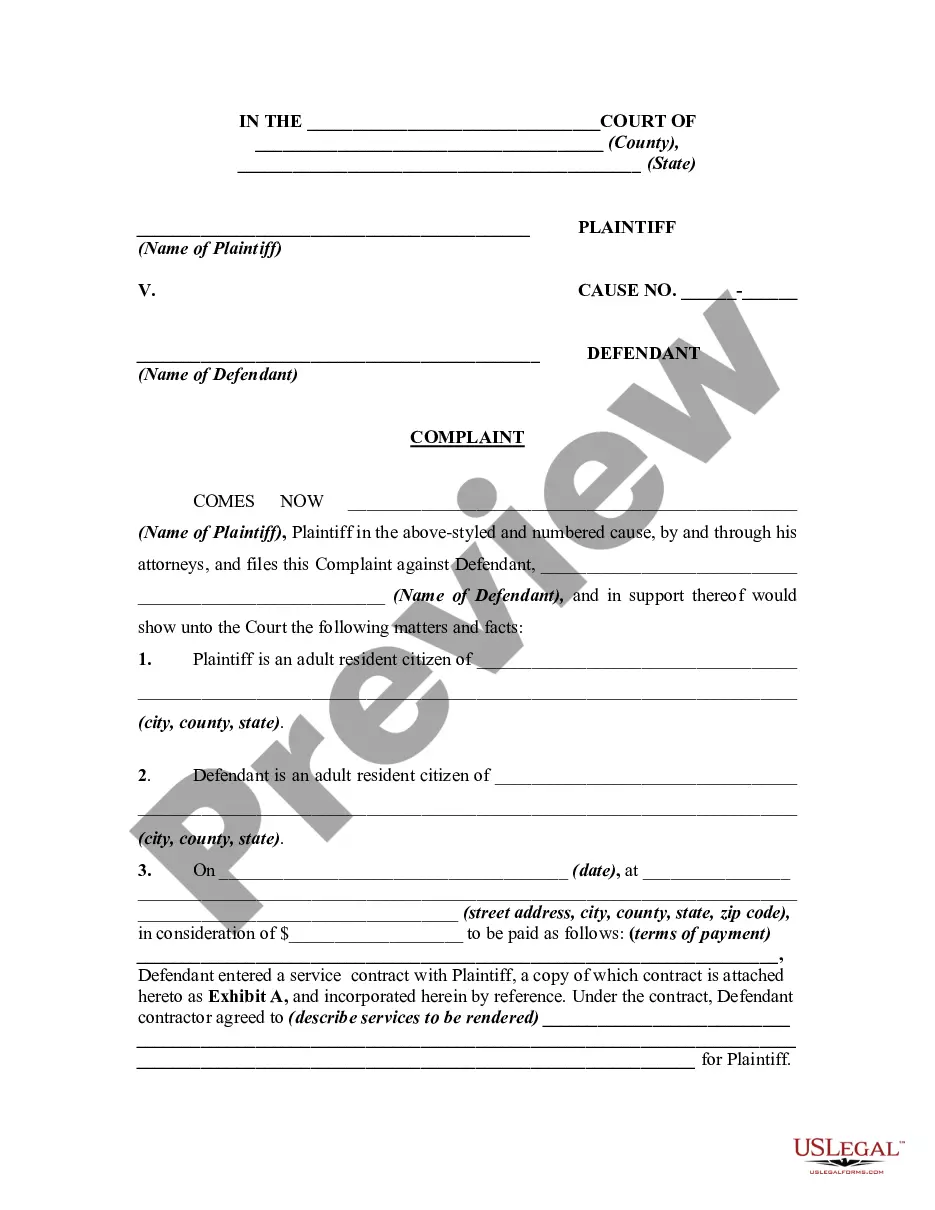
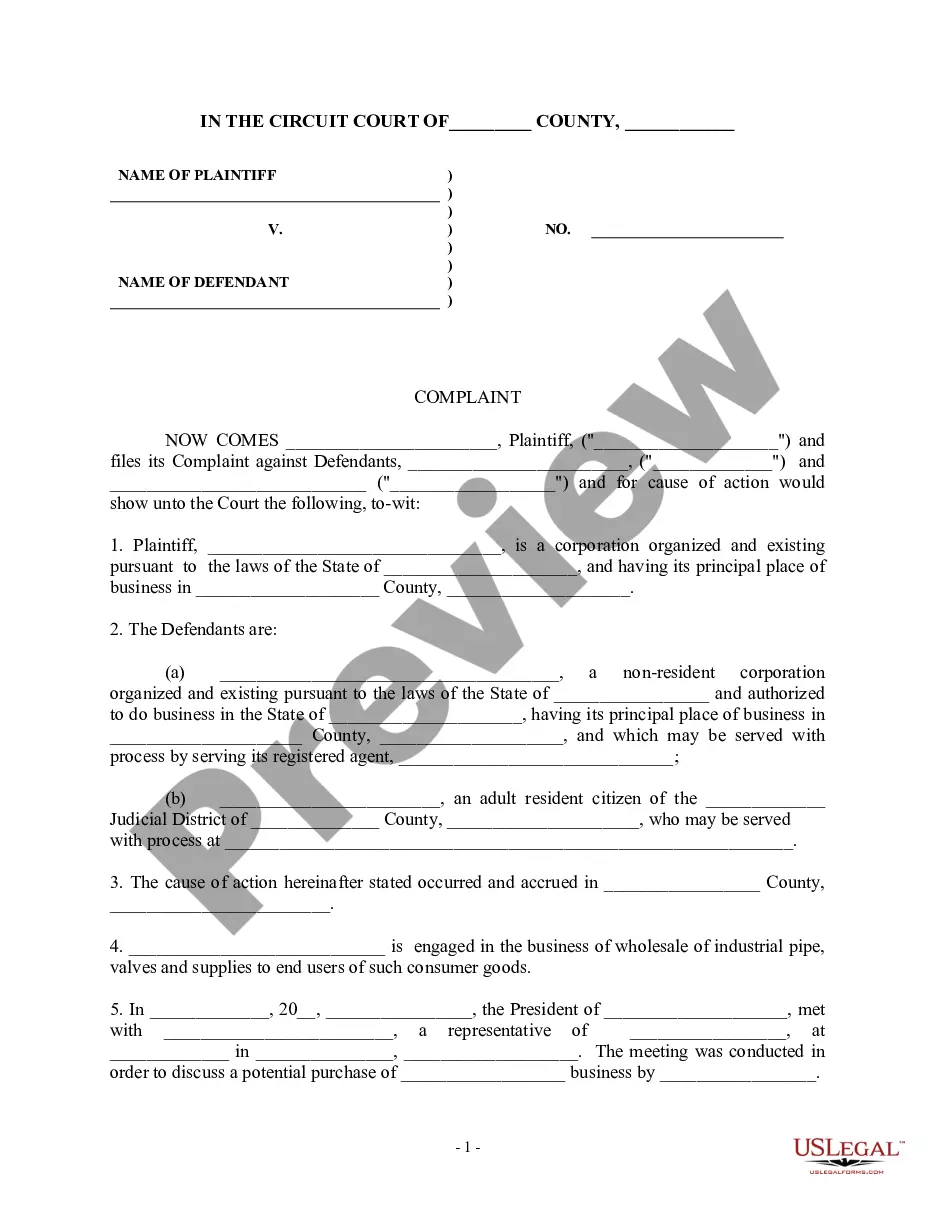
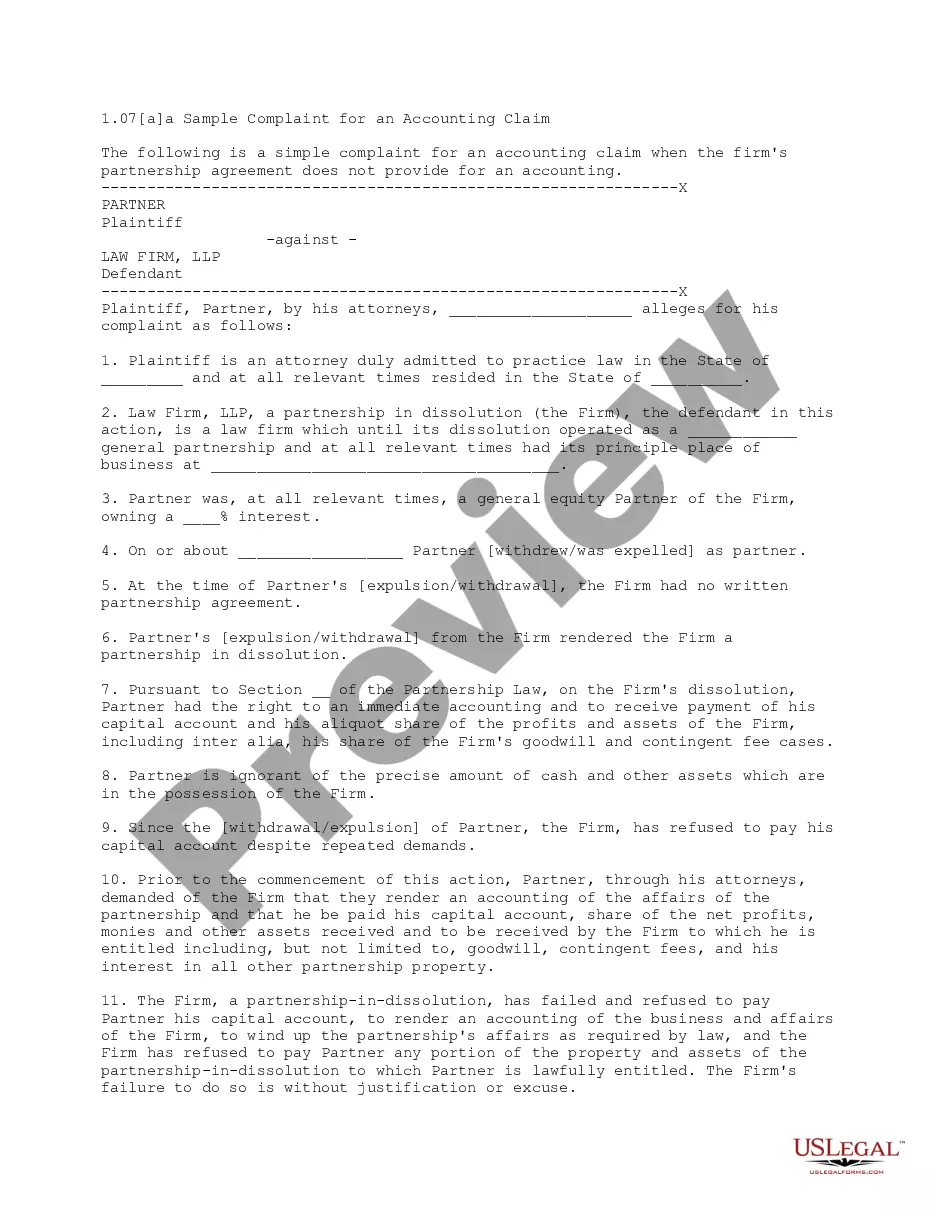
- Identification of the parties: Clearly states the plaintiff and defendant involved in the complaint.
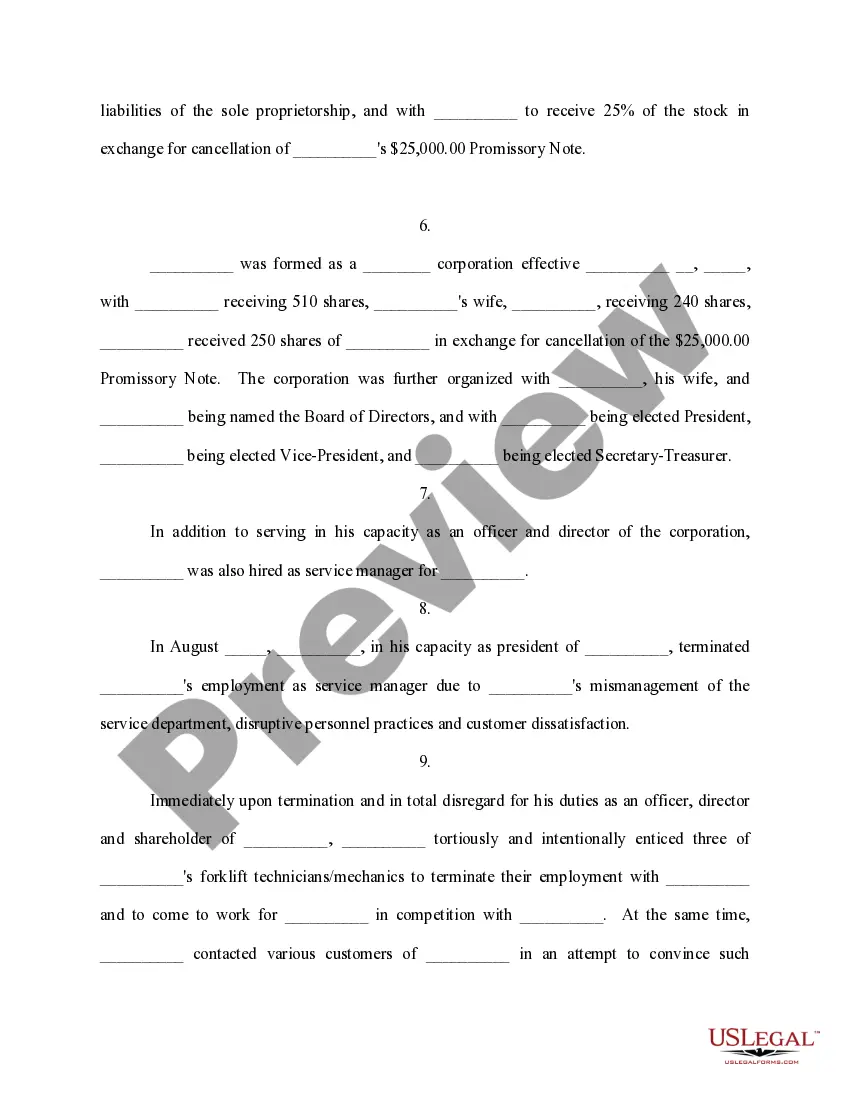
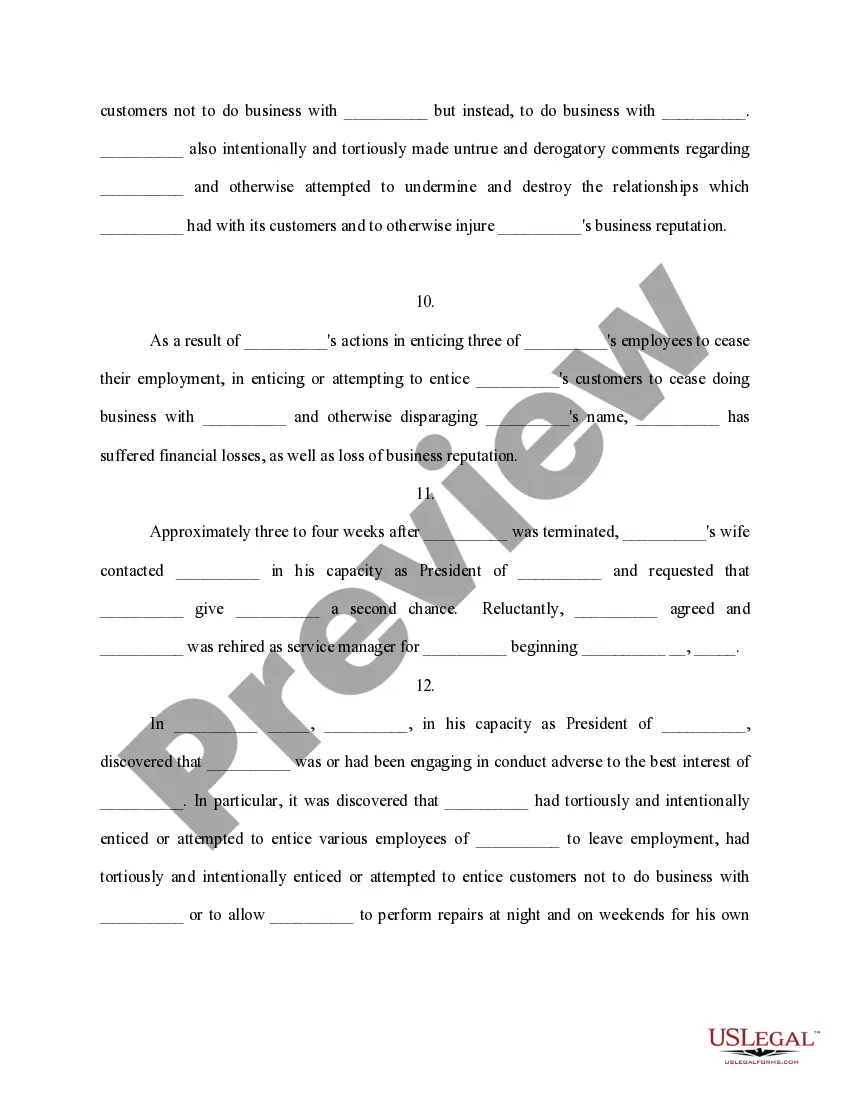
- Factual background: Provides context and details regarding the relationship and transactions between the parties.
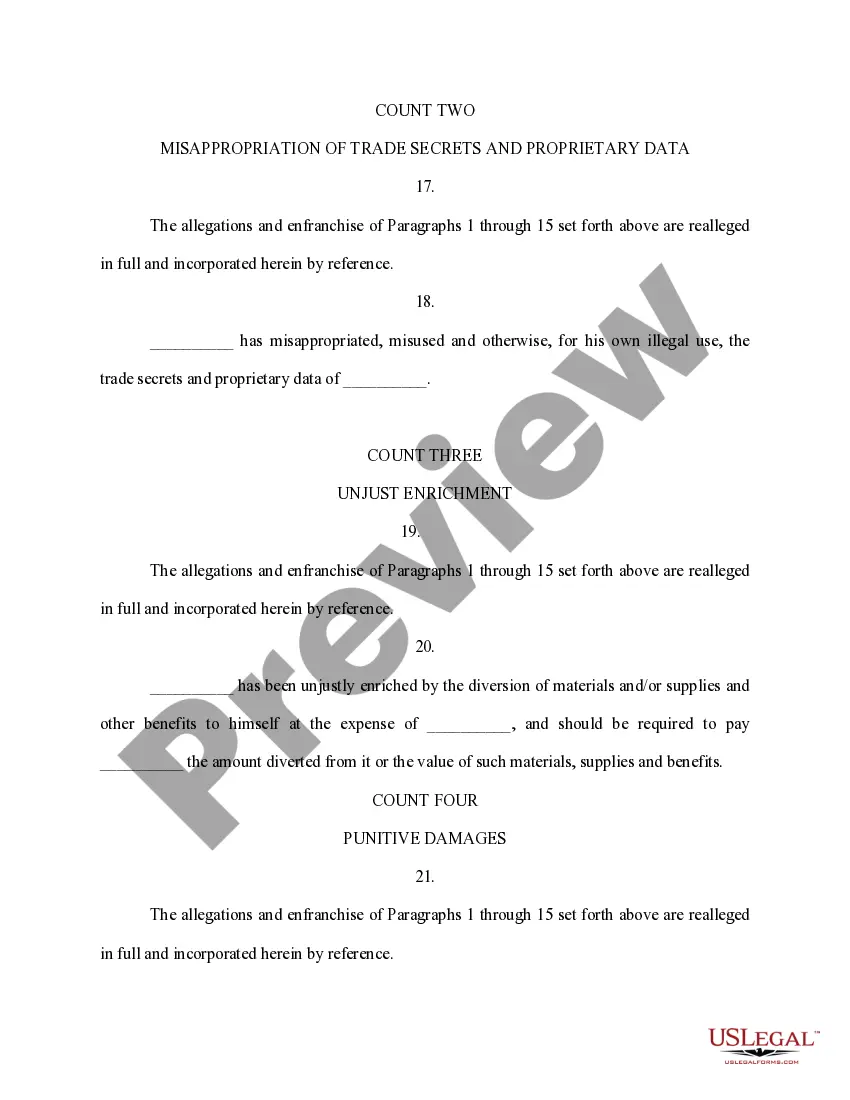
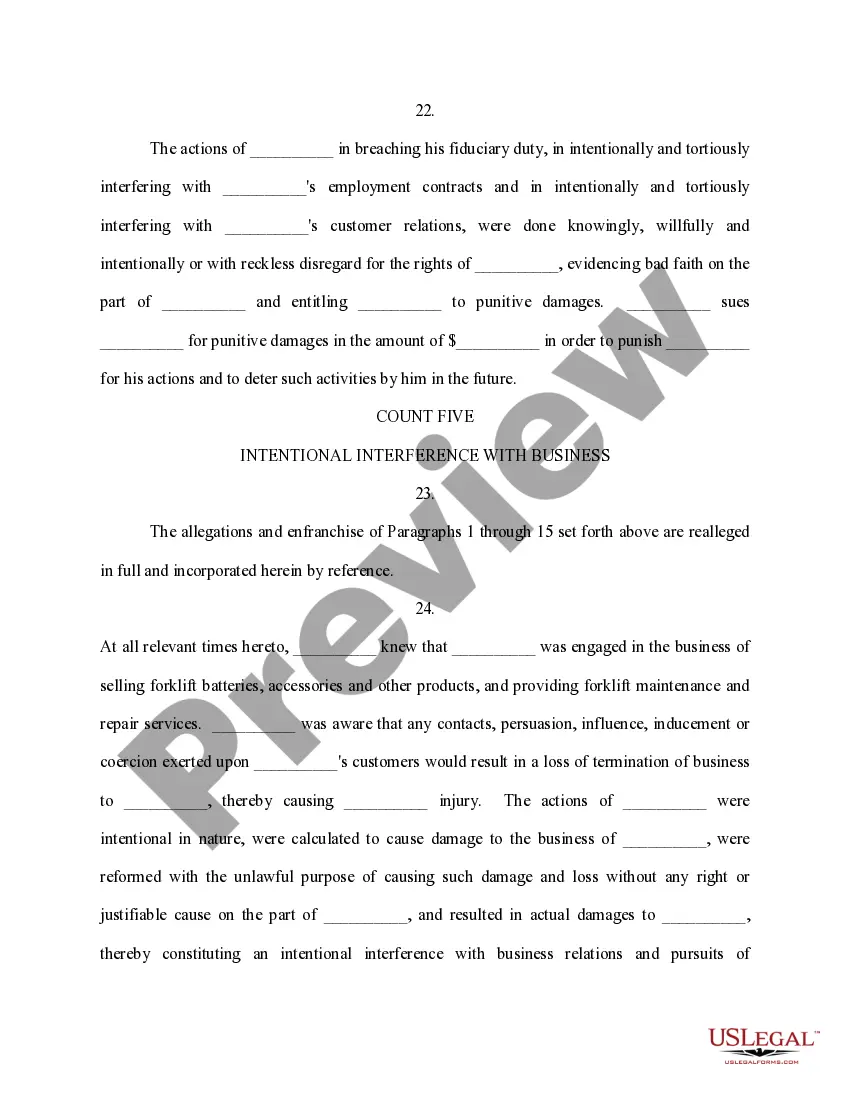
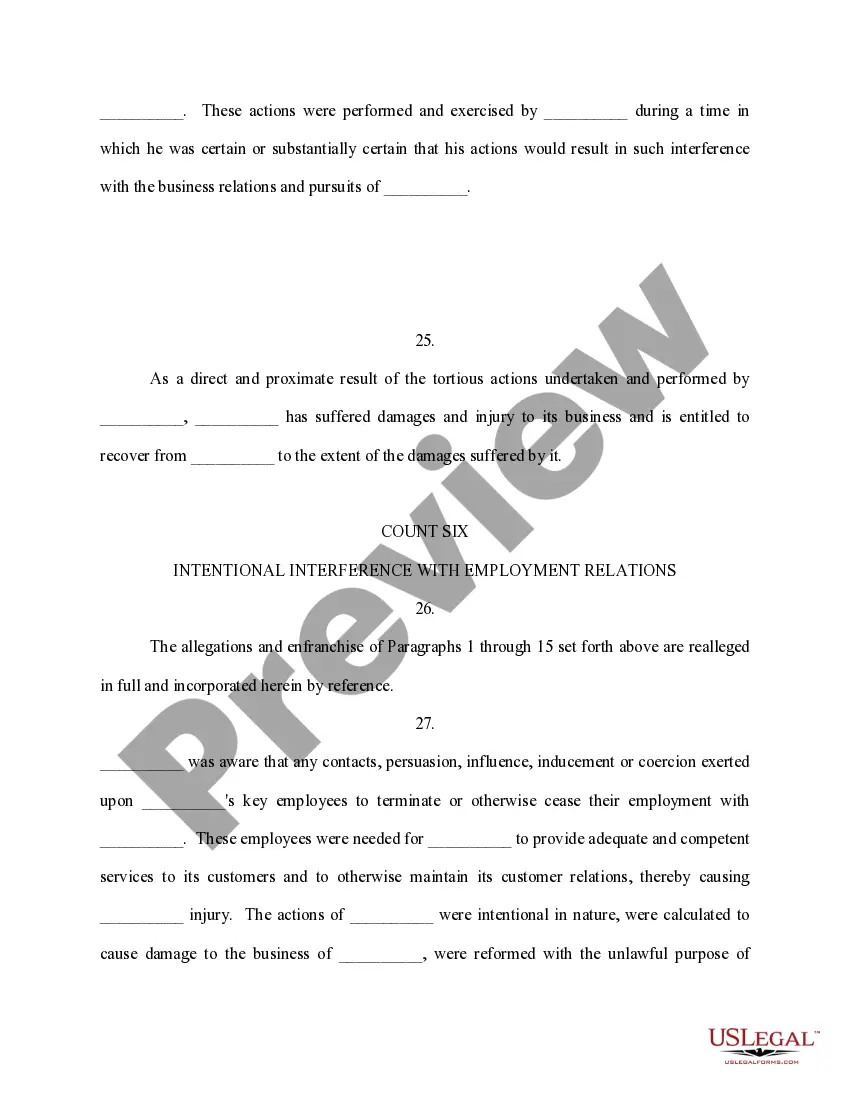
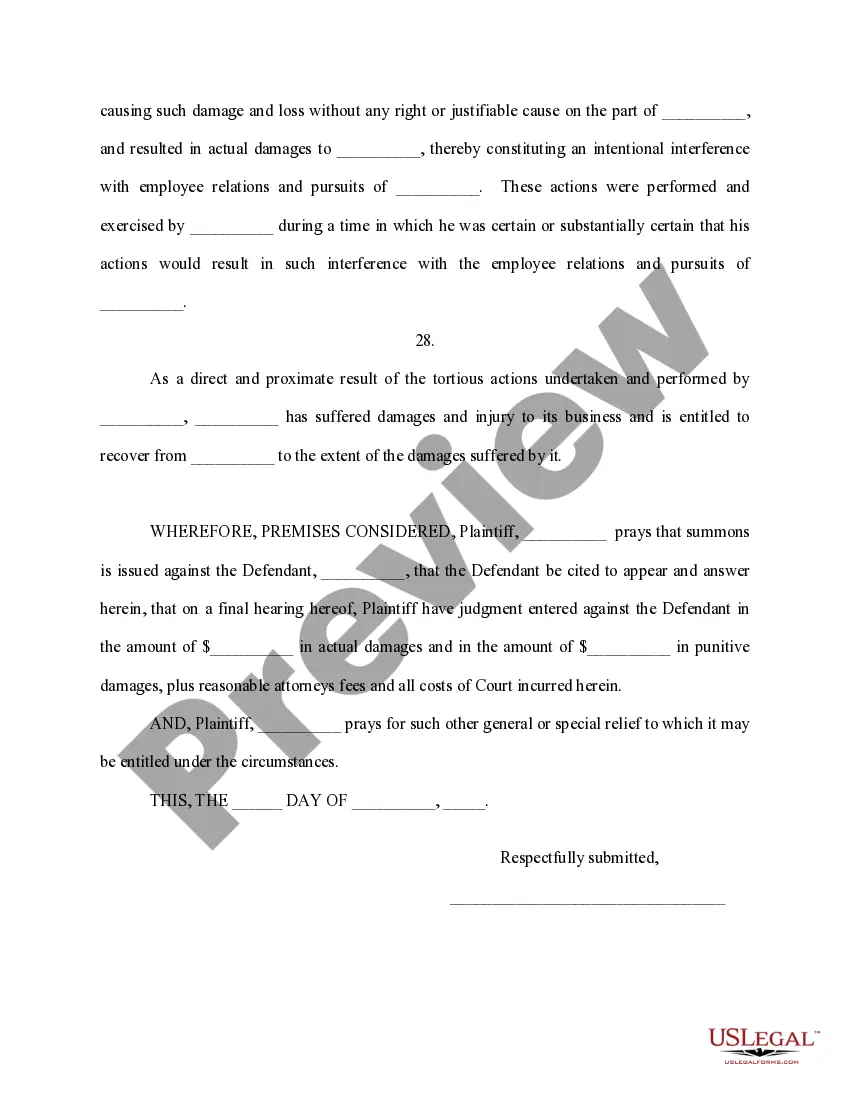
- Counts of action: Lists specific allegations, including breach of fiduciary duty, misappropriation of trade secrets, unjust enrichment, and intentional interference.
- Request for damages: Specifies the nature of damages sought, both actual and punitive.
- Signature block: Ensures the document is properly signed and dated for legal validity.

Situations where this form applies
This form should be used when there is evidence that a party has failed to uphold their fiduciary duties, leading to economic damage or loss of trust. Typical scenarios include disputes between business partners, trustees failing to act in the best interests of beneficiaries, or situations where confidential information is misused or disclosed. If you believe you have suffered as a result of another party's breach of trust or fiduciary duty, this complaint form is essential for seeking remedy through the legal system.
Who should use this form
- Individuals who are beneficiaries in a trust and suspect breaches by trustees.
- Business partners who feel a partner has acted against their interests.
- Corporations seeking to address misuse of proprietary information by former employees.
- Anyone who has suffered losses due to fiduciary breaches in a business or legal context.
How to complete this form
- Identify the parties: Fill in the full names and addresses of the plaintiff and defendant.
- Detail the factual background: Provide a clear and concise narrative of the events that led to the breach of fiduciary duty.
- Specify counts of action: Clearly articulate the specific breaches and claims you are making against the defendant.
- Detail damages: Quantify the financial and non-financial damages you are seeking as a result of the breach.
- Sign and date the document: Ensure the form is signed by the plaintiff and dated for submission to court.
Is notarization required?
This form does not typically require notarization unless specified by local law. However, check your jurisdiction for any additional requirements regarding signature verification.
Get your form ready online
Our built-in tools help you complete, sign, share, and store your documents in one place.
Make edits, fill in missing information, and update formatting in US Legal Forms—just like you would in MS Word.
Download a copy, print it, send it by email, or mail it via USPS—whatever works best for your next step.
Sign and collect signatures with our SignNow integration. Send to multiple recipients, set reminders, and more. Go Premium to unlock E-Sign.
If this form requires notarization, complete it online through a secure video call—no need to meet a notary in person or wait for an appointment.
We protect your documents and personal data by following strict security and privacy standards.

Make edits, fill in missing information, and update formatting in US Legal Forms—just like you would in MS Word.

Download a copy, print it, send it by email, or mail it via USPS—whatever works best for your next step.

Sign and collect signatures with our SignNow integration. Send to multiple recipients, set reminders, and more. Go Premium to unlock E-Sign.

If this form requires notarization, complete it online through a secure video call—no need to meet a notary in person or wait for an appointment.

We protect your documents and personal data by following strict security and privacy standards.
Common mistakes
- Failing to clearly specify the breach of fiduciary duty and its implications.
- Not providing sufficient factual background to support claims.
- Leaving out essential details about damages being sought.
- Omitting signatures or failing to date the document properly.
Benefits of completing this form online
- Convenience: Access and complete the form from anywhere without the need for physical documents.
- Editability: Easily make changes to the form as needed before finalizing it.
- Time-saving: Download instantly without waiting for postal deliveries or office visits.
- Reliability: Forms are drafted by licensed attorneys, ensuring legal compliance and accuracy.
Legal use & context
- Applicable in cases of demonstrated fiduciary relationships such as trusts or partnerships.
- Use to initiate civil actions for damages resulting from breaches of duty.
- Can be subject to state-specific legal interpretations and rulings.
Summary of main points
- The Complaint for Breach of Fiduciary Duty - Trust is essential for addressing breaches in trust relationships.
- Clear identification of duties and damages is crucial for successful claims.
- Utilizing this form online provides convenience and reliability, making legal processes more accessible.
Looking for another form?

Form popularity
FAQ
Consequences of a Breach of Fiduciary Duty A breach of fiduciary duty is not a criminal act but can be tied to one.This means that on top of damages, the fiduciary would also have to deal with the consequences of a criminal act, and potentially jail time.
Breach of fiduciary duty offers a wonderful panoply of remedies: legal remedies, equitable remedies, a right to an accounting, an award of money damages, disgorgement of self-dealt profits, and finally, if pled derivatively, the potential to recover attorneys' fees.
The most common penalties for a breach of fiduciary duty are compensatory damages, punitive damages, double or treble damages, fees, costs, and removal of the fiduciary.
Preventing Breaches of Fiduciary Duty The best way to prevent a breach of fiduciary duty is for the company to have a policy forbidding self-dealing," he says. "The best advice is to 'trust, but verify' the company's relationships with anyone suspected of not acting in the company, client or member's best interest."
Breach of Fiduciary Duty Penalties The civil penalties include fines, restitution, and courts can order relief that restores the beneficiaries to the place they would have been. Beneficiaries can demand repayment of missing funds, restoration of mismanaged assets, and resignation from the trustee's role.
It is legally permitted for the wronged individual to sue for and receive damages as well as any profits made by the fiduciary in breach of their fiduciary duty. Breaches of fiduciary duty can have significant consequences not only for the fiduciary's finances, but also on their reputation.
Consequences of a Fiduciary Breach A client can end a professional relationship because they do not trust in a professional's care of the required fiduciary duty.A successful breach of fiduciary duty lawsuit can result in monetary penalties for direct damages, indirect damages, and legal costs.
If you can prove a fiduciary relationship existed, you must prove that a breach occurred and that the defendant acted on his or her own behalf instead of acting in the best interests of the principal. Finally, you must prove that the breach caused harm for which compensation is available.
The defendant was acting as a fiduciary of the plaintiff; The defendant breached a fiduciary duty to the plaintiff; The plaintiff suffered damages as a result of the breach; and. The defendant's breach of fiduciary duty caused the plaintiff's damages.