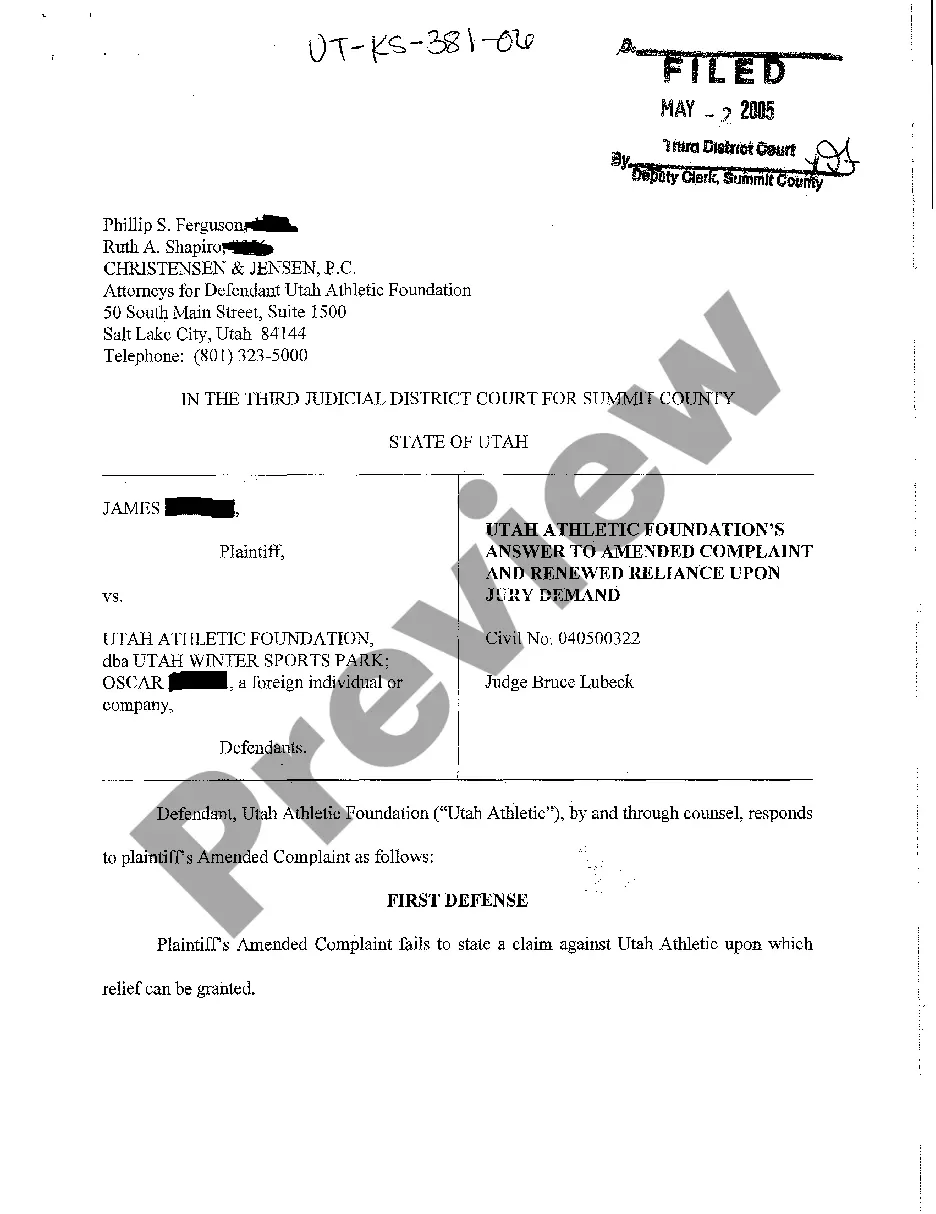
Motion to Vacate, Set Aside, or Correct Sentence by a Person in Federal Custody - With Instructions
Understanding this form
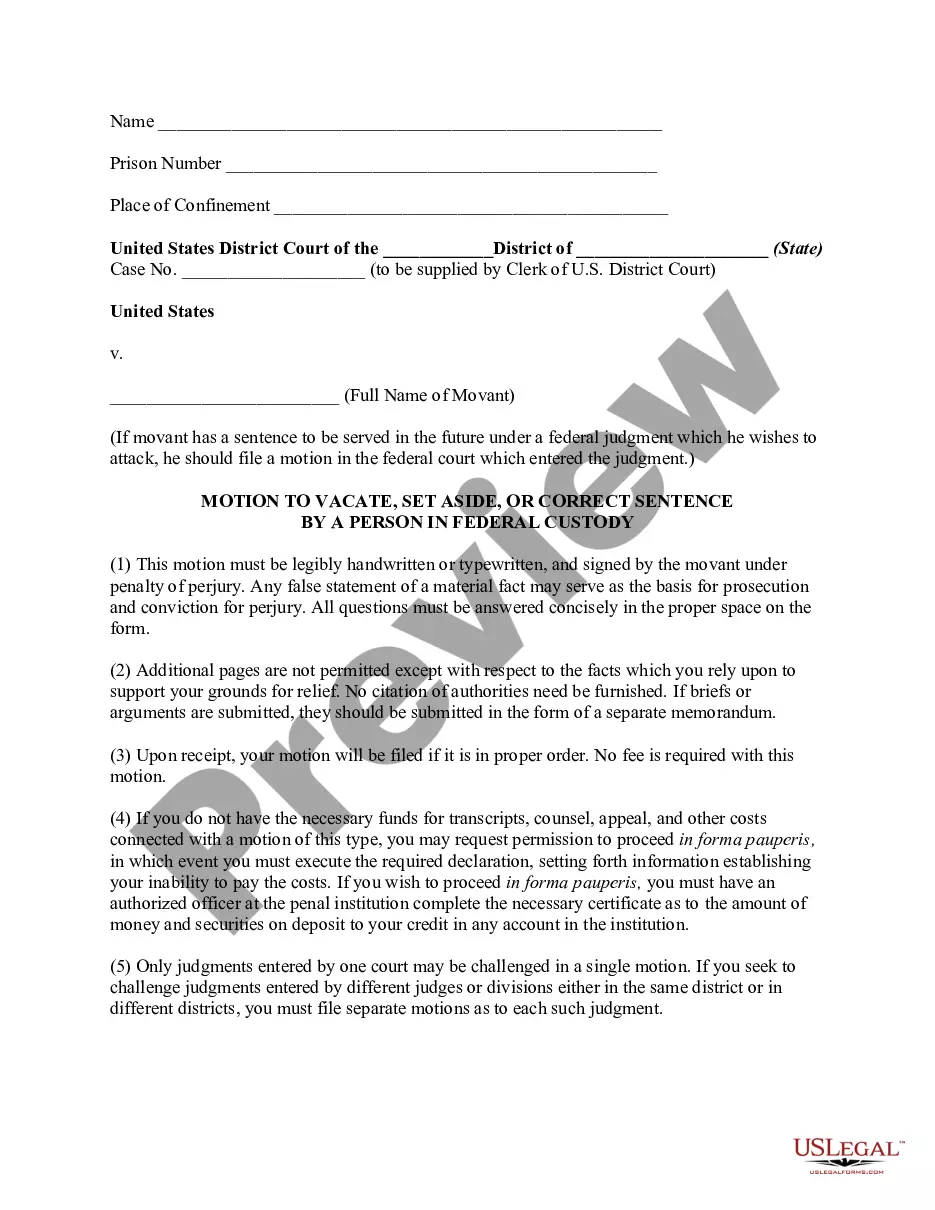
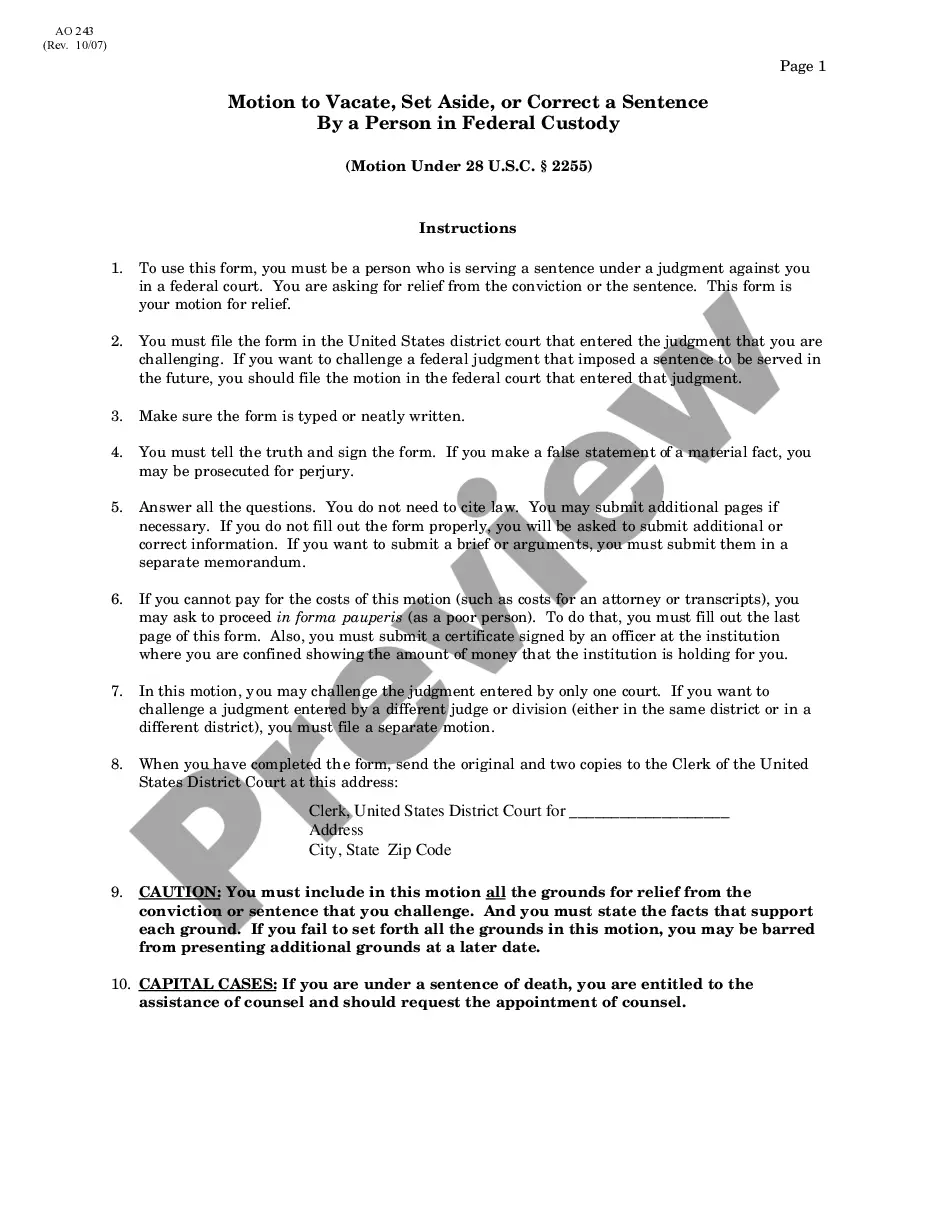
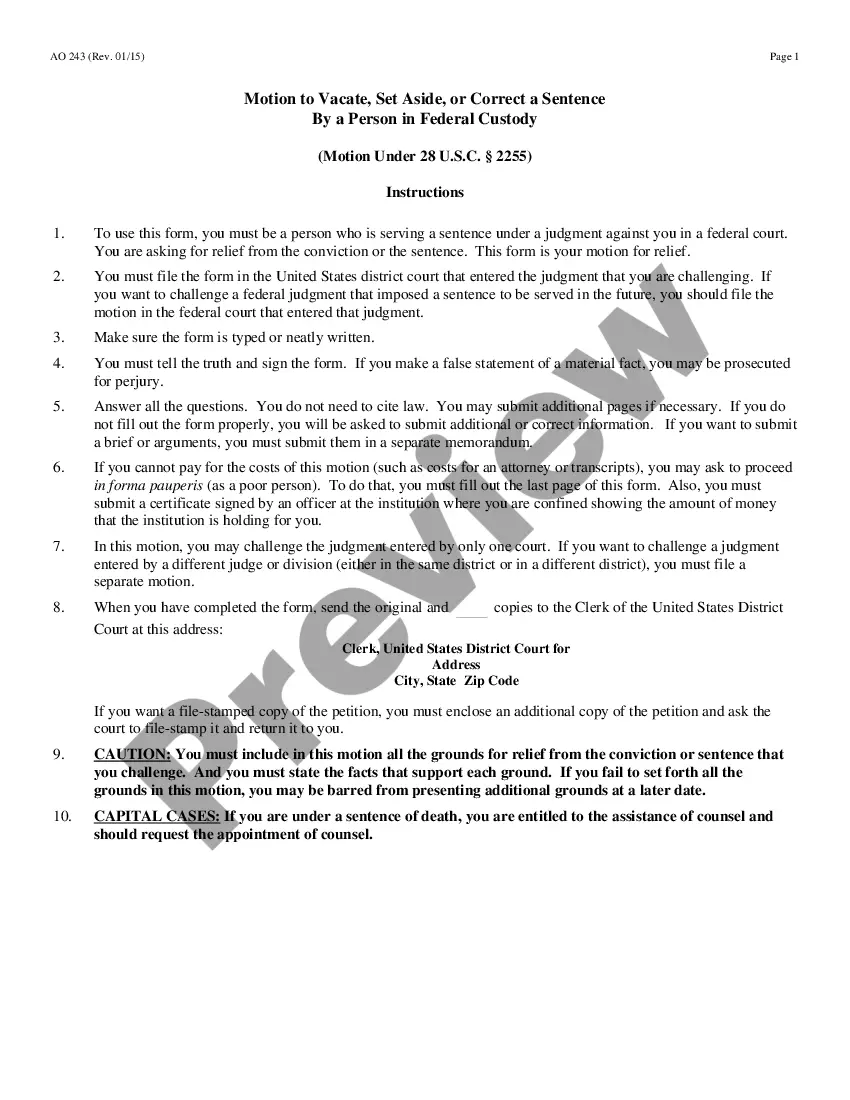
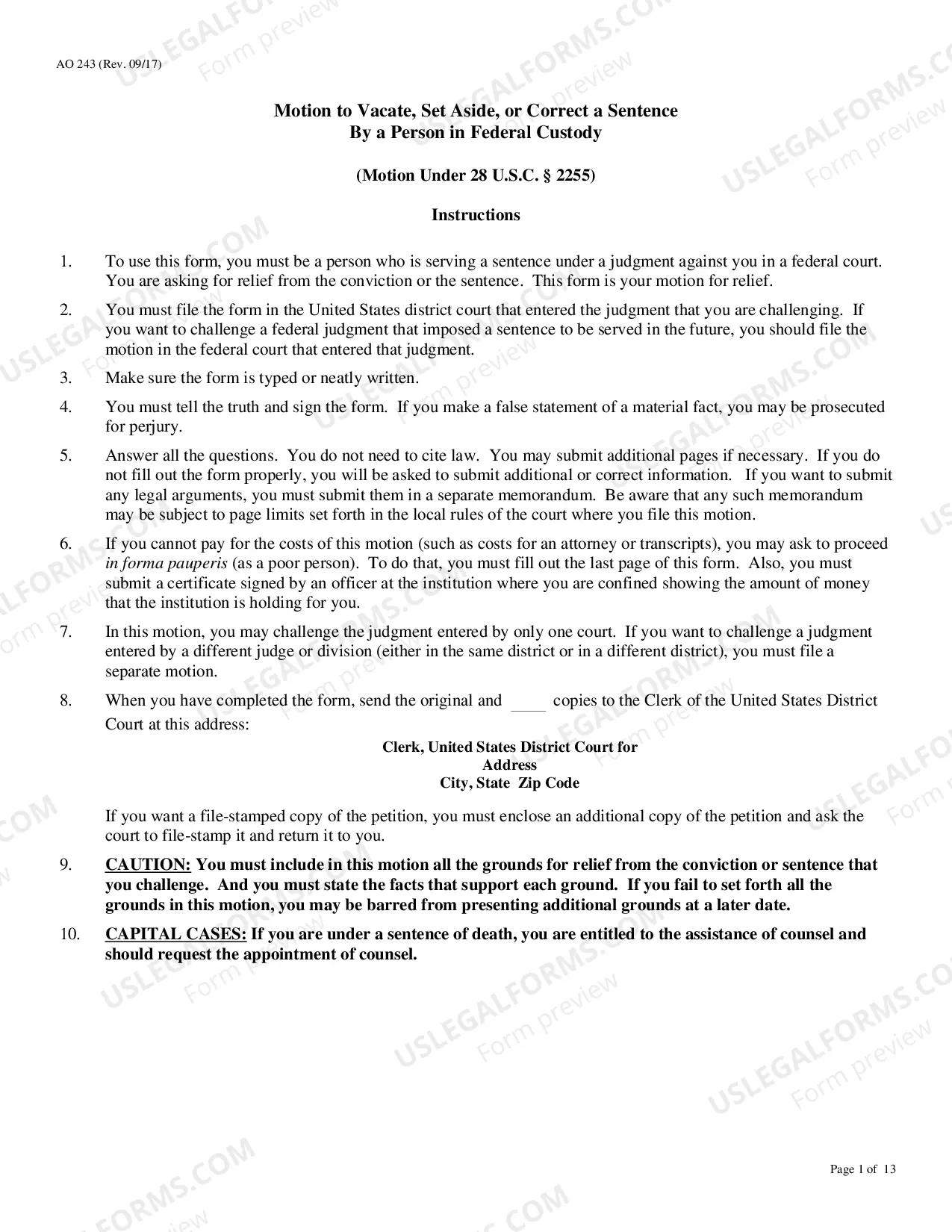
The Motion to Vacate, Set Aside, or Correct Sentence by a Person in Federal Custody is a legal document filed by individuals who are currently incarcerated and believe their sentencing is wrongful. This form allows the individual to request the court to vacate, set aside, or correct their sentence based on constitutional violations or other legal errors. Unlike a direct appeal, this motion serves as a collateral attack on the court's judgment.
Key components of this form
- Prisoner identification: Requires the prisoner's number and place of confinement.
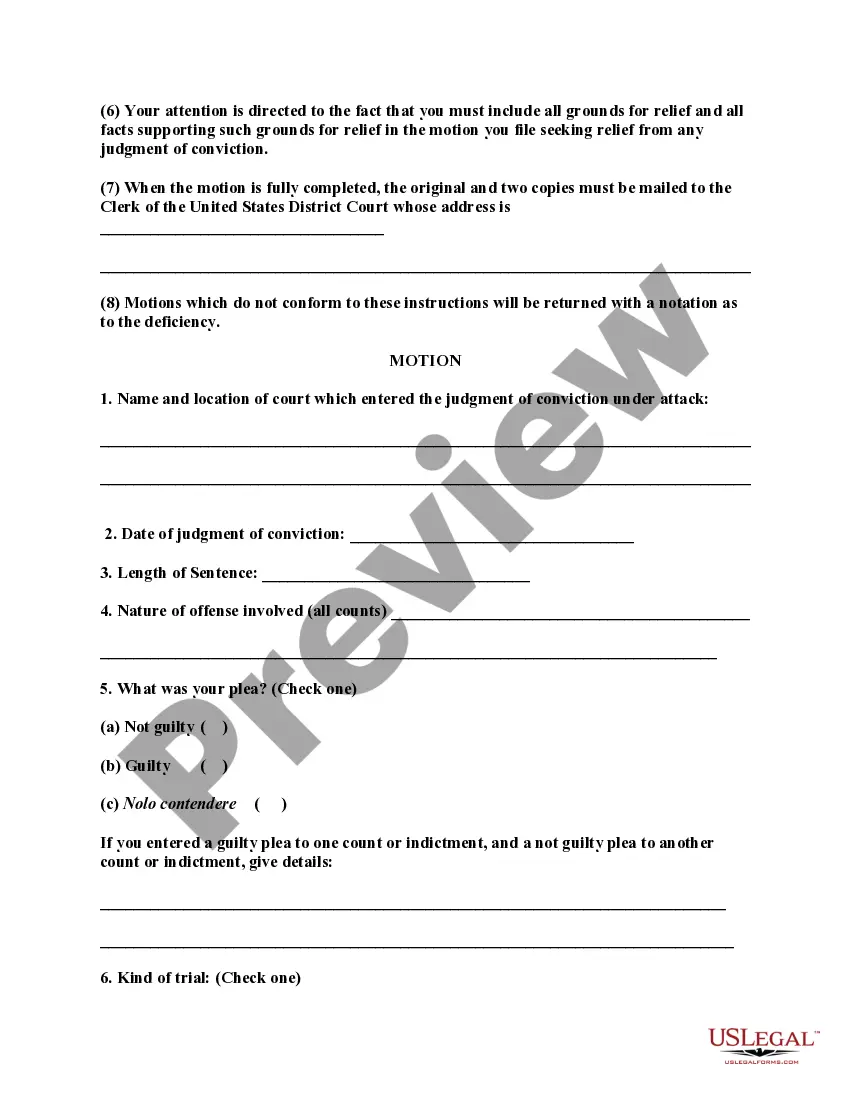
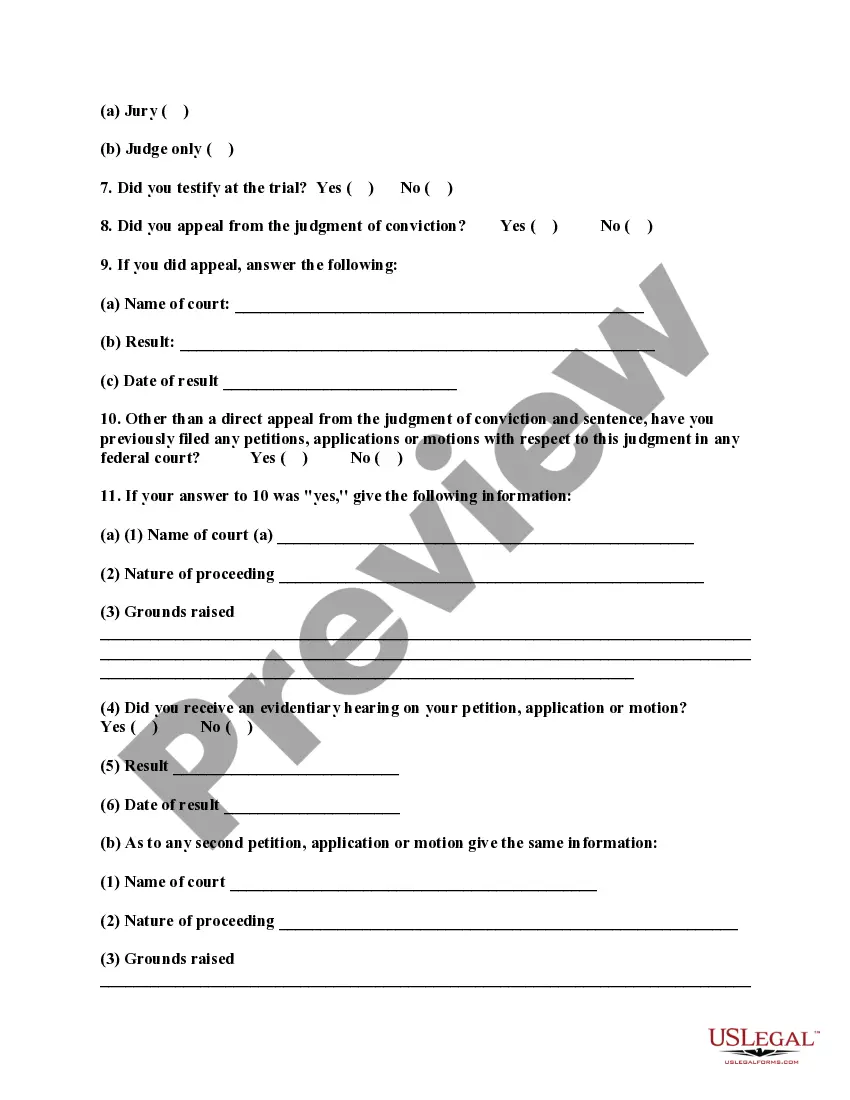
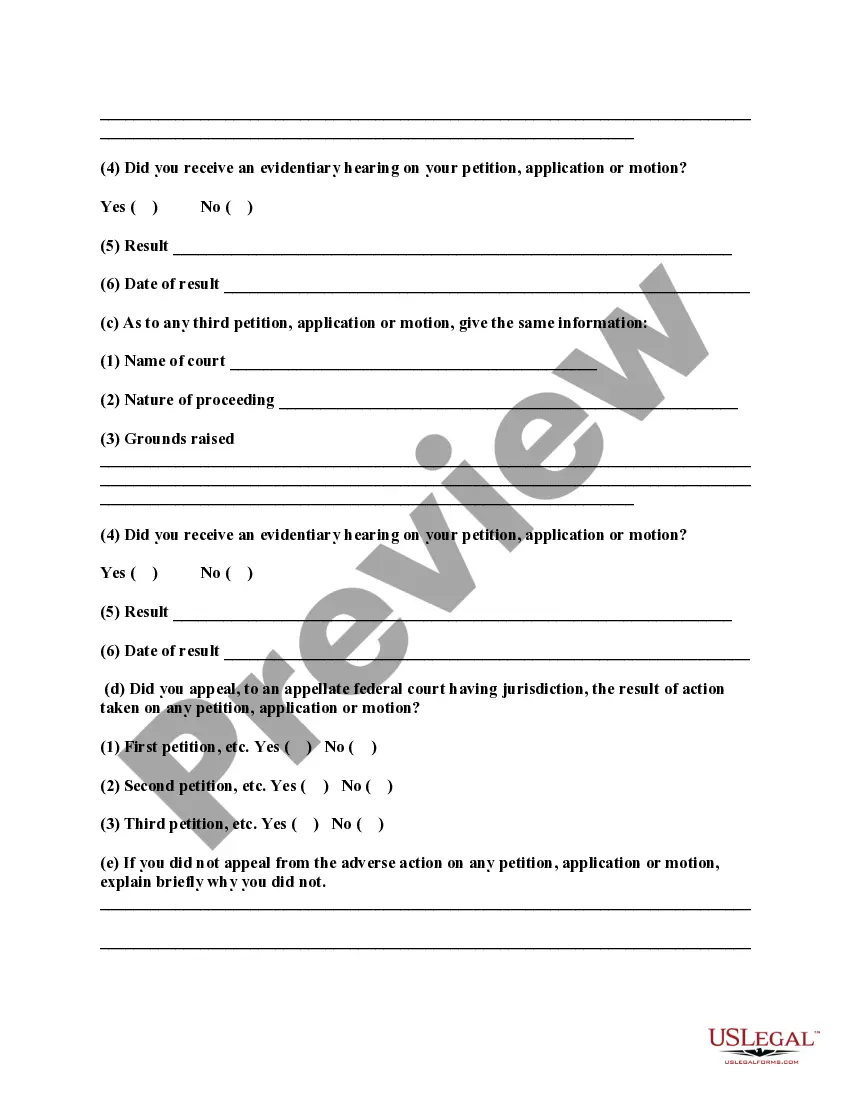
- Details of the conviction: Includes the nature of the offense, plea entered, and trial method.
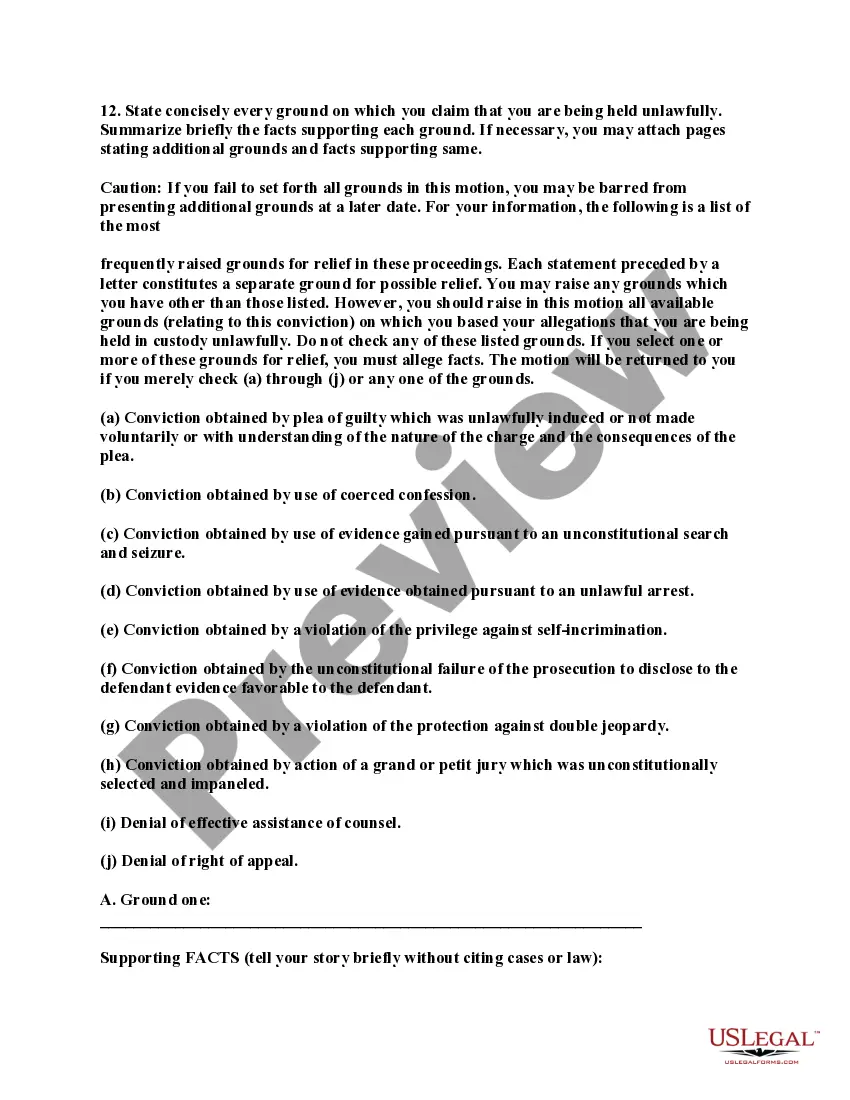
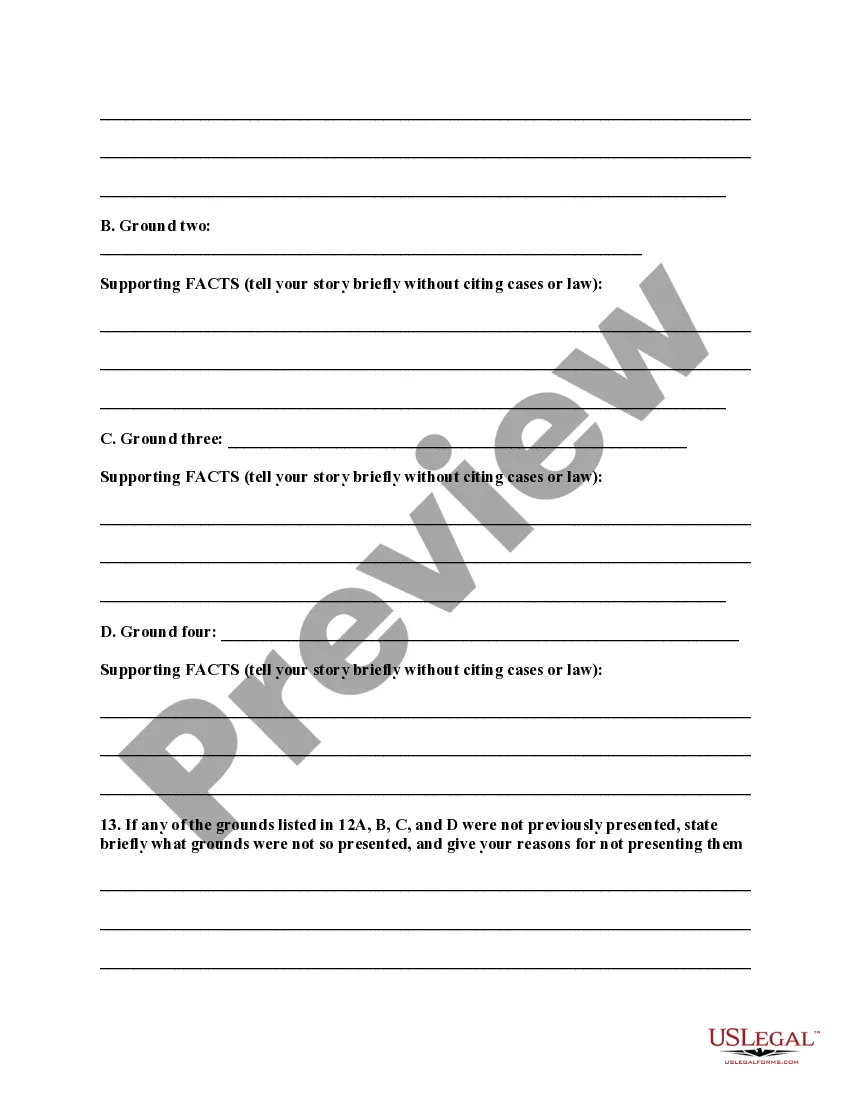
- Grounds for relief: A section where the individual outlines why the sentence is unlawful, supported by relevant facts.
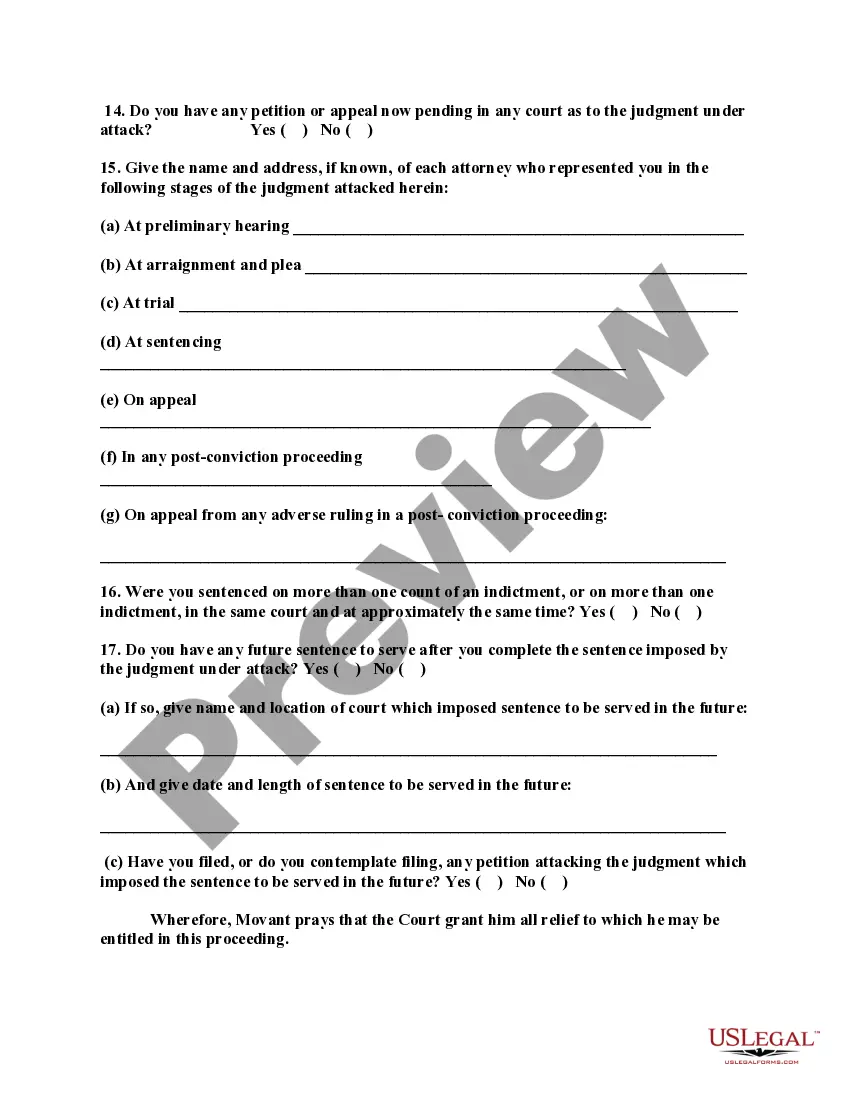
- Legal representation: Information on attorney representation at different stages of the trial.
- Date of judgment: Requires the exact date when the sentence was given.
- Filing instructions: Specifics on how to submit the motion to the court.
When to use this form
This form should be utilized when an individual believes that their sentence has been imposed in violation of their constitutional rights or without proper jurisdiction. Typical scenarios include instances where the person claims ineffective assistance of counsel, jury misconduct, or improper plea agreements. It is appropriate to use this form after all direct appeals have been exhausted.
Who needs this form
- Individuals currently incarcerated under a federal sentence.
- People who believe their conviction or sentence was based on legal errors.
- Those who have already filed appeals and seek further legal remedies.
- Anyone prepared to assert specific grounds challenging their sentence.
How to prepare this document
- Fill in your prisoner number and place of confinement at the top of the form.
- Provide details about the court that sentenced you, including the case number.
- Clearly outline each ground for relief, along with supporting facts, in the designated sections.
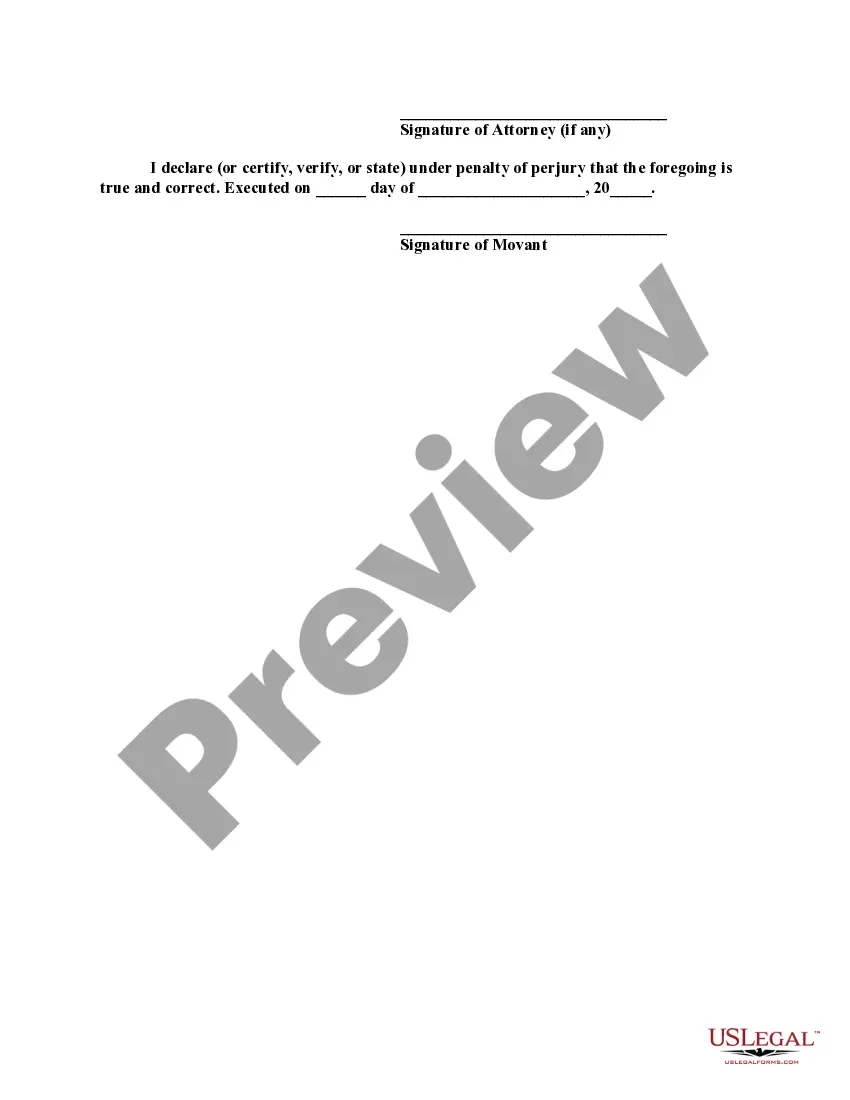
- Sign the motion under penalty of perjury, confirming the truth of the statements.
- Mail the completed form to the Clerk of the United States District Court in the appropriate district.
Is notarization required?
This form does not typically require notarization unless specified by local law. It is essential that the individual completing this motion signs it under penalty of perjury, affirming the truth of the contents.
Get your form ready online
Our built-in tools help you complete, sign, share, and store your documents in one place.
Make edits, fill in missing information, and update formatting in US Legal Forms—just like you would in MS Word.
Download a copy, print it, send it by email, or mail it via USPS—whatever works best for your next step.
Sign and collect signatures with our SignNow integration. Send to multiple recipients, set reminders, and more. Go Premium to unlock E-Sign.
If this form requires notarization, complete it online through a secure video call—no need to meet a notary in person or wait for an appointment.
We protect your documents and personal data by following strict security and privacy standards.

Make edits, fill in missing information, and update formatting in US Legal Forms—just like you would in MS Word.

Download a copy, print it, send it by email, or mail it via USPS—whatever works best for your next step.

Sign and collect signatures with our SignNow integration. Send to multiple recipients, set reminders, and more. Go Premium to unlock E-Sign.

If this form requires notarization, complete it online through a secure video call—no need to meet a notary in person or wait for an appointment.

We protect your documents and personal data by following strict security and privacy standards.
Common mistakes to avoid
- Failing to include all necessary details about the conviction and the grounds for relief.
- Not signing the motion, which could lead to dismissal.
- Using erasures or whiteout that may render the form illegible.
- Omitting the required copies when submitting the motion.
Benefits of completing this form online
- Convenience of filling out the form from anywhere, anytime.
- Editable formats allow for easy corrections and adjustments.
- Access to reliable templates drafted by licensed attorneys to ensure legal compliance.
Legal use & context
- This motion serves as a means to contest a federal court judgment based on constitutional claims.
- It provides a formal process for individuals to seek post-conviction relief.
- The motion must be filed in the district court where the original sentencing occurred.
Key takeaways
- The Motion to Vacate, Set Aside, or Correct Sentence is a vital legal tool for challenging wrongful incarceration.
- Completing the form accurately and thoroughly is crucial for it to be accepted by the court.
- This form provides a pathway for individuals seeking to assert their rights after conviction.
Looking for another form?








Form popularity
FAQ
Fill out a Notice of Motion to Vacate Judgment and Declaration (Small Claims) (Form SC-135 ). File it with the small claims court clerk. Pay the filing fee. If you cannot afford the fee, ask for a fee waiver. The clerk will give you a date for your hearing.
From Wikipedia, the free encyclopedia. A vacated judgment makes a previous legal judgment legally void. A vacated judgment is usually the result of the judgment of an appellate court, which overturns, reverses, or sets aside the judgment of a lower court. An appellate court may also vacate its own decisions.
Fill out a Notice of Motion to Vacate Judgment and Declaration (Small Claims) (Form SC-135 ). File it with the small claims court clerk. Pay the filing fee. If you cannot afford the fee, ask for a fee waiver. The clerk will give you a date for your hearing.
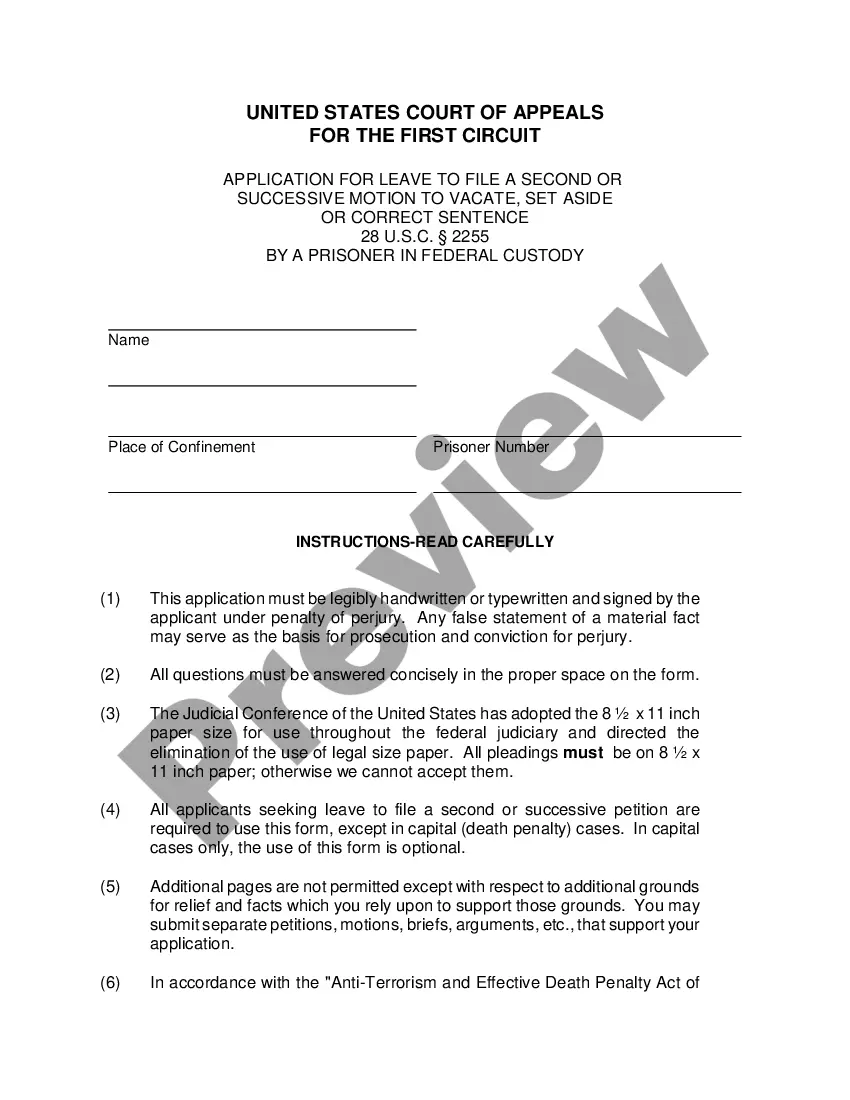
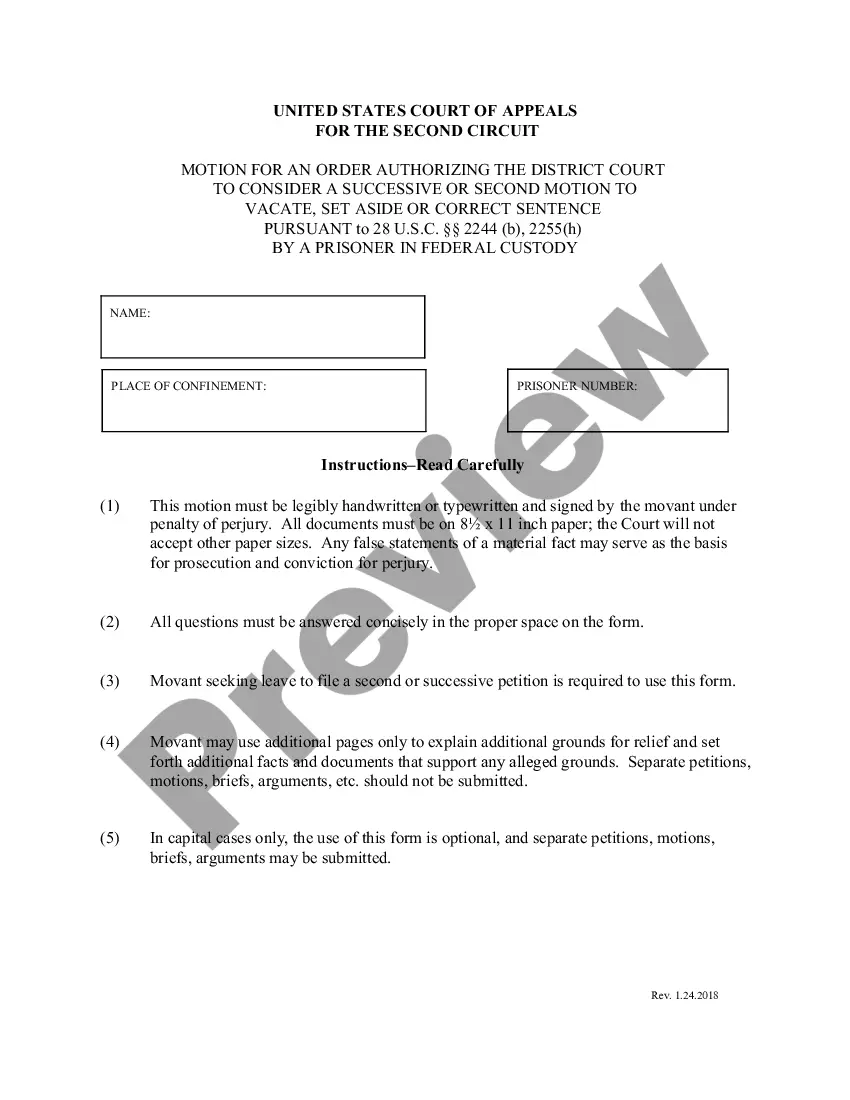
As to federal convictions, we can file in federal court a motion to vacate judgment pursuant to 28 USC sec 2255, motions for permission to file a second or subsequent 2255 motion, and periods for pardon, clemency, or commutation.
From Wikipedia, the free encyclopedia. A vacated judgment makes a previous legal judgment legally void. A vacated judgment is usually the result of the judgment of an appellate court, which overturns, reverses, or sets aside the judgment of a lower court. An appellate court may also vacate its own decisions.
In order to vacate a judgment in California, You must file a motion with the court asking the judge to vacate or set aside the judgment. Among other things, you must tell the judge why you did not respond to the lawsuit (this can be done by written declaration).
A Motion to Vacate is a request to the court to withdraw a previous order or judgment it entered.An appeal is a request to a higher court to change the decision made by a lower court. A Motion to Vacate asks the same court to withdraw its decision. A Motion to Vacate is rarely granted.
A Motion to Vacate is a request to the court to withdraw a previous order or judgment it entered.A Motion to Vacate asks the same court to withdraw its decision. A Motion to Vacate is rarely granted. Before filing such a motion, make sure that you have solid legal grounds for the motion.
Yes. Judges can vacate other judges' orders. It happens all the time.