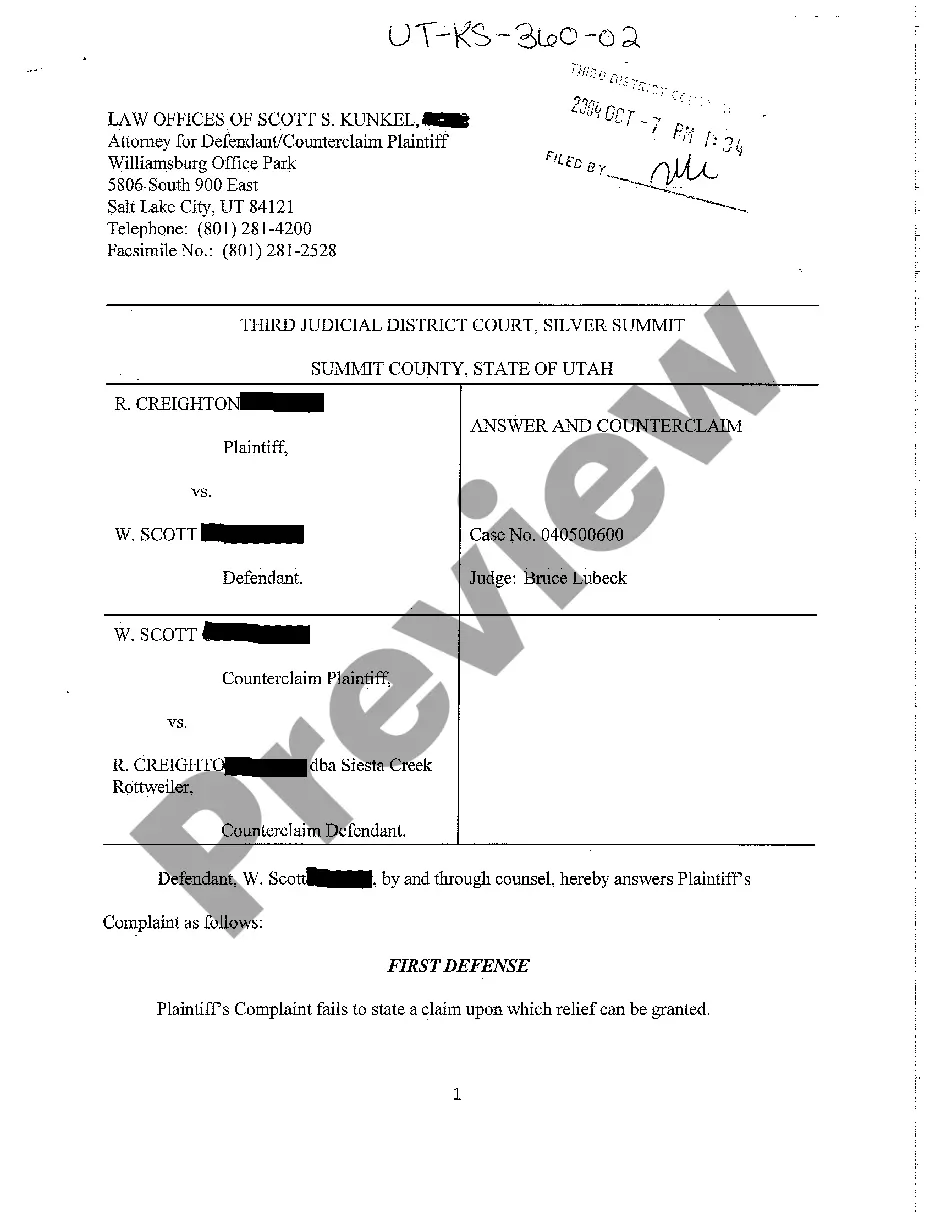
Letter to Creditor, Collection Agencies, Credit Issuer or Utility Company Notifying Them of Death
What this document covers
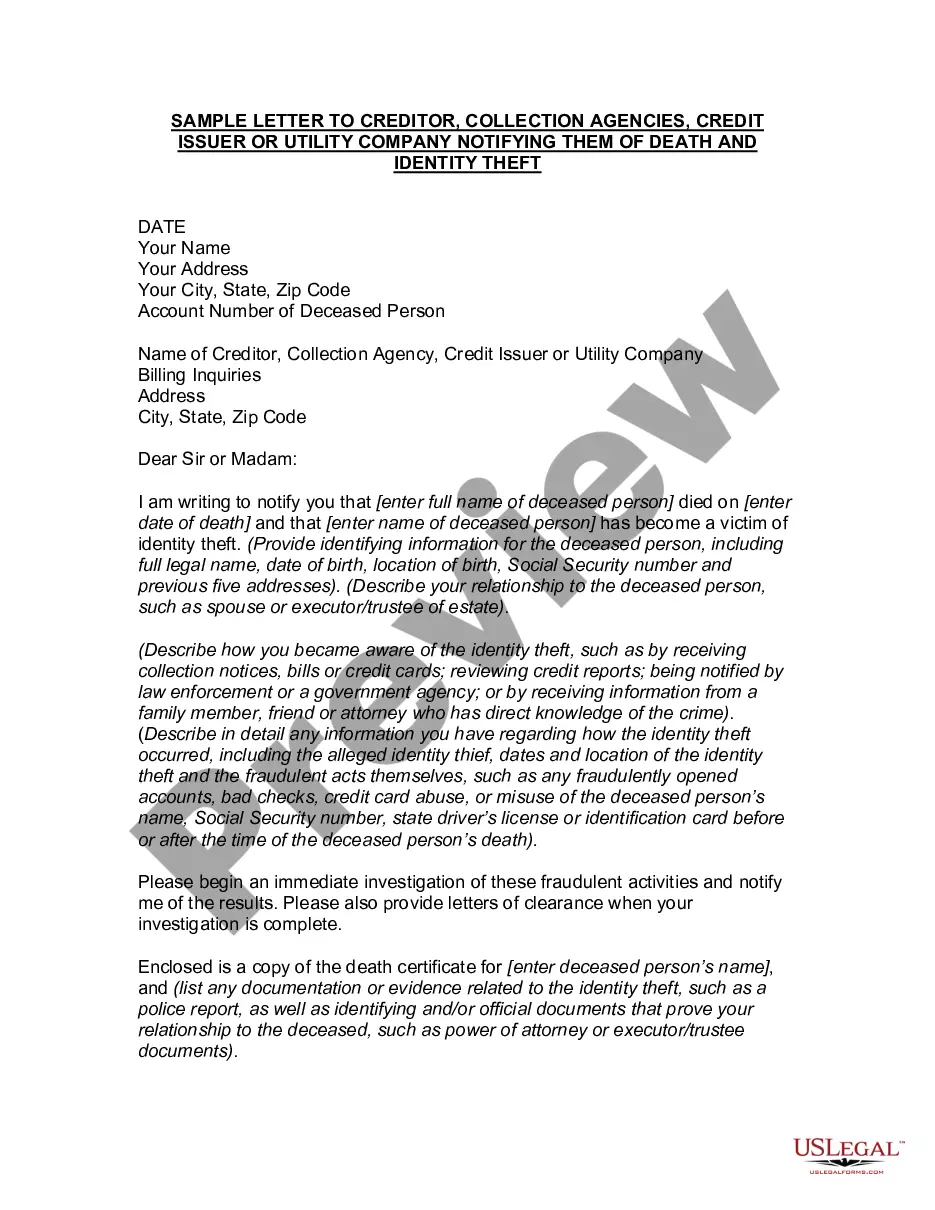
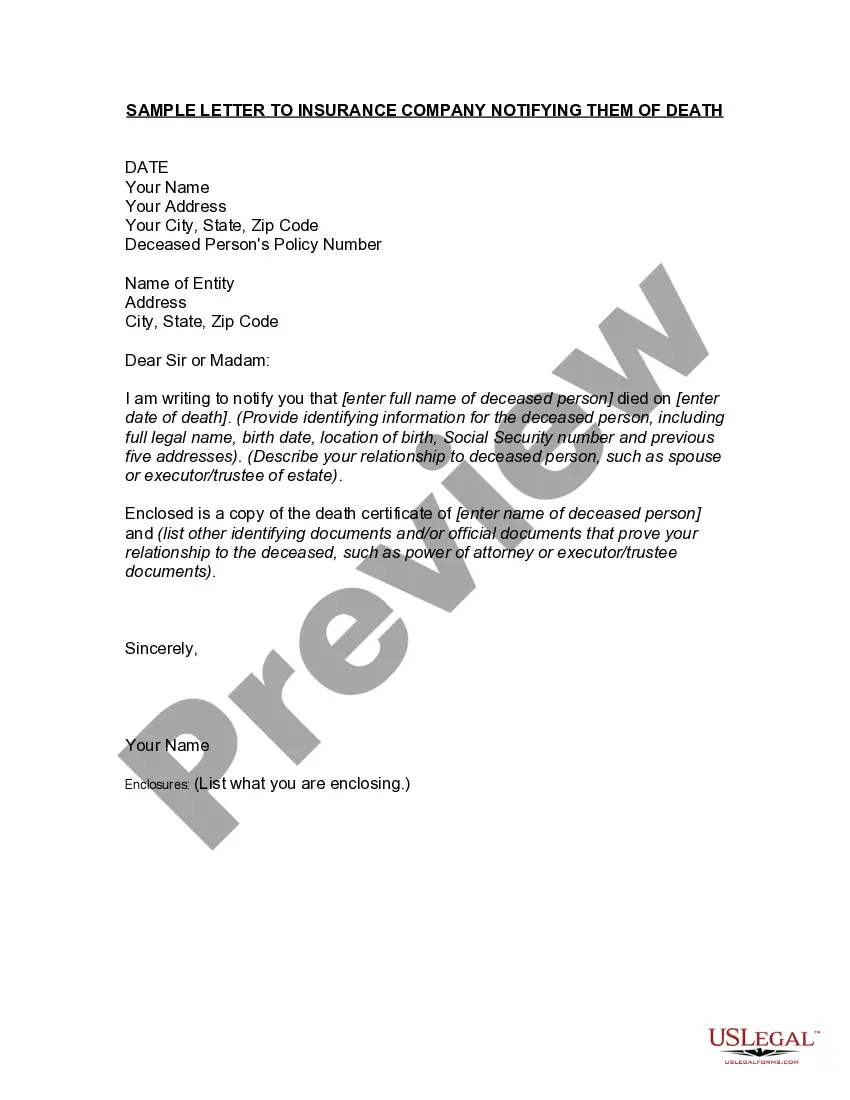
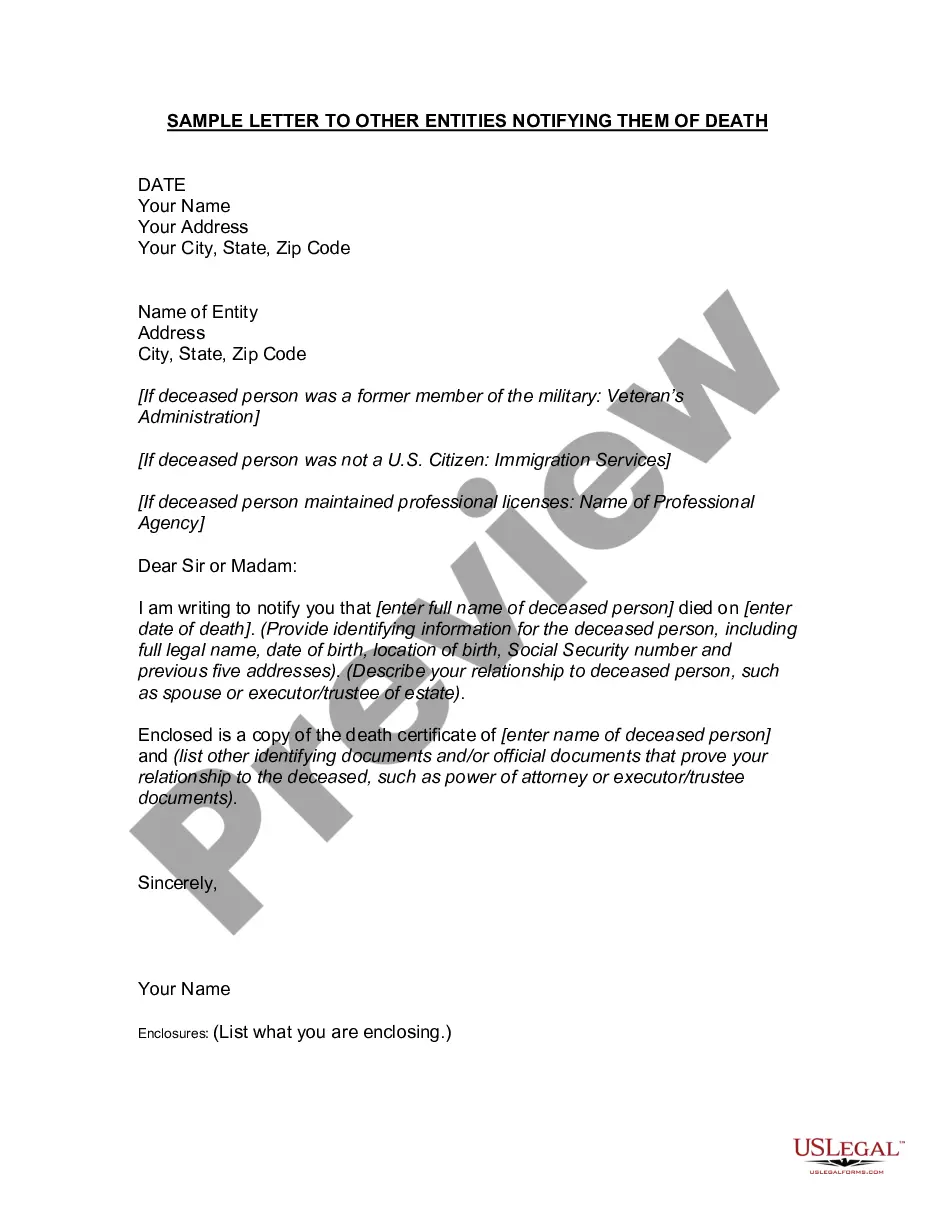
The Letter to Creditor, Collection Agencies, Credit Issuer or Utility Company Notifying Them of Death is a formal document used to inform creditors and agencies about the death of an individual. It also addresses the issue of identity theft involving the deceased. This letter prompts the relevant parties to investigate any fraudulent activities and provide letters of clearance once the investigation concludes.
What’s included in this form
- Date of the letter
- Your contact information
- Account number of the deceased individual
- Name and address of the creditor or agency
- Details of the deceased person, including identifying information
- Detailed account of the identity theft
- Documentation included, such as a death certificate

When to use this form
This form should be used when a loved one has passed away and you discover that their identity is being misused. For instance, if you receive unexpected bills, collection notices, or find unauthorized accounts in their name, this letter notifies creditors of the situation and initiates the necessary investigation into the identity theft.
Who needs this form
- Executors or administrators of the deceased's estate
- Spouses or immediate family members of the deceased
- Trustees managing the estate of the deceased
- Anyone who discovers their loved oneâs identity is being misused after their death
Steps to complete this form
- Fill in the date when the letter is created.
- Provide your full name and address.
- Specify the account number associated with the deceased.
- Clearly state the full name and details of the deceased.
- Describe the identity theft situation in detail.
- Attach relevant documentation, including the death certificate and any reports of identity theft.
Is notarization required?
This form does not typically require notarization unless specified by local law. However, it's recommended to check with local regulations to ensure compliance.
Get your form ready online
Our built-in tools help you complete, sign, share, and store your documents in one place.
Make edits, fill in missing information, and update formatting in US Legal Forms—just like you would in MS Word.
Download a copy, print it, send it by email, or mail it via USPS—whatever works best for your next step.
Sign and collect signatures with our SignNow integration. Send to multiple recipients, set reminders, and more. Go Premium to unlock E-Sign.
If this form requires notarization, complete it online through a secure video call—no need to meet a notary in person or wait for an appointment.
We protect your documents and personal data by following strict security and privacy standards.

Make edits, fill in missing information, and update formatting in US Legal Forms—just like you would in MS Word.

Download a copy, print it, send it by email, or mail it via USPS—whatever works best for your next step.

Sign and collect signatures with our SignNow integration. Send to multiple recipients, set reminders, and more. Go Premium to unlock E-Sign.

If this form requires notarization, complete it online through a secure video call—no need to meet a notary in person or wait for an appointment.

We protect your documents and personal data by following strict security and privacy standards.
Typical mistakes to avoid
- Failing to include all relevant details about the deceased.
- Not providing adequate evidence of identity theft.
- Neglecting to keep copies of the letter and all attachments.
Benefits of completing this form online
- Immediate access to professionally drafted templates.
- Ease of editing and customization to fit your specific needs.
- Convenient downloading options for quick and secure submission to relevant parties.
Main things to remember
- This form is essential for managing affairs following the death of an individual, particularly concerning identity theft.
- Providing detailed and accurate information is crucial for effective communication with creditors and agencies.
- Using this online form streamlines the process and helps protect the deceasedâs identity from further misuse.
Looking for another form?









Form popularity
FAQ
Timespan for Creditors to Make Claim For unsecured debts, the time limit ranges from 3-6 months in most states. State laws require executors to post notice of the death, either in a newspaper or directly to known creditors to give them a chance to file a claim. No claims are accepted after the time frame has expired.
A death notice flags a person's credit reports as "deceased - do not issue credit." If someone attempts to use the deceased person's information to apply for credit, the notice should be displayed when the deceased person's credit report is accessed, informing the creditor the person is deceased.
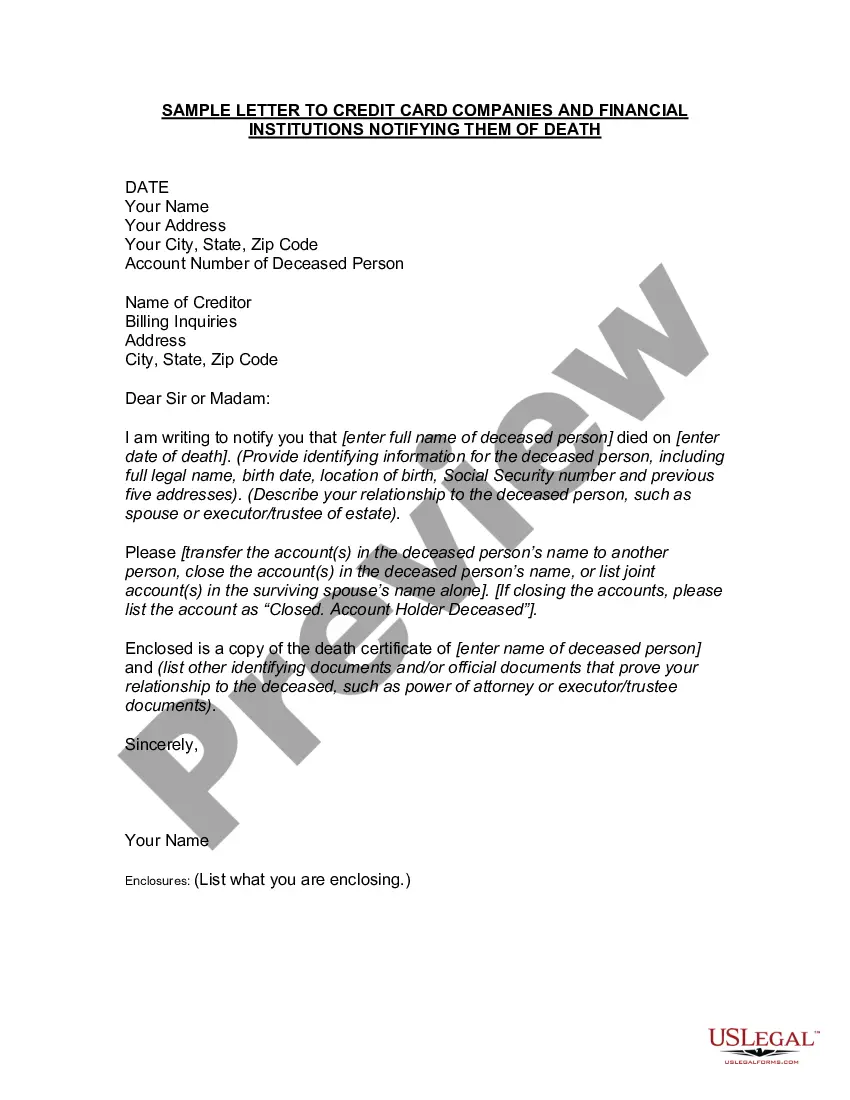
How to Notify Creditors of Death. Once your debts have been established, your surviving family members or the executor of your estate will need to notify your creditors of your death. They can do this by sending a copy of your death certificate to each creditor.
Typically, a relative of the deceased person is expected to notify any lenders including credit card companies when that person dies.Unlike some debts, such as a mortgage or a car loan, most credit card debt isn't secured. In these cases, the card issuer may have to write off that debt as a loss.
Never Give Them Your Personal Information. A call from a debt collection agency will include a series of questions. Never Admit That The Debt Is Yours. Even if the debt is yours, don't admit that to the debt collector. Never Provide Bank Account Information.
Agencies by telephone to report the death: Experian (888-397-3742), Equifax (800-685-1111) and TransUnion (800-888-4213). Request the credit report is flagged as Deceased. Do Not Issue Credit. Follow up with a written correspondence to each agency sent via certified mail.
Once a creditor receives confirmation from your family members that you've died--usually via a death certificate--the creditor will notify the credit bureaus. The credit bureaus will then note that you are deceased. Once this occurs, you can't pull your credit and neither can lenders. All credit activity stops.
Usually, the deceased's estate pays the credit card debt from the estate's assets. Typically, children do not inherit the credit card debt unless they are a joint holder on the account. Surviving spouses are responsible for their deceased spouse's debt if he or she is a joint borrower.
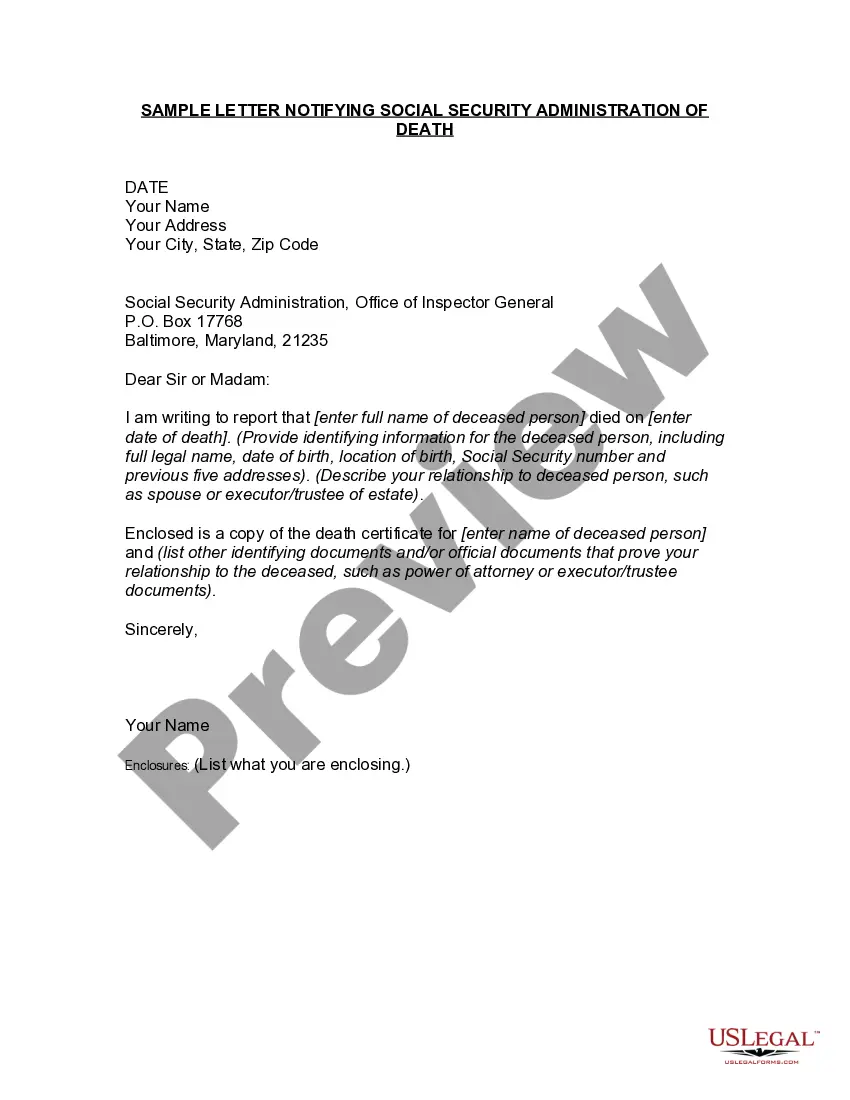
However, once the three nationwide credit bureaus Equifax, Experian and TransUnion are notified someone has died, their credit reports are sealed and a death notice is placed on them. That notification can happen one of two ways from the executor of the person's estate or from the Social Security Administration.