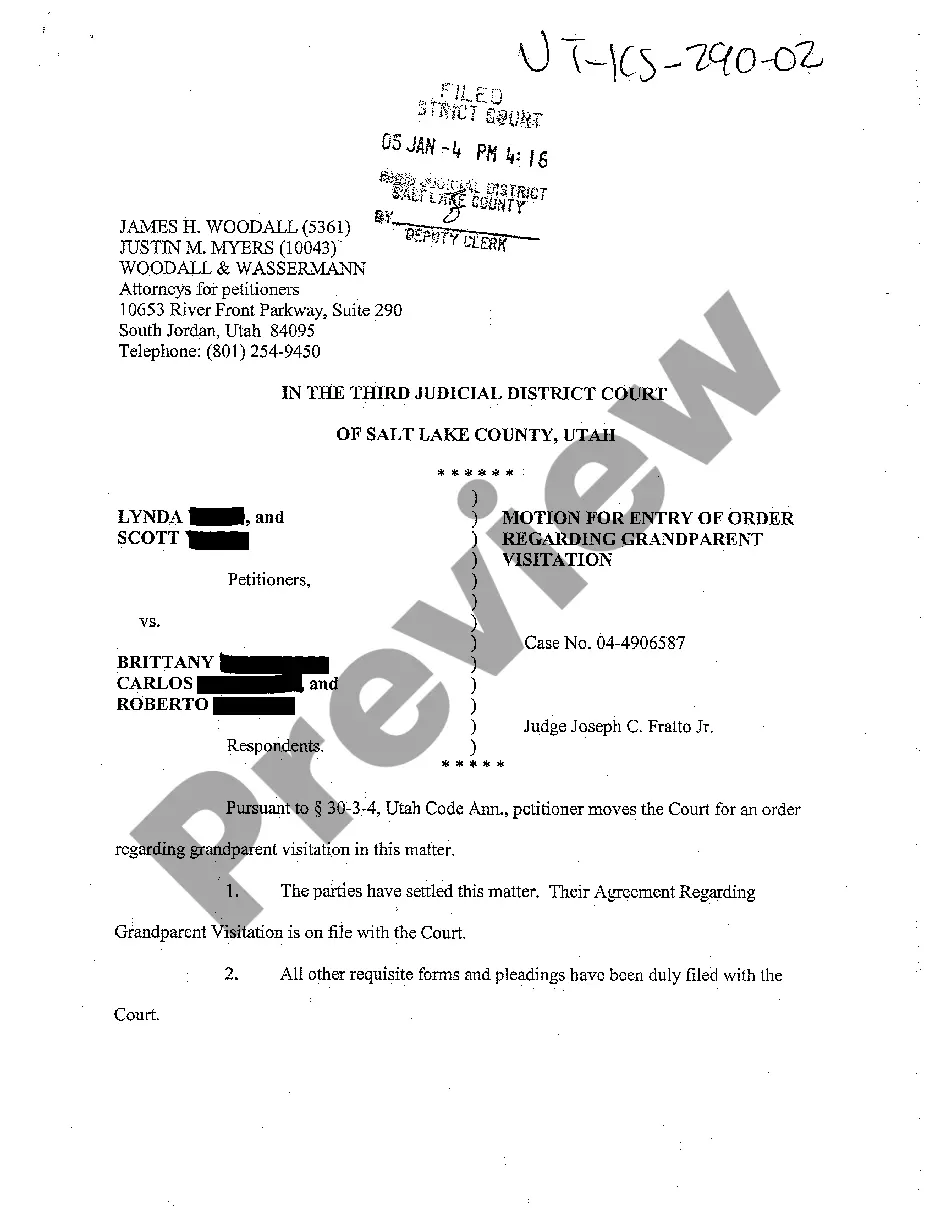
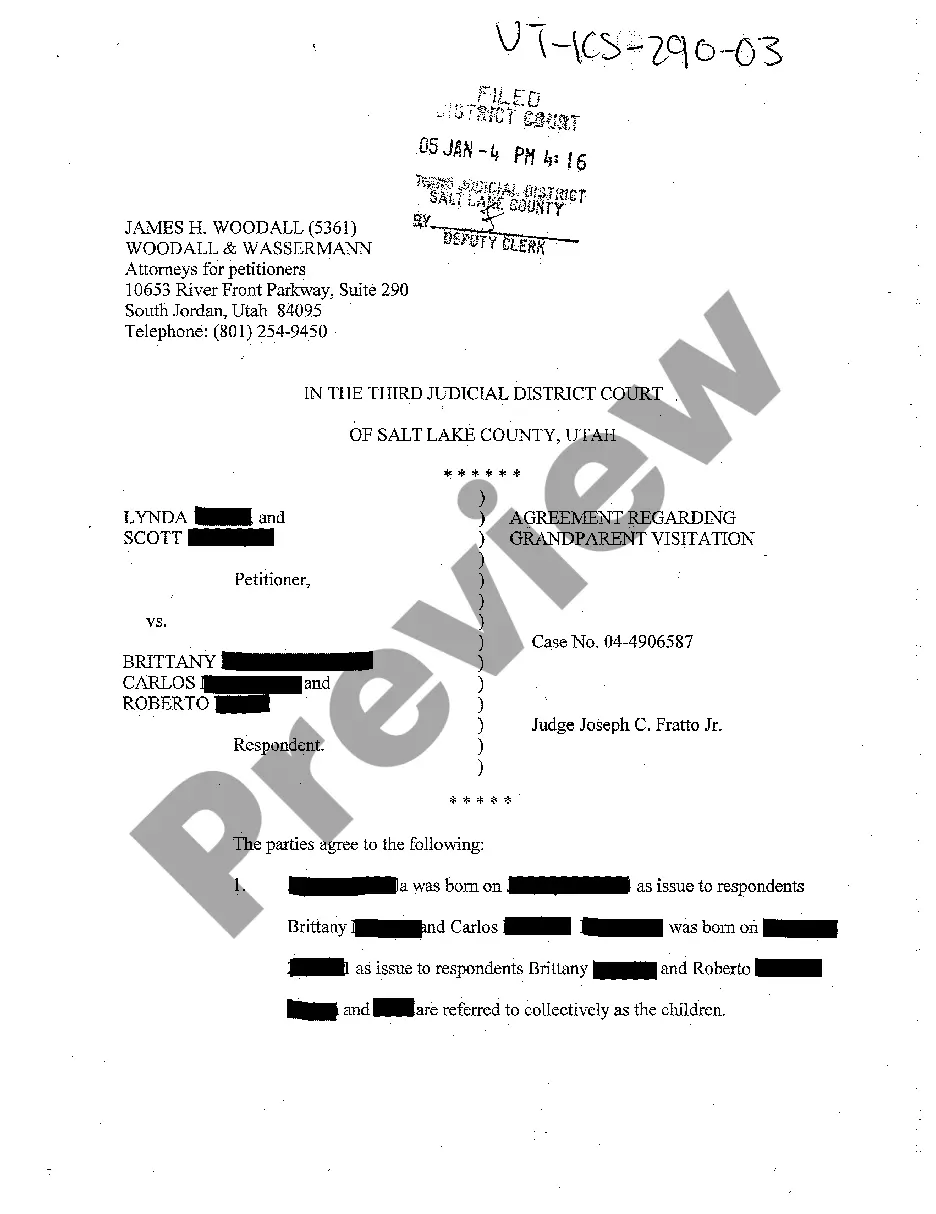
Agreement Between Publisher and Author of a Book to Publish a Book
About this form
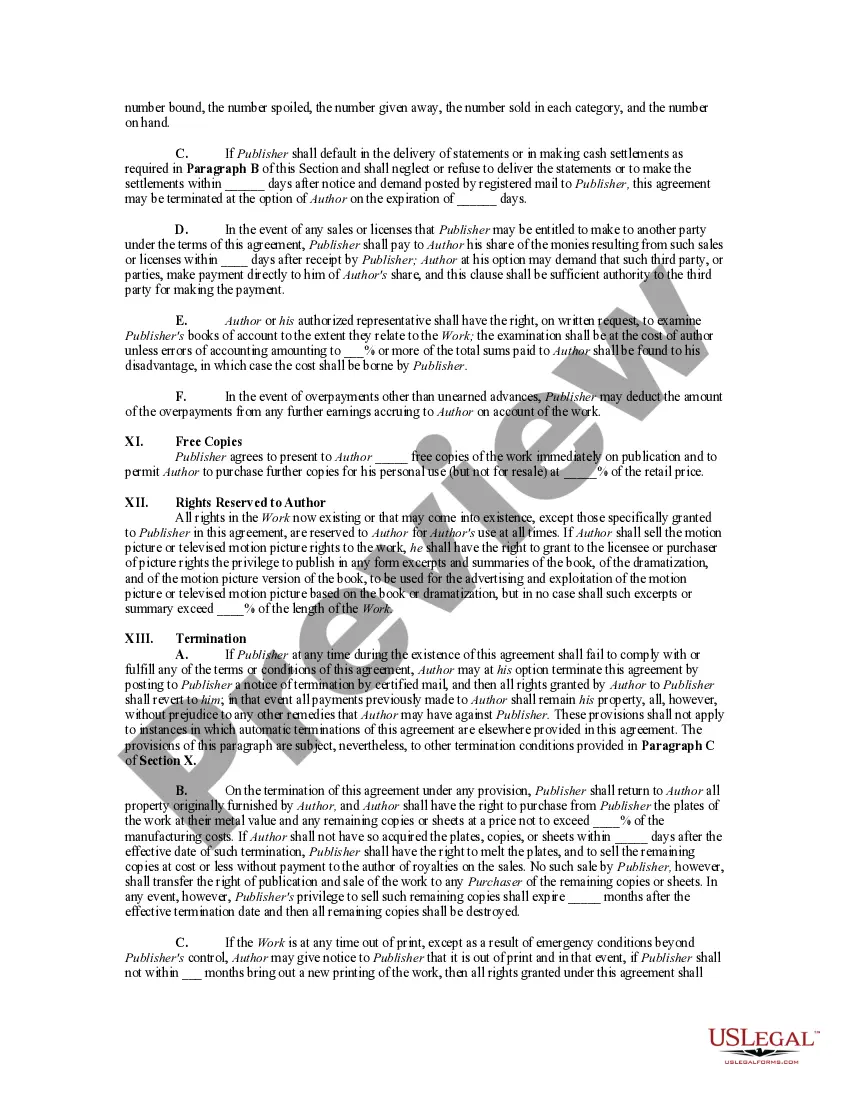
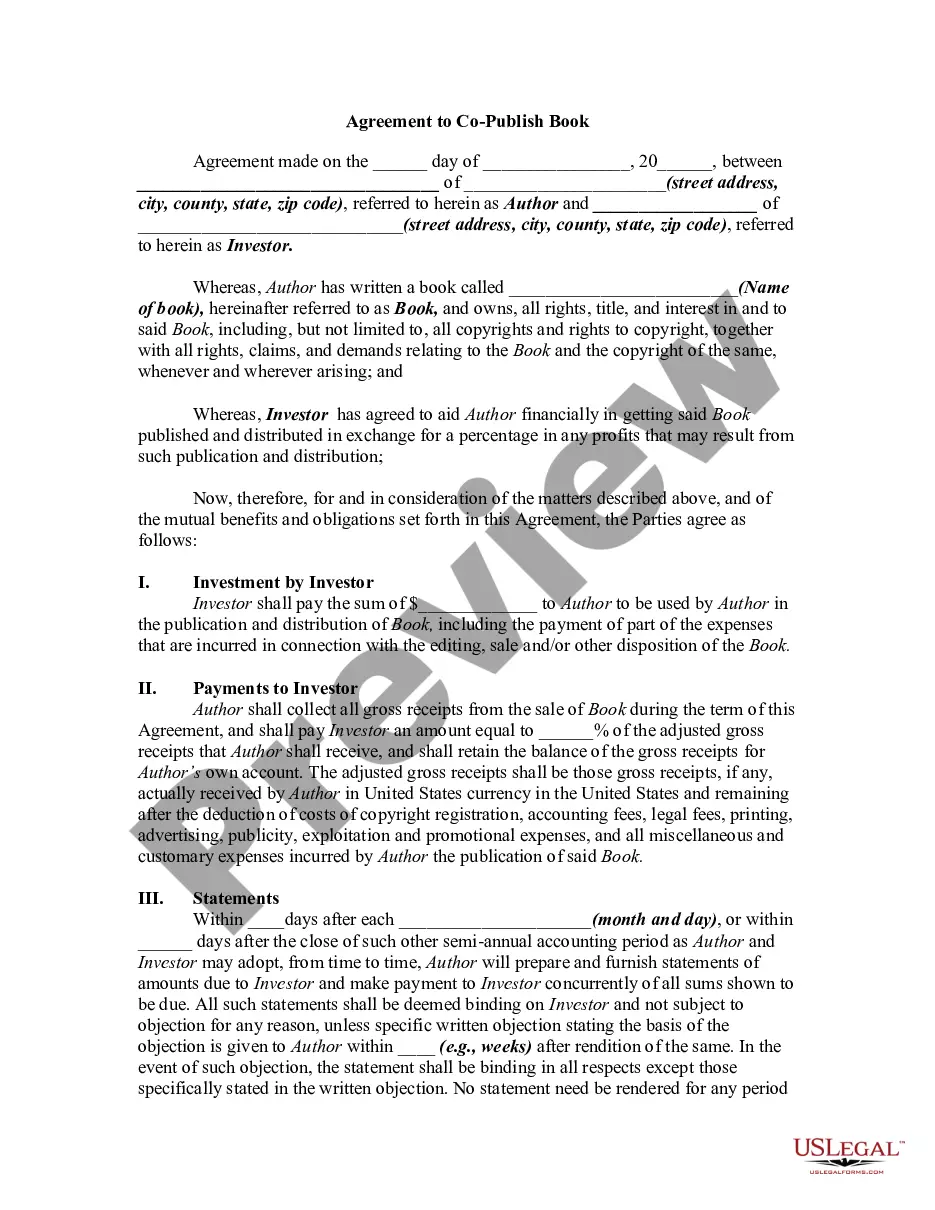
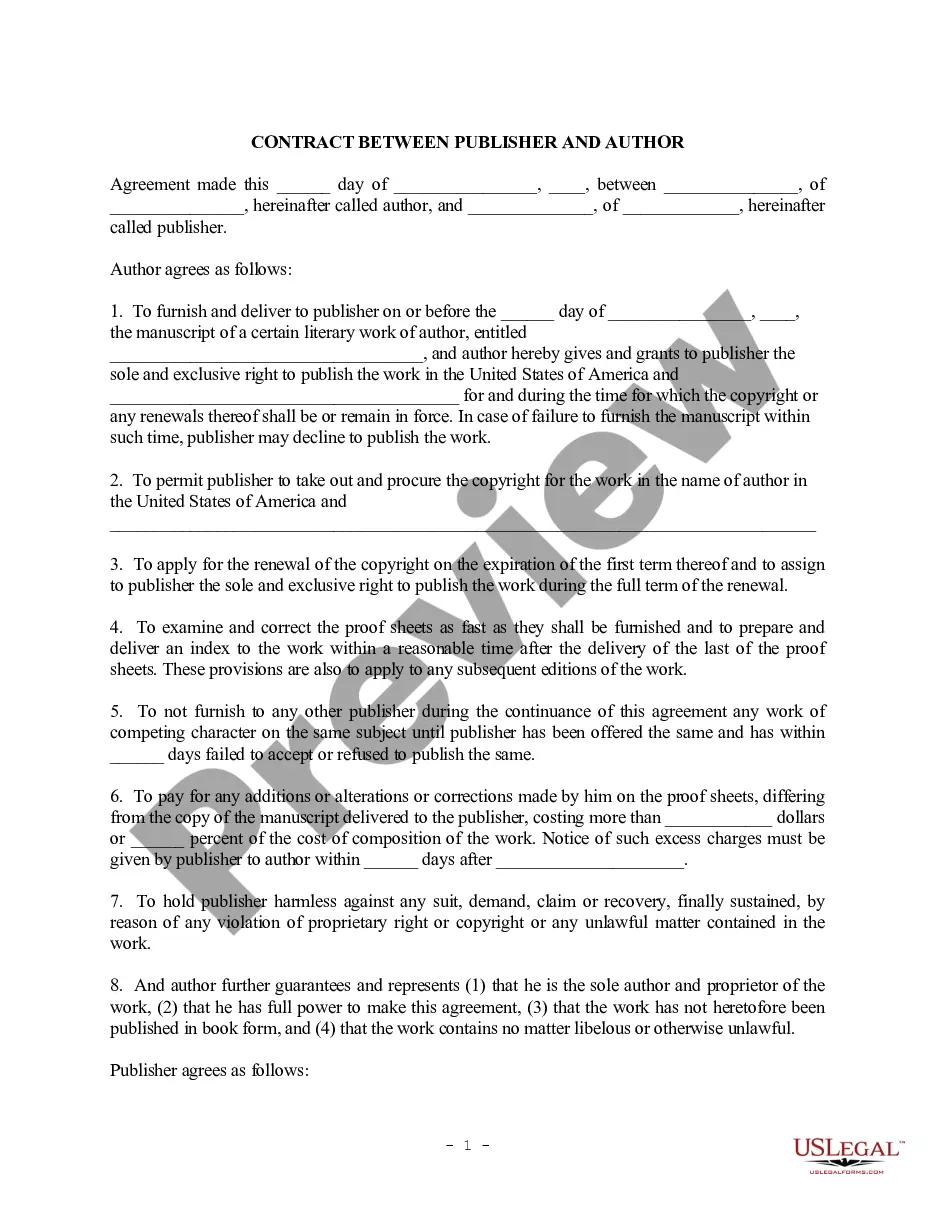
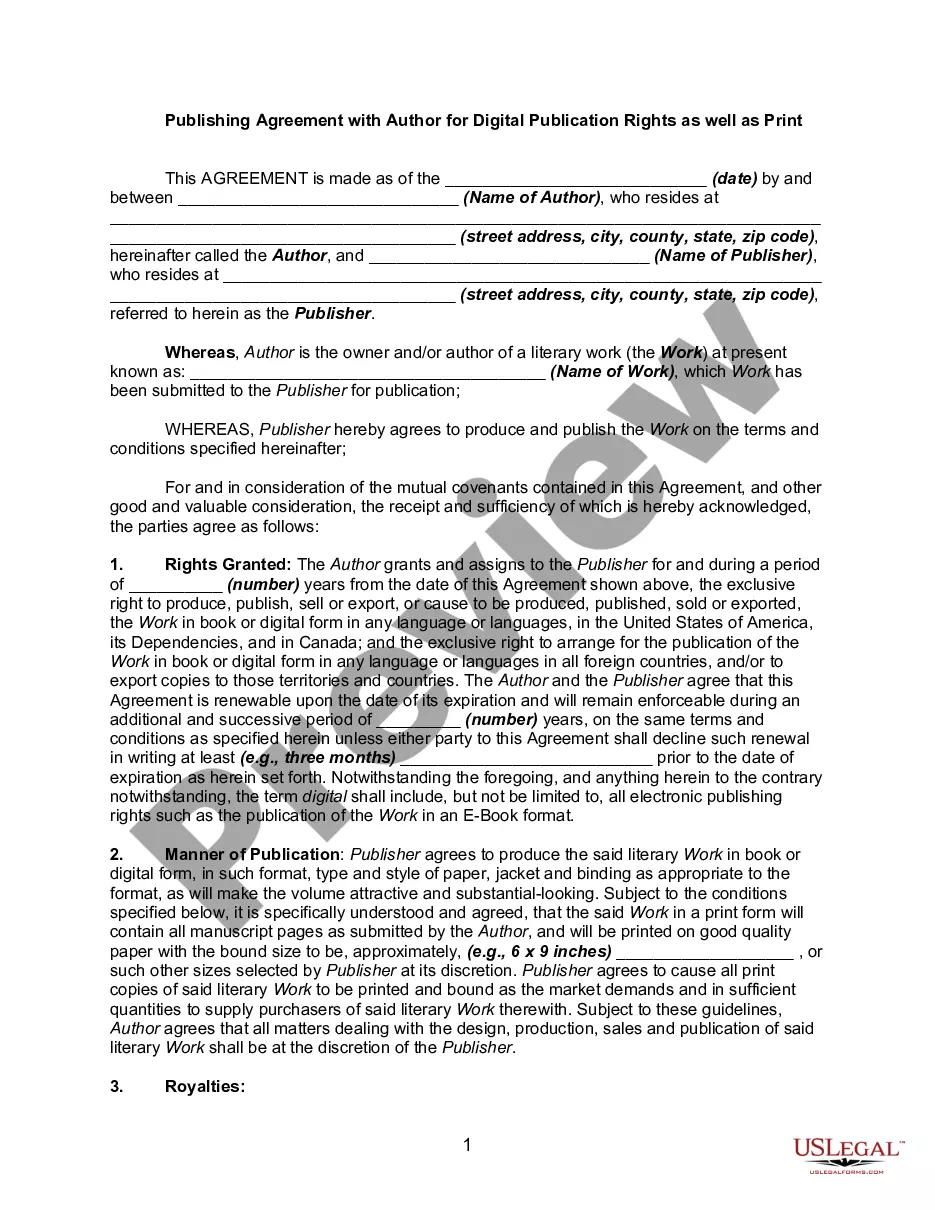
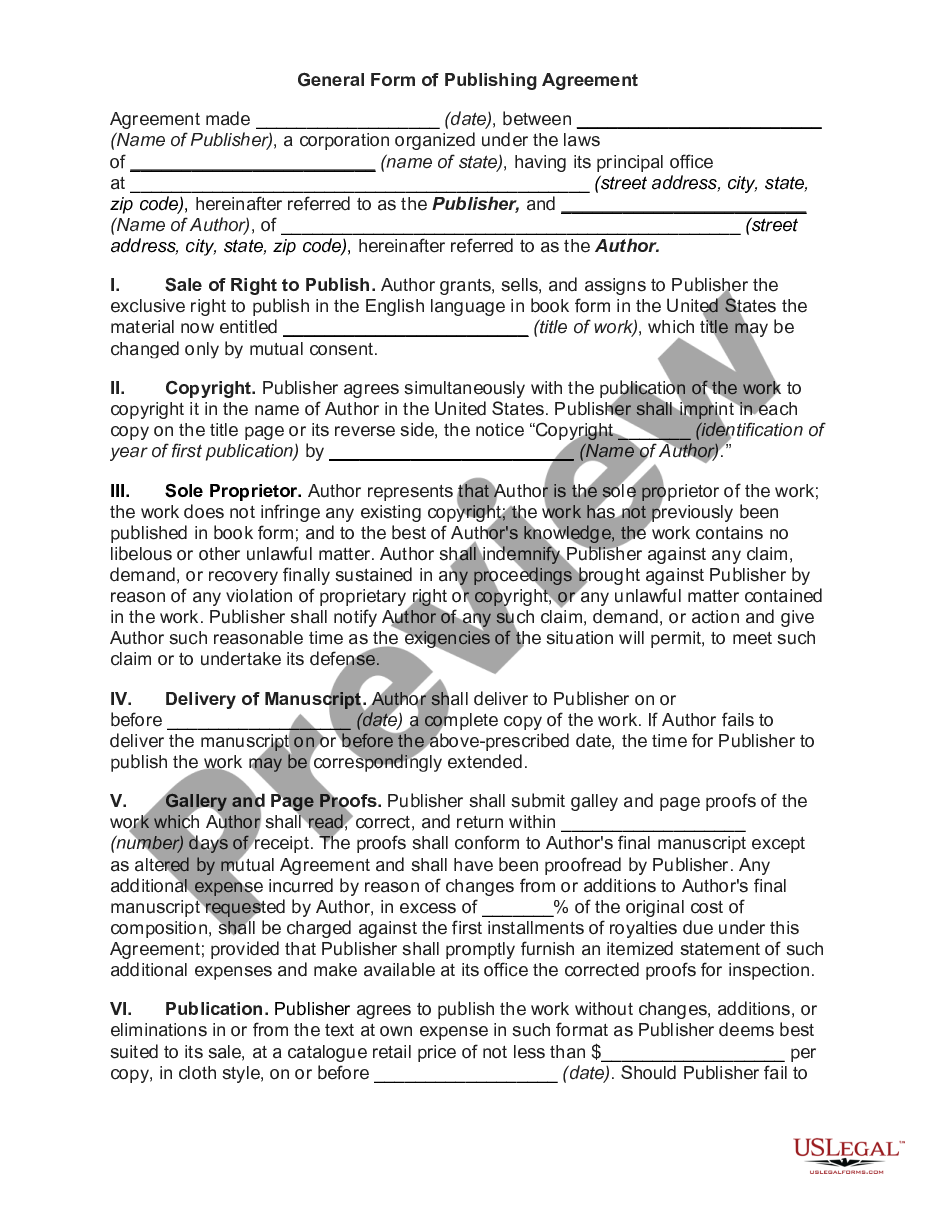
This form is a standard Agreement Between Publisher and Author of a Book to Publish a Book. It outlines the rights and responsibilities of both parties regarding the publication of a literary work. This agreement differs from other publishing forms by emphasizing the relationship between the publisher and the author, specifying copyright ownership, royalties, and conditions for publication, making it essential for authors seeking to publish their books professionally.
Key components of this form
- Sale of right to publish: Grants the publisher exclusive rights for the work's publication.
- Copyright: Ensures that the publisher registers the copyright in the authorâs name.
- Delivery of manuscript: Specifies the deadline for manuscript submission.
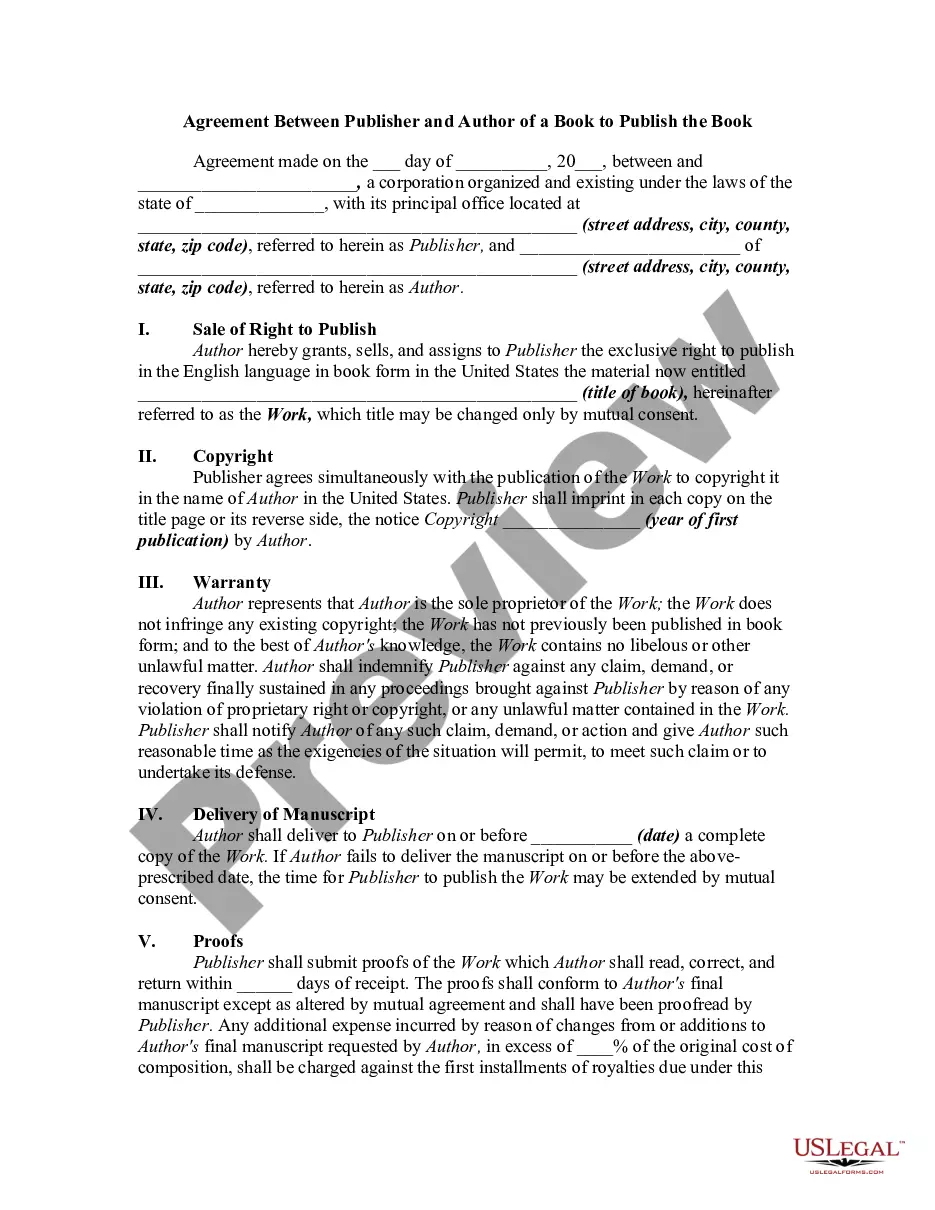
- Royalties: Outlines the advance and royalty structure for book sales.
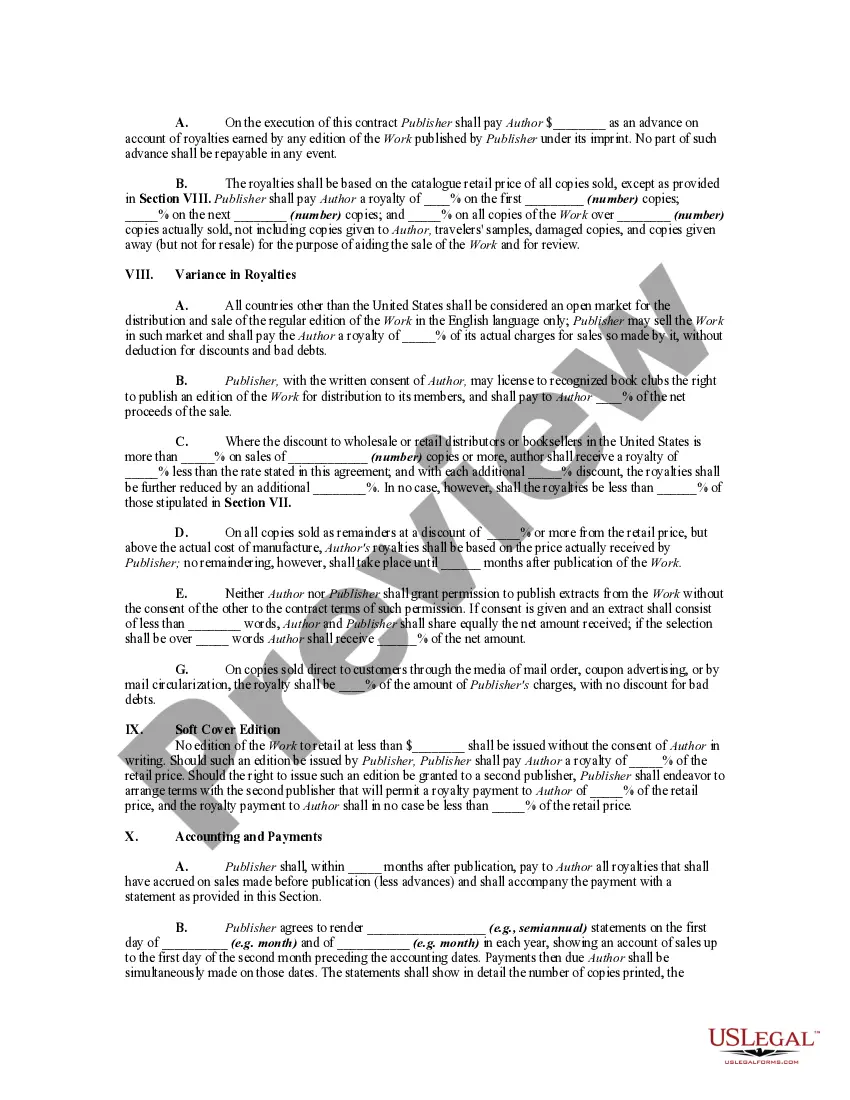
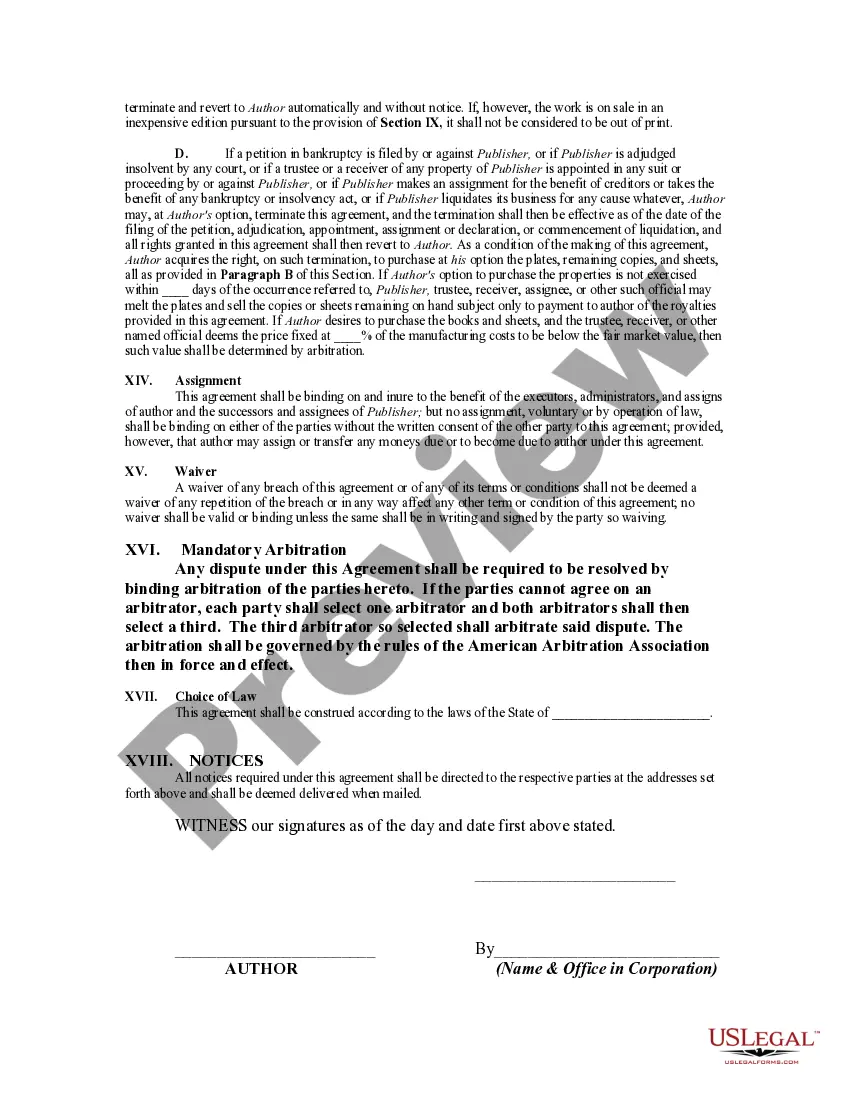
- Termination: Details the conditions under which the agreement can be terminated by either party.
- Assignment: Defines the binding nature of the agreement concerning successors and assigns.


When to use this document
This form should be used when an author is ready to publish a book and needs a clear agreement with a publisher. It is necessary to define the terms of publication, including rights, copyright, royalties, and responsibilities, which will help prevent disputes in the future. Authors looking to ensure fair compensation and legal protection of their work should utilize this agreement before the publication process commences.
Who can use this document
- Authors who wish to publish their books through a traditional publisher.
- Publishers seeking to formalize their publishing agreements with authors.
- Literary agents representing authors in publishing deals.
- Self-publishing authors who want to establish a contractual relationship with editors or publishing platforms.
Steps to complete this form
- Identify the parties: Fill in the names and addresses of the publisher and the author.
- Enter the book title: Specify the title of the work to be published.
- Set dates: Include the date of the agreement and deadlines for manuscript submission and publication.
- Define financial terms: Determine the advance amount and the royalty percentage for sales.
- Review clauses: Ensure all clauses regarding rights, responsibilities, and termination are understood and agreed upon.
Is notarization required?
This form does not typically require notarization unless specified by local law. However, it is advisable to have copies of the signed agreement notarized to enhance its validity and enforceability in case of future disputes.
Get your form ready online
Our built-in tools help you complete, sign, share, and store your documents in one place.
Make edits, fill in missing information, and update formatting in US Legal Forms—just like you would in MS Word.
Download a copy, print it, send it by email, or mail it via USPS—whatever works best for your next step.
Sign and collect signatures with our SignNow integration. Send to multiple recipients, set reminders, and more. Go Premium to unlock E-Sign.
If this form requires notarization, complete it online through a secure video call—no need to meet a notary in person or wait for an appointment.
We protect your documents and personal data by following strict security and privacy standards.

Make edits, fill in missing information, and update formatting in US Legal Forms—just like you would in MS Word.

Download a copy, print it, send it by email, or mail it via USPS—whatever works best for your next step.

Sign and collect signatures with our SignNow integration. Send to multiple recipients, set reminders, and more. Go Premium to unlock E-Sign.

If this form requires notarization, complete it online through a secure video call—no need to meet a notary in person or wait for an appointment.

We protect your documents and personal data by following strict security and privacy standards.
Common mistakes
- Failing to specify important deadlines for manuscript delivery and publication.
- Not clearly defining royalty structures or pricing, leading to potential disputes.
- Neglecting to include copyright registration details, which can impact ownership.
Why use this form online
- Instant access to a professionally drafted legal document that saves time and effort.
- Editable format allowing authors to customize sections as needed for their specific agreement.
- Secure storage and easy retrieval of the document, ensuring it is always available for reference.
- Once signed, this agreement is legally binding, ensuring both parties adhere to the terms set forth.
- In case of a dispute, the agreement includes clauses for mediation and arbitration under specified conditions.
- Intellectual property rights of the Author are protected, provided the terms are clearly defined and agreed upon.
Quick recap
- Clear definitions of rights and obligations protect both the Author and Publisher.
- A well-drafted agreement is crucial for successful publication and financial arrangements.
- Authors retain certain rights, allowing them to explore other publishing opportunities.
Looking for another form?



Form popularity
FAQ
Generally, copyright in an article is owned by the author or the author's institution prior to publication. In the subscription journal publishing model the author assigns copyright to the publisher at the time of publication when they sign the publisher's agreement.
Head over to the copyright.gov portal. Click on Literary Works, then Register A Literary Work. Take a minute to create an account with the U.S. Copyright Office if you didn't do so already. Go to Copyright Registration on the left side of your screen and click on Register A New Claim.
It's perfectly acceptable to send a query simultaneously to multiple publishers. If more than one press responds with interest, the author should study the presses and rank them. The full book proposal should be sent only to one press. If it passes on the project, then the proposal may be sent to another.
Typically it is the author but may even be the publisher. If the copyright holder is deceased, it may be his/her heirs or estate. There are several resources online to search for copyright holders: The U.S. Copyright Office (both free and fee-based)
Some of the most essential clauses of a standard (boilerplate) book publishing contract are: Grant of Rights, Subsidiary Rights, Delivery and Acceptance, Publication, Copyright, Advance (if there is any), Royalties, and Out of Print.
Usually, the author of the creative work is the owner of the copyright. But in the publishing industry, the owner of the copyright may be the publishing company due to an agreement between the author and the publisher. Some of the big names in book publishing are Random House, DoubleDay, and Penguin.
A book can also be published by more than one publisher at the same time, generally for different countries.
Should I copyright my book before I submit it to editors and agents? There is no need to copyright your book (with the U.S. Copyright Office) before submitting it.The publisher merely handles the paperwork on behalf of the author, and the copyright is the author's property.
Author assigns copyright to the publisher Assignment of copyright is generally permanent unless the agreement indicates otherwise. If the author assigns copyright to the publisher; the publisher can also, at their discretion, enter into agreements with other parties to use the work.