Letter to Creditors Notifying Them of Identity Theft for New Accounts
What is this form?
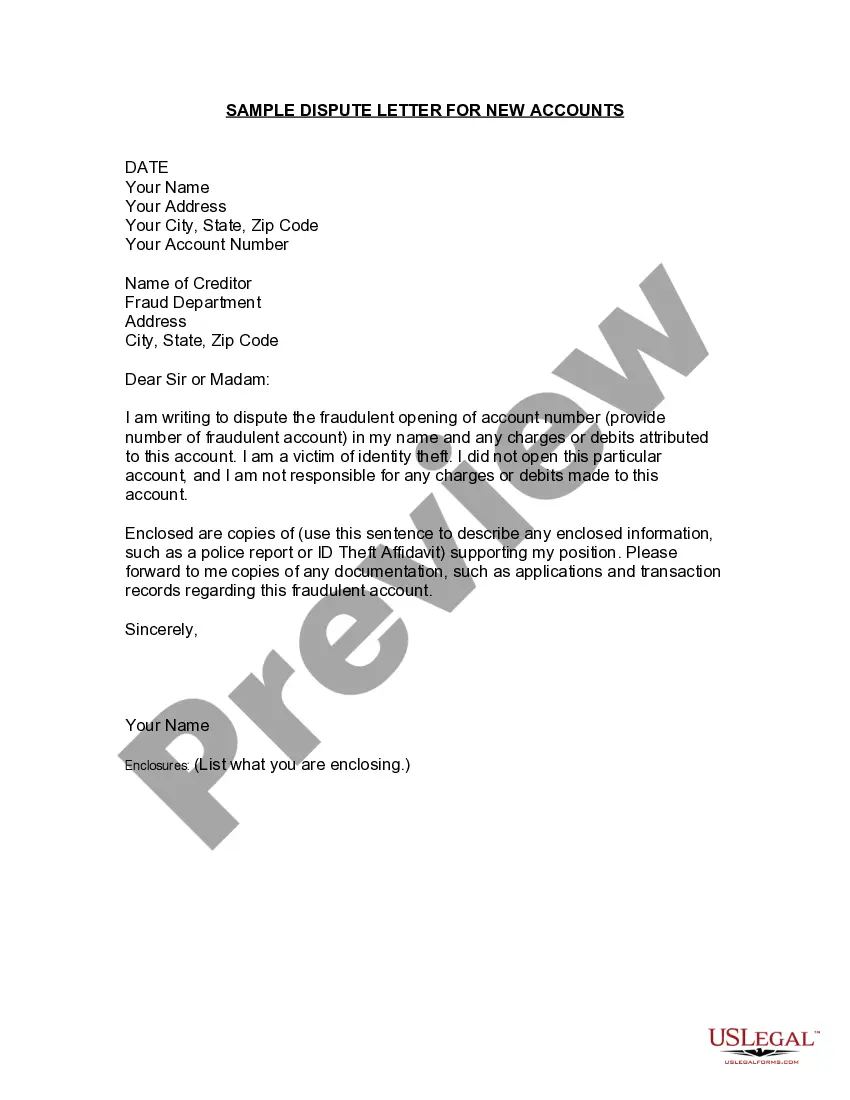
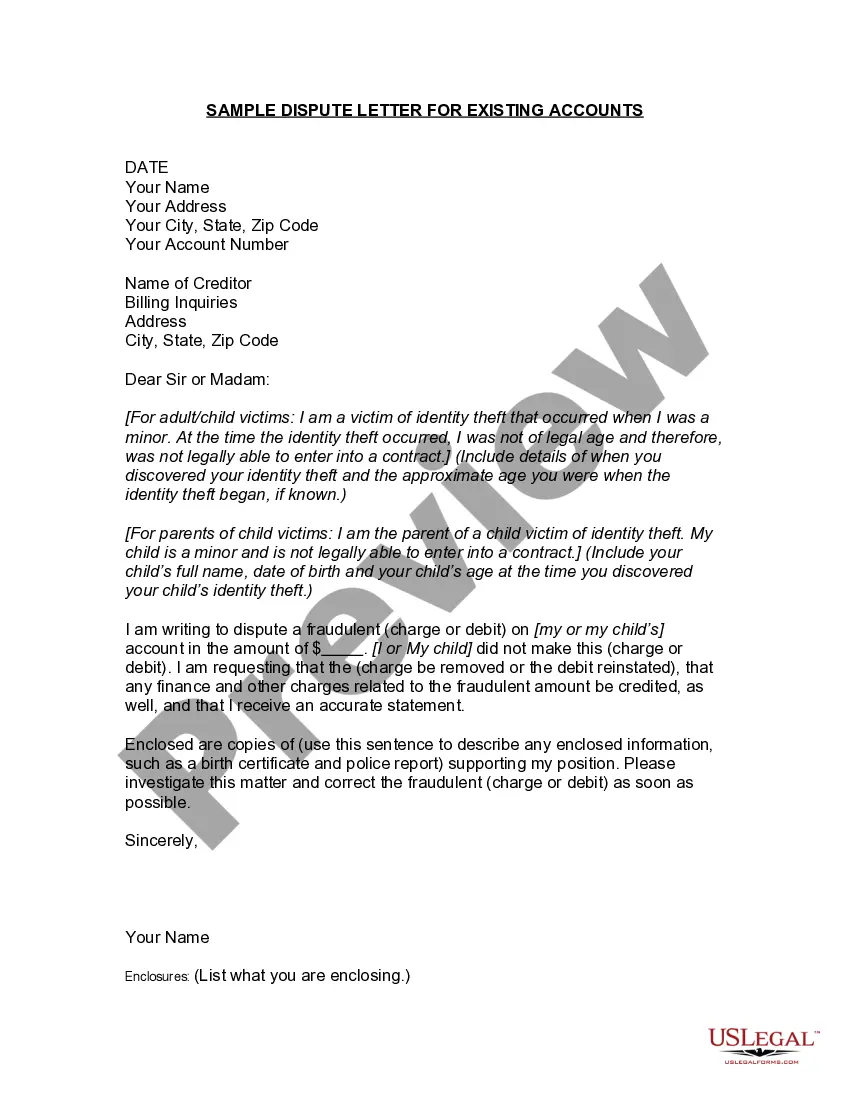
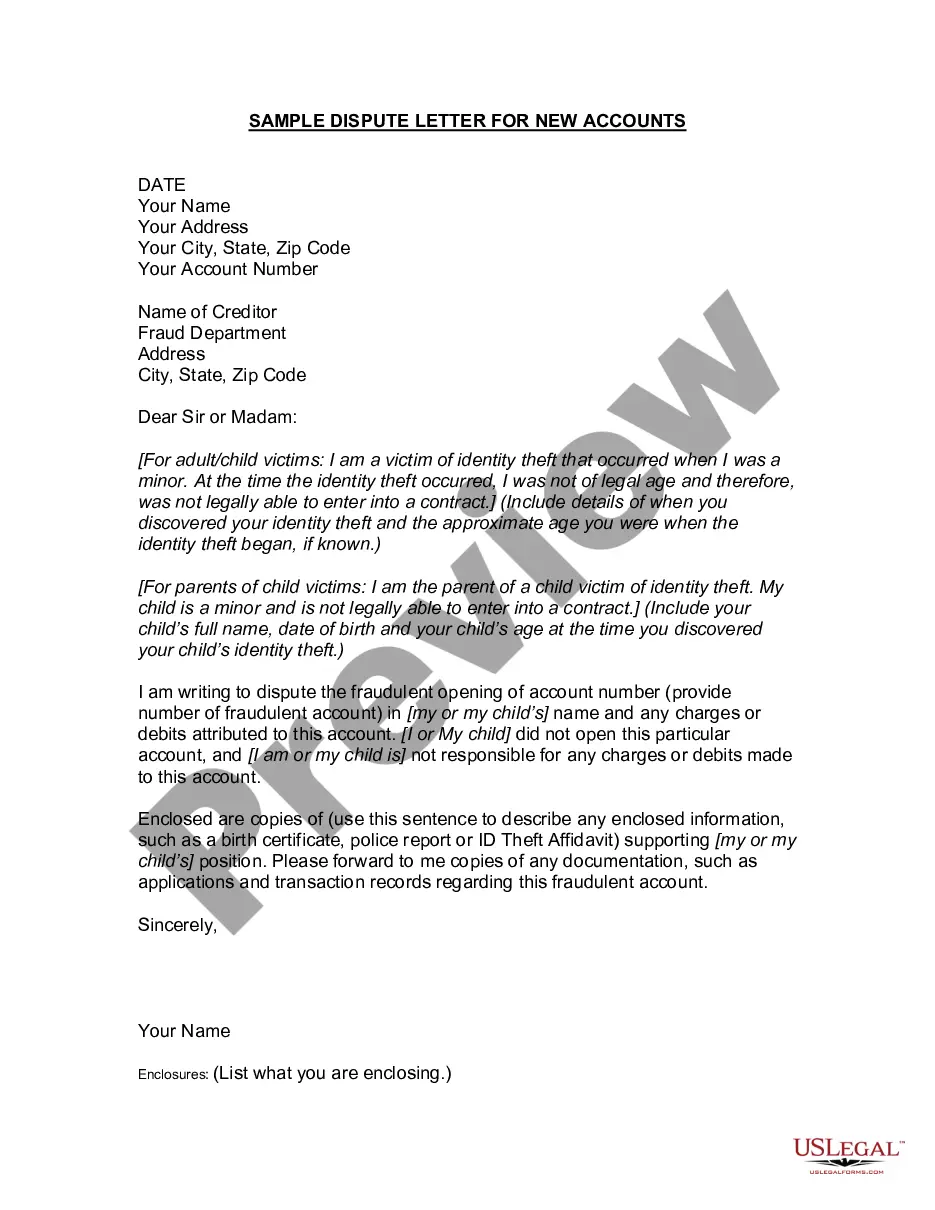
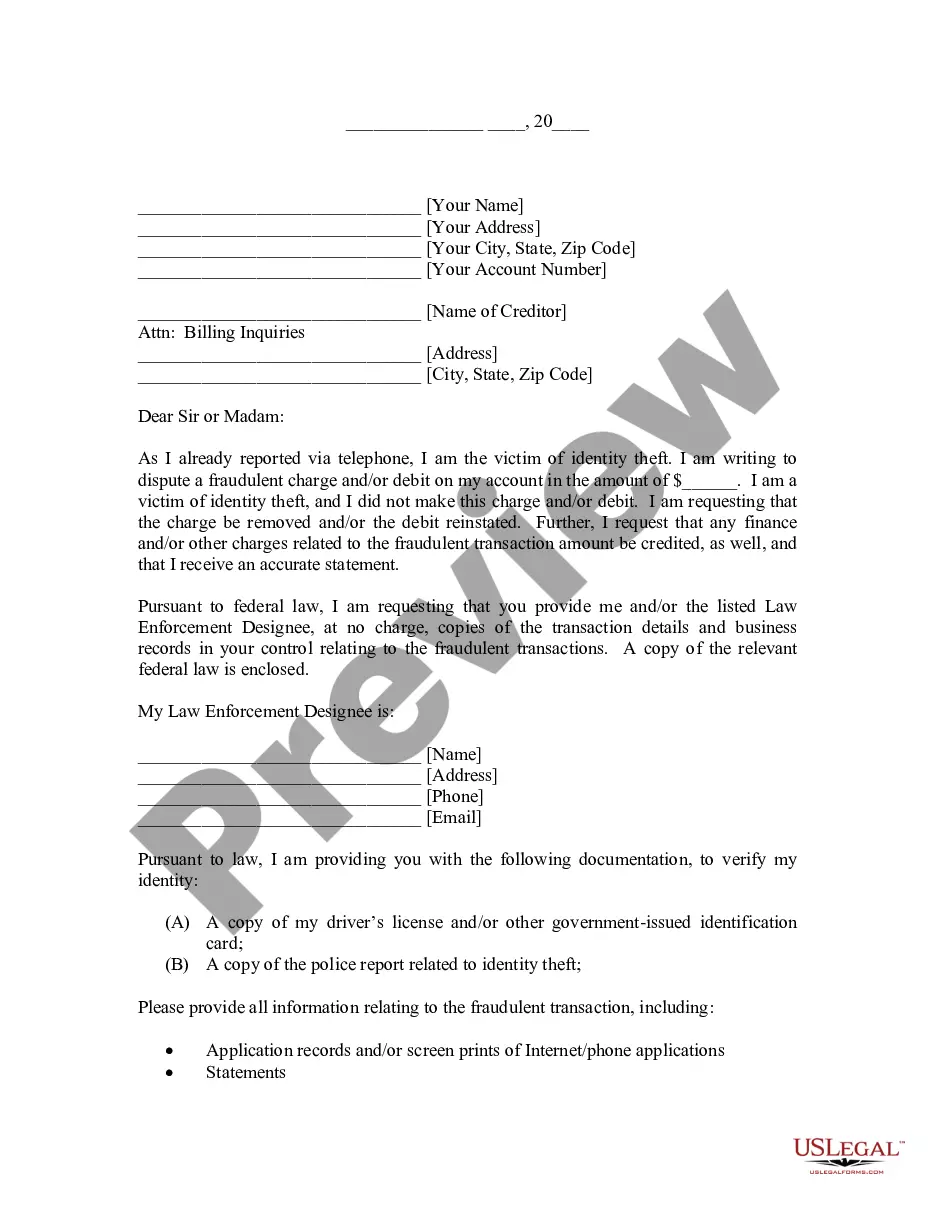
The Letter to Creditors Notifying Them of Identity Theft for New Accounts is a formal document used by a victim of identity theft to inform creditors about accounts fraudulently opened in their name. This letter serves to dispute these unauthorized accounts and any associated charges or debits. It is crucial as it establishes the victim's position and assists in resolving the issue promptly, differentiating it from other general dispute letters by its specific focus on identity theft cases.
Key parts of this document
- Date of the letter
- Your name and contact information
- Creditor's name and address
- Account number of the fraudulent account
- Description of the identity theft and the fraudulent account
- Request for documentation related to the fraudulent account
- A list of any enclosed documents supporting your claim
Common use cases
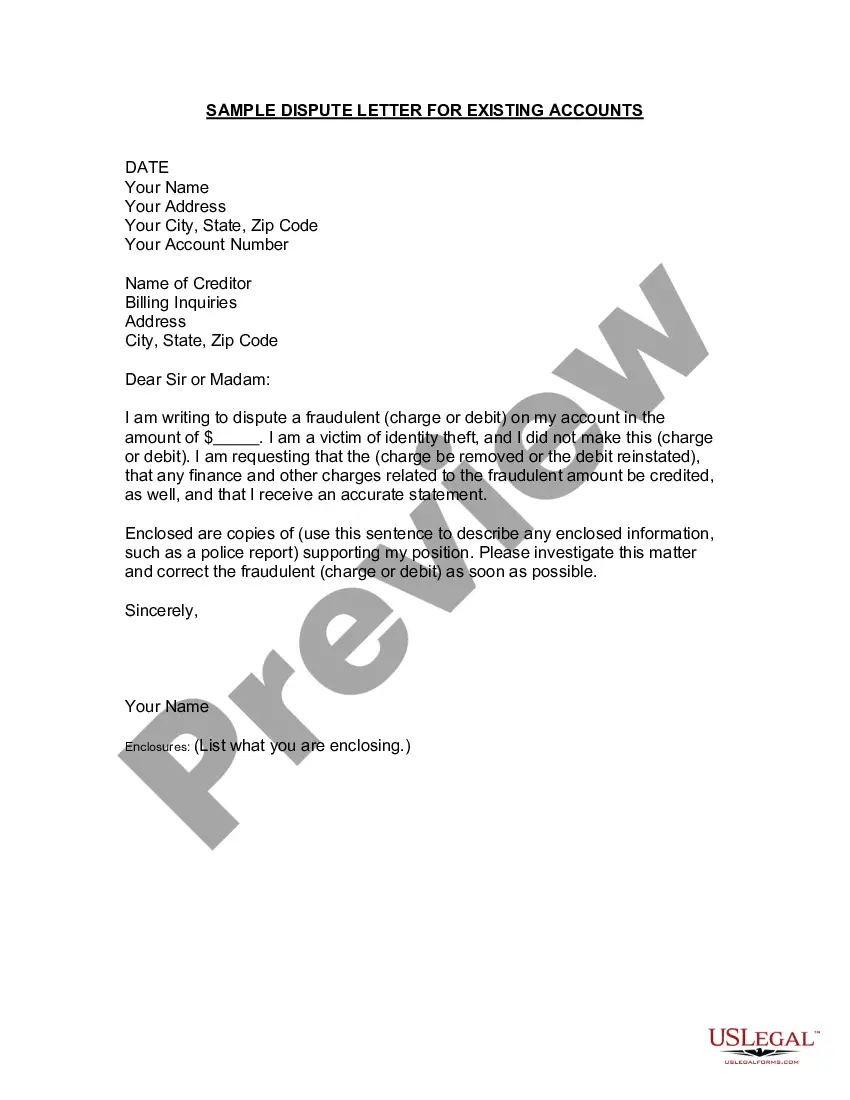
This form should be used when you discover that a credit account has been fraudulently opened in your name without your consent. If you receive bills or statements for accounts you did not create or authorize, sending this letter to the creditors immediately is crucial for protecting your financial interests. Use it to initiate the process of disputing the fraudulent account and to alleviate any potential financial harm from unauthorized charges.
Who needs this form
- Individuals who have been victims of identity theft
- People who find unauthorized credit accounts in their names
- Anyone wishing to dispute fraudulent charges related to these accounts
- Consumers who need to formally notify creditors to take action
Steps to complete this form
- Fill in the date at the top of the letter.
- Provide your full name and address in the header section.
- Identify the creditor by writing their name and address below your information.
- Include the account number of the fraudulent account you are disputing.
- Explain that you are a victim of identity theft and dispute the account.
- List any enclosed documents that support your identity theft claim, such as a police report.
Notarization guidance
This form does not typically require notarization unless specified by local law. It is advisable to check your state's requirements regarding identity theft notifications to ensure compliance.
Get your form ready online
Our built-in tools help you complete, sign, share, and store your documents in one place.
Make edits, fill in missing information, and update formatting in US Legal Forms—just like you would in MS Word.
Download a copy, print it, send it by email, or mail it via USPS—whatever works best for your next step.
Sign and collect signatures with our SignNow integration. Send to multiple recipients, set reminders, and more. Go Premium to unlock E-Sign.
If this form requires notarization, complete it online through a secure video call—no need to meet a notary in person or wait for an appointment.
We protect your documents and personal data by following strict security and privacy standards.

Make edits, fill in missing information, and update formatting in US Legal Forms—just like you would in MS Word.

Download a copy, print it, send it by email, or mail it via USPS—whatever works best for your next step.

Sign and collect signatures with our SignNow integration. Send to multiple recipients, set reminders, and more. Go Premium to unlock E-Sign.

If this form requires notarization, complete it online through a secure video call—no need to meet a notary in person or wait for an appointment.

We protect your documents and personal data by following strict security and privacy standards.
Common mistakes to avoid
- Failing to include the account number of the fraudulent account.
- Not attaching supporting documentation, like a police report or ID Theft Affidavit.
- Sending the letter to the wrong department or address.
- Neglecting to keep copies of all correspondence for your records.
- Not following up with creditors after sending the letter.
Advantages of online completion
- Convenience of downloading and completing the form at your own pace.
- Editability allows for customization to fit your specific situation.
- Access to professionally drafted language that meets legal standards.
- Reduces the risk of errors compared to drafting a letter from scratch.
Looking for another form?

Form popularity
FAQ
Mail the letter first class. You should send the letter first class, return receipt requested. The receipt will serve as proof that the creditor received the letter. Be sure to attach any supporting documentation, such as a copy of your credit report.
Report Identity Theft. Report identity (ID) theft to the Federal Trade Commission (FTC) online at IdentityTheft.gov or by phone at 1-877-438-4338.
You can call the Federal Trade Commission (FTC) at 1-877-438-4338 or TDD at 1-866-653-4261, or online at http://www.consumer.ftc.gov/features/feature-0014-identity-theft to report identity theft.
File a claim with your identity theft insurance, if applicable. Notify companies of your stolen identity. File a report with the FTC. Contact your local police department. Place a fraud alert on your credit reports. Freeze your credit. Sign up for a credit monitoring service, if offered.
What is the first step in protecting yourself from identity theft? Never provide personal data about yourself unless absolutely necessary.
Step 1: Call the companies where you know fraud occurred. Ask them to close or freeze the accounts. Then, no one can add new charges unless you agree. Change logins, passwords and PINS for your accounts. You might have to contact these companies again after you have an FTC Identity Theft Report.
File a claim with your identity theft insurance, if applicable. Notify companies of your stolen identity. File a report with the FTC. Contact your local police department. Place a fraud alert on your credit reports. Freeze your credit. Sign up for a credit monitoring service, if offered.
Equifax. Equifax.com/personal/credit-report-services. 800-685-1111. Experian. Experian.com/help. 888-EXPERIAN (888-397-3742) Transunion. TransUnion.com/credit-help. 888-909-8872.
If you're a victim of identity theft, filing a report will start an investigation to restore your credit and good name.Also, creditors, financial institutions, and debt collectors might require you to file a police report and/or Federal Trade Commission (FTC) identity theft report.