Parental Permission and Medical Consent Form
Understanding this form
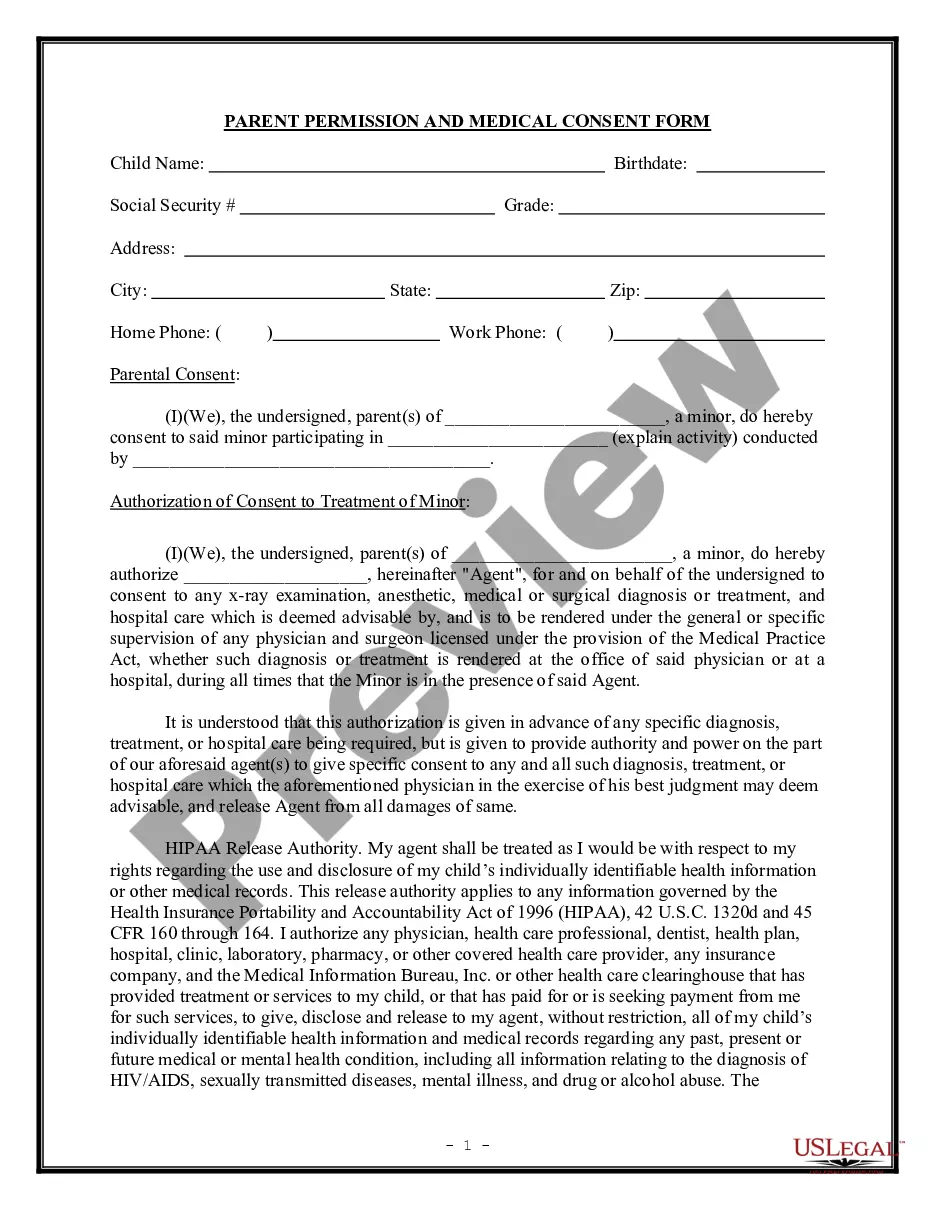
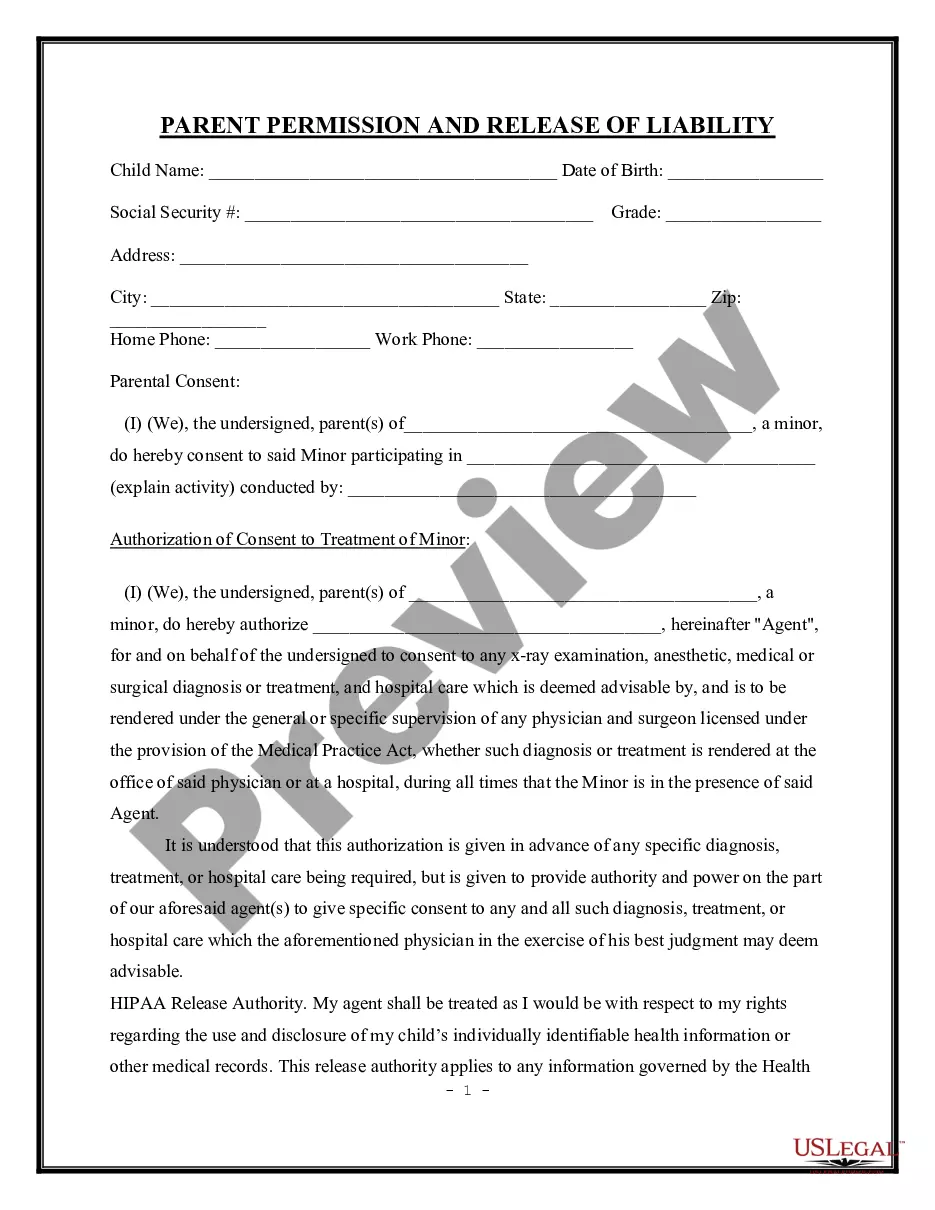
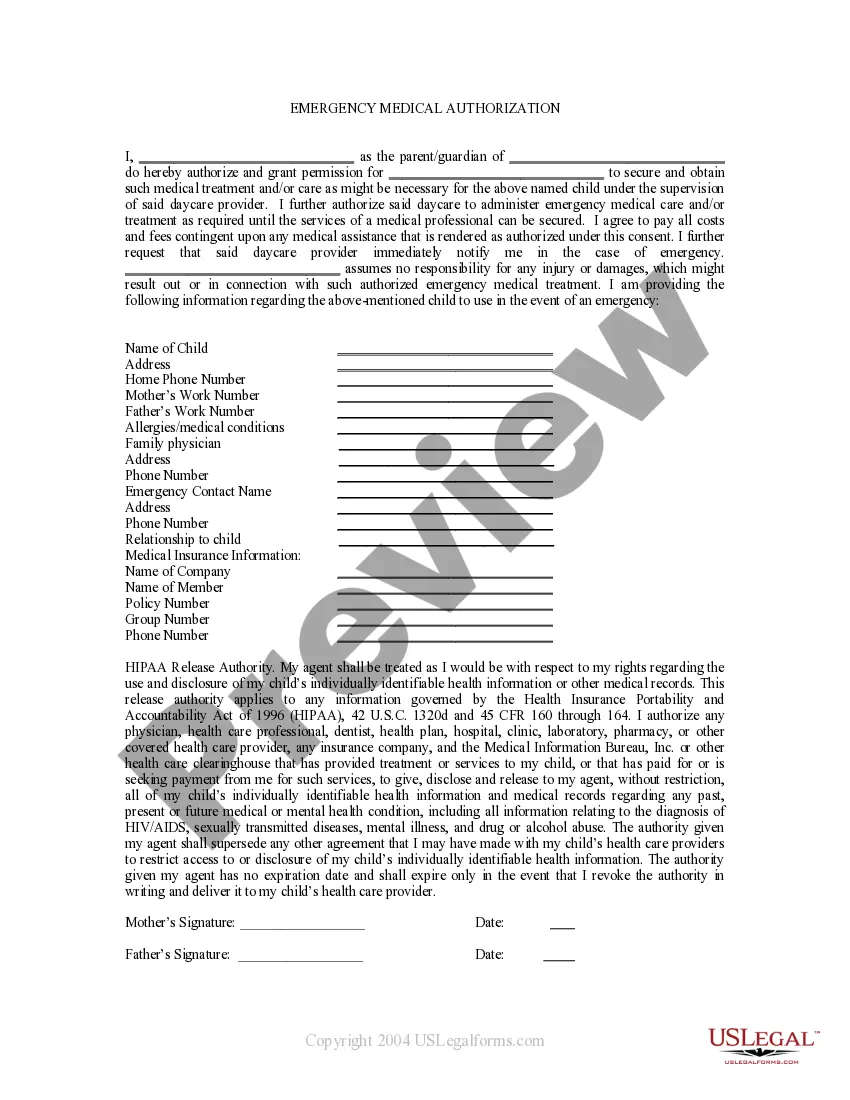
The Parental Permission and Medical Consent Form is a legal document that allows parents or guardians to authorize another individual, known as an agent, to make medical decisions for their minor child. This form provides critical permission for medical treatment, including diagnoses, surgeries, anesthetics, and hospital care, ensuring that the child's health needs can be promptly addressed in the absence of the parents. Unlike general consent forms, this specific form outlines the scope of medical authority granted to the agent and includes provisions for patient confidentiality under HIPAA regulations.
Form components explained
- Child's name and date of birth for identification.
- Agentâs name who is authorized to make medical decisions.
- Scope of consent for medical treatment and procedures.
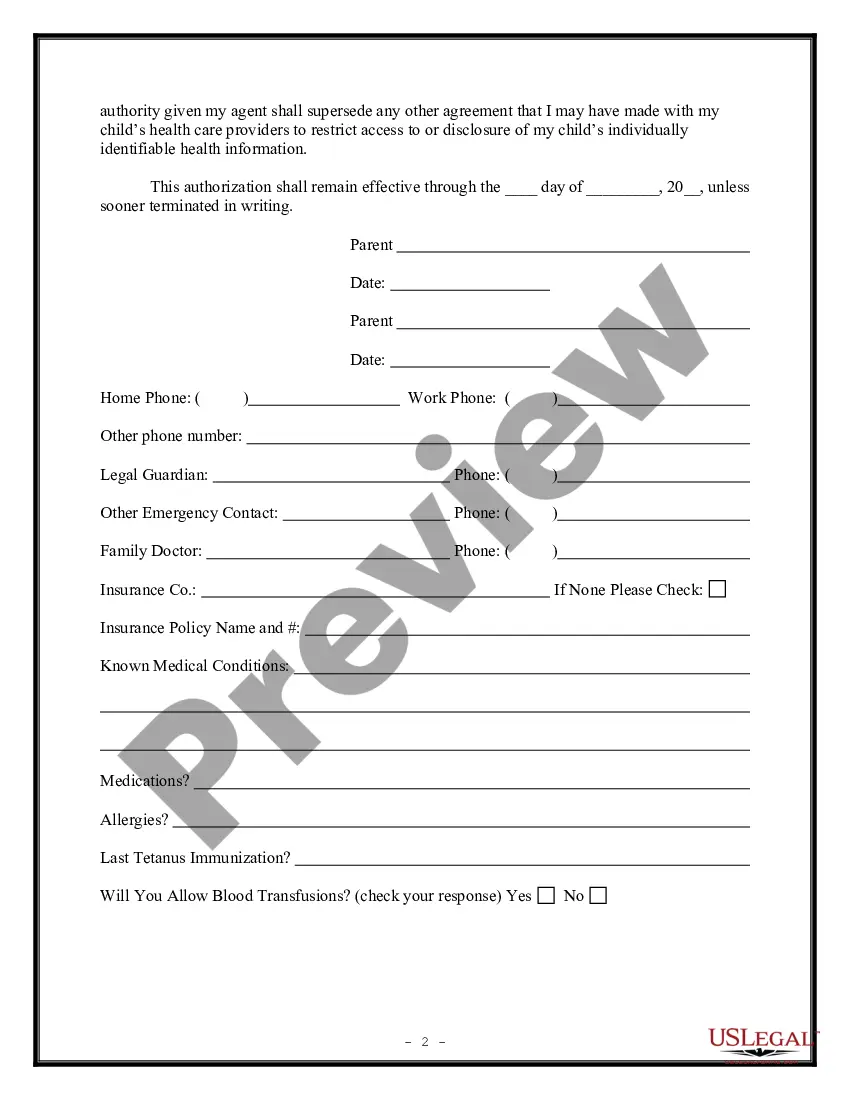
- HIPAA release authority concerning medical records.
- Expiration date for the authorization unless revoked sooner.
When this form is needed
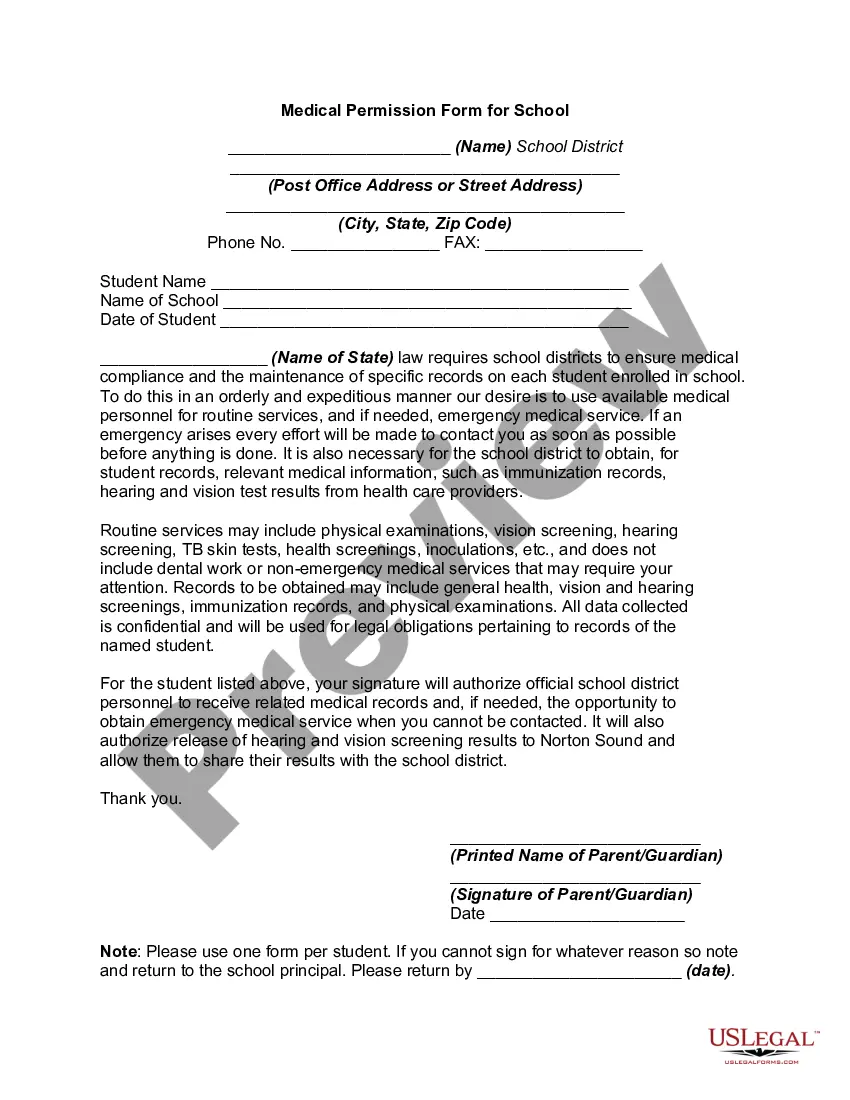
This form is essential in situations where a parent or guardian cannot be present to give consent for medical treatments. Examples include when children attend school trips, camps, or other activities where medical attention may be necessary. It also applies in emergencies where immediate medical intervention is required, making it crucial for ensuring that children receive timely care when parents cannot be reached.
Who should use this form
- Parents or guardians of minor children.
- Individuals responsible for the care of minors, such as grandparents or caregivers.
- Anyone planning for major events where minors may require medical attention and parents will not be present.
Instructions for completing this form
- Enter the child's full name and date of birth in the specified fields.
- Identify the agent authorized to make medical decisions.
- Provide details regarding the scope of medical treatment consented to.
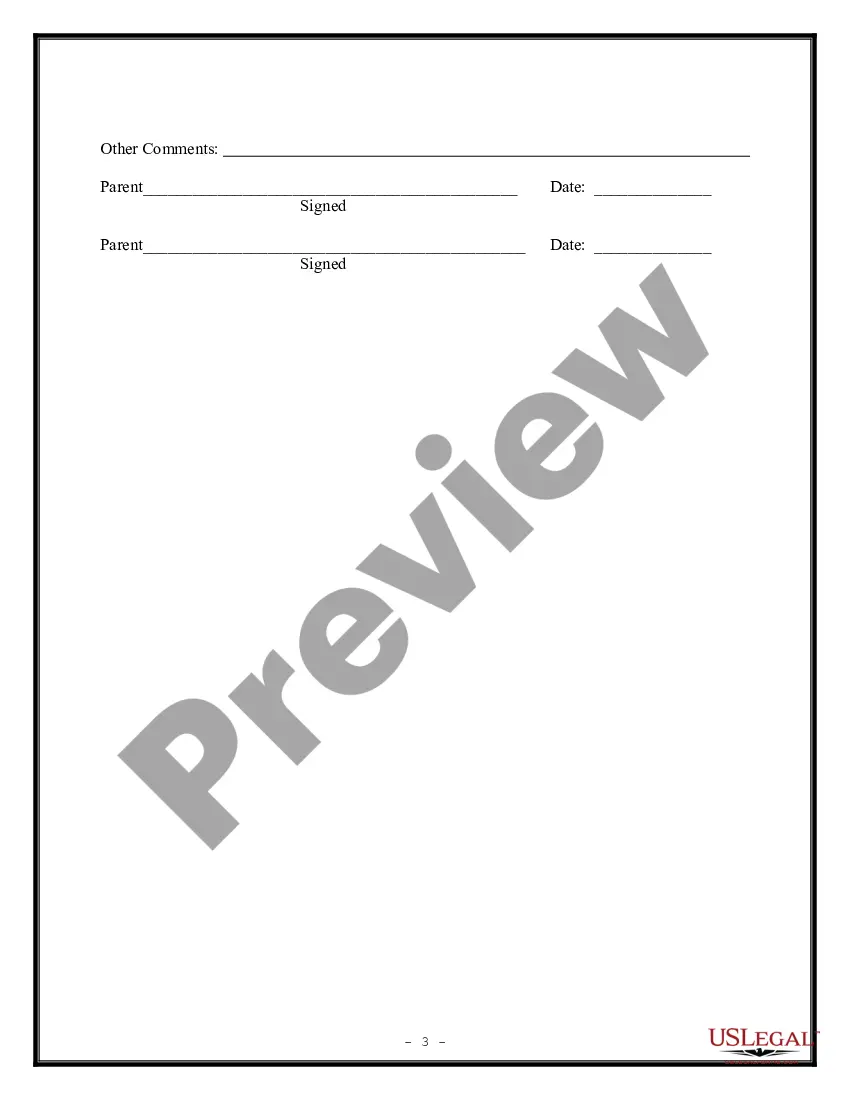
- Sign and date the form to validate the consent.
- Specify the expiration date for the authorization, if applicable.
Notarization guidance
This form does not typically require notarization unless specified by local law. However, some jurisdictions may require it to be notarized to be legally valid. Always check local requirements to ensure compliance.
Get your form ready online
Our built-in tools help you complete, sign, share, and store your documents in one place.
Make edits, fill in missing information, and update formatting in US Legal Forms—just like you would in MS Word.
Download a copy, print it, send it by email, or mail it via USPS—whatever works best for your next step.
Sign and collect signatures with our SignNow integration. Send to multiple recipients, set reminders, and more. Go Premium to unlock E-Sign.
If this form requires notarization, complete it online through a secure video call—no need to meet a notary in person or wait for an appointment.
We protect your documents and personal data by following strict security and privacy standards.

Make edits, fill in missing information, and update formatting in US Legal Forms—just like you would in MS Word.

Download a copy, print it, send it by email, or mail it via USPS—whatever works best for your next step.

Sign and collect signatures with our SignNow integration. Send to multiple recipients, set reminders, and more. Go Premium to unlock E-Sign.

If this form requires notarization, complete it online through a secure video call—no need to meet a notary in person or wait for an appointment.

We protect your documents and personal data by following strict security and privacy standards.
Typical mistakes to avoid
- Failing to specify the agentâs name or not including complete contact information.
- Leaving the expiration date blank, which can create uncertainty about the duration of the consent.
- Not including the child's date of birth or not providing accurate medical history if required.
- Overlooking the need for both parents' signatures if applicable.
Advantages of online completion
- Convenient access to legally drafted forms that can be downloaded instantly.
- Ability to edit the form to meet specific needs before printing.
- Increased reliability with forms created by licensed attorneys to ensure compliance.
Legal use & context
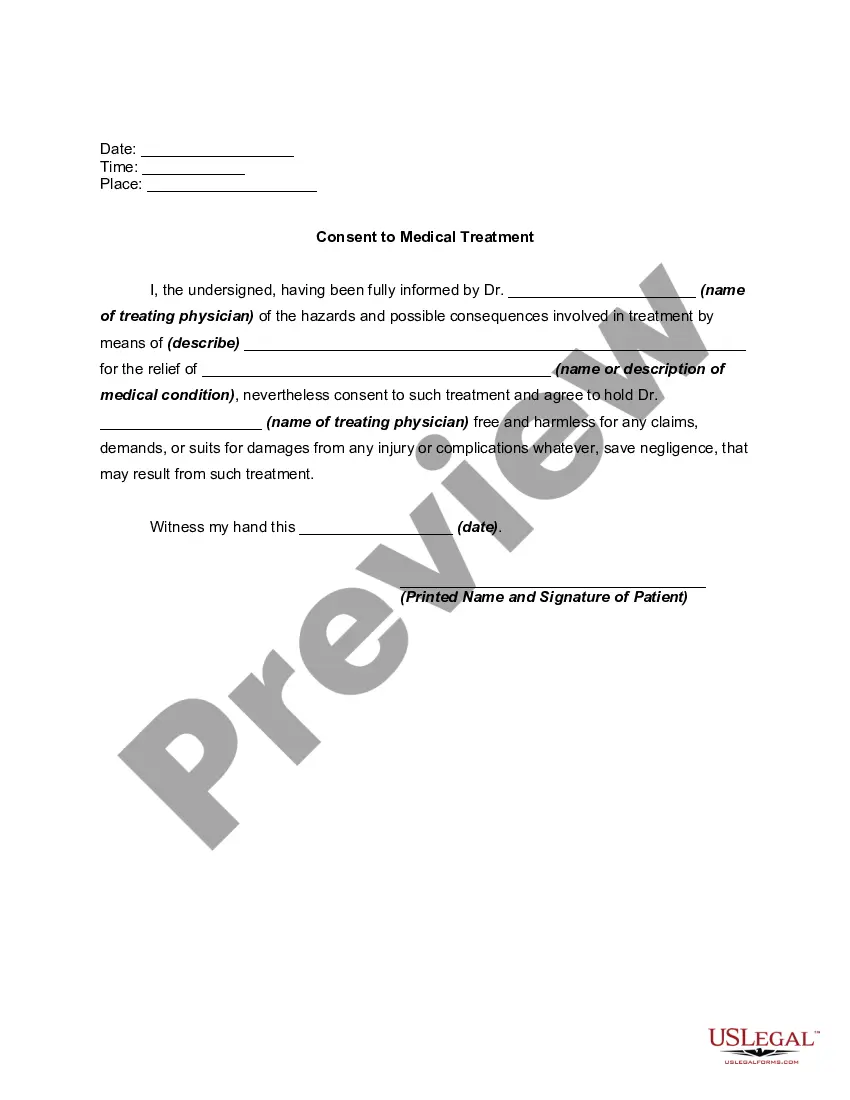
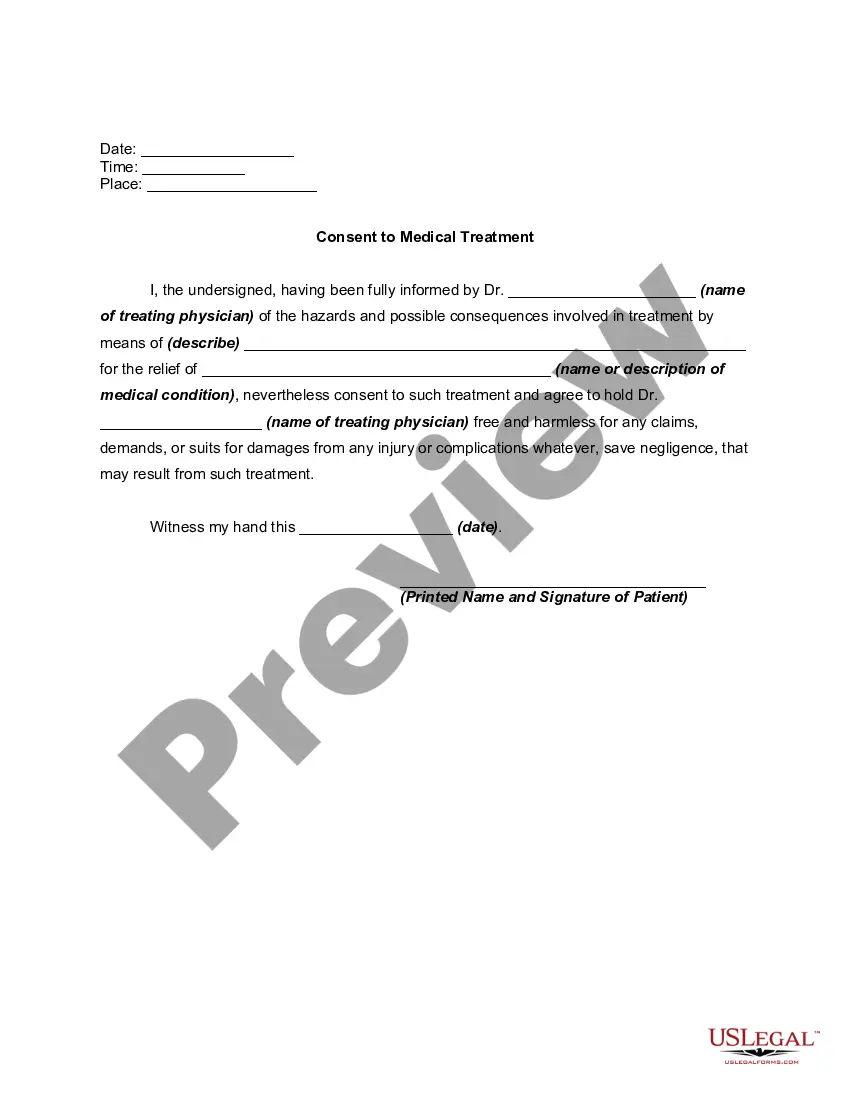
- This form serves as a legal authorization for medical decisions.
- It protects the agent making medical decisions from liability when acting in good faith.
- HIPAA provisions included ensure confidentiality while allowing necessary disclosures.
Key takeaways
- The Parental Permission and Medical Consent Form is essential for allowing others to make medical decisions for your child.
- It includes critical information such as the childâs identity, agent details, and extended consent for medical use.
- Completing the form correctly guarantees that the child's health needs are met promptly in emergencies.
Looking for another form?
Form popularity
FAQ
To Whom It May Concern: I, Name of Legal Guardian, am the lawful guardian of the female child named below. I give permission and consent to Name, Address and Phone Number of Temporary Caregiver to authorize medical treatment for Full Name of Child and date of birth.
Ensure that the formal letter/ email has a clear heading regarding the consent. Explain the requirements (if any) from the respondents. Mention the duration of the program or participation.
The name of your child. The name of your child's class. The name of your child's teacher. The e-mail address of the parent. The phone number/s of the parent. Any additional contact number/s. Any special instructions pertaining to the child. The parental consent.
Step 1 Find a Competent Guardian. Step 2 Inform the Guardian of Child's Medical Issues (if any) Step 3 Inform the Guardian of the Child's Medications. Step 4 Determine an End Date. Step 5 Sign the Document.
Obtaining informed consent in medicine is process that should include: (1) describing the proposed intervention, (2) emphasizing the patient's role in decision-making, (3) discussing alternatives to the proposed intervention, (4) discussing the risks of the proposed intervention and (5) eliciting the patient's
Identify yourself by yourself as accurately as possible. Introduce the person or entity to whom you wish to grant authority. Mention their name, their ID number, and how they relate to you. Specify the scope of the authority, that is the allowed actions. Specify any exclusions if any.
The top left-hand corner of the page should include name, address, and the date. The name of the recipient and address would come below this information. The opening of the letter should be with Dear, Mr/Ms, or To whom it may concern
If you share legal custody with your child's other parent or parents, you will want to arrange to have the form notarized together.Once the covered time period is up, a new medical release form will need to be notarized for a caregiver's authority to make medical decisions to continue.