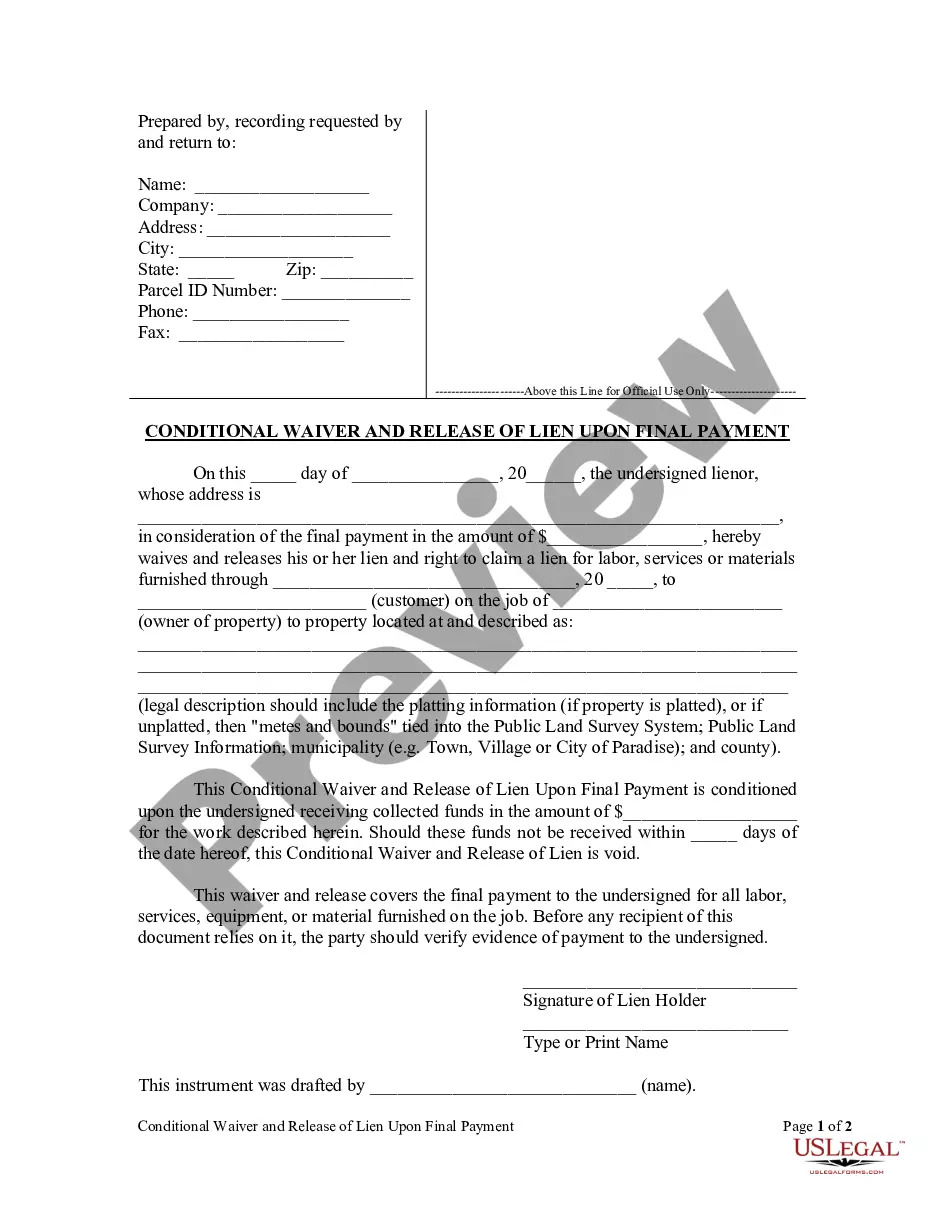
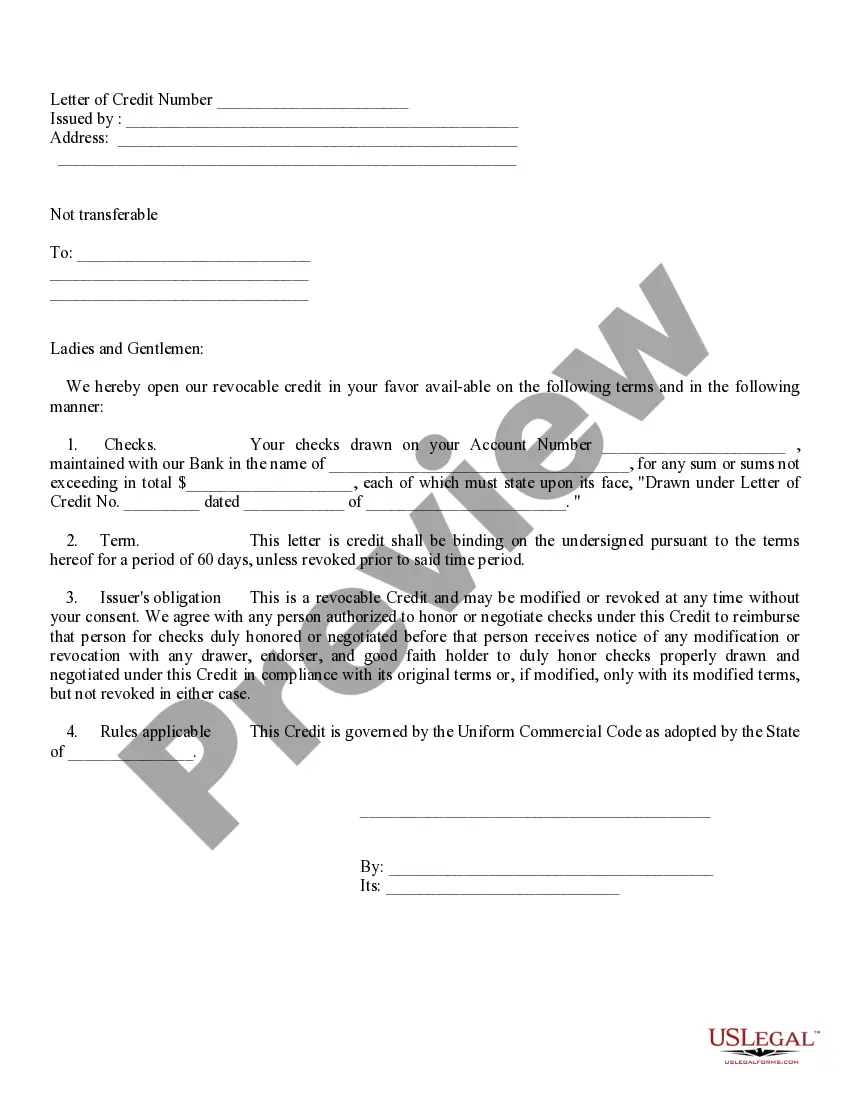
Letter of Credit
Overview of this form
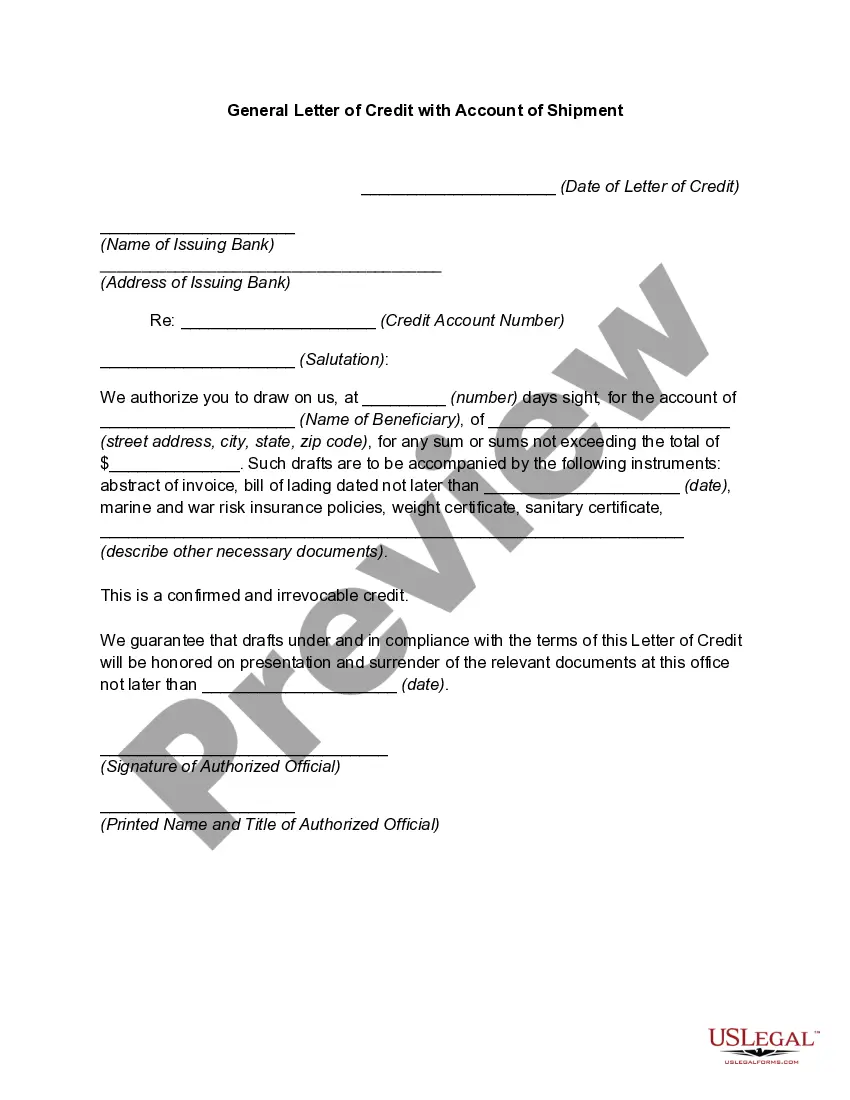
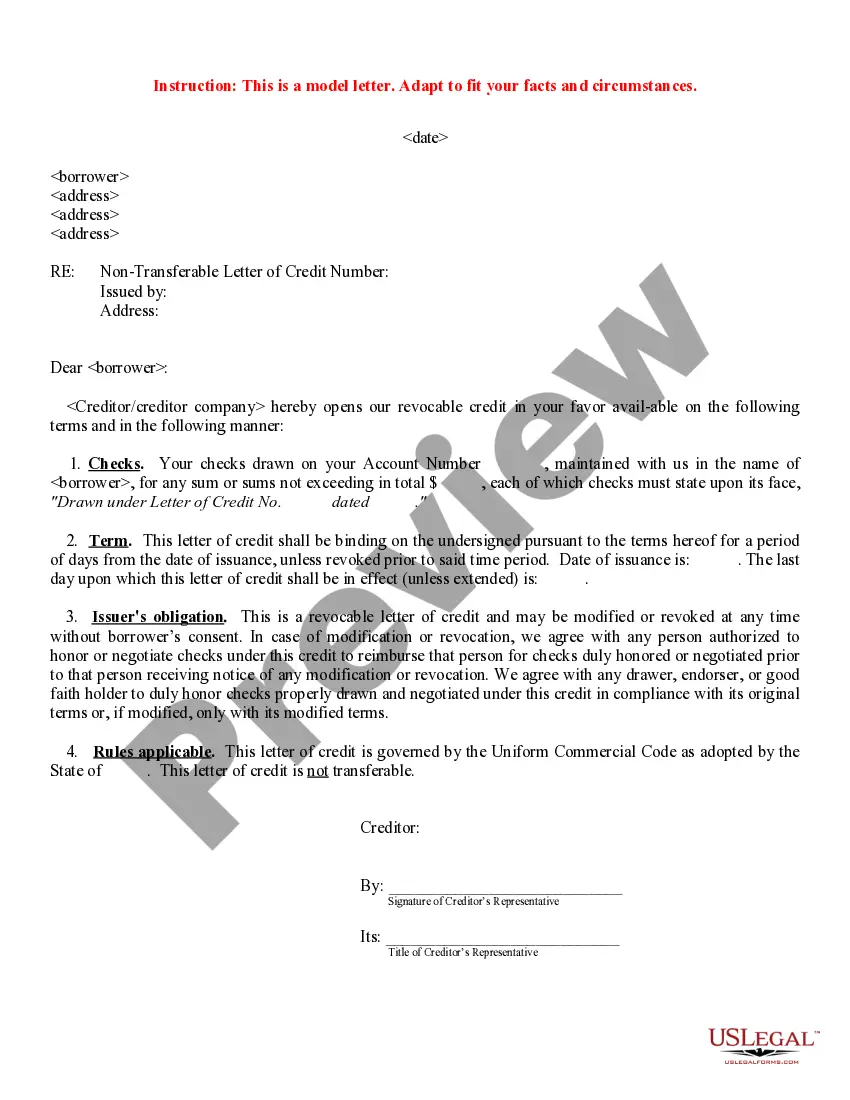
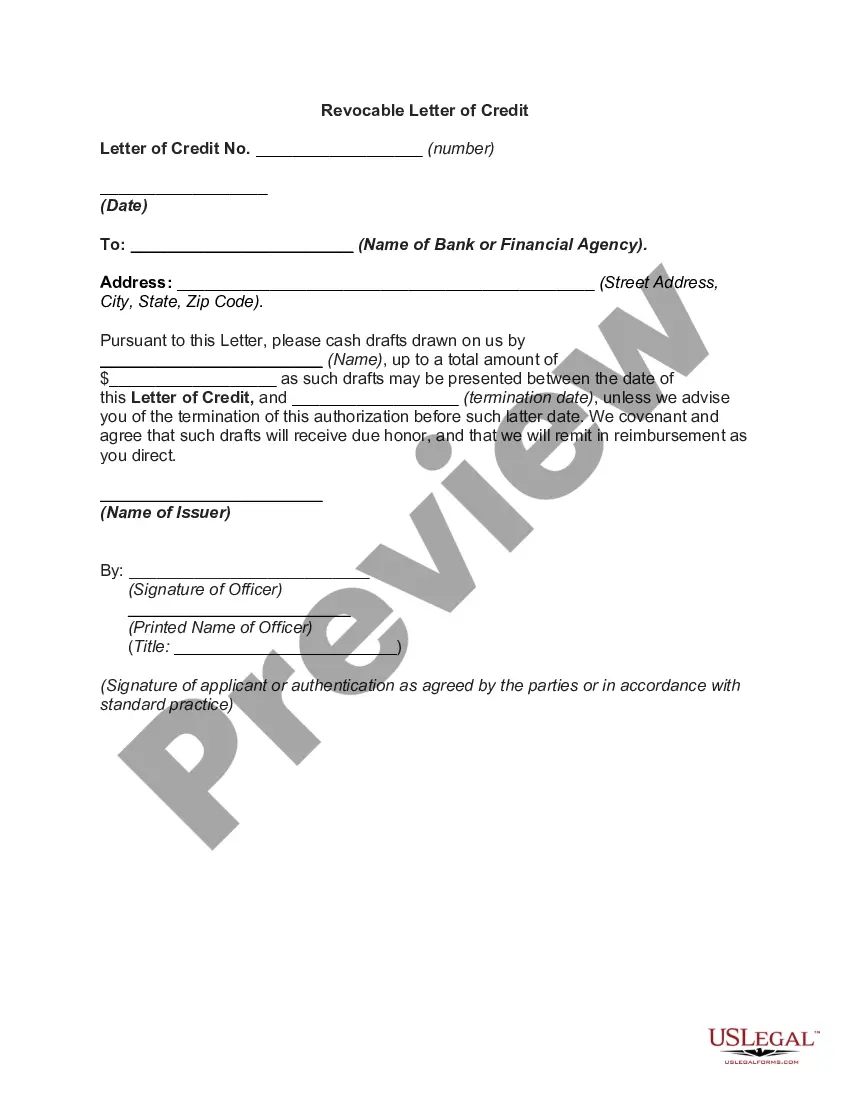
The Letter of Credit is a financial document where the issuer commits to granting revocable credit to the applicant. This form allows the applicant to access funds under certain conditions and specifies that the credit can be changed or revoked without the applicant's consent. It serves as a guarantee from the bank or issuer to the beneficiary but is distinct from other forms of credit due to its revocability and conditions of use.
Form components explained
- Letter of Credit Number: Identifies the specific credit arrangement.
- Issuer Information: Details of the institution providing the credit.
- Beneficiary Information: The party entitled to draw on the credit.
- Terms of Credit: Conditions under which the funds can be accessed.
- Expiration Duration: Specifies the length of time the credit is valid.
- Governing Rules: Indicates adherence to the relevant Uniform Commercial Code.
When this form is needed
This form is typically needed when an individual or business requires a guarantee from a bank or issuer for access to certain funds. It is commonly used in business transactions, such as when securing loans or ensuring payment for goods and services, and allows the issuer to have flexible terms that can be adjusted as needed.
Intended users of this form
- Individuals or businesses seeking to establish temporary credit.
- Entities engaged in commercial transactions requiring payment assurance.
- Financial institutions issuing credit to clients.
- Parties involved in agreements requiring a security instrument.
How to prepare this document
- Fill in the Letter of Credit Number assigned for tracking.
- Provide complete issuer information, including name and address.
- Identify the beneficiary who can access the credit.
- Specify the maximum amount available under this credit.
- Indicate the duration of the credit validity, typically 60 days unless revoked.
- Sign the document to validate the agreement, including title and date.
Notarization requirements for this form
In most cases, this form does not require notarization. However, some jurisdictions or signing circumstances might. US Legal Forms offers online notarization powered by Notarize, accessible 24/7 for a quick, remote process.
Get your form ready online
Our built-in tools help you complete, sign, share, and store your documents in one place.
Make edits, fill in missing information, and update formatting in US Legal Forms—just like you would in MS Word.
Download a copy, print it, send it by email, or mail it via USPS—whatever works best for your next step.
Sign and collect signatures with our SignNow integration. Send to multiple recipients, set reminders, and more. Go Premium to unlock E-Sign.
If this form requires notarization, complete it online through a secure video call—no need to meet a notary in person or wait for an appointment.
We protect your documents and personal data by following strict security and privacy standards.

Make edits, fill in missing information, and update formatting in US Legal Forms—just like you would in MS Word.

Download a copy, print it, send it by email, or mail it via USPS—whatever works best for your next step.

Sign and collect signatures with our SignNow integration. Send to multiple recipients, set reminders, and more. Go Premium to unlock E-Sign.

If this form requires notarization, complete it online through a secure video call—no need to meet a notary in person or wait for an appointment.

We protect your documents and personal data by following strict security and privacy standards.
Common mistakes to avoid
- Leaving out the identification number, which can lead to confusion.
- Not clearly defining the terms and limits of the credit.
- Failing to specify the beneficiary accurately, which can prevent access to funds.
- Neglecting to include correct issuer details, risking invalidation.
Why complete this form online
- Convenience of completing the form from any location at any time.
- Editability allows for easy adjustments before finalizing.
- Reliable templates drafted by licensed attorneys, ensuring legal compliance.
- Fast access to essential documents that can streamline business transactions.
Legal use & context
- This Letter of Credit is enforceable under specific conditions established by the issuer.
- Understanding your rights and obligations is critical; modifications can occur without permission.
- It is vital to ensure that the terms comply with the relevant Uniform Commercial Code statutes.
Quick recap
- The Letter of Credit allows for revocable access to funds as stipulated by the issuer.
- Clearly complete all sections and adhere to any state-specific directives.
- Utilizing this document correctly can facilitate smoother financial transactions.
Looking for another form?







Form popularity
FAQ
The issuing bank pays the beneficiary under a standby letter of credit if and when the beneficiary submits a proper draw request to the issuing bank.Drawing on a standby letter of credit usually requires delivery of a draft and specified documents to the issuing bank in order to receive payment.
They are Commercial, Export / Import, Transferable and Non-Transferable, Revocable and Irrevocable, Stand-by, Confirmed, and Unconfirmed, Revolving, Back to Back, Red Clause, Green Clause, Sight, Deferred Payment, and Direct Pay LC.
Irrevocable LC. This LC cannot be cancelled or modified without consent of the beneficiary (Seller). Revocable LC. Stand-by LC. Confirmed LC. Unconfirmed LC. Transferable LC. Back-to-Back LC. Payment at Sight LC.
A letter of credit, or "credit letter" is a letter from a bank guaranteeing that a buyer's payment to a seller will be received on time and for the correct amount. In the event that the buyer is unable to make a payment on the purchase, the bank will be required to cover the full or remaining amount of the purchase.
A letter of credit is a document that guarantees the buyer's payment to the sellers. It is Issued by a bank and ensures the timely and full payment to the seller. If the buyer is unable to make such a payment, the bank covers the full or the remaining amount on behalf of the buyer.
A letter of credit is a document issued by a third party that guarantees payment for goods or services when the seller provides acceptable documentation.This might be done, for example, if the advising bank financed the transaction for the beneficiary until payment was received.
In most cases, the letter of credit charges is paid by both the applicant and the beneficiary of the LC. A percentage of the invoice value underwritten in charged, which is from 0.1% to 2.0% of the commercial invoice value per month.