Letter of Credit ( General )
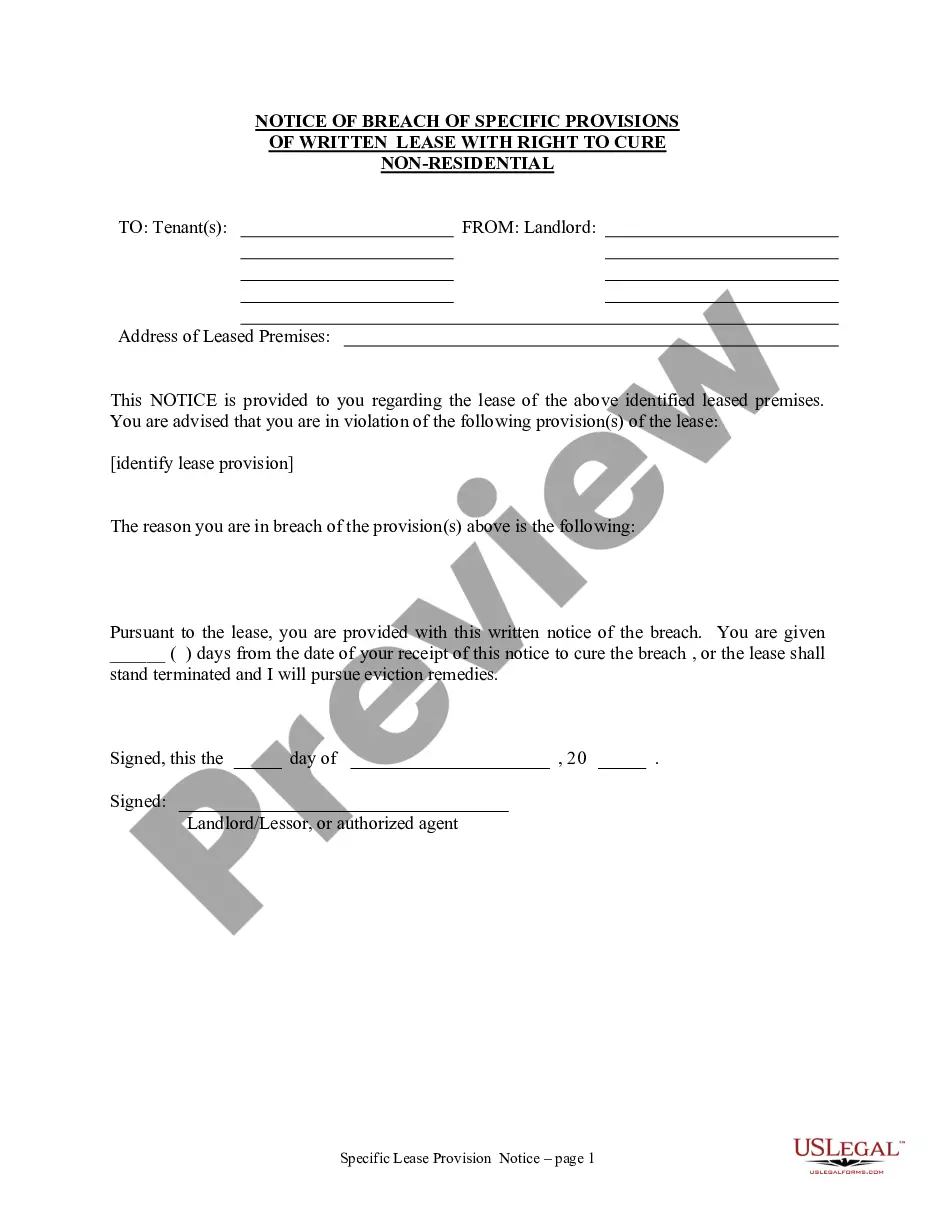
What is this form?
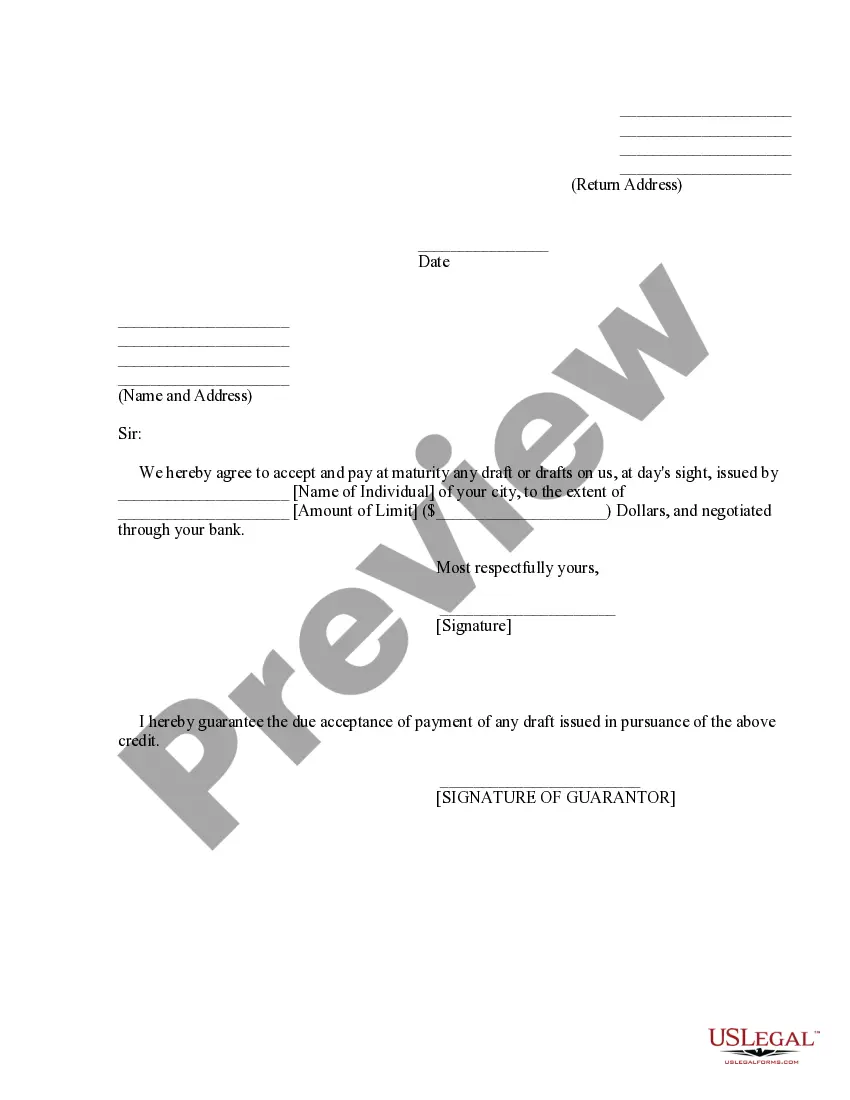
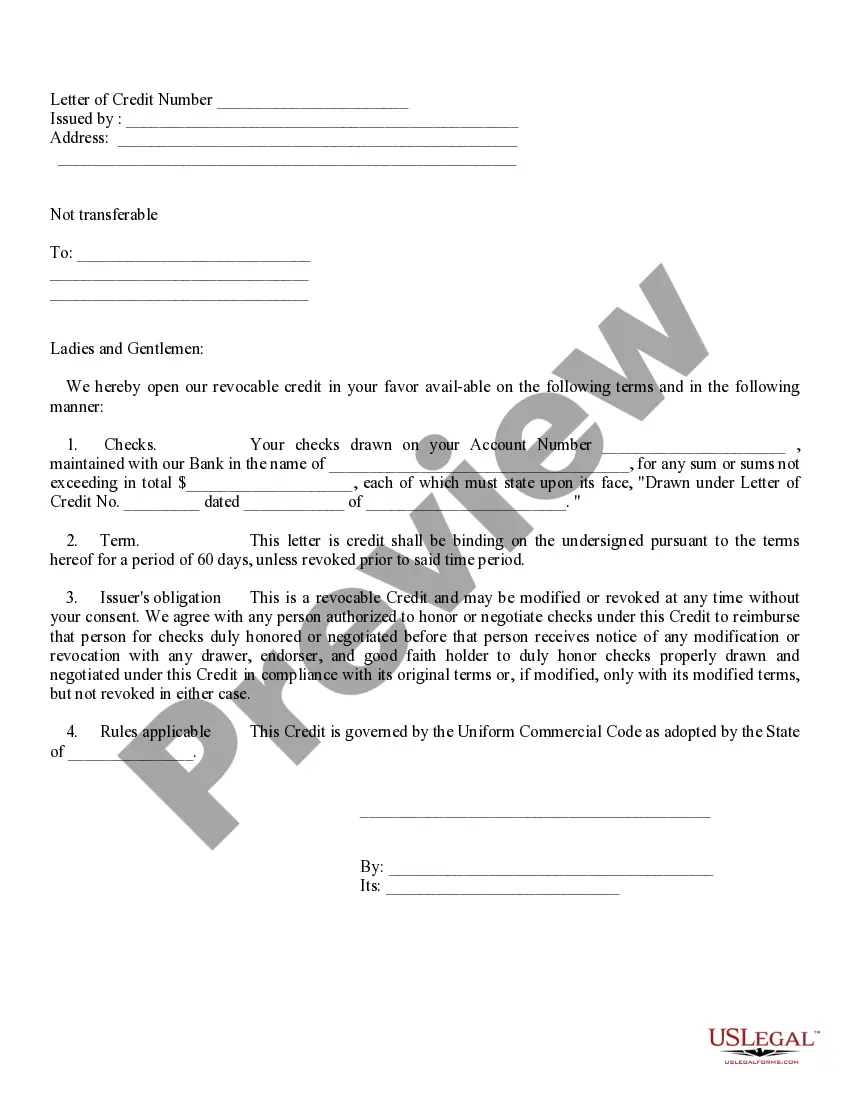
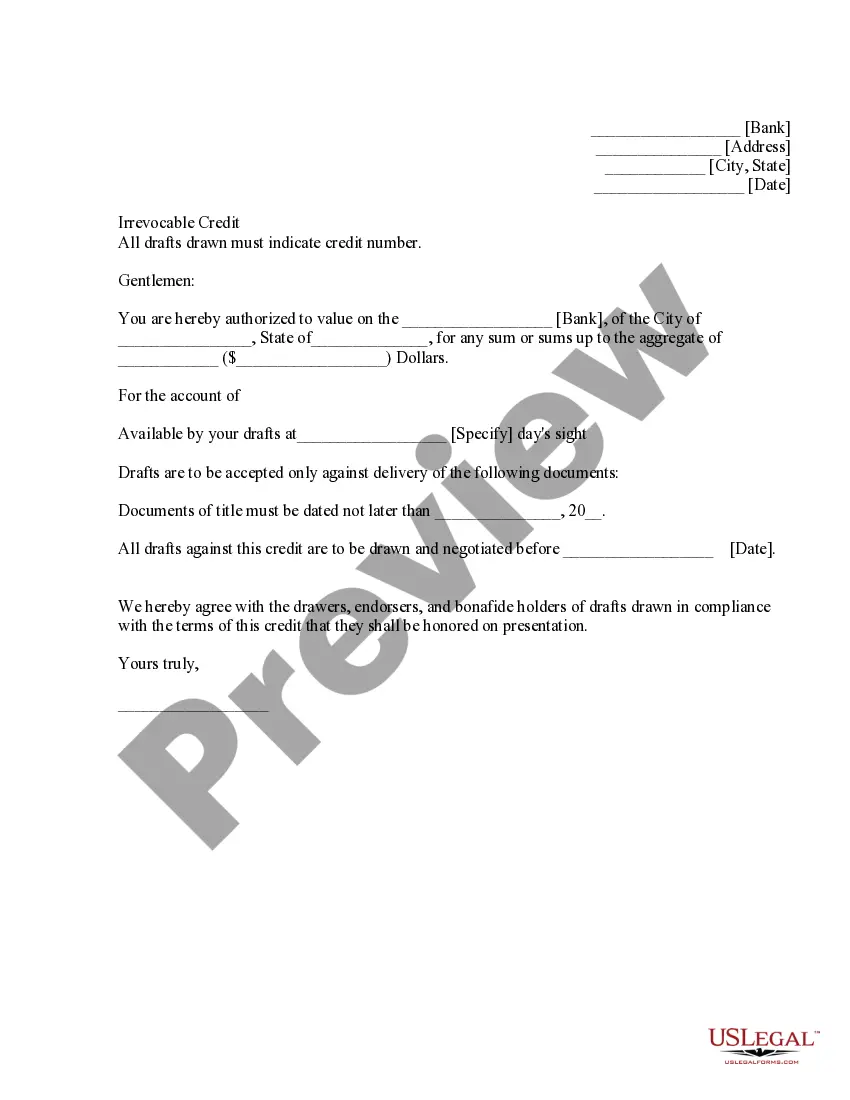
The Letter of Credit (General) is a financial document in which a bank guarantees payment to a seller on behalf of the buyer, usually up to a specified amount and within a defined time frame. This letter serves to facilitate transactions by assuring the seller of payment, thus building trust between the parties involved. It differs from similar forms, such as a personal guarantee, as it is issued by a financial institution and legally binds the creditor to fulfill the payment obligations outlined in the document.
Key components of this form
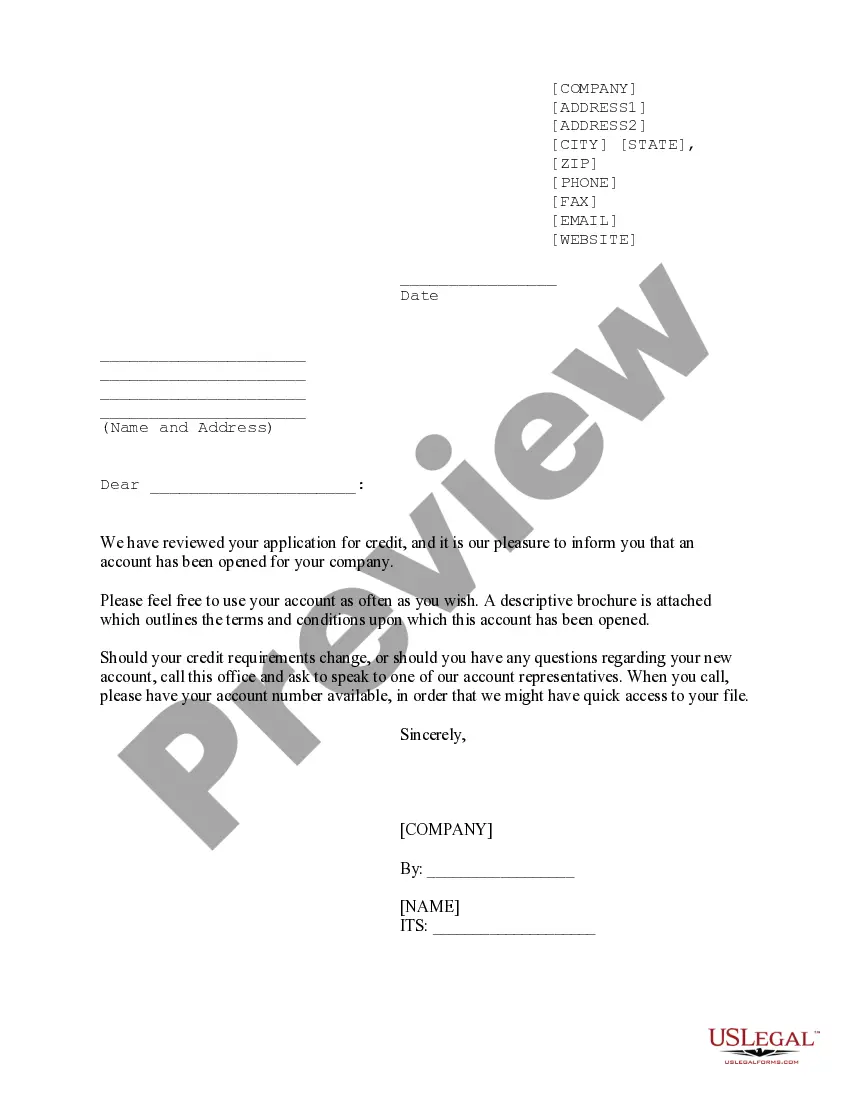
- Return Address: Where the letter is sent from.
- Date: The date the letter is issued.
- Name and Address of the Recipient: The buyer or party for whom the letter of credit is addressed.
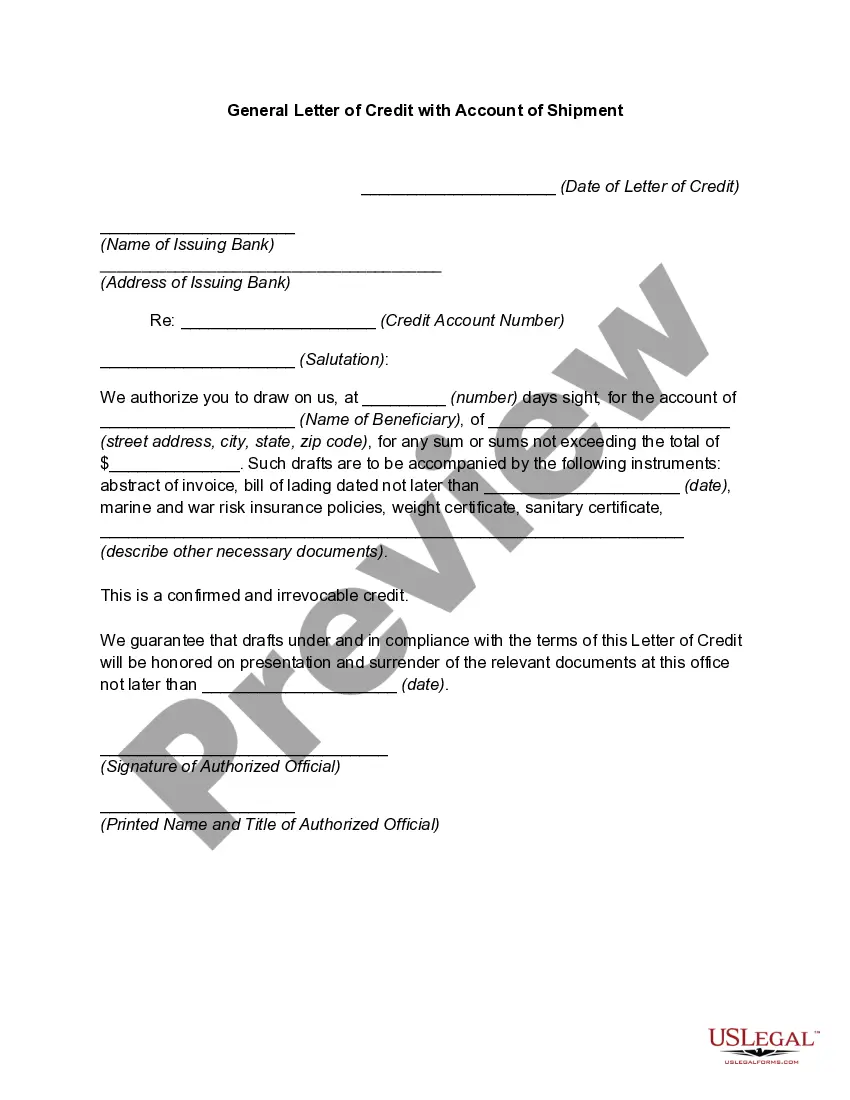
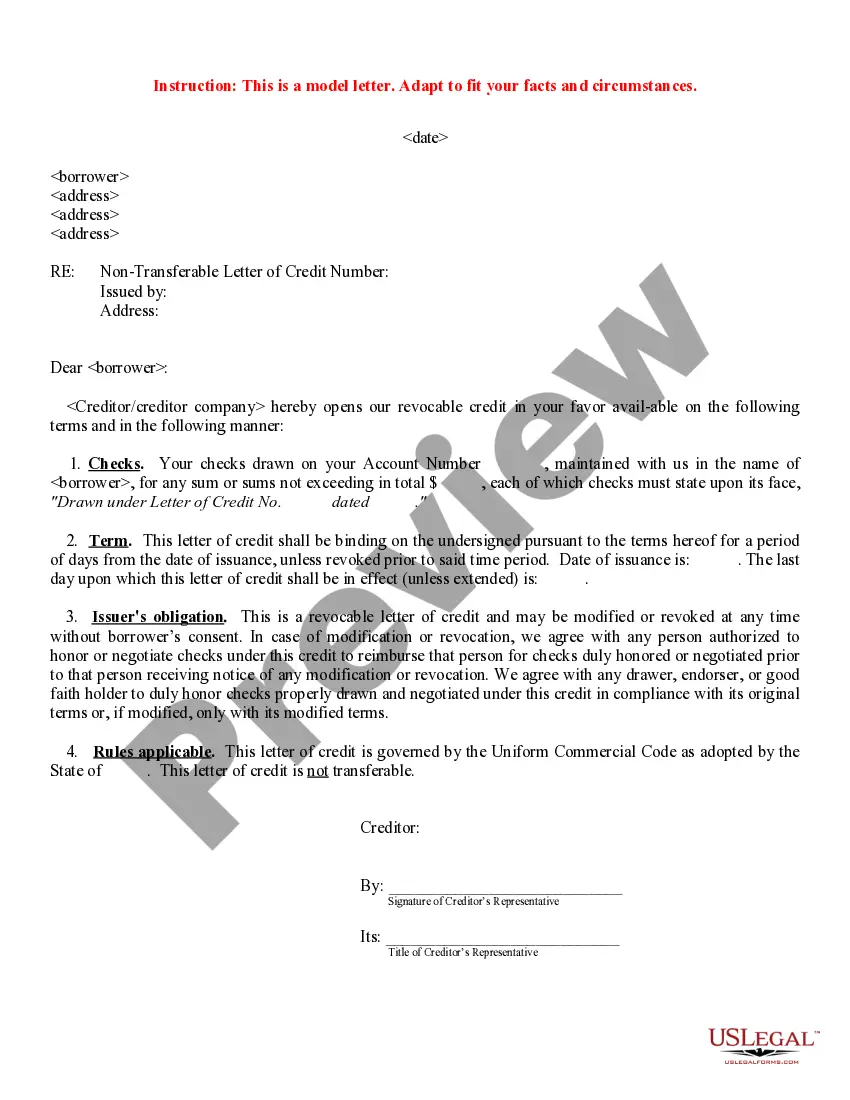
- Draft or drafts terms: Specifies the terms under which the bank will pay the seller.
- Amount of Limit: The maximum amount the bank is willing to guarantee for payment.
- Signature of the Bank: Required for the validity of the letter.
- Signature of Guarantor: Confirms the guarantee of payment.
Common use cases
This letter should be used in situations where a buyer wants to assure a seller that payment will be made for goods or services. Typical scenarios include international trade, where parties may not know each other well, or high-value transactions where the seller requires a guarantee of payment before delivering the goods. Utilizing a letter of credit reduces the risk for the seller, making them more willing to proceed with the transaction.
Intended users of this form
Individuals or businesses engaged in transactions that require a payment guarantee should consider using this form, including:
- Buyers looking to establish trust with a new supplier.
- Sellers concerned about credit risk in high-value transactions.
- Exporters needing to assure incoming payments from foreign buyers.
- Financial institutions facilitating trade between parties.
Completing this form step by step
- Identify the return address and date for the letter.
- Enter the name and address of the recipient.
- Specify the name of the individual and the terms of the draft.
- Complete the amount of limit in both numerical and written form.
- Obtain signatures from the authorized bank representative and the guarantor.
Notarization guidance
Notarization is not commonly needed for this form. However, certain documents or local rules may make it necessary. Our notarization service, powered by Notarize, allows you to finalize it securely online anytime, day or night.
Get your form ready online
Our built-in tools help you complete, sign, share, and store your documents in one place.
Make edits, fill in missing information, and update formatting in US Legal Forms—just like you would in MS Word.
Download a copy, print it, send it by email, or mail it via USPS—whatever works best for your next step.
Sign and collect signatures with our SignNow integration. Send to multiple recipients, set reminders, and more. Go Premium to unlock E-Sign.
If this form requires notarization, complete it online through a secure video call—no need to meet a notary in person or wait for an appointment.
We protect your documents and personal data by following strict security and privacy standards.

Make edits, fill in missing information, and update formatting in US Legal Forms—just like you would in MS Word.

Download a copy, print it, send it by email, or mail it via USPS—whatever works best for your next step.

Sign and collect signatures with our SignNow integration. Send to multiple recipients, set reminders, and more. Go Premium to unlock E-Sign.

If this form requires notarization, complete it online through a secure video call—no need to meet a notary in person or wait for an appointment.

We protect your documents and personal data by following strict security and privacy standards.
Common mistakes
- Failing to include the correct return address and recipient information.
- Leaving out the date, which is essential for validity.
- Not specifying the total amount of the credit clearly.
- Obtaining missing signatures, which can invalidate the document.
Why use this form online
- Convenience of downloading and filling out the form at any time.
- Editability allows for corrections before finalizing.
- Access to legally drafted templates ensures reliability and compliance.
- Ability to save and print copies for your records.
Looking for another form?
Form popularity
FAQ
Types of letters of credit include commercial letters of credit, standby letters of credit, and revocable letters of credit.
Main types of LC Irrevocable LC. This LC cannot be cancelled or modified without consent of the beneficiary (Seller).Revocable LC.Stand-by LC.Confirmed LC.Unconfirmed LC.Transferable LC.Back-to-Back LC.Payment at Sight LC.
Main types of LC Irrevocable LC. This LC cannot be cancelled or modified without consent of the beneficiary (Seller).Revocable LC.Stand-by LC.Confirmed LC.Unconfirmed LC.Transferable LC.Back-to-Back LC.Payment at Sight LC.
A line of credit or a loan is money that a person or business can borrow from a bank or other lender. A letter of credit is a document that shows the issuing bank's promise to pay the seller the amount due. Businesses use letters of credit and loans for very different purposes.
A letter of guarantee is different from a commercial letter of credit, which commits the bank to pay the supplier directly on your behalf when the services are rendered, whether your company has the ability to pay, or not.
Letters of Credit Explained The International Chamber of Commerce Uniform Customs and Practice for Documentary Credits oversees letters of credit used in international transactions.
A letter of credit, or a credit letter, is a letter from a bank guaranteeing that a buyer's payment to a seller will be received on time and for the correct amount. If the buyer is unable to make a payment on the purchase, the bank will be required to cover the full or remaining amount of the purchase.
Loans and credits are different finance mechanisms. While a loan provides all the money requested in one go at the time it is issued, in the case of a credit, the bank provides the customer with an amount of money, which can be used as required, using the entire amount borrowed, part of it or none at all.