Employee Evaluation Form for Economist
Understanding this form
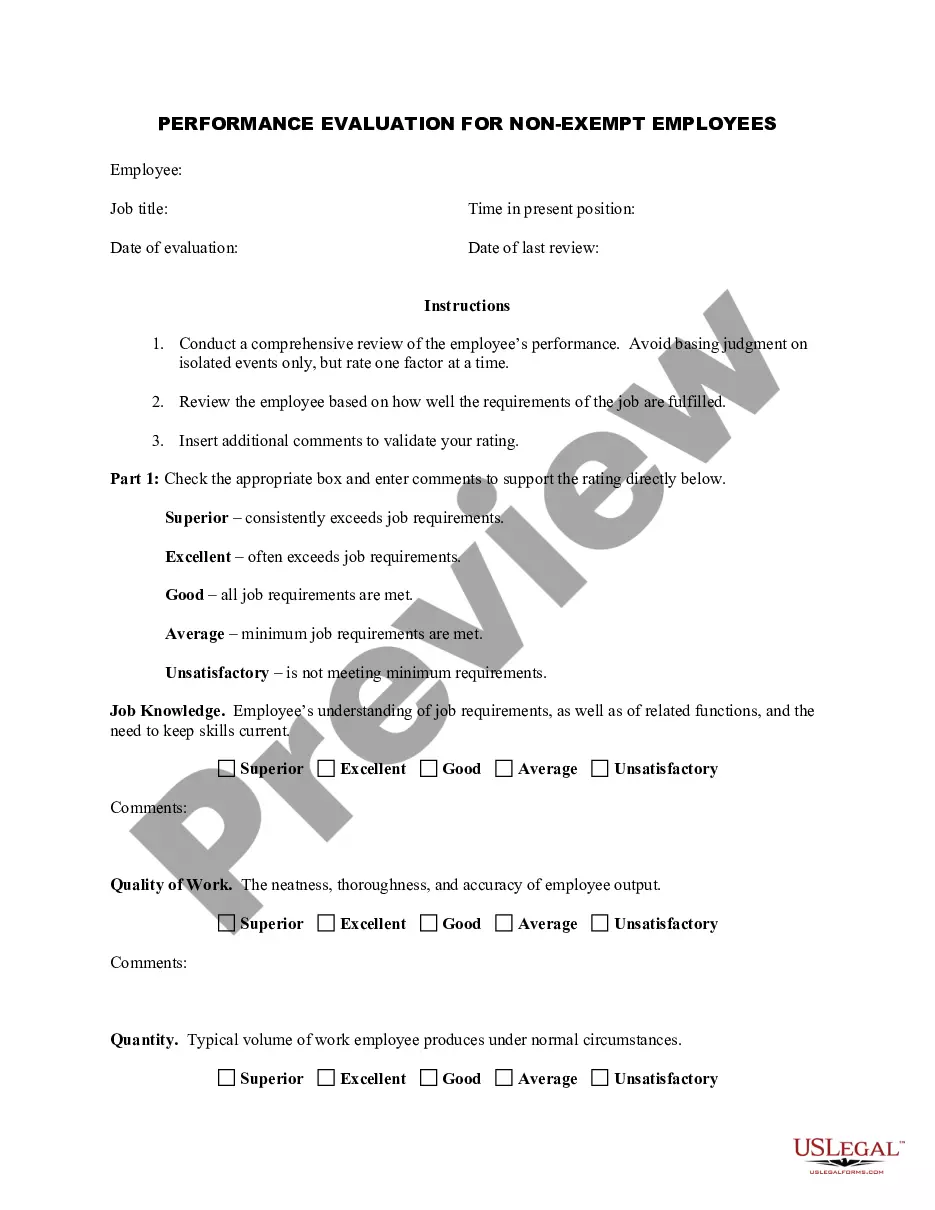
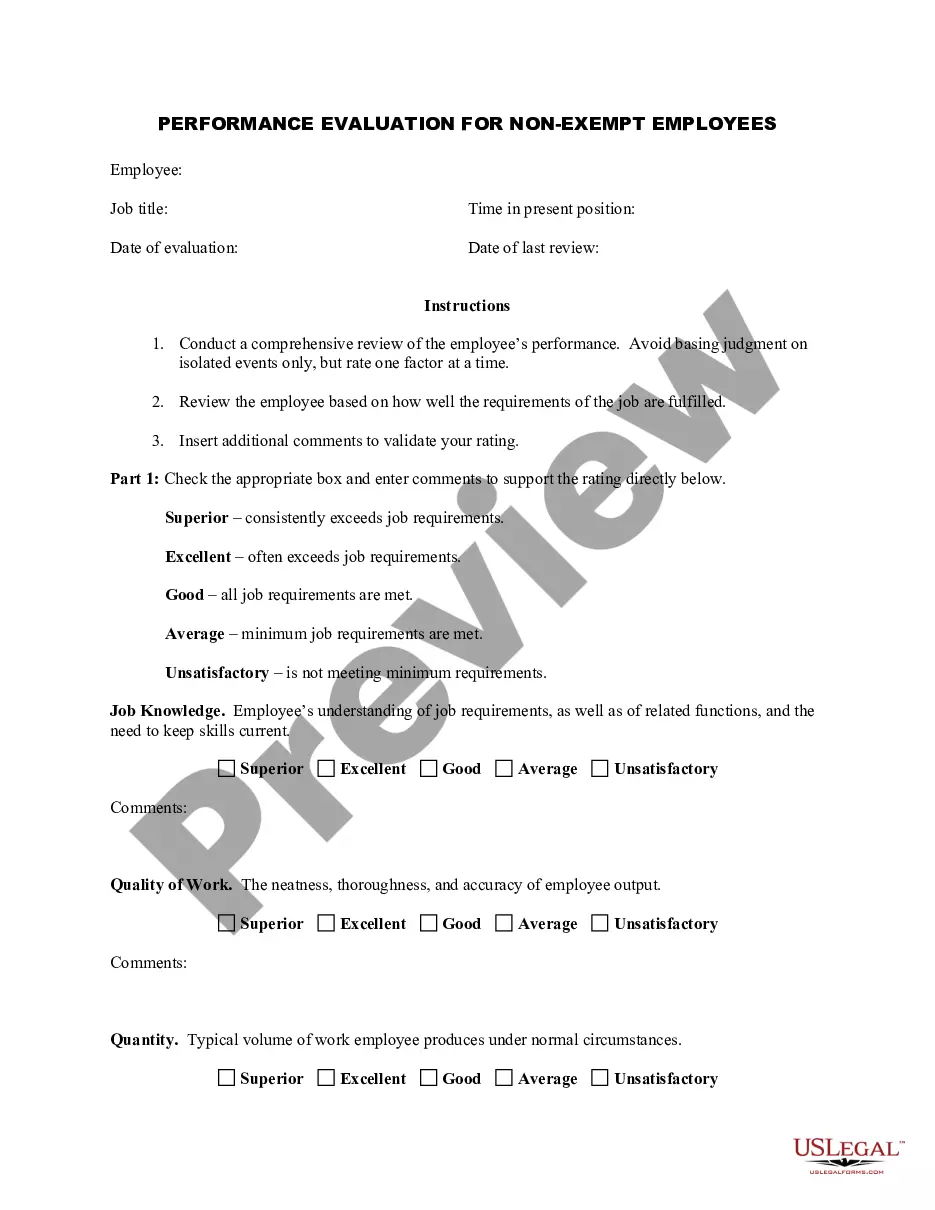
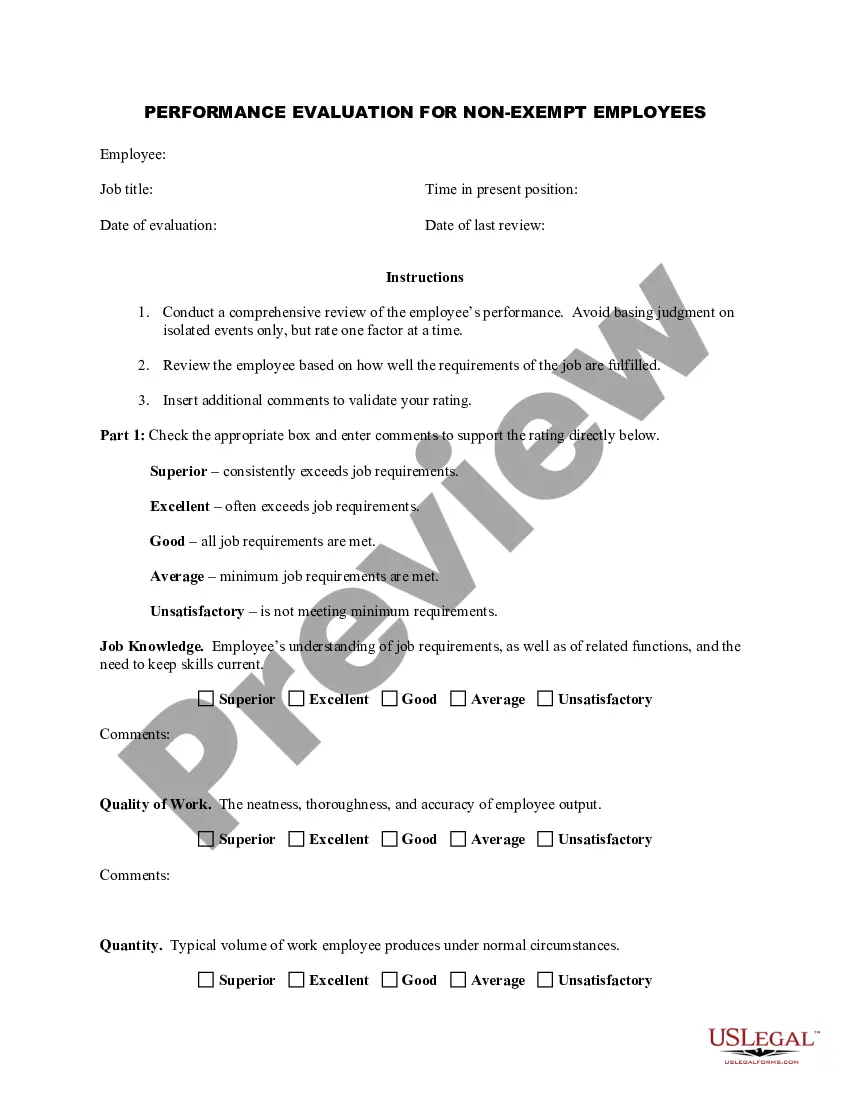
The Employee Evaluation Form for Economist is a performance review tool specifically designed for non-exempt employees in the field of economics. This form assesses how well employees fulfill their job requirements, helping employers document employee performance and set future goals. It provides a structured way to evaluate various aspects of an economistâs role, differing from general employee evaluations by focusing on the specific competencies and responsibilities of economics professionals.
Main sections of this form
- Employee details: Collects personal and job-related information.
- Performance categories: Evaluates areas such as job knowledge, quality of work, quantity of work, cooperation, initiative, dependability, and attendance.
- Goal setting: Allows setting clear goals for the upcoming evaluation period.
- Management and employee signatures: Ensures acknowledgment of the evaluation process and conclusions reached.


When to use this form
This form should be used during regular performance review intervals in your organization, typically annually or bi-annually, to formally assess an economistâs job performance. It can also be useful after a significant project completion or when evaluating new hires during their probationary period.
Who should use this form
This form is intended for:
- Managers and supervisors responsible for evaluating economists.
- Human resources personnel involved in performance management.
- Economists themselves, to gain insight into their strengths and areas for improvement.
How to prepare this document
- Begin by filling in the employee's personal and job information at the top of the form.
- Rate the employee in various performance categories based on the defined scale (e.g., Superior, Excellent, Good, Average, Unsatisfactory).
- Provide comments for each rating to justify your evaluations.
- Discuss the employee's achievements regarding past goals and set new goals for the next evaluation period.
- Obtain signatures from the evaluator and the employee to confirm that the review took place.
Does this document require notarization?
This form does not typically require notarization unless specified by local law. It serves as an internal document for performance reviews within the organization.
Get your form ready online
Our built-in tools help you complete, sign, share, and store your documents in one place.
Make edits, fill in missing information, and update formatting in US Legal Forms—just like you would in MS Word.
Download a copy, print it, send it by email, or mail it via USPS—whatever works best for your next step.
Sign and collect signatures with our SignNow integration. Send to multiple recipients, set reminders, and more. Go Premium to unlock E-Sign.
If this form requires notarization, complete it online through a secure video call—no need to meet a notary in person or wait for an appointment.
We protect your documents and personal data by following strict security and privacy standards.

Make edits, fill in missing information, and update formatting in US Legal Forms—just like you would in MS Word.

Download a copy, print it, send it by email, or mail it via USPS—whatever works best for your next step.

Sign and collect signatures with our SignNow integration. Send to multiple recipients, set reminders, and more. Go Premium to unlock E-Sign.

If this form requires notarization, complete it online through a secure video call—no need to meet a notary in person or wait for an appointment.

We protect your documents and personal data by following strict security and privacy standards.
Mistakes to watch out for
- Failing to document specific examples that support performance ratings.
- Not discussing the evaluation with the employee prior to finalizing it.
- Using vague language in comments instead of clear, constructive feedback.
Why complete this form online
- Convenient access to the evaluation form from anywhere, enabling timely completion.
- Editability allows for updates and changes before final submission.
- Reliable record-keeping ensures compliance and accountability in the evaluation process.
Main things to remember
- The Employee Evaluation Form for Economist is essential for structured performance reviews.
- It allows managers to assess and document employee performance efficiently.
- Utilizing this form helps set future goals, fostering employee development and organizational growth.
Looking for another form?


Form popularity
FAQ
Set Performance Standards. Set Specific Goals. Take Notes Throughout the Year. Be Prepared. Be Honest and Specific with Criticism. Don't Compare Employees. Evaluate the Performance, Not the Personality. Have a Conversation.
Be proud. One major goal of the self-evaluation is to highlight your accomplishments and recollect milestones in your professional development. Be honest and critical. Continuously strive for growth. Track your accomplishments. Be professional.
There are three main methods used to collect performance appraisal (PA) data: objective production, personnel, and judgmental evaluation. Judgmental evaluations are the most commonly used with a large variety of evaluation methods.
An appraisal form is a document that managers and human resources use to evaluate the performance of employees. On an appraisal form, managers keep track of employees' achievements and contributions during a specific period of time. They also indicate the employee's areas of strength and weakness.
Self-Evaluation. A self-evaluation requires an employee to judge his or her own performance against predetermined criteria. Behavioral Checklist. 360-Degree Feedback. Management by Objectives. Ratings Scale.
A good self-assessment should point to specific tasks and projects that highlight your best work. When describing those accomplishments, employees should emphasize the impact those achievements had on the whole business to emphasize their value to the company.
Level of execution. Quality of work. Level of creativity. Amount of consistent improvement. Customer and peer feedback. Sales revenue generated. Responsiveness to feedback. Ability to take ownership.
Communication. Collaboration and teamwork. Problem-solving. Quality and accuracy of work. Attendance, punctuality and reliability. The ability to accomplish goals and meet deadlines.