Classification of Employees for Personnel Manual or Employee Handbook regarding Full Time, Part Time, Temporary, Leased, Exempt, and Nonexempt Employees
About this form
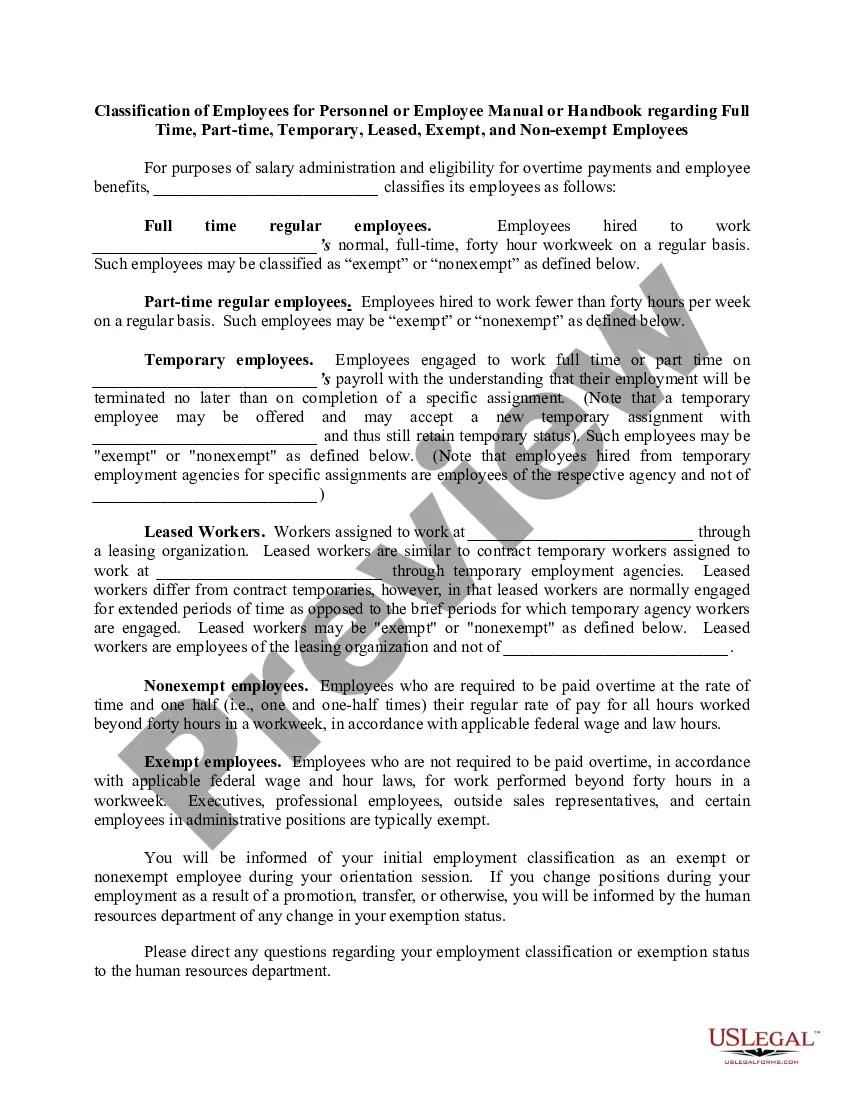
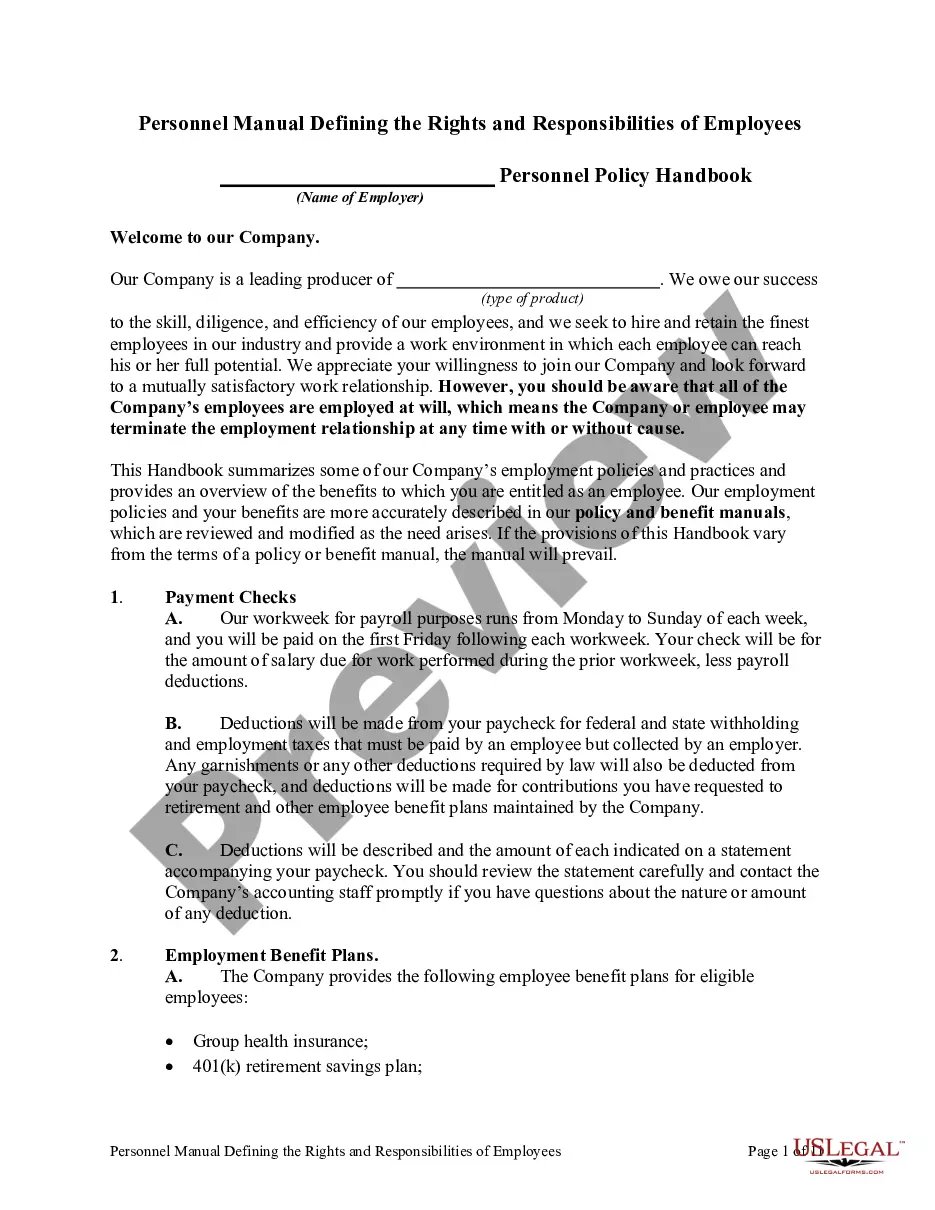
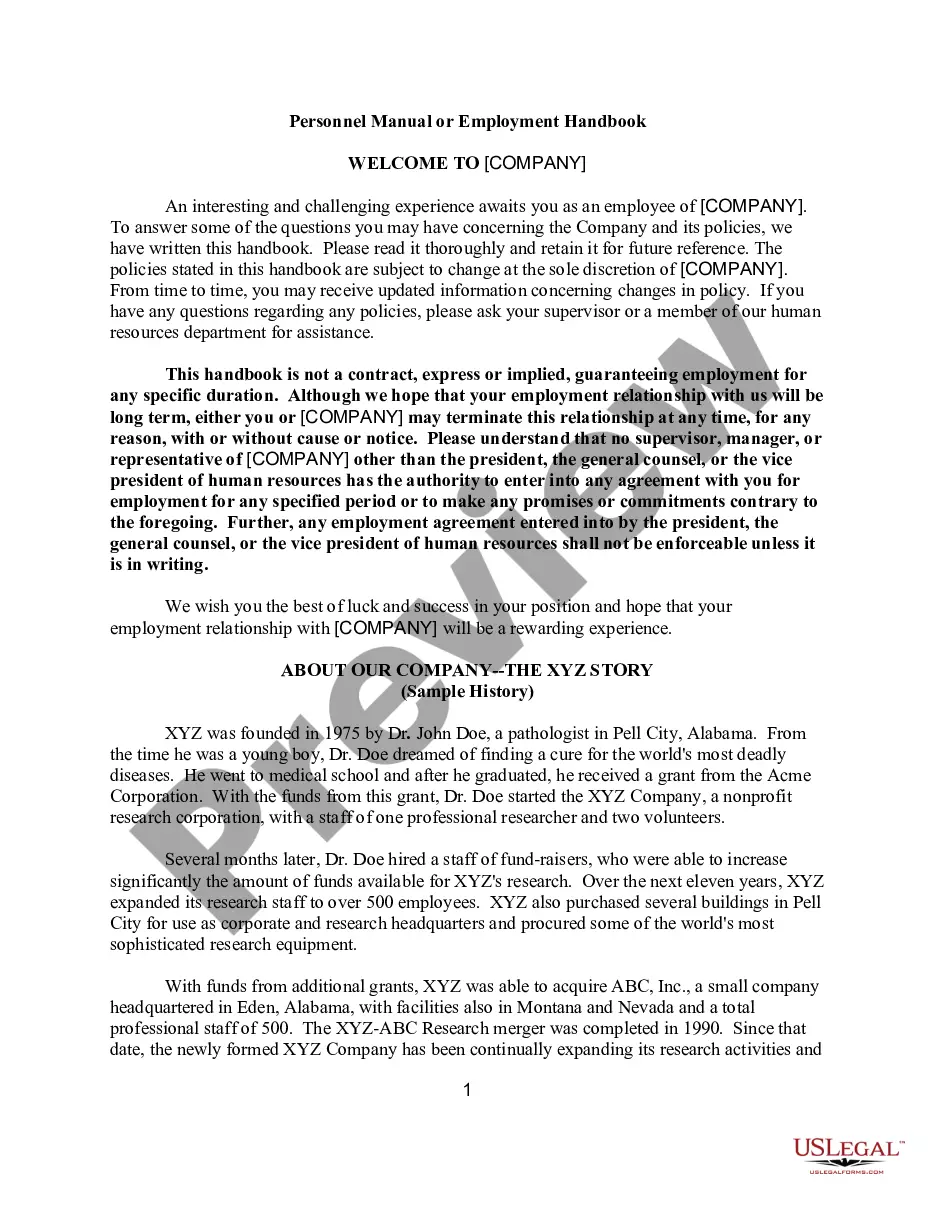
This form, titled "Classification of Employees for Personnel Manual or Employee Handbook," provides a structured classification system for employees based on their work arrangements and eligibility for benefits. It distinguishes between full-time, part-time, temporary, leased, exempt, and nonexempt employees. This classification is essential for salary administration and ensures compliance with wage and hour laws, making it a critical document for organizations managing a diverse workforce.
Form components explained
- Definitions of employee classifications: full-time, part-time, temporary, and leased workers.
- Explanation of exempt versus nonexempt employee status and their impact on overtime pay.
- Guidelines for communicating classification status to employees during orientation.
- Instructions for employee inquiries regarding their classification and exemption status.

When to use this document
This form should be used when developing or updating an employee handbook or personnel manual. It is particularly useful for ensuring that all employees understand their classification, which affects their eligibility for overtime pay and benefits. Employers should refer to this form during hiring, onboarding, or restructuring phases to maintain clear communication about employee status.
Who can use this document
This form is intended for:
- Human resources professionals responsible for employee classification.
- Employers seeking to clarify employment types in their personnel documents.
- Organizations that need to comply with labor laws regarding employee classifications.
- Businesses with a mix of full-time, part-time, and temporary workers requiring clear guidelines.
Completing this form step by step
- Identify and define the various categories of employees your organization utilizes.
- Fill in the specific terms that apply to your organization in the provided blank spaces.
- Clarify the criteria that will determine whether employees are classified as exempt or nonexempt.
- Ensure that all classifications align with your organizationâs policies and legal requirements.
- Share the completed classifications with the relevant departments, including human resources and accounting.
Does this form need to be notarized?
This form usually doesn’t need to be notarized. However, local laws or specific transactions may require it. Our online notarization service, powered by Notarize, lets you complete it remotely through a secure video session, available 24/7.
Get your form ready online
Our built-in tools help you complete, sign, share, and store your documents in one place.
Make edits, fill in missing information, and update formatting in US Legal Forms—just like you would in MS Word.
Download a copy, print it, send it by email, or mail it via USPS—whatever works best for your next step.
Sign and collect signatures with our SignNow integration. Send to multiple recipients, set reminders, and more. Go Premium to unlock E-Sign.
If this form requires notarization, complete it online through a secure video call—no need to meet a notary in person or wait for an appointment.
We protect your documents and personal data by following strict security and privacy standards.

Make edits, fill in missing information, and update formatting in US Legal Forms—just like you would in MS Word.

Download a copy, print it, send it by email, or mail it via USPS—whatever works best for your next step.

Sign and collect signatures with our SignNow integration. Send to multiple recipients, set reminders, and more. Go Premium to unlock E-Sign.

If this form requires notarization, complete it online through a secure video call—no need to meet a notary in person or wait for an appointment.

We protect your documents and personal data by following strict security and privacy standards.
Common mistakes to avoid
- Failing to regularly update employee classifications as roles and responsibilities change.
- Not communicating changes in classification status to affected employees.
- Inaccurately classifying employees, potentially leading to legal compliance issues.
- Overlooking state-specific labor laws that may influence classification criteria.
Why complete this form online
- Instant access to professionally drafted templates that save time.
- Easy customization to fit your organizationâs specific needs.
- Secure storage and record-keeping for compliance audits.
- Regular updates ensure you have the latest legal information and best practices.
Legal use & context
- This form helps organizations comply with federal and state labor laws regarding employee classifications.
- Clear classification reduces the risk of employee disputes related to pay and benefits.
- Employers must keep this classification form updated to reflect changes in employment status or laws.
Key takeaways
- Employee classification is important for compliance with wage and hour laws.
- Clear definitions prevent misunderstandings regarding employee rights and benefits.
- This form is vital for maintaining structured and legally compliant HR practices.
Looking for another form?


Form popularity
FAQ
Under the HCE duties test: The employee's primary duty must be office or nonmanual work. The employee must "customarily and regularly" perform at least one of the bona fide exempt duties of an executive, administrative or professional employee, as described in the regulations.
An exempt employee is not entitled overtime pay by the Fair Labor Standards Act (FLSA). These salaried employees receive the same amount of pay per pay period, even if they put in overtime hours. A nonexempt employee is eligible to be paid overtime for work in excess of 40 hours per week, per federal guidelines.
The most common roles considered exempt include professional, executive, outside sales, and administrative. On the flip side, non-exempt employees must be paid overtime -- one-and-a-half times their hourly rate, for any hours worked beyond 40 each week.
Outside Sales Employee: To be exempt, an outside sales employee must have a primary duty of making sales or obtaining orders or contracts for services, and the employee must be customarily and regularly engaged away from the employer's place of business.
Requirements differ from state to state, but the FLSA (Fair Labor Standards Act) classifies exempt employees as anyone doing jobs that fall into these categories Professional, administrative, executive, outside sales, STEM (Science, Technology, Engineering, and Math) and computer related.
When an employee is considered exempt, it means they are excluded from the specific rights created by the FLSA. Typically, an employee who is paid a salary instead of hourly pay will be considered exempt. A full-time exempt employee works at least 40 hours per week.
Exempt employees aren't paid extra for putting in more than 40 hours per week; they're paid for getting the job done. On the other hand, nonexempt employees must be paid overtime if they work more than 40 hours per workweek, so it often behooves employers to keep nonexempt employees' hours down.
Exempt employees do not earn overtime pay, no matter how many hours they work in a week or per day. There are 2 tests to determine how an employee is categorized.
Employees usually are classified according to the hours worked and the expected duration of the job. Accordingly, they generally fall into three major categories: full-time, part-time, and temporary employees.