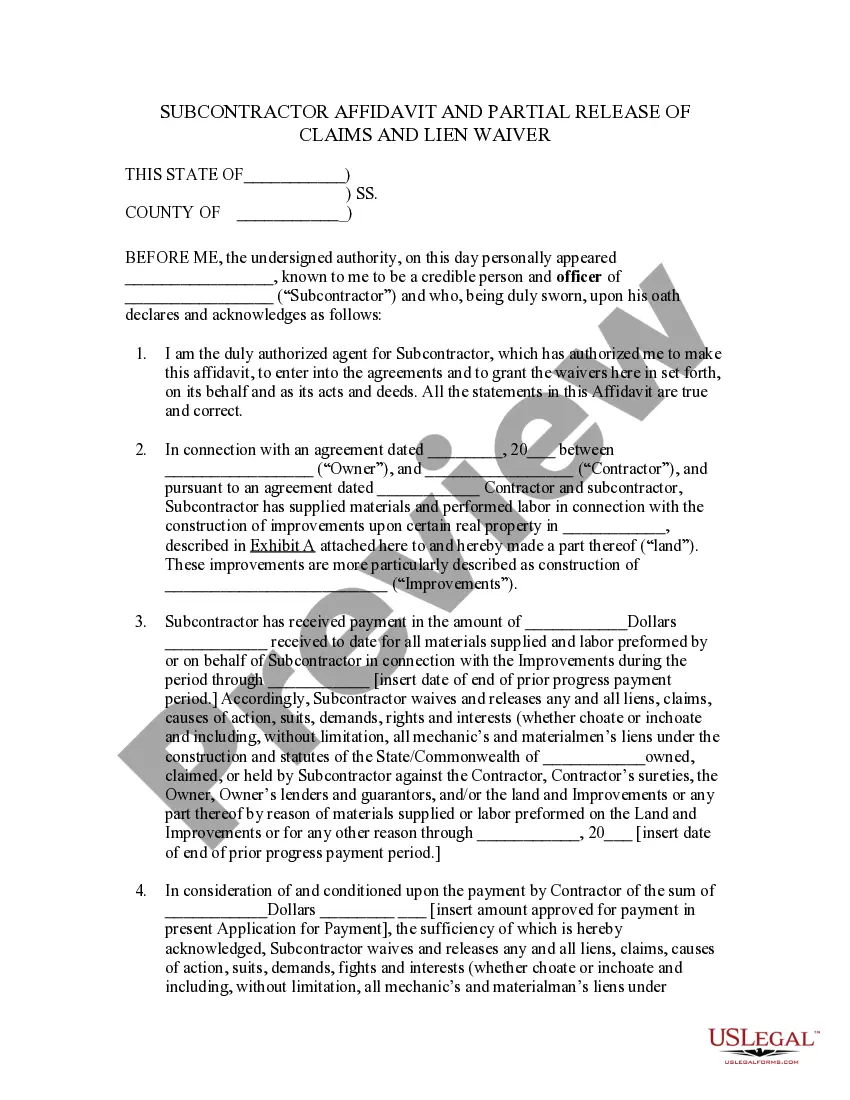
Release by Employee of Claims against Employer related to Terminated Employment Including the Release of Employee Benefit and Pension Plans and Funds
What this document covers
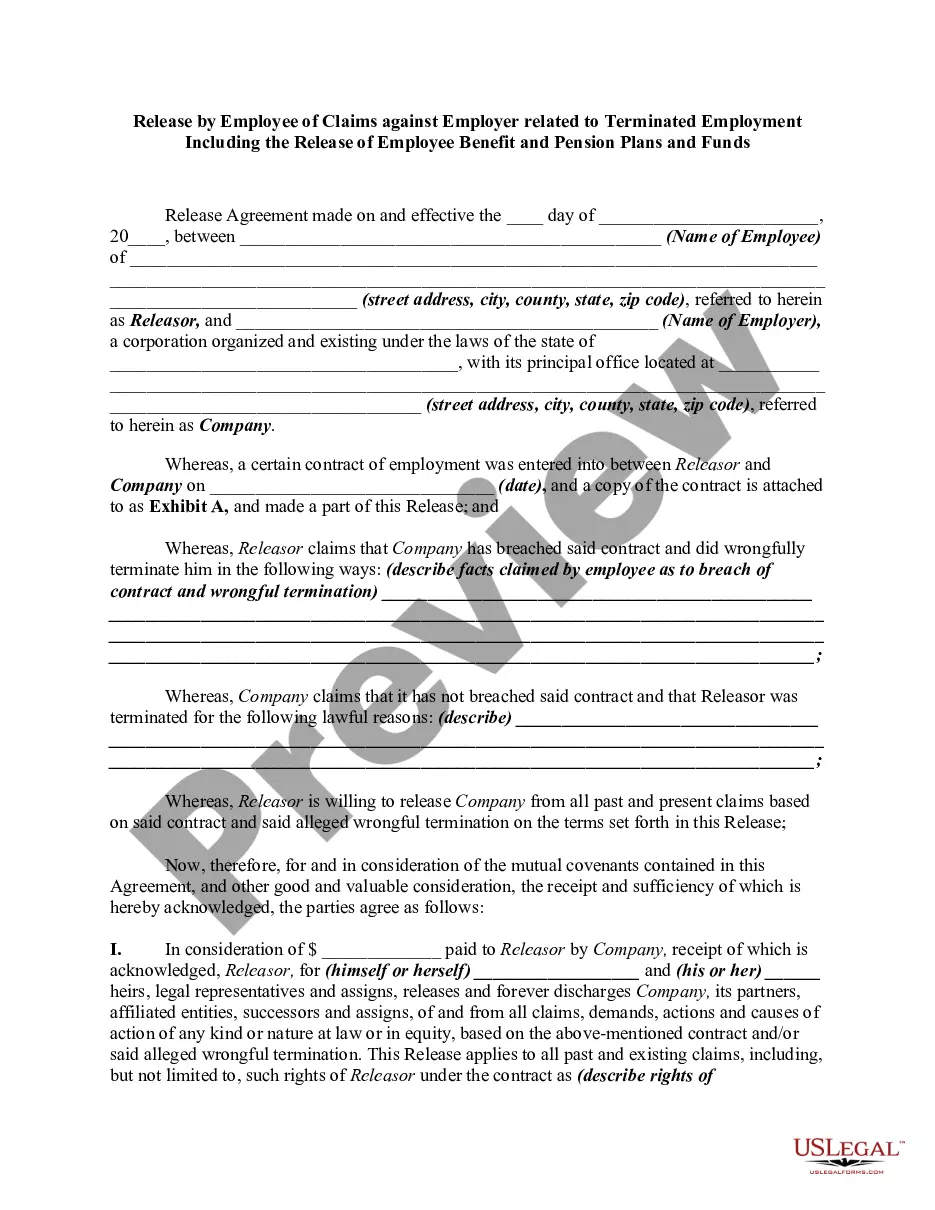
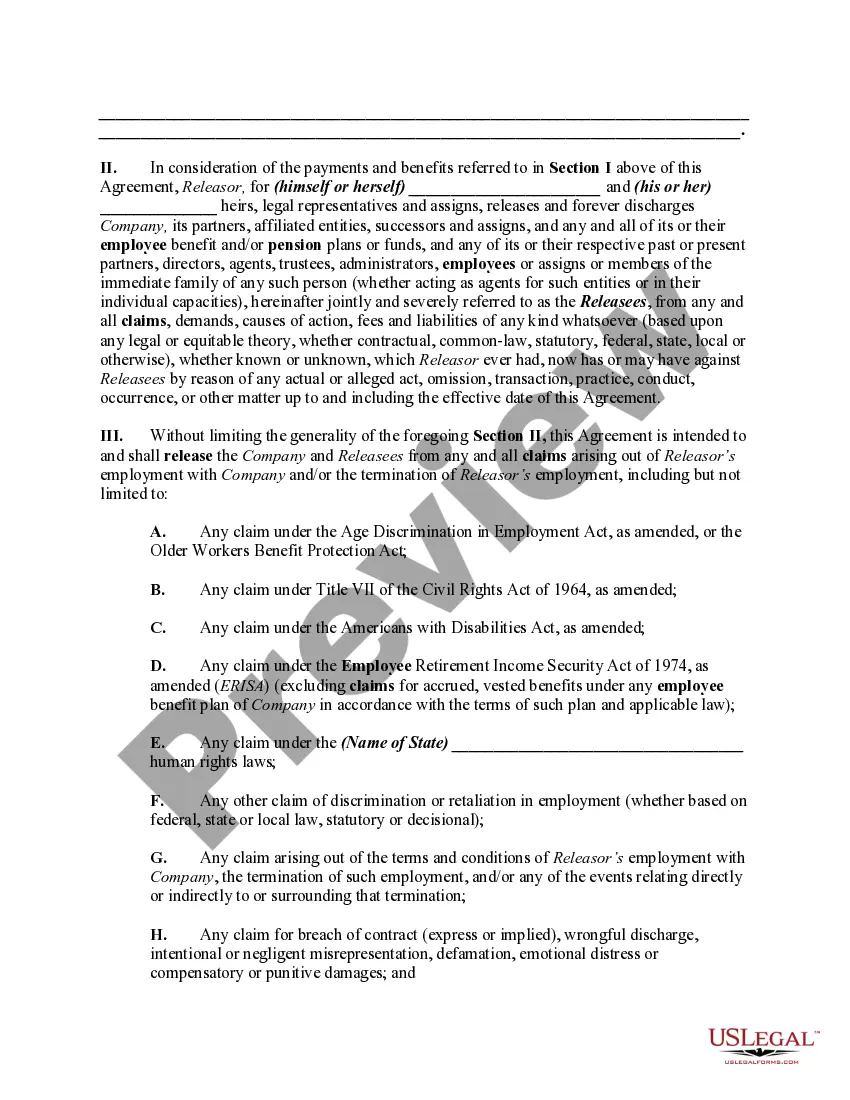
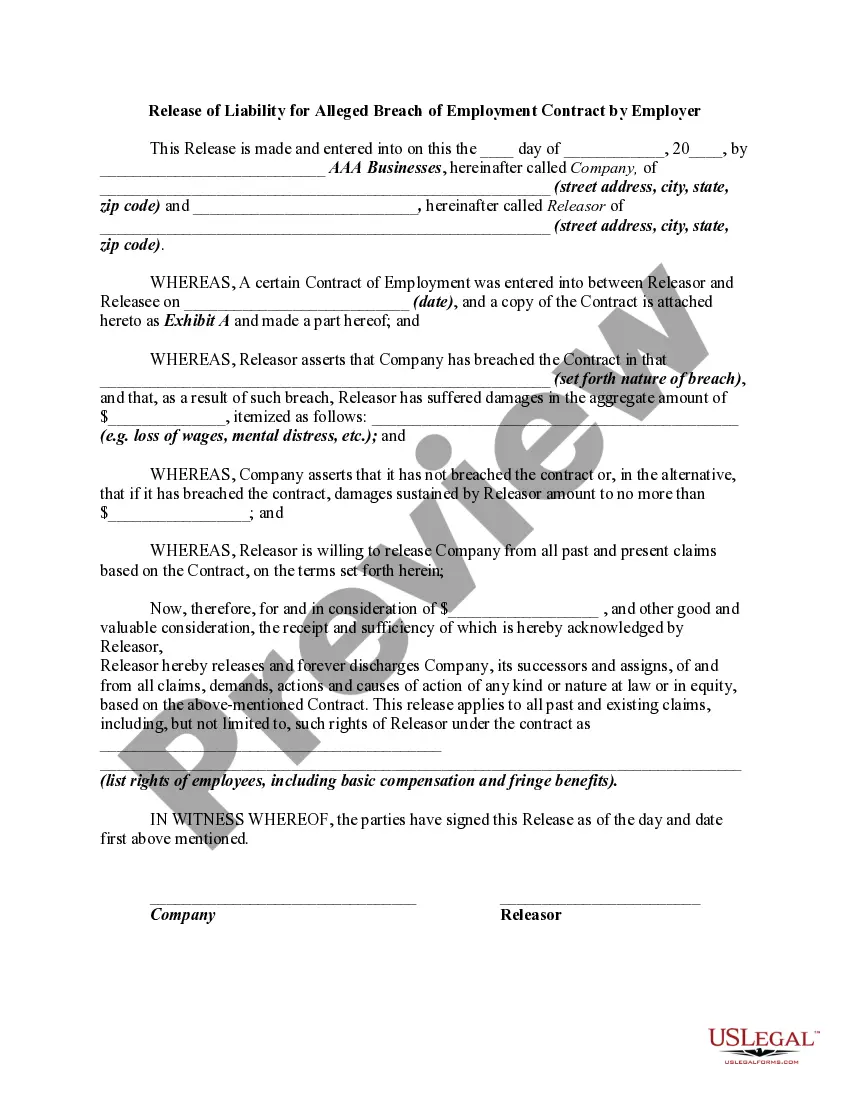
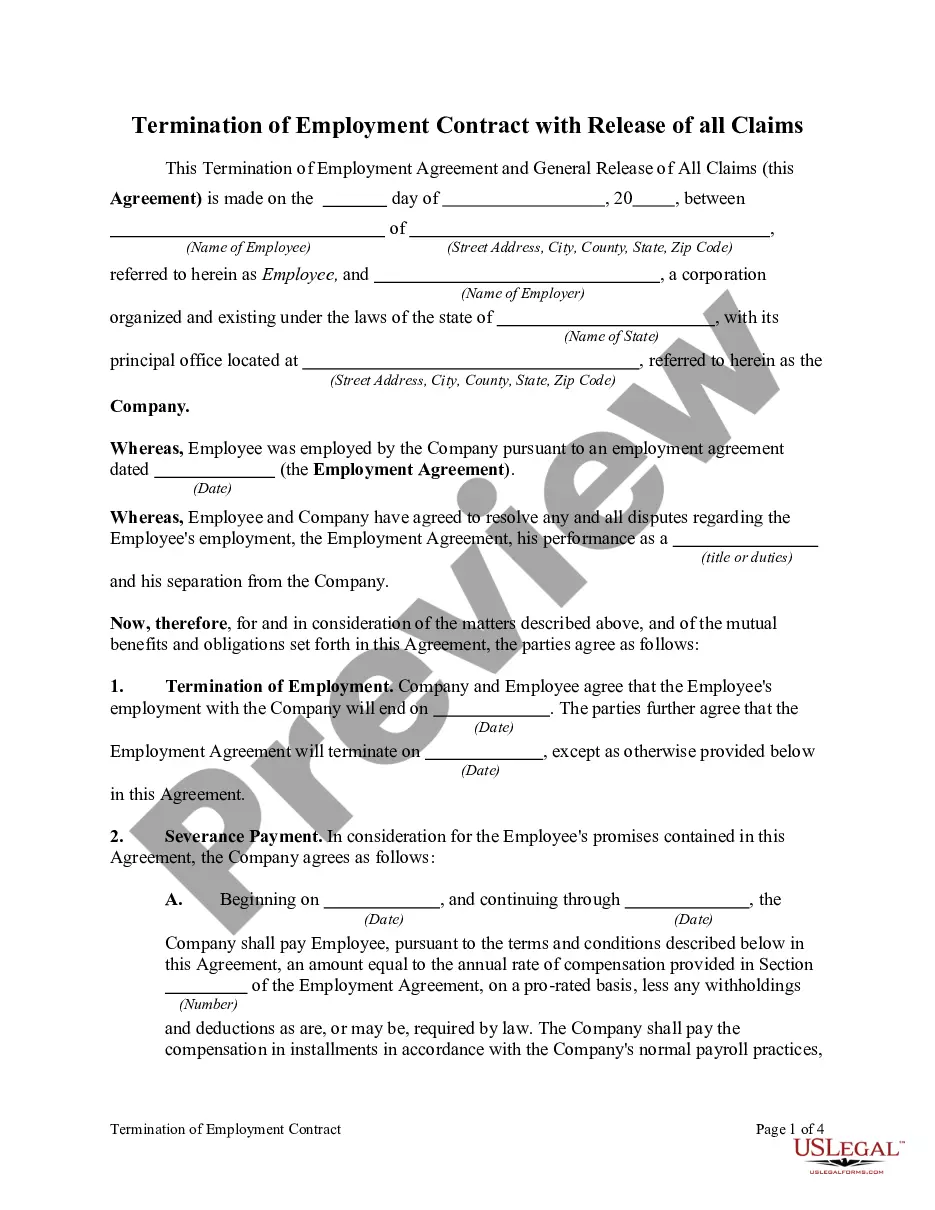
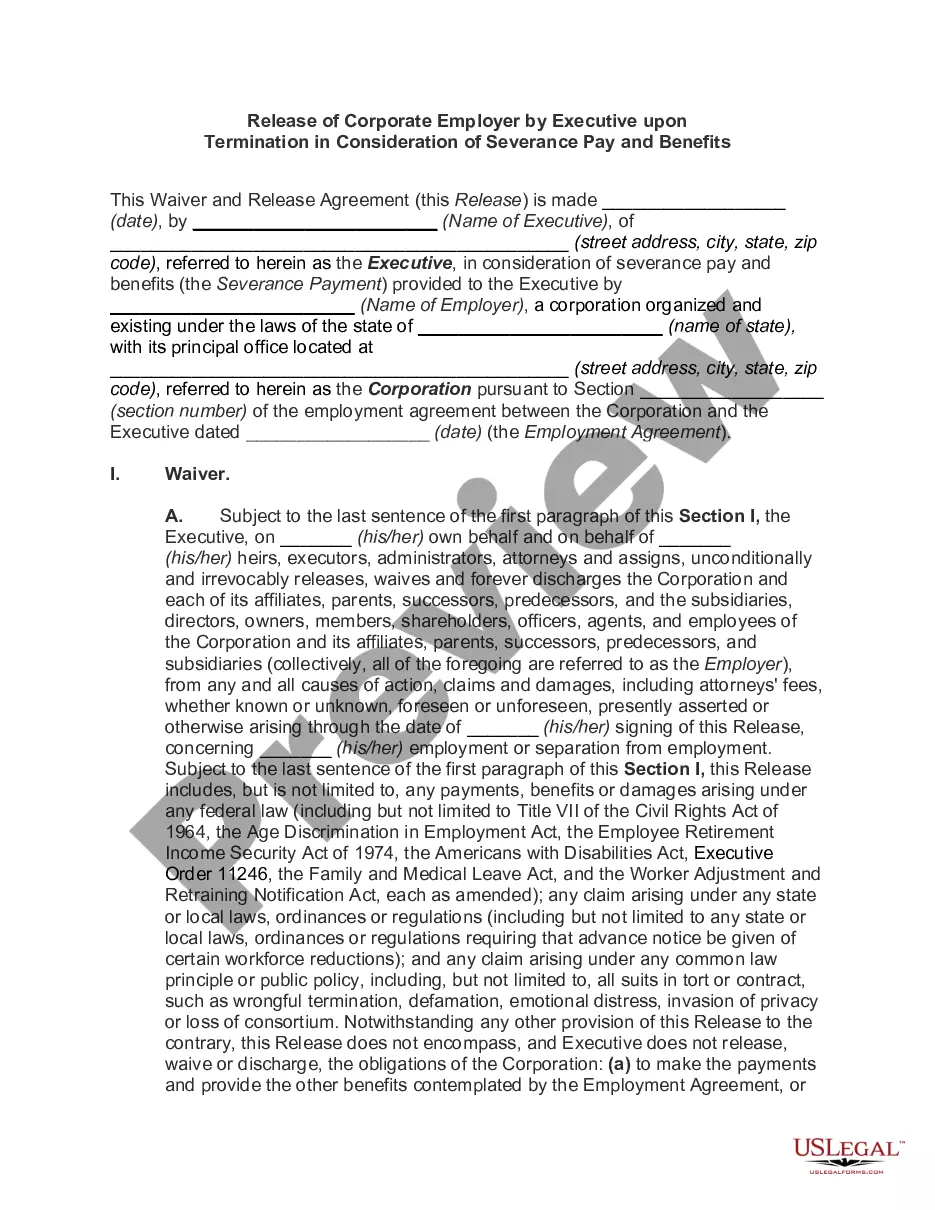
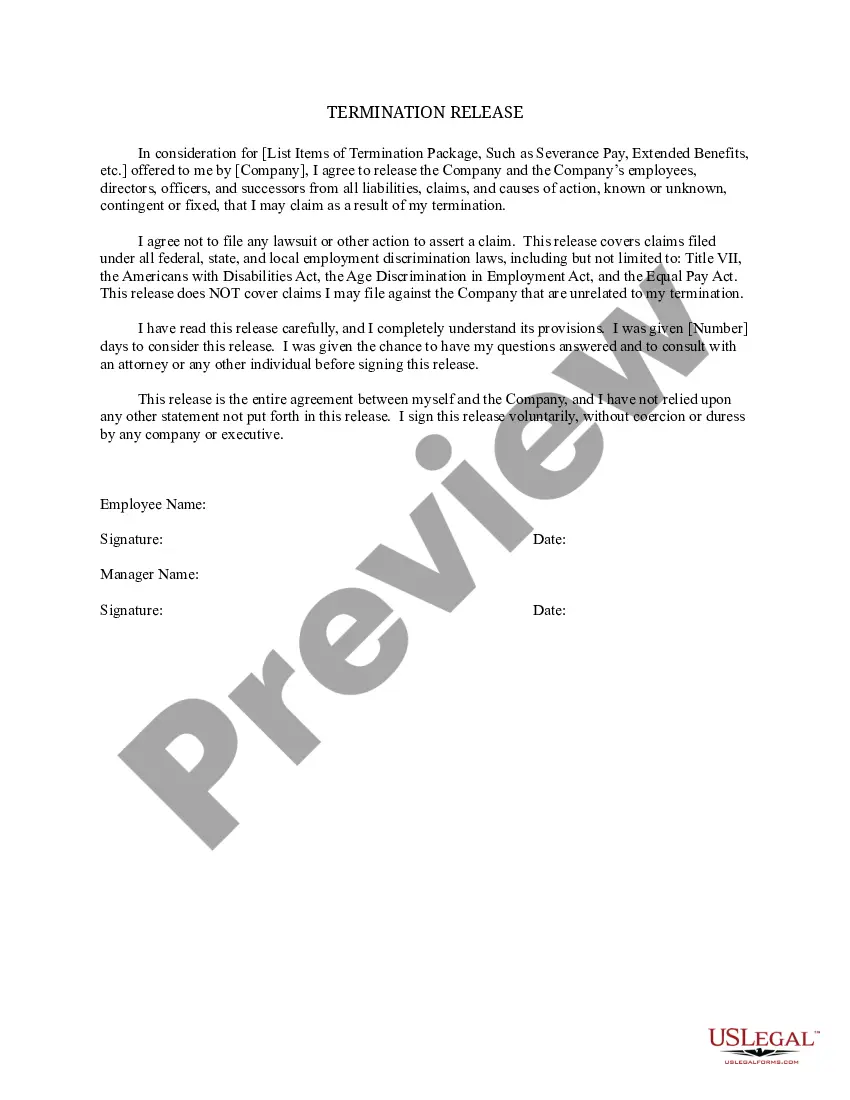
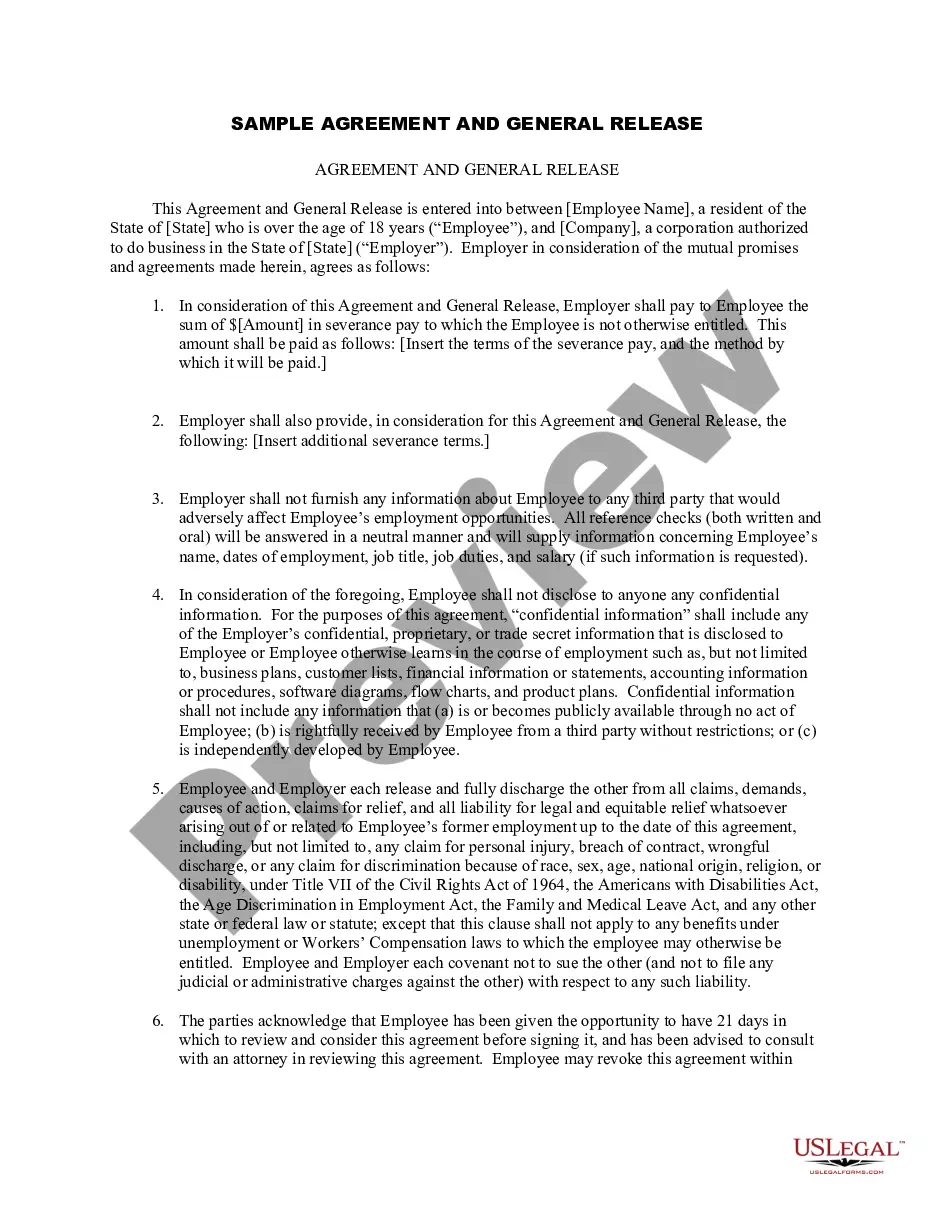
The Release by Employee of Claims against Employer related to Terminated Employment is a legal document that enables a former employee to formally relinquish any claims against their employer following termination. This includes claims related to wrongful termination, breaches of contract, and various rights under federal laws such as the Age Discrimination in Employment Act and the Americans with Disabilities Act. Unlike other employment termination forms, this release specifically addresses the waiver of potential legal actions in exchange for a settlement, making it essential for resolving disputes amicably and efficiently.
Main sections of this form
- Identification of the employee (Releasor) and employer (Company) involved.
- Description of the employment contract and the basis for claims against the employer.
- Consideration: details of any settlement or payment made to the Releasor.
- A comprehensive release clause that discharges the employer from various types of claims.
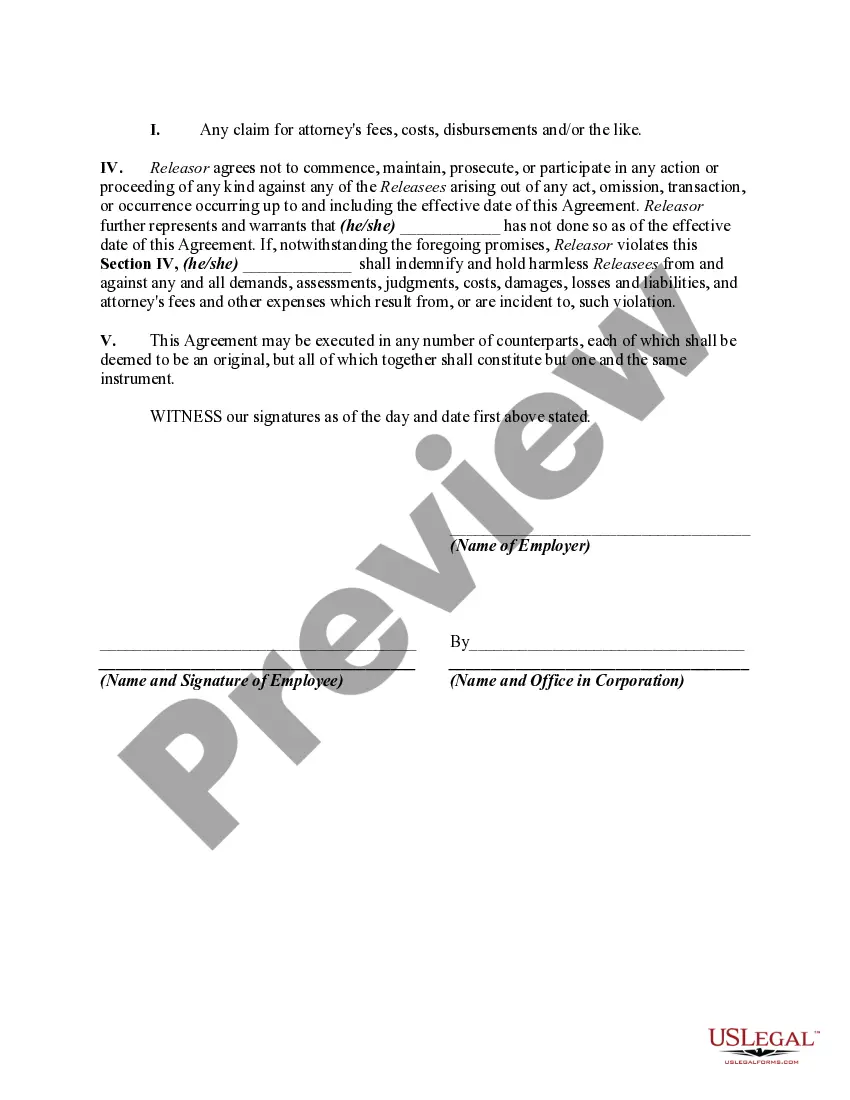
- Non-disparagement clause preventing the Releasor from speaking negatively about the employer.
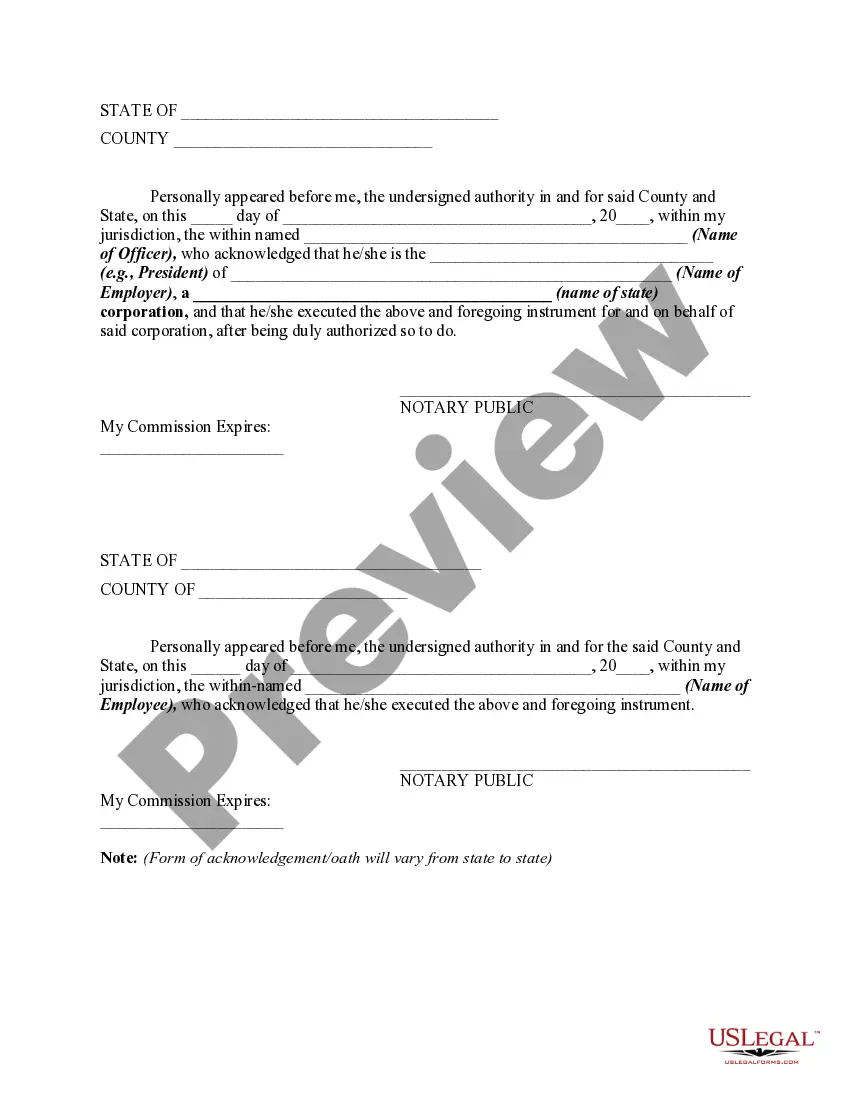
- Signature lines for both parties, including notary acknowledgment if required.
Situations where this form applies
This form should be utilized when an employee has reached a settlement with their employer after termination and wishes to release the employer from any potential legal claims. Specific situations include accepting a lump sum payment in exchange for waiving rights to sue for wrongful termination, discrimination, or any breaches of the employment contract. It is crucial to use this form to ensure that all claims are appropriately settled and to avoid future legal actions.
Intended users of this form
- Former employees who have reached a settlement agreement with their employer.
- Individuals who believe they have potential claims against their employer regarding their termination.
- Employees seeking a clear and legally binding way to release claims against their previous employer.
How to complete this form
- Identify and enter the names and addresses of both the employee (Releasor) and the employer (Company).
- Provide the date of the employment contract and describe the nature of the claims being released.
- State the amount of consideration being paid to the Releasor for the release of claims.
- Review and complete all sections of the release, ensuring clarity and accuracy.
- Sign the document in the designated areas and secure notarization if required by local law.
Notarization guidance
This form does not typically require notarization unless specified by local law. It is advisable to check regional regulations to ensure compliance and enforceability.
Get your form ready online
Our built-in tools help you complete, sign, share, and store your documents in one place.
Make edits, fill in missing information, and update formatting in US Legal Forms—just like you would in MS Word.
Download a copy, print it, send it by email, or mail it via USPS—whatever works best for your next step.
Sign and collect signatures with our SignNow integration. Send to multiple recipients, set reminders, and more. Go Premium to unlock E-Sign.
If this form requires notarization, complete it online through a secure video call—no need to meet a notary in person or wait for an appointment.
We protect your documents and personal data by following strict security and privacy standards.

Make edits, fill in missing information, and update formatting in US Legal Forms—just like you would in MS Word.

Download a copy, print it, send it by email, or mail it via USPS—whatever works best for your next step.

Sign and collect signatures with our SignNow integration. Send to multiple recipients, set reminders, and more. Go Premium to unlock E-Sign.

If this form requires notarization, complete it online through a secure video call—no need to meet a notary in person or wait for an appointment.

We protect your documents and personal data by following strict security and privacy standards.
Common mistakes
- Failing to fully describe the claims being released, which can lead to ambiguity.
- Not specifying the amount of consideration acknowledged in the release.
- Neglecting to sign the document or obtain required notarization.
- Using the form without consulting local laws, which may differ significantly by jurisdiction.
Why complete this form online
- Convenience of downloading and completing the form at your own pace.
- Editability allows for customization to fit specific circumstances and legal requirements.
- Access to reliable forms drafted by licensed attorneys, ensuring compliance and legality.
Looking for another form?



Form popularity
FAQ
COBRA is a federal law that may let you pay to stay on your employee health insurance for a limited time after your job ends (usually 18 months).
Fortunately, terminated employees do have certain rights. In addition to a final paycheck, employees could be entitled to things like continued health insurance coverage, extended benefits, severance pay, and unemployment compensation.
There isn't a law that demands coverage for a minimum period. However, an employer needs to allow you access to its health insurance plan for at least 18 months after termination through COBRA.
A release is an agreement not to sue; it waives your right to sue and company and "releases" your employer from legal liability for claims you may have against it.Or, in a broad release, you might waive your right to sue over any and all claims arising out of your employment.
Employees terminated by an employer have certain rights. An employee has the right to receive a final paycheck and the option of continuing health insurance coverage, and may even be eligible for severance pay and unemployment compensation benefits.
Health insurance is active for at least 2 months after termination, in most cases, but some people keep their coverage for up to 3 years.It applies to companies with 20 or more employees and lets you keep your health insurance at your employer's group rate for up to 18 months after termination.
Also known as a general release or release. A written contract in which one or more parties agree to give up legal causes of action against the other party in exchange for adequate consideration (that is, something of value to which the party releasing the legal claims is not already entitled).
Wrongful termination, or not following due process as defined by the respective state and federal laws, will result in legal punitive consequences for the employer. In addition, the courts may order the employer to pay fines and award additional compensation to an employee who was terminated.