Release of Liability for Alleged Breach of Employment Contract by Employer
About this form
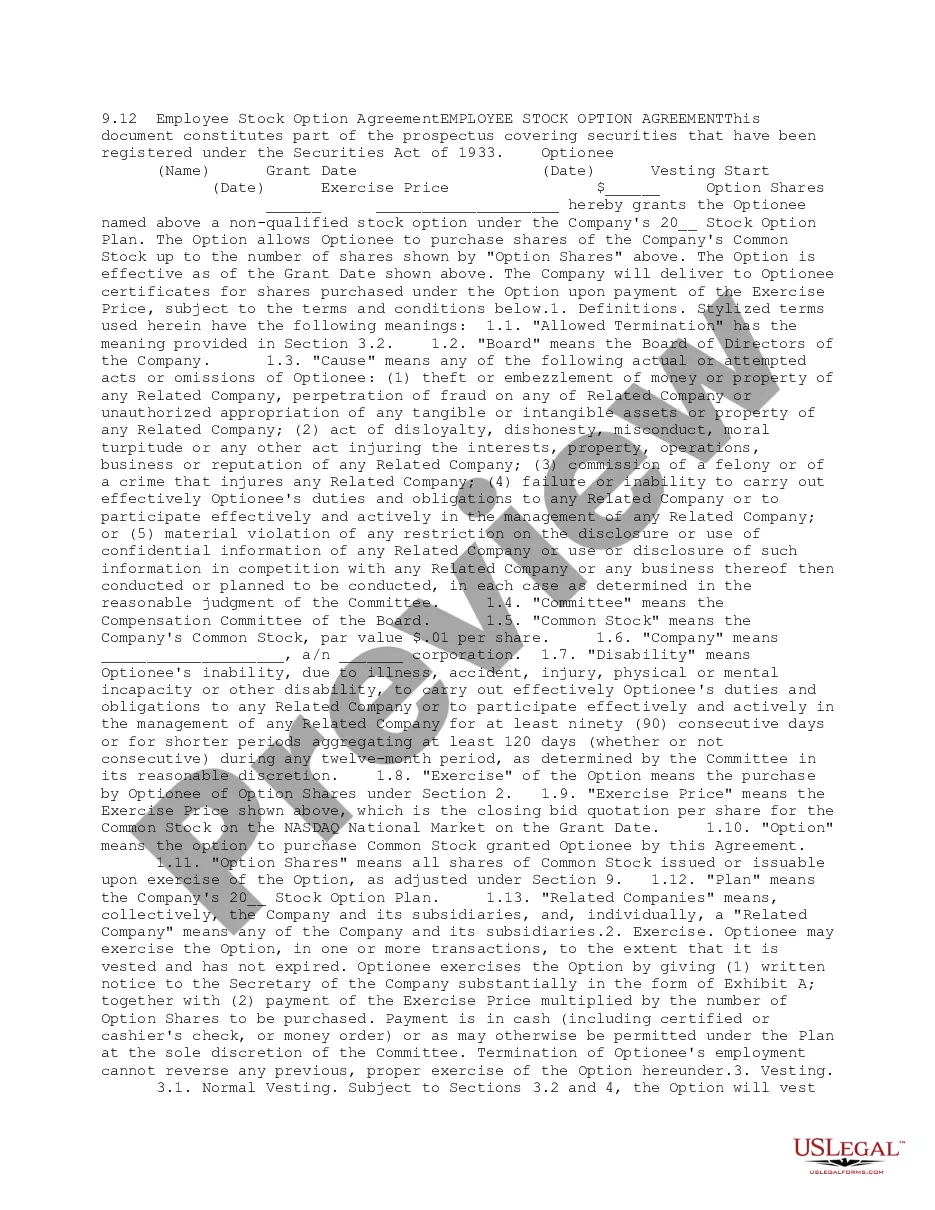
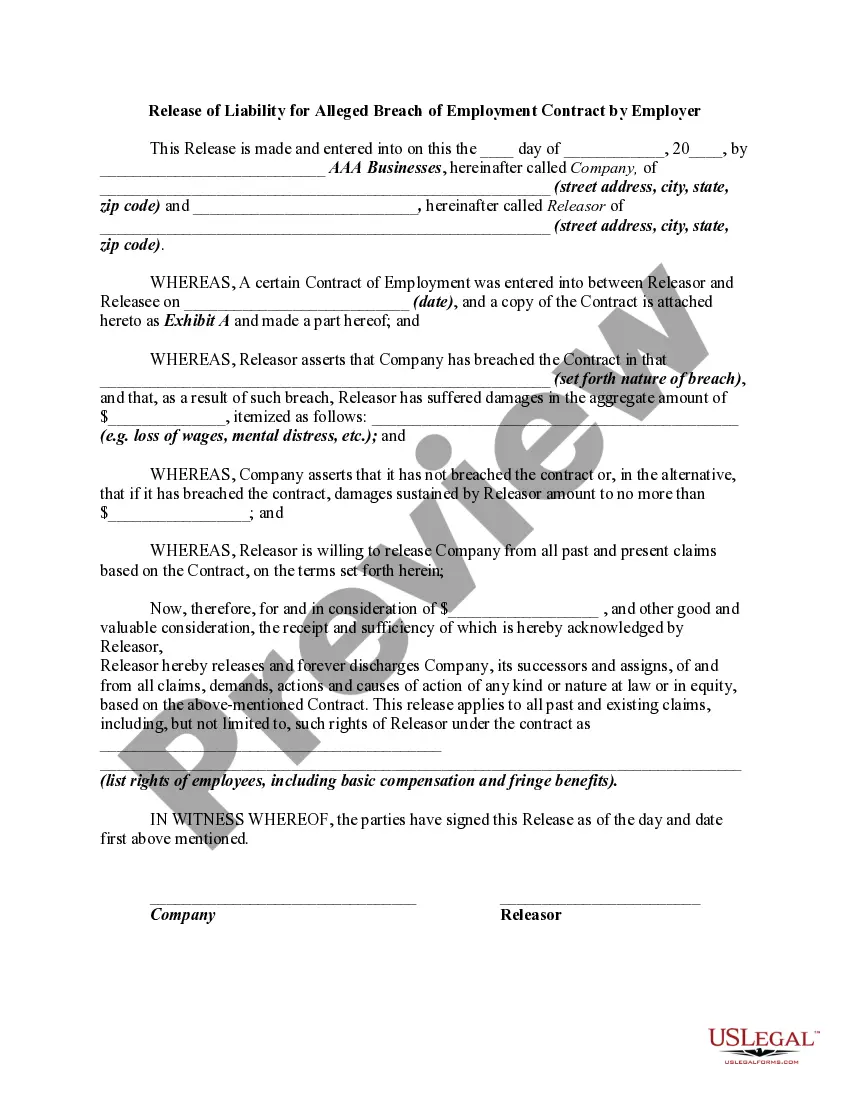
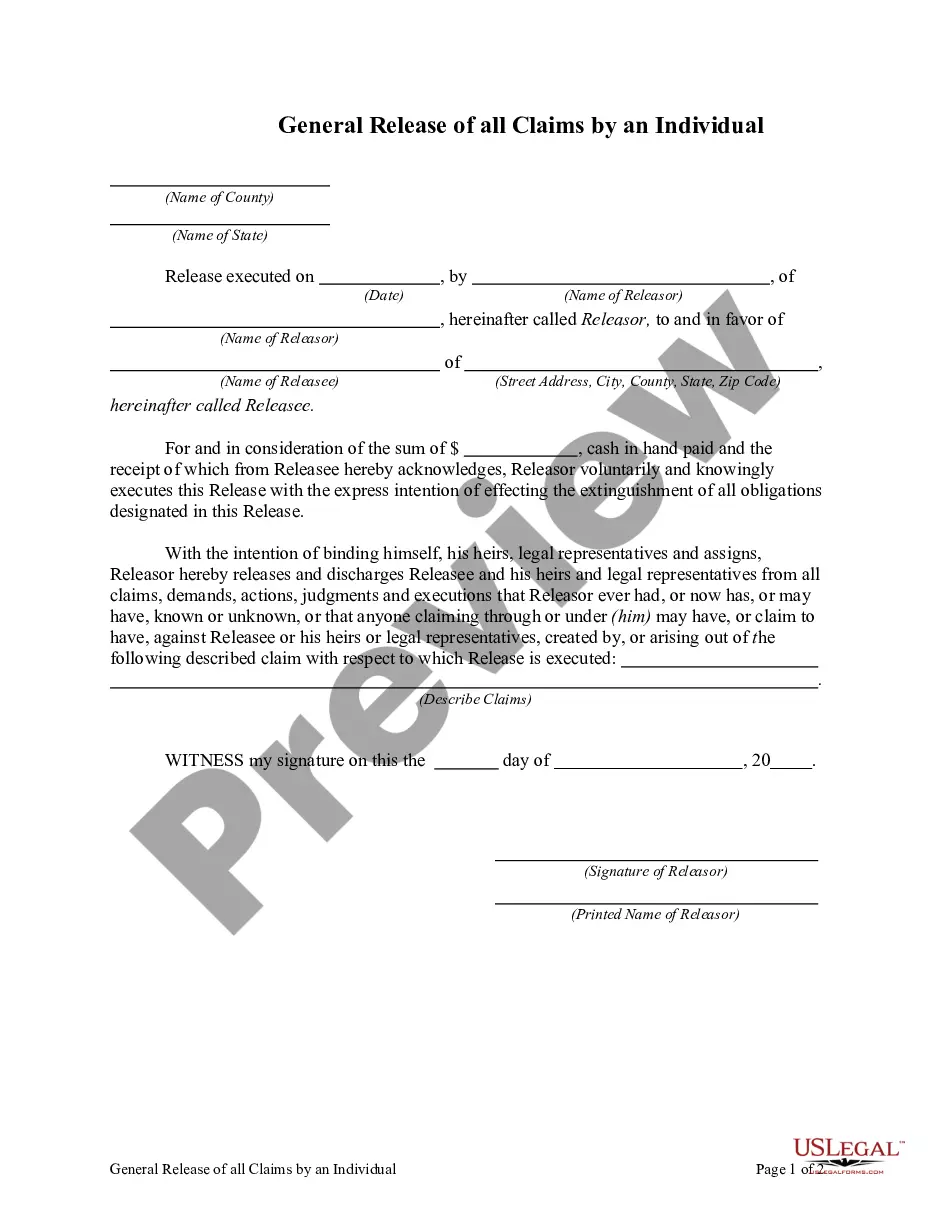
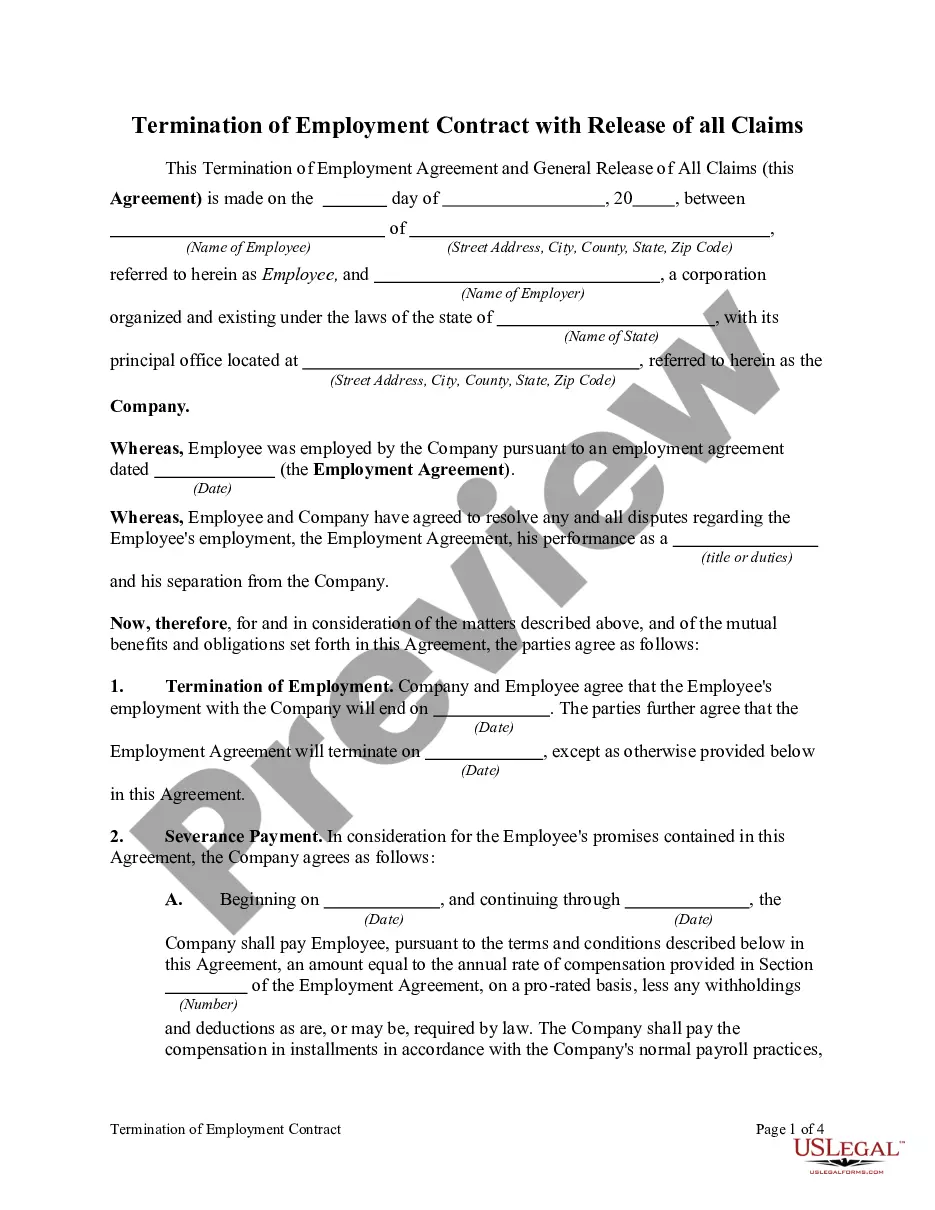
The Release of Liability for Alleged Breach of Employment Contract by Employer is a legal document that allows an employee (the Releasor) to release their employer from any claims related to an alleged breach of their employment contract. This form is crucial in settling disputes amicably and providing clarity on any claims both parties may have. It establishes a formal agreement stating that the Releasor will not pursue legal action against the employer concerning the identified issues in the employment contract.
Key components of this form
- Identification of parties involved: Both the Company (Employer) and Releasor (Employee) need to be clearly stated with their addresses.
- Description of the employment contract and its breach: The form requires detailing the nature of the alleged breach.
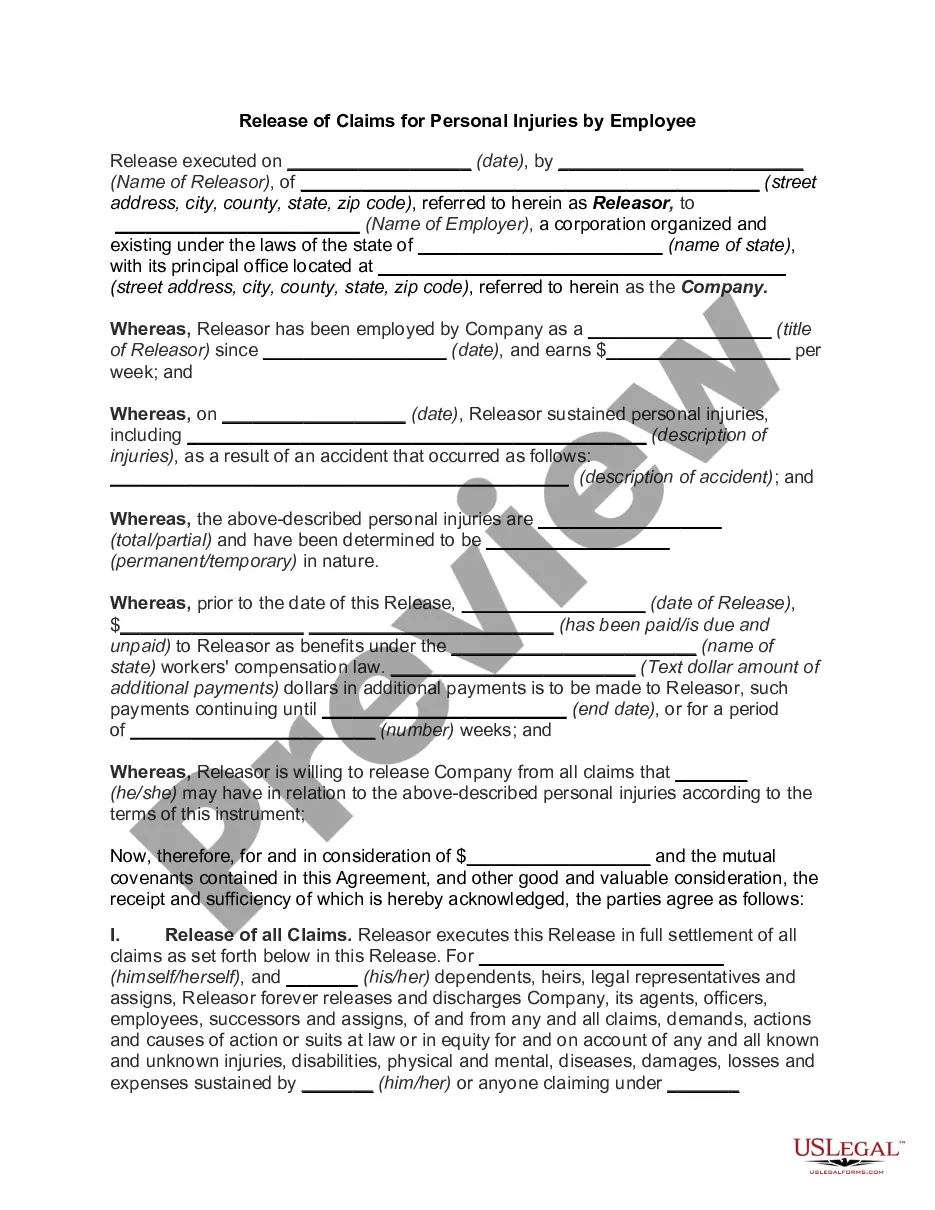
- Assertion of damages: The Releasor must specify the damages suffered as a result of the alleged breach, including any dollar amounts.
- Mutual release clause: This section outlines the release of both past and present claims related to the employment contract.
- Signatures: The form requires signatures from both parties to validate the agreement.
When to use this form
This form is applicable in situations where an employee believes their employer has violated the terms of an employment contract. Typical scenarios include disputes over unpaid wages, wrongful termination, or other grievances rooted in employment agreements. The release of liability can be beneficial for both parties to settle disputes without escalating to legal action.
Intended users of this form
- Employees who feel their employer has breached their employment contract.
- Employers who wish to settle disputes regarding contractual claims without going to court.
- Legal representatives assisting clients with employment disputes.
Completing this form step by step
- Identify the parties involved by entering their names and addresses at the top of the form.
- Specify the date when the original employment contract was signed and attach a copy as Exhibit A.
- Detail the nature of the alleged breach and describe incurred damages, including any financial amounts.
- Include the release terms, clarifying that the Releasor is waiving all claims against the employer.
- Both parties should sign and date the form to make it legally binding.
Is notarization required?
This form does not typically require notarization to be legally valid. However, some jurisdictions or document types may still require it. US Legal Forms provides secure online notarization powered by Notarize, available 24/7 for added convenience.
Get your form ready online
Our built-in tools help you complete, sign, share, and store your documents in one place.
Make edits, fill in missing information, and update formatting in US Legal Forms—just like you would in MS Word.
Download a copy, print it, send it by email, or mail it via USPS—whatever works best for your next step.
Sign and collect signatures with our SignNow integration. Send to multiple recipients, set reminders, and more. Go Premium to unlock E-Sign.
If this form requires notarization, complete it online through a secure video call—no need to meet a notary in person or wait for an appointment.
We protect your documents and personal data by following strict security and privacy standards.

Make edits, fill in missing information, and update formatting in US Legal Forms—just like you would in MS Word.

Download a copy, print it, send it by email, or mail it via USPS—whatever works best for your next step.

Sign and collect signatures with our SignNow integration. Send to multiple recipients, set reminders, and more. Go Premium to unlock E-Sign.

If this form requires notarization, complete it online through a secure video call—no need to meet a notary in person or wait for an appointment.

We protect your documents and personal data by following strict security and privacy standards.
Common mistakes
- Failing to attach the original employment contract as required.
- Not providing specific details regarding the alleged breach and damages.
- Neglecting to include both parties' signatures, making the release unenforceable.
Advantages of online completion
- Convenience: Access the form easily from anywhere, allowing quick and efficient completion.
- Editability: Customize the form to fit specific situations without needing extensive legal knowledge.
- Reliability: Forms provided by licensed attorneys ensure compliance with legal standards.
Looking for another form?

Form popularity
FAQ
Compensatory Damages. Consequential Damages; Liquidated Damages; Injunctions and other Equitable Relief.
If your employer breaks your contract, you should try and sort the matter out with them informally first. If this doesn't work, you could try raising a grievance against your employer if you have time within the time limit to make a tribunal claim.
If part of your contract is broken A contract can be broken if either you or your employer doesn't follow a term in the contract.If your employer breaks your contract, you should try and sort the matter out with them informally first. If this doesn't work, you could try raising a grievance against your employer.
A typical breach in employment contract cases occurs when an employer fails to pay the employee at the time or in the amount that is stated in the contract. This type of breach not only allows the employee out of the contract, but may also give the employee cause to sue the employer for damages.
A release is an agreement not to sue; it waives your right to sue and company and "releases" your employer from legal liability for claims you may have against it.Or, in a broad release, you might waive your right to sue over any and all claims arising out of your employment.
In most states, this ranges from $1.500 to $15,000. It's a fairly simple process, with the judgment taking place right away and limited right of appeal.
The existence of a contract concerning the worker's compensation, The worker fulfilled his or her part of the contract, The employer did not perform its part of the contract, and. The worker has suffered damages due to the employer's breach.
If part of your contract is broken A contract can be broken if either you or your employer doesn't follow a term in the contract.If your employer breaks your contract, you should try and sort the matter out with them informally first. If this doesn't work, you could try raising a grievance against your employer.
You can take your employer to court for breach of contract, but legal fees can be expensive and you can only claim for any financial loss you have suffered. If the breach has just hurt your feelings, it may not be worth taking any further action. Your employer may try to change your contract without your agreement.