Assignment of Lease from Tenant
Understanding this form
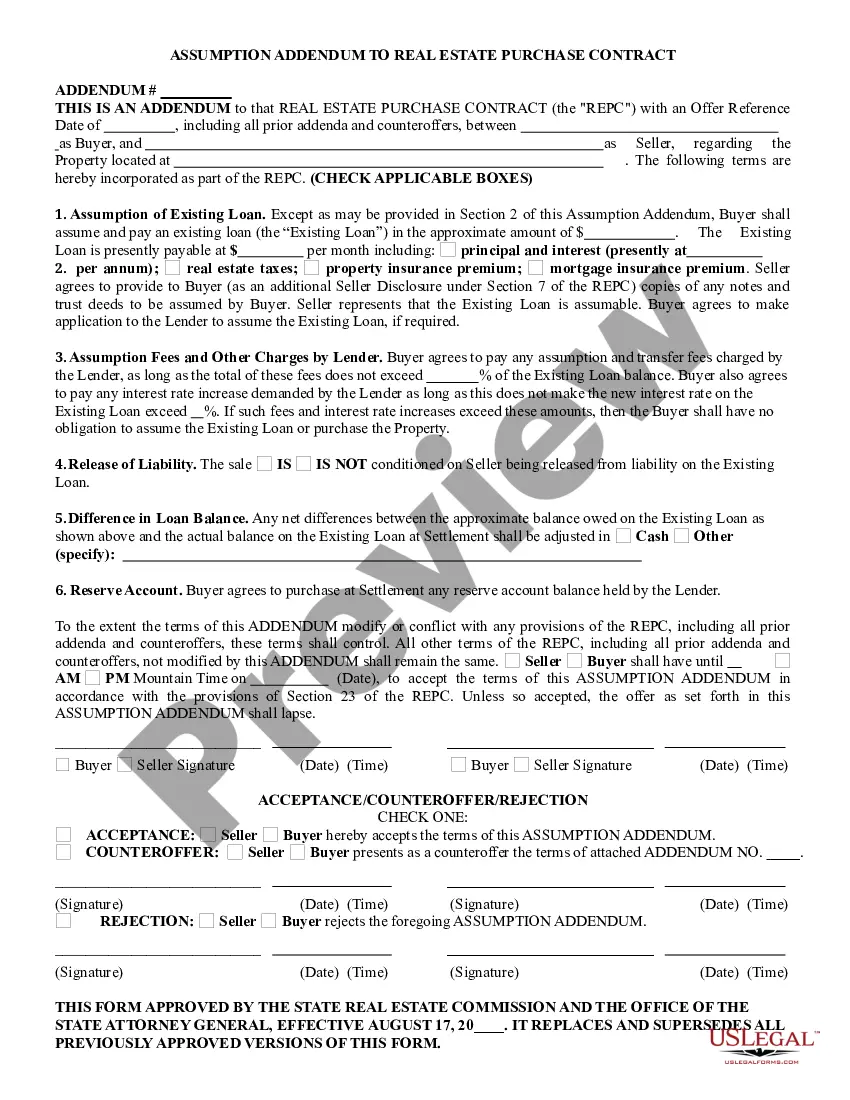
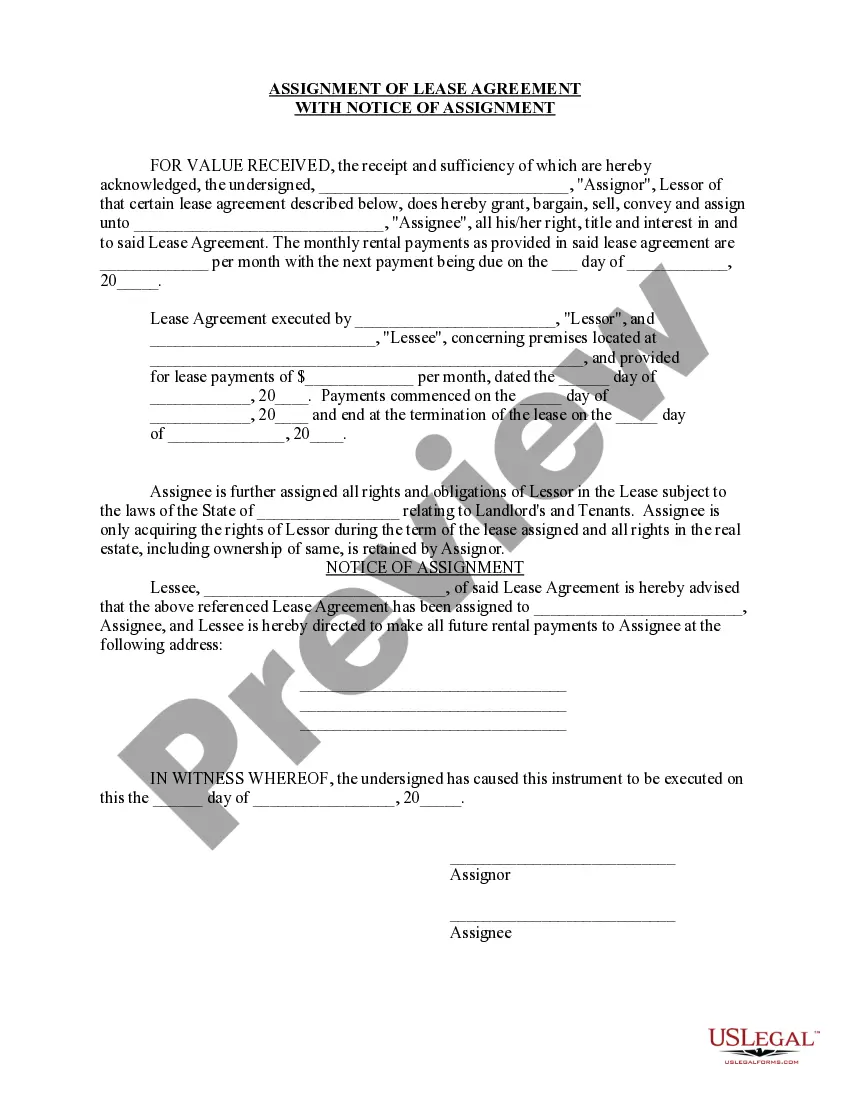
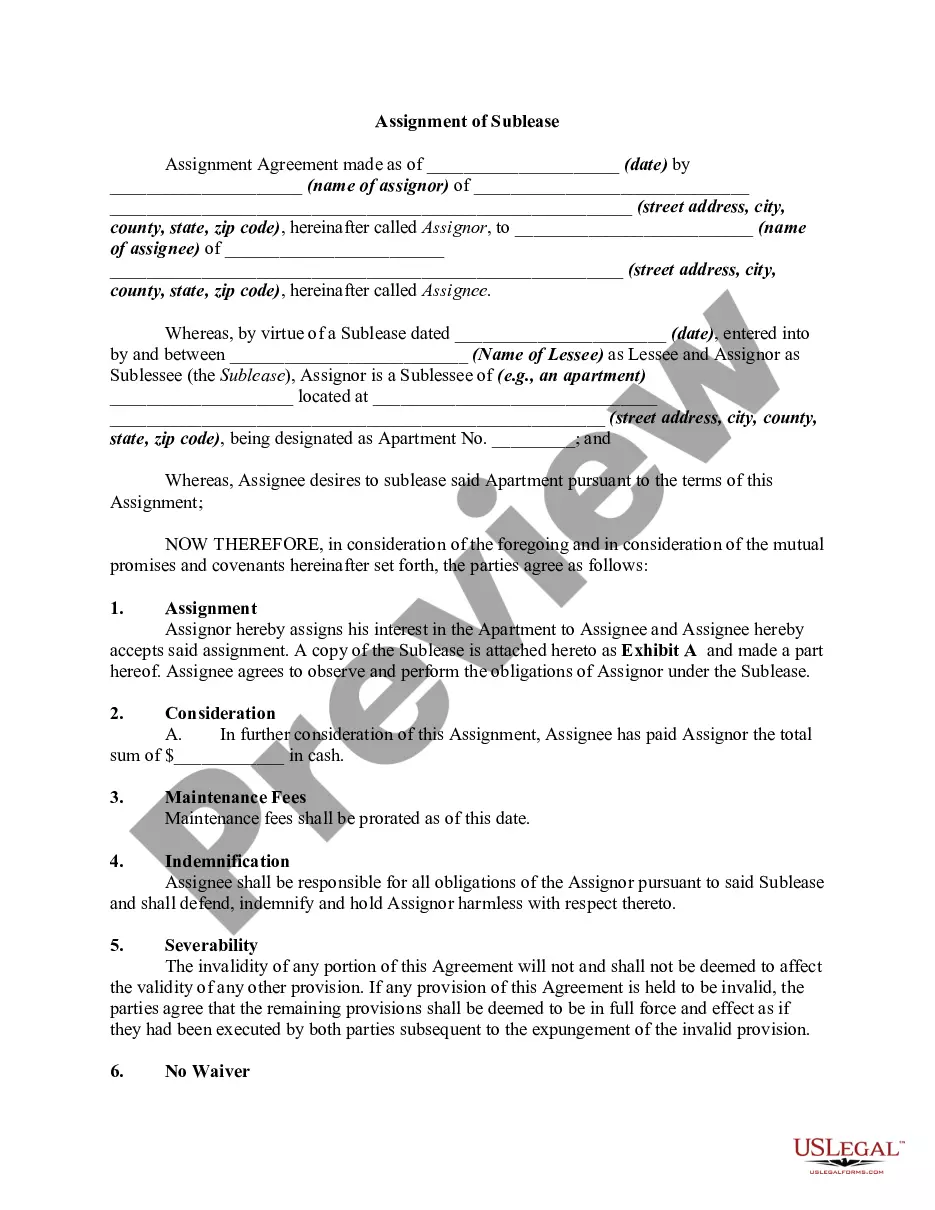
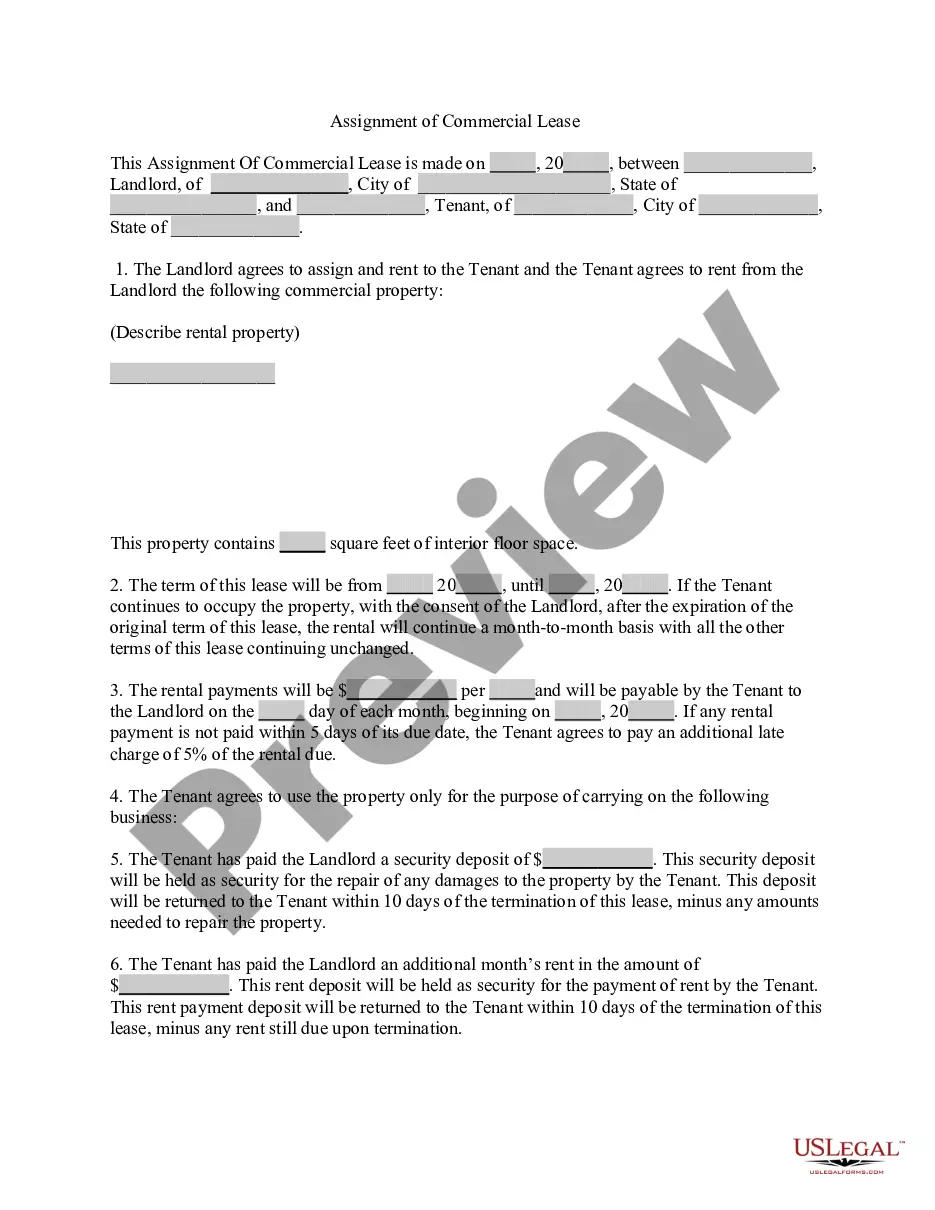
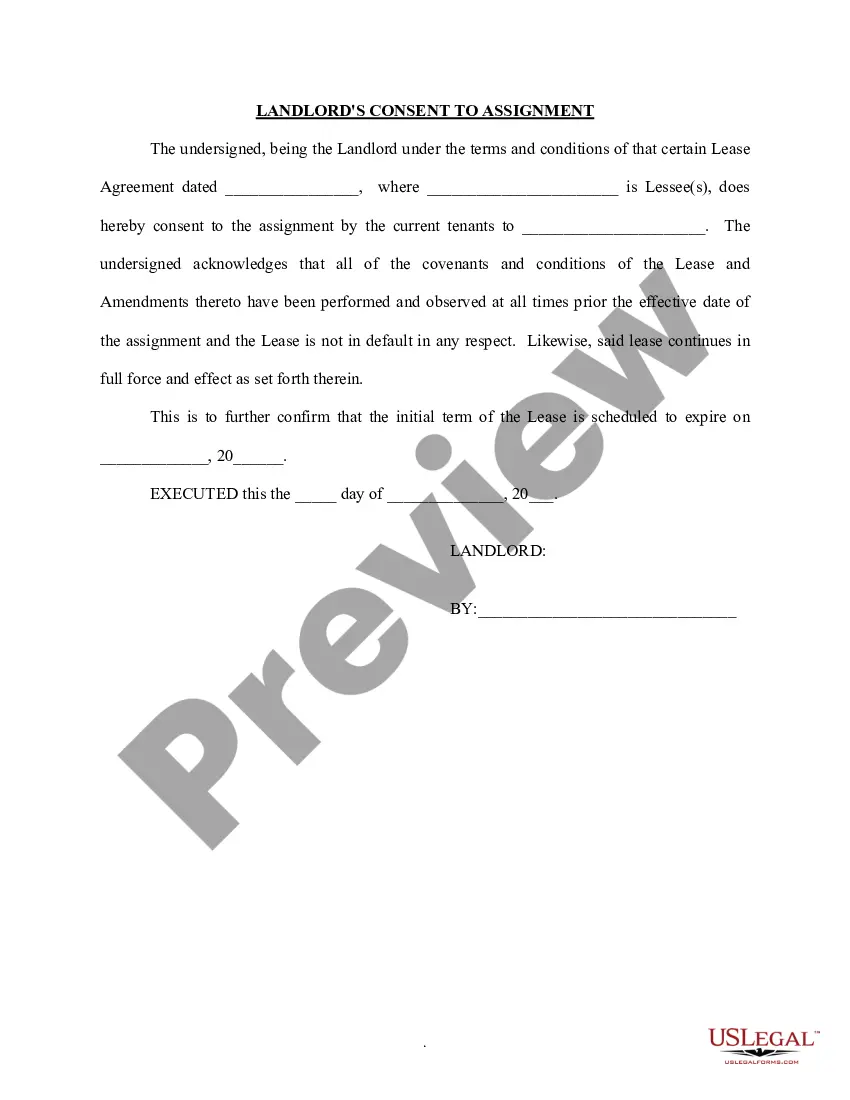
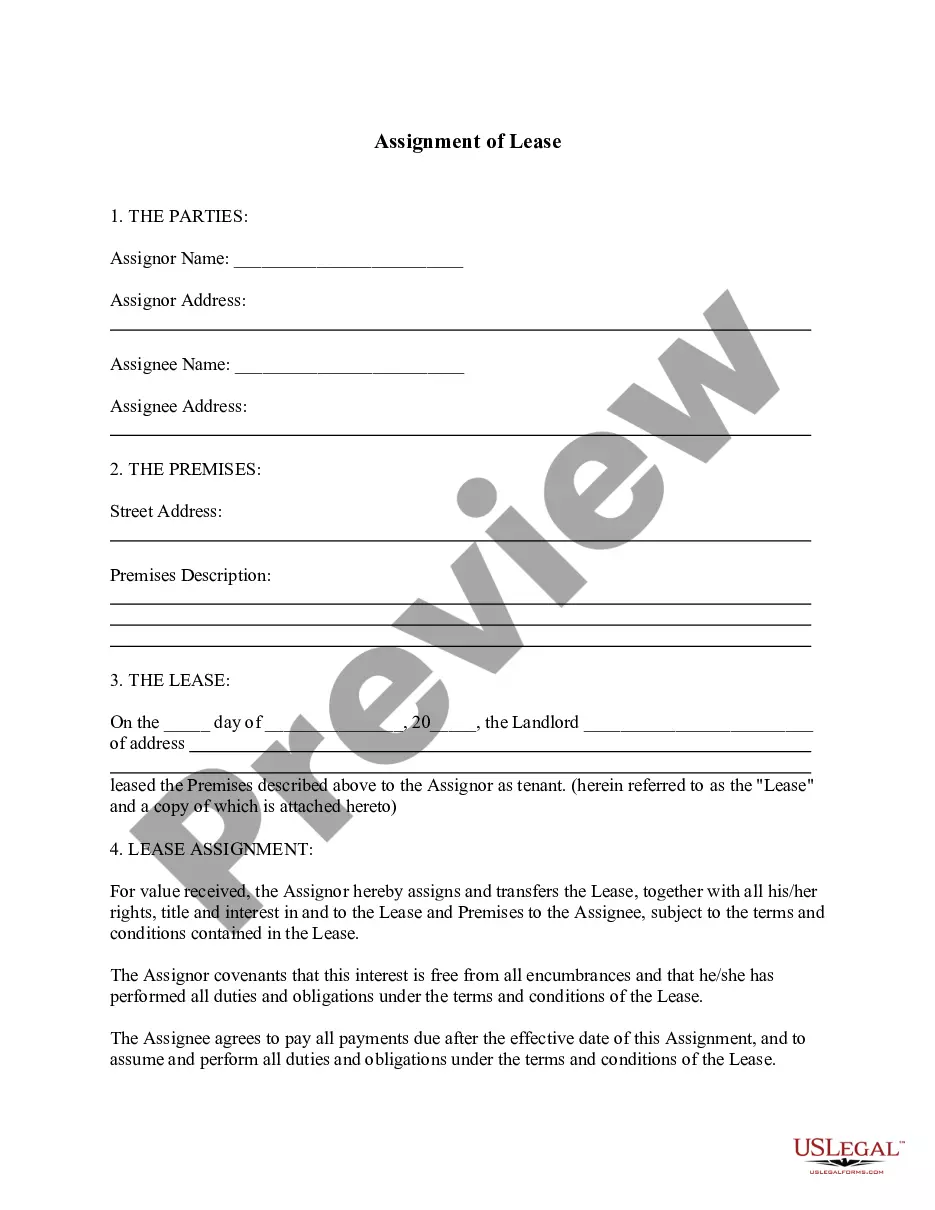
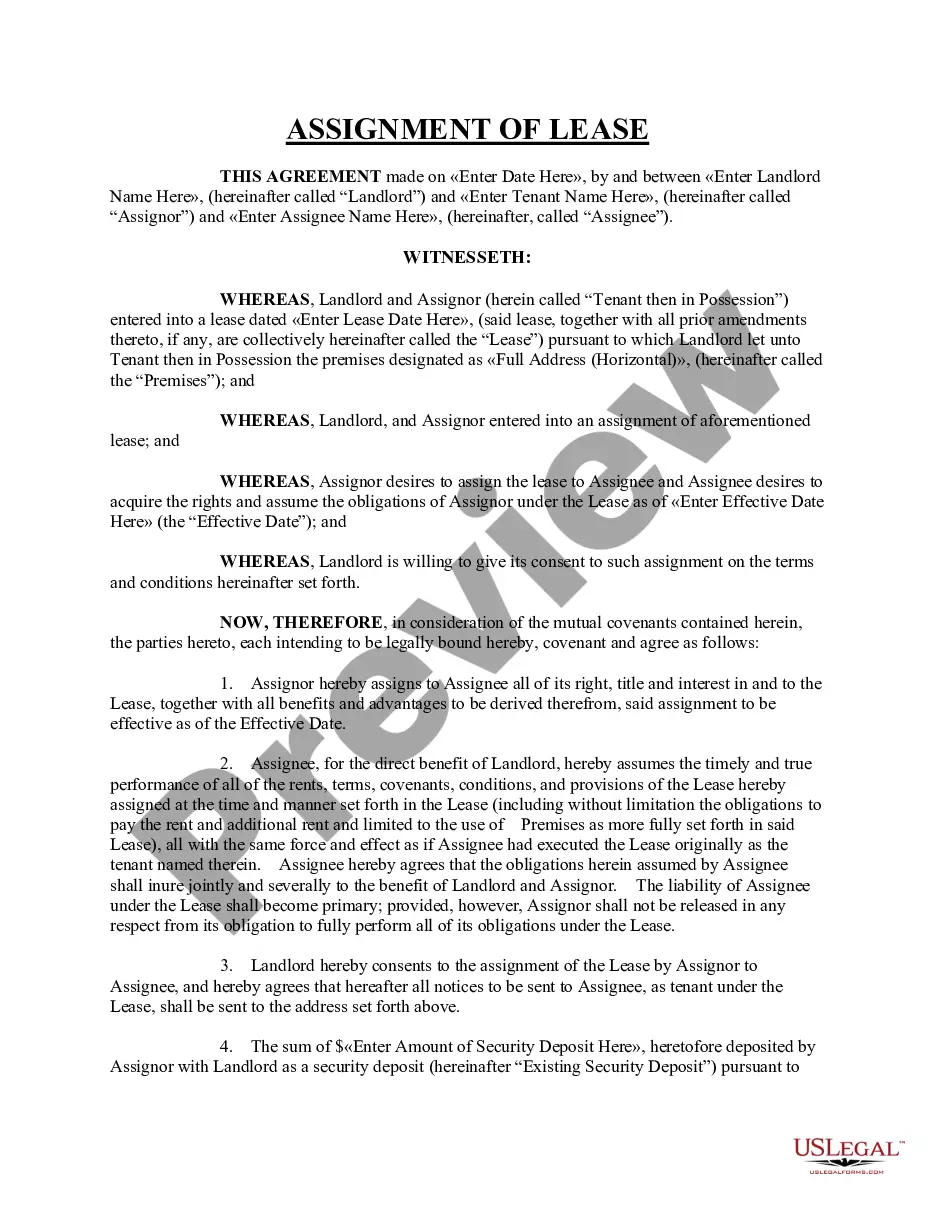
The Assignment of Lease from Tenant is a legal document that allows an original tenant to transfer their leasehold interest to a new tenant, known as the assignee. This form outlines the rights and obligations assumed by the assignee, ensuring continuity of rental payments and adherence to the terms of the original lease agreement. It differs from other lease forms by specifically focusing on the assignment process and the consent of the landlord, which cannot be unreasonably withheld.
Main sections of this form
- Assignor and assignee information: Includes names and details of both parties.
- Description of the lease agreement: Specifies the rental terms and property location.
- Effective date: Indicates when the assignment will take effect.
- Notice of assignment: Addresses the lessee and details future rental payment instructions.
- State laws: Notes that the assignment is subject to relevant landlord-tenant laws of the state.
Situations where this form applies
This form should be used when a tenant wishes to transfer their lease obligations to another individual. Scenarios include situations where the original tenant needs to relocate, but the lease term has not yet ended, or when a new tenant wishes to take over an existing lease for a rental property. It is important to ensure that the landlord consents to the assignment as per the terms of the original lease.
Who should use this form
- Original tenants seeking to assign their lease to another party.
- New tenants looking to assume an existing lease agreement.
- Landlords who need a formal record of lease assignment for property management.
How to complete this form
- Identify the parties involved: Fill in the names of the assignor and assignee.
- Specify the lease agreement: Include details about the property and the terms of the lease.
- Enter the effective date of the assignment: Indicate when the new tenant will take over the lease.
- Notice of assignment: Inform the lessee of the change and direct them to send rent payments to the assignee.
- Sign and date the form: Ensure all parties sign the document to validate the assignment.
Does this document require notarization?
Notarization is not commonly needed for this form. However, certain documents or local rules may make it necessary. Our notarization service, powered by Notarize, allows you to finalize it securely online anytime, day or night.
Get your form ready online
Our built-in tools help you complete, sign, share, and store your documents in one place.
Make edits, fill in missing information, and update formatting in US Legal Forms—just like you would in MS Word.
Download a copy, print it, send it by email, or mail it via USPS—whatever works best for your next step.
Sign and collect signatures with our SignNow integration. Send to multiple recipients, set reminders, and more. Go Premium to unlock E-Sign.
If this form requires notarization, complete it online through a secure video call—no need to meet a notary in person or wait for an appointment.
We protect your documents and personal data by following strict security and privacy standards.

Make edits, fill in missing information, and update formatting in US Legal Forms—just like you would in MS Word.

Download a copy, print it, send it by email, or mail it via USPS—whatever works best for your next step.

Sign and collect signatures with our SignNow integration. Send to multiple recipients, set reminders, and more. Go Premium to unlock E-Sign.

If this form requires notarization, complete it online through a secure video call—no need to meet a notary in person or wait for an appointment.

We protect your documents and personal data by following strict security and privacy standards.
Common mistakes to avoid
- Failing to obtain landlord consent before assigning the lease.
- Not including complete property details and lease terms.
- Omitting signatures from one or more parties involved in the assignment.
- Not providing proper notice to the lessee about the assignment.
Why complete this form online
- Convenience of immediate access to the form for quick completion.
- Editability to customize the form as needed for specific lease situations.
- Reliability as the forms are drafted by licensed attorneys to ensure legal compliance.
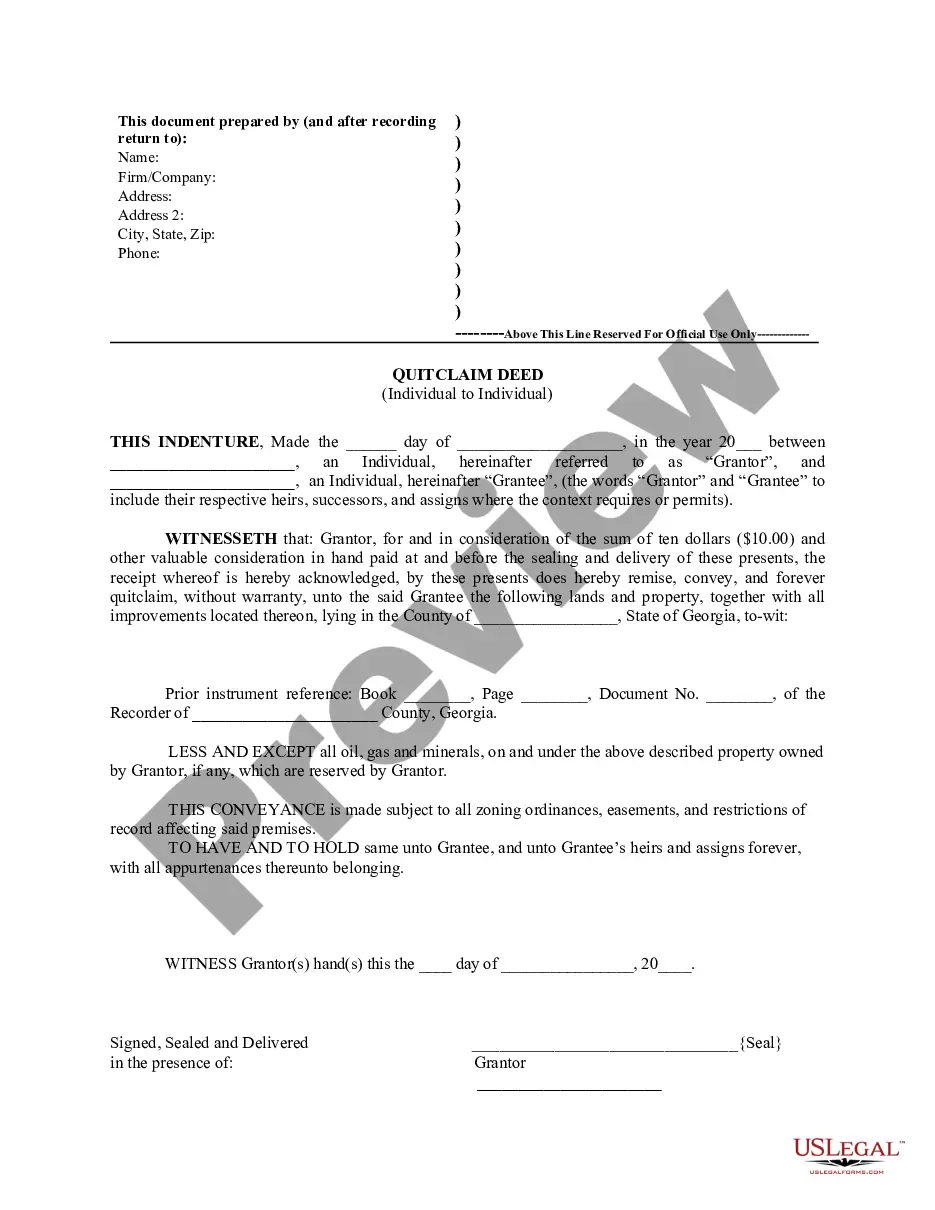
Looking for another form?



Form popularity
FAQ
Sometimes called Assignment of Leases, Rents and Profits or simply Assignment of Rents, this is a document attached to a mortgage loan agreement which entitles the lender to any income (from leases, rents, etc.) derived from the property once the owner defaults on the loan.
The difference between assignment and transfer is that assign means it's legal to transfer property or a legal right from one person to another, while transfer means it's legal to arrange for something to be controlled by or officially belong to another person.
This might include financial statements, business history and professional references; and. there is an agreement about who is liable for the costs of the deed of assignment. The landlord's lawyer usually prepares the agreement. However, the outgoing tenant or the incoming tenant pays these costs, not the landlord.
The landlord's lawyer usually prepares the agreement. However, the outgoing tenant or the incoming tenant pays these costs, not the landlord.
An assignment is when the tenant transfers their lease interest to a new tenant using a Lease Assignment. The assignee takes the assignor's place in the landlord-tenant relationship, although the assignor may remain liable for damages, missed rent payments, and other lease violations.
As verbs the difference between assign and transfer is that assign is to designate or set apart something for some purpose while transfer is to move or pass from one place, person or thing to another.
An assignment of a lease is a complete transfer of the right to be the tenant under the lease. The third-party assignee becomes the "tenant" under the lease, taking over all of the leased premises, substituting for the old tenant.
If the lease is silent on the point, an assignment of part will be permitted.