Guaranty of Promissory Note by Corporation - Individual Borrower
What this document covers
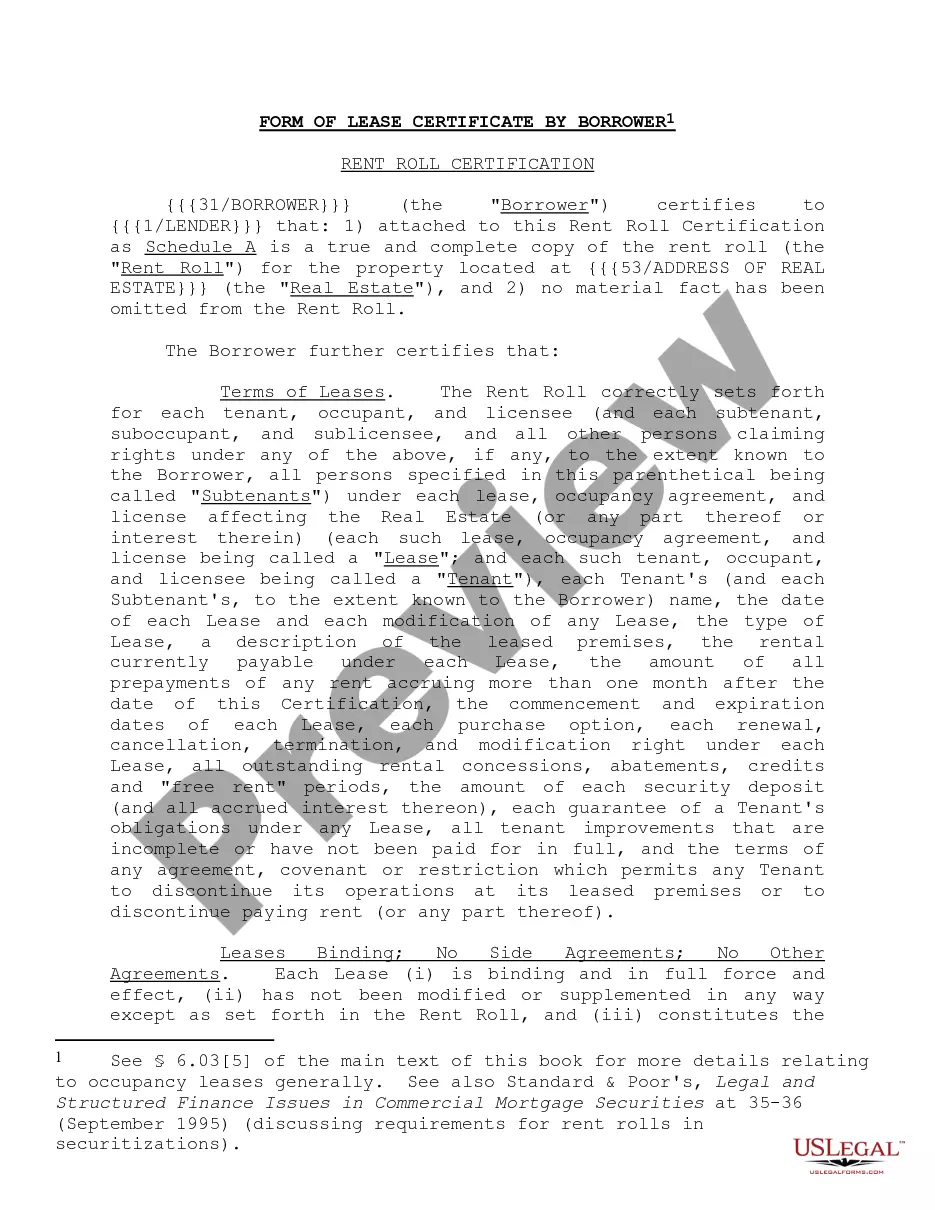
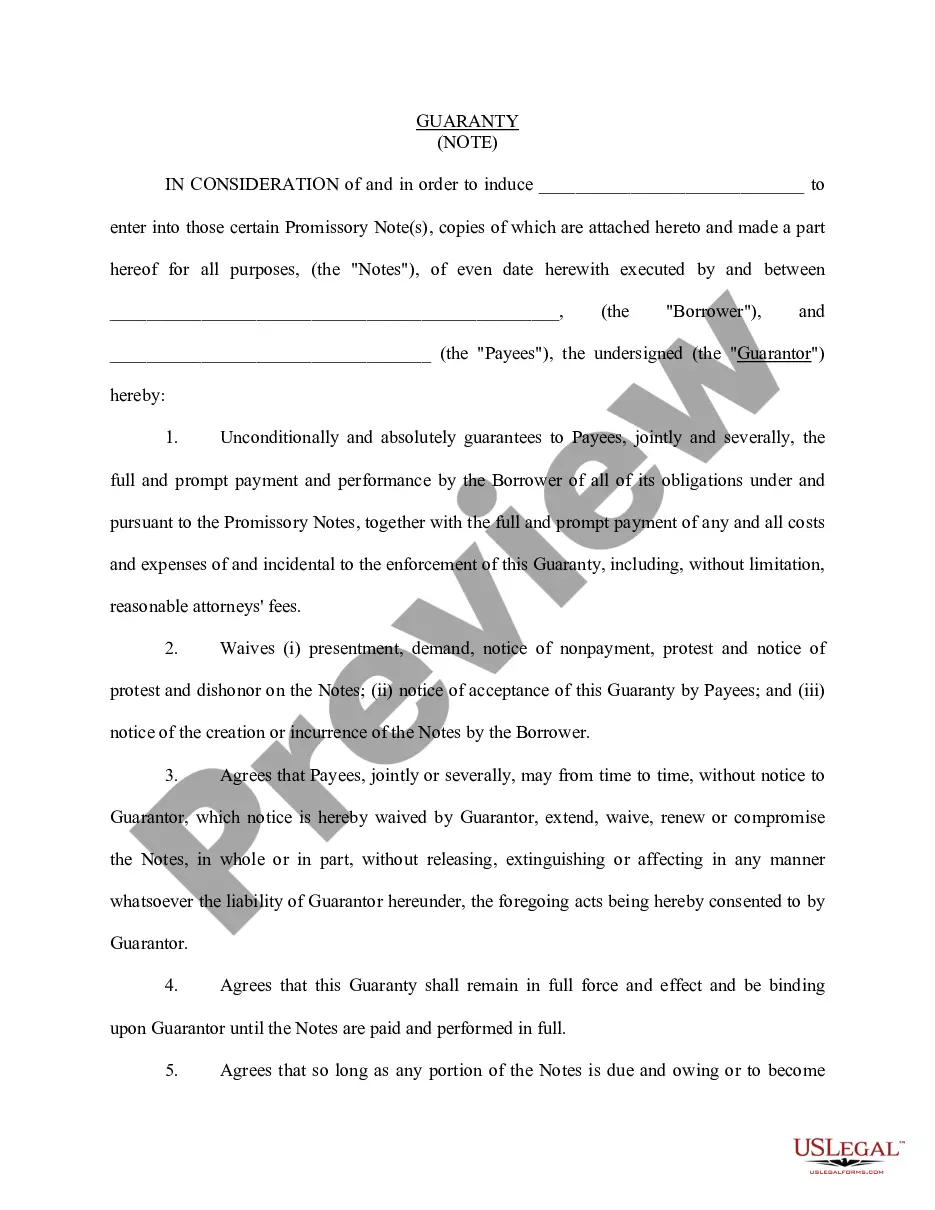
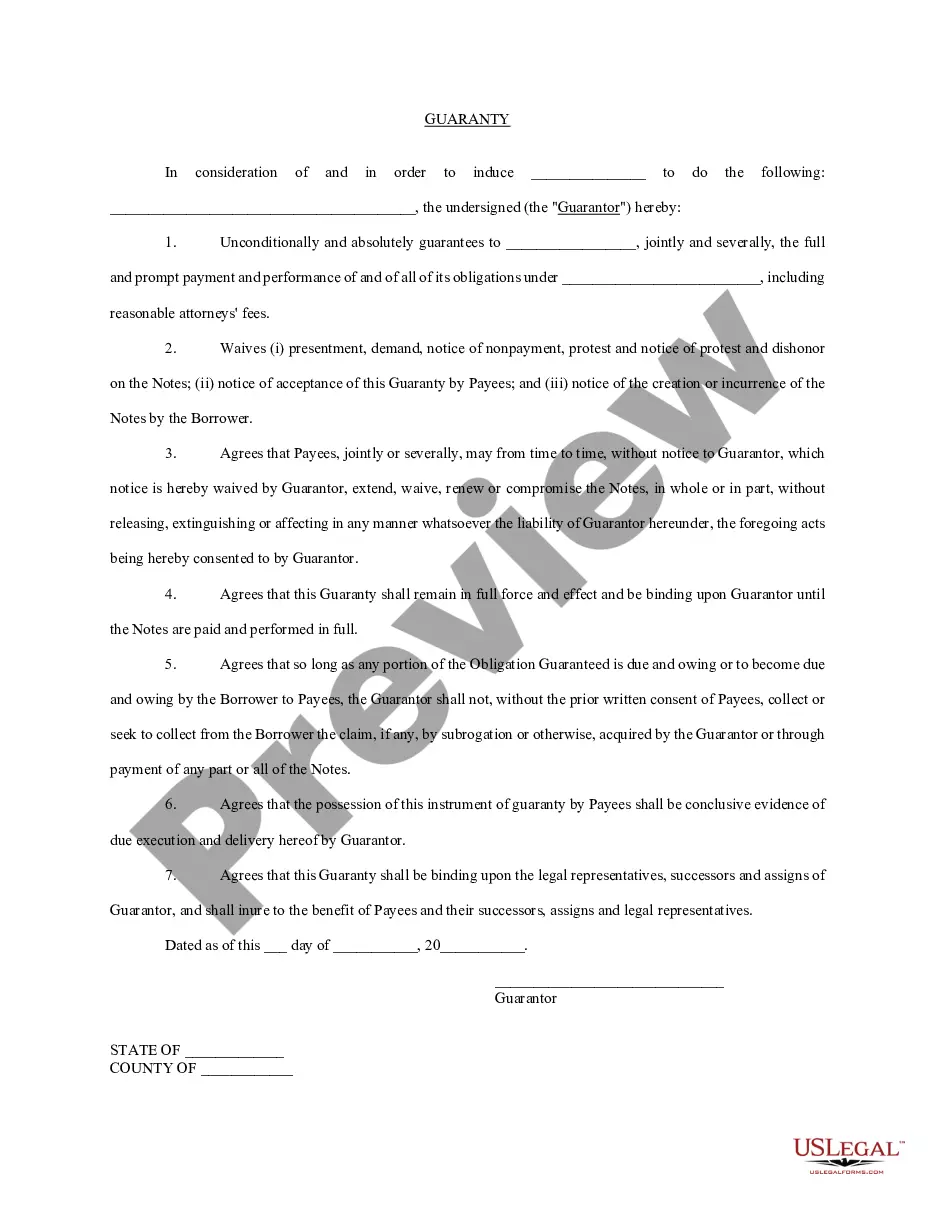
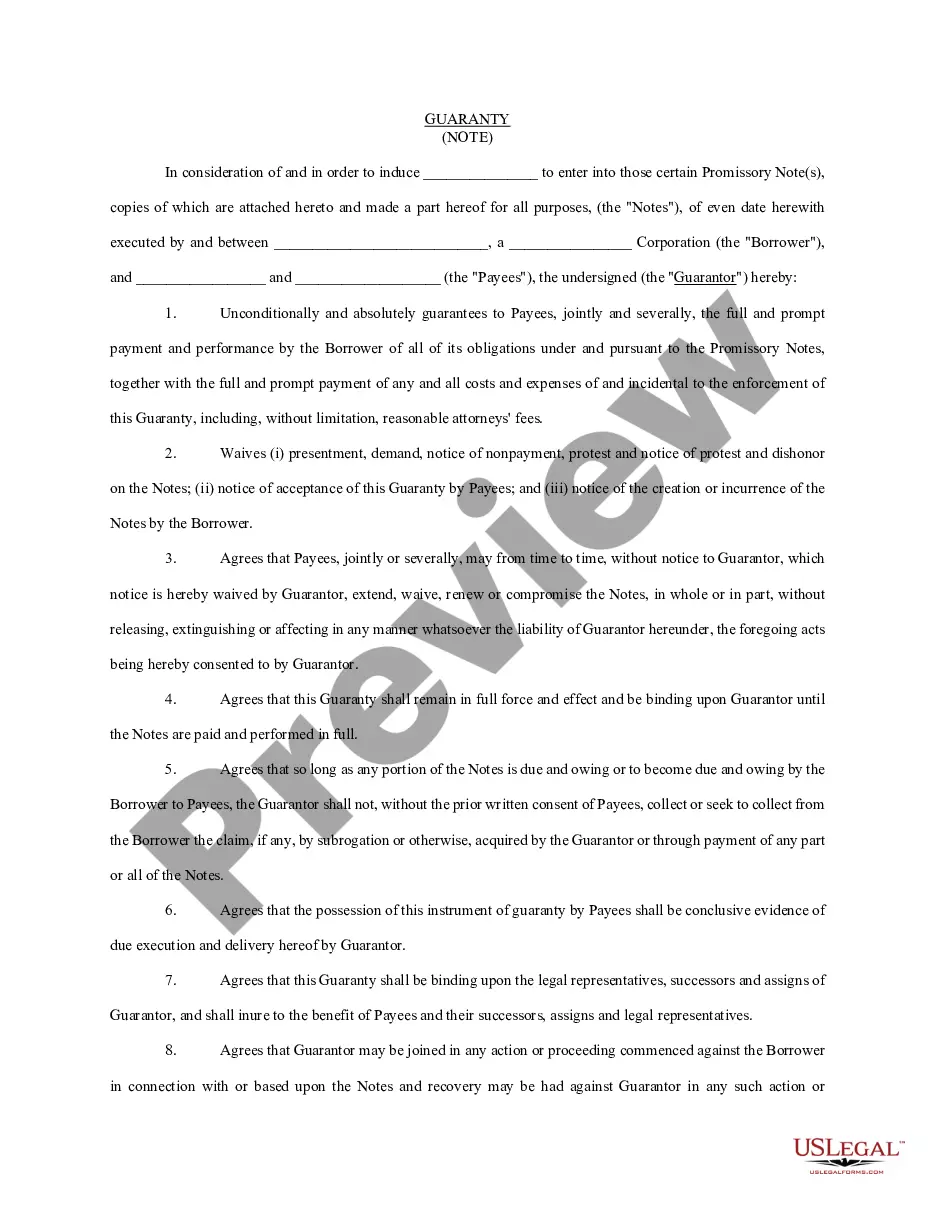
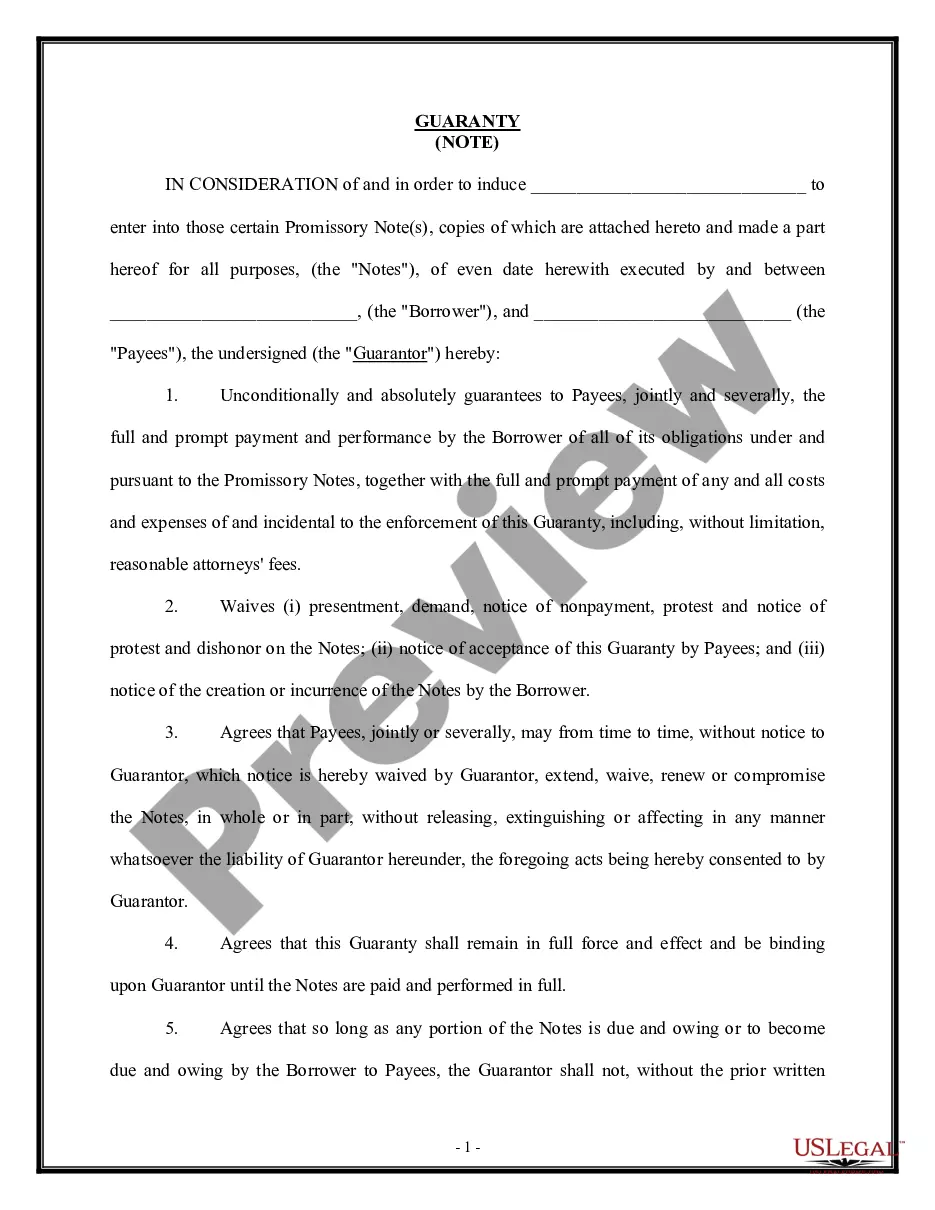
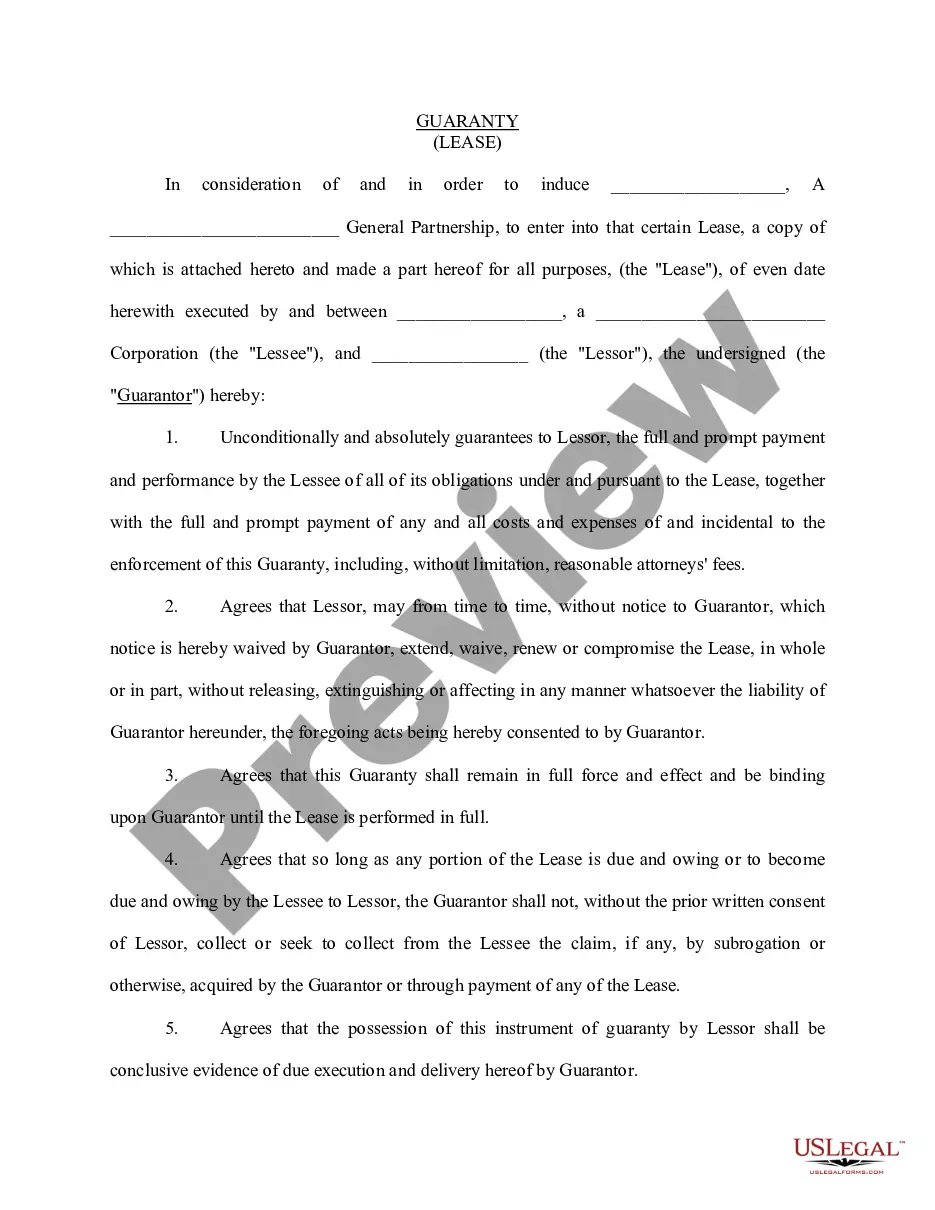
The Guaranty of Promissory Note by Corporation - Individual Borrower is a legal document that ensures the payment obligations of a borrower are fulfilled by a corporate guarantor. This form serves to protect the payees by guaranteeing that, in the event of default by the borrower, the corporation will be responsible for all obligations outlined in the promissory notes. Unlike standard promissory notes, this document provides an added layer of assurance to the lenders, making it particularly valuable in corporate financing transactions.
What’s included in this form
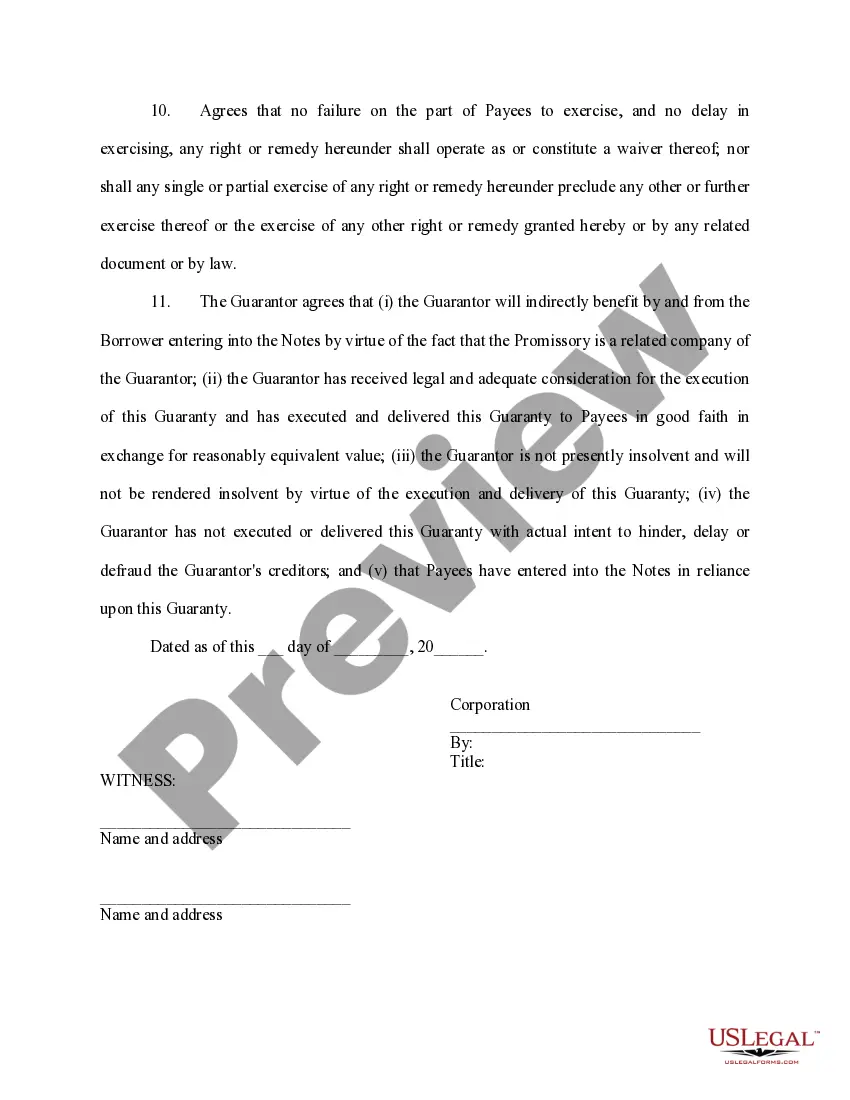
- Identification of the parties involved: the borrower, payees, and guarantor.
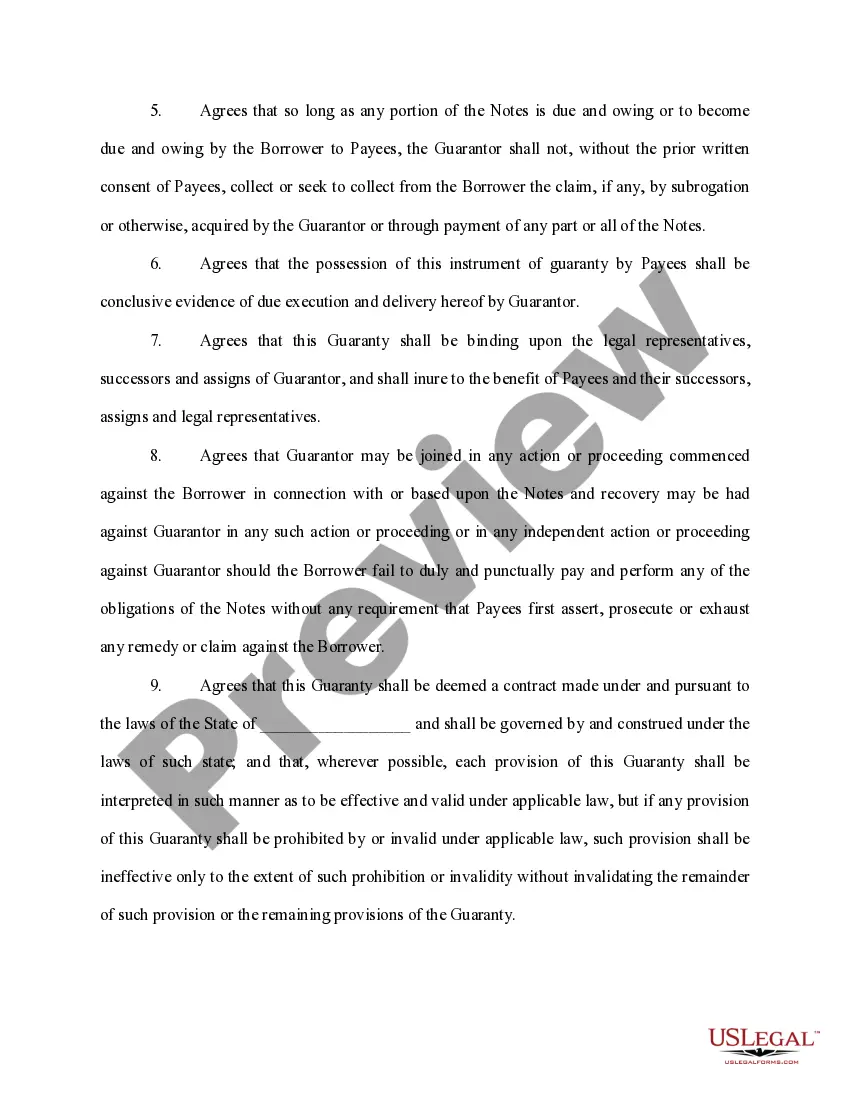
- Unconditional guarantee of payment and performance by the borrower.
- Waivers of notice and demands for payment, enhancing the enforceability of the guaranty.
- Consent to amendments of the promissory notes without affecting the guarantor's liability.
- Legal authority and jurisdiction governing the terms of the guaranty.
Situations where this form applies
This form is essential when a corporation is willing to ensure the debts of an individual borrower. It is commonly used in scenarios where a corporation seeks financing and is more likely to secure favorable terms by providing a guaranty on behalf of the borrower, who may be an individual associated with the corporate entity. Use this form to clarify the obligations and ensure that all parties understand their rights and responsibilities in the event of a default.
Who this form is for
- Corporations acting as guarantors for individual borrowers.
- Payees or lenders seeking additional security for loans provided to individuals.
- Individuals needing financing with a corporate backing to enhance credibility and reliability.
How to prepare this document
- Identify the parties: fill in the names and addresses of the borrower, payees, and guarantor.
- Attach copies of the related promissory notes for reference.
- Complete the date and location fields accurately.
- Ensure that the guarantor signs and dates the document.
- If required, include witness signatures and titles as necessary.
Does this form need to be notarized?
Notarization is not commonly needed for this form. However, certain documents or local rules may make it necessary. Our notarization service, powered by Notarize, allows you to finalize it securely online anytime, day or night.
Get your form ready online
Our built-in tools help you complete, sign, share, and store your documents in one place.
Make edits, fill in missing information, and update formatting in US Legal Forms—just like you would in MS Word.
Download a copy, print it, send it by email, or mail it via USPS—whatever works best for your next step.
Sign and collect signatures with our SignNow integration. Send to multiple recipients, set reminders, and more. Go Premium to unlock E-Sign.
If this form requires notarization, complete it online through a secure video call—no need to meet a notary in person or wait for an appointment.
We protect your documents and personal data by following strict security and privacy standards.

Make edits, fill in missing information, and update formatting in US Legal Forms—just like you would in MS Word.

Download a copy, print it, send it by email, or mail it via USPS—whatever works best for your next step.

Sign and collect signatures with our SignNow integration. Send to multiple recipients, set reminders, and more. Go Premium to unlock E-Sign.

If this form requires notarization, complete it online through a secure video call—no need to meet a notary in person or wait for an appointment.

We protect your documents and personal data by following strict security and privacy standards.
Common mistakes to avoid
- Failing to clearly identify all parties involved in the transaction.
- Not attaching the promissory notes referenced in the guaranty.
- Omitting necessary signatures or witness details from the document.
- Using outdated or incorrect legal names for the parties.
Why complete this form online
- Convenient access to legal documents that can be downloaded anytime.
- Customizable templates that allow for editing to fit specific needs.
- Compliance with legal standards to ensure enforceability of the document.
Legal use & context
- This guaranty is legally binding and enforceable under the laws of the jurisdiction specified in the agreement.
- It provides lenders with a form of security, thereby increasing the likelihood of loan approval for individual borrowers.
- Understanding your obligations under this agreement is crucial, as failure to uphold them can lead to legal consequences for the guarantor.
Summary of main points
- The Guaranty of Promissory Note ensures a corporation guarantees an individual's payment obligations.
- It is essential for protecting lenders while providing necessary financial support to individual borrowers.
- Clear identification of parties, accurate completion, and consideration of state laws are vital for enforceability.
Looking for another form?
Form popularity
FAQ
That's why your promissory note could include a personal guarantee. Since a promissory note is basically just an IOU, a lender will want some kind of collateral to secure the loan.With a business loan, a personal guarantee means that you -- not your business -- are personally responsible for the loan.
If he doesn't comply, you can show him the rulebook. According to the rule of subrogation under the Indian Contract Act, the guarantor has the right to recover the money later from the borrower, says Panigrahi. Subrogation means stepping into the shoes of someone else (in this case, the guarantor becomes the lender).
The lender holds the promissory note while the loan is being repaid, then the note is marked as paid and returned to the borrower when the loan is satisfied. Promissory notes aren't the same as mortgages, but the two often go hand in hand when someone is buying a home.
Another important distinction to remember is that a co-borrower is primarily liable for the debt from its inception. In contrast, a guarantor is not liable unless the underlying borrower defaults and, depending on the terms of the guaranty, the lender pursues collection efforts against the borrower.
A guarantor is someone who signs a guarantee on behalf of a borrower when they apply for a loan. By doing so, they become legally responsible for paying back the lender if the borrower defaults on the loan. This is different from a co-borrower, who signs a loan with someone and is jointly responsible for repayments.
Borrower: The person who is borrowing money from a bank, money lender or financial institution.Guarantor: If you are a guarantor on someone else's loan, you are promising to the lender that you will repay the borrower's loan if the borrower does not repay.
A promissory note is a legal document signed by a debtor who promises to pay a debt in a form and manner as described in the document. A personal guaranty, as defined at businessdictionary.com, is an agreement that makes one liable for one's own or a third party's debts or obligations.
What Is a Guarantor? A guarantor is a financial term describing an individual who promises to pay a borrower's debt in the event that the borrower defaults on their loan obligation. Guarantors pledge their own assets as collateral against the loans.