Guaranty of Promissory Note by Individual - Individual Borrower
Understanding this form
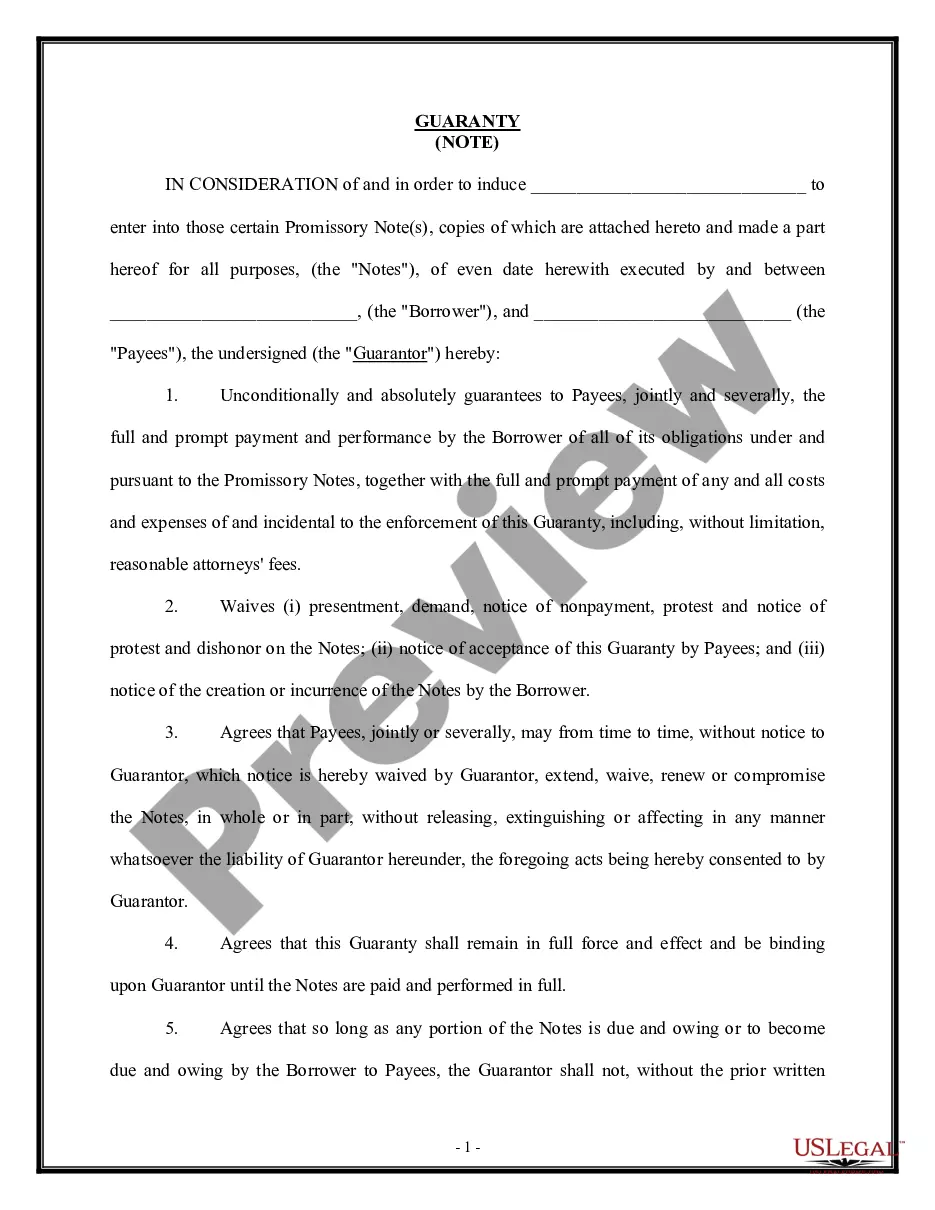
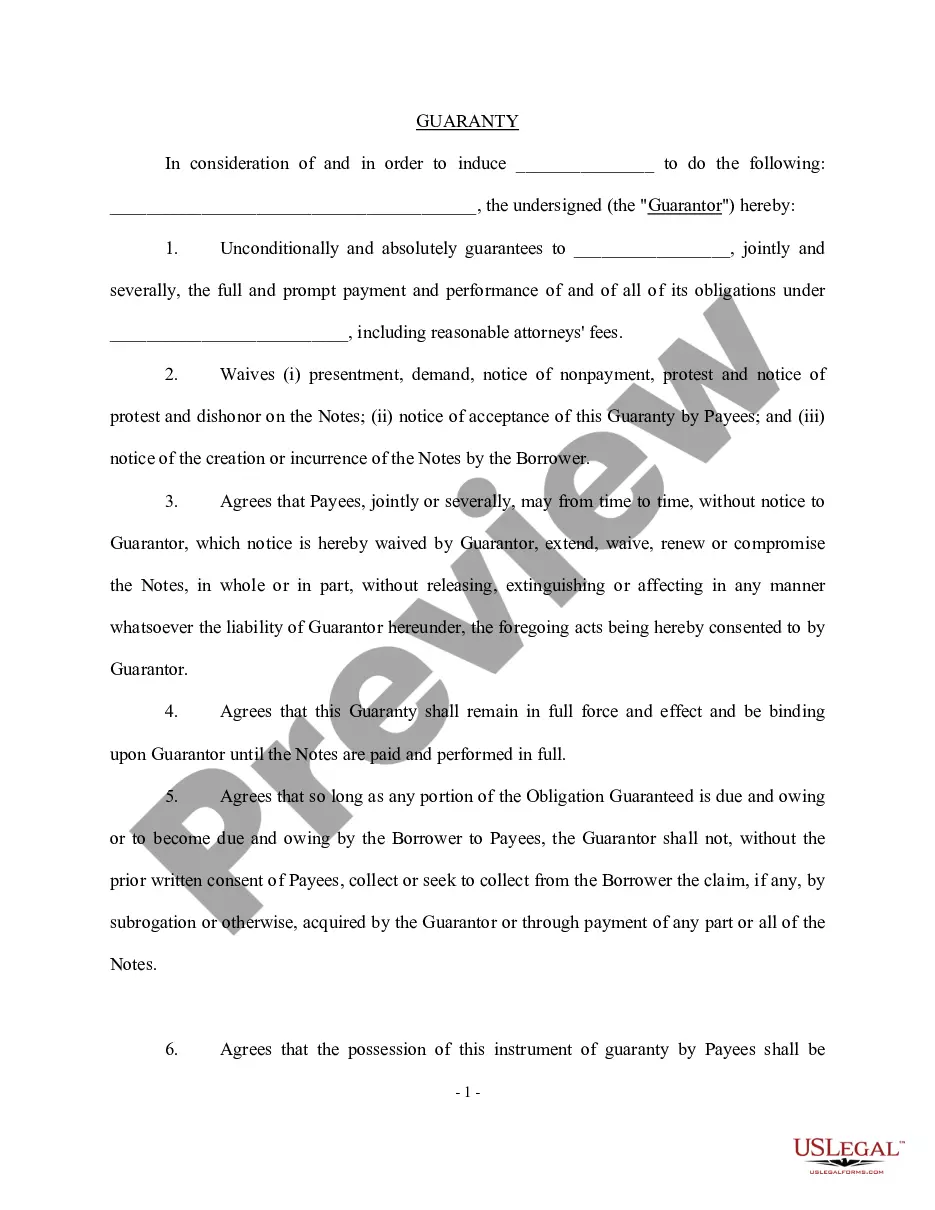
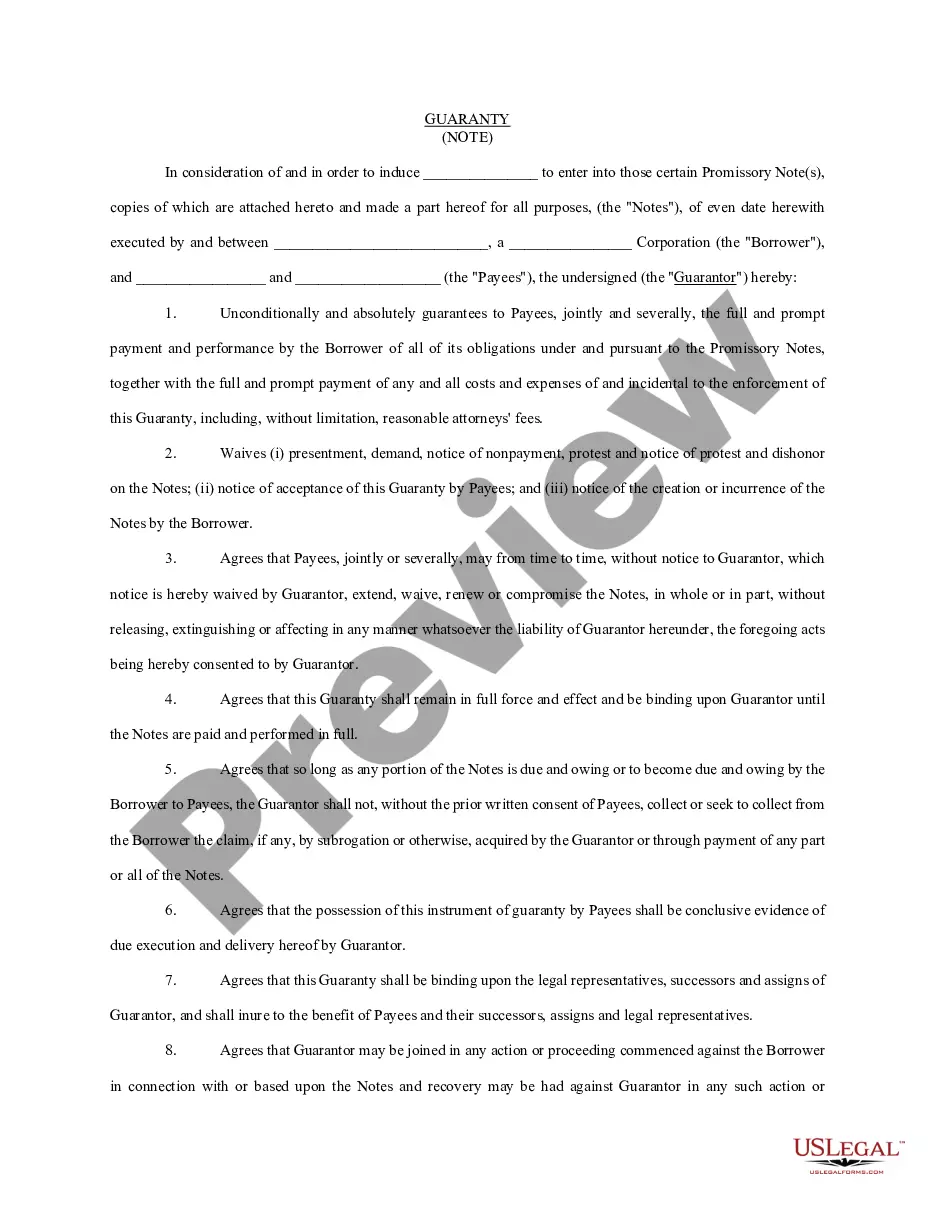
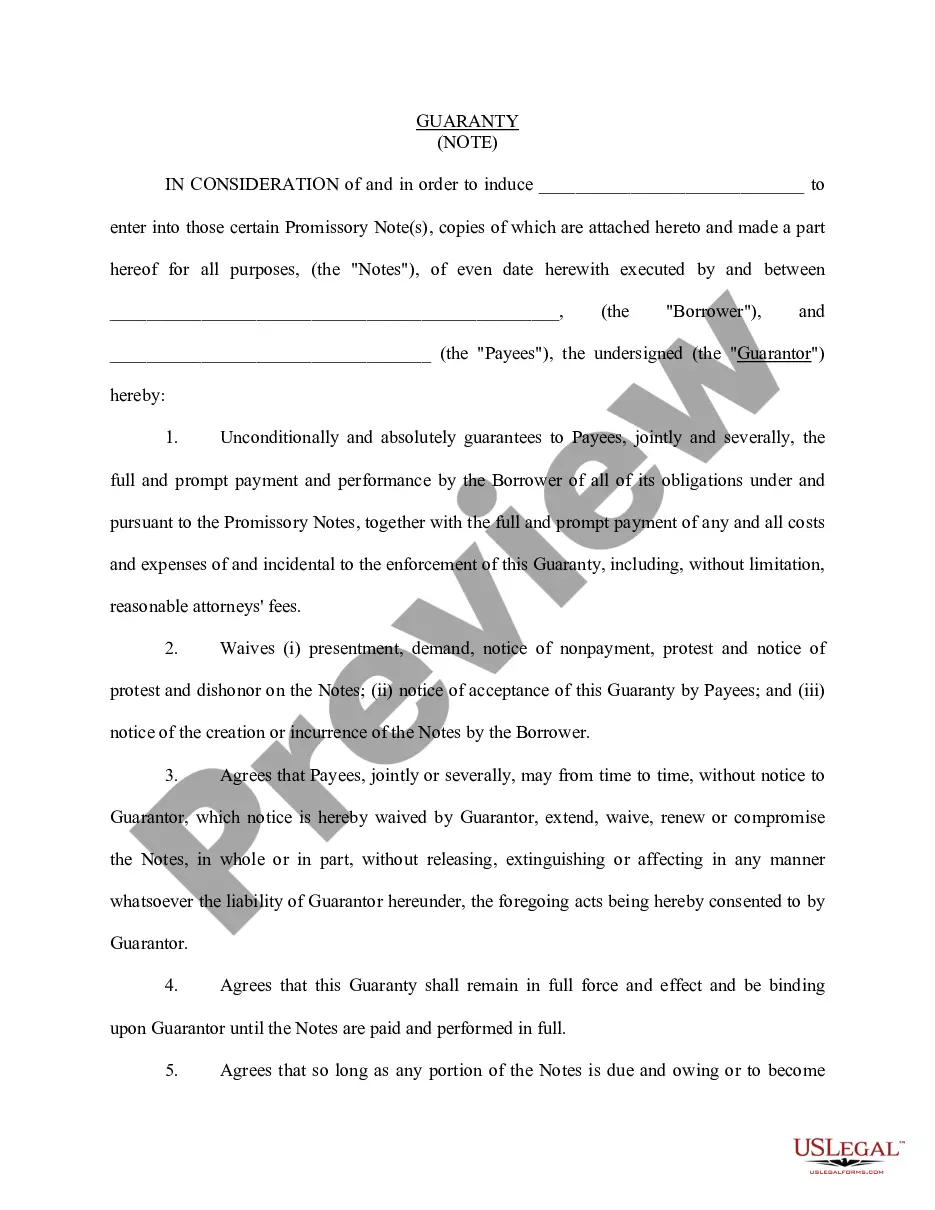
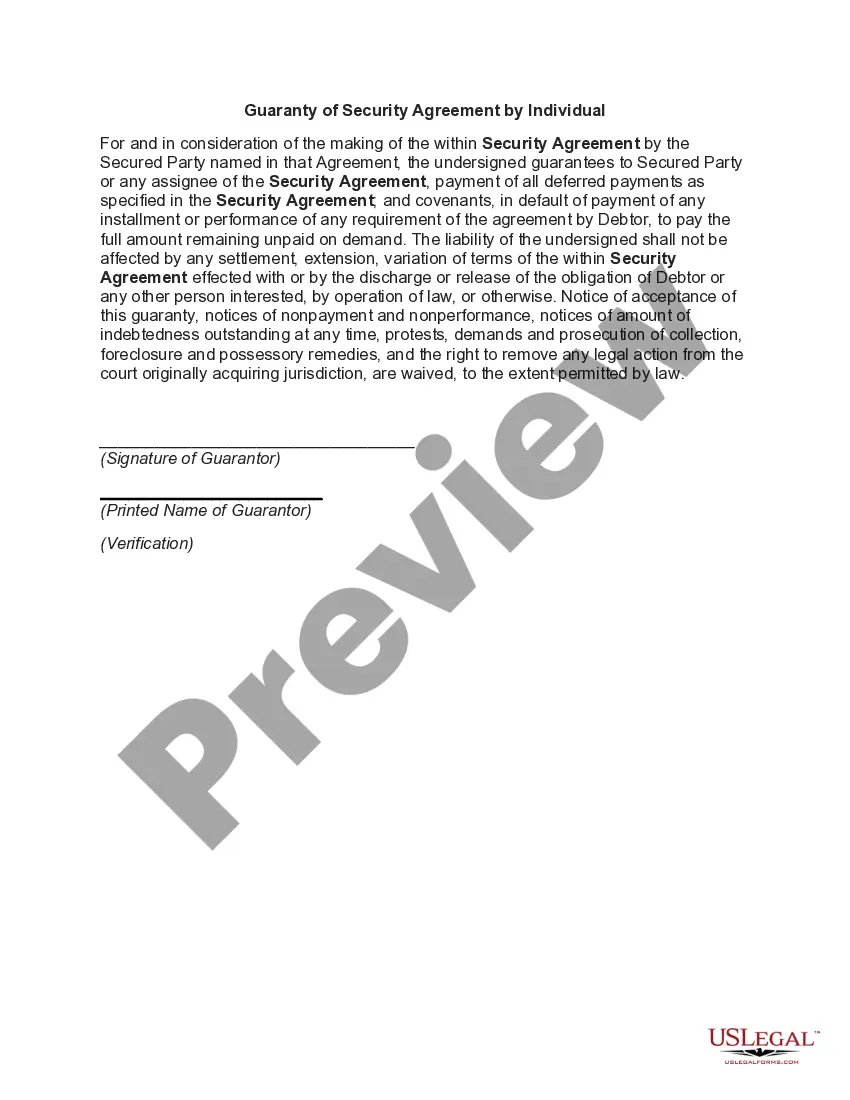
This Guaranty of Promissory Note by Individual is a legal document where an individual (the guarantor) agrees to assure the payees that a borrower will fulfill all payment obligations outlined in a promissory note. This form differs from similar agreements by establishing a personal guarantee from an individual, adding a layer of security for the payees in case of default by the borrower.
What’s included in this form
- Identification of the parties involved: guarantor, borrower, and payees.
- Unconditional guarantee of payment and performance by the borrower.
- Waivers of presentment, demand, and notices related to the promissory note.
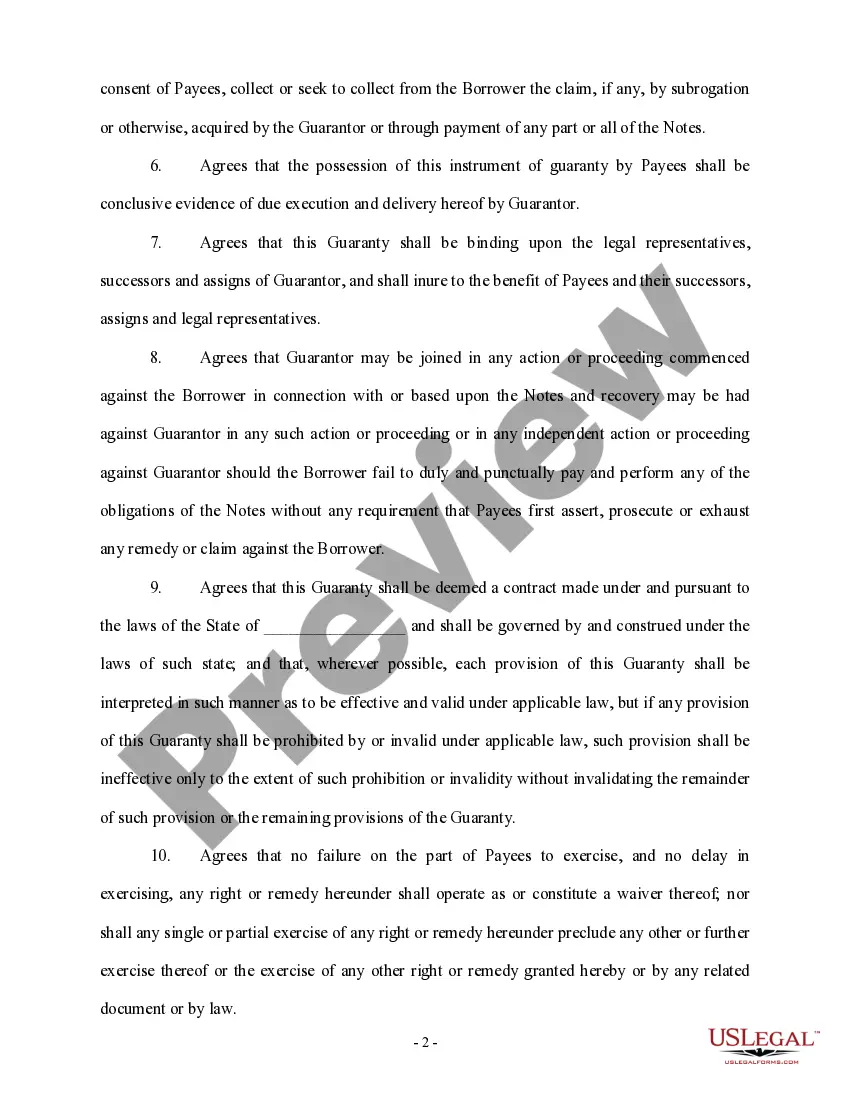
- Terms regarding the binding nature of this guaranty on the guarantor's successors.
- Conditions under which the guarantor may be pursued for obligations if the borrower defaults.
- Governing law clause specifying the state jurisdiction.
Situations where this form applies
This form should be used when an individual is willing to provide a guarantee for a promissory note in which another person or entity is borrowing money. It is commonly utilized in personal loans, business loans, or any situation where the principal borrower may need added security to convince lenders to provide financing.
Intended users of this form
This form is intended for:
- Individuals acting as guarantors in personal or business loans.
- Lenders or payees seeking additional security for the repayment of loans.
- Borrowers who require a guarantor to secure loan agreements.
How to complete this form
- Identify and provide the names and addresses of the guarantor, borrower, and payees.
- Specify the date of execution for the guaranty and any relevant promissory notes.
- Carefully review and understand each section of the guaranty to ensure all agreements and waivers are acknowledged.
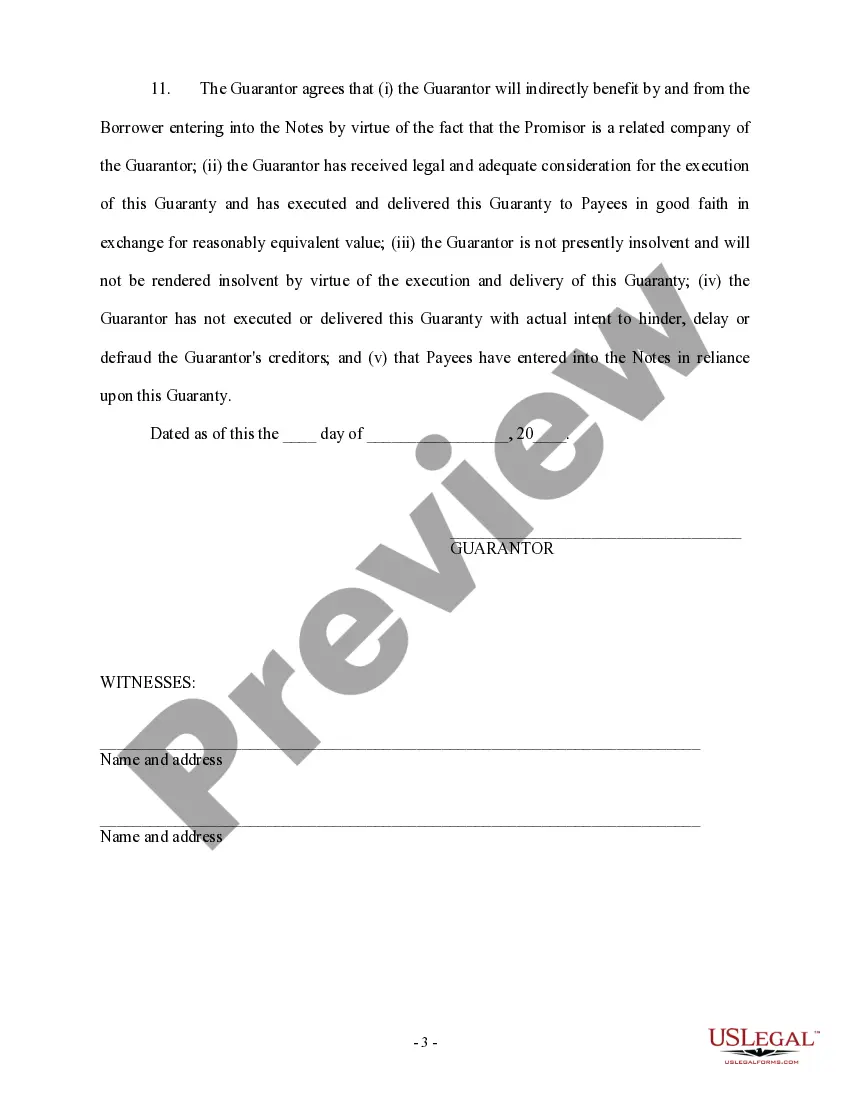
- Sign the guaranty in the designated areas and ensure witnesses, if required, are present.
- Keep a copy of the signed guaranty for your records and provide copies to all parties involved.
Does this form need to be notarized?
This form does not typically require notarization unless specified by local law. However, notarization may add an extra layer of verification and security for all parties involved.
Get your form ready online
Our built-in tools help you complete, sign, share, and store your documents in one place.
Make edits, fill in missing information, and update formatting in US Legal Forms—just like you would in MS Word.
Download a copy, print it, send it by email, or mail it via USPS—whatever works best for your next step.
Sign and collect signatures with our SignNow integration. Send to multiple recipients, set reminders, and more. Go Premium to unlock E-Sign.
If this form requires notarization, complete it online through a secure video call—no need to meet a notary in person or wait for an appointment.
We protect your documents and personal data by following strict security and privacy standards.

Make edits, fill in missing information, and update formatting in US Legal Forms—just like you would in MS Word.

Download a copy, print it, send it by email, or mail it via USPS—whatever works best for your next step.

Sign and collect signatures with our SignNow integration. Send to multiple recipients, set reminders, and more. Go Premium to unlock E-Sign.

If this form requires notarization, complete it online through a secure video call—no need to meet a notary in person or wait for an appointment.

We protect your documents and personal data by following strict security and privacy standards.
Common mistakes
- Failing to accurately identify all parties involved.
- Not understanding the waivers included, which can significantly impact rights.
- Signing the form without proper legal advice, leading to potential liabilities.
Why complete this form online
- Convenience of completing and storing the form digitally.
- Editability allows for changes prior to finalizing the agreement.
- Access to professionally drafted templates ensures legal compliance.
Legal use & context
- The Guaranty serves as a legally enforceable contract, ensuring that the payees can seek recovery against the guarantor.
- It establishes a clear understanding of obligations and responsibilities among the parties involved.
Key takeaways
- This form provides extra security for lenders in transactions with potentially risky borrowers.
- It is crucial for the guarantor to understand the implications of their commitment before signing.
- Always verify that the form complies with state-specific requirements.
Looking for another form?
Form popularity
FAQ
The term personal guarantee refers to an individual's legal promise to repay credit issued to a business for which they serve as an executive or partner. Providing a personal guarantee means that if the business becomes unable to repay the debt, the individual assumes personal responsibility for the balance.
A guarantor for rent on a residential tenancy is somebody who acts as surety by legally agreeing to take over the financial obligations of the lease in the event that the tenant defaults. This often means that a guarantor is liable for any rent or property damage that the leaseholder has failed to cover.
That's why your promissory note could include a personal guarantee. Since a promissory note is basically just an IOU, a lender will want some kind of collateral to secure the loan.With a business loan, a personal guarantee means that you -- not your business -- are personally responsible for the loan.
A guarantor is a person who signs a contract of guarantee on behalf of a borrower.If the borrower defaults, and cannot pay back the loan, the terms of the contract of guarantee obligate the guarantor to pay the lender the money owed by the borrower.
Borrower: The person who is borrowing money from a bank, money lender or financial institution.Guarantor: If you are a guarantor on someone else's loan, you are promising to the lender that you will repay the borrower's loan if the borrower does not repay.
A Guarantor is not an owner and has no entitlement to the property. Their similarity lies in that they are both responsible for the debt on the property if the Borrower is unable to pay. A Co-signor is most often used when an applicant is unable to qualify for a mortgage, based on their income or credit.
Being a guarantor shouldn't affect your ability to get a mortgage, unless you're then called upon to make repayments. Since you would be inheriting the debt, this will put you at risk of not being able to repay and this can ultimately decrease your credit score if you don't keep up with repayments yourself.
A promissory note is a legal document signed by a debtor who promises to pay a debt in a form and manner as described in the document. A personal guaranty, as defined at businessdictionary.com, is an agreement that makes one liable for one's own or a third party's debts or obligations.