Annulment Property Settlement, Child Support, and Custody Agreement
What this document covers
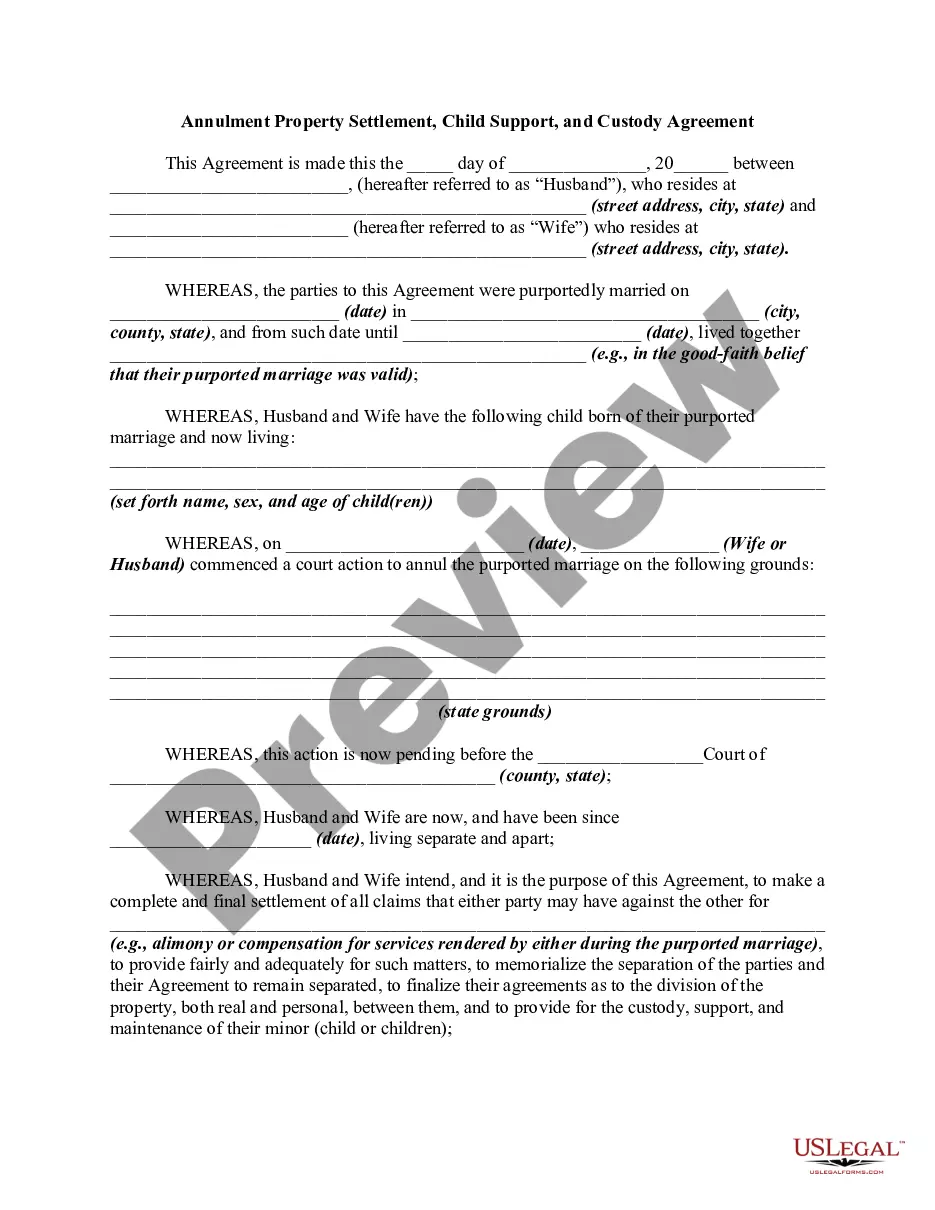
The Annulment Property Settlement, Child Support, and Custody Agreement is a legal document designed to facilitate the division of property, child custody, and child support arrangements following an annulled marriage. Unlike typical divorce agreements, this form addresses the unique legal context of annulments while ensuring that both parties have clarity on asset distribution and parental responsibilities. It serves to finalize agreements and outline the terms under which both parties live separately and fulfill their obligations toward their children.
What’s included in this form
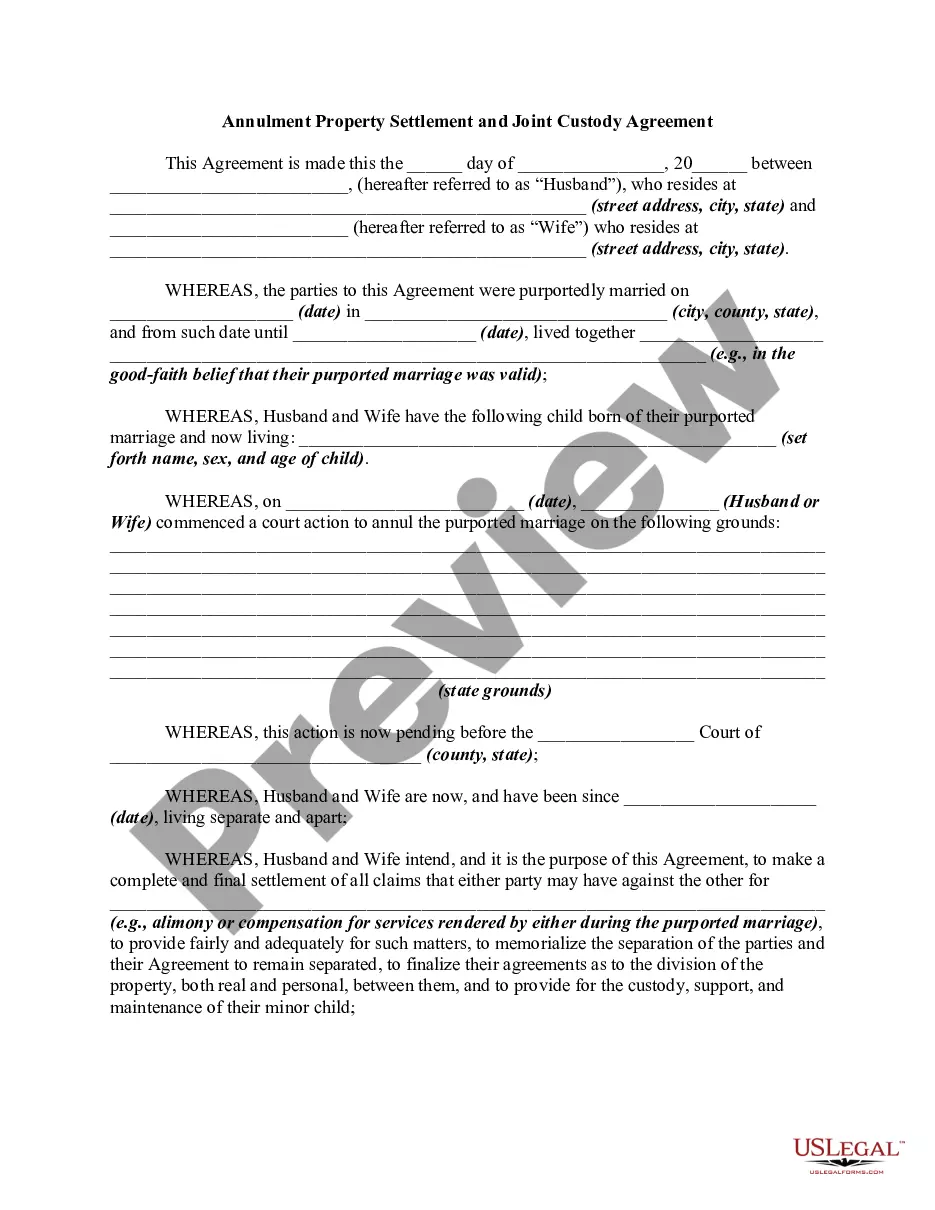
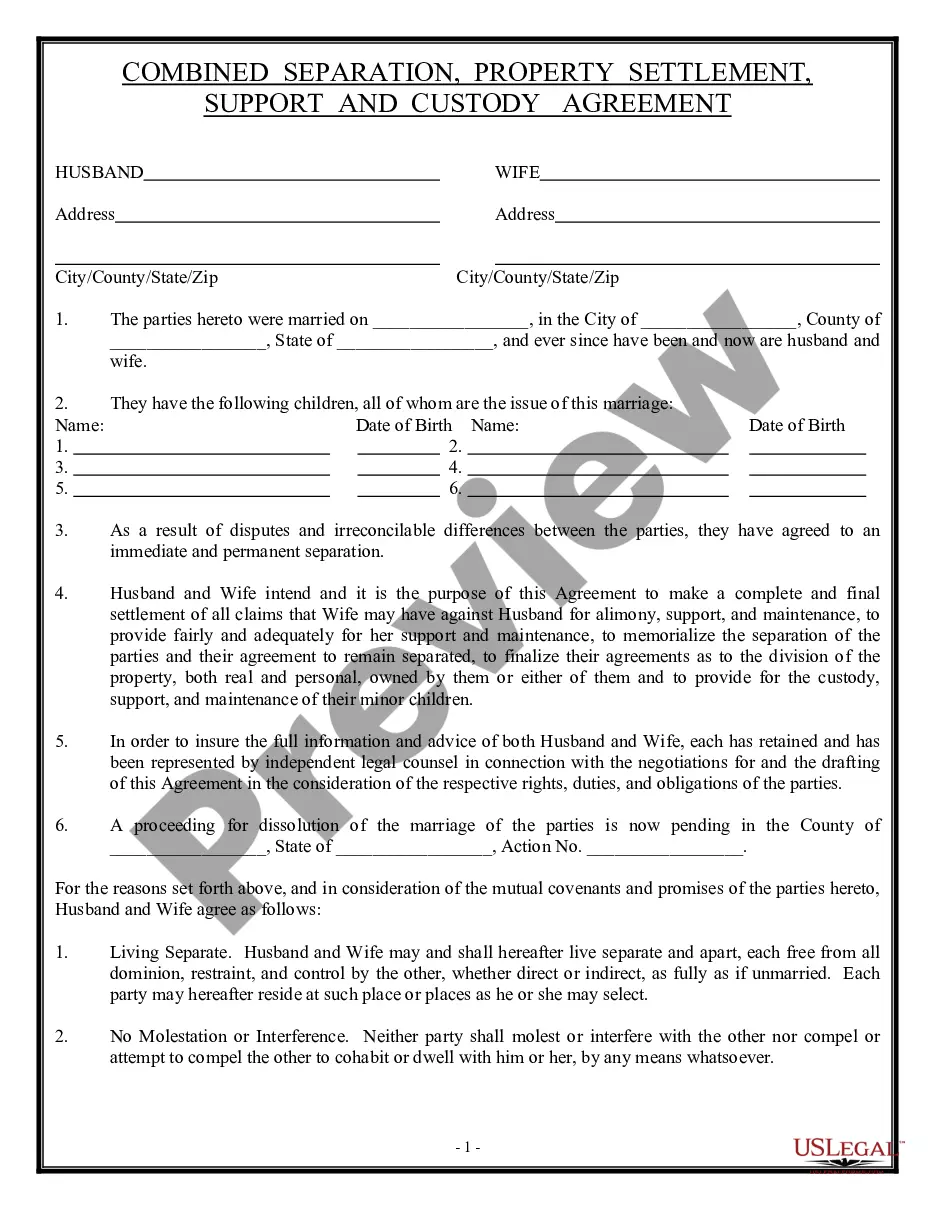
- Identification of the parties: Names and addresses of Husband and Wife.
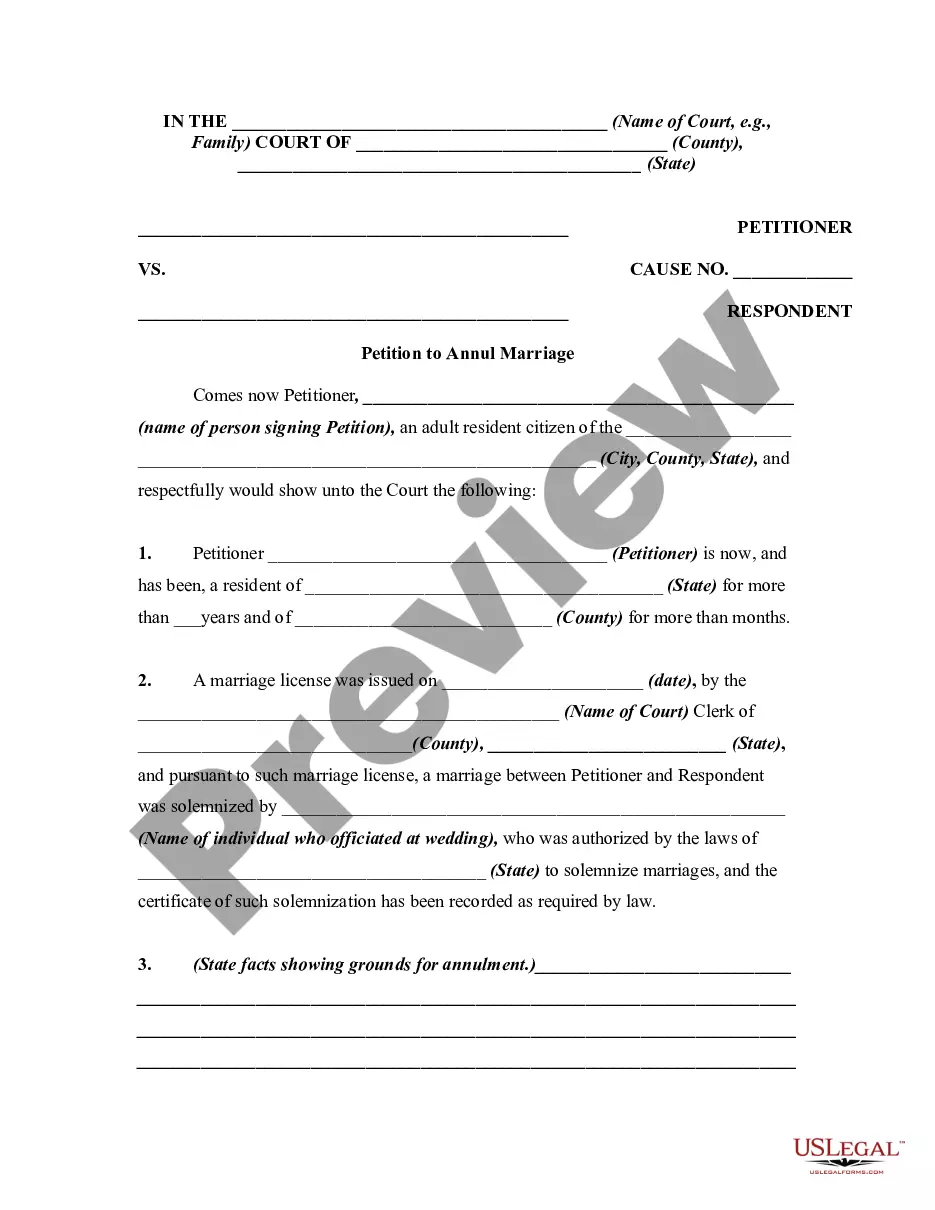
- Details of the annulment: Grounds for annulment and court information.
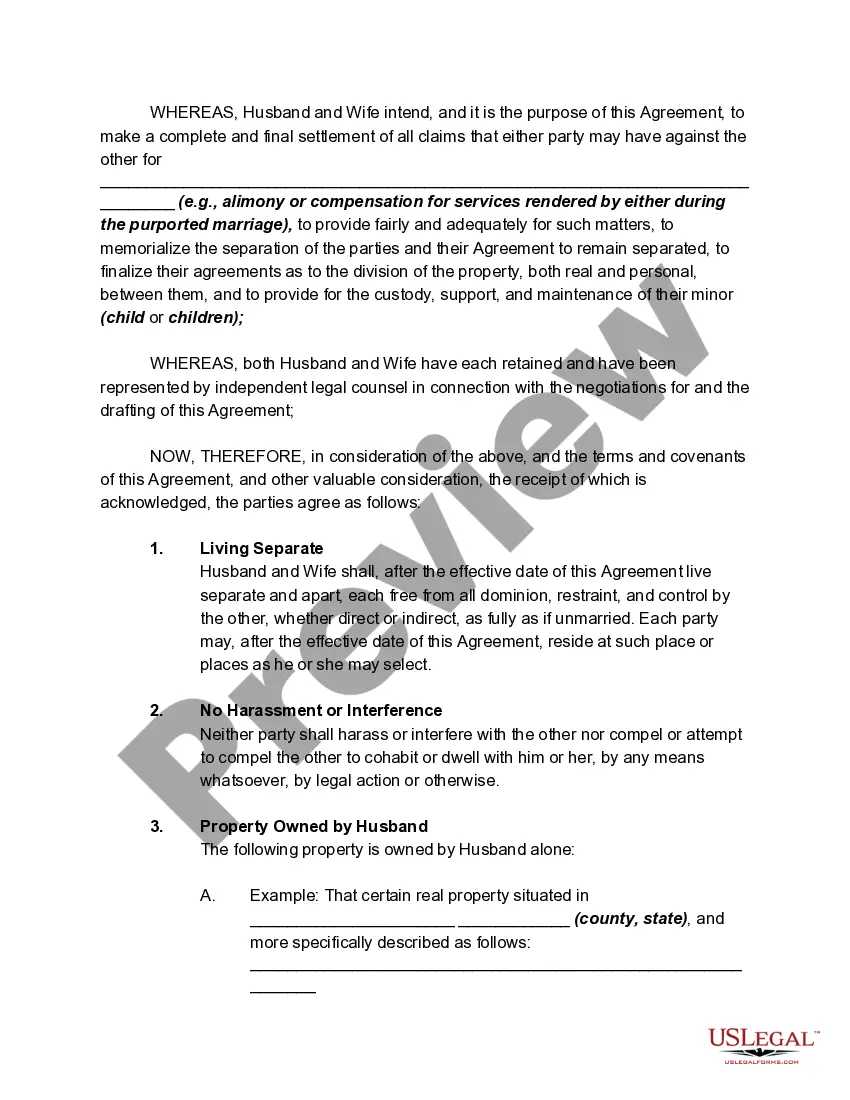
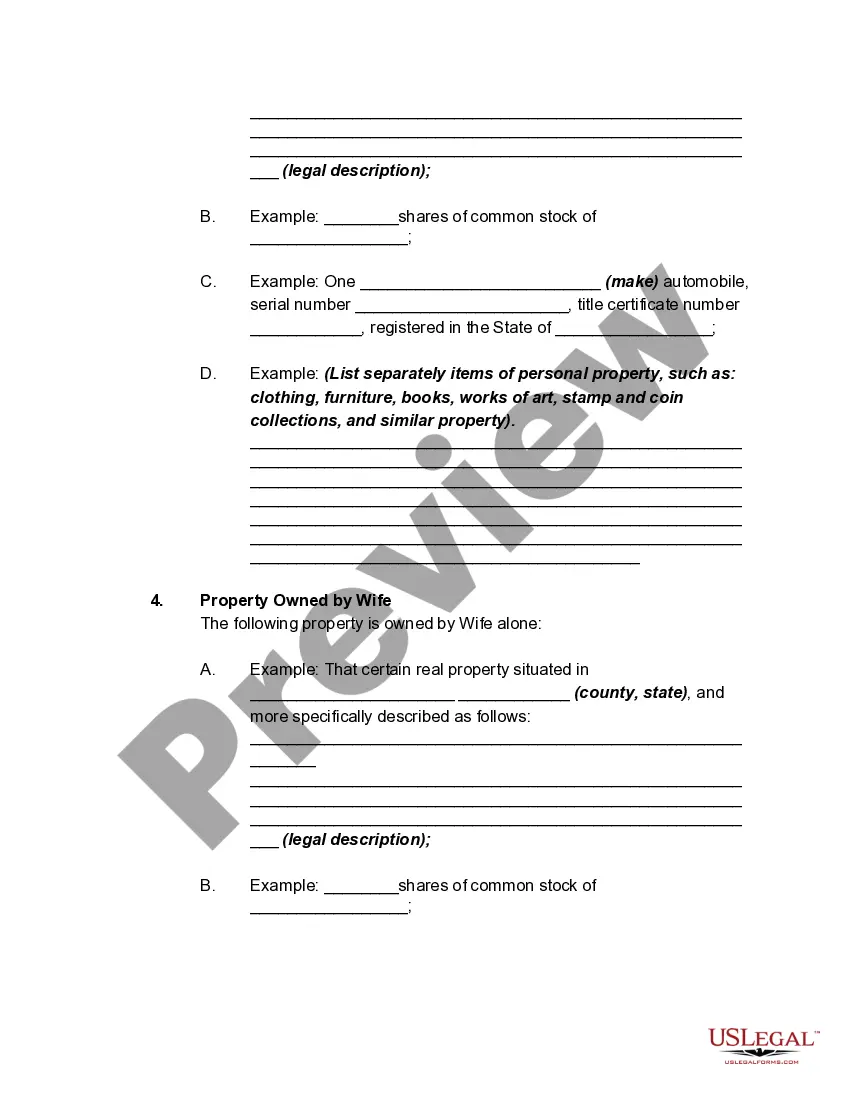
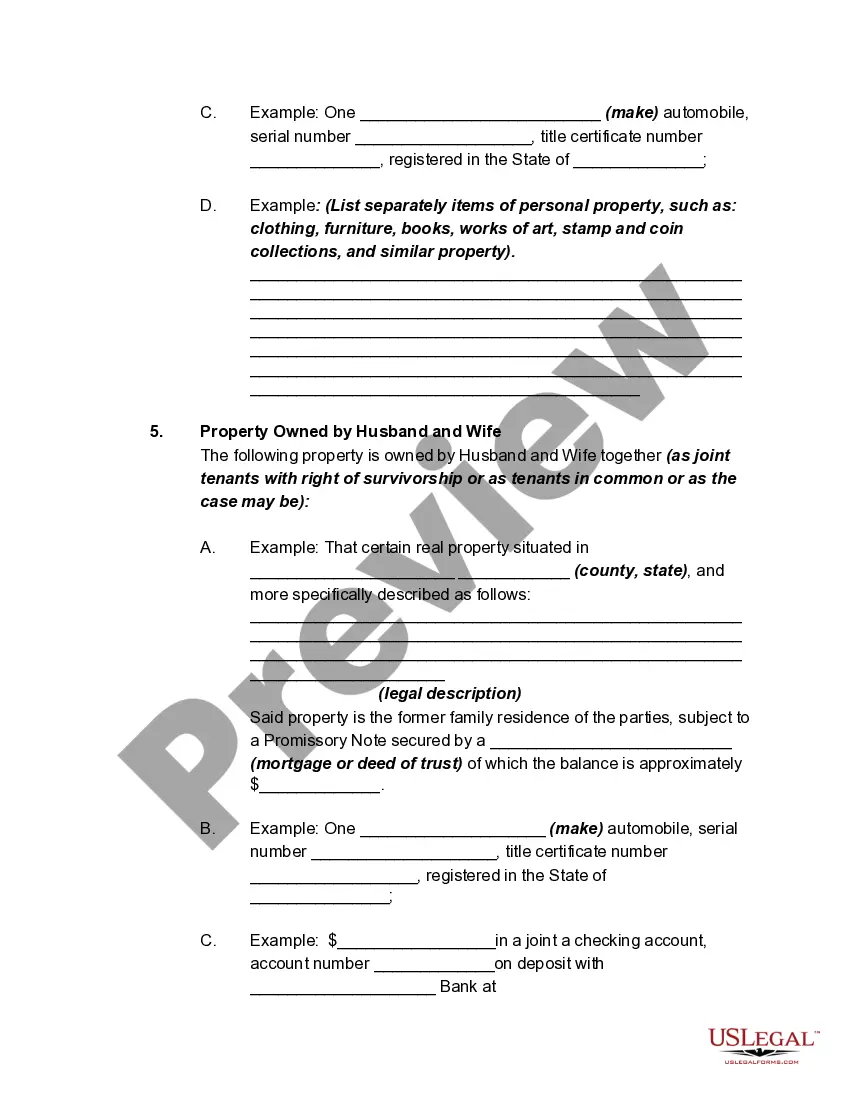
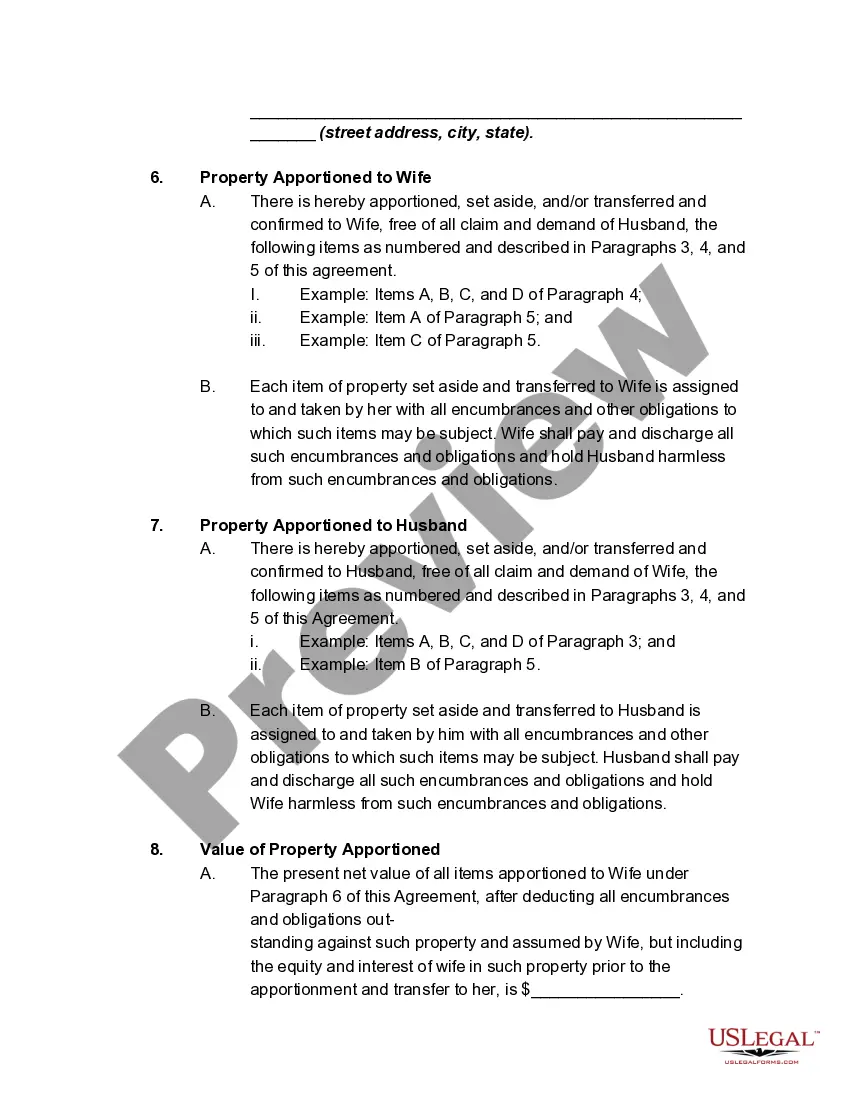
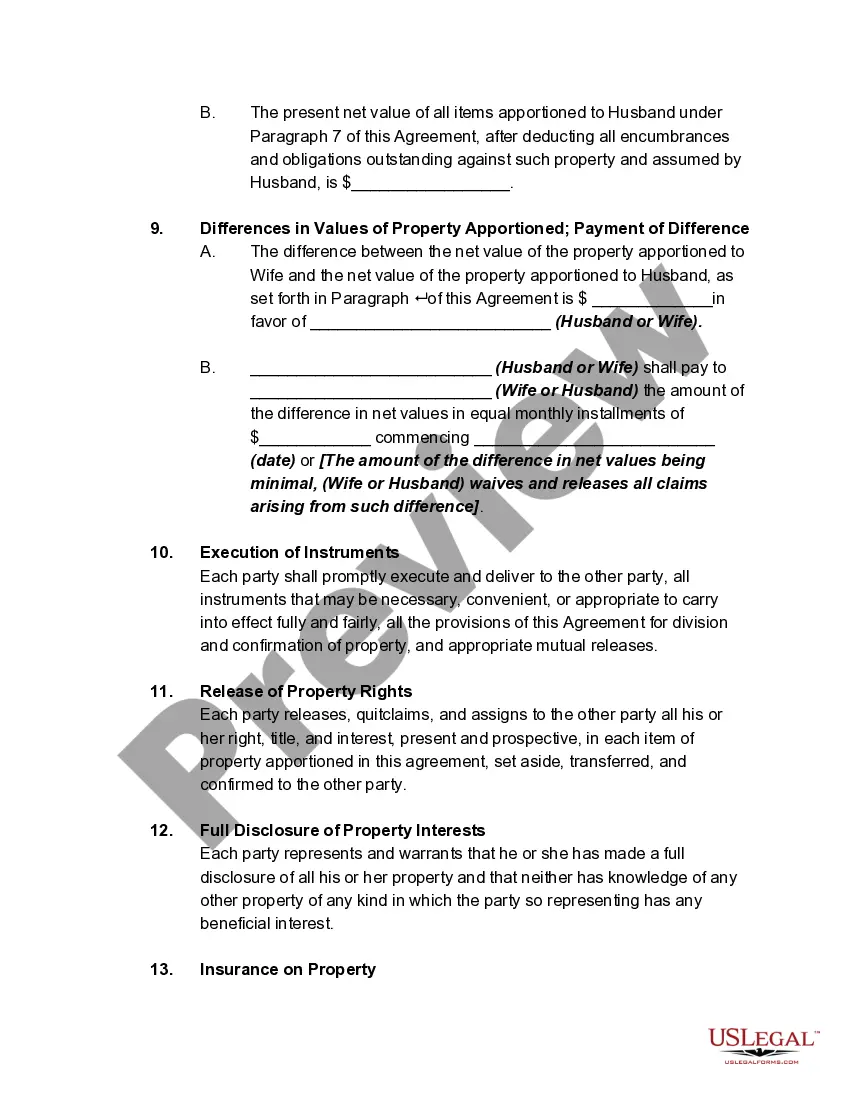
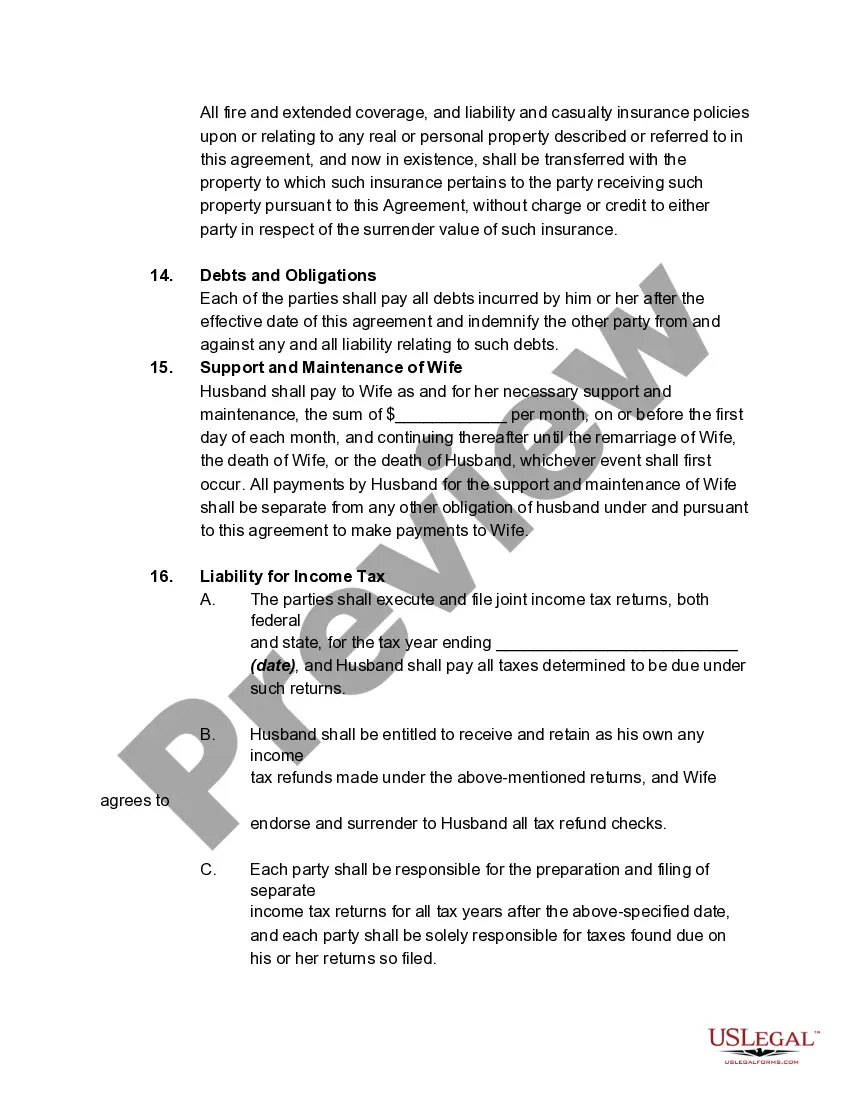
- Property division: Comprehensive sections for property owned separately and jointly.
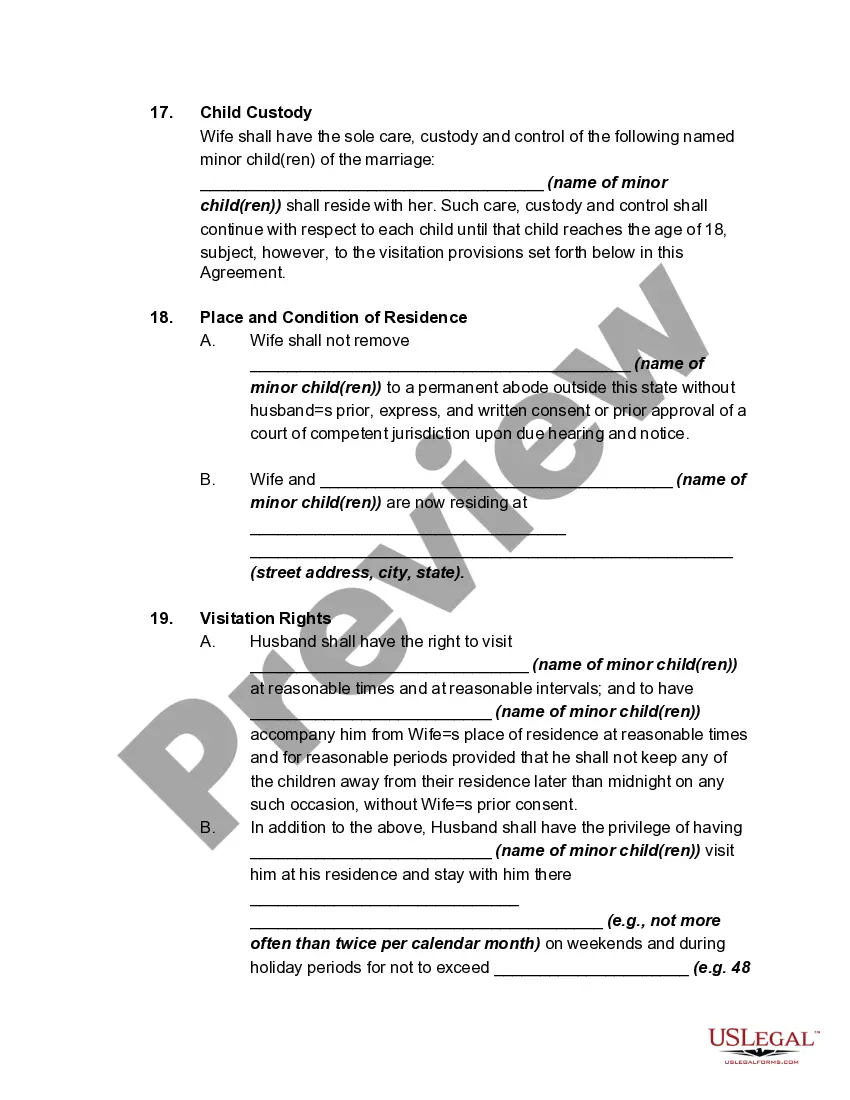
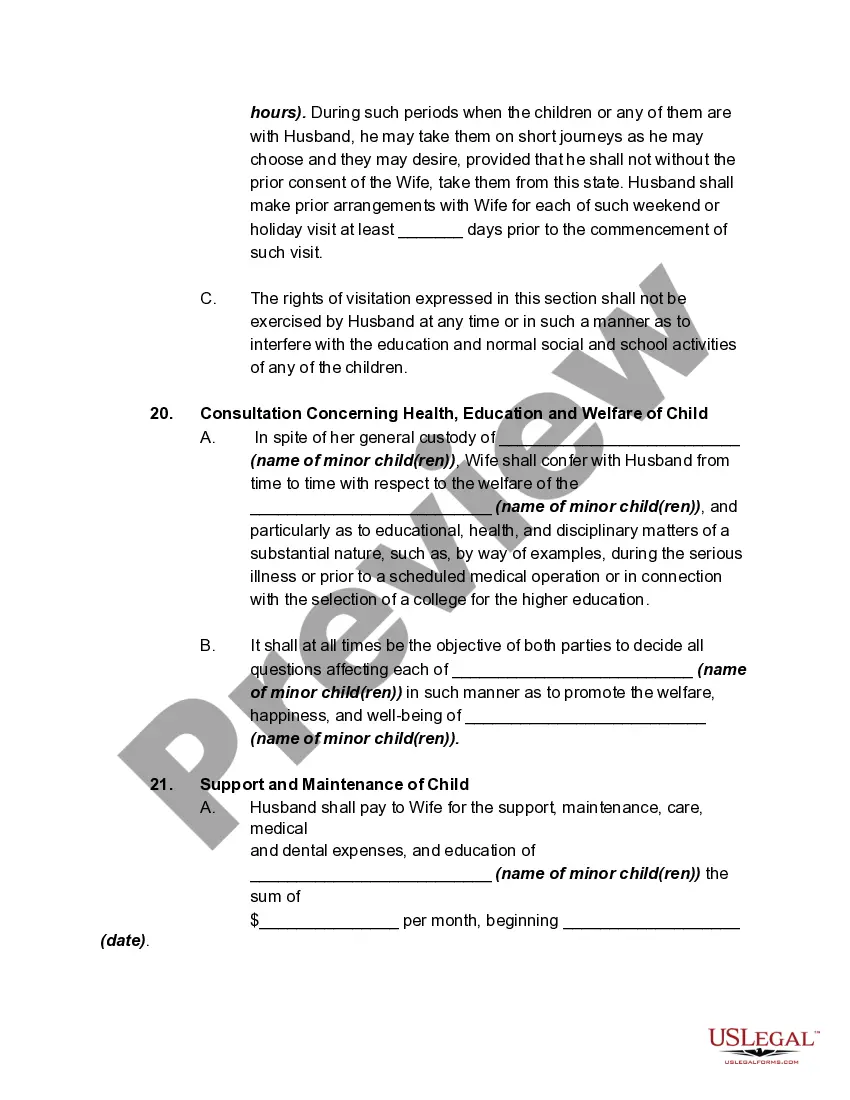
- Child custody provisions: Custodial arrangements and visitation rights.
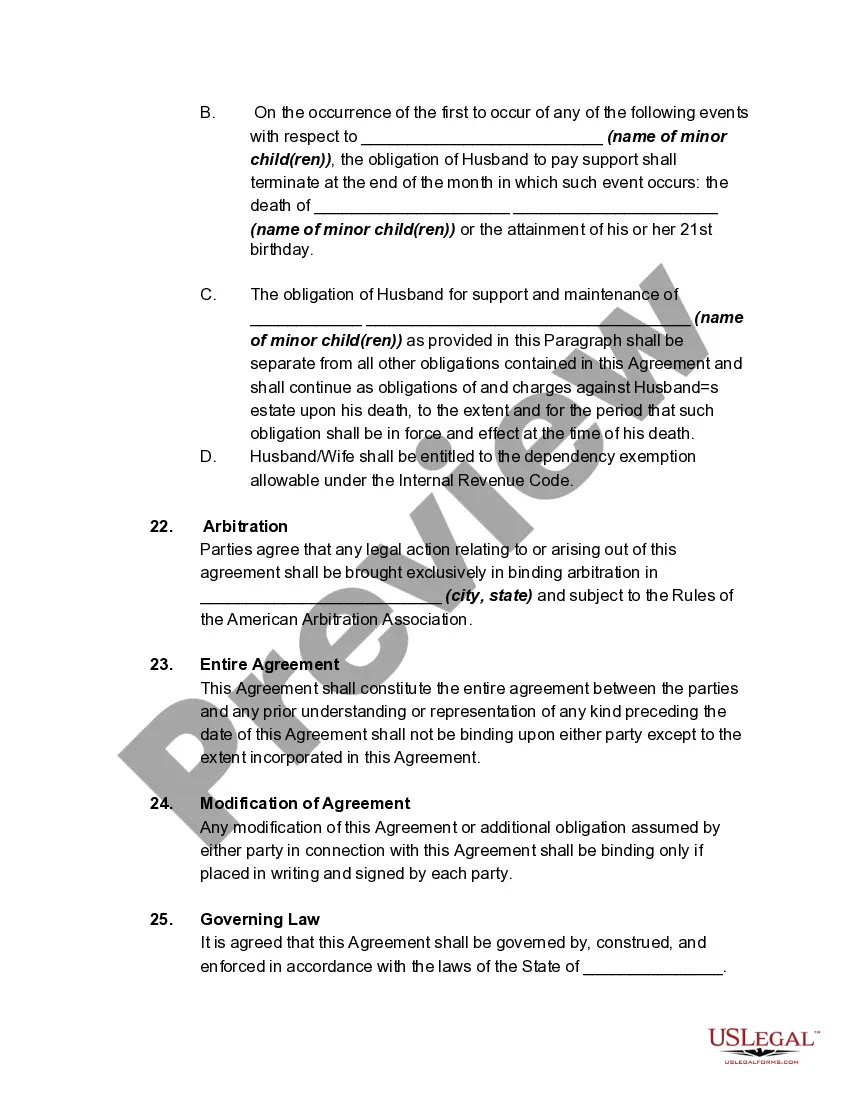
- Child support obligations: Monthly support amounts and conditions for termination.
- Terms for mutual release of property claims: Agreements to relinquish rights to specified properties.

Common use cases
This form is necessary when a marriage needs to be annulled, and there are shared assets or children involved. It helps to ensure that both parties reach a mutual agreement on property distribution, child custody, and financial support, thus avoiding future disputes. This agreement is ideal for couples who wish to formally document their separation and resolve these matters within a legal framework.
Who this form is for
- Individuals seeking an annulment who have shared property or children.
- Spouses who want to clarify custody arrangements and support obligations.
- Couples interested in creating a legally binding framework for their separation terms.
- Anyone who has been represented by independent legal counsel during the annulment process.
Completing this form step by step
- Identify the parties involved by entering their full names and addresses.
- Specify the date and location of the purported marriage and the date of separation.
- List all children involved, including names, ages, and any custody arrangements.
- Detail the distribution of property, specifying items assigned to each party separately and jointly.
- Enter the agreed-upon amounts for child support and any obligations for alimony.
- Sign and date the agreement in the presence of witnesses, if required.
Does this form need to be notarized?
This form does not typically require notarization unless specified by local law. However, having it notarized can provide an additional layer of validation, ensuring that the signatures are authenticated and adding to the document's credibility in legal proceedings.
Get your form ready online
Our built-in tools help you complete, sign, share, and store your documents in one place.
Make edits, fill in missing information, and update formatting in US Legal Forms—just like you would in MS Word.
Download a copy, print it, send it by email, or mail it via USPS—whatever works best for your next step.
Sign and collect signatures with our SignNow integration. Send to multiple recipients, set reminders, and more. Go Premium to unlock E-Sign.
If this form requires notarization, complete it online through a secure video call—no need to meet a notary in person or wait for an appointment.
We protect your documents and personal data by following strict security and privacy standards.

Make edits, fill in missing information, and update formatting in US Legal Forms—just like you would in MS Word.

Download a copy, print it, send it by email, or mail it via USPS—whatever works best for your next step.

Sign and collect signatures with our SignNow integration. Send to multiple recipients, set reminders, and more. Go Premium to unlock E-Sign.

If this form requires notarization, complete it online through a secure video call—no need to meet a notary in person or wait for an appointment.

We protect your documents and personal data by following strict security and privacy standards.
Common mistakes to avoid
- Failing to fully disclose all assets, which can lead to disputes later.
- Not specifying visitation rights clearly, resulting in misunderstandings.
- Overlooking the need for signatures from both parties, rendering the agreement invalid.
- Neglecting to consult legal counsel, which may lead to inadequate terms.
Benefits of completing this form online
- Convenience: Complete and download the form from anywhere without the need for in-person visits.
- Editability: Easily customize the document to fit your specific circumstances before finalizing.
- Reliability: Access forms crafted by licensed attorneys, ensuring accuracy in legal language and terms.
- The agreement is legally binding once signed by both parties and can be enforced in court.
- It is advisable for each party to review the agreement with a legal professional to ensure all provisions are enforceable under state law.
- Failure to adhere to the terms can result in legal consequences, including potential enforcement actions.
What to keep in mind
- The Annulment Property Settlement Agreement helps parties manage property division and child custody during an annulment.
- Ensure full disclosure of assets and obligations to avoid disputes.
- Clear terms regarding child support and visitation are crucial for child welfare.
Looking for another form?
Form popularity
FAQ
3 attorney answers The subsequent marriage would void the previous court's order. You will have to file for a divorce & request temporary orders for custody.
A court will modify custody following a parent's remarriage if the proposed change serves a child's best interests. A second marriage doesn't automatically warrant a new custody arrangement.However, not all custody situations turn out perfectly after a parent remarries.
If you have sole physical custody, it is not legal for the other parent to take your child from you. Sometimes taking your child from you is a crime, like "parental kidnapping." But if you are married, and there is no court order of custody, it is legal for the other parent to take your child.
Make sure you have all of the basic information and divorce forms you need according to the divorce laws in your state. Make sure you have all of the personal information you need. Include a statement that you and the other party are in agreement with the contents of the document.
Ongoing drug or alcohol abuse. Child abuse or neglect. Domestic violence. Mental health issues. Jail time. Relocation.
Some people wonder if they can save even more by money by writing their own settlement agreement and not seeking the help of a divorce attorney at all. While there is no legal requirement that you have a lawyer draft your settlement agreement, it is certainly a good idea to do so.
Figure out what guideline child support amount is. Agree on an amount and other issues. Write up your agreement. Sign your Stipulation (agreement) Turn in your Stipulation to the court for the judge to sign. File your Stipulation after the judge signs it.
At its heart, the law directs that the child's birth parents are responsible for the child's support and no one else. Therefore, in most states, the courts will not reduce a non-custodial parent or obligor's child support payments due to a custodial parent's decision to remarry.
As mentioned above, an annulment does not reverse the obligation of child support. Any child conceived by the parties is still entitled to support.