Employment or Job Termination Agreement
Overview of this form
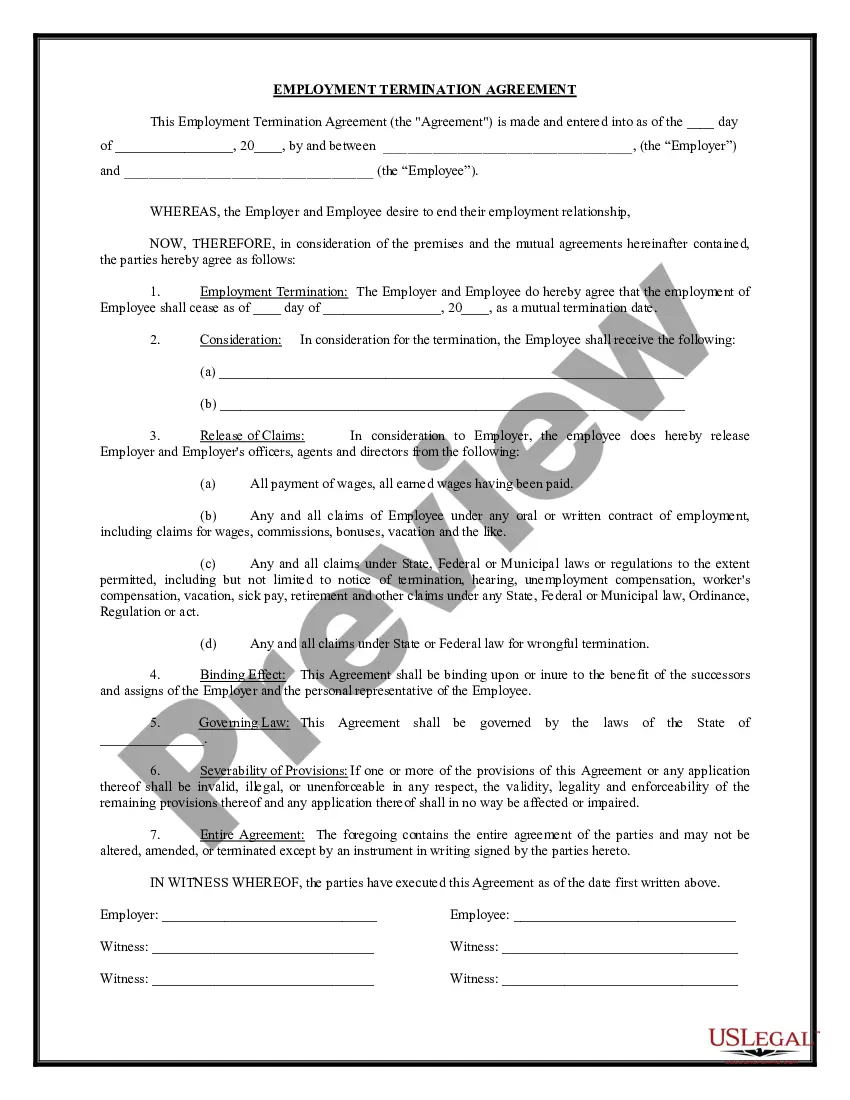
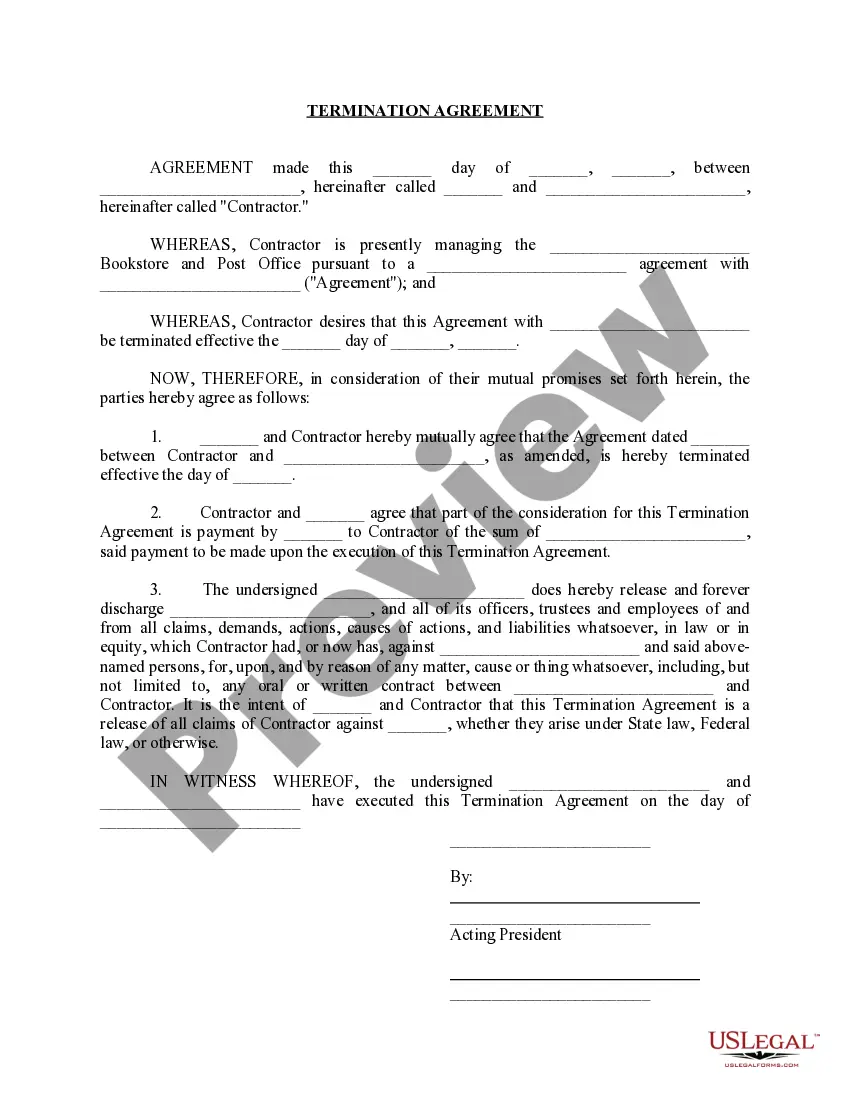
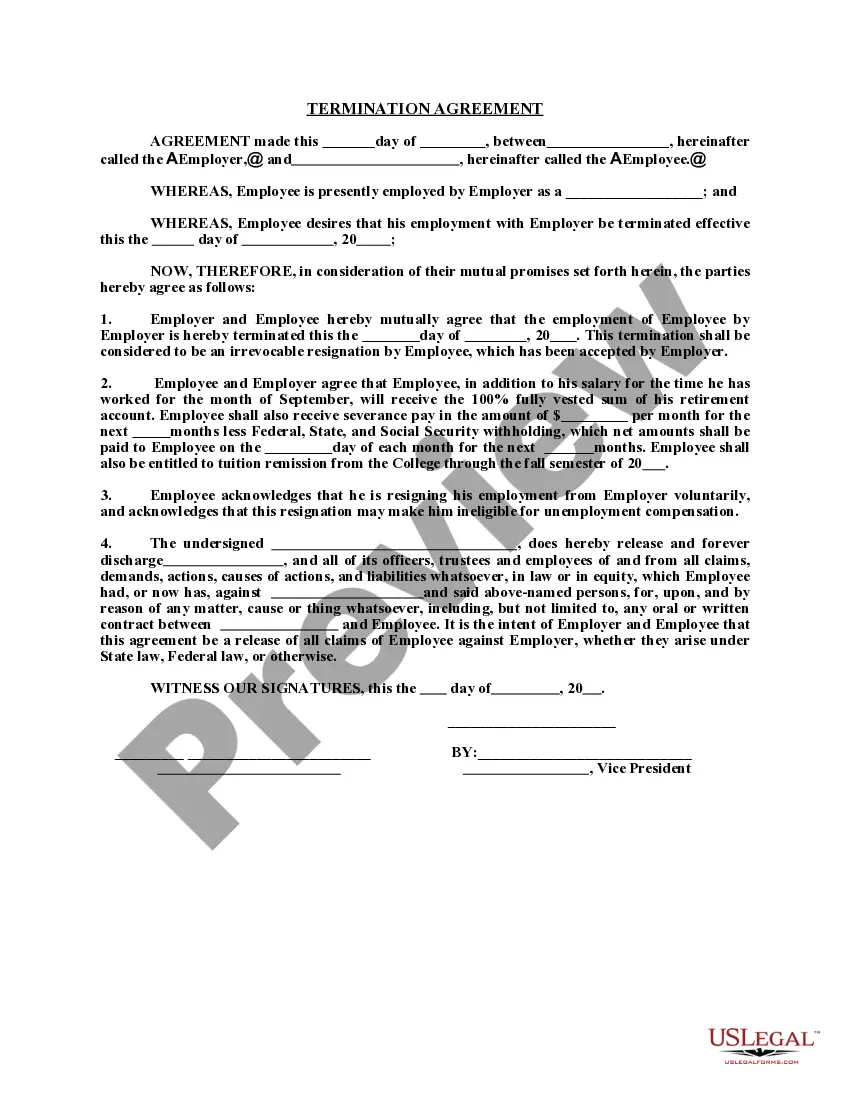
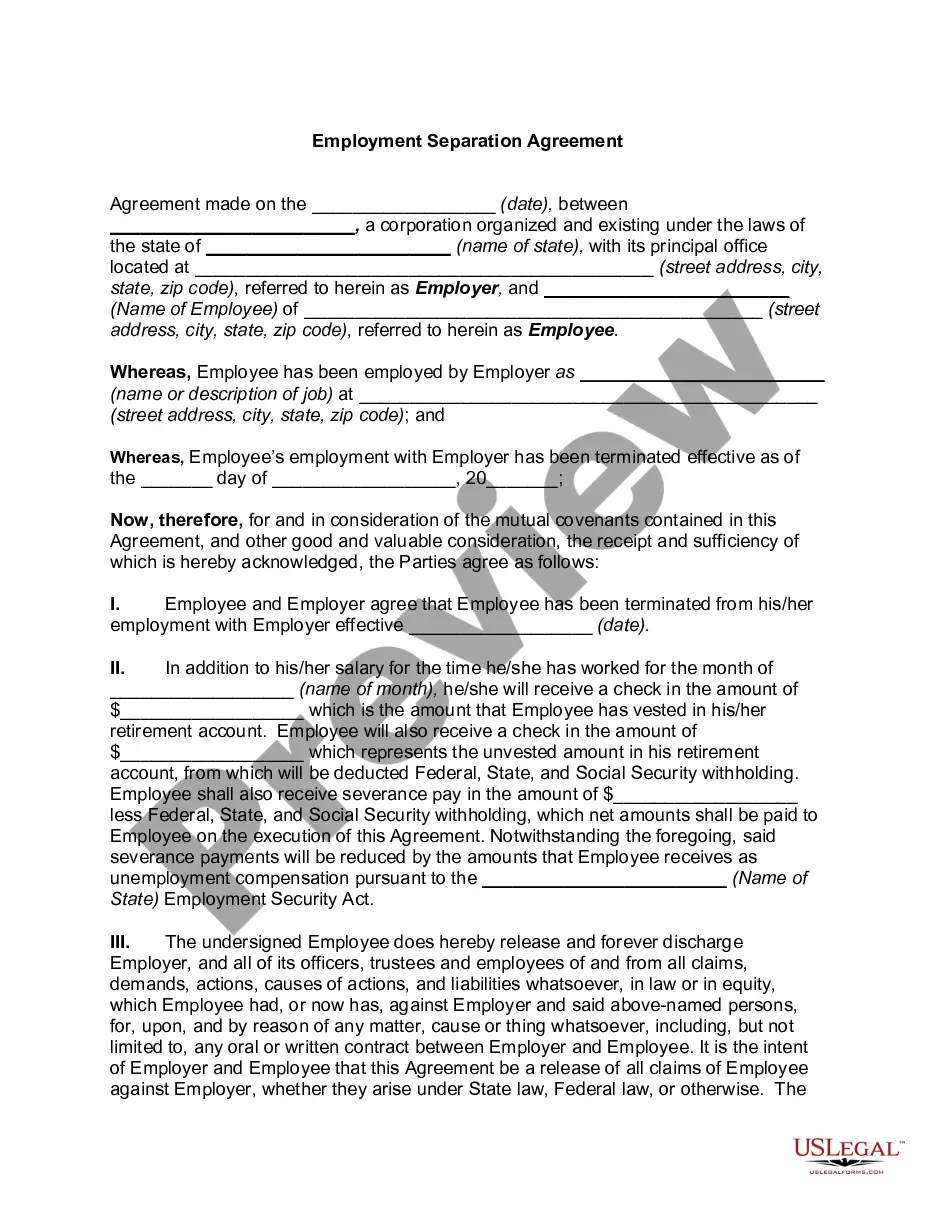
This Employment or Job Termination Agreement is a legal document used when both the employer and employee decide to end their employment relationship voluntarily on a specified date. It clearly outlines the terms of the termination, including any considerations for the employee and the release of claims against the employer. This agreement ensures that both parties understand their rights and obligations, distinguishing it from other employment-related forms, such as resignation letters or involuntary termination documentation.
Key components of this form
- Identification of the Employer and Employee, including names and addresses.
- Specification of the mutual termination date.
- Details of any consideration or compensation the employee will receive upon termination.
- Release of claims by the employee against the employer.
- Binding effect, ensuring the agreement applies to successors and assigns.
- Governing law clause stating the jurisdiction under which the agreement falls.
When to use this document
This Employment or Job Termination Agreement is suitable in various scenarios, including when an employee is resigning, when the employer and employee mutually agree to part ways, or when an employee has been terminated but both parties wish to formalize the end of the employment relationship amicably. This form is especially useful when there are agreed-upon severance or benefits involved in the termination.
Intended users of this form
This agreement is intended for:
- Employers who need to formalize a mutual termination with an employee.
- Employees who want to ensure their rights are protected during the termination process.
- HR professionals responsible for managing employee separations.
Instructions for completing this form
- Identify the parties involved by entering the names of the Employer and Employee.
- Specify the effective termination date clearly.
- Detail any compensation or benefits the Employee will receive upon termination.
- Include any necessary releases of claims that the Employee agrees to upon termination.
- Ensure both parties sign and date the agreement, and include witnesses if required.
Does this form need to be notarized?
This form usually doesn’t need to be notarized. However, local laws or specific transactions may require it. Our online notarization service, powered by Notarize, lets you complete it remotely through a secure video session, available 24/7.
Get your form ready online
Our built-in tools help you complete, sign, share, and store your documents in one place.
Make edits, fill in missing information, and update formatting in US Legal Forms—just like you would in MS Word.
Download a copy, print it, send it by email, or mail it via USPS—whatever works best for your next step.
Sign and collect signatures with our SignNow integration. Send to multiple recipients, set reminders, and more. Go Premium to unlock E-Sign.
If this form requires notarization, complete it online through a secure video call—no need to meet a notary in person or wait for an appointment.
We protect your documents and personal data by following strict security and privacy standards.

Make edits, fill in missing information, and update formatting in US Legal Forms—just like you would in MS Word.

Download a copy, print it, send it by email, or mail it via USPS—whatever works best for your next step.

Sign and collect signatures with our SignNow integration. Send to multiple recipients, set reminders, and more. Go Premium to unlock E-Sign.

If this form requires notarization, complete it online through a secure video call—no need to meet a notary in person or wait for an appointment.

We protect your documents and personal data by following strict security and privacy standards.
Avoid these common issues
- Failing to enter the mutual termination date correctly.
- Not including all necessary details about consideration provided.
- Missing signatures from either party or witnesses.
- Not reviewing state-specific employment laws that may affect the agreement.
Why complete this form online
- Convenient access to legal forms from any device.
- Editability allows customization to meet specific needs.
- Reliability of forms drafted by licensed attorneys.
- Immediate downloads for quick resolutions.
Legal use & context
- This agreement is legally binding and enforceable if completed properly.
- Both parties are advised to consult legal counsel before signing to fully understand their rights.
- The agreement protects against future claims related to the employment termination.
What to keep in mind
- The Employment or Job Termination Agreement outlines a mutual decision to end employment.
- It ensures clarity and protection for both parties involved.
- Proper completion and understanding of the agreement can prevent future legal disputes.
Looking for another form?

Form popularity
FAQ
State labor law in Karnataka and Tamil NaduUnder the Karnataka Shops and Establishments Act, 1961 and the Tamil Nadu Shops and Establishments Act, 1947, an employer cannot terminate an employee who has been with the enterprise for more than six months, except on the grounds of reasonable cause. In addition, an
Be honest. Always be honest about why you were terminated from a previous position. Keep it simple. Remain positive. Demonstrate personal growth. Promote your skills and experience. Unmatched skillset. Laid off due to company restructure. Didn't meet the attendance policy.
Further, the Karnataka Act also prescribes that any such termination shall be made by giving a reasonable cause to the employee. Loss of business, poor performance, etc., are all valid reasons to terminate employees.
In U.S. labor law, at-will employment is an employer's ability to dismiss an employee for any reason (that is, without having to establish "just cause" for termination), and without warning, as long as the reason is not illegal (e.g. firing because of the employee's race, religion or sexuality).
Serious misconduct; Willful disobedience of a lawful order; Gross and habitual neglect of duty; Fraud; Willful breach of trust; Commission of a crime against the person of the employer or any immediate member of his family or his duly authorized representatives; and. Analogous causes.
If the reasons are not in accordance with company's policies then the employee can be terminated. The employer, however, has the right to terminate services without conducting internal inquiries. But this seldom happens as (s)he then has to justify before the court the reasons for not doing so.
Resignation means the employee has decided to sever the employment. We usually call this quitting. Termination means the employer has decided to sever the employment. We call this being fired, terminated or laid off.
According to Article 282 of the Philippines Labor Code, the following just causes by the employee can be the basis for firing an employee in the Philippines: serious misconduct or willful disobedience. gross and habitual neglect of duty. fraud or deliberate breach of trust.
In general, to be terminated for cause, a contract should indicate that an employee must do something (or fail to do something) that causes harm (or risks harm) to the employer, and that violates a lawful workplace policy or a state or federal law.