Affidavit Denying the Use of an Alias
Overview of this form
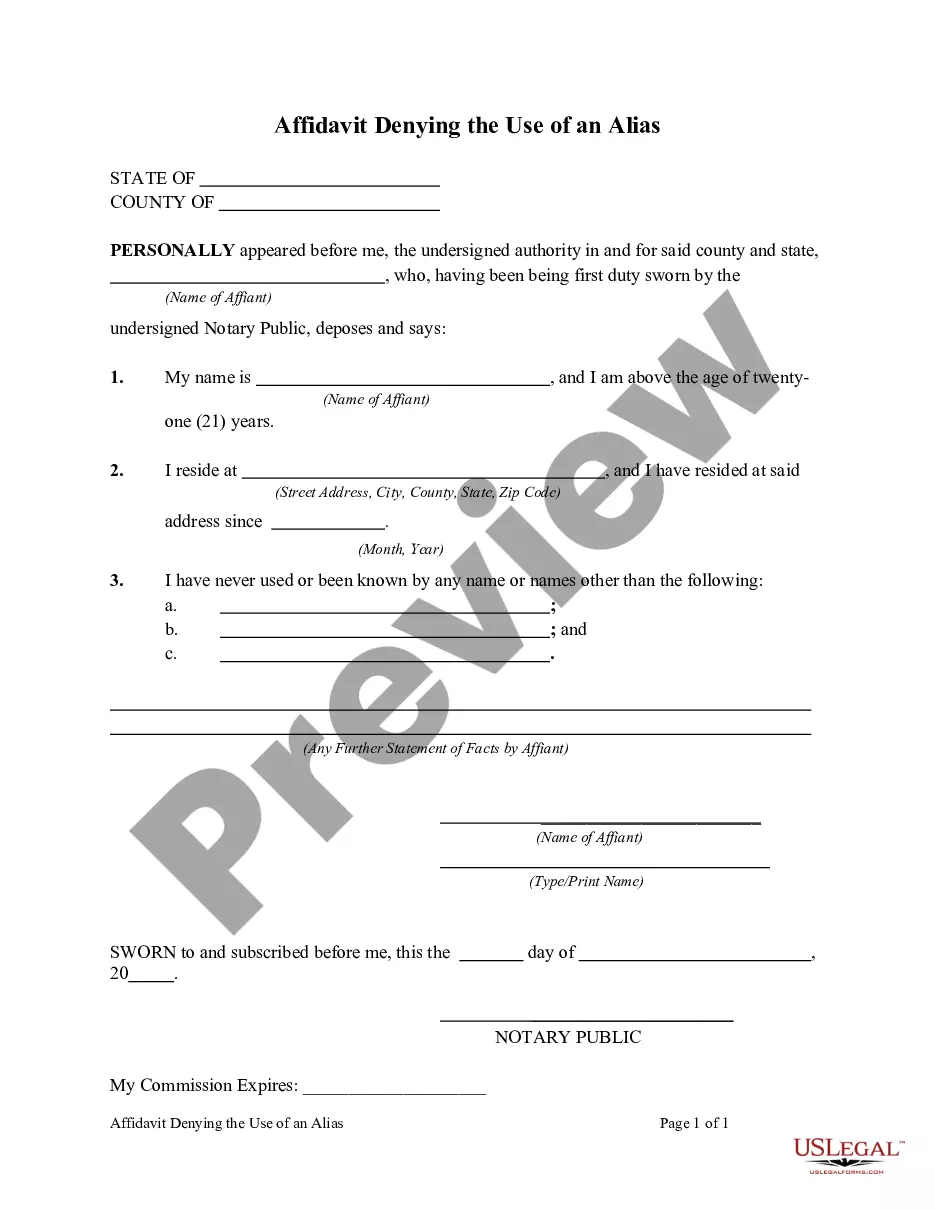
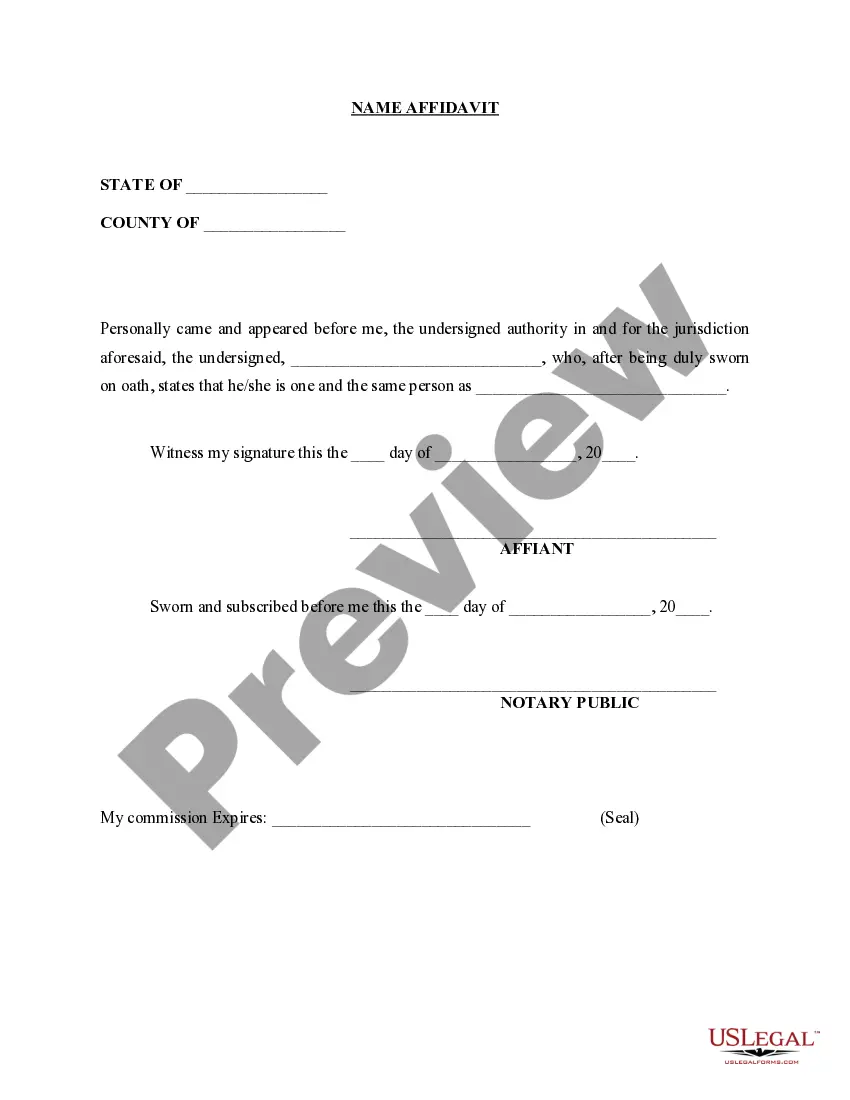
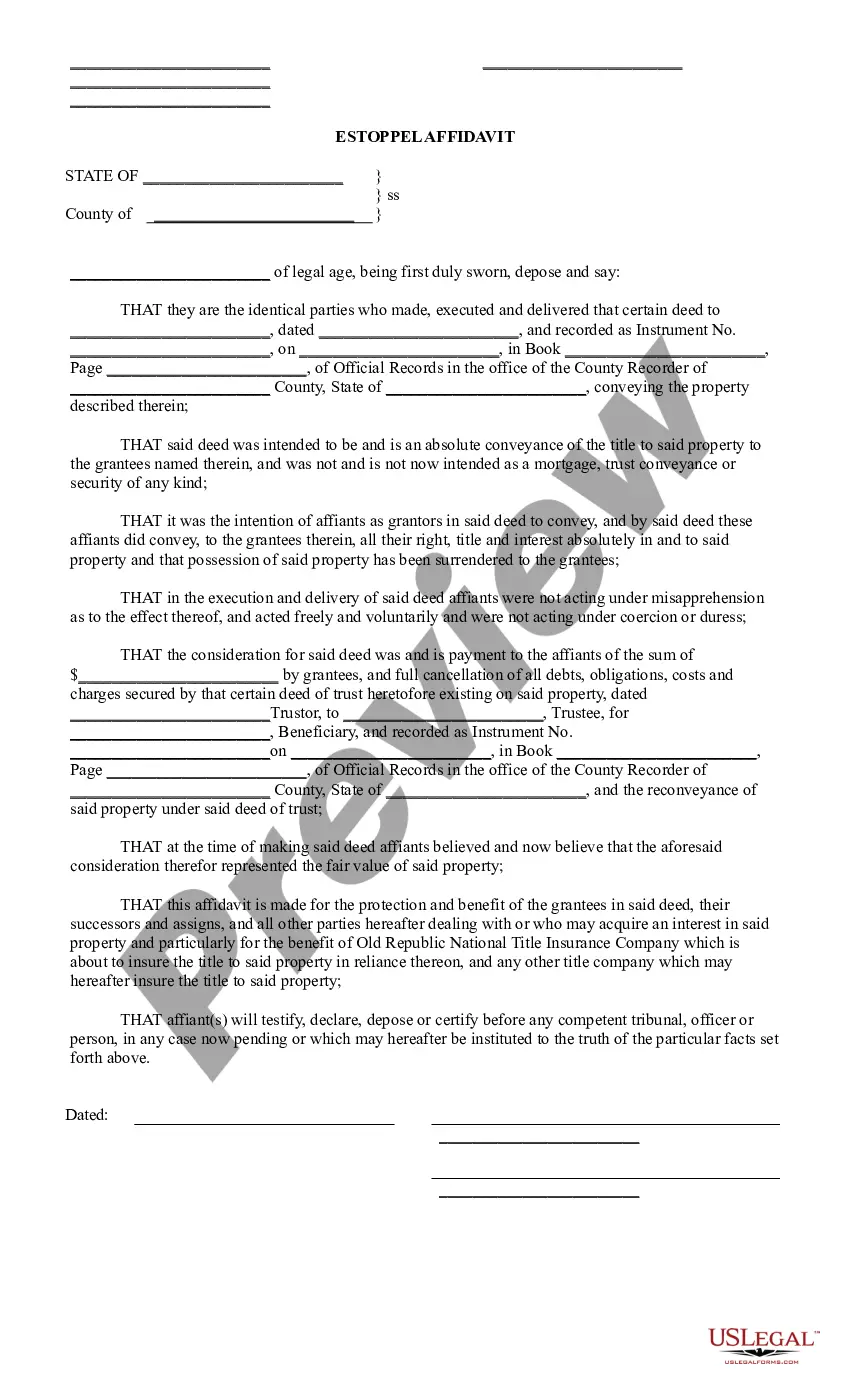
The Affidavit Denying the Use of an Alias is a legal document that allows an individual to formally declare that they have never used an alias or a specific name as an alias. This form is important for clarifying one's identity, especially in legal or financial contexts where aliases may create confusion or complicate matters. By executing this affidavit, the individual can unequivocally deny any association with an alternate name, distinguishing it from other forms that might merely require a listing of names or aliases.
Main sections of this form
- Identification of the affiant: The individual making the affidavit must provide their full legal name and contact information.
- Statement of denial: A clear declaration stating that the affiant has never used an alias.
- Signature and date: The affiant must sign and date the affidavit, affirming the truth of the statements made.
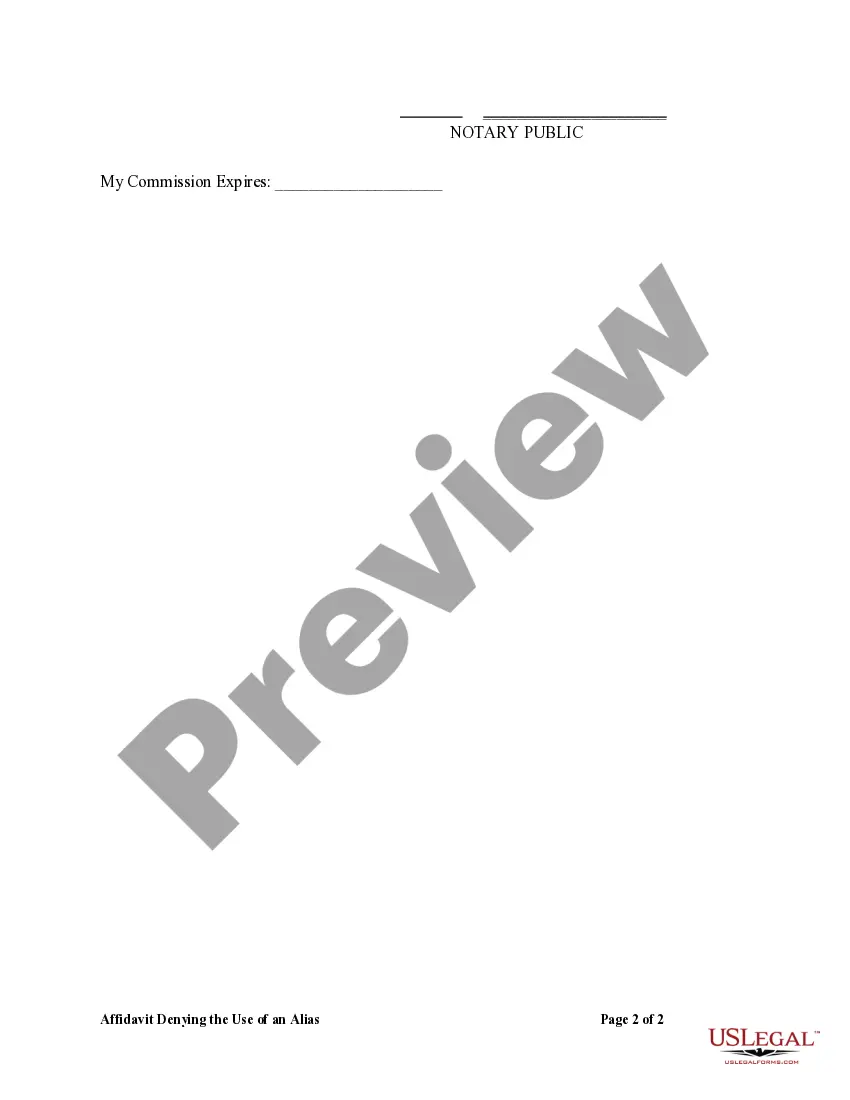
- Notarization section: A designated area for the notary public to acknowledge the signing of the affidavit.
Situations where this form applies
This affidavit is often used in situations where identity verification is crucial. For instance, you may need to submit this form when applying for a loan, clearing a background check, or during legal proceedings where your name history is in question. It serves to prevent any misunderstandings related to aliases, ensuring that your legal and financial dealings proceed smoothly.
Intended users of this form
- Individuals applying for credit or loans.
- People involved in legal cases requiring identity verification.
- Anyone needing to clarify their identity with financial institutions or government agencies.
- Persons concerned about mistaken identity due to past use of an alias.
Steps to complete this form
- Identify yourself: Fill in your full name and contact information at the top of the affidavit.
- Make your statement: Clearly state that you have never used any aliases.
- Sign the affidavit: Provide your signature and the date at the designated section.
- Arrange for notarization: Have a notary public witness your signature and complete the notarization section.
Notarization guidance
This form must be notarized to be legally valid. US Legal Forms provides secure online notarization powered by Notarize, allowing you to complete the process through a verified video call.
Get your form ready online
Our built-in tools help you complete, sign, share, and store your documents in one place.
Make edits, fill in missing information, and update formatting in US Legal Forms—just like you would in MS Word.
Download a copy, print it, send it by email, or mail it via USPS—whatever works best for your next step.
Sign and collect signatures with our SignNow integration. Send to multiple recipients, set reminders, and more. Go Premium to unlock E-Sign.
If this form requires notarization, complete it online through a secure video call—no need to meet a notary in person or wait for an appointment.
We protect your documents and personal data by following strict security and privacy standards.

Make edits, fill in missing information, and update formatting in US Legal Forms—just like you would in MS Word.

Download a copy, print it, send it by email, or mail it via USPS—whatever works best for your next step.

Sign and collect signatures with our SignNow integration. Send to multiple recipients, set reminders, and more. Go Premium to unlock E-Sign.

If this form requires notarization, complete it online through a secure video call—no need to meet a notary in person or wait for an appointment.

We protect your documents and personal data by following strict security and privacy standards.
Mistakes to watch out for
- Failing to include all required identification details.
- Not signing or dating the affidavit.
- Overlooking the notarization step if required.
Advantages of online completion
- Convenient access: Download and complete the form from home, saving time.
- Editability: Easily make changes as needed before finalizing your affidavit.
- Reliability: Forms are drafted by licensed attorneys, ensuring compliance with legal standards.
Legal use & context
- Affidavits serve as legal documents that can be presented in court or used in official transactions.
- This form is useful for verifying identity in situations where names differ across documents.
- Affidavits must be completed accurately to avoid legal complications.
What to keep in mind
- The Affidavit Denying the Use of an Alias is important for establishing your legal identity.
- Make sure to complete the form accurately and sign it.
- Review state-specific requirements for additional steps or notarization needs.
Looking for another form?
Form popularity
FAQ
The affidavit reflects both your old and new names. Affidavits can be used for changing the whole name, surname or just a few letters. Keep a copy of the affidavit. This is a crucial document and comes in handy for any future legal formalities.
That my name as per the records is -(XYZ). That I have changed my name as _________ on (date of change of name). 3.At present all the records have my new name _________. I am getting a public notice published to this effect in the newspaper.
(1) The Registrar-General, a Deputy Registrar-General or any justice of the peace, notary public, commissioner of the court for taking affidavits, Australian legal practitioner authorised by section 27 (1) to take and receive any affidavit, a federal judicial officer, or other person by law authorised to administer an
Title the affidavit. First, you'll need to title your affidavit. Craft a statement of identity. The very next section of your affidavit is what's known as a statement of identity. Write a statement of truth. State the facts. Reiterate your statement of truth. Sign and notarize.
Draft the Affidavit by providing the details of the old name and new name. Execute the Affidavit on a Stamp Paper of Denomination of Rs. 10/- or as per the prescribed stamp duty as per your state. Make the Affidavit attest and sealed by the Notary Public.
An affiant is someone who files an affidavit, which is a written statement used as evidence in court. In order to be admissible, affidavits must be notarized by a notary public.
Uses Of Affidavit Of One And The Same Person The affidavit of one and the same person is used to declare that two (or more) names pertain to the same person.
You will need to attend a registry or service centre in person and provide your proof of identity documents, plus a Full Marriage Certificate. For NSW, generally we only accept Marriage Certificates issued by the NSW Registry of Births, Deaths and Marriages (BDM). Commemorative certificates are not acceptable.