Lease Agreement or Rental of a Mobile Home
What is this form?
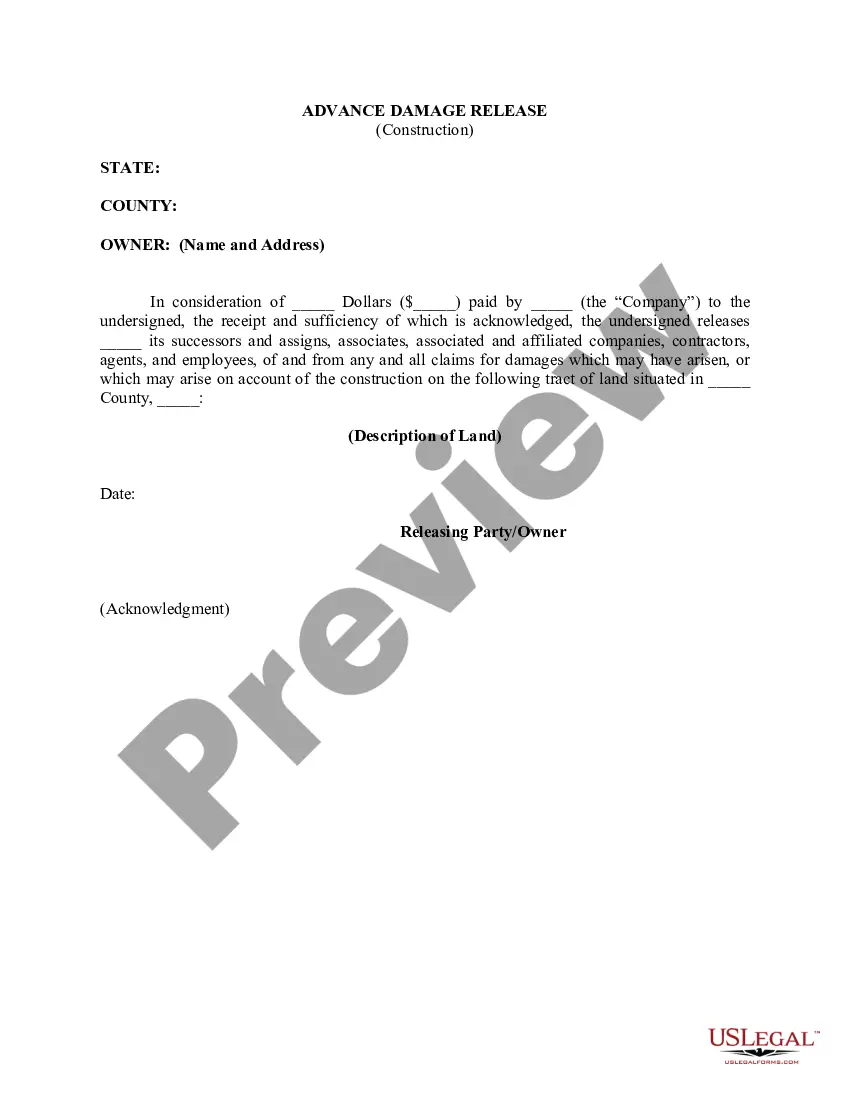
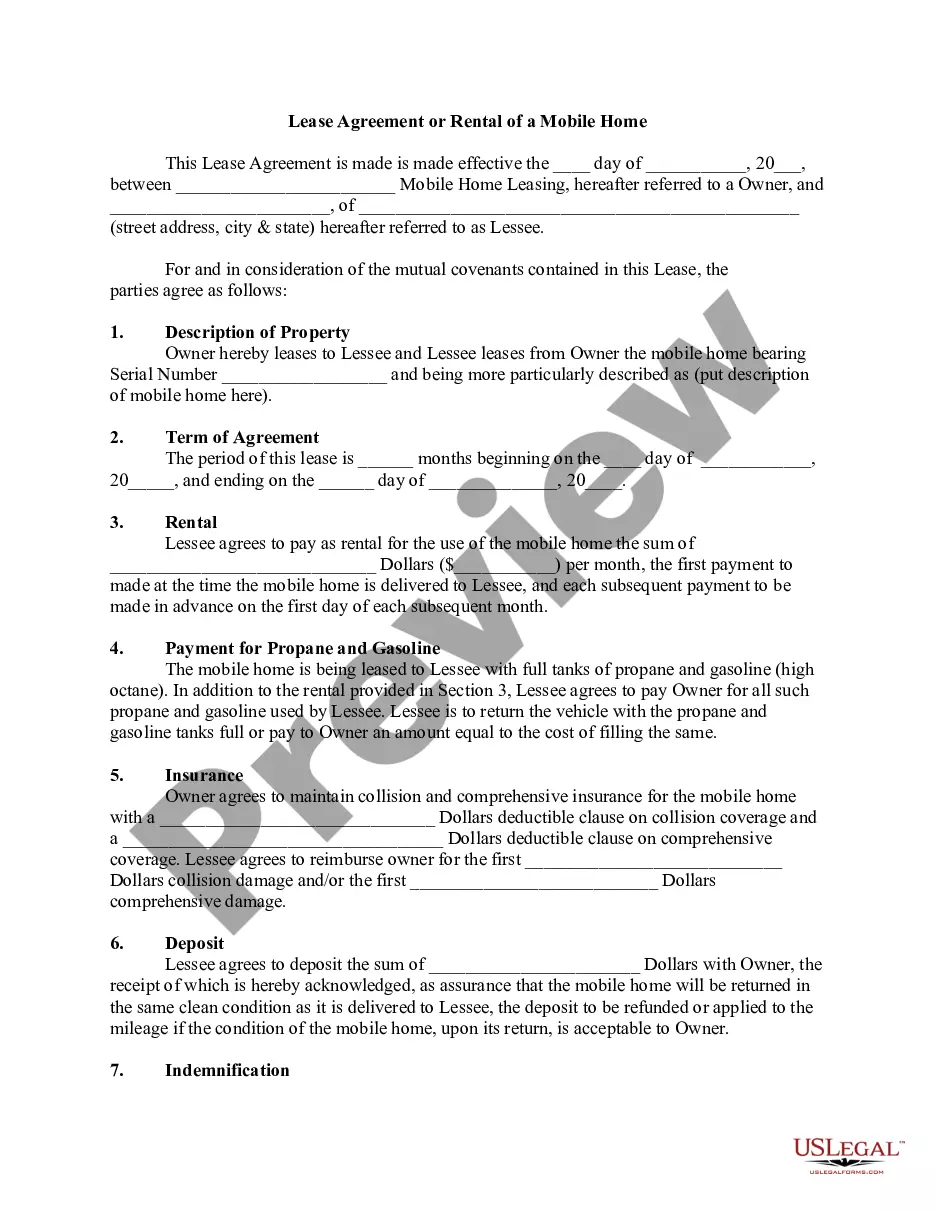
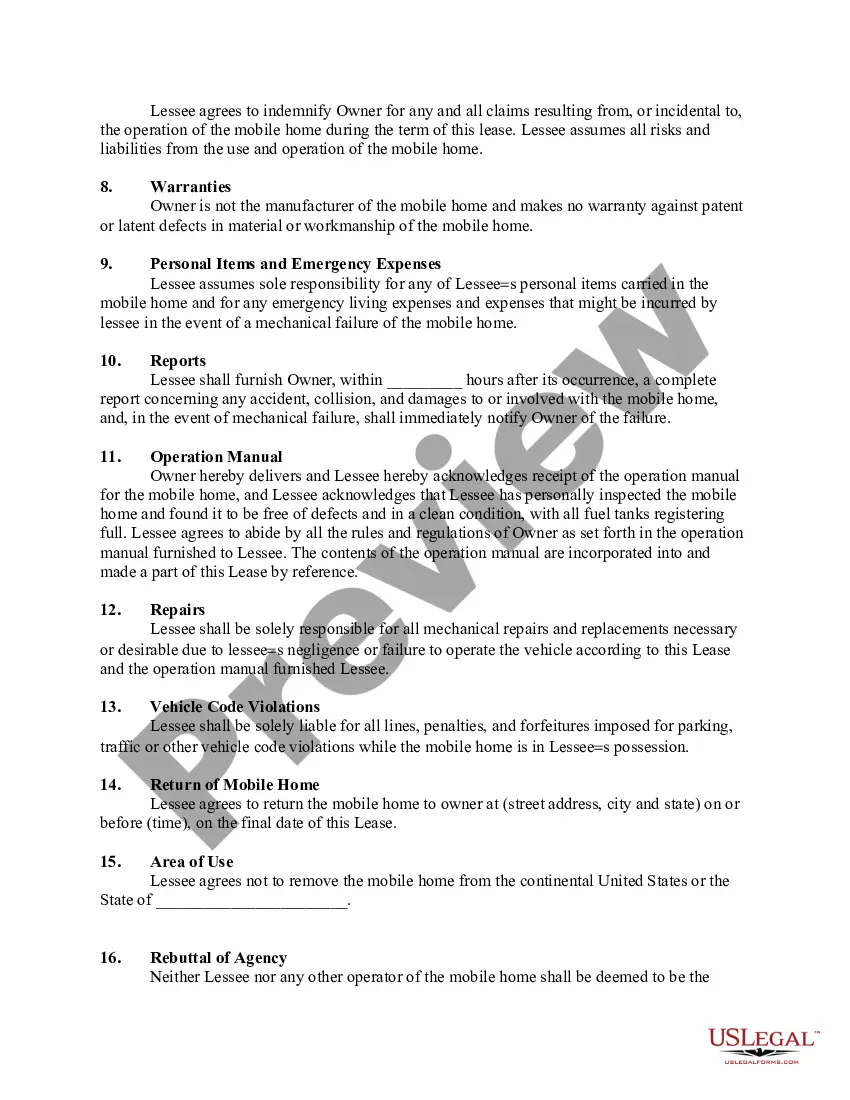
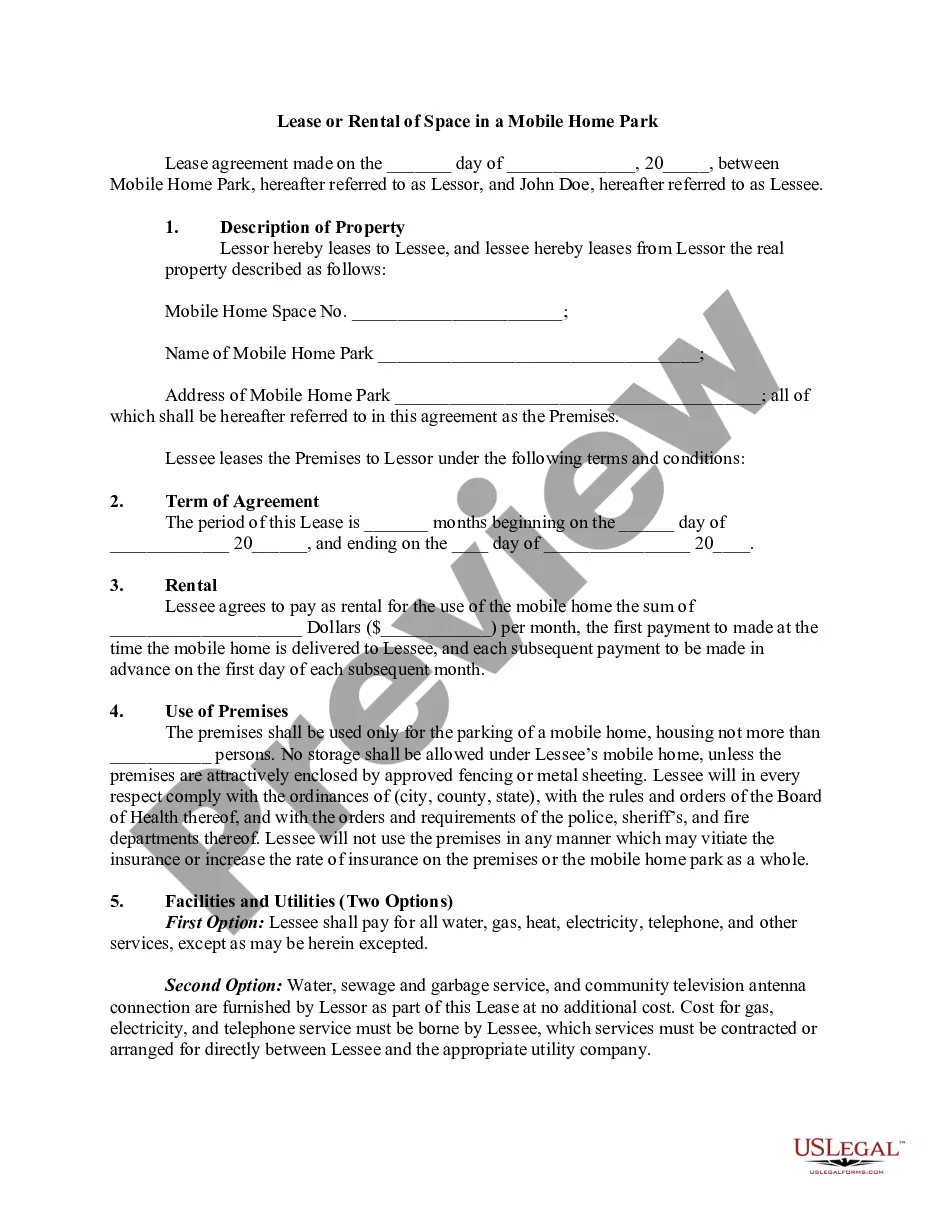
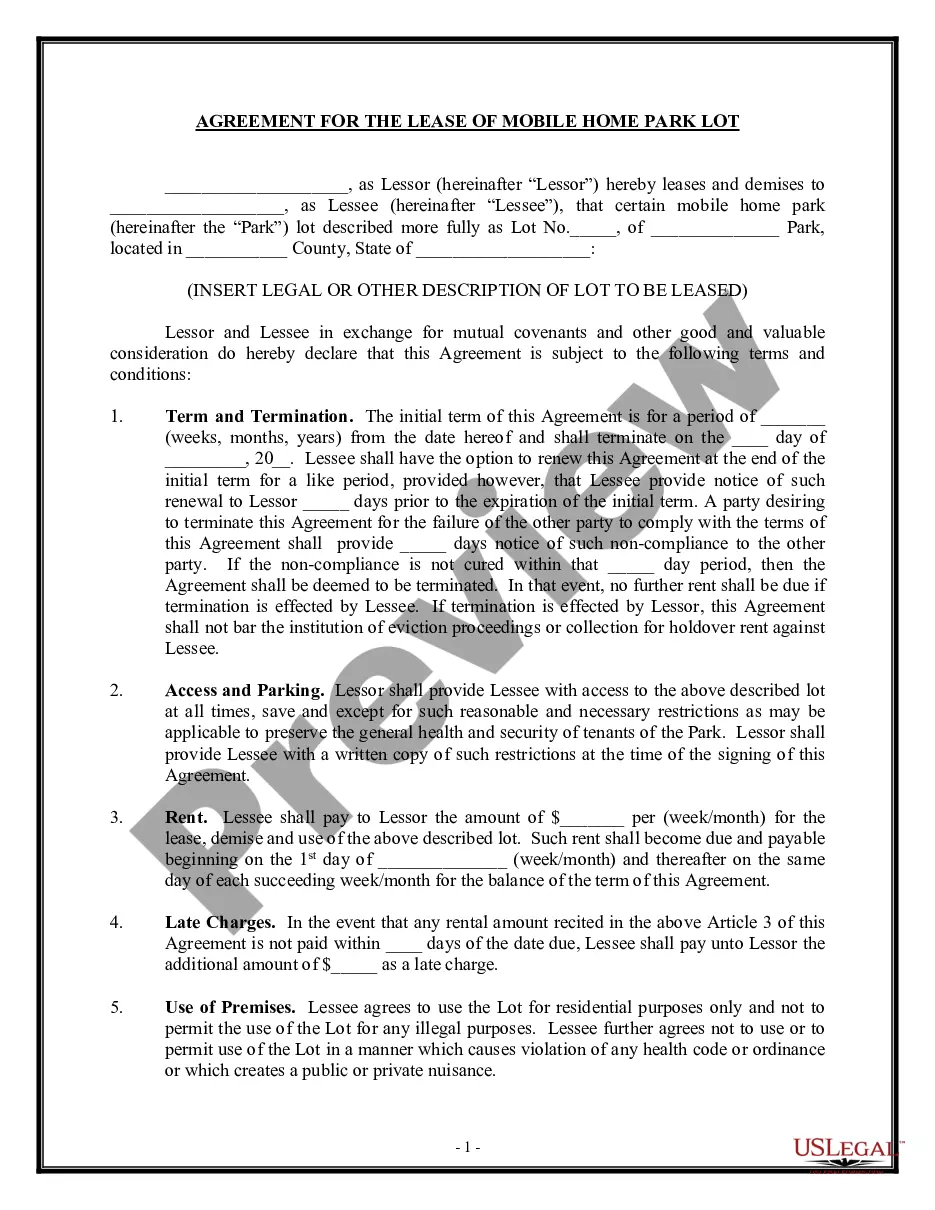
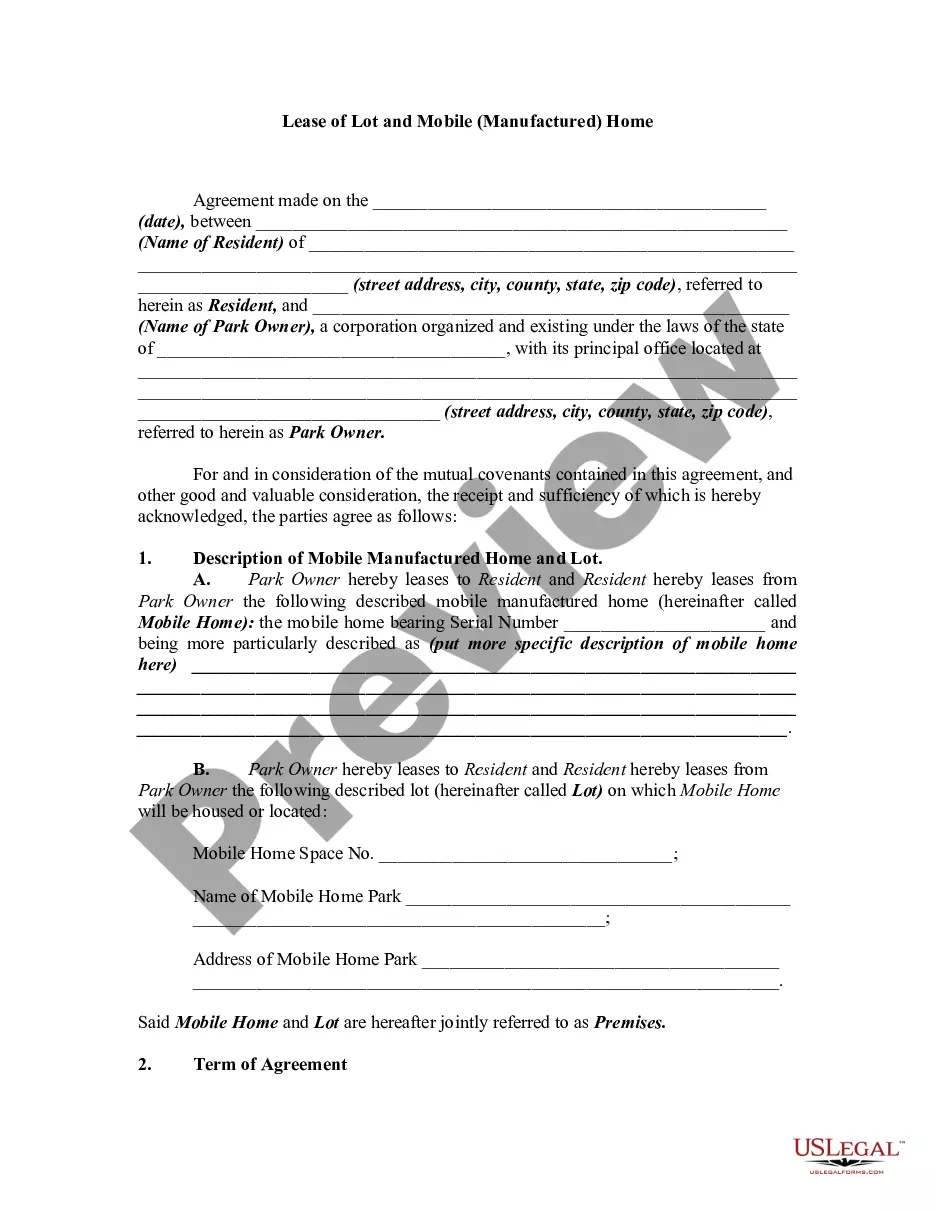
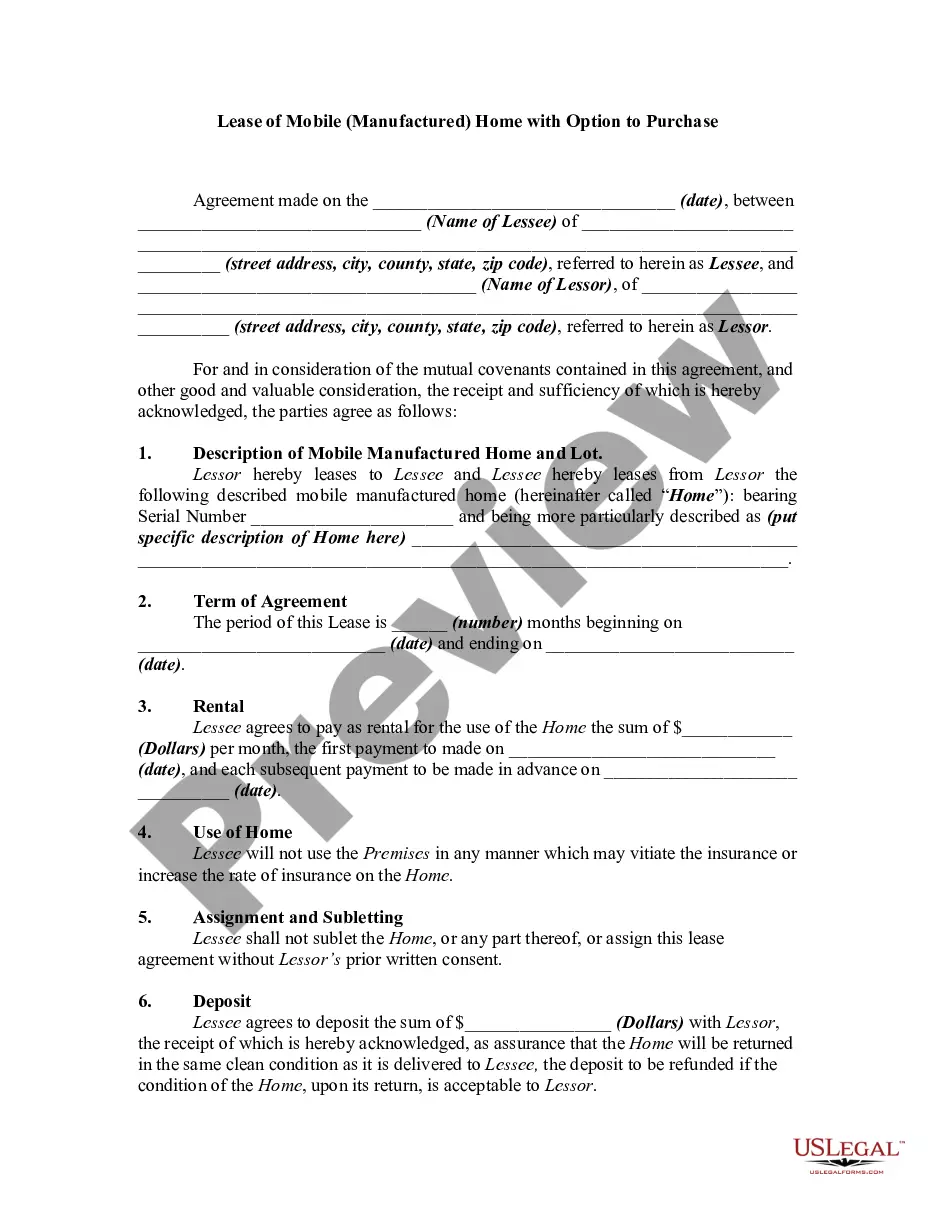
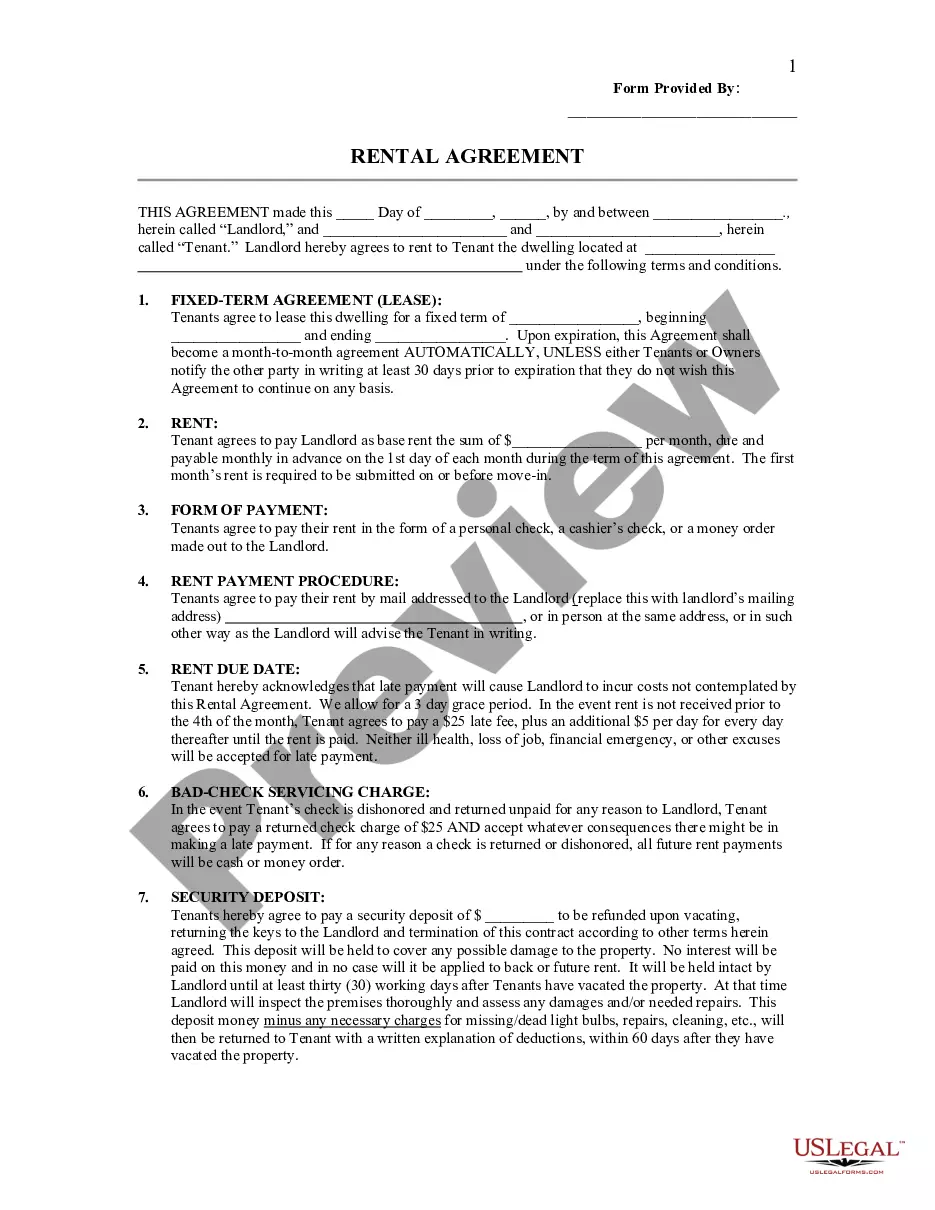
This Lease Agreement or Rental of a Mobile Home is a legal document that outlines the terms under which a mobile home is leased from an owner to a tenant. It clarifies the rights and responsibilities of both parties, including rental payments, maintenance of the property, and liabilities. Distinct from standard lease agreements, this form specifically addresses the unique factors associated with mobile homes as personal property.
Form components explained
- Description of the mobile home, including its serial number and specific details.
- Term of the lease, including start and end dates.
- Rental amount and payment obligations.
- Provisions for payment of propane and gasoline during the lease period.
- Insurance responsibilities, including deductible details.
- Deposit requirements for the care of the mobile home.
- Indemnification clauses and liability for accidents or damages.
- Specifications regarding the return of the mobile home at the end of the lease.
When this form is needed
This form should be used whenever an individual or entity wishes to rent a mobile home to another party. It is suitable for both short-term and long-term rentals, ensuring that all critical aspects of the lease, such as rental terms and liabilities, are clearly defined. This agreement can help prevent disputes and clarify expectations between the owner and the lessee.
Who can use this document
- Mobile home owners looking to lease their property.
- Individuals or families seeking to rent a mobile home.
- Real estate agents or property managers involved with mobile home rentals.
- Parties entering into an agreement where mobile home leasing is involved.
Completing this form step by step
- Identify the parties involved: the owner and the lessee.
- Specify the mobile home details, including its serial number.
- Fill in the term of the lease, including start and end dates.
- Enter the rental amount and payment schedule.
- Complete sections regarding insurance and indemnification clauses.
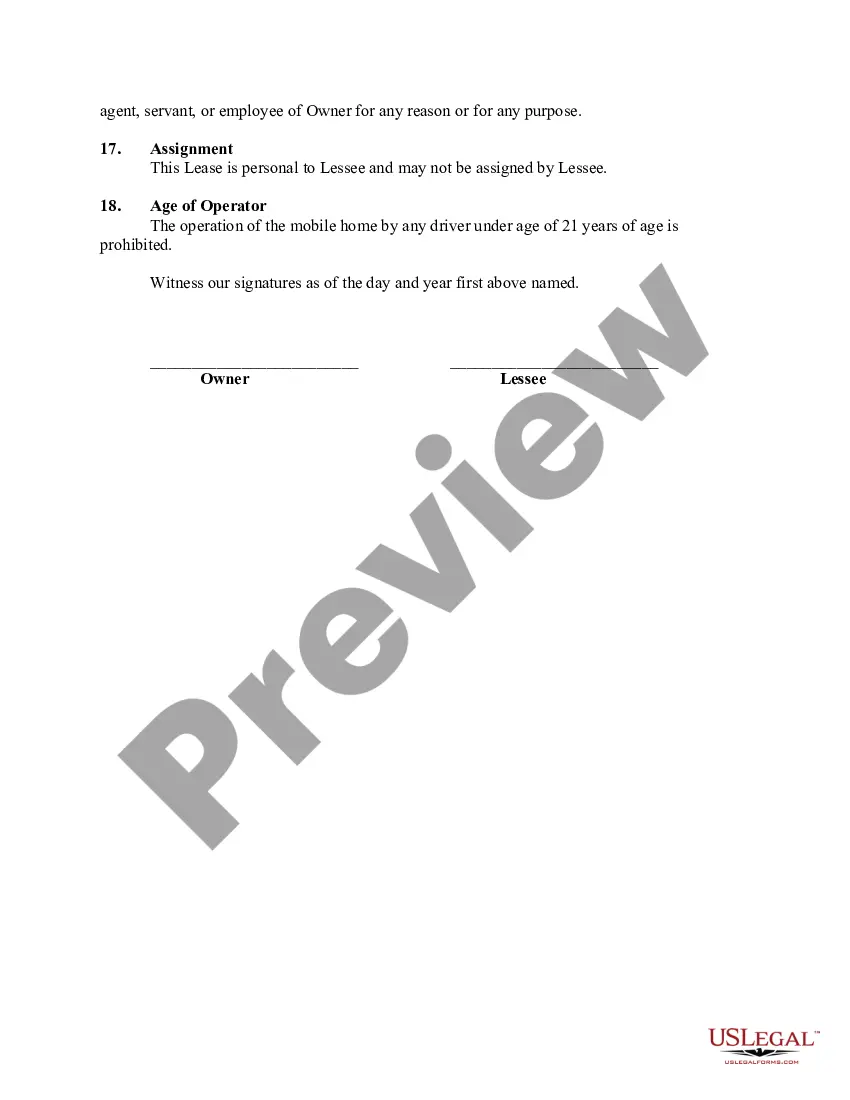
- Have both parties sign and date the form to finalize the agreement.
Is notarization required?
This form does not typically require notarization to be legally valid. However, some jurisdictions or document types may still require it. US Legal Forms provides secure online notarization powered by Notarize, available 24/7 for added convenience.
Get your form ready online
Our built-in tools help you complete, sign, share, and store your documents in one place.
Make edits, fill in missing information, and update formatting in US Legal Forms—just like you would in MS Word.
Download a copy, print it, send it by email, or mail it via USPS—whatever works best for your next step.
Sign and collect signatures with our SignNow integration. Send to multiple recipients, set reminders, and more. Go Premium to unlock E-Sign.
If this form requires notarization, complete it online through a secure video call—no need to meet a notary in person or wait for an appointment.
We protect your documents and personal data by following strict security and privacy standards.

Make edits, fill in missing information, and update formatting in US Legal Forms—just like you would in MS Word.

Download a copy, print it, send it by email, or mail it via USPS—whatever works best for your next step.

Sign and collect signatures with our SignNow integration. Send to multiple recipients, set reminders, and more. Go Premium to unlock E-Sign.

If this form requires notarization, complete it online through a secure video call—no need to meet a notary in person or wait for an appointment.

We protect your documents and personal data by following strict security and privacy standards.
Mistakes to watch out for
- Not specifying the serial number or description of the mobile home.
- Failing to include the full rental amount and payment due dates.
- Leaving the insurance details incomplete or inaccurate.
- Not documenting the terms of the deposit and potential deductions.
- Omitting signatures or dates, which can render the lease invalid.
Benefits of completing this form online
- Convenience of downloading and filling out the form from home.
- Editable templates that allow customization to fit specific needs.
- Access to legally drafted documents prepared by qualified attorneys.
- Time-saving process, eliminating the need for in-person consultations.
Main things to remember
- This form establishes a clear and binding rental agreement for mobile homes.
- It includes critical information such as rental payments, term duration, and usage rules.
- Both parties should understand their responsibilities under the lease.
- Using this form can help prevent conflicts and ensure mutual understanding.
Looking for another form?


Form popularity
FAQ
The Lease Must be in Writing It does not matter if the lease is handwritten or typed.
As long as the contract spells out specific details and both parties have signed that they agree to the contract's terms, a handwritten contract is legally binding and enforceable in court.
Terms. The lease should state the length of the agreement. Rent. The amount of rent and when it is due. Deposits and fees. The names of all tenants. Occupancy limits. Restrictions on disruptive activity. Pets. Maintenance and repairs.
Names of all tenants. Limits on occupancy. Term of the tenancy. Rent. Deposits and fees. Repairs and maintenance. Entry to rental property. Restrictions on tenant illegal activity.
The Lease Must be in Writing It does not matter if the lease is handwritten or typed. If the lease is for more than one year, it must be in written form and contain the following terms.
Names of all tenants. Limits on occupancy. Term of the tenancy. Rent. Deposits and fees. Repairs and maintenance. Entry to rental property. Restrictions on tenant illegal activity.
If you're thinking of renting out your property, or you're a tenant, and the current owner doesn't already have an agreement drawn up, it's possible to create your own rental contract.
The difference between lease and rent is that a lease generally lasts for 12 months while a rental agreement generally lasts for 30 days.That means the landlord can't raise the rent without your written consent or evict you without cause, and you can't stop paying rent or break the lease without consequence.
Collect each party's information. Include specifics about your property. Consider all of the property's utilities and services. Know the terms of your lease. Set the monthly rent amount and due date. Calculate any additional fees. Determine a payment method. Consider your rights and obligations.