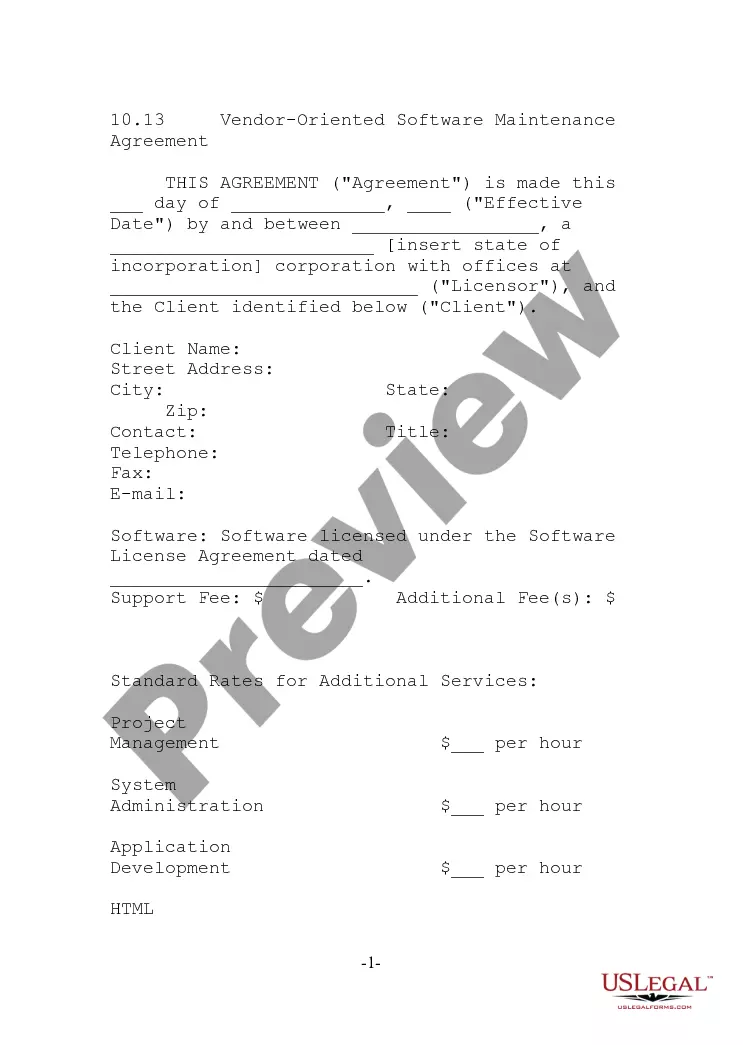
Equipment Rental Agreement - Lease

Overview of this form
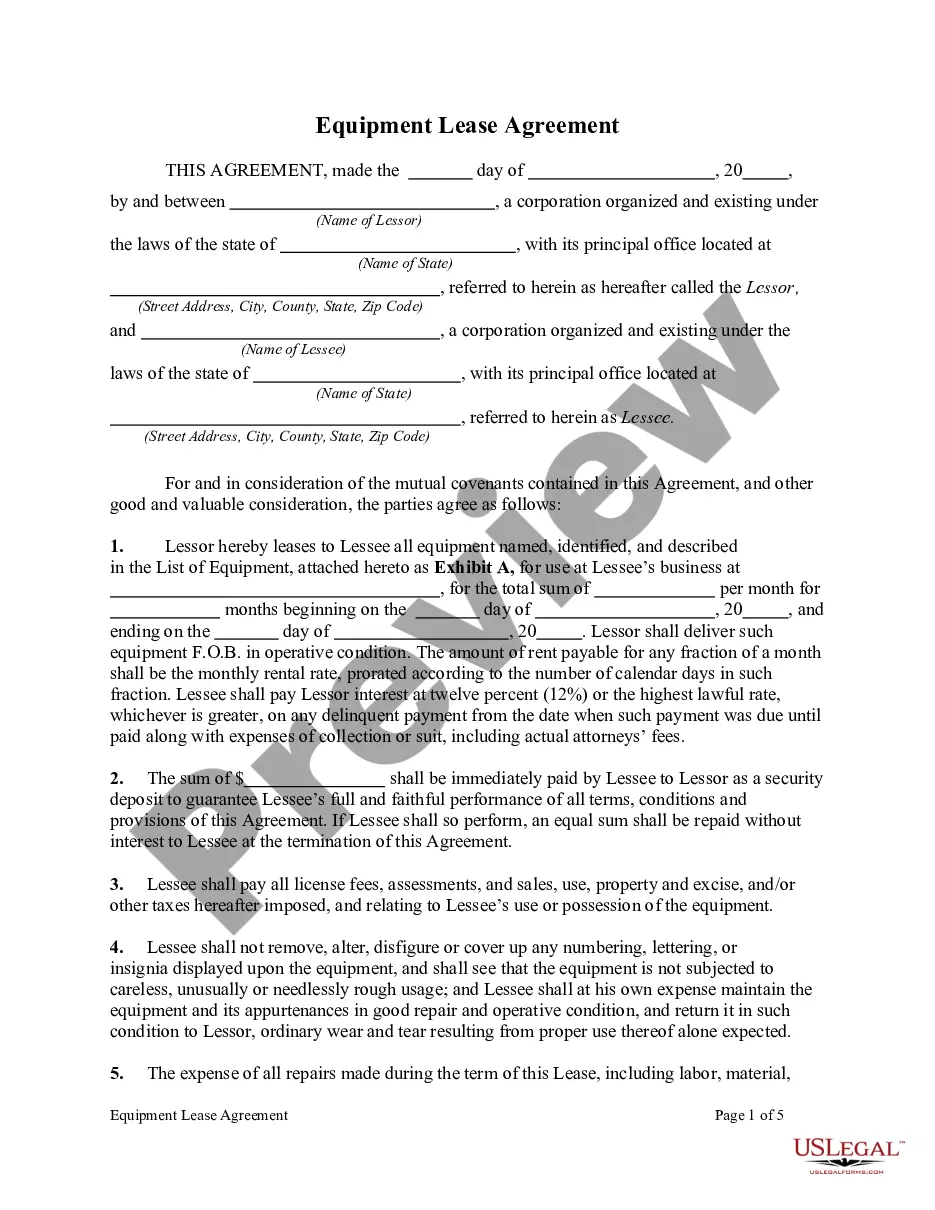
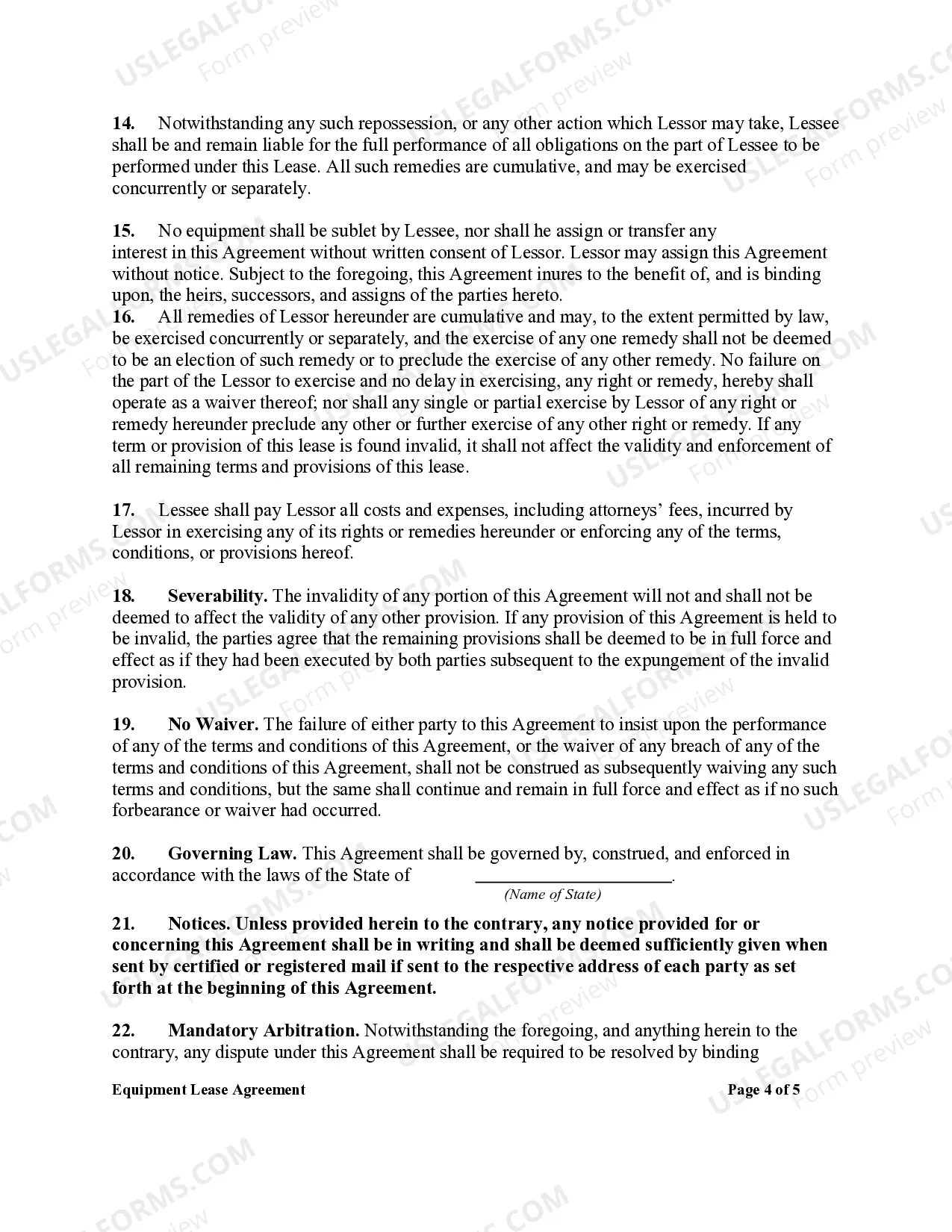
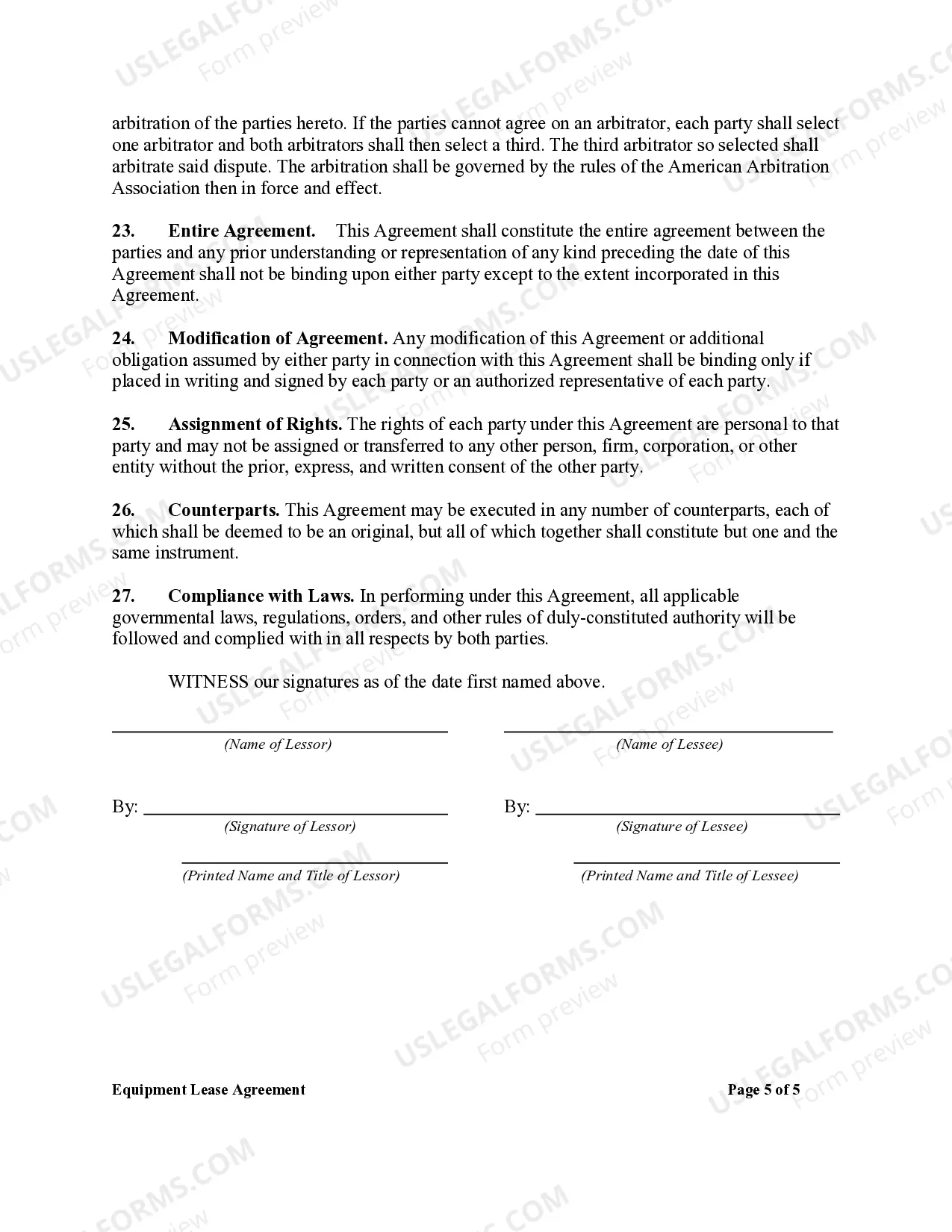
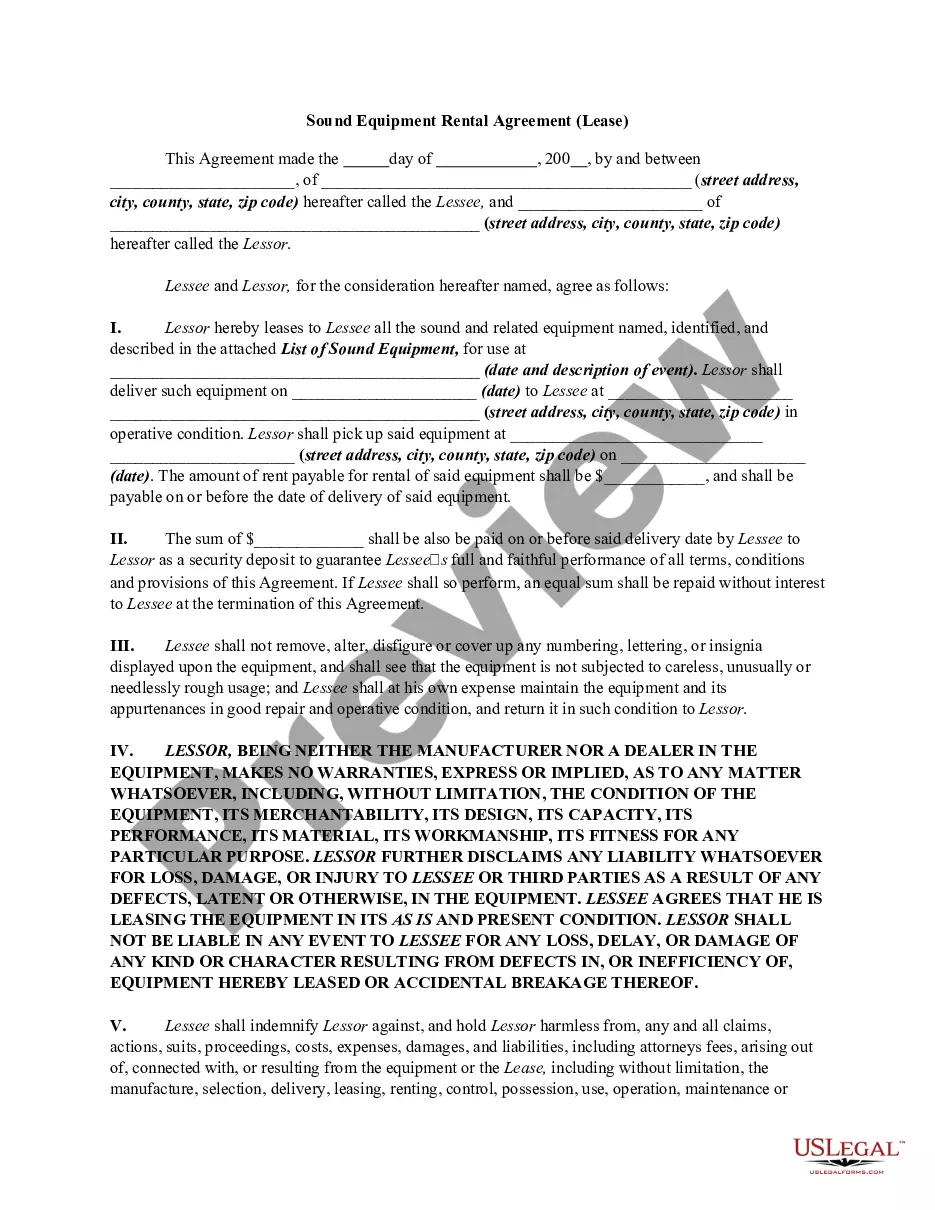
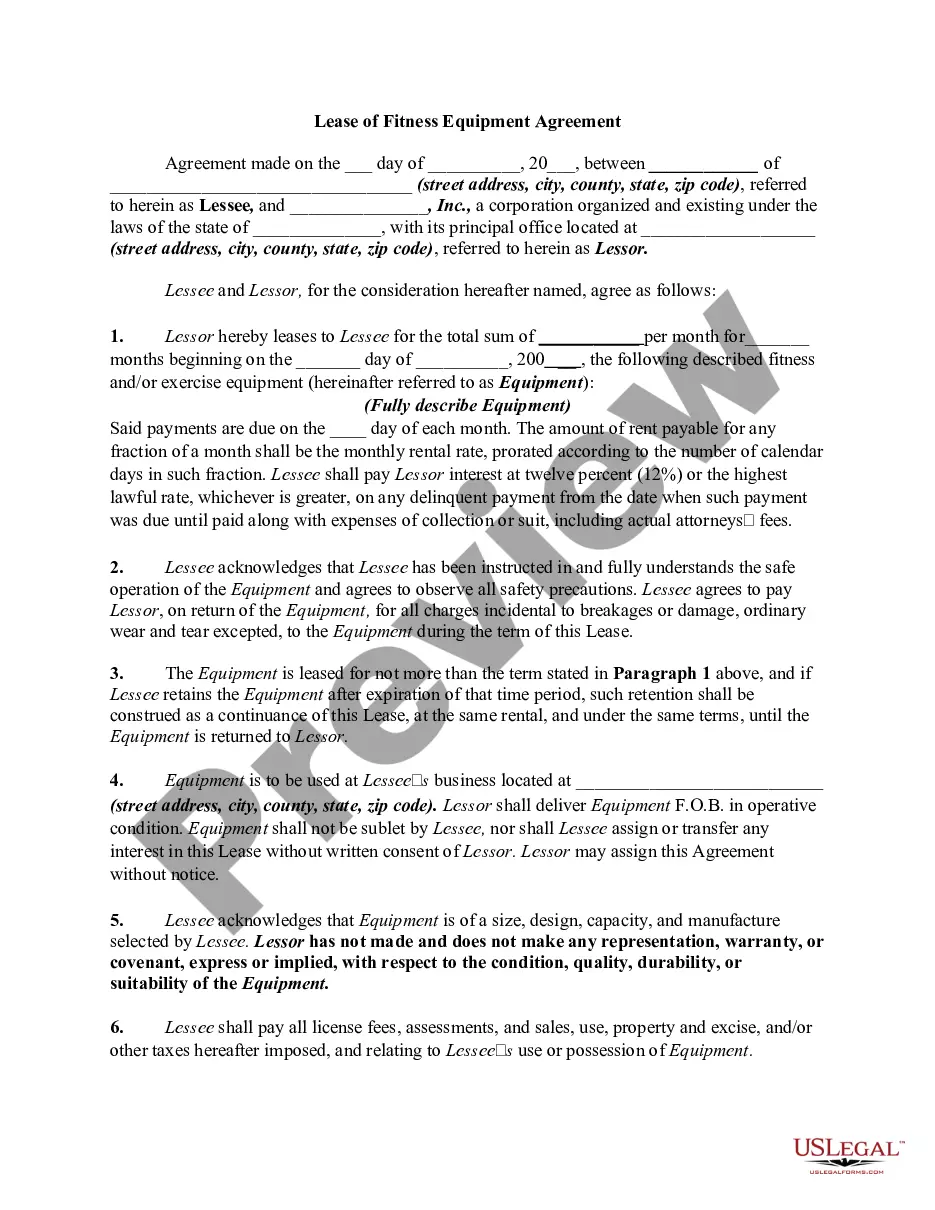
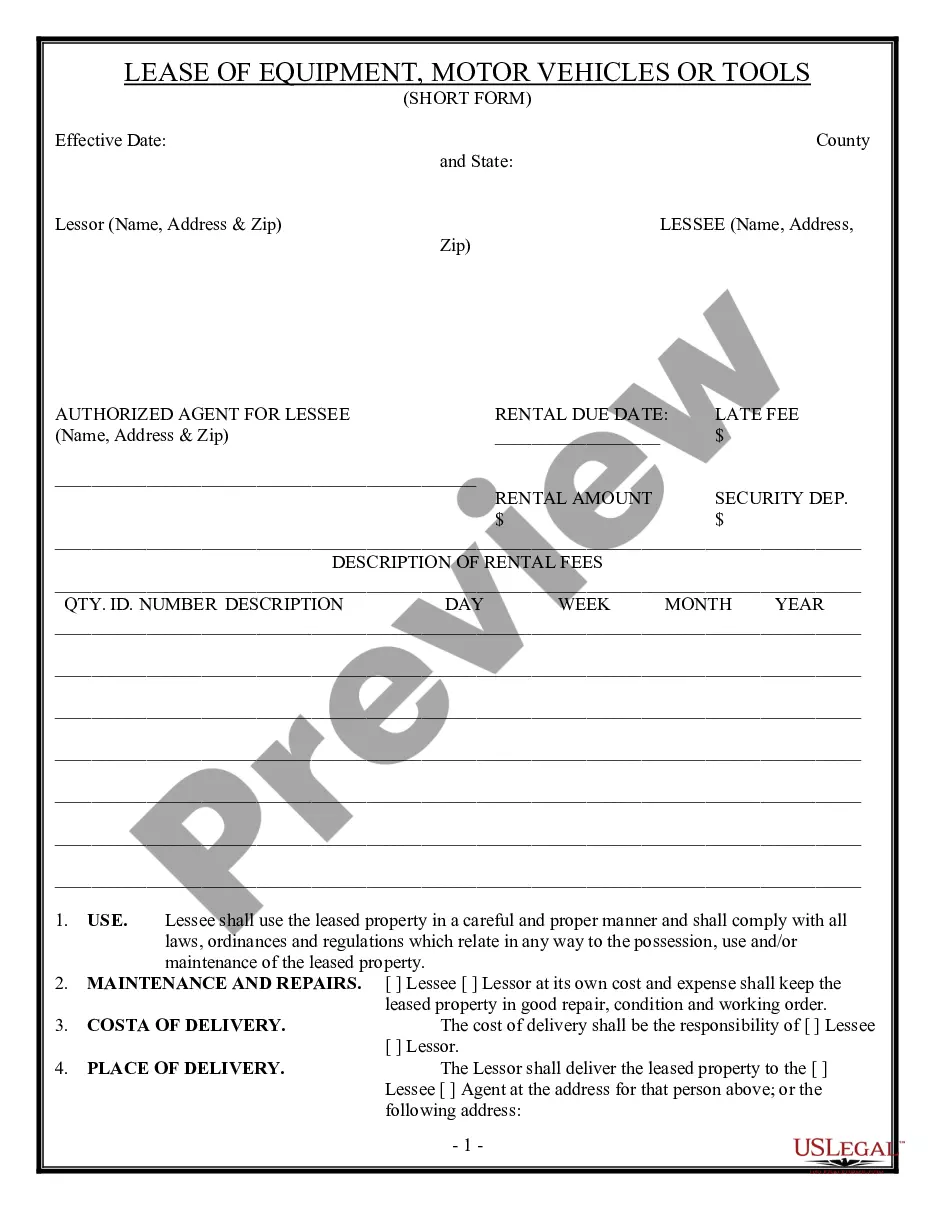
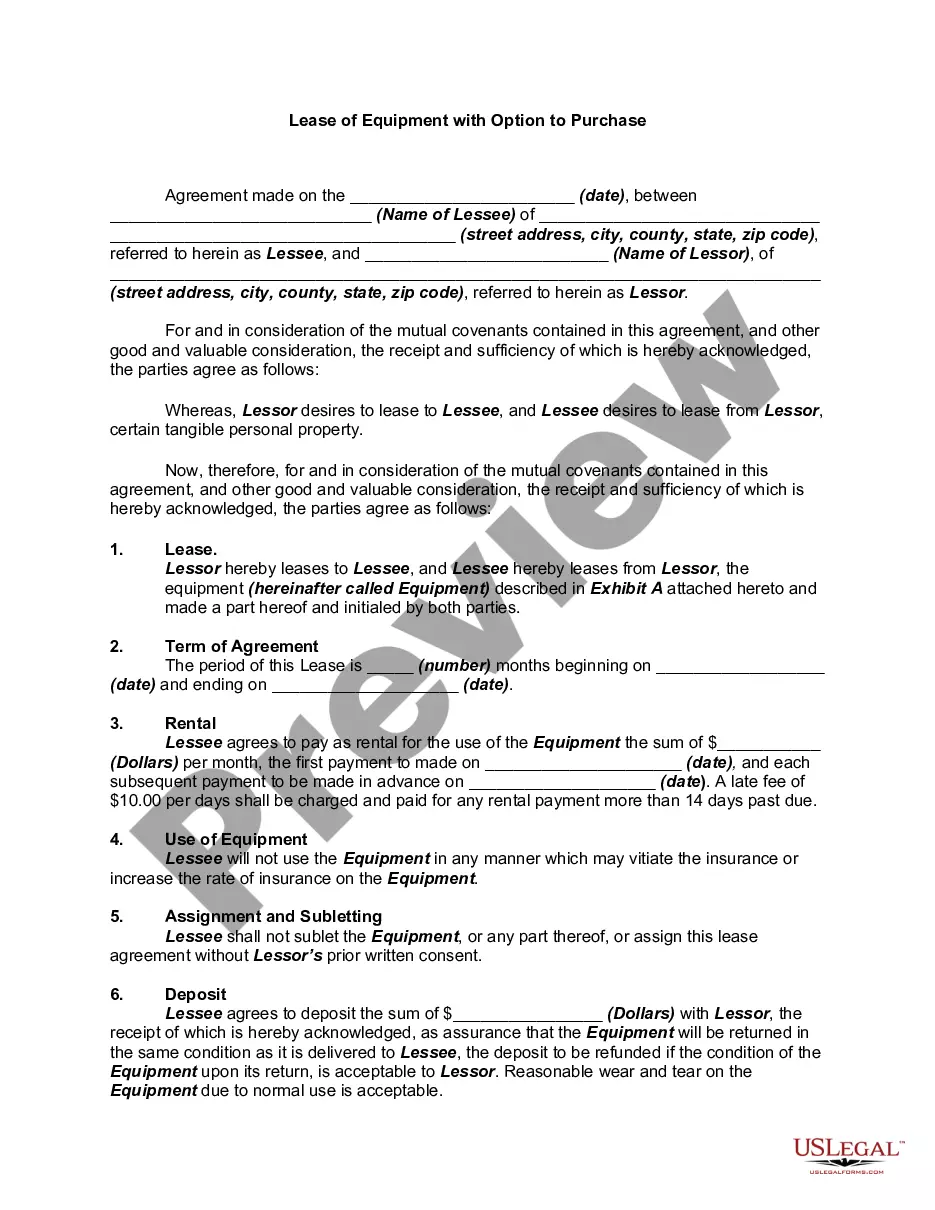
An Equipment Rental Agreement, also known as an Equipment Lease Agreement, is a legal document that outlines the terms and conditions under which one party (the Lessor) rents equipment to another party (the Lessee). This agreement ensures that the Lessor retains ownership of the equipment and establishes the responsibilities of both parties regarding usage and maintenance. Unlike a purchase agreement, this form does not transfer title at the end of the lease, making it essential for businesses that need to use equipment temporarily without ownership obligations.
Key components of this form
- Identification of the parties involved (Lessor and Lessee).
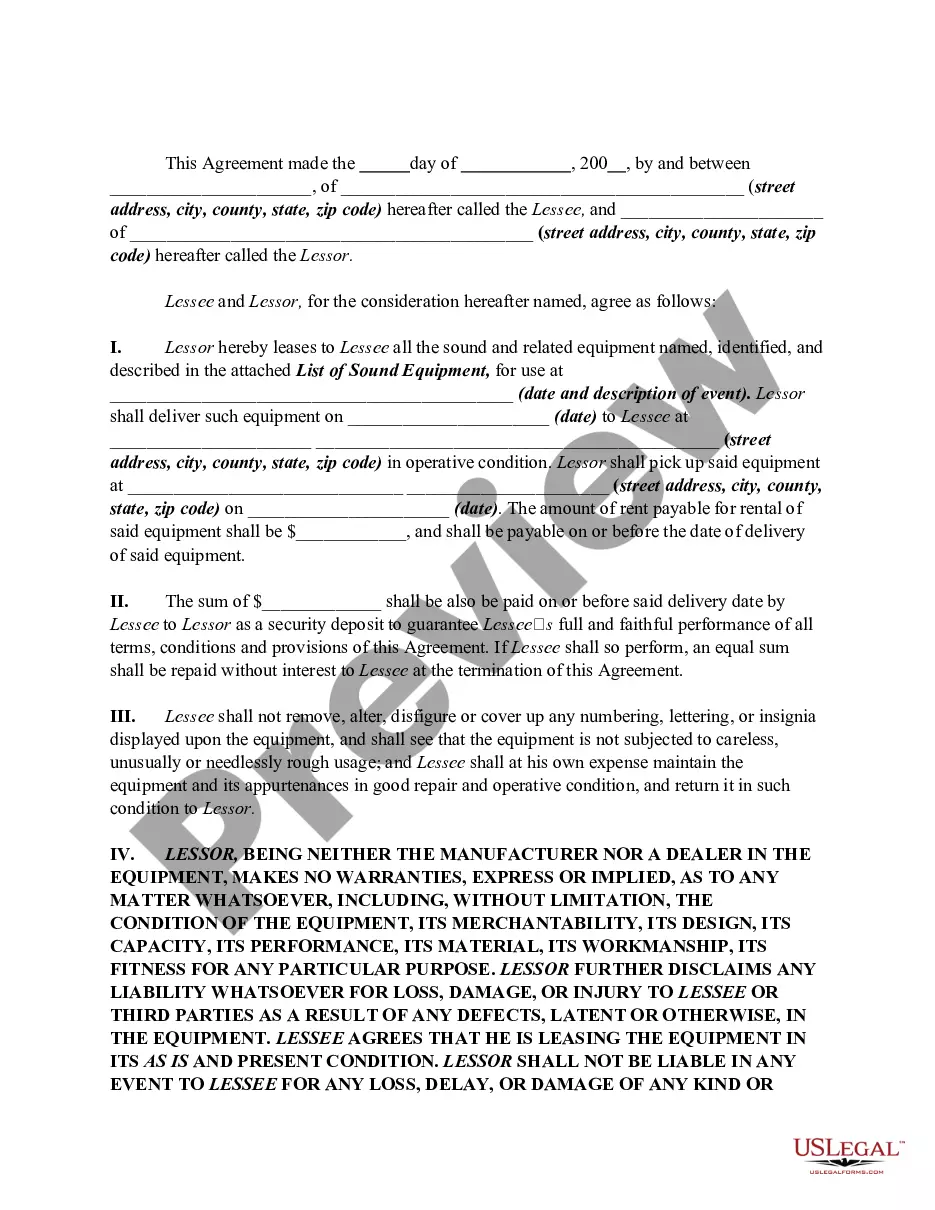
- List of equipment being rented (see Exhibit A).
- Payment terms, including rent and tax responsibilities.
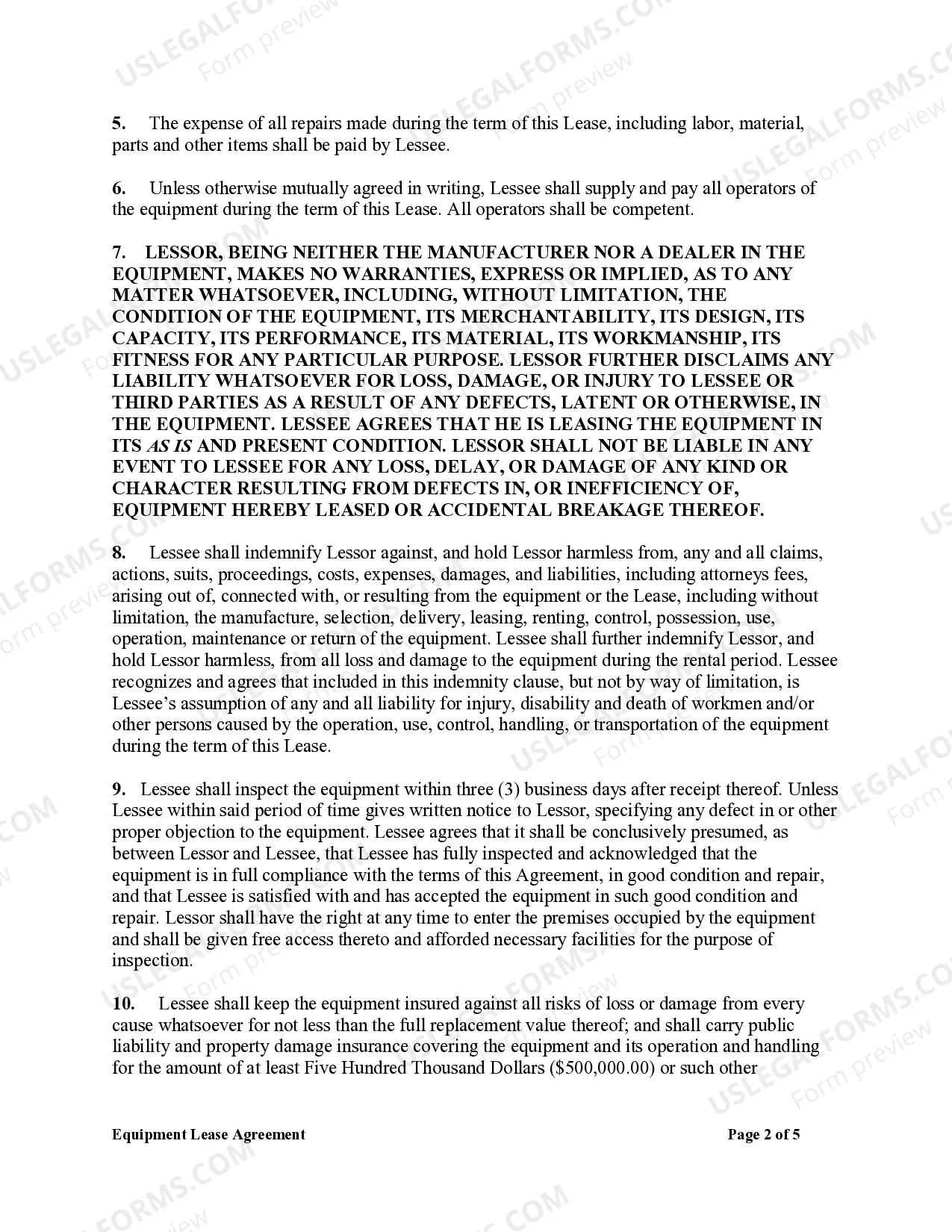
- Lessee's obligations for equipment maintenance and repairs.
- Indemnity clause protecting the Lessor against various liabilities.
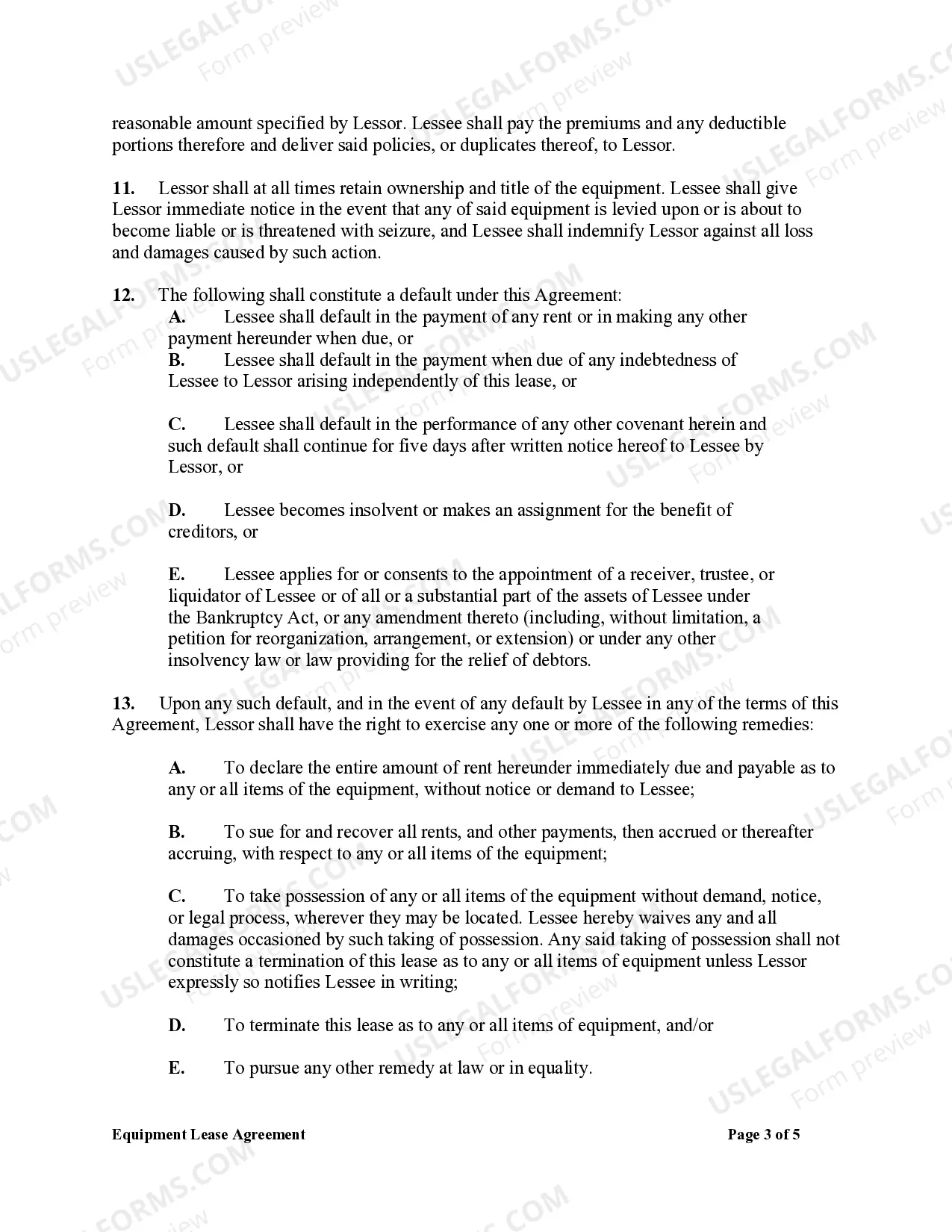
- Default and termination conditions for the lease.
- Insurance requirements for the equipment during the rental period.
When to use this document
This Equipment Rental Agreement should be used when a business or individual wishes to lease equipment rather than purchase it outright. It is particularly useful in scenarios such as construction projects, event management, or any situation where temporary access to equipment is needed. This form helps clarify expectations and responsibilities, reducing the risk of disputes between the Lessor and Lessee.
Intended users of this form
- Businesses seeking to rent equipment for operational needs.
- Individuals needing specialized equipment for a short-term project.
- Equipment rental companies providing leases to customers.
- Contractors and vendors who require tools or machinery temporarily.
Steps to complete this form
- Identify the names and contact details of both the Lessor and Lessee.
- Provide a detailed list of the equipment being leased in Exhibit A.
- Specify the lease duration, payment amounts, and payment schedule.
- Include terms for maintenance and repair obligations.
- Indicate insurance coverage details and any necessary conditions for indemnification.
- Both parties should sign and date the agreement to formalize the lease.
Does this document require notarization?
This form does not typically require notarization unless specified by local law. It is advisable for both parties to retain copies of the signed agreement for their records.
Get your form ready online
Our built-in tools help you complete, sign, share, and store your documents in one place.
Make edits, fill in missing information, and update formatting in US Legal Forms—just like you would in MS Word.
Download a copy, print it, send it by email, or mail it via USPS—whatever works best for your next step.
Sign and collect signatures with our SignNow integration. Send to multiple recipients, set reminders, and more. Go Premium to unlock E-Sign.
If this form requires notarization, complete it online through a secure video call—no need to meet a notary in person or wait for an appointment.
We protect your documents and personal data by following strict security and privacy standards.

Make edits, fill in missing information, and update formatting in US Legal Forms—just like you would in MS Word.

Download a copy, print it, send it by email, or mail it via USPS—whatever works best for your next step.

Sign and collect signatures with our SignNow integration. Send to multiple recipients, set reminders, and more. Go Premium to unlock E-Sign.

If this form requires notarization, complete it online through a secure video call—no need to meet a notary in person or wait for an appointment.

We protect your documents and personal data by following strict security and privacy standards.
Mistakes to watch out for
- Failing to list all equipment clearly in Exhibit A.
- Neglecting to review the maintenance and repair responsibilities.
- Not specifying payment details or due dates, leading to disputes.
- Ignoring the insurance requirements, which can lead to liability issues.
Why use this form online
- Ease of access and immediate availability for download.
- Editable format allows users to customize terms to fit their needs.
- Reliability of professionally drafted content ensuring compliance with legal standards.
- Convenience of storing and sharing the form electronically.
Legal use & context
- An Equipment Rental Agreement provides a clear framework for rental terms.
- Helps protect both Lessor and Lessee from potential legal disputes.
- Establishes clear responsibilities, which can aid in enforcing compliance.
What to keep in mind
- An Equipment Rental Agreement is essential for formalizing equipment leasing arrangements.
- Clarity in payment and maintenance responsibilities can prevent disputes.
- Legal compliance may vary by state, so review local laws when using this form.
Looking for another form?
Form popularity
FAQ
Equipment leasing is a type of financing in which the small business owner rents the equipment rather than purchasing it. Business owners can lease expensive equipment such as machinery, vehicles, computers and other tools needed to run a business.
Collect each party's information. Include specifics about your property. Consider all of the property's utilities and services. Know the terms of your lease. Set the monthly rent amount and due date. Calculate any additional fees. Determine a payment method. Consider your rights and obligations.
Names of all tenants. Limits on occupancy. Term of the tenancy. Rent. Deposits and fees. Repairs and maintenance. Entry to rental property. Restrictions on tenant illegal activity.
Name the parties. A simple rental agreement form needs to name the parties signing the lease and where they live. Describe the premises. Define the term of the lease. Set how much rent is owed. Assign a security deposit amount. Finalize the lease.
A lease can be written or verbal, but a verbal lease can be very difficult to enforce.Most leases are fairly standard and cover basic components such as rent amount, duration of lease term, resposiblities of each party and penalties for not following the terms.
An equipment lease agreement is a contractual agreement where the lessor, who is the owner of the equipment, allows the lessee to use the equipment for a specified period in exchange for periodic payments. The subject of the lease may be vehicles, factory machines, or any other equipment.
Choosing to rent a piece of equipment means no big down payment, as with a purchase, and less money spent on the overall arrangement than with a lease. Plus, rental payments are generally considered a tax-deductible operating expense, which simplifies accounting.
In simple terms, equipment leasing has some similarities to an equipment loan, however it's the lender that buys the equipment and then leases (rents) it back to you for a flat monthly fee. Most equipment leases come at a fixed interest rate and fixed term to keep those payments the same every month.