Corporate Right of First Refusal - Corporate Resolutions
Understanding this form
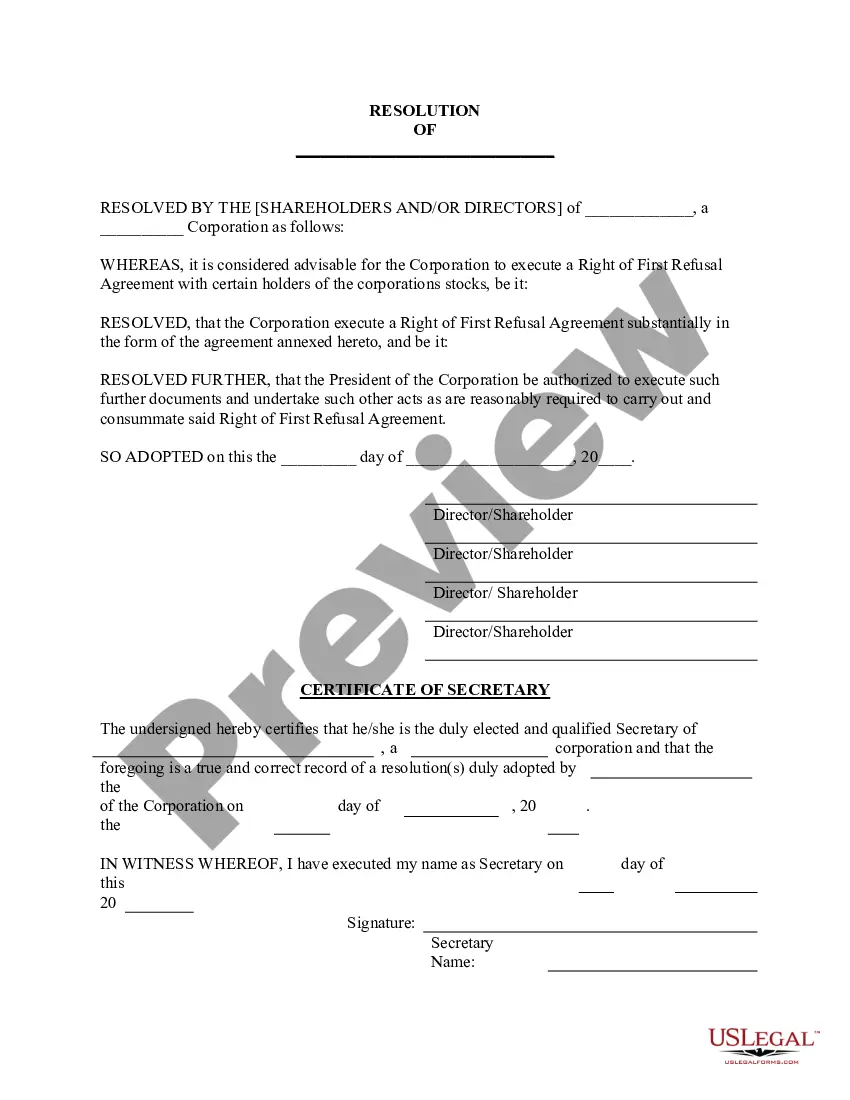
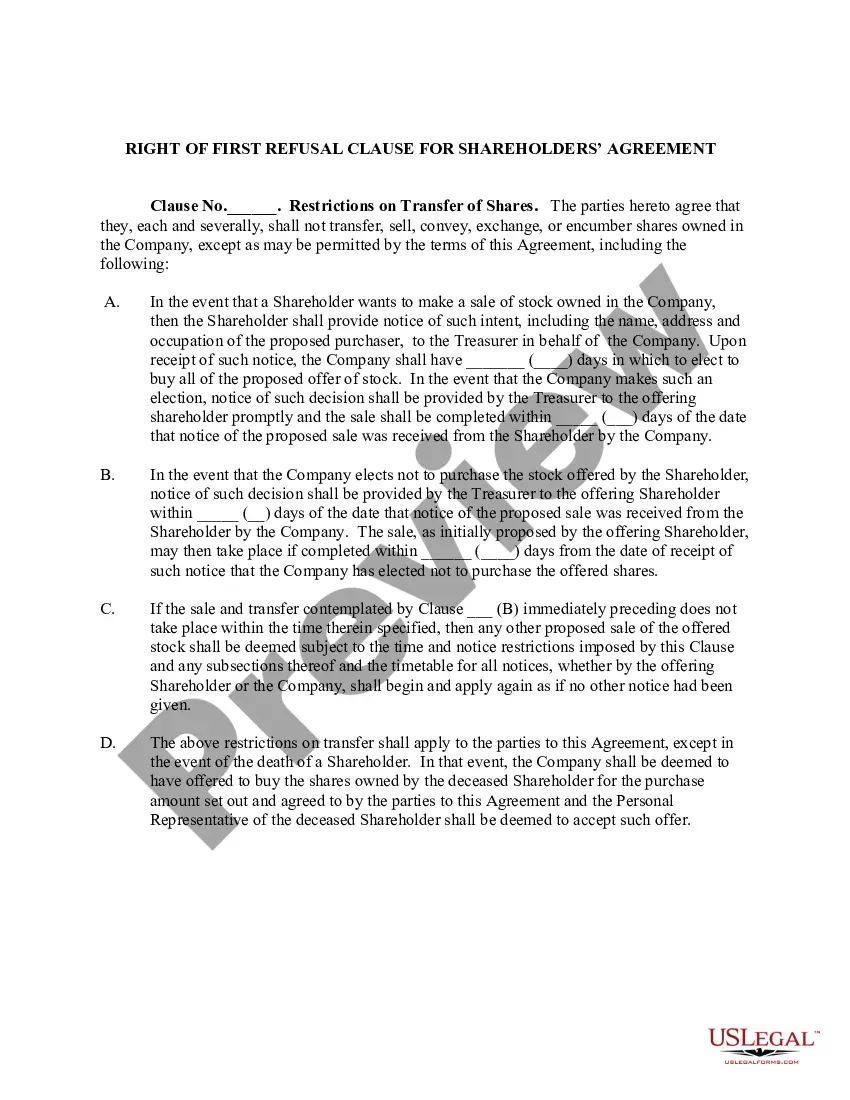
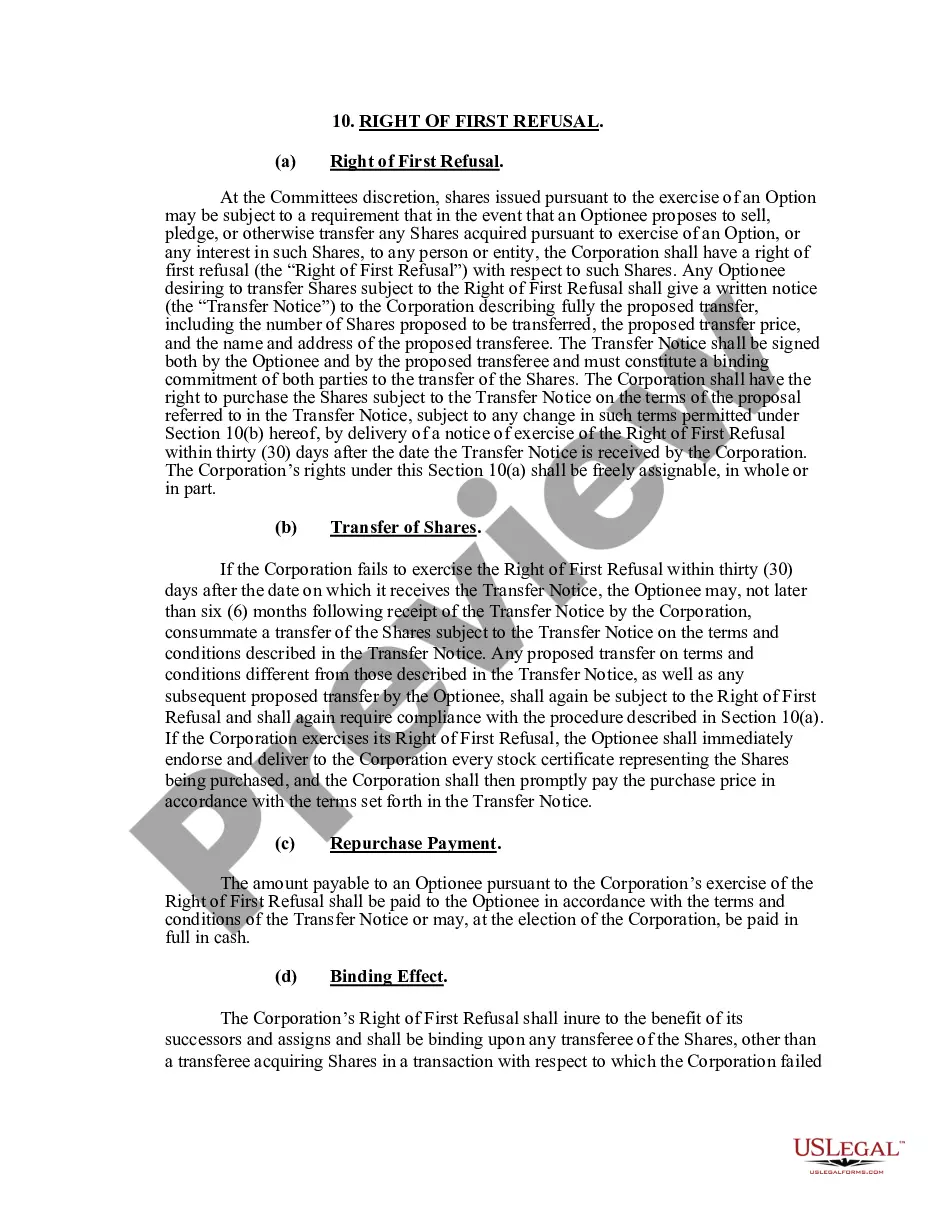
The Corporate Right of First Refusal - Corporate Resolutions form is a legal document that allows a corporation to establish a right of first refusal for certain shareholders. This means that before shareholders can sell their shares to a third party, they must first offer the corporation the opportunity to buy those shares. This form is distinct from other corporate resolutions as it specifically addresses the conditions under which shareholders must offer their shares to the corporation first.
Main sections of this form
- Corporation name and type
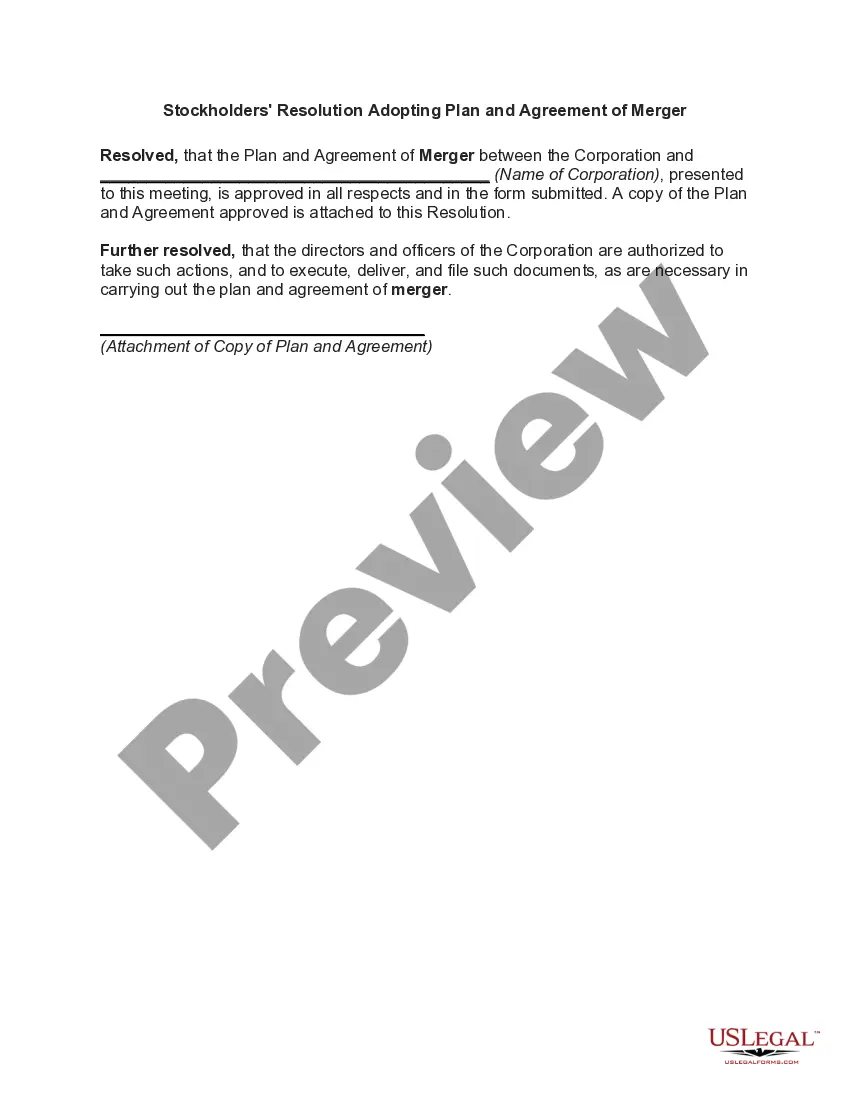
- Resolution detailing the right of first refusal
- Authorization for the President to execute the agreement
- Signature lines for directors or shareholders
- Certificate of Secretary confirming the adoption of the resolution
When to use this document
This form should be used when a corporation wants to ensure that it has the first option to purchase shares being sold by certain shareholders. It is beneficial when the corporation seeks to maintain control over its ownership structure and prevent unwanted outside investors from acquiring shares without the corporationâs consent.
Who needs this form
- Corporation directors and officers wishing to formalize shareholder agreements
- Shareholders who are part of an agreement to sell their shares
- Legal representatives involved in corporate governance
Completing this form step by step
- Enter the name of the corporation and its type.
- Draft a resolution that specifies the right of first refusal for certain shareholders.
- Authorize the corporationâs President to execute the agreement and any related documents.
- Obtain signatures from all relevant directors and shareholders.
- Have the Secretary certify the resolution and file it appropriately.
Notarization requirements for this form
This form does not typically require notarization unless specified by local law.
Get your form ready online
Our built-in tools help you complete, sign, share, and store your documents in one place.
Make edits, fill in missing information, and update formatting in US Legal Forms—just like you would in MS Word.
Download a copy, print it, send it by email, or mail it via USPS—whatever works best for your next step.
Sign and collect signatures with our SignNow integration. Send to multiple recipients, set reminders, and more. Go Premium to unlock E-Sign.
If this form requires notarization, complete it online through a secure video call—no need to meet a notary in person or wait for an appointment.
We protect your documents and personal data by following strict security and privacy standards.

Make edits, fill in missing information, and update formatting in US Legal Forms—just like you would in MS Word.

Download a copy, print it, send it by email, or mail it via USPS—whatever works best for your next step.

Sign and collect signatures with our SignNow integration. Send to multiple recipients, set reminders, and more. Go Premium to unlock E-Sign.

If this form requires notarization, complete it online through a secure video call—no need to meet a notary in person or wait for an appointment.

We protect your documents and personal data by following strict security and privacy standards.
Avoid these common issues
- Failing to properly identify all shareholders involved in the agreement.
- Not obtaining all necessary signatures before finalizing the document.
- Neglecting to record the resolution in the corporate minutes.
Advantages of online completion
- Convenient access to downloadable legal forms.
- Easy editing to tailor the document to specific corporate needs.
- Reliable templates drafted by licensed attorneys.
Legal use & context
- Enforceable as a corporate resolution once signed and adopted.
- Limits share transferability in accordance with corporate governance.
- Provides a legal framework for protecting shareholder interests.
Looking for another form?
Form popularity
FAQ
Right of first refusal (ROFR), also known as first right of refusal, is a contractual right to enter into a business transaction with a person or company before anyone else can. If the party with this right declines to enter into a transaction, the obligor is free to entertain other offers.
A right of first refusal agreement allows a buyer and seller to enter into an arrangement by which the potential buyer is given the first crack at a property when it goes up for sale.
A right of first refusal, different from a right of first offer, gives the right holder the option to match an offer already received by the seller. A right of first offer is said to favor the seller, while a right of first refusal favors the buyer.
A right of first refusal, different from a right of first offer, gives the right holder the option to match an offer already received by the seller. A right of first offer is said to favor the seller, while a right of first refusal favors the buyer.
When a casting director issues a first refusal it means that a final casting decision has not been made; the casting director is requesting that the performer contact him/her before accepting a booking for another job on the same day(s), i.e., giving the original producer the first opportunity to book the person.
The Right of First Refusal is a court-ordered right, usually negotiated in an agreement between the parties, granting the non-custodial parent an option to care for the child or children during the custodial parent's designated time, when the custodial parent is otherwise unavailable, instead of placing that child in
In a ROFR mechanism, the selling shareholder has to solicit an offer from a third party before offering its shares to the non-selling shareholders.In contrast, the ROFO places the onus on the non-selling shareholder to make an offer for the selling shareholder's shares, usually within a given timeframe.
The right of first refusal is usually triggered when a third party offers to buy or lease the property owner's asset. Before the property owner accepts this offer, the property holder (the person with the right of first refusal) must be allowed to buy or lease the asset under the same terms offered by the third party.