Letter regarding sale of assets - Asset Purchase Transaction
Overview of this form
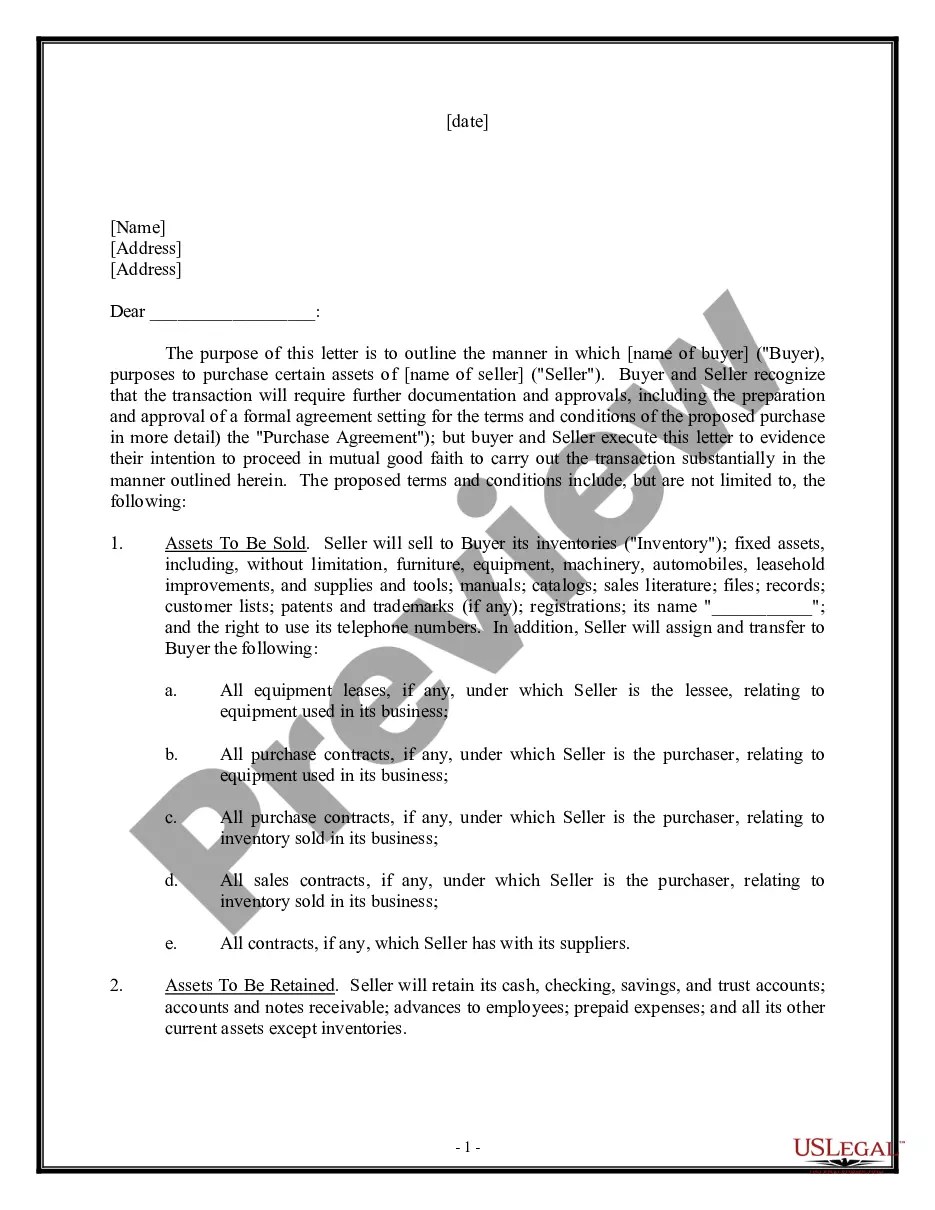
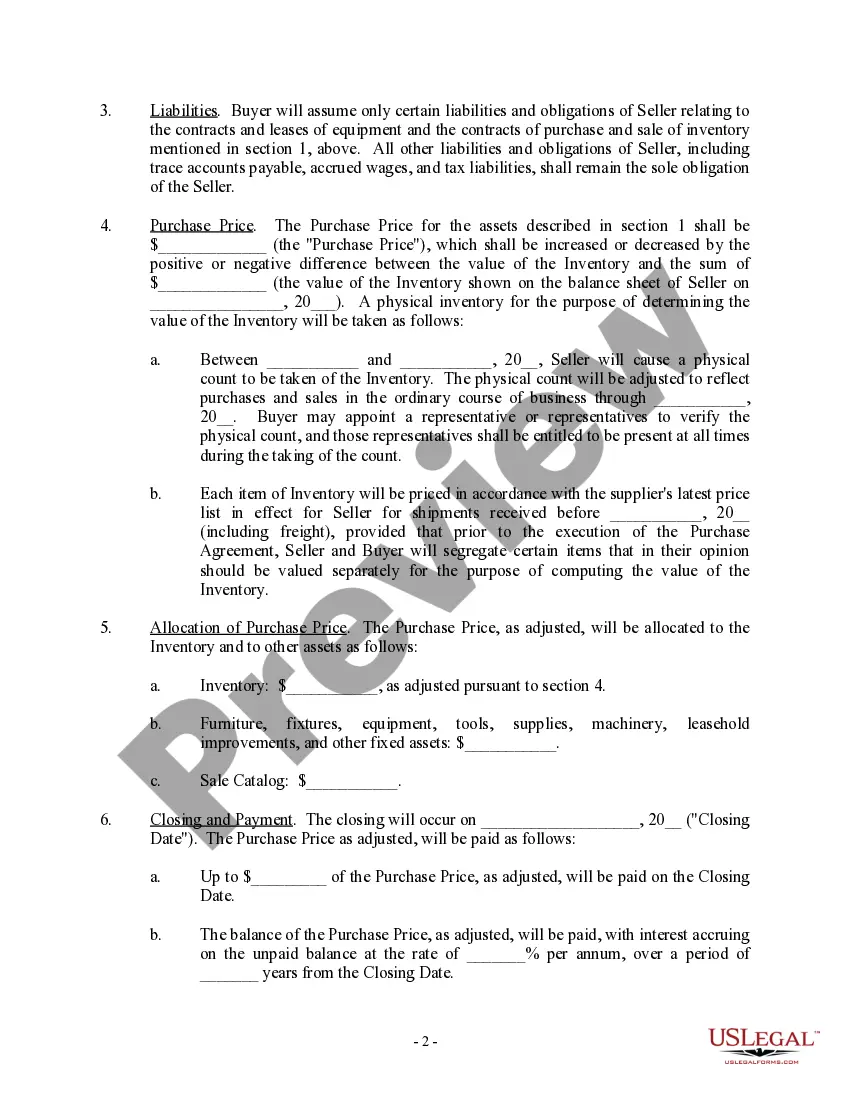
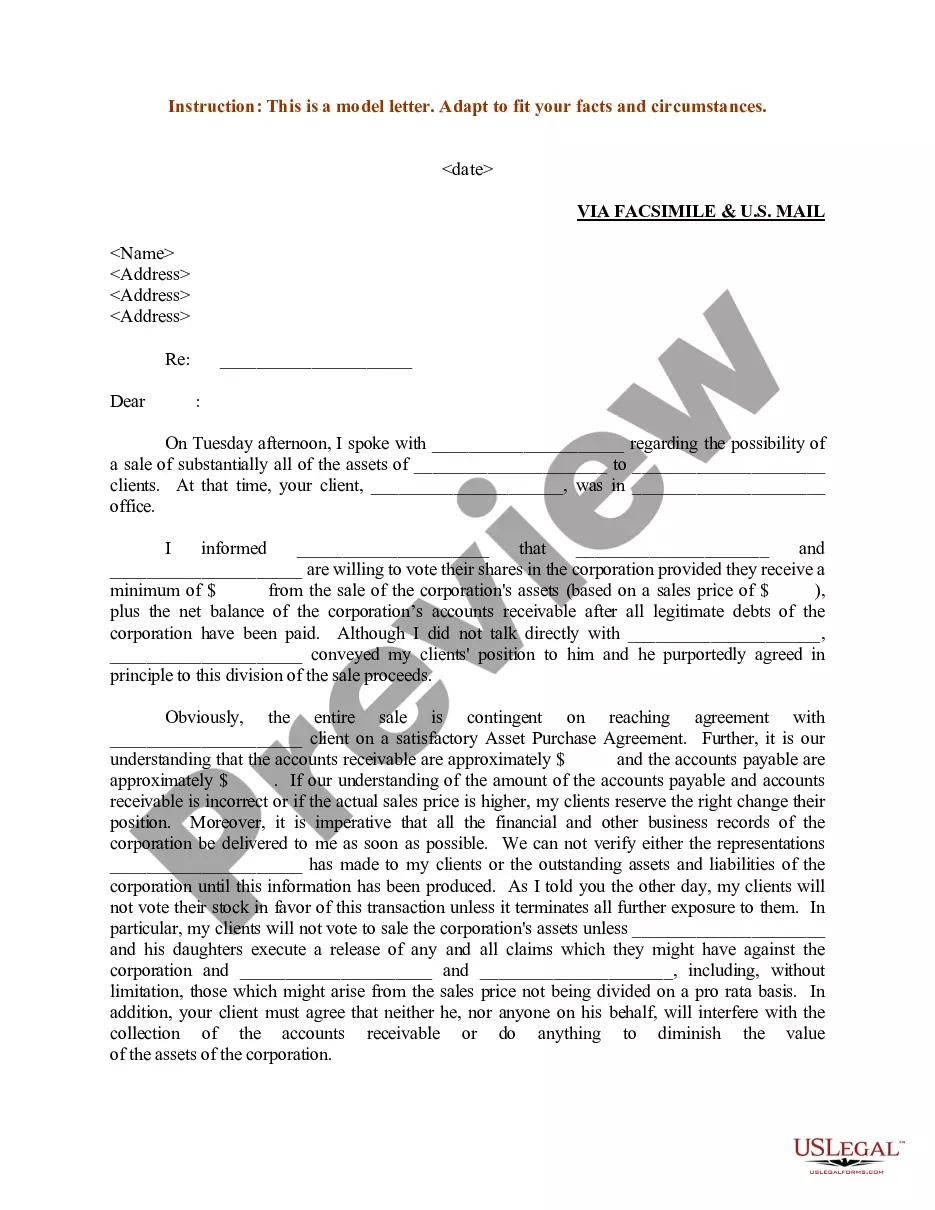
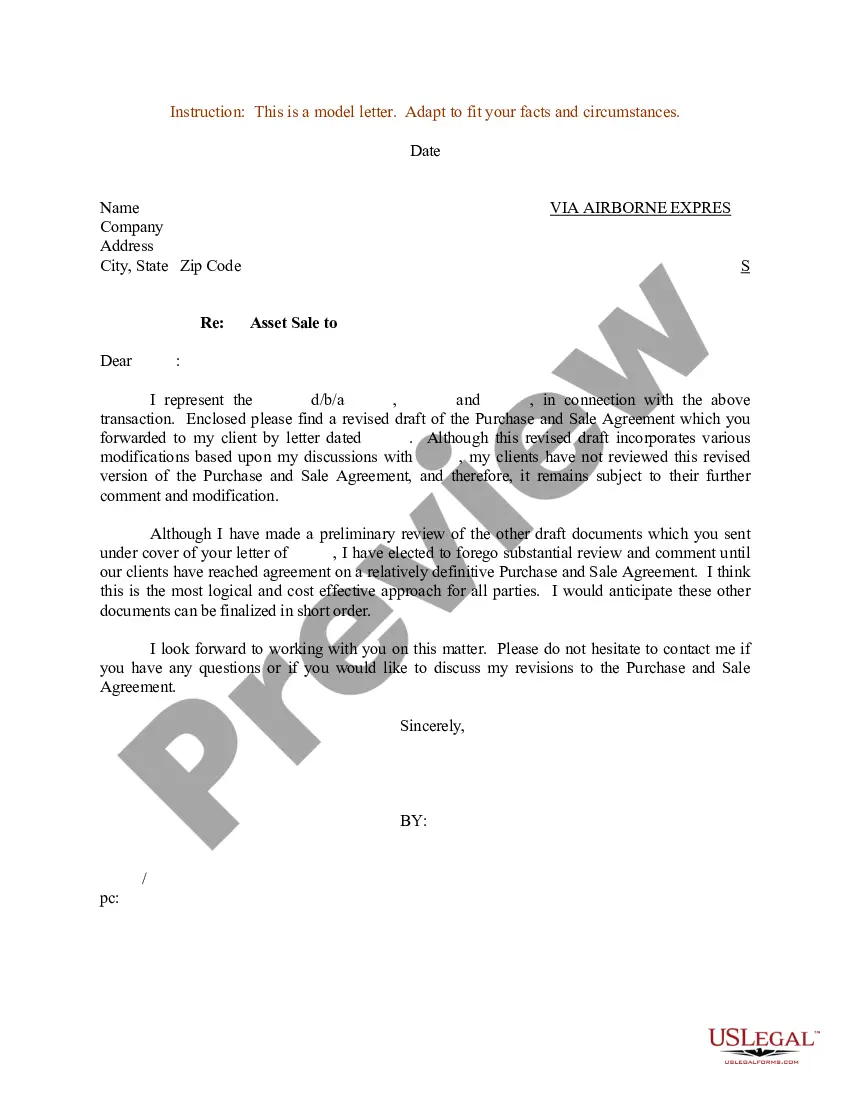
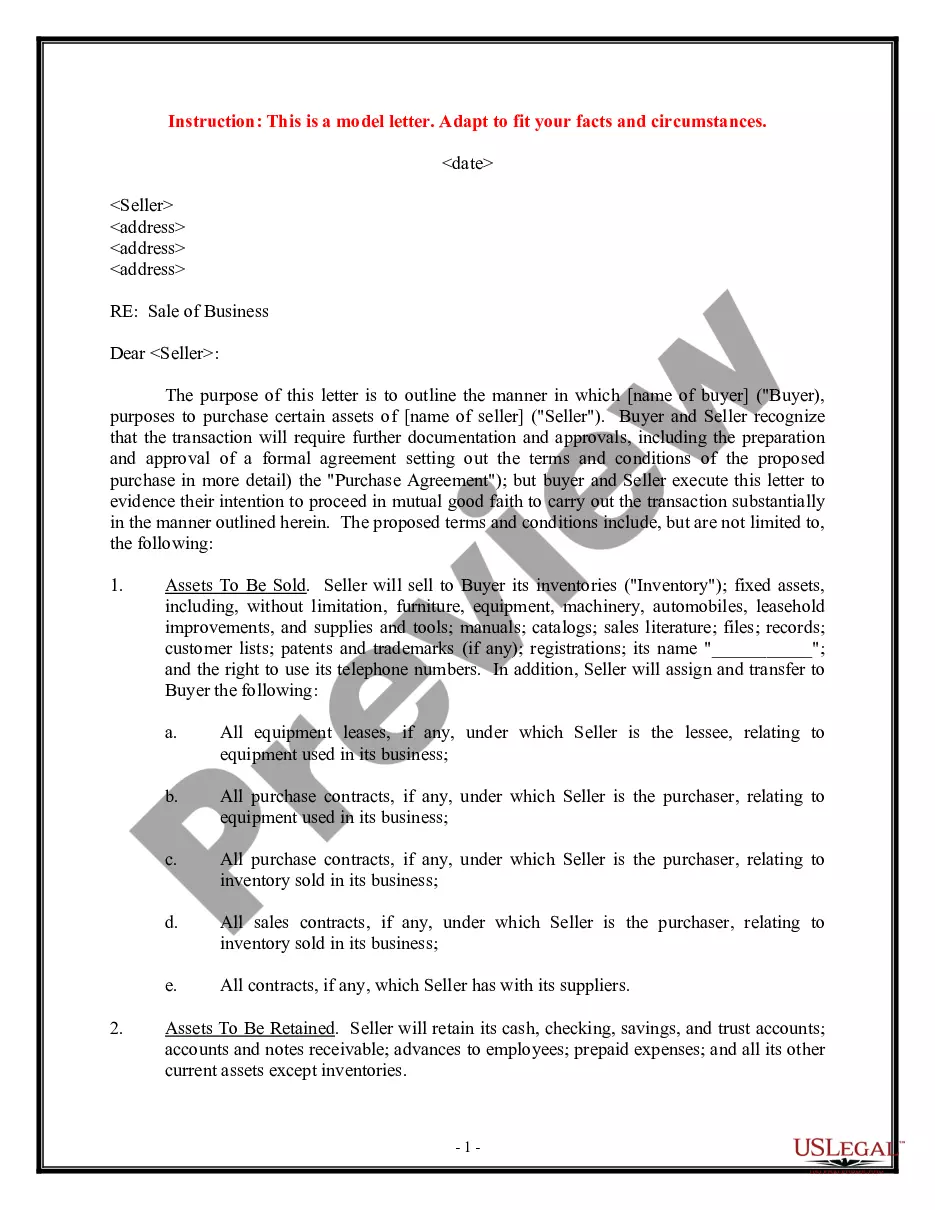
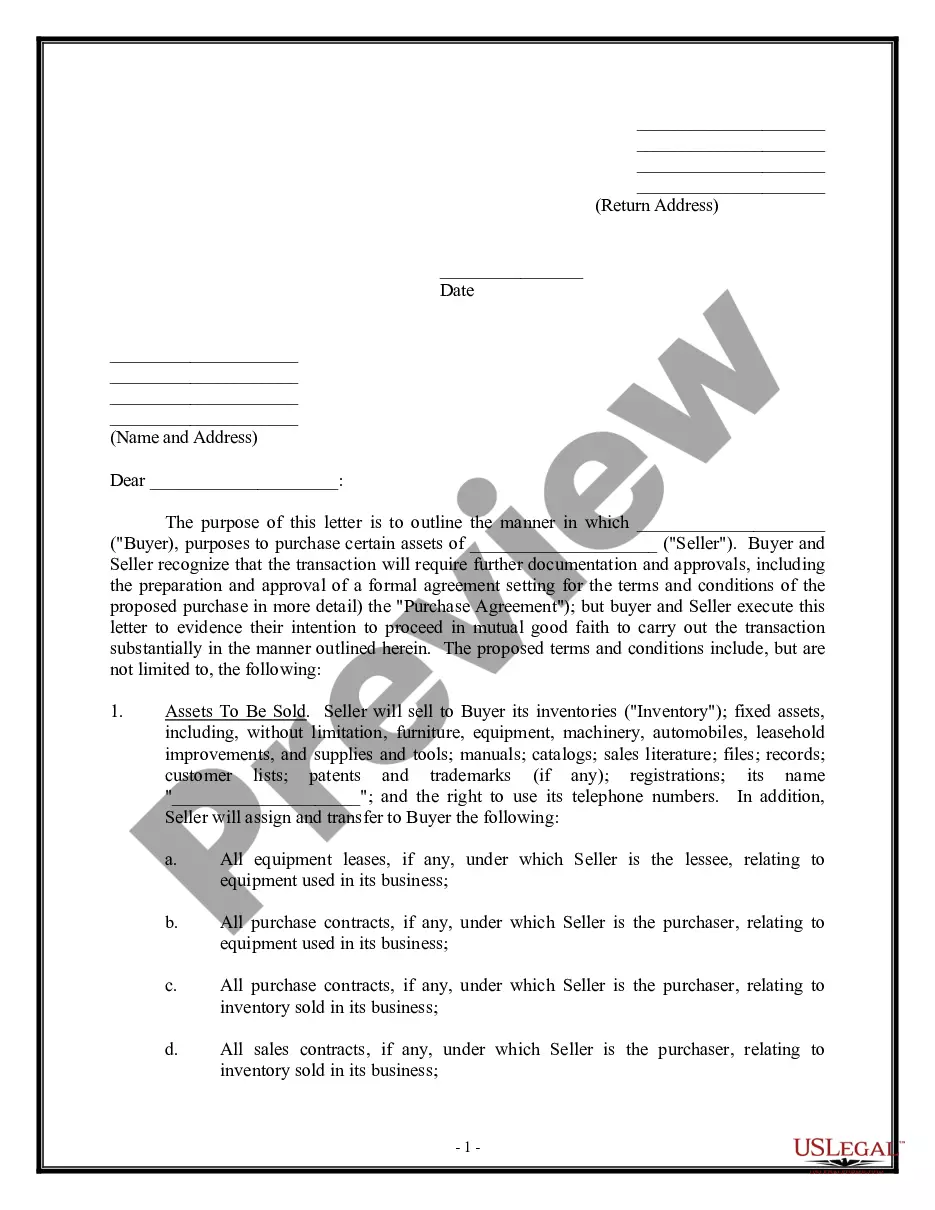
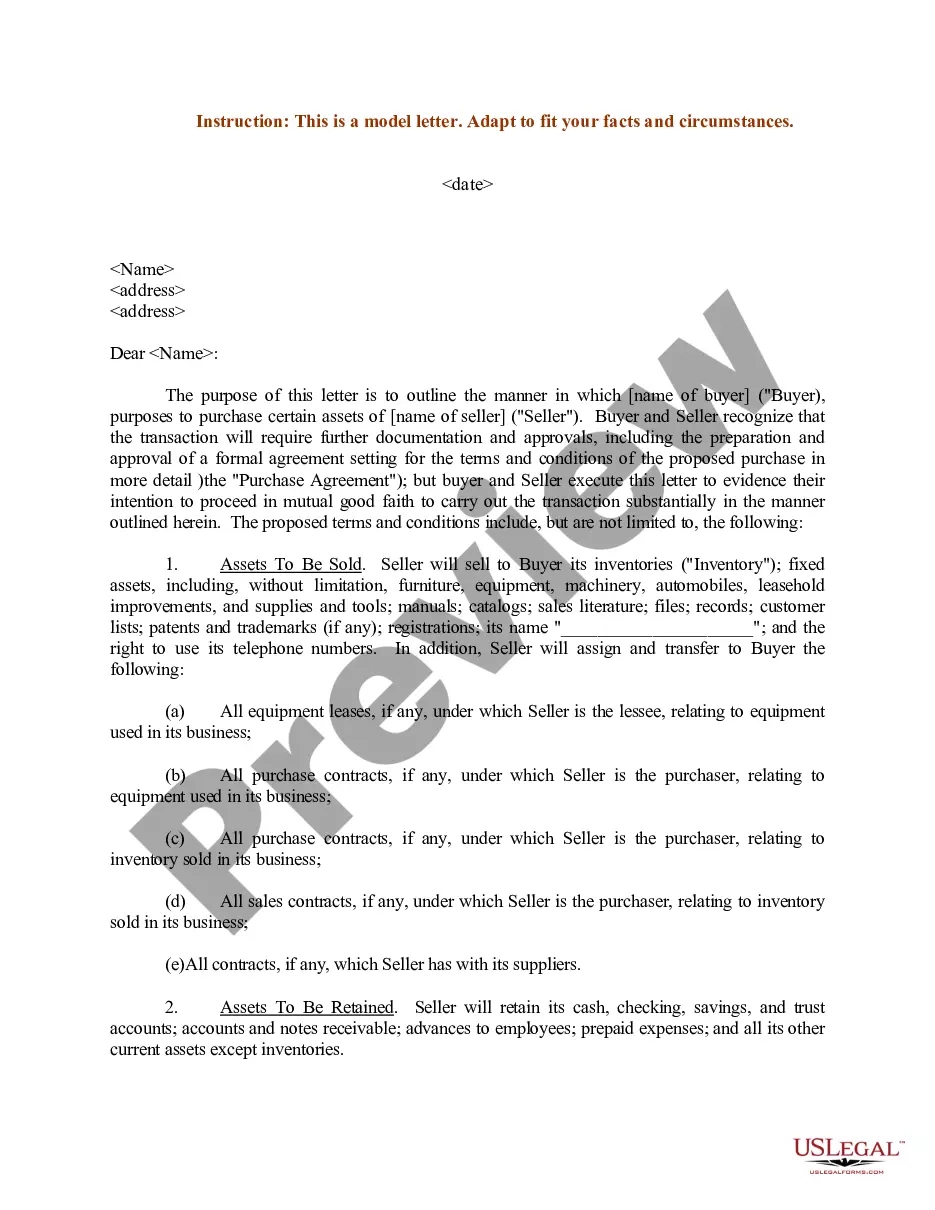
The Letter regarding sale of assets - Asset Purchase Transaction serves as a preliminary agreement between a buyer and a seller for the purchase of specific assets. This letter outlines the basic terms and conditions involved in the transaction and expresses the intent of both parties to move forward in good faith, requiring a more detailed Purchase Agreement later on. Unlike standard sales forms, this letter allows for the immediate articulation of intent and initial terms before the finalization of the formal contract.
Form components explained
- Identification of the Buyer and Seller.
- Details of the assets being sold, including inventory and fixed assets.
- Terms regarding assets that will be retained by the Seller.
- Liabilities that the Buyer will assume.
- Purchase price and adjustments based on inventory value.
- Conditions for closing the transaction.
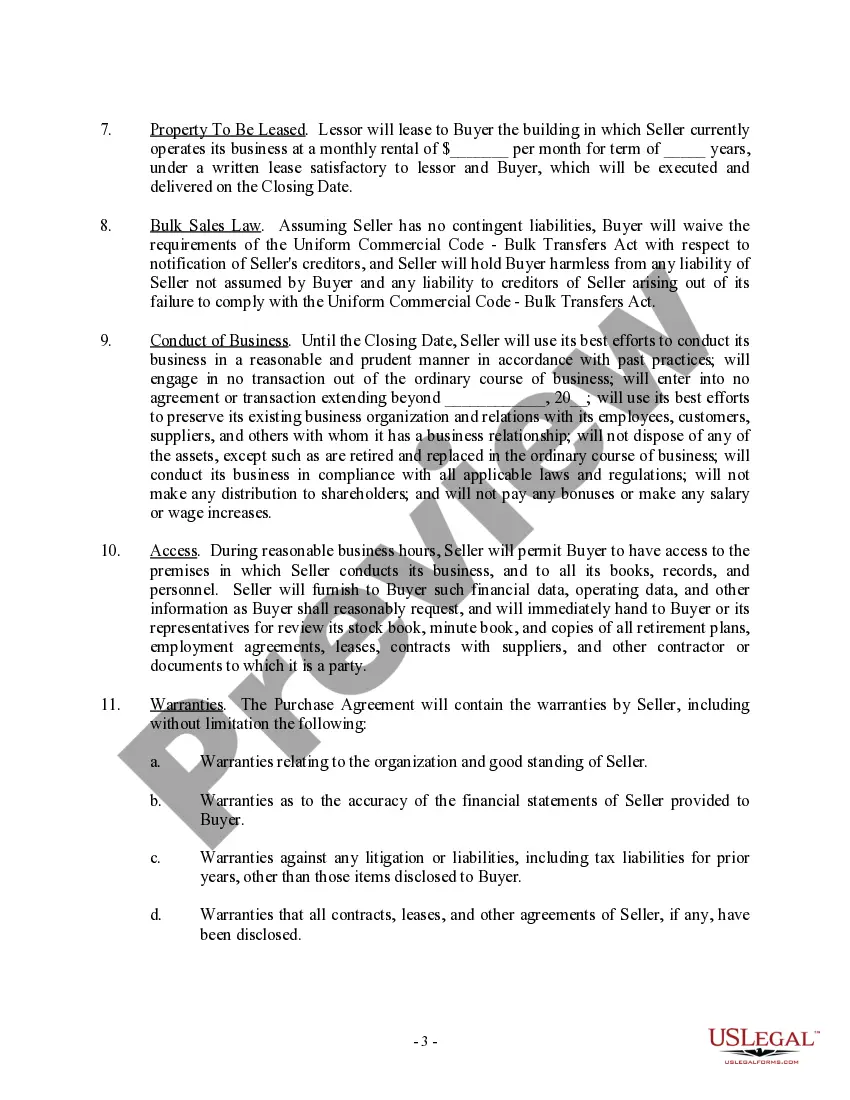
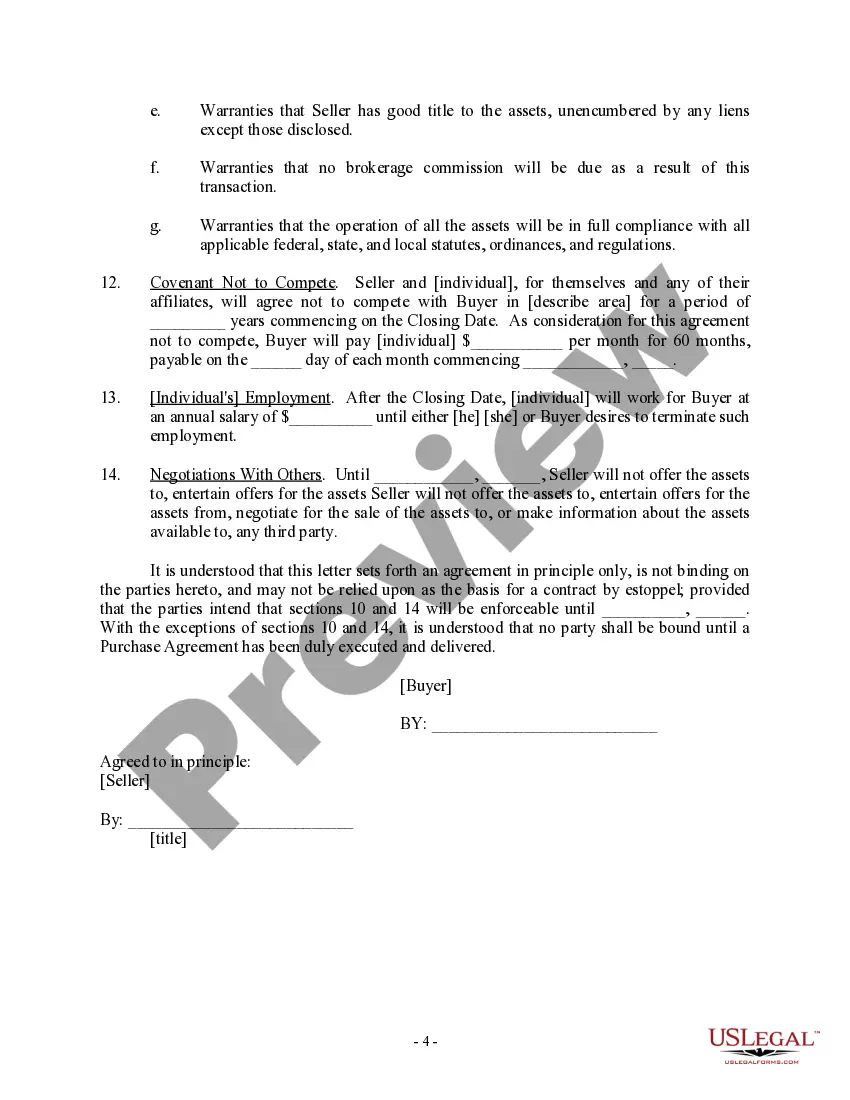
- Warranties provided by the Seller regarding the condition of the assets.
- Non-compete agreement clauses and employment terms.
- Confidentiality during the negotiation period.
Common use cases
This form is useful when a business intends to sell assets to another entity. It is typically employed in situations where a buyer wants to outline the terms of an asset purchase before negotiating the final Purchase Agreement. Common scenarios include the sale of business inventory or equipment, mergers and acquisitions, or when a business is restructuring its assets.
Who should use this form
- Businesses involved in asset sales.
- Buyers looking to acquire specific business assets.
- Sellers wanting to formally outline terms before final agreements.
- Business attorneys assisting clients in asset transactions.
Instructions for completing this form
- Identify the Buyer and Seller by entering their legal names and addresses.
- Clearly outline the assets being sold, including any inventory and equipment.
- Specify the purchase price, including any adjustments based on inventory valuation.
- Include terms regarding liabilities, assets retained by the Seller, and warranties associated with the assets.
- Schedule the closing date and detail payment terms for the purchase price.
- Ensure both parties sign and date the letter to formalize their agreement in principle.
Notarization guidance
This form does not typically require notarization unless specified by local law. It is recommended, however, to consult local regulations or legal counsel to confirm notarization requirements for asset purchase transactions in your jurisdiction.
Get your form ready online
Our built-in tools help you complete, sign, share, and store your documents in one place.
Make edits, fill in missing information, and update formatting in US Legal Forms—just like you would in MS Word.
Download a copy, print it, send it by email, or mail it via USPS—whatever works best for your next step.
Sign and collect signatures with our SignNow integration. Send to multiple recipients, set reminders, and more. Go Premium to unlock E-Sign.
If this form requires notarization, complete it online through a secure video call—no need to meet a notary in person or wait for an appointment.
We protect your documents and personal data by following strict security and privacy standards.

Make edits, fill in missing information, and update formatting in US Legal Forms—just like you would in MS Word.

Download a copy, print it, send it by email, or mail it via USPS—whatever works best for your next step.

Sign and collect signatures with our SignNow integration. Send to multiple recipients, set reminders, and more. Go Premium to unlock E-Sign.

If this form requires notarization, complete it online through a secure video call—no need to meet a notary in person or wait for an appointment.

We protect your documents and personal data by following strict security and privacy standards.
Mistakes to watch out for
- Failing to clearly define the assets being sold.
- Not including all necessary terms and conditions for the purchase.
- Omitting the closing date and payment details.
- Neglecting to have both parties sign the document.
Why use this form online
- Convenience of downloading and completing the form at your own pace.
- Editable templates allow for easy customization based on specific transaction needs.
- Quick access to legally vetted forms drafted by licensed attorneys.
Legal use & context
- This form serves as an initial agreement but is not legally binding until a Purchase Agreement is executed.
- Failing to follow through with a formal agreement can lead to misunderstandings or disputes regarding the transaction.
- Proper documentation and compliance with state laws are crucial for enforceability.
Looking for another form?


Form popularity
FAQ
Selling Depreciated Assets When you sell a depreciated asset, any profit relative to the item's depreciated price is a capital gain.If you used the Section 179 deduction, for example, to write down the cost of the computer to nothing and sold it for $1,200, the entire selling price would be a taxable gain.
Assets Depreciate. You Need to Keep Good Records. Asset Sales Will Affect Your Business Tax. Deduct an Asset's Value Through Donation. Strive to Sell All of Your Assets for Their Fair Market Value. For assets purchased during the tax year, your records should include:
You report gains on the sale of assets as non-operating income on your income statement. To measure the gain, subtract the value of the asset in your ledgers from the sale price.
In an asset sale, the seller retains possession of the legal entity and the buyer purchases individual assets of the company, such as equipment, fixtures, leaseholds, licenses, goodwill, trade secrets, trade names, telephone numbers, and inventory.
Selling your business often requires a fair round of negotiations.A letter of intent (LOI) is a written agreement regarding the sale and purchase. This is the first formal step in the purchase process by laying out the conditions and the terms of the agreement between the two parties.
An asset sale occurs when a company sells some or all of its actual assets, either tangible or intangible. In an asset sale, the seller retains legal ownership of the company but has no further recourse to the sold assets. The buyer assumes no liabilities in an asset sale.
In an asset sale, the seller retains possession of the legal entity and the buyer purchases individual assets of the company, such as equipment, fixtures, leaseholds, licenses, goodwill, trade secrets, trade names, telephone numbers, and inventory.Normalized net working capital is also typically included in a sale.
Debit cash for the amount received, debit all accumulated depreciation, debit the loss on sale of asset account, and credit the fixed asset. Gain on sale. Debit cash for the amount received, debit all accumulated depreciation, credit the fixed asset, and credit the gain on sale of asset account.
An asset sale happens when you sell or transfer the assets of your company, rather than shares or stock. These assets can be tangible (eg machinery and inventory) or intangible (eg intellectual property). In an asset sale, you can typically choose what you want to sell.