Basic Principles of The Law of War
What is this form?
The Basic Principles of The Law of War form provides a comprehensive overview of the regulations governing armed conflict. It highlights the restrictions placed on military members and commanders during both international and non-international armed conflicts. This document serves as a crucial guide to ensure compliance with humanitarian laws and the conduct of warfare while safeguarding human rights.
Key parts of this document
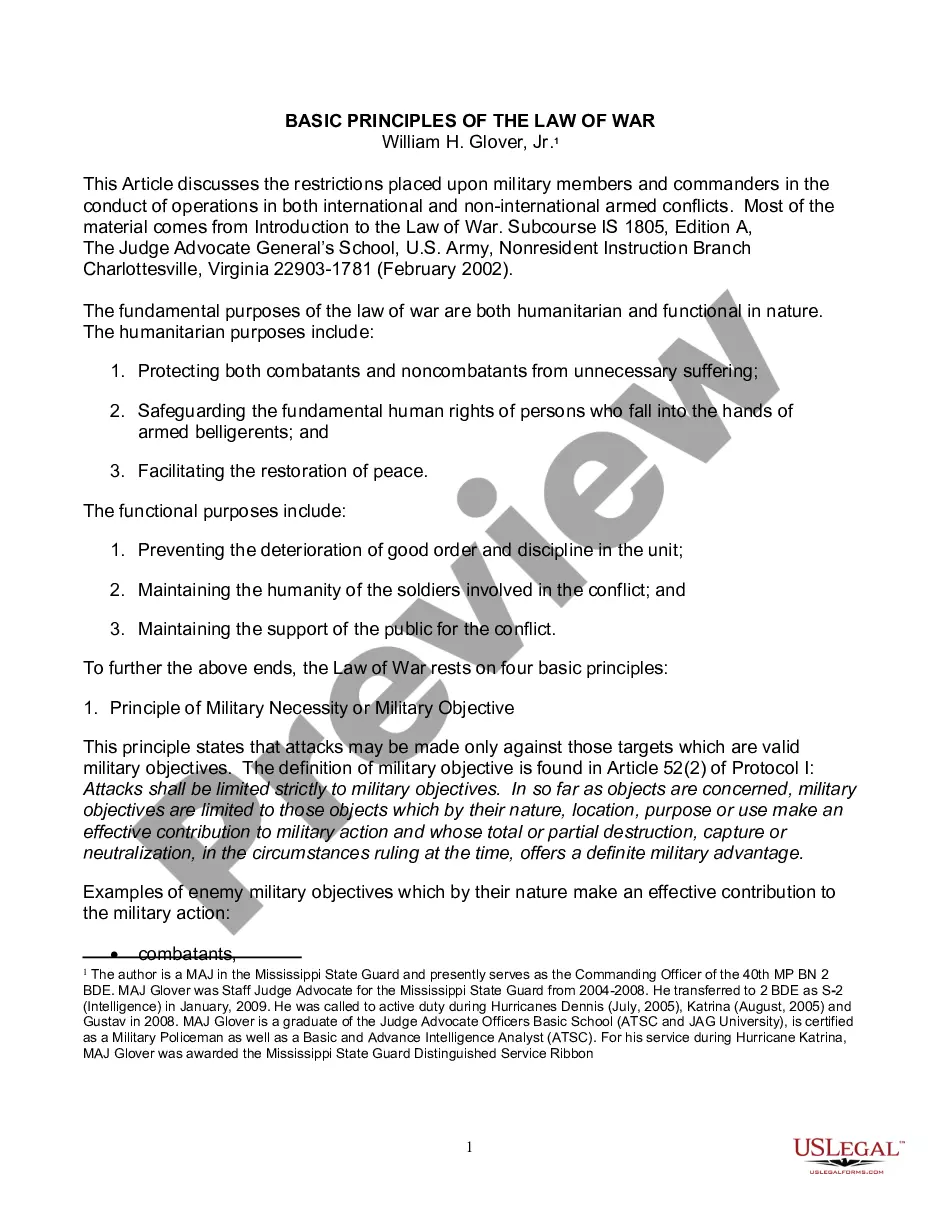
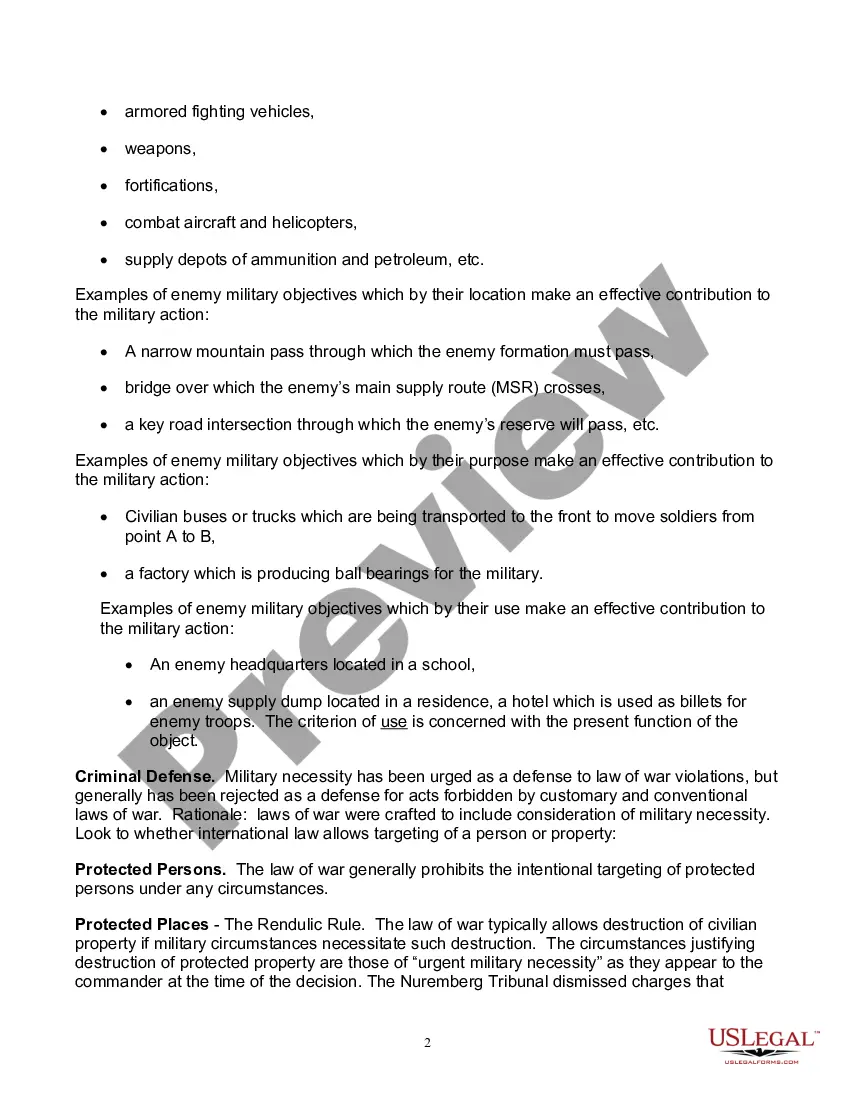
- Principle of Military Necessity: Outlines valid military objectives and the justification for targeting them.
- Protection of Non-Combatants: Clarifies the rules relating to the treatment and safeguarding of civilians and protected persons.
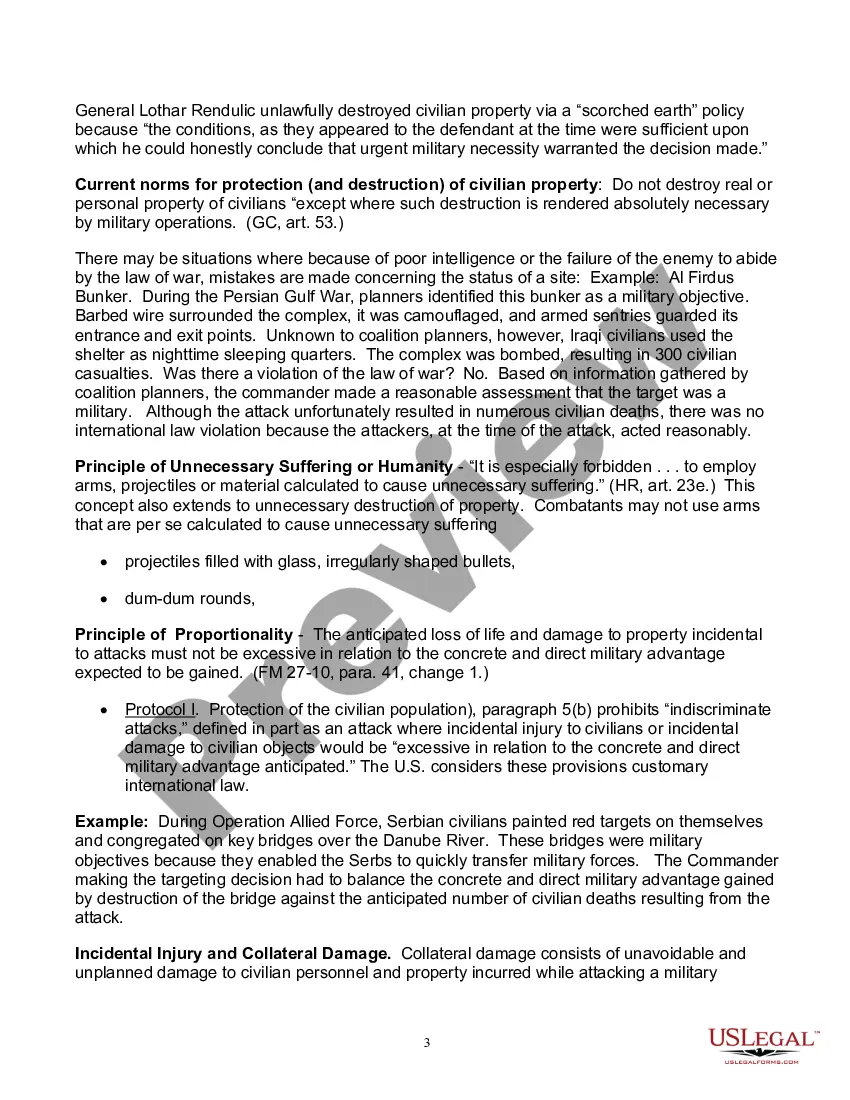
- Principle of Proportionality: Discusses the balance between military advantage and collateral damage.
- Legal Status of Combatants and Detainees: Defines lawful combatants, unprivileged belligerents, and protections for prisoners of war.
- Application of the Law of War: Details the circumstances under which the law applies in various military operations.


Common use cases
This form is necessary when military personnel are involved in armed conflicts, providing guidance on adhering to legal and ethical standards. It can also be required for military training and preparation, helping commanders and soldiers understand their rights and responsibilities under international law.
Intended users of this form
- Military personnel deploying to conflict zones.
- Service members undergoing training in the Law of War.
- Legal advisors providing counsel on military operations.
- Commanders responsible for ensuring compliance with ethical and legal standards in warfare.
How to prepare this document
- Familiarize yourself with the principles outlined in the form.
- Identify the specific military operation or conflict to which the principles will apply.
- Review the roles and responsibilities of all parties involved in military operations.
- Ensure that all personnel understand the legal standards addressed in the document.
- Incorporate the principles into training materials and operational briefings.
Is notarization required?
This form does not typically require notarization to be legally valid. However, some jurisdictions or document types may still require it. US Legal Forms provides secure online notarization powered by Notarize, available 24/7 for added convenience.
Get your form ready online
Our built-in tools help you complete, sign, share, and store your documents in one place.
Make edits, fill in missing information, and update formatting in US Legal Forms—just like you would in MS Word.
Download a copy, print it, send it by email, or mail it via USPS—whatever works best for your next step.
Sign and collect signatures with our SignNow integration. Send to multiple recipients, set reminders, and more. Go Premium to unlock E-Sign.
If this form requires notarization, complete it online through a secure video call—no need to meet a notary in person or wait for an appointment.
We protect your documents and personal data by following strict security and privacy standards.

Make edits, fill in missing information, and update formatting in US Legal Forms—just like you would in MS Word.

Download a copy, print it, send it by email, or mail it via USPS—whatever works best for your next step.

Sign and collect signatures with our SignNow integration. Send to multiple recipients, set reminders, and more. Go Premium to unlock E-Sign.

If this form requires notarization, complete it online through a secure video call—no need to meet a notary in person or wait for an appointment.

We protect your documents and personal data by following strict security and privacy standards.
Avoid these common issues
- Misinterpreting the principle of military necessity, leading to unlawful targeting.
- Overlooking the importance of civilian protection and engagement rules.
- Failing to apply the principles in training sessions properly.
Why use this form online
- Immediate access to up-to-date legal standards and principles.
- Easy download and sharing capabilities for training and reference.
- Editable formats that allow customization based on specific military needs.
Legal use & context
- The Law of War is a recognized component of international law that governs conduct during armed conflicts.
- Non-compliance can lead to legal repercussions for military personnel and units.
- Understanding these principles is essential for maintaining discipline and order within military operations.
Summary of main points
- The Law of War establishes important regulations for armed conflict, prioritizing humanitarian considerations.
- Military necessity, proportionality, and distinction are fundamental principles to follow.
- Effective implementation of these laws supports both operational success and legal compliance in military engagements.
Key terms explained
- Military necessity: Justification for actions taken in warfare that are needed to secure military objectives.
- Combatants: Members of armed forces who are allowed to engage in combat under the law of war.
- Collateral damage: Unintended damage or casualties inflicted on non-combatants during military operations.
Looking for another form?







Form popularity
FAQ
(2) Proportionality Loss of life and damage to property incidental to attacks must not be excessive in relation to the concrete and direct military advantage expected to be gained.
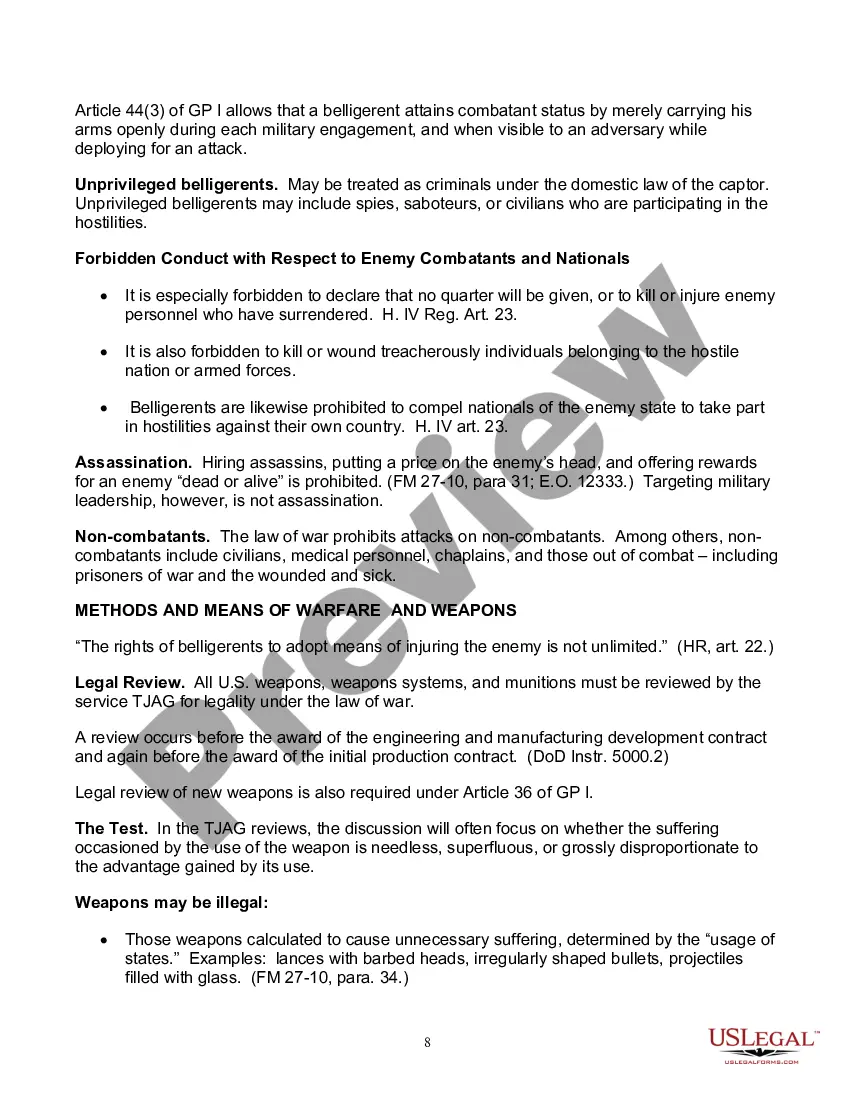
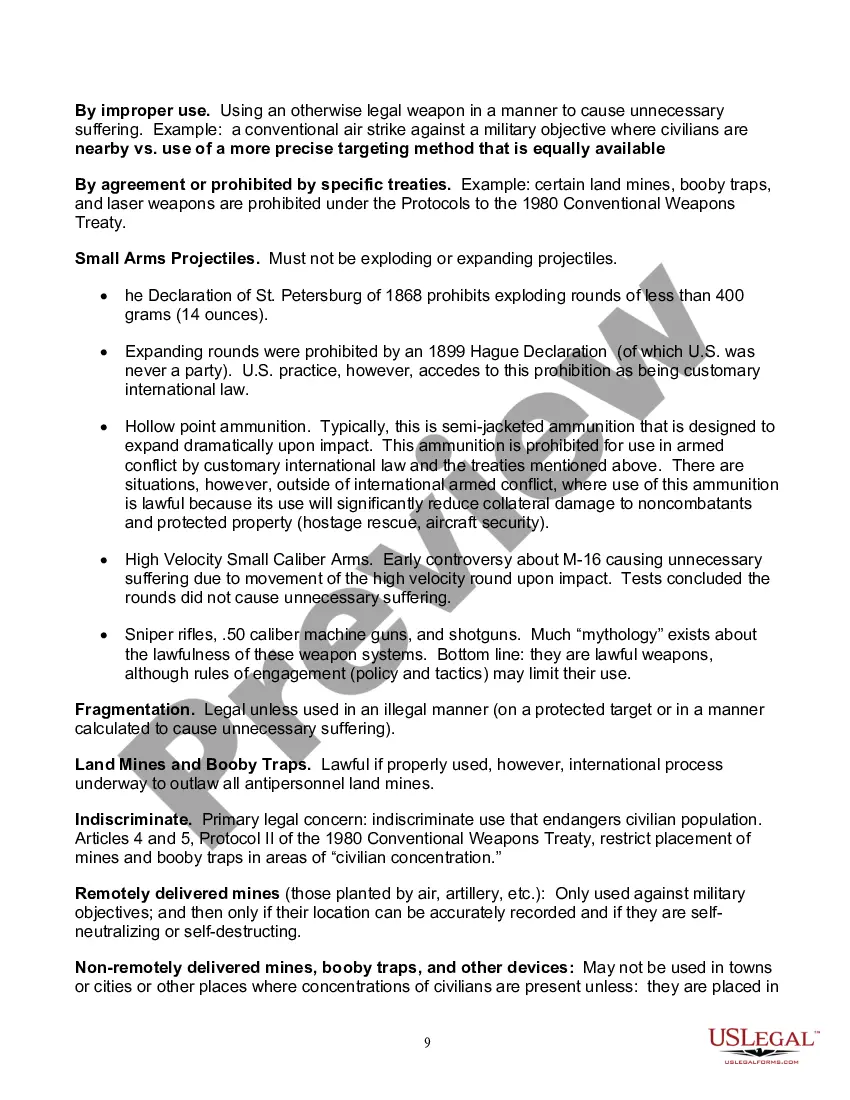
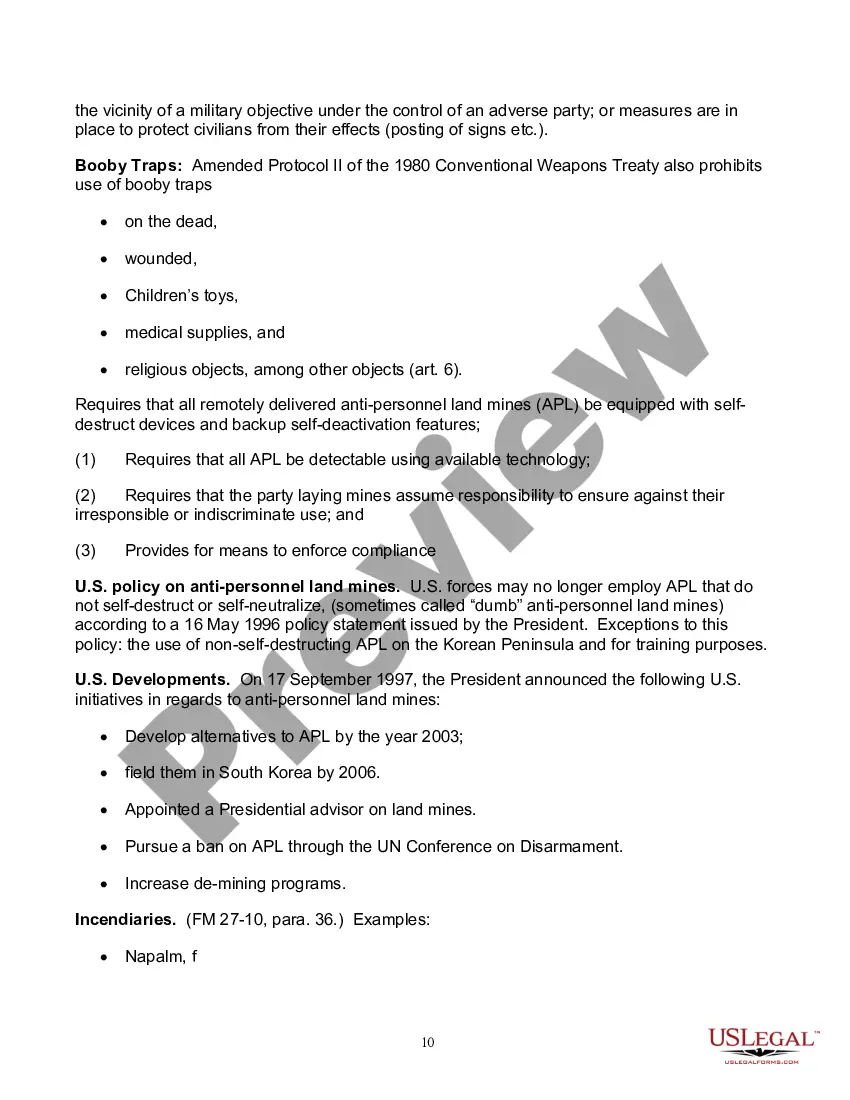
The law of war rests on five fundamental principles that are inherent to all targeting decisions: military necessity, unnecessary suffering, proportionality, distinction (discrimination), and honor (chivalry).
The Four Universal Principles The government as well as private actors are accountable under the law. The laws are clear, publicized, and stable; are applied evenly; and protect fundamental rights, including the security of persons and contract, property, and human rights.
Despite the codification of much customary law into treaty form during the last one hundred years, four fundamental principles still underlie the law of armed conflict. They are distinction, military necessity, unnecessary suffering, and proportionality.
The Law of War principle of Honor influences the conduct of activities by encouraging refrain from taking advantage of the adversary's adherence to the Law of War and to encourage combatants to act in good faith in non-hostile relations.
The law of war rests on five fundamental principles that are inherent to all targeting decisions: military necessity, unnecessary suffering, proportionality, distinction (discrimination), and honor (chivalry).