Comparison of Contract Law of the People's Republic of China with The United States
About this form
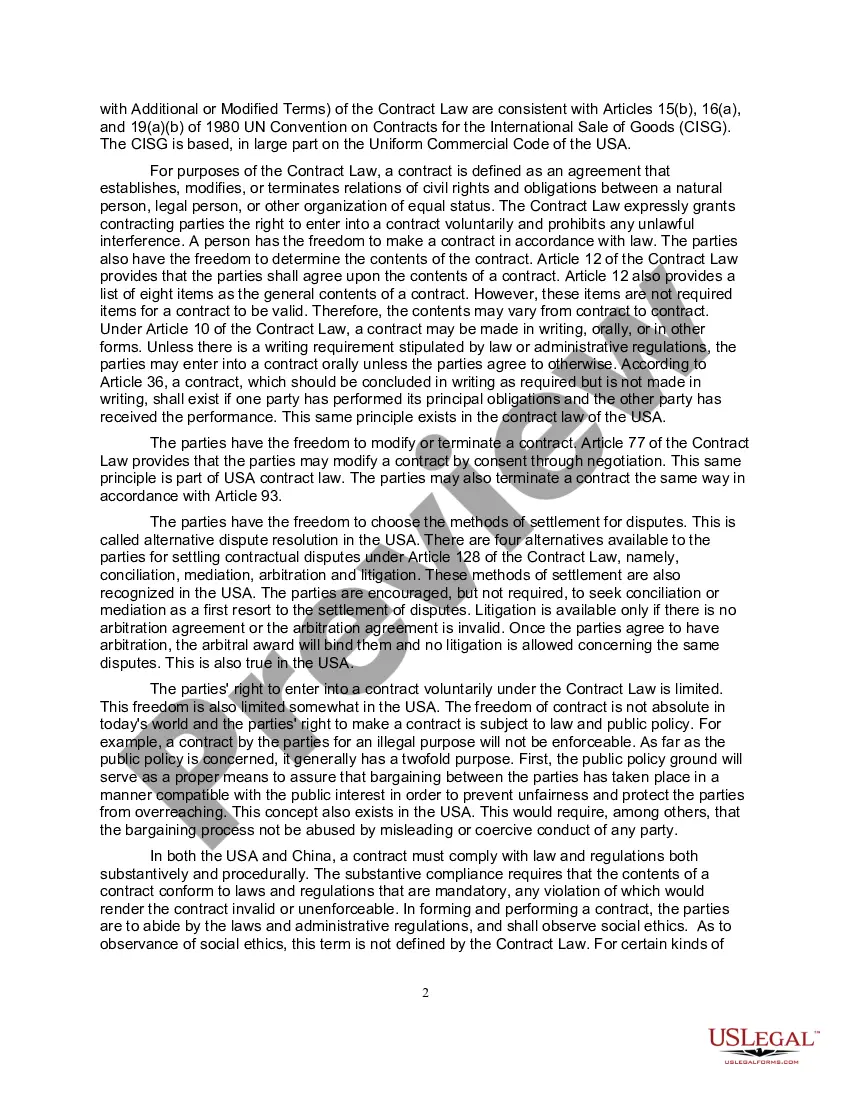
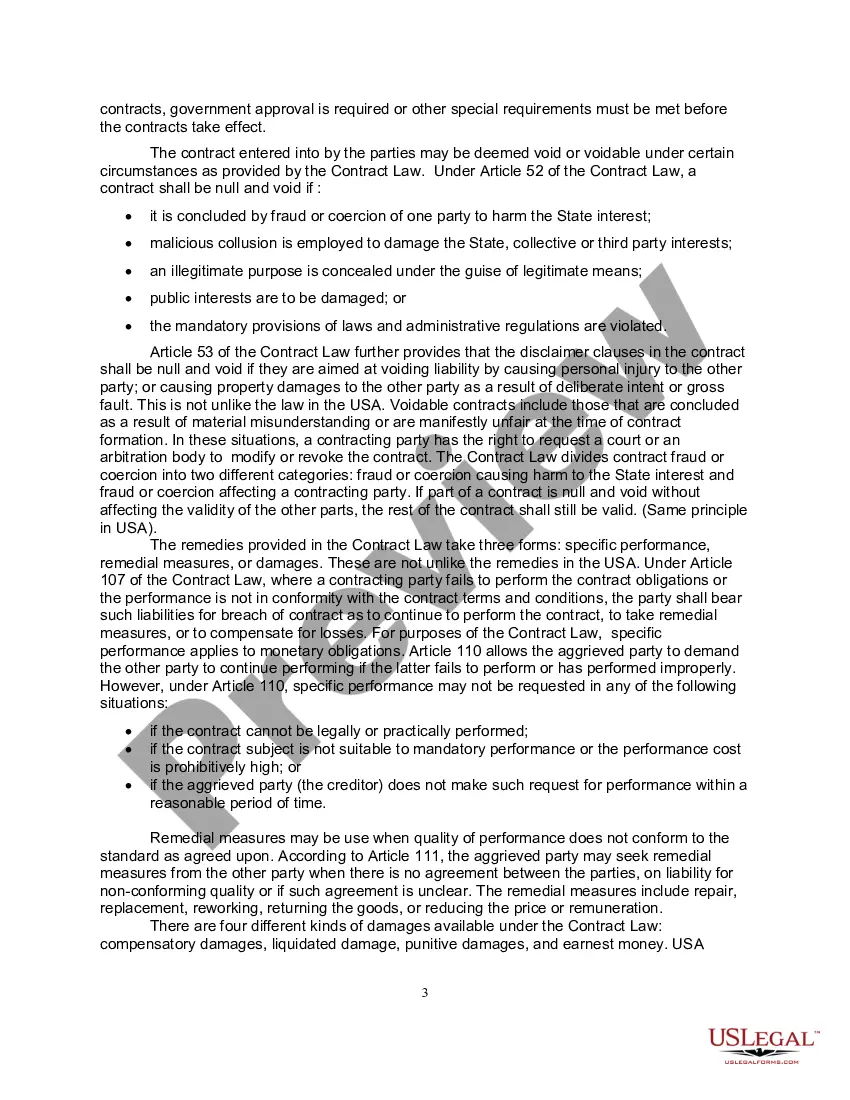
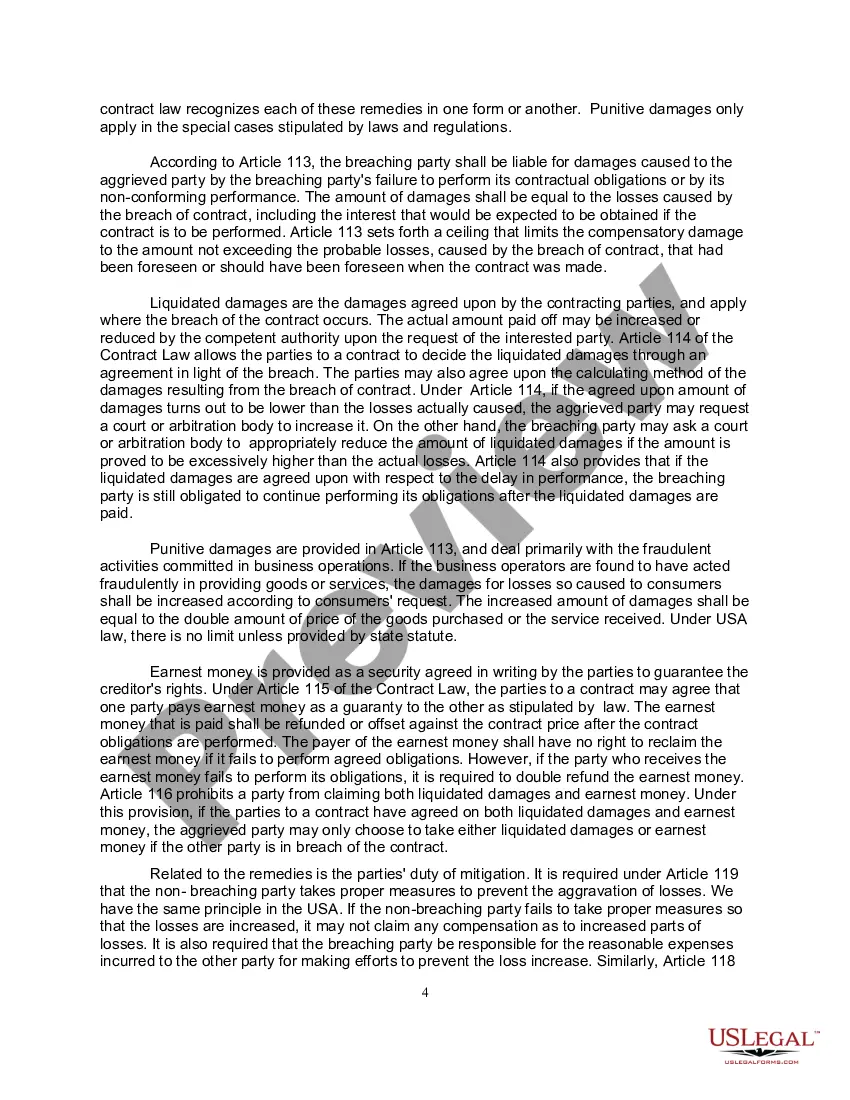
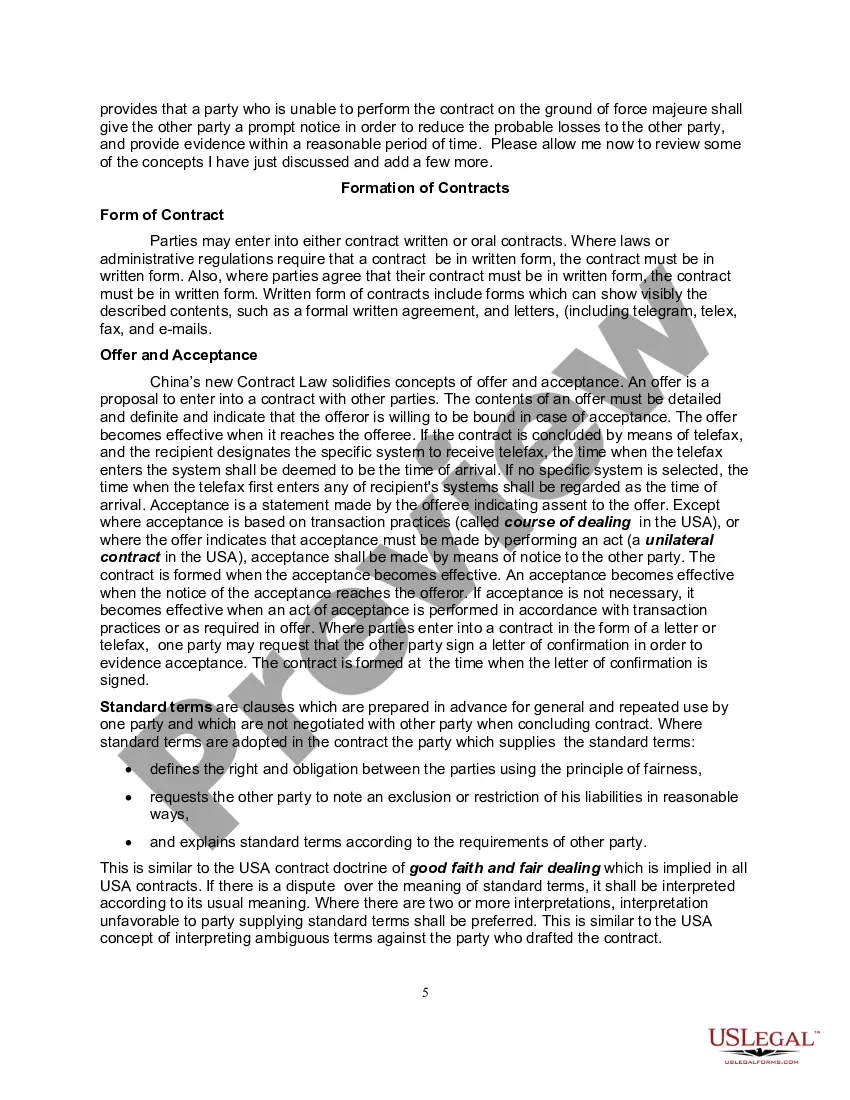
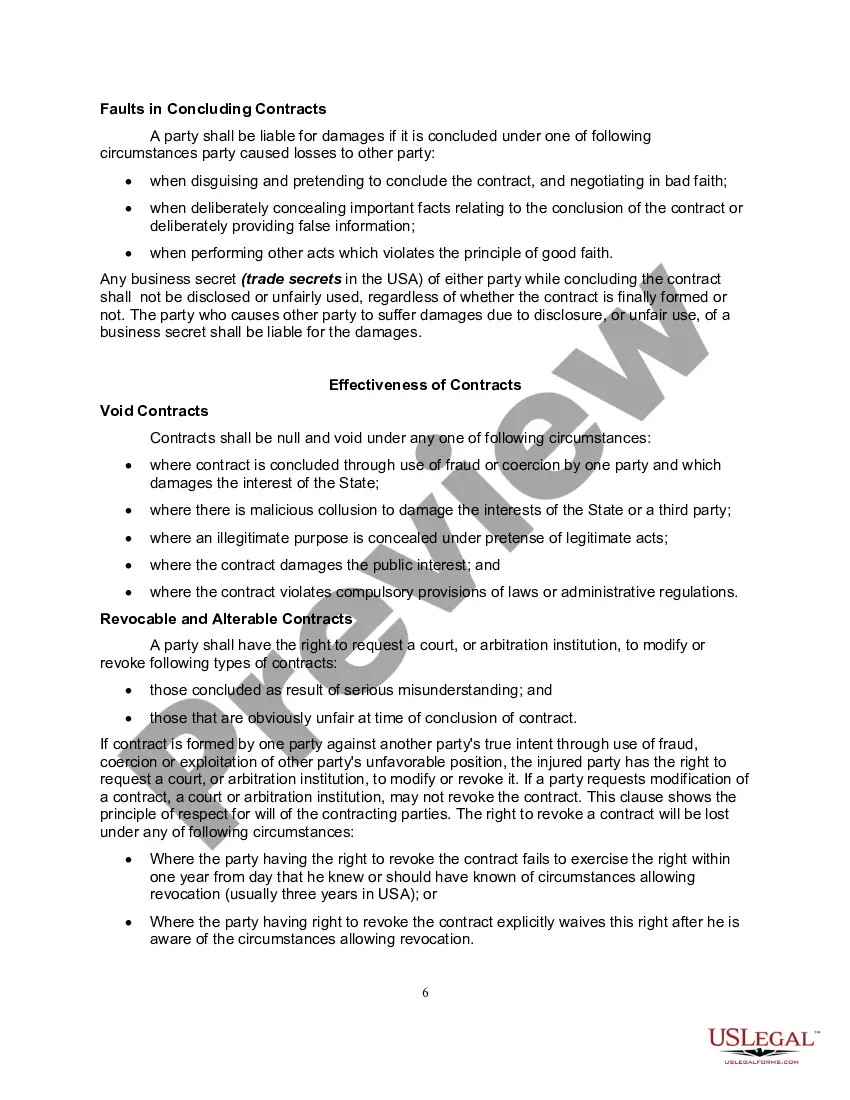
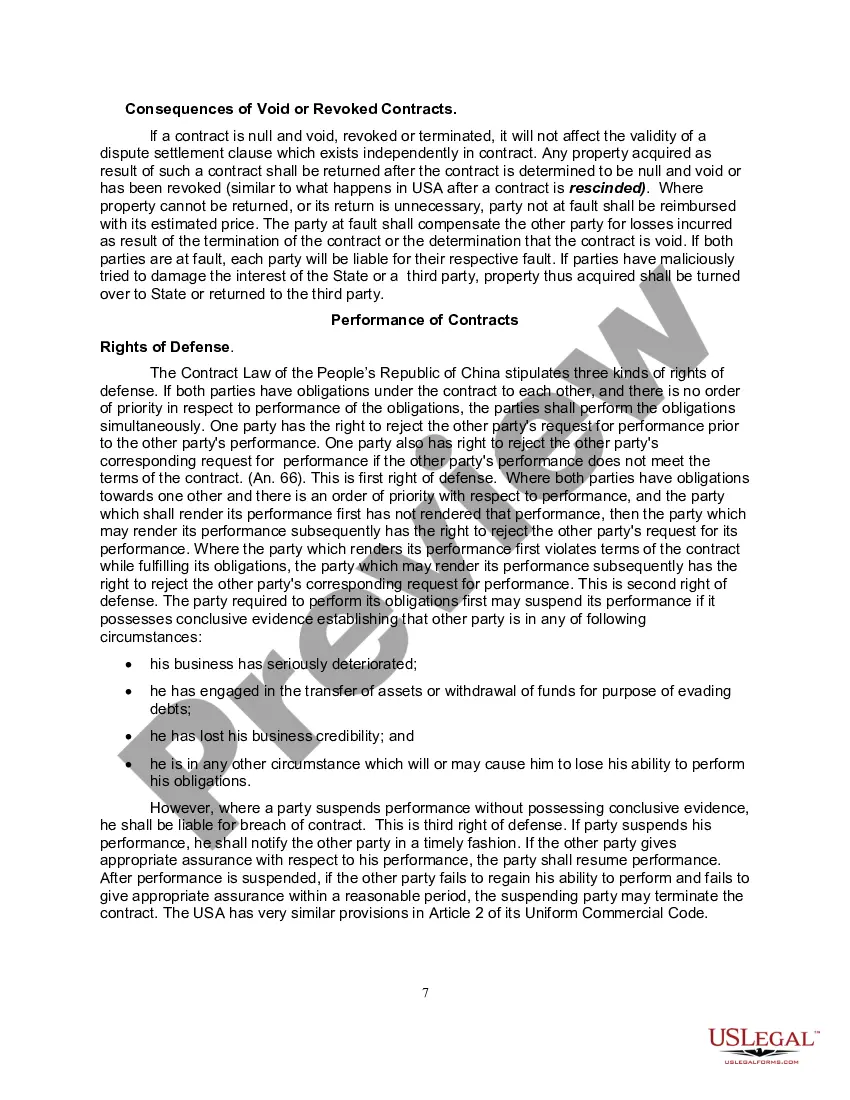
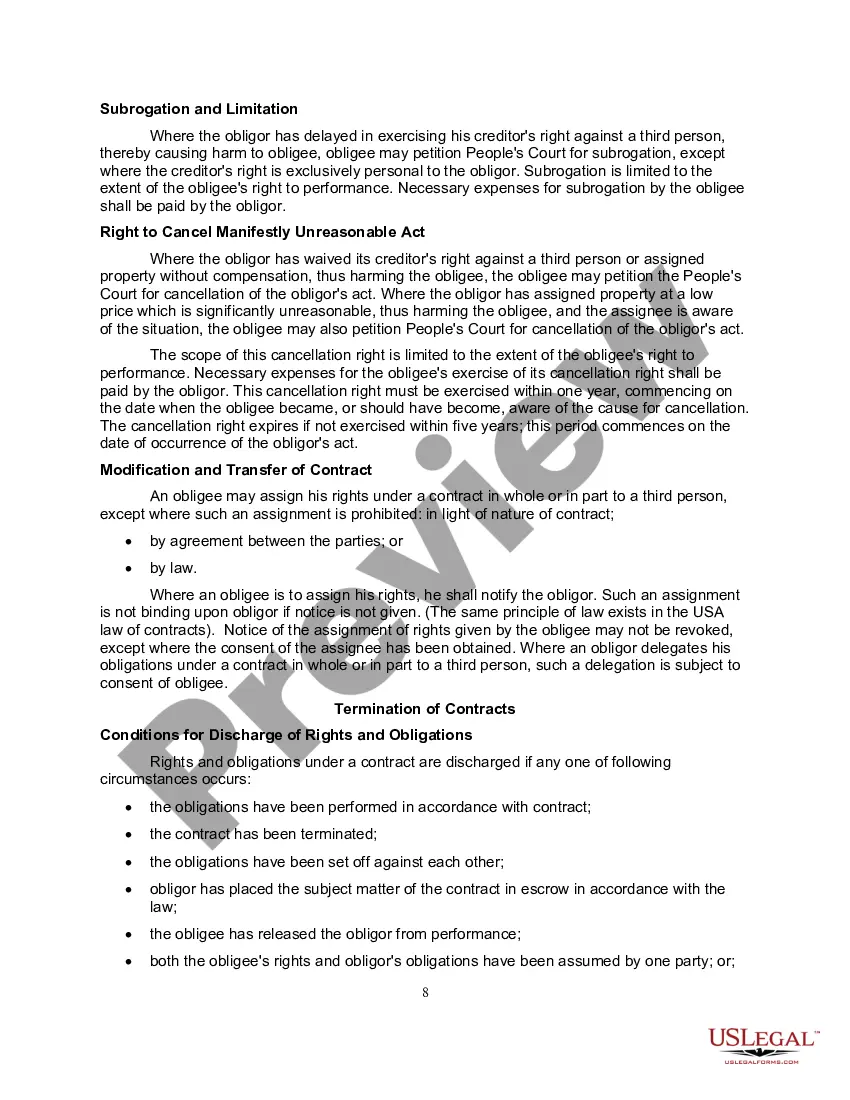
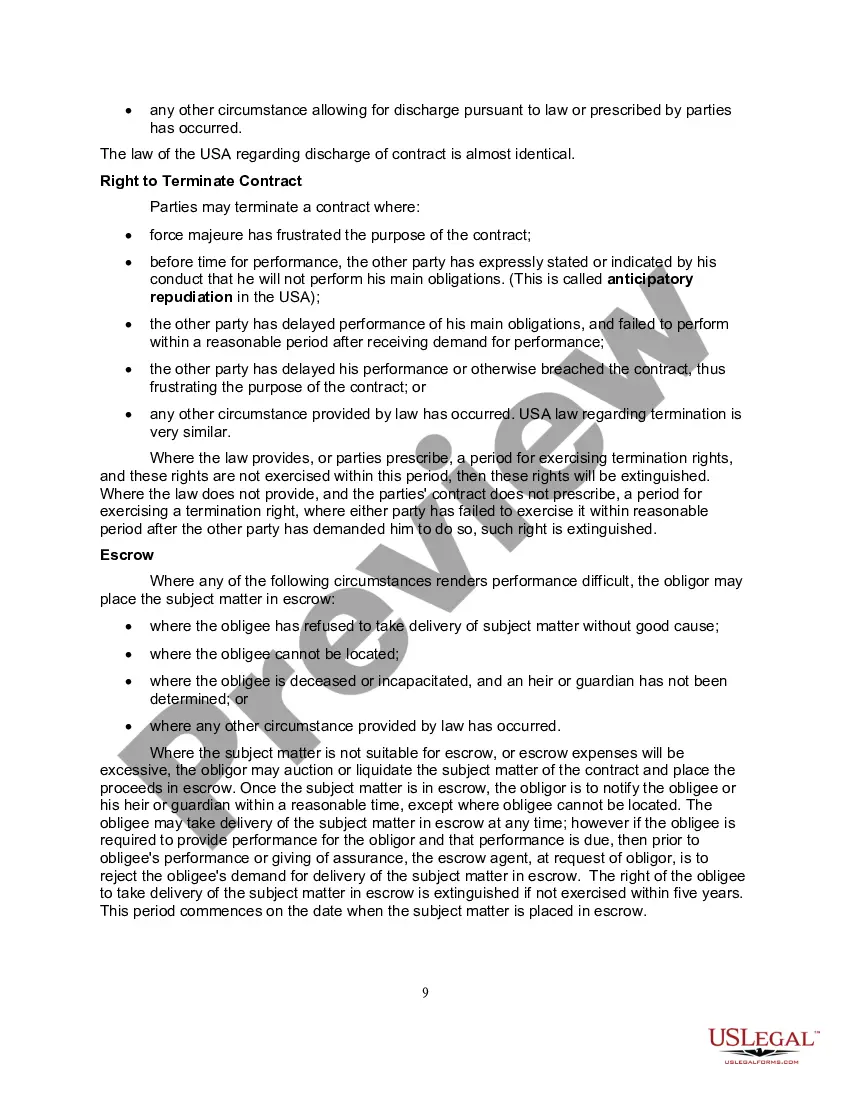
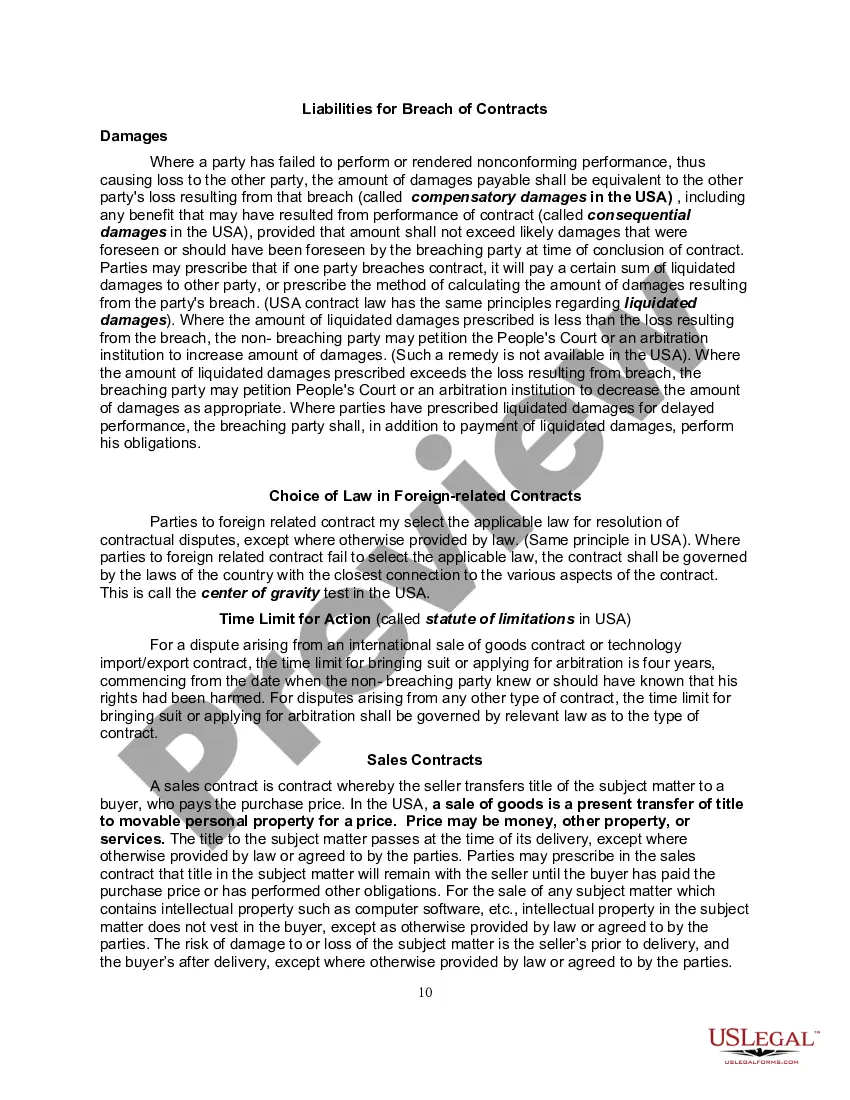
This form is a detailed comparison of Contract Law in the People's Republic of China and the United States. Its primary purpose is to provide users with an understanding of key similarities and differences in contract law between these two jurisdictions. This comparison can help individuals and businesses navigate the complexities of international contracts more effectively.
Main sections of this form
- Overview of the evolution of contract law in China and its alignment with international standards.
- Key principles in both Chinese and U.S. contract law, including offer and acceptance, anticipatory repudiation, and dispute resolution options.
- A side-by-side comparison of specific legal terms and requirements in both legal systems.
- Important articles of the Chinese Contract Law and their American counterparts.
- Discussion of compliance with laws, including void and voidable contracts, and the enforcement of penalties for breach of contract.



When to use this form
This form is useful when individuals or businesses are entering into contracts across jurisdictions, specifically between the People's Republic of China and the United States. It is beneficial for understanding potential legal implications and how to structure agreements to ensure enforceability in both countries. This comparison can also guide legal professionals in offering effective counsel to clients engaged in international business transactions.
Intended users of this form
- Business owners and professionals involved in international trade or contracts.
- Legal practitioners specializing in contract law or international business law.
- Students and researchers studying comparative law or international legal systems.
- Individuals interested in understanding their rights and obligations under varying contract laws.
How to complete this form
- Review each section of the form to understand the key differences and similarities between Chinese and U.S. contract law.
- Identify the specific legal principles relevant to your contract situation.
- Integrate applicable sections from both legal systems as necessary to enhance contract clarity.
- Seek legal advice if uncertain about any comparisons and their implications on your contracts.
- Ensure that all parties to the contract understand the legal terms as outlined within the context of both jurisdictions.
Notarization requirements for this form
This form usually doesn’t need to be notarized. However, local laws or specific transactions may require it. Our online notarization service, powered by Notarize, lets you complete it remotely through a secure video session, available 24/7.
Get your form ready online
Our built-in tools help you complete, sign, share, and store your documents in one place.
Make edits, fill in missing information, and update formatting in US Legal Forms—just like you would in MS Word.
Download a copy, print it, send it by email, or mail it via USPS—whatever works best for your next step.
Sign and collect signatures with our SignNow integration. Send to multiple recipients, set reminders, and more. Go Premium to unlock E-Sign.
If this form requires notarization, complete it online through a secure video call—no need to meet a notary in person or wait for an appointment.
We protect your documents and personal data by following strict security and privacy standards.

Make edits, fill in missing information, and update formatting in US Legal Forms—just like you would in MS Word.

Download a copy, print it, send it by email, or mail it via USPS—whatever works best for your next step.

Sign and collect signatures with our SignNow integration. Send to multiple recipients, set reminders, and more. Go Premium to unlock E-Sign.

If this form requires notarization, complete it online through a secure video call—no need to meet a notary in person or wait for an appointment.

We protect your documents and personal data by following strict security and privacy standards.
Typical mistakes to avoid
- Assuming that contract laws are identical in both jurisdictions.
- Neglecting to consider the specific nuances of contract enforcement in the People's Republic of China.
- Failing to include provisions for dispute resolution compatible with both legal systems.
- Ignoring the legal documentation requirements of either jurisdiction.
Why complete this form online
- Immediate access to expert-drafted comparative legal insights.
- The ability to download and reference the form at any time, facilitating real-time learning.
- Cost-effectiveness by providing a comprehensive overview without the need for costly legal consultations.
- Enhanced understanding of international contracting practices, improving negotiation outcomes.
Legal use & context
- This form helps clarify enforceability of contracts in international settings.
- It provides insight into limits imposed by different legal systems.
- Users gain a clearer understanding of how legal principles apply across borders.
Summary of main points
- International contracts require an understanding of the differences in laws governing agreements across countries.
- The Chinese Contract Law aligns with certain U.S. principles, but significant differences still exist.
- Consultation with legal experts is advisable to navigate complexities effectively.
Looking for another form?

Form popularity
FAQ
Contract Types Overview. Express and Implied Contracts. Unilateral and Bilateral Contracts. Unconscionable Contracts. Adhesion Contracts. Aleatory Contracts. Option Contracts. Fixed Price Contracts.
For a contract to be valid, it must have four key elements: agreement, capacity, consideration, and intention.
The basic elements required for the agreement to be a legally enforceable contract are: mutual assent, expressed by a valid offer and acceptance; adequate consideration; capacity; and legality. In some states, element of consideration can be satisfied by a valid substitute.
Contractual terms are defined as conditions, warranties or innominate terms. This may be specified in the contract, implied by the nature of it, or implied by law.
Key elements of a contract. For a contract to be valid, it must have four key elements: agreement, capacity, consideration, and intention.
Example: John promises to paint Dan's car in return for Dan's promise to pay him $100.Example: Toni fills her car with gas at Tina's gas station. There is a contract for the purchase and sale of gas. Unilateral Contract: A person accepts an offer by performing a requested act.
An example of contract is an agreement between two people to be married. Contract is defined as to acquire something or to hire someone to do work. An example of contract is a child getting lice from a classmate. An example of contract is hiring someone to do plumbing work in a house.
Contracts are made up of three basic parts an offer, an acceptance and consideration. The offer and acceptance are what the purpose of the agreement is between the parties.
The five requirements for creating a valid contract are an offer, acceptance, consideration, competency and legal intent.