Verified Complaint for Patent Infringement Against Tree Delimbing Device
Understanding this form
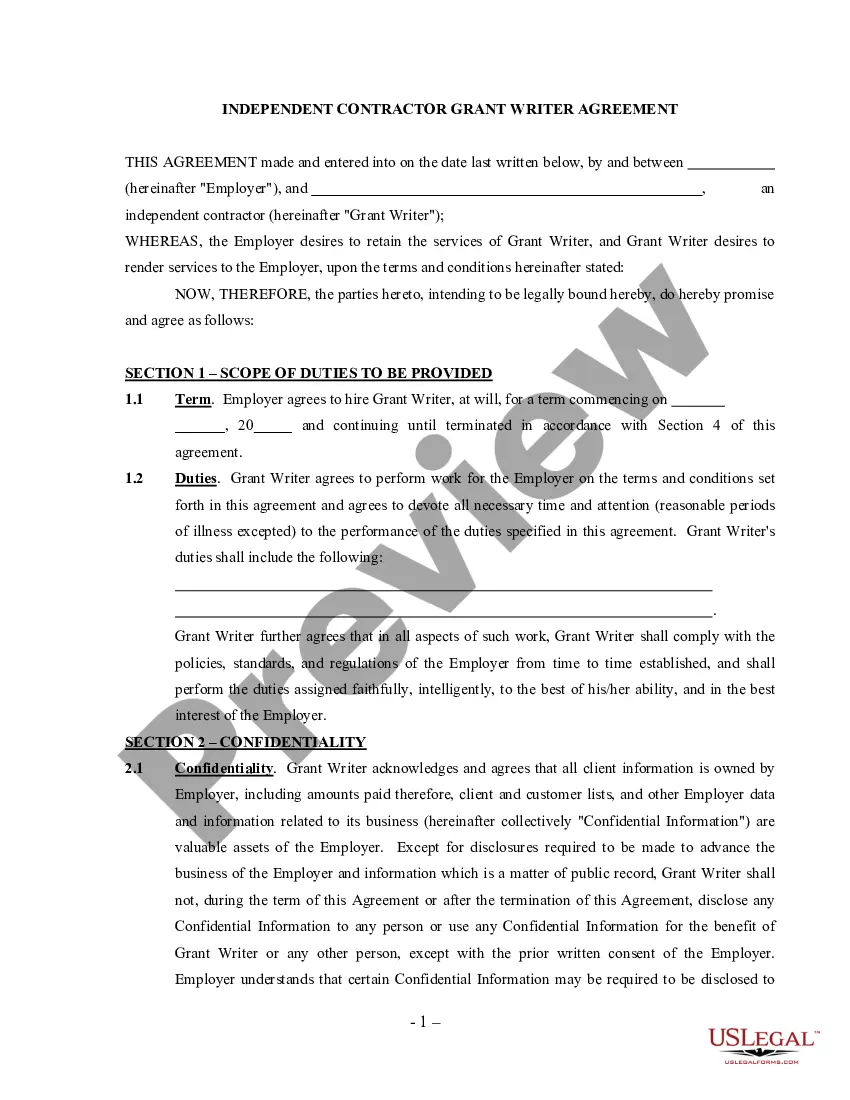
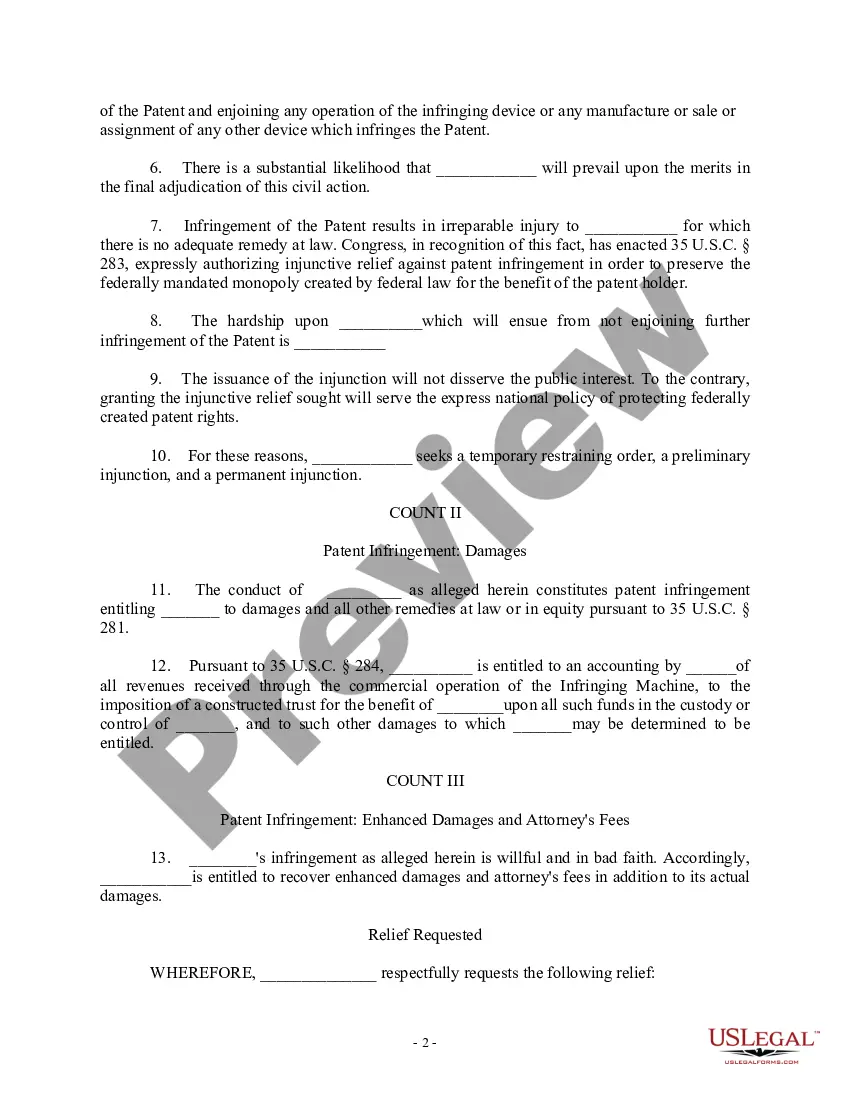
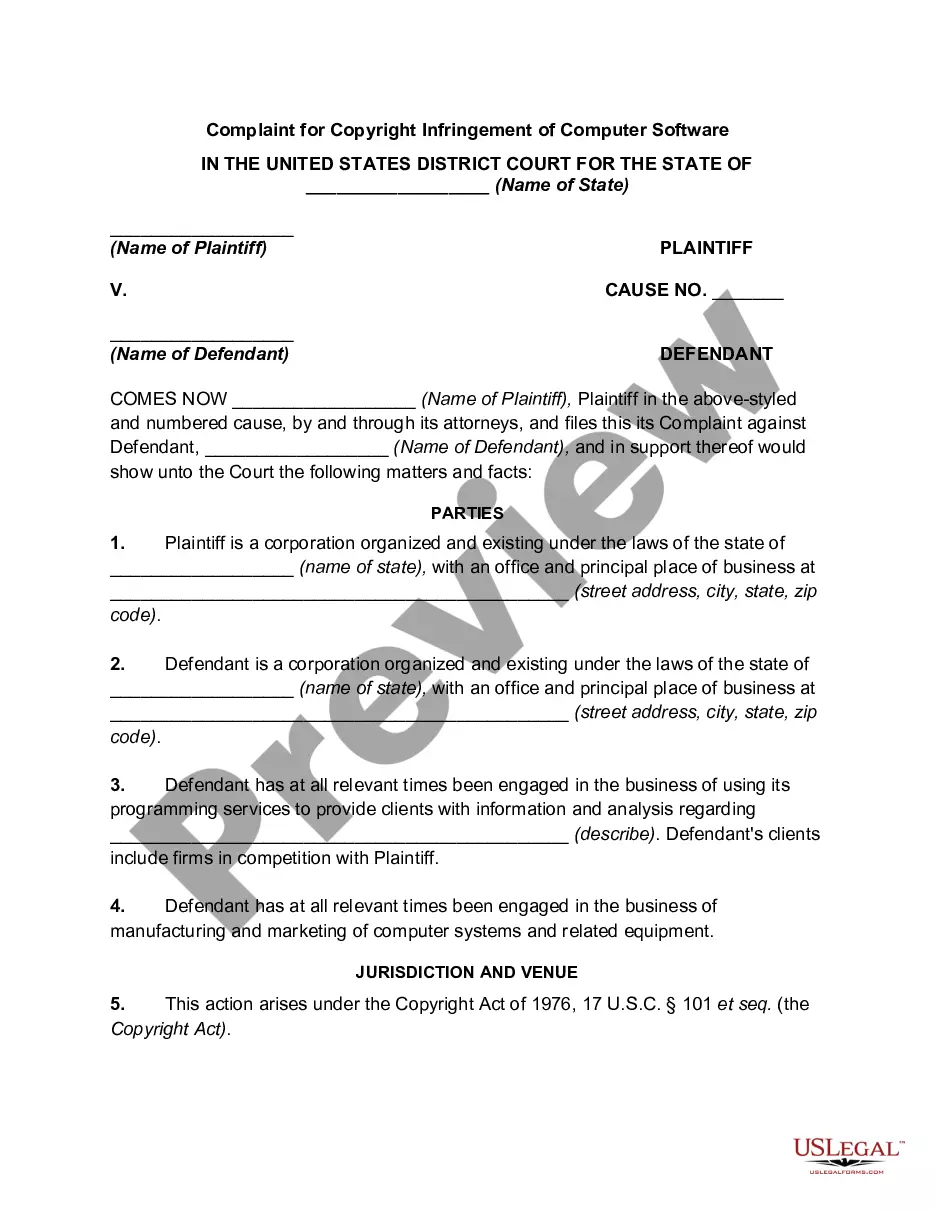
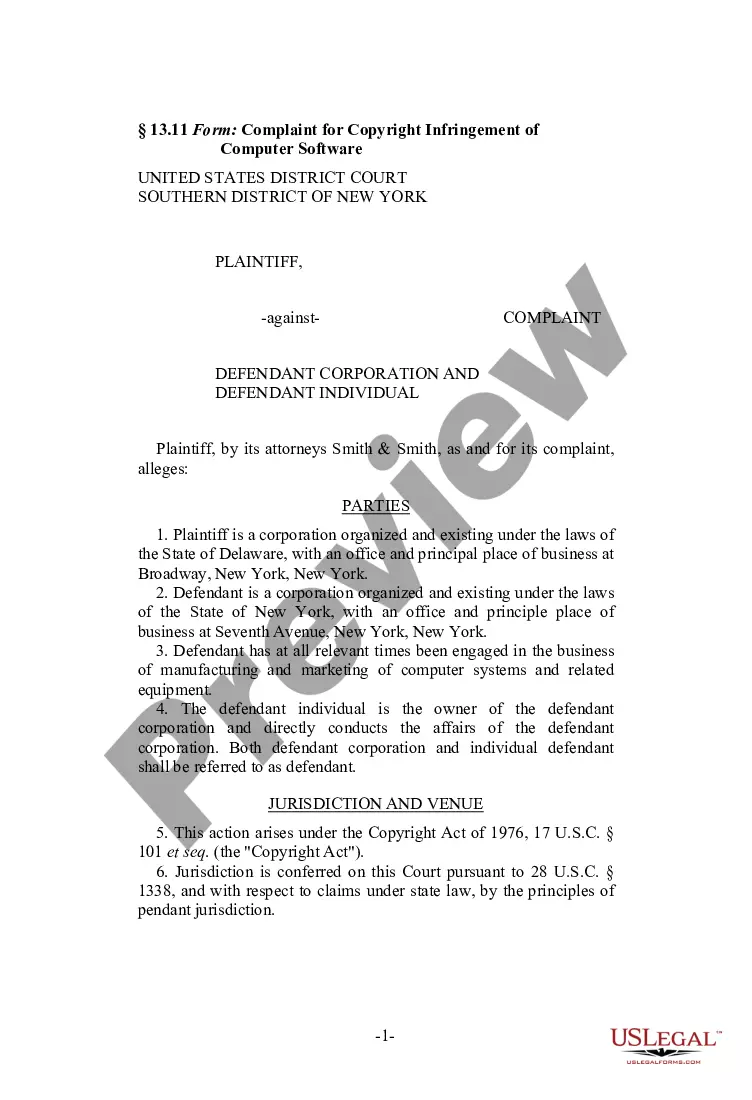
The Verified Complaint for Patent Infringement against a Tree Delimbing Device is a legal document used to initiate a civil lawsuit alleging patent infringement. This form allows the plaintiff to outline claims for damages and seek injunctive relief to prevent further infringement of their patented invention. It is specifically tailored for cases involving disputes over patent rights, distinguishing it from other general complaint forms by its emphasis on patent law.
Key components of this form
- The title and parties involved in the action.
- A summary outlining the claims for relief based on patent infringement.
- Jurisdictional statements indicating the court's authority to hear the case.
- Detailed factual background of the infringement claim.
- Specific counts detailing requests for injunctive relief and damages.
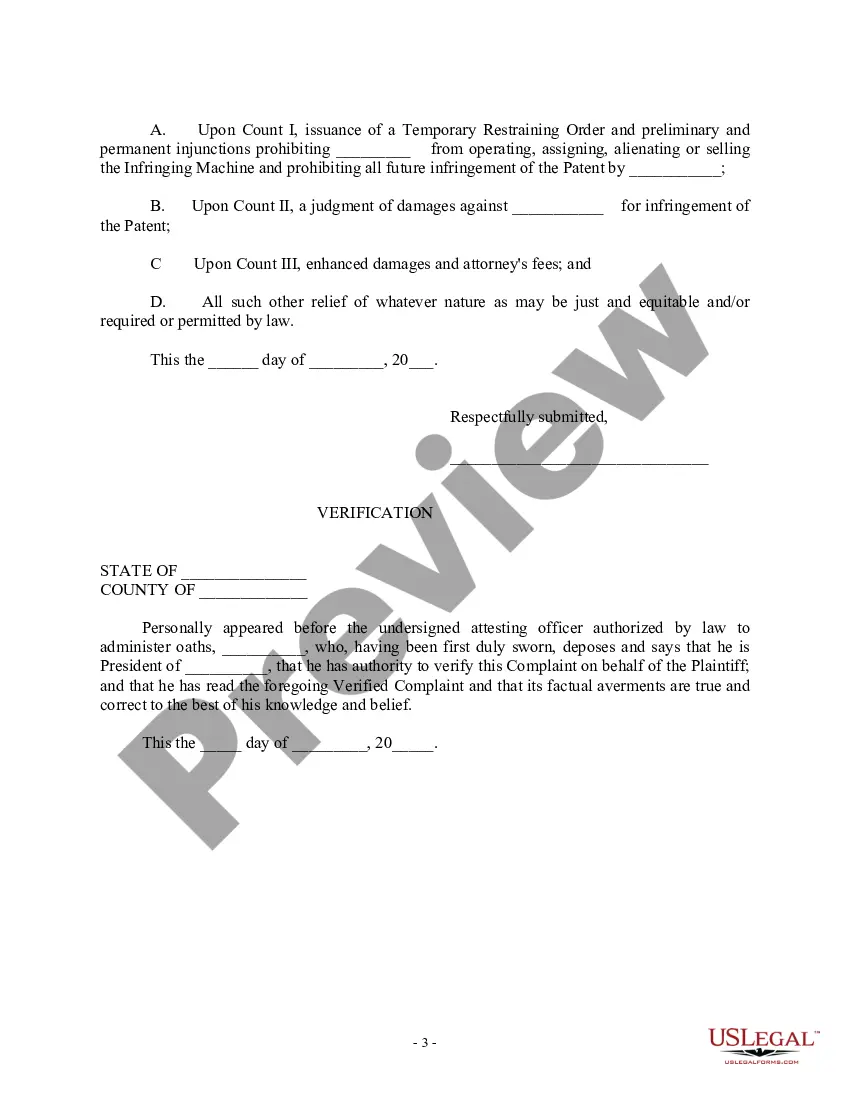
- A verification section affirming the truthfulness of the complaint.

When this form is needed
This form should be used when an individual or entity believes that their patent has been infringed by another party. It is applicable when the patent owner seeks to enforce their rights through a court of law, aiming to obtain both monetary damages and an injunction to prevent further unauthorized use of their invention. Common scenarios include situations where a competitor uses, sells, or manufactures a product that incorporates the patented technology without permission.
Who needs this form
- Patent holders seeking legal recourse for infringement.
- Business owners whose patented inventions have been used without authorization.
- Attorneys filing on behalf of clients in patent infringement cases.
Steps to complete this form
- Identify the parties involved, including the plaintiff and defendant.
- Insert the patent number that is allegedly infringed upon.
- Outline the factual background relevant to the infringement claim.
- Specify the types of relief sought, including injunctive relief and damages.
- Ensure the verification section is completed accurately, with the necessary signature and date.
Is notarization required?
To make this form legally binding, it must be notarized. Our online notarization service, powered by Notarize, lets you verify and sign documents remotely through an encrypted video session.
Get your form ready online
Our built-in tools help you complete, sign, share, and store your documents in one place.
Make edits, fill in missing information, and update formatting in US Legal Forms—just like you would in MS Word.
Download a copy, print it, send it by email, or mail it via USPS—whatever works best for your next step.
Sign and collect signatures with our SignNow integration. Send to multiple recipients, set reminders, and more. Go Premium to unlock E-Sign.
If this form requires notarization, complete it online through a secure video call—no need to meet a notary in person or wait for an appointment.
We protect your documents and personal data by following strict security and privacy standards.

Make edits, fill in missing information, and update formatting in US Legal Forms—just like you would in MS Word.

Download a copy, print it, send it by email, or mail it via USPS—whatever works best for your next step.

Sign and collect signatures with our SignNow integration. Send to multiple recipients, set reminders, and more. Go Premium to unlock E-Sign.

If this form requires notarization, complete it online through a secure video call—no need to meet a notary in person or wait for an appointment.

We protect your documents and personal data by following strict security and privacy standards.
Mistakes to watch out for
- Failing to include all relevant facts and evidence supporting the claim.
- Not specifying the patent number or the nature of the infringement clearly.
- Leaving the verification section incomplete or unsigned.
Why use this form online
- Convenient and accessible for quick downloading, allowing users to fill out the form at their own pace.
- Editable templates let you customize the form to fit your specific case details.
- Reliable and legally accurate forms drafted by licensed attorneys.
Looking for another form?

Form popularity
FAQ
Utility patent. This is what most people think of when they think about a patent. Provisional patent. Design patent. Plant patent.
Utility patent. This is what most people think of when they think about a patent. Provisional patent. Design patent. Plant patent.
In general terms, a "utility patent" protects the way an article is used and works (35 U.S.C. 101), while a "design patent" protects the way an article looks (35 U.S.C. 171).Both design and utility patents may be obtained on an article if invention resides both in its utility and ornamental appearance.
The theory behind the poor man's patent is that, by describing your invention in writing and mailing that documentation to yourself in a sealed envelope via certified mail (or other proof-of-delivery mail), the sealed envelope and its contents could be used against others to establish the date that the invention was
There are three types of patents: utility patents, design patents, and plant patents. Each type of patent has its own eligibility requirements and protects a specific type of invention or discovery; however, it's possible for one invention or discovery to potentially have more than one type of patent available for it.
Under U.S. Code Title 35, the U.S. Patent and Trademark Office (USPTO) issues three different types of patents: utility patents, design patents, and plant patents.
What is a Patent? Patents are a right granted to an inventor that allows them to exclude all others from making, using, or selling their invention for 20 years. In the U.S. the U.S. Patent and Trademark Office reviews and approves patent applications, which provide protection against others stealing their idea.
Having a patent will not in and of itself make you rich.Many inventors often think that all they need to do is come up with an idea, file a patent application, and companies will be banging on their door offering millions of dollars for the idea. Unfortunately, it doesn't work this way.