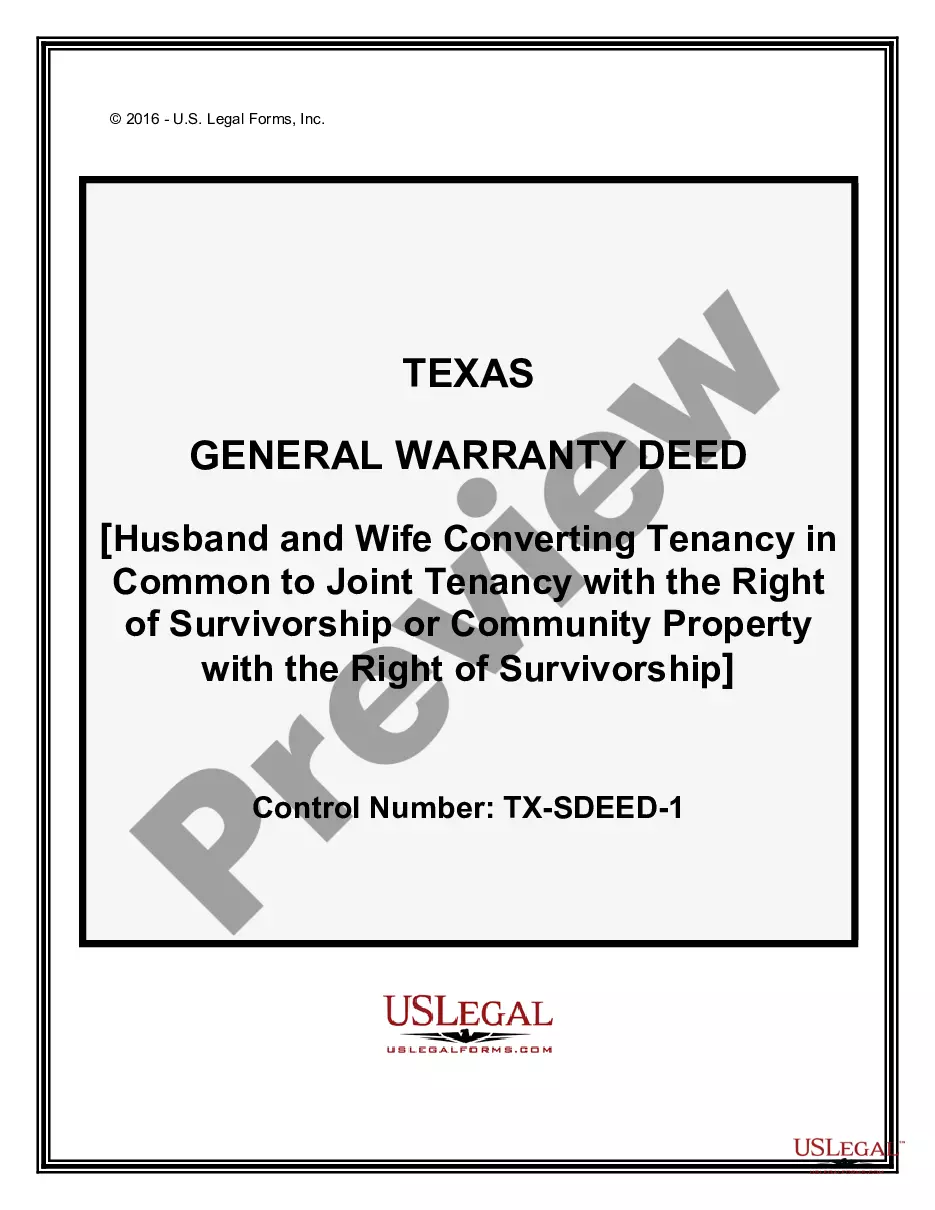
Texas Warranty Deed for Husband and Wife Converting Property from Tenants in Common to Joint Tenancy
What is this form?
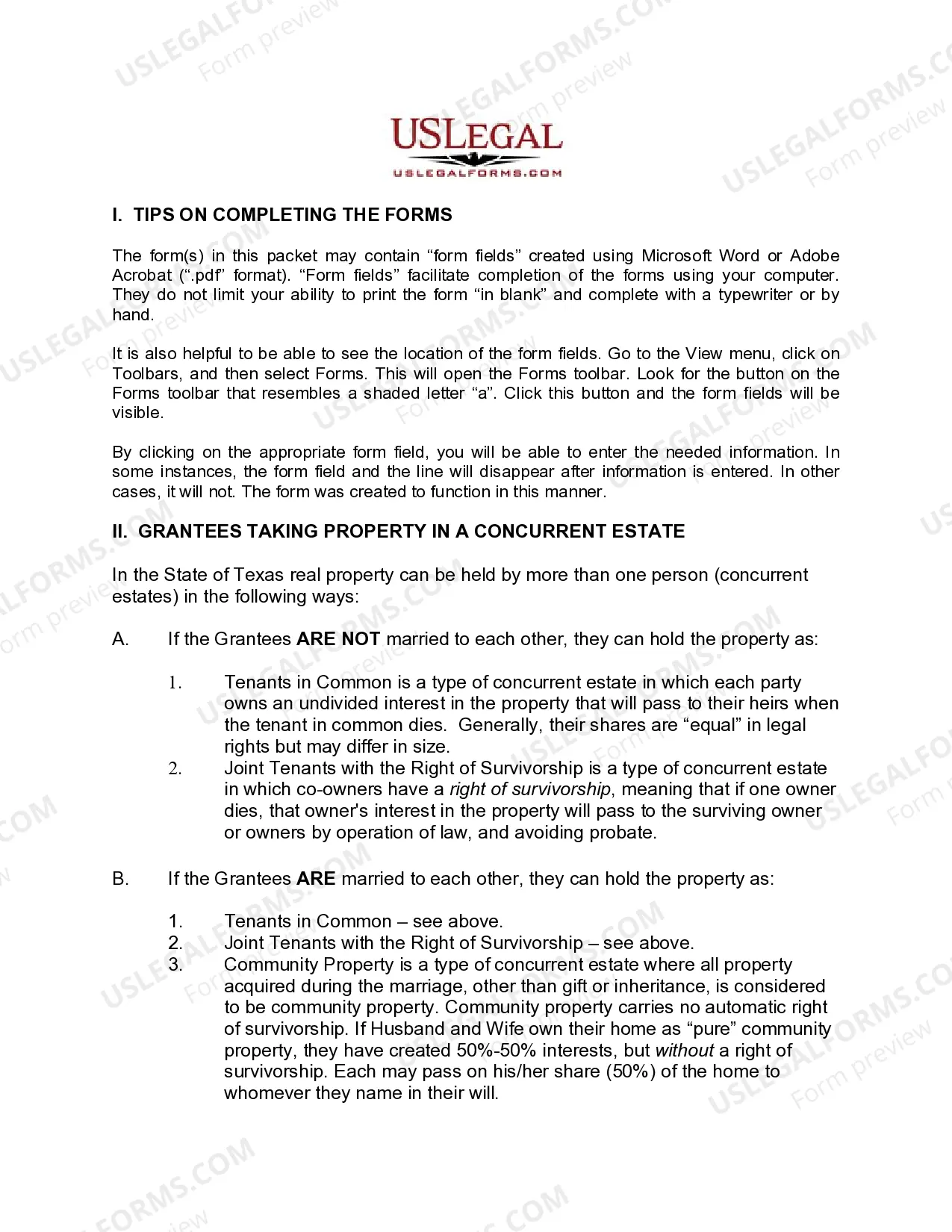
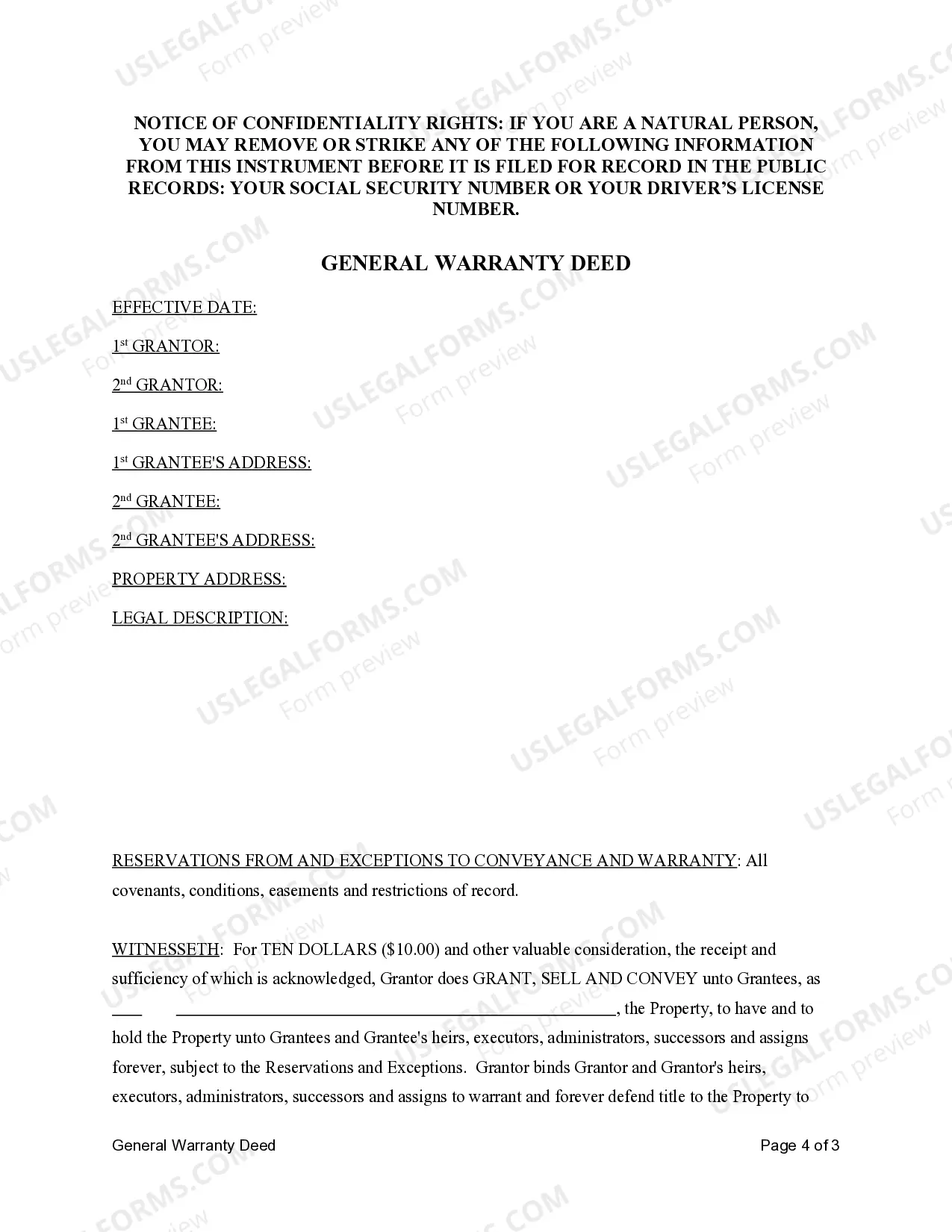
This Warranty Deed is a legal document used to transfer property ownership from a husband and wife who currently hold the title as tenants in common to becoming joint tenants. This form not only facilitates this change in ownership but also provides the benefits of joint tenancy, such as the right of survivorship, which allows for the seamless transfer of the property to the surviving spouse upon the death of one owner.
Main sections of this form
- Identification of the grantors (husband and wife) and their current ownership status.
- Details about the property being transferred, including legal descriptions.
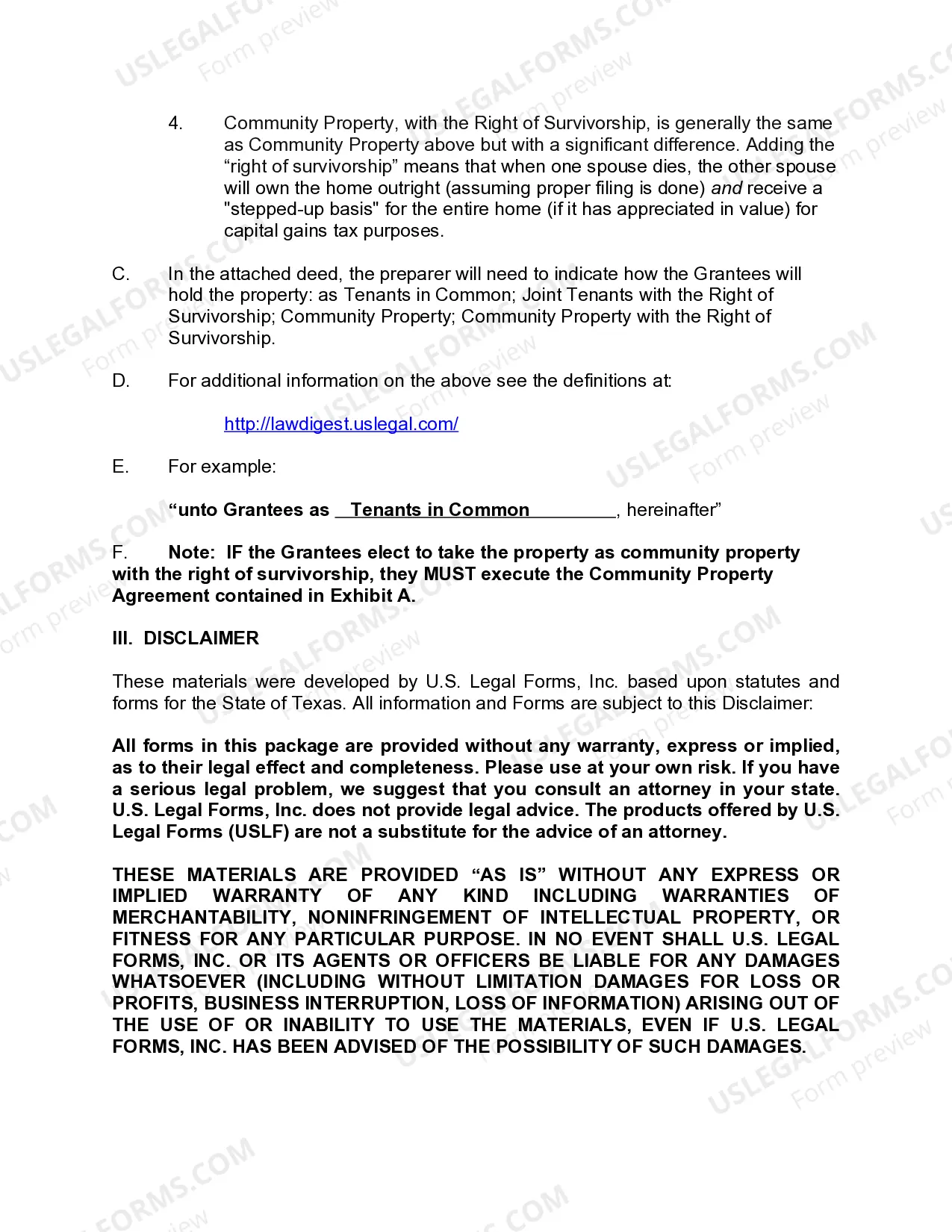
- Specification of how the property will be held post-transfer (joint tenancy).
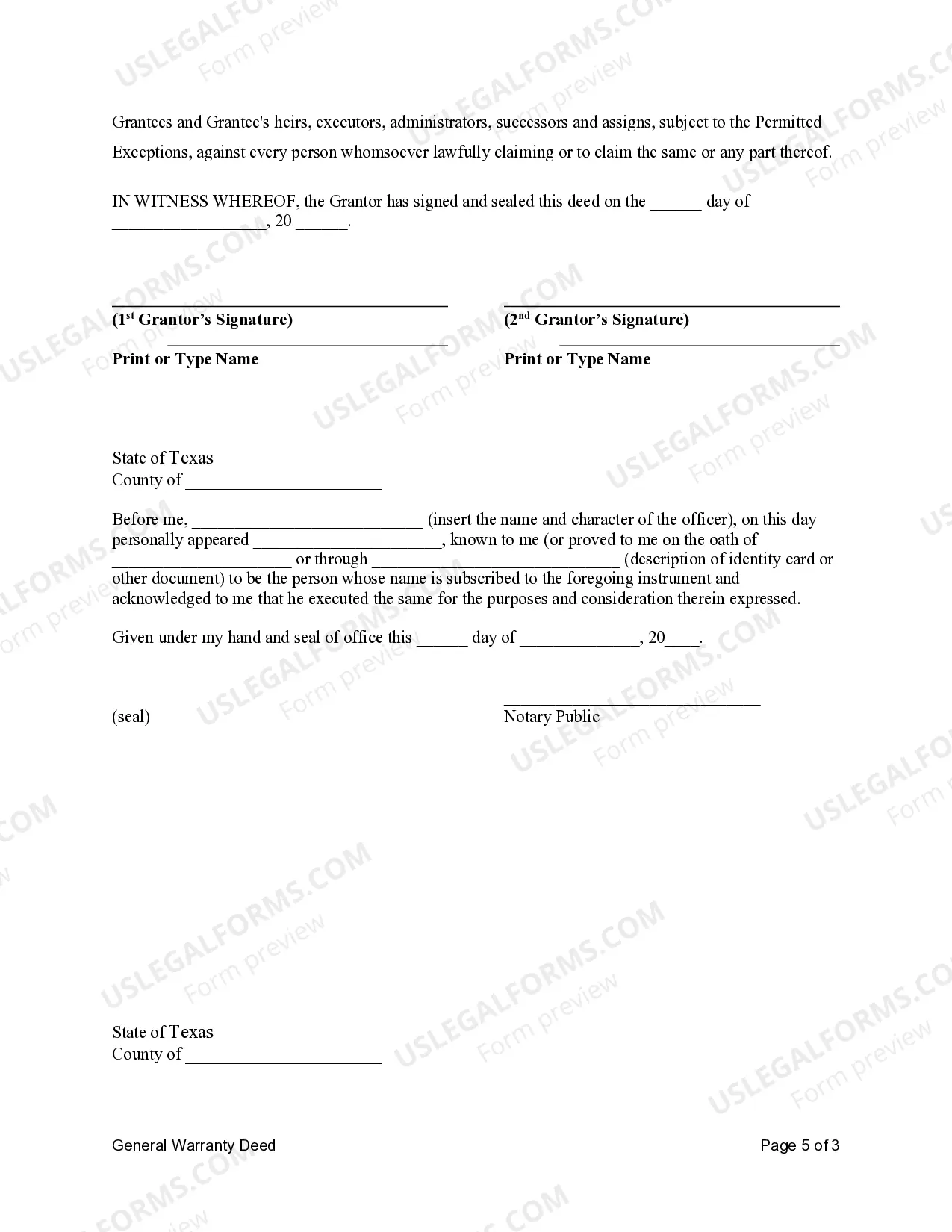
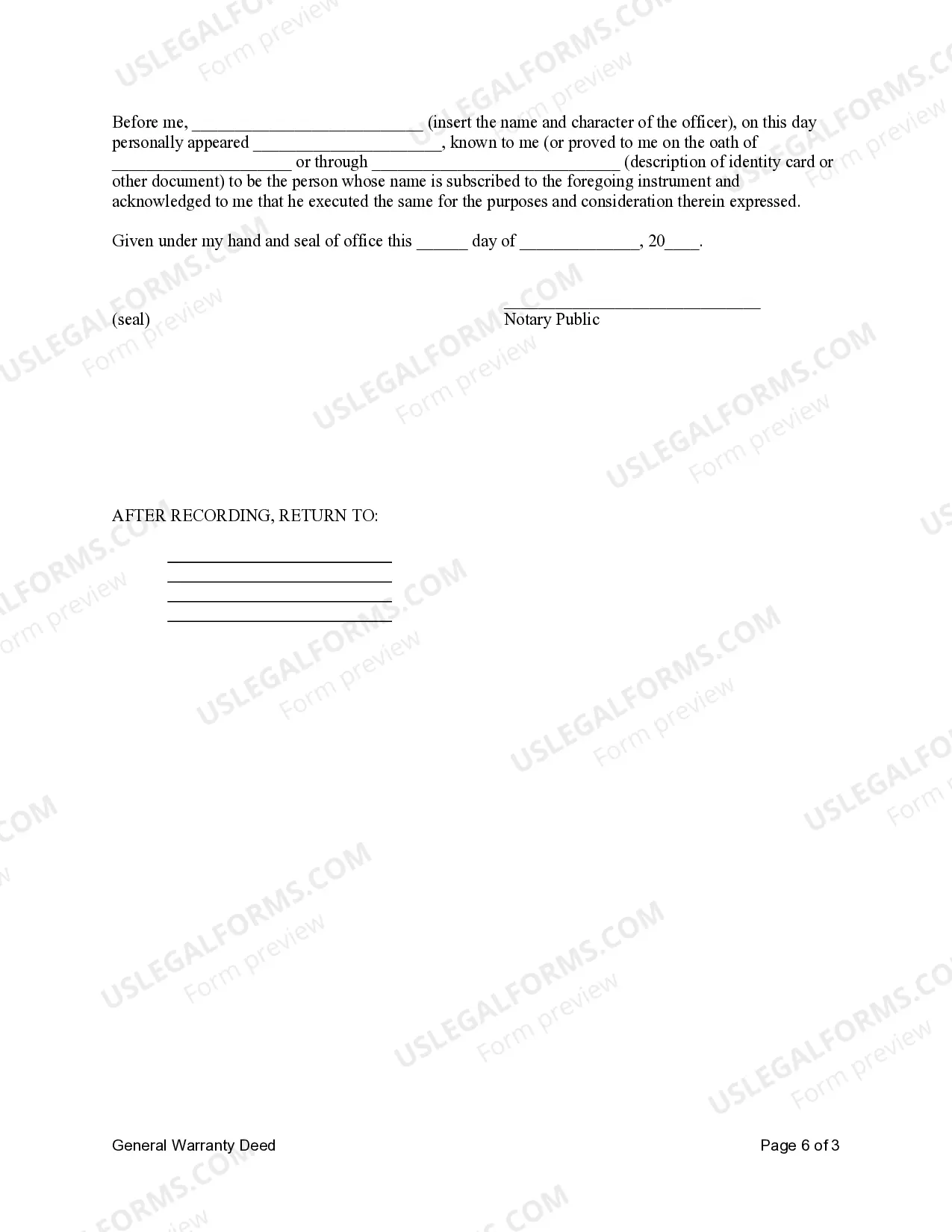
- Spaces for signatures and notary acknowledgment if required.
- Clear instructions for filing the deed with local authorities.



When to use this form
This form should be used when a husband and wife who own property as tenants in common decide to change their ownership arrangement to joint tenants. This might occur during estate planning or when they wish to simplify the transfer of property rights upon death.
Who can use this document
- Married couples currently holding property as tenants in common.
- Individuals seeking to jointly own a property with their spouse.
- Couples involved in estate planning that wish to ensure property is passed to the surviving spouse without probate.
Completing this form step by step
- Identify the grantors: Enter the names of the husband and wife as they currently hold the title.
- Specify the property: Provide a complete legal description of the property being transferred.
- Choose the ownership type: Indicate that the property will be held as joint tenants.
- Enter dates and signatures: Complete the form by adding the date and signatures of both parties.
- Notarization: If required, arrange for a notary to verify the signatures.
Notarization requirements for this form
To make this form legally binding, it must be notarized. Our online notarization service, powered by Notarize, lets you verify and sign documents remotely through an encrypted video session.
Get your form ready online
Our built-in tools help you complete, sign, share, and store your documents in one place.
Make edits, fill in missing information, and update formatting in US Legal Forms—just like you would in MS Word.
Download a copy, print it, send it by email, or mail it via USPS—whatever works best for your next step.
Sign and collect signatures with our SignNow integration. Send to multiple recipients, set reminders, and more. Go Premium to unlock E-Sign.
If this form requires notarization, complete it online through a secure video call—no need to meet a notary in person or wait for an appointment.
We protect your documents and personal data by following strict security and privacy standards.

Make edits, fill in missing information, and update formatting in US Legal Forms—just like you would in MS Word.

Download a copy, print it, send it by email, or mail it via USPS—whatever works best for your next step.

Sign and collect signatures with our SignNow integration. Send to multiple recipients, set reminders, and more. Go Premium to unlock E-Sign.

If this form requires notarization, complete it online through a secure video call—no need to meet a notary in person or wait for an appointment.

We protect your documents and personal data by following strict security and privacy standards.
Common mistakes
- Failing to include a complete legal description of the property.
- Not specifying the desired ownership type correctly.
- Forgetting to sign the document or to have it notarized if required.
- Not filing the deed with the appropriate local authorities after completion.
Benefits of using this form online
- Convenient access to downloadable forms at any time.
- Editability allows for quick adjustments without needing to start from scratch.
- Reliable templates drafted by licensed attorneys ensuring legal compliance.
- No need for travel to obtain forms or legal advice, saving time and effort.
Looking for another form?

Form popularity
FAQ
Change from joint tenants to tenants in common You can make this change without the other owners' agreement. A solicitor, conveyancer or legal executive can also make the application for you.
In estate law, joint tenancy is a special form of ownership by two or more persons of the same property. The individuals, who are called joint tenants, share equal ownership of the property and have the equal, undivided right to keep or dispose of the property. Joint tenancy creates a Right of Survivorship.
' Spouses typically acquire title as tenants by the entireties, which only applies to spouses. Sometimes you will see a couple who acquired the property before marriage. In some states, a premarital joint tenancy automatically becomes tenants by the entireties upon marriage.
Serve a written notice of the change (a 'notice of severance') on the other owners - a conveyancer can help you do this. Download and fill in form SEV to register a restriction without the other owners' agreement. Prepare any supporting documents you need to include.
Unlike most states Texas does not automatically recognize joint tenancies as having a right of survivorship. Instead the parties must agree, in writing, to include a right of survivorship.
Tenancy by the entirety, another joint-owned property option, is when the parties are husband and wife. In this case, each spouse has an equal and undivided interest in the property. If one spouse dies, the full title of the property automatically passes to the surviving spouse.
It would be simple for us to say that you can simply record a new document putting both of you onto title to the home as joint tenants with rights of survivorship. Usually, when you make a simple change in the title from tenants in common to joint tenants, the taxing authorities will ignore that change.
Tenants in common (called joint owners in Scotland) this is where you each own a share in the property. You can split ownership equally between you () or you can decide that one of you will own more than the other. Your share of the property will pass to whoever you leave it to in your will.
With a Survivorship Deed in place, when one of the parties in a joint tenancy dies, the other party (or parties) takes over the deceased party's interest in the property instead of it passing to the deceased's heirs or beneficiaries.