Texas Agreement for Payment of Unpaid Rent
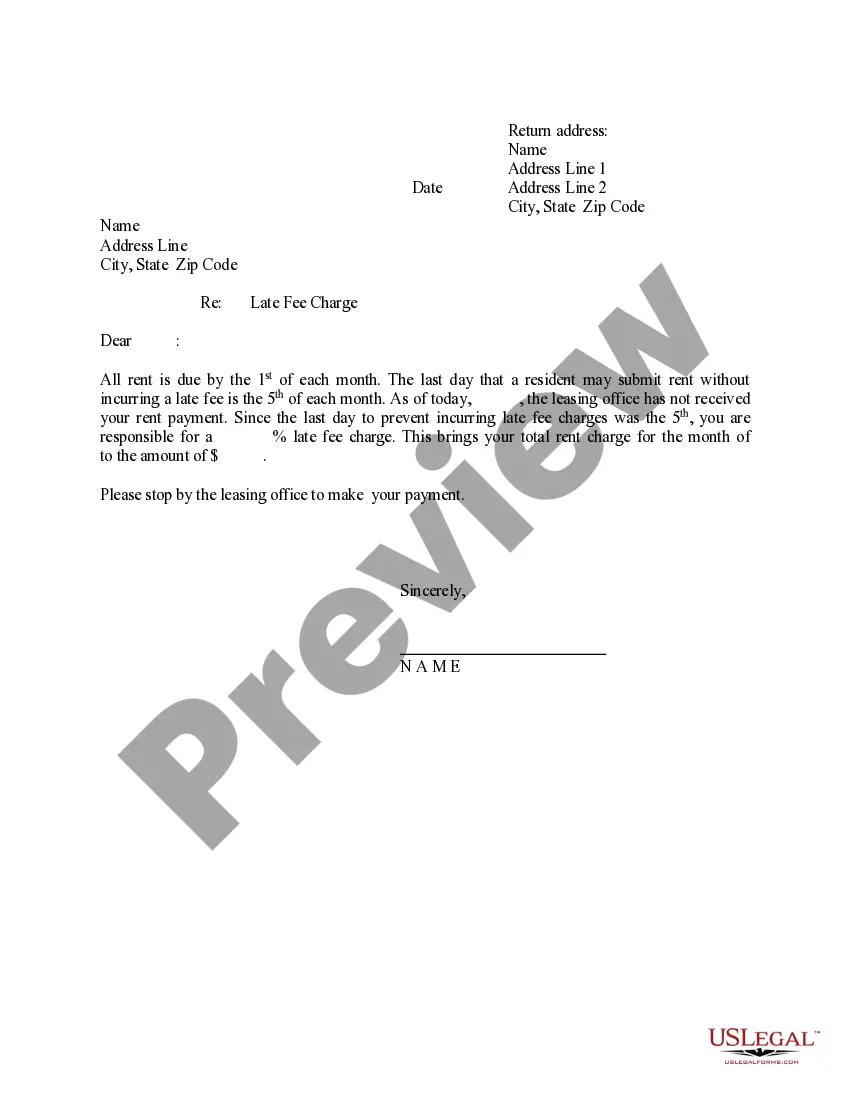
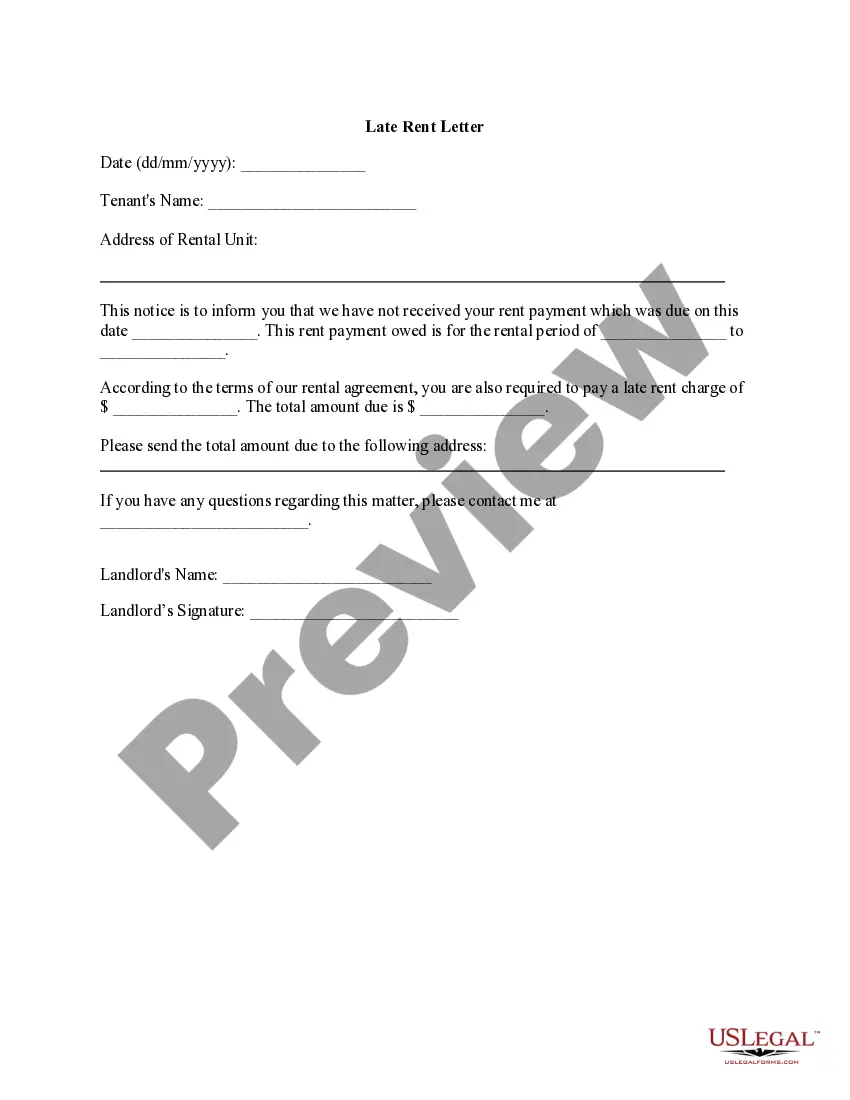
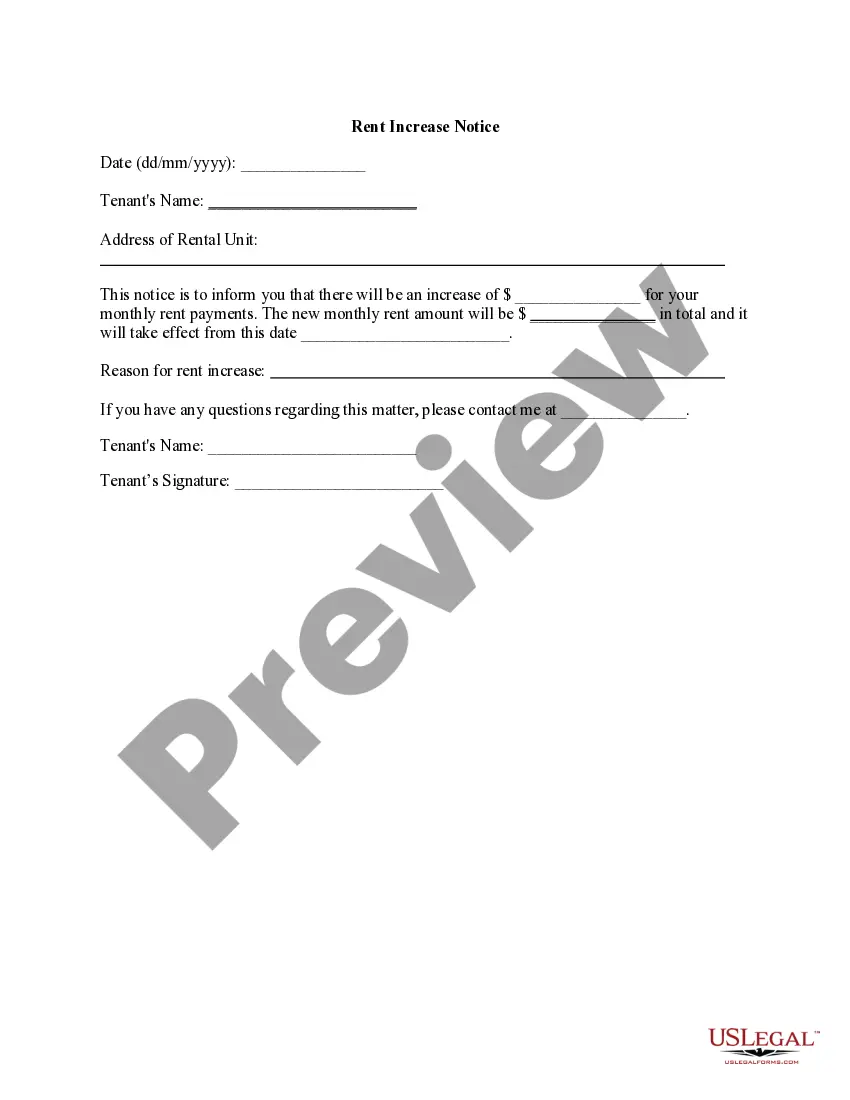
About this form
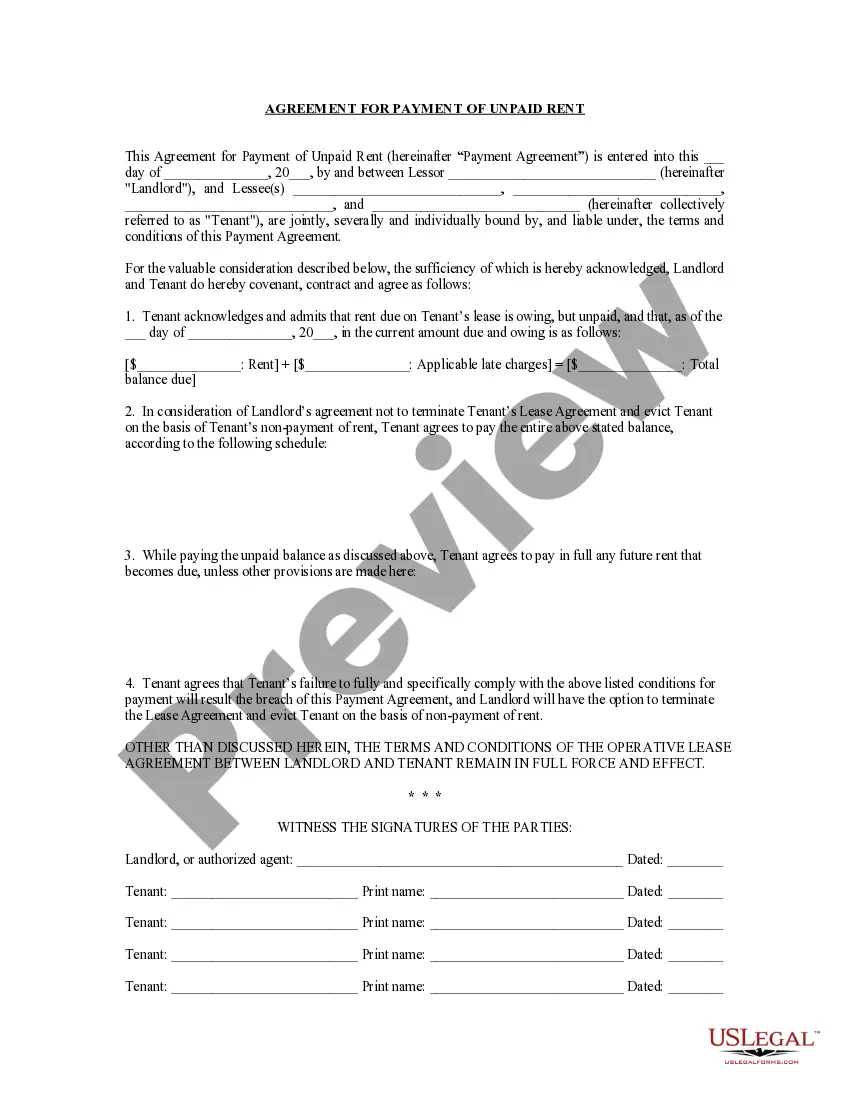
The Agreement for Payment of Unpaid Rent is a binding contract between a landlord and tenant to address overdue rent. This form outlines payment terms and deadlines, allowing the tenant to pay overdue rent while the landlord agrees to refrain from eviction. Unlike traditional eviction notices, this payment agreement provides a structured plan for the tenant to resolve their rent arrears, ensuring compliance with state laws.
Key components of this form
- Identification of parties: Includes details of both the landlord and tenant(s).
- Rent acknowledgment: Tenant admits to owing overdue rent and any applicable late charges.
- Payment structure: Outlines the total balance due and the payment schedule.
- Continuation of lease: Confirms that all other lease terms remain effective.
- Signatures: Requires signatures from all parties involved to formalize the agreement.

When to use this form
This form is useful when a tenant has fallen behind on rent payments but wishes to avoid eviction. It establishes a formal agreement to pay off overdue rent in a structured manner, benefiting both the landlord, who retains the tenant, and the tenant, who can manage their financial obligations more effectively.
Who this form is for
- Landlords seeking a formal agreement with their tenants regarding unpaid rent.
- Tenants who have overdue rent and want to propose a payment plan to avoid eviction.
- Property managers responsible for handling lease agreements and tenant relations.
Steps to complete this form
- Identify the parties involved by entering the landlord's and tenants' full names.
- Specify the date on which the agreement is made.
- State the total amount due, including overdue rent and any late charges.
- Ensure all parties sign and date the agreement to confirm their acceptance of terms.
- Keep a copy of the completed form for all parties involved for future reference.
Notarization guidance
In most cases, this form does not require notarization. However, some jurisdictions or signing circumstances might. US Legal Forms offers online notarization powered by Notarize, accessible 24/7 for a quick, remote process.
Get your form ready online
Our built-in tools help you complete, sign, share, and store your documents in one place.
Make edits, fill in missing information, and update formatting in US Legal Forms—just like you would in MS Word.
Download a copy, print it, send it by email, or mail it via USPS—whatever works best for your next step.
Sign and collect signatures with our SignNow integration. Send to multiple recipients, set reminders, and more. Go Premium to unlock E-Sign.
If this form requires notarization, complete it online through a secure video call—no need to meet a notary in person or wait for an appointment.
We protect your documents and personal data by following strict security and privacy standards.

Make edits, fill in missing information, and update formatting in US Legal Forms—just like you would in MS Word.

Download a copy, print it, send it by email, or mail it via USPS—whatever works best for your next step.

Sign and collect signatures with our SignNow integration. Send to multiple recipients, set reminders, and more. Go Premium to unlock E-Sign.

If this form requires notarization, complete it online through a secure video call—no need to meet a notary in person or wait for an appointment.

We protect your documents and personal data by following strict security and privacy standards.
Common mistakes
- Not including all tenant names, which can lead to confusion about obligations.
- Failing to specify payment deadlines clearly.
- Inaccurate calculations of overdue rent and fees that can invalidate the agreement.
- Not obtaining signatures from all parties, making the agreement unenforceable.
Benefits of completing this form online
- Convenient access to legal forms anytime, anywhere, for on-the-go completion.
- Edit the form easily to tailor it to specific needs and circumstances.
- Reliable templates prepared by licensed attorneys to ensure compliance with state laws.
Looking for another form?






Form popularity
FAQ
Like a binding contract, the Texas Agreement for Payment of Unpaid Rent formalizes a plan to address overdue rent while avoiding eviction. It identifies the landlord and tenant, records the overdue amount, sets a payment schedule, states that the lease continues, and requires all parties to sign. Use it when a tenant is behind on rent but wants to stay and resolve arrears.
This form provides a formal, contract-based path for a landlord to address unpaid rent without immediate eviction. It documents the parties, acknowledges the overdue rent, and outlines a payment schedule the tenant must follow. While the plan is in effect, the landlord agrees not to pursue eviction, and both sides sign to formalize the agreement.
Yes. The agreement is a binding contract between the landlord and tenant that records the overdue rent, the payment terms, and that other lease terms continue. By signing, both parties commit to the specified payment schedule and the ongoing lease obligations, giving a clear framework to resolve arrears without defaulting to eviction.
The agreement is signed by the landlord and the tenant(s). Signatures are required to formalize the plan, and the document should be dated and clearly identify each party so it can be enforced.
Yes. The continuation of lease clause confirms that all lease terms beyond payment of arrears remain in effect. It means the tenant remains bound by the overall lease and the scheduled payments, while the arrears are resolved under the agreement instead of terminating the tenancy.
This form differs from an eviction notice by creating a structured payment plan and binding both parties to continue the lease. It stops eviction proceedings while the tenant pays the overdue amount under a set schedule, with the landlord agreeing not to pursue eviction as long as terms are met.