Texas Notice of Default on Residential Lease
About this form
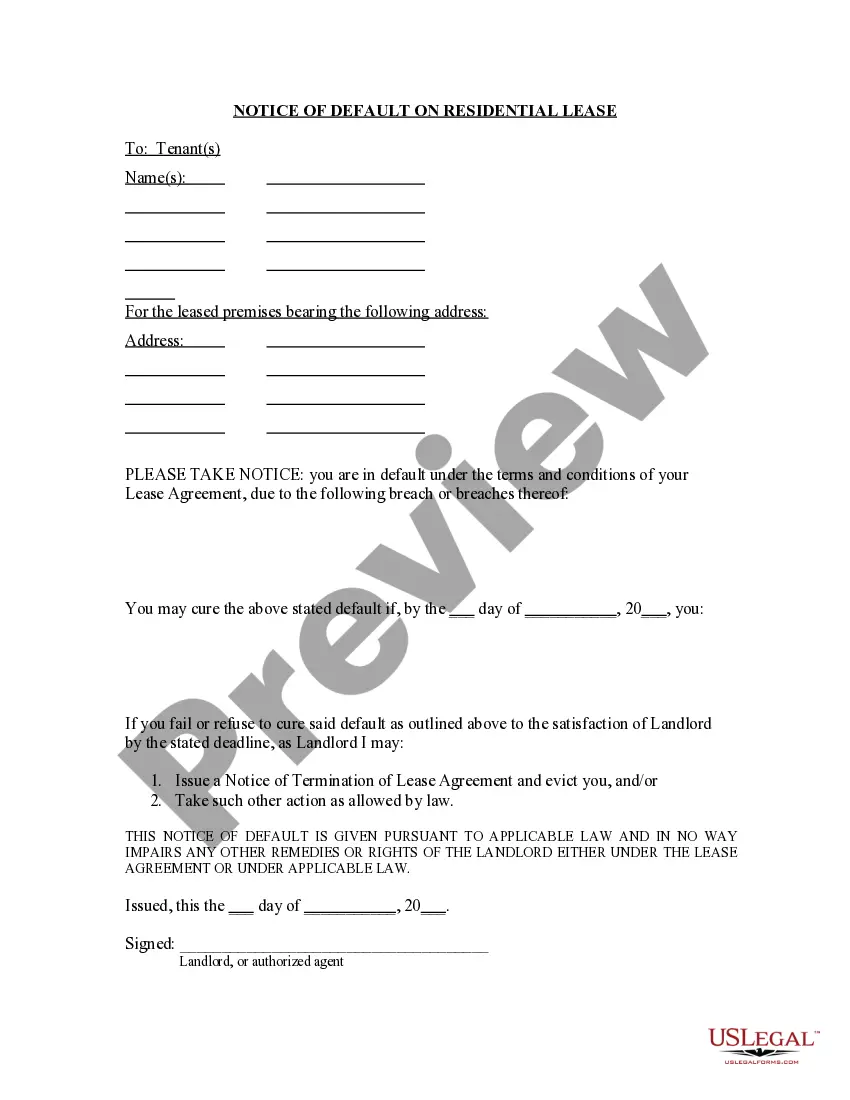
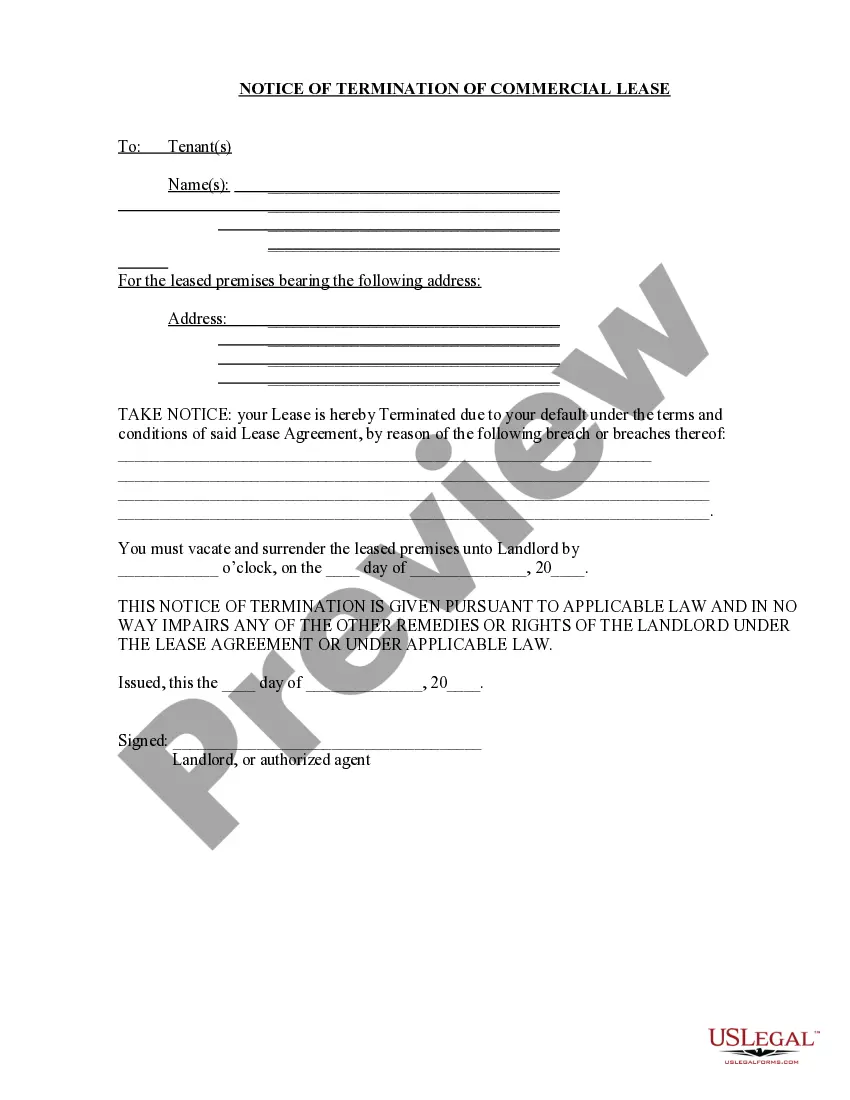
The Notice of Default on Residential Lease is a formal notification from a landlord to a tenant, indicating that the tenant has failed to meet specific obligations outlined in their lease agreement, such as paying rent on time. This notice serves as a preliminary step before further legal actions, including eviction. Unlike other forms related to tenant eviction, this document specifically cites the reasons for default and indicates a deadline for the tenant to cure the defaults before further action is taken.
What’s included in this form
- A field for the landlord or authorized agent's signature.
- Specific reasons for default, such as late rent payment.
- Deadline date for the tenant to remedy the default.
- A statement regarding the landlordâs rights to take further action, including eviction.
- An indication that this notice complies with applicable law.


When to use this document
This form should be used when a tenant has failed to meet their obligations under a residential lease agreement, particularly when they have not paid rent or have violated terms of the lease. It is essential for landlords to provide this notice before initiating eviction proceedings, ensuring that the tenant has an opportunity to cure the default within a specified timeframe.
Intended users of this form
- Landlords who manage residential rental properties.
- Property managers acting on behalf of landlords.
- Tenants wishing to understand their rights regarding lease defaults.
Instructions for completing this form
- Identify the parties involved, including the landlord and tenant.
- Specify the reasons for the default, such as late rent payment.
- Enter the deadline date by which the tenant must cure the default.
- Provide the date the notice is issued.
- Sign the notice as the landlord or authorized agent.
Notarization guidance
This form does not typically require notarization unless specified by local law. It is advisable to check local regulations to ensure compliance with any additional requirements.
Get your form ready online
Our built-in tools help you complete, sign, share, and store your documents in one place.
Make edits, fill in missing information, and update formatting in US Legal Forms—just like you would in MS Word.
Download a copy, print it, send it by email, or mail it via USPS—whatever works best for your next step.
Sign and collect signatures with our SignNow integration. Send to multiple recipients, set reminders, and more. Go Premium to unlock E-Sign.
If this form requires notarization, complete it online through a secure video call—no need to meet a notary in person or wait for an appointment.
We protect your documents and personal data by following strict security and privacy standards.

Make edits, fill in missing information, and update formatting in US Legal Forms—just like you would in MS Word.

Download a copy, print it, send it by email, or mail it via USPS—whatever works best for your next step.

Sign and collect signatures with our SignNow integration. Send to multiple recipients, set reminders, and more. Go Premium to unlock E-Sign.

If this form requires notarization, complete it online through a secure video call—no need to meet a notary in person or wait for an appointment.

We protect your documents and personal data by following strict security and privacy standards.
Common mistakes
- Failing to specify the exact reasons for default.
- Not providing a clear deadline for curing the default.
- Using unclear language or legal jargon that may confuse the tenant.
- Neglecting to sign the notice before delivering it to the tenant.
Advantages of online completion
- Easy access to legal forms tailored to your needs.
- Editable templates that allow for customization according to individual situations.
- Convenient download options for immediate use.
- Prepared by licensed attorneys to ensure legal compliance.
Main things to remember
- The Notice of Default is crucial for landlords to initiate the eviction process legally.
- It provides tenants the opportunity to address their defaults before facing potential eviction.
- Always be aware of state-specific requirements when using this form.
Looking for another form?
Form popularity
FAQ
A Texas judgment is valid for ten years from the date it's signed by the judge. After the expiration of ten years the judgment is dormant for two years. During that two year period of dormancy the judgment cannot be enforced.
Question: Can you overturn a default judgment? Yes, when there is a showing of excusable neglect and a meritorious defense. When a law suit is filed and a defendant fails to timely answered the complaint, the plaintiff may move for an entry of default judgment.
If granted, the default judgment will be vacated and a new trial will be scheduled on the matter. In a county or district court in Texas, the deadline for a request for a new trial is 30 days from entry of the default judgment.
Default judgments happen when you don't respond to a lawsuit often from a debt collector and a judge resolves the case without hearing your side.Next up could be wage garnishment or a bank account levy, which allows a creditor to remove money from your bank accounts to repay the debt.